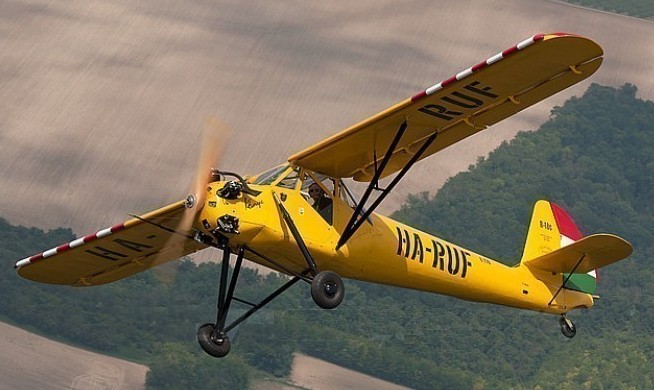
Rubik R-18 Kánya (Kite/Kitty Hawk)

Rubik R-18c Kánya

The Rubik R-28 Kanya liaison/tug aircraft, designed 1944, was produced by the Sportarutermelo factory at Esztergom, Hungary, during 1948-9.
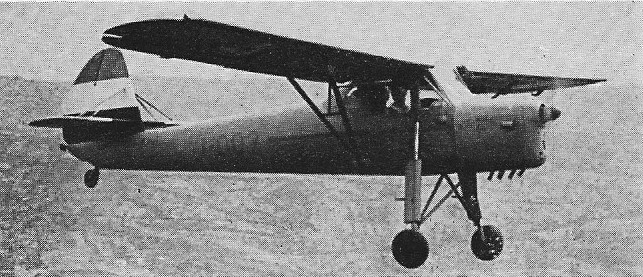
The R-18 has full-span Handley Page slots and larger flaps. Dual controls are fitted and construction is mixed with fabric covering.

  • R-18A powered by 130 hp (97 kW) Walter Major S 6-cyl air-cooled in-line, 1 prototype
  • R-18B powered by 105 hp (78 kW) Walter Minor 4-III 6-cyl in-line, 1 prototype
  • R-18 series powered by Walter Minor, converted Shvetsov M-11 5-cyl radial, 10 built

Engine: Walter Major 4-1, 130 hp
Wingspan: 38 ft
Wing area: 150 sq.ft
Length: 25 ft
Height: 7 ft
Empty weight: 900 lb
Loaded weight: 1520 lb
Max speed: 110 mph
Cruise: 75 mph
Minimum speed: 38 mph
Absolute ceiling: 19,700 ft
Range: 380 mi
Seats: 2
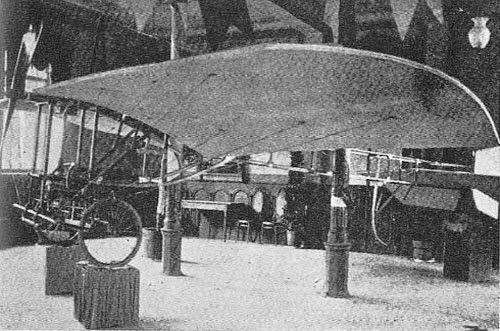
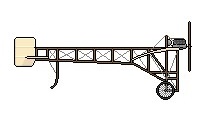
Rozum-Bechiny 1910 monoplane

Designed by the Czech engineers Rozum and Bechyne and built by Emil Rudawski and Co. in Krakow. The construction of the aircraft was completed in April 1910. It was equipped a 40 hp air-cooled radial engine of their own design, one of the first Polish aircraft engines. It was presented at the factory on 4 April and the first flight was announced on 5 May.

In 1910 Pole Rozum and Czech Bechiny built in Kraków, Poland, an aircraft broadly modelled after Bleriot XI and with engine of their own design. Static tests of the engine and airplane were apparently successful, but it’s unclear if there were any flights made on it.

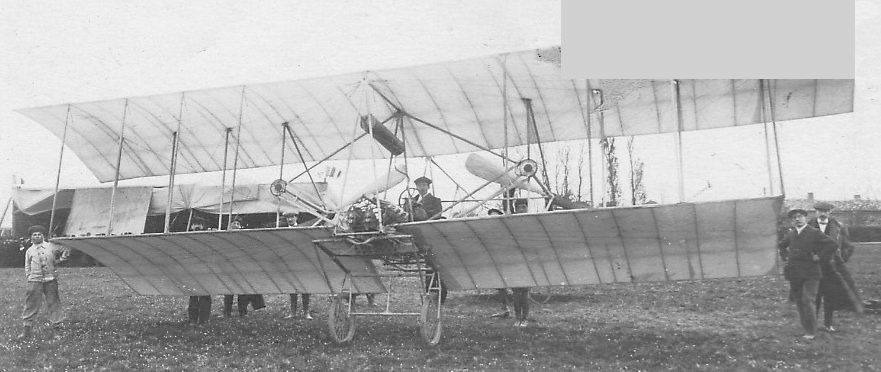
Rozé, Perret et Chaffal 1910 biplane

The Roze, Perret, et Chaffal biplane was a large overhung biplane that might have been designed by Francois Denhaut and was made partly of steel tubing. It had a single trapezoidal tailplane aft only and no apparent vertical surfaces. The arrangement of the two pusher propellers was similar to that on the Wright. It was damaged in 1909 at Poitiers, and probably rebuilt into the photographed configuration, which was tested at Poitiers, France, in May 1910.

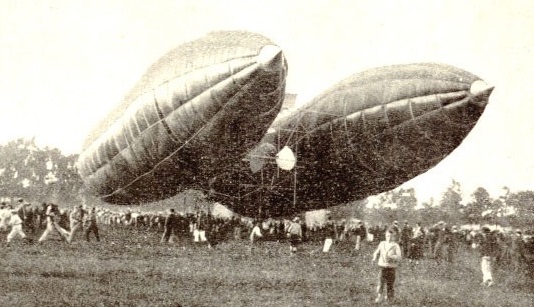
Roze Aviateur

The “Aviateur”, as designed and built by Louis-Étienne Roze. Recognizable due to the catamaran configuration of the rigid airship hulls. The Aviateur was a putative challenger for the Deutsch de la Meurthe prize, eventually won by Santos-Dumont using his No. 6 dirigible – but when tested in 1901, it failed to fly.

Trials took place on the 5th and 6th of September 1901. Miscalculations by M.Roze meant the airship was too heavy and managed to lift only fifteen feet, then coming down and landing softly. At 10 hp each, the two Santos-Dumont (Buchet) motors were too weak. The inherent problem with the motors was that they served the lifting propellors, which in turn had to be switched over to the propulsion/push propellors to move forward. Thus , no forward flight and the silk “wings” remained vertical, not closing to the horizontal.

As Roze had no further financial means to build the Aviateur larger nothing was ever heard of his airship again.

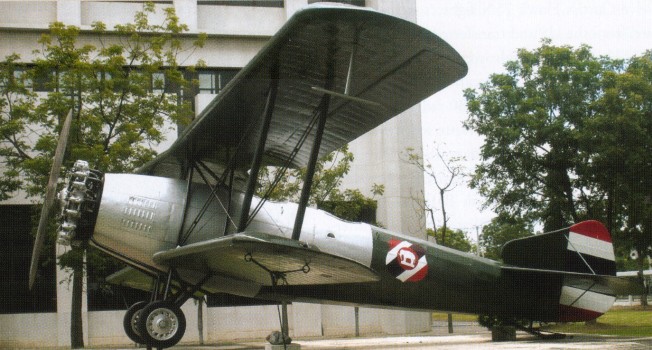
Royal Thai Air Force Paribatra / Boripatra

(Replica)

The construction ot this indigenous two seat bomber began on 5 April 1927 and was named ‘Paribatra’ by His Majestry the King.

The Boripatra was the first aircraft designed and built by the Thais. Around 12 were built by the Aeronautical Service Workshops at Don Muang up until 1933 and were powered by a Bristol Jupiter, BMW, Curtiss D-12 or Pratt & Whitney Hornet engine.