Talleres Serie-B

The Serie A aircraft were followed from the National Aviation Shops by the improved Serie B, the single seat Serie C Microplano with an Hispano Suiza engine and the two seat Serie H parasol.

As a result of the revolution that ensued with the fall of the Carranza regime, the Mexican Army’s air component found itself reduced to a dozen airworthy aircraft in September 1920.

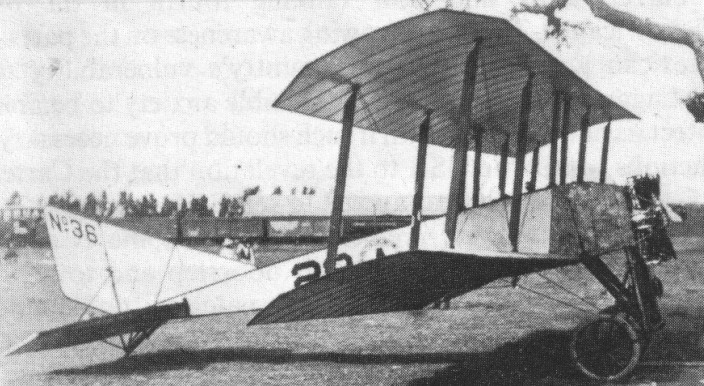
Talleres Serie-A

The first Mexican designed aircraft, the Serie A, built in some numbers by the Talleres Nacionales de Construcciones Aeronauticas for the Army. A conventional two seat two bay biplane powered by a Mexican -designed engine, the 60 hp Aztatl (Stork) six cylinder radial the only foreign items of equipment utilised by the Serie A were, in fact, the French magnetos as even the propeller was of Mexican design.

On 6 July 1917, the Serie A No 9, piloted by Army Lt Horacio Ruiz, flew the first Mexican airmail service, from Pachuca to Mexico City, and six months later, on 3 January 1918, Cadet Samuel C Rojas became the first officer to graduate from the Military Aviation School after completing his training in a Serie A aircraft. Lt Rojas was also the first pilot to perform aerobatics in Mexico, on 26 June 1918, but within nine weeks, on 5 November, the Mexican Army’s fledgeling aviation component suffered its first fatality. For some time Lt Amado Paniagua had led a small demonstration team known as the Escuadrilla Amado Paniagua to promote aviation among the Mexican populace, but on that day, his Serie A aircraft failed to recover from an “Immelmann” turn over the beach at Veracruz and spun in.
Talleres Microplane Veloz

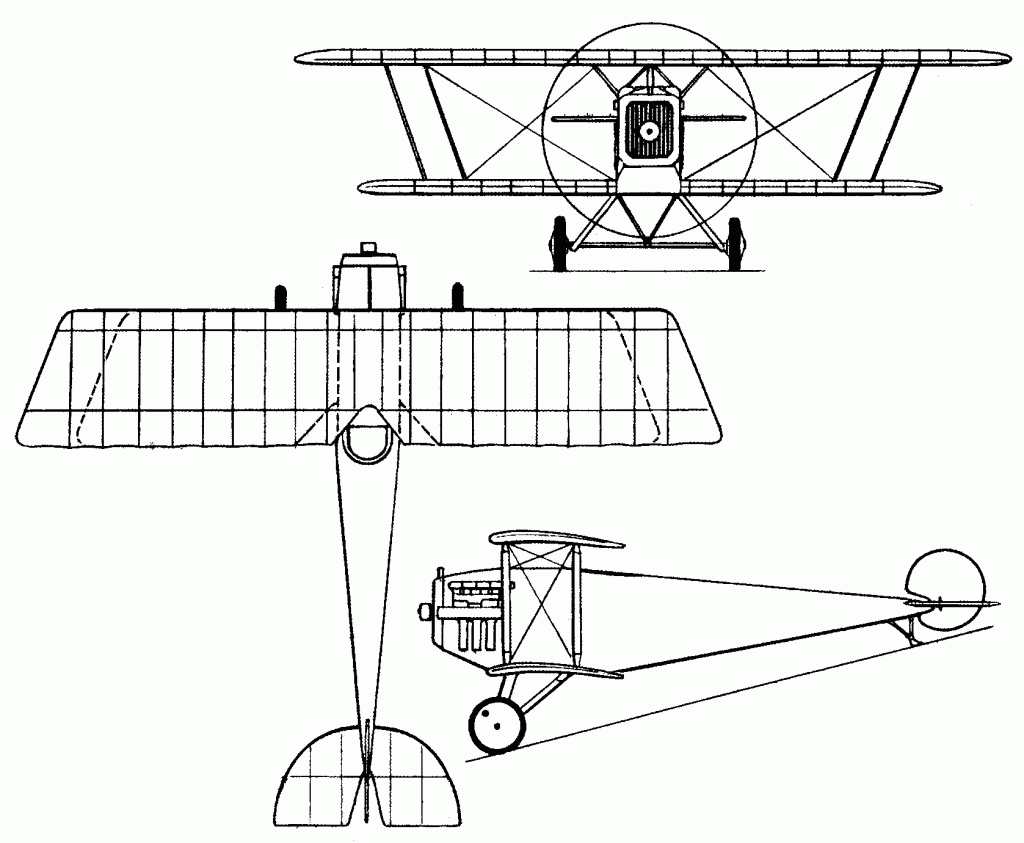
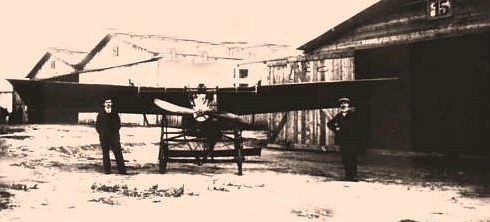
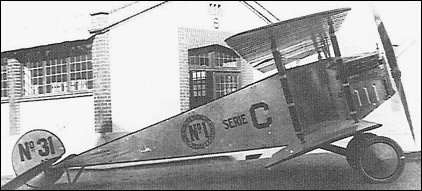
In February 1918, the Talleres Nacionales de Construcciones Aeronauticas (TNCA), or National Aircraft Manufacturing Workshops, at Balbuena Airfield, Mexico City, completed the prototype of a single-seat fighting scout to the designs of Francisco Santarini and Capt Guillermo Villasana. First own product of the National Aircraft Manufacturing Workshops.

A single-bay unstaggered biplane known as the Microplano, the aircraft was powered by a 180hp Hispano-Suiza eight-cylinder Vee-type water-cooled engine driving a Mexican Anahuac propeller, and was of metal construction. The intended armament was either one or two synchronised machine guns.

Although flight trials of the Microplano were allegedly satisfactory, no series production was undertaken owing to the overthrow of the Carranza regime and the ensuing civil war.

Engine: 180hp Hispano-Suiza
Wingspan: 8.00 m / 26 ft 3 in
Wing area: 18.00 m2 / 193.75 sq ft
Length: 6.60 m / 22 ft 8 in
Height: 2.55 m / 8 ft 4 in
Empty weight: 460 kg / 1014 lb
Max take-off weight: 650 kg / 1433 lb
Max speed: 220 km/h / 137 mph

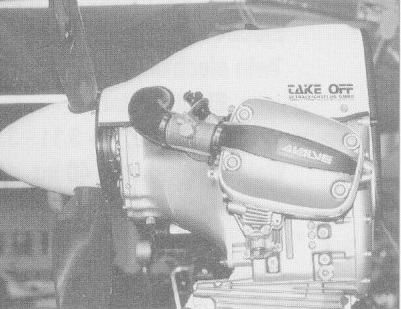
Take Off 1100

Based on an 1100cc BMW motorcycle engine.

1100
Cycle: 4 stroke
No cylinders: 2
Bore: 99 mm
Stroke: 70.5 mm
Compression: 10.7
Displacement: 1085 cc
Cooling: air/oil
Ignition: electronic
Reduction: 3.5:1 mechanical
Dimension: 540 x 740 x 90 mm
Weight: 74 kg
Max pwr: 90 hp at 7250 rpm
Max torque: 95 at 5000 rpm
Fuel consumption: 240 G/hp/hr
Price 1998: 13 000 DM

Take Off Merlin

Merlin KX

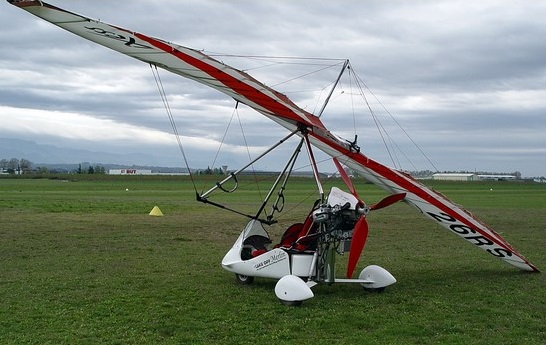
Take Off made its name with BMW conversions on what was basically Drachenstudio Kecur trikes as the Merlin KX.

The 1998 version created by Wilfried Bloidiesel was the Merlin 1100 trike, made in Slovenia and powered by a BMW 1100 cc boxer. Equipped with an airfoil cooling system and electronic injection, the engine is fitted with a catalyst.

Merlin 1100

The Take Off Merlin is a German ultralight trike, designed and produced by Take Off GmbH of Hamm. The aircraft is supplied as a complete ready-to-fly-aircraft.

Merlin KX
Empty weight: 190 kg
Wing span: 10.60 m
Wing area: 13.8 sq.m
Fuel capacity: 60 lt
Certification: Vz
Engine: BMW 1100, 63 hp
MAUW: 400 kg
Seats: 2
Max speed: 125 kph
Cruise speed: 70-100 kph
Minimum speed: 55 kph
Climb rate: 2.5 m/s
Fuel consumption: 8 lt/hr
Price (1998): 29 300 DM

Merlin 1100
Empty weight: 190 kg
Wing span: 10.5 m
Wing area: 15.2 sq.m
Fuel capacity: 60 lt
Engine: BMW 1100 RS, 90 hp
MAUW: 400 kg
Seats: 2
Max speed: 130 kph
Cruise speed: 70 kph
Minimum speed: 60 kph
Climb rate: 4 m/s
Fuel consumption: 6.5 lt/hr
Price (1998): 34 000 DM

Ta-Ho-Ma B

Ta-Ho-Ma built the model B three place open cockpit biplane in 1929. Power was from a 100hp Siemens-Halske SH-12, or optional 180hp Hisso E.

The price was $4275. A total of four model A and B were built, registered NC475, NC536, NC537, and NC538.

Engine: 100hp Siemens-Halske SH-12
Wing span: 30’0″
Length: 21’0″
Useful load: 874 lb
Max speed: 115 mph
Cruise speed: 105 mph
Stall speed: 33 mph
Range: 425 mi

Ta-Ho-Ma A

In 1929 Ta-Ho-Ma was selling the model A, three place open cockpit biplane.

Power was the 150hp Hisso E, or optional 90hp Curtiss OX-5. The model A sold for $3,750, or $2,500 less motor.

A total of four model A and B were built, registered NC475, NC536, NC537, and NC538.

Engine: 150hp Hisso E
Wingspan: 32’0″
Length: 21’8″
Usful load: 795 lb
Max speed: 135 mph
Cruise speed: 115 mph
Stall speed: 35 mph
Range: 575 mi