In 1932 Taft built a seaplane, N13159 c/n A1, with a 90hp LeBlond. The registration was cancelled on 30 July 1934.
Piston
Taft Kingfisher / Whittelsey Amphib
Built in 1928 the sole Taft Kingfisher, N368, was a 3 place open cockpit biplane flying boat.
First flying on 6 Feb 1928, the Kingfisher became the Whittelsey Amphib.
Engine: 110hp LeBlond 7DF pusher
Wingspan (upper): 37’0″
Wingspan (lower): 18’0″
Length: 28’9″
Useful load: 600 lb
Max speed: 90 mph
Cruise speed: 65 mph
Taddéoli La Mouette
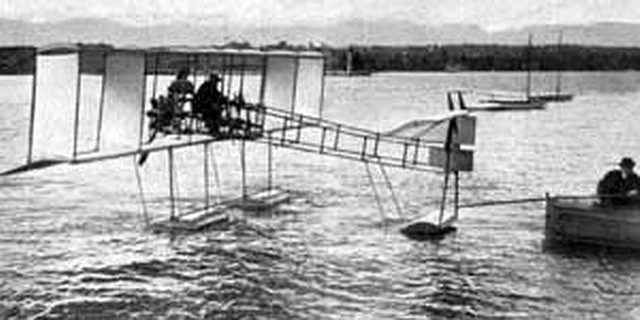
Émile Taddéoli’s Gnôme-engined, Voisin-inspired canard float biplane “Mouette” was designed by his mechanic Prampolini and built at the Perrot & Cie workshop. It flew 80 meters during the first test flight on Lac Léman in March 1912, but sunk when landing, as the main floats got submerged instead of skimming the surface. After that, the project was abandoned.
Tachikawa R-HM

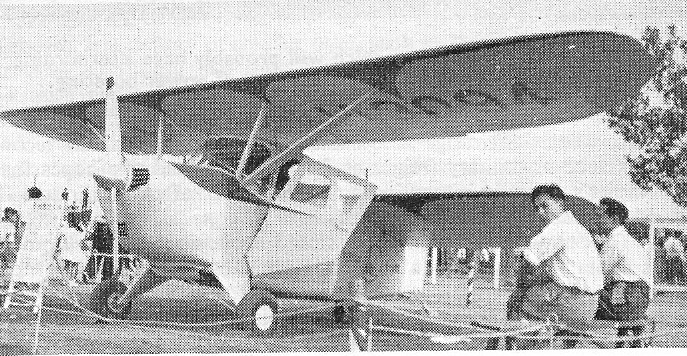
The Tachikawa R-HM is a refined two-seat cabin version of the Mignet pre-war Flying Flea, powered by a 90 hp Continental C90-12F engine. It is generally similar to the H.M.310 Estafette produced by Avioes Mignet do Brasil.
The R-HM is a tandem monoplane or heavily-staggered biplane, lift being divided between the two surfaces which give a slot effect.
The registration was JA3094.
Engine: 90 hp Continental C90-12F
Wingspan: 26 ft 3 in
Wing area: 201.5 sq.ft
Length: 16 ft 8 in
Height: 6 ft 6 in
Empty weight: 910 lb
Loaded weight: 1422 lb
Max speed: 99 mph
Cruise: 74.5 mph
Range: 298 mi
Tachikawa R-53
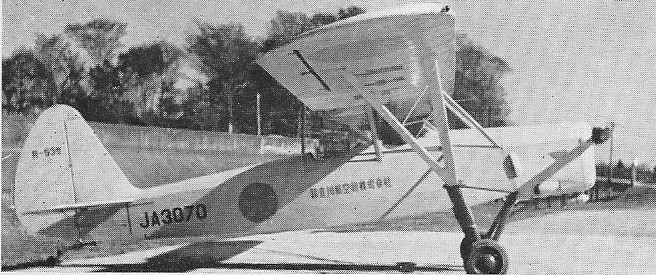
The Tachikawa R-53 is a revised version of the R-52, differing primarily in having a 155 hp Blackburn Cirrus Major engine.
Essentially a parasol wing two-seat primary trainer, the R-53 is of mixed construction with a welded steel-tube fuselage and a wood and duralumin wing, all fabric covered.

Engine: 155 hp Blackburn Cirrus Major
Wingspan: 35 ft
Length: 24 ft 9 in
Height: 8 ft 2 in
Empty weight: 1470 lb
Loaded weight: 2090 lb
Max speed: 129 mph
Cruise: 93 mph
Range: 465 mi
Service ceiling: 14,270 ft
Tachikawa R-52
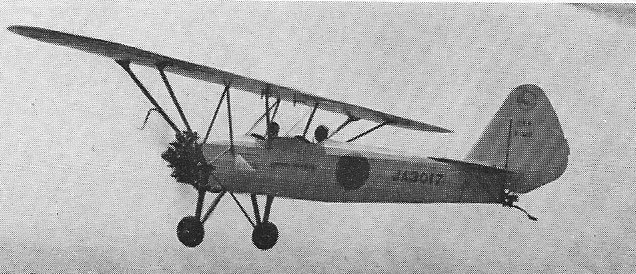
The Tachikawa R-52 was completed in September 1952 and was the first aircraft built entirely from Japanese materials and powered by a Japanese engine (a 130 hp Shinphu 2 radial) to be completed after World War 2.
Derived from the pre-war R-38, the R-52 tandem two-seat parasol-wing trainer was the first product of the Shin Tachikawa Kasushiki Kaisha, and the prototype was presented by the Yomiuri Press for student instruction. The R-52 is of mixed construction with fabric covering.
Engine: 130 hp Shinphu 2
Wingspan: 35 ft
Length: 24 ft 3 in
Height: 9 ft 2 in
Empty weight: 1500 lb
Loaded weight: 2105 lb
Max speed: 124 mph
Cruise: 93 mph
ROC: 722 fpm
Range: 310 mi
Tachikawa Ki-106
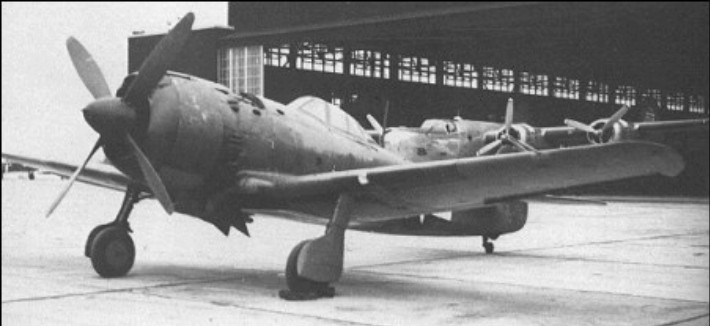
On 8 September 1943, instructions were issued to redesign the Nakajima Ki-84 Hayate all-metal single-seat fighter for wooden construction because of the increasingly critical light alloy supply situation. The task of redesigning the airframe was assigned to the Tachikawa Hikoki which was to collaborate with the Army Aerotechnical Research Institute at Tachikawa.
Assigned the designation Ki-106, the wooden fighter was intended to utilise a high proportion of semi-skilled labour in its construction and to be broken down into components to be built by small wood-working shops grouped around designated assembly points.
Prototype construction was sub-contracted to Ohjo Koku, but the first of three prototypes was not flown until July 1945. The external characteristics of the Ki-84 were faithfully retained by the Ki-106, apart from some minor revision of the vertical tail, the first prototype being powered by the 2,000 hp Nakajima Ha-45-21 engine and carrying an armament of four 20-mm cannon. Appreciably heavier than the standard Ki-84, the Ki-106 was subjected to various weight saving measures, one of these being a reduction in the armament to two 20-mm cannon, and the second prototype flew with this armament during the last week of the war.
Engine: 2,000 hp Nakajima Ha-45-21
Length 32 ft 7 in (9.92 m)
Wing span: 36.8 ft (11.21 m)
Height: 3.59 m / 11 ft 9 in
Wing area: 21 sq.m / 226.04 sq ft
Max take-off weight: 3900 kg / 8598 lb
Empty weight: 2948 kg / 6499 lb
Max. speed: 620 km/h / 385 mph at 21,325ft (6 500m)
Range (+1.5 hr res): 800 km / 497 miles
Time to 16,405ft (5 000m): 7.85min
Tachikawa Ki-94-II
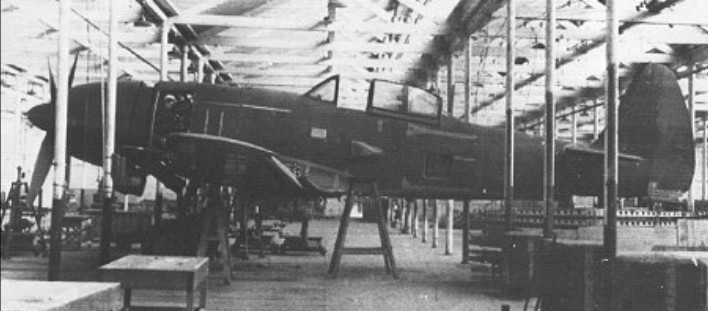
Defeat in the Battle of Midway essentially left Japan without means to project their aerial power over distant territories and started the three-year long retreat towards their home islands. Since 1942, US strategic bombers began regularly raiding imperial territories, and it culminated with the raid on Tokyo on the night of 9-10 March 1945 that included 334 B-29 heavy bombers and resulted in the almost total obliteration of mostly wooden civilian structures over 40 km2 of the Japanese capital, and the death of over 100,000 people.
The Japanese army command had considered such possibilities beforehand, and the means to deter long-range bombing raids were being developed from 1942. Koku Hombu, the aviation HQ of the Imperial Army, placed an order with the Tachikawa Hikoki HK company for a high altitude interceptor that would be able to destroy enemy bombers.
The initial requirements were the fighter was supposed to have a range of 3,000 km, up to 800 km/h speed, and a pressurized cockpit. Tachikawa started the Ki-94 project that was later split into two completely different designs – the Ki-94-I and Ki-94-II.
The Ki-94-I was a large twin-boom monoplane with two tandem 18-cylinder Mitsubishi Ha-211 Ru piston engines located in the front and rear sections of the fuselage. The rear-pushing propeller was located between the tail booms. The designers expected that this scheme would provide speeds of up to 780 km/h at a 10-kilometer altitude. The Ki-94 was supposed to carry two 37-mm Ho-204 and two 30-mm Ho-155 cannons, located in the wings.

By the end of 1943, Tachikawa had a wooden model built but the Koku Hombu technical department considered it to be exceedingly difficult to produce, and the high expectations of the aircraft’s characteristics were deemed overly enthusiastic. As a result, the design was discarded and the role of the fighter-interceptor was handed over to Nakajima Ki-87, while Tachikawa focused on the sister Ki-94-II design.
Ki-94
Engine: 1 x Nakajima Ha-44, 1835kW
Max take-off weight: 6450 kg / 14220 lb
Empty weight: 4690 kg / 10340 lb
Wingspan: 14 m / 45 ft 11 in
Length: 12 m / 39 ft 4 in
Height: 4.65 m / 15 ft 3 in
Wing area: 28 sq.m / 301.39 sq ft
Max. speed: 712 km/h / 442 mph
Cruise speed: 440 km/h / 273 mph
Ceiling: 14680 m / 48150 ft
Range: 2100 km / 1305 miles
Crew: 1
Armament: 2 x 30mm cannons, 2 x 20mm cannons, 500kg of bombs
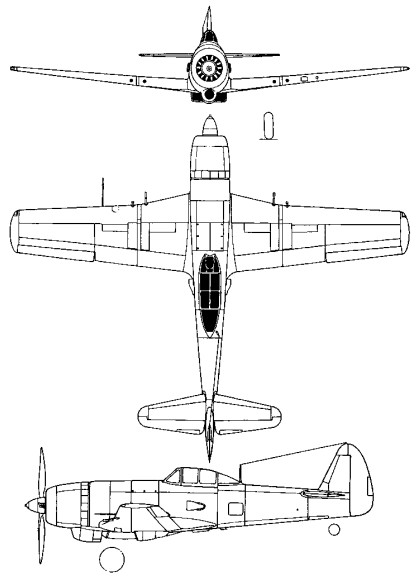
Tachikawa SS-1
From 1937 Tachikawa produced a number of interesting designs which did not go into series production. These included the SS-1 twin-engined low-wing monoplane developed from the Lockheed 14 and intended for high-altitude research.
Tachikawa A-26 / Ki-77
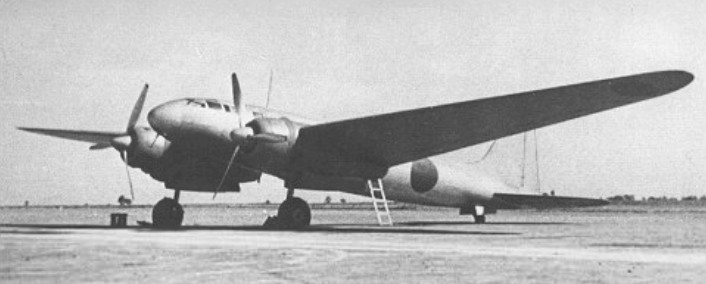
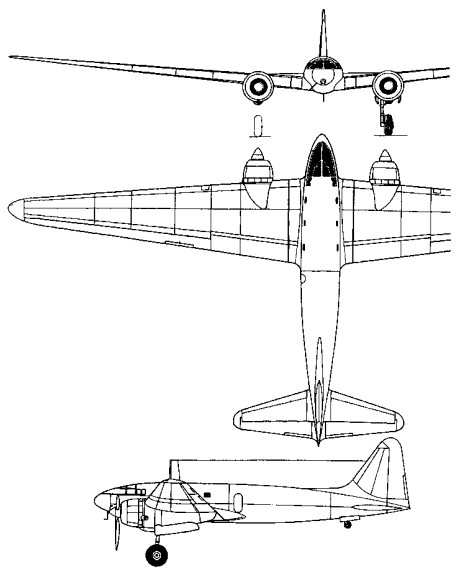
The A-26, later redesignated Ki-77, was a long-distance record aircraft with a remarkably slim fuselage and finely tapered wide-span monoplane wings. The first prototype flew on November 18, 1942, and later set two endurance records during the war. Two were built, the second was lost two months after completion.
Allied code name Clara.
Engines: 2 x Mitsubishi Ha.104ru, 1730 hp
Ki-77
Engines: 2 x Nakajima Ha-115, 875kW / 1170 hp
Max take-off weight: 16725 kg / 36873 lb
Empty weight: 7237 kg / 15955 lb
Wingspan: 29.44 m / 96 ft 7 in
Length: 15.3 m / 50 ft 2 in
Height: 3.85 m / 13 ft 8 in
Wing area: 79.56 sq.m / 856.38 sq ft
Max. speed: 440 km/h / 273 mph
Cruise speed: 300 km/h / 186 mph
Ceiling: 8700 m / 28550 ft
Range: 18000 km / 11185 miles
Crew: 5
 All Aero