Later products included in the late 1940s, the prototype TTS-5 six-seat twin-engined general-purpose transport.
Piston
Talleres Tezuitlan
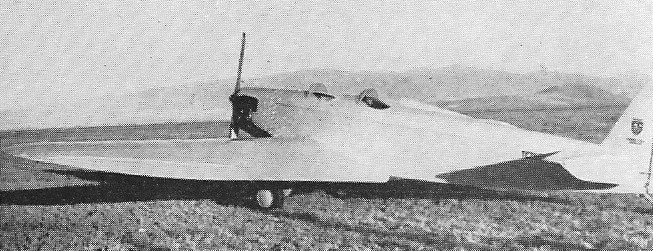
September 1942, a new Mexican primary trainer, the Tezuitlan designed by Antonio Sea and making extensive use of mahogany ply in its construction, commenced flight testing.
Powered by a 125 hp Lycoming engine. The Teziutlan was designed to operate from Mixico’s high-altitude airfields and utilised 95% nationally-produced materials. Construction is all-wood.
Forty five were ordered for the FAM, but, in the event, the considerable infusion of training aircraft from the USA that commenced at this time rendered the Tezuitlan surplus to requirements, only five being completed.
Engine: 125 hp Lycoming
Wingspan: 38 ft 5 in
Length: 23 ft 10.5 in
Height: 6 ft 2.75 in
Empty weight: 986 lb
Loaded weight: 1633 lb
Max speed: 108 mph
Cruise: 102,5 mph
ROC: 1380 fpm
Service ceiling: 22,960 ft
Talleres Azcarate OE-1
In 1928, the National Aviation Shops produced two sesquiplanes to the designs of Brig Gen Juan F Azcarate, who had assumed command of Mexican Army Aviation, these, the Azearate OE 1 light bomber and recon-naissance aircraft and the Azearate E trainer, both entering limited production at Balbuena, three of the former and 10 of the latter being built in 1929.
Talleres Azcarate E
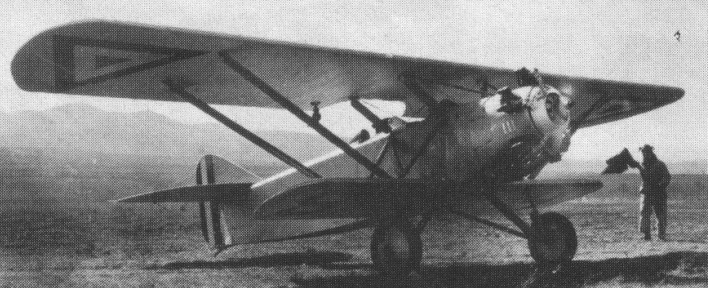
In 1928, the National Aviation Shops produced two sesquiplanes to the designs of Brig Gen Juan F Azcarate, who had assumed command of Mexican Army Aviation, these, the Azearate OE 1 light bomber and recon-naissance aircraft and the Azearate E trainer, both entering limited production at Balbuena, three of the former and 10 of the latter being built in 1929.
The Azcarate E is primarily of wooden construction, the cew of two in tandem with full dual controls. A single 0.30in machine gun was mounted in the rear cockpit.
Serveral squadrons were equipped with the type until the mid-1940s, still serving with the Mecican School of Military Aviation.
Engine: Wright J-5, 220 hp
Max speed: 100 mph
Cruise: 82 mph
Talleres Anahuac
The National Aviation Shops, direction of which had been taken over by Angel Lascurain y Osio, continued to produce small series of aeroplanes of indigenous design, among which was the Toloche parasol fighter monoplane powered by a Gnome rotary, the Quetzalcoatl with a BMW engine, the Mexico parasol trainer and the Sonora low wing training monoplane. The Avro 504K Mk II trainer was built in series as the Anahuac. More than 50 Anahuac trainers were manufactured by the Balbuena factory, these remaining the principal equipment of the Military Aviation School until 1930.
Talleres Sonora
The National Aviation Shops, direction of which had been taken over by Angel Lascurain y Osio, continued to produce small series of aeroplanes of indigenous design, among which was the Toloche parasol fighter monoplane powered by a Gnome rotary, the Quetzalcoatl with a BMW engine, the Mexico parasol trainer and the Sonora low wing training monoplane. The Avro 504K Mk II trainer was built in series as the Anahuac. More than 50 Anahuac trainers were manufactured by the Balbuena factory, these remaining the principal equipment of the Military Aviation School until 1930.
Talleres Mexico
The National Aviation Shops, direction of which had been taken over by Angel Lascurain y Osio, continued to produce small series of aeroplanes of indigenous design, among which was the Toloche parasol fighter monoplane powered by a Gnome rotary, the Quetzalcoatl with a BMW engine, the Mexico parasol trainer and the Sonora low wing training monoplane. The Avro 504K Mk II trainer was built in series as the Anahuac. More than 50 Anahuac trainers were manufactured by the Balbuena factory, these remaining the principal equipment of the Military Aviation School until 1930.
Talleres Quetzalcoatl
The National Aviation Shops, direction of which had been taken over by Angel Lascurain y Osio, continued to produce small series of aeroplanes of indigenous design, among which was the Toloche parasol fighter monoplane powered by a Gnome rotary, the Quetzalcoatl with a BMW engine, the Mexico parasol trainer and the Sonora low wing training monoplane. The Avro 504K Mk II trainer was built in series as the Anahuac. More than 50 Anahuac trainers were manufactured by the Balbuena factory, these remaining the principal equipment of the Military Aviation School until 1930.
Talleres Toloche
The National Aviation Shops, direction of which had been taken over by Angel Lascurain y Osio, continued to produce small series of aeroplanes of indigenous design, among which was the Toloche parasol fighter monoplane powered by a Gnome rotary, the Quetzalcoatl with a BMW engine, the Mexico parasol trainer and the Sonora low wing training monoplane. The Avro 504K Mk II trainer was built in series as the Anahuac. More than 50 Anahuac trainers were manufactured by the Balbuena factory, these remaining the principal equipment of the Military Aviation School until 1930.
Talleres Serie-C
The Serie‑A aircraft were followed from the National Aviation Shops by the improved Serie‑B, the single‑seat Serie‑C Microplano with an Hispano‑Suiza engine and the two‑seat Serie‑H parasol, but as a result of the revolution that ensued with the fall of the Carranza regime, the Mexican Army’s air component found itself reduced to a dozen airworthy aircraft in September 1920.
 All Aero