Antares MA-30

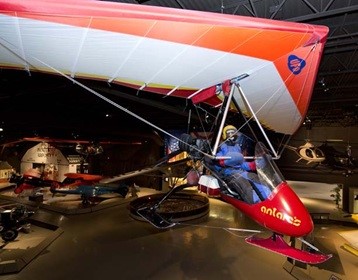
The Antares MA-30 was designed by Russian engineer Sergey Zozulya and manufactured in 1991. Sergey designed the aircraft with triangular engineering, distinctive fairing, and landing gear for the ultralight to be capable of flying on wheels, tundra tires, floats, or skis.

The MA-30 was built for strength and was constructed largely of titanium parts. The design features a Rogallo wing and a standard trike configuration, with a fiberglass cowling installed to protect the pilot from the weather. The MA-30 uses a weight-shift control system and is powered by a 50-hp Rotax 503 engine.

In 1992, Mike Jacober decided to fly his MA-30 to the summit of Mount McKinley, now known as Denali, the highest peak in North America. Mike enlisted the help of fellow MA-30 pilot Joel Wallace, his stepson Matthew Howard, and his friend David Swendiman. Beginning in late December of 1992, the four began meeting weekly to discuss plans for the adventure, figuring what they’d need for equipment, fuel, etc., and making contingency plans for different situations.

On May 1, 1993, the Mount McKinley flying group launched their expedition from Talkeetna, at an altitude of 346 feet, with Matthew and David flying into Kahiltna Base Camp in a Cessna 185 with all the supplies, while Mike and Joel flew their MA-30s across the 60-plus mile glacier. The group spent a total of eight days at Kahiltna, five of which were spent gearing up for the flight to the summit.

On May 6, Mike and Joel pulled on their flying garb, put on their oxygen masks and cylinders and fired up their MA-30s. A string of small problems prevented Joel from reaching the summit, but that didn’t hinder Mike. After about 20 minutes, Mike was high enough to cross the Kahiltna peaks and the valley to the south buttress of Mount McKinley. The MA-30 picked up some ridge lift for about two miles and enabled Mike to reach the south peak. At the peak, the ridge lift went away and Mike had to make a dozen or so 360-degree turns in front of the face to work his way up, eventually making it over the summit by about 150 feet, reaching an altitude of 20,470 feet. After circling the summit, Mike snapped a few pictures, turned off the engine, and glided back down to Kahiltna.

Mike Jacober an aviation pioneer, a dedicated instructor, passed away. In 2002 he was inducted into the EAA Sport Aviation Halls of Fame as one of the nation’s most respected ultralight pilots and promoters.
Ginny Jacober, Mike’s widow, donated his MA-30 to the EAA Aviation Museum in 2004.

Engine: Rotax 503, 50 hp
Wingspan: 33 feet, 10 inches
Length: 8 feet
Empty Weight: 341 pounds
Gross Weight: 872 pounds
Cruise Speed: 55 mph
Maximum Speed: 60 mph
Seats: 1

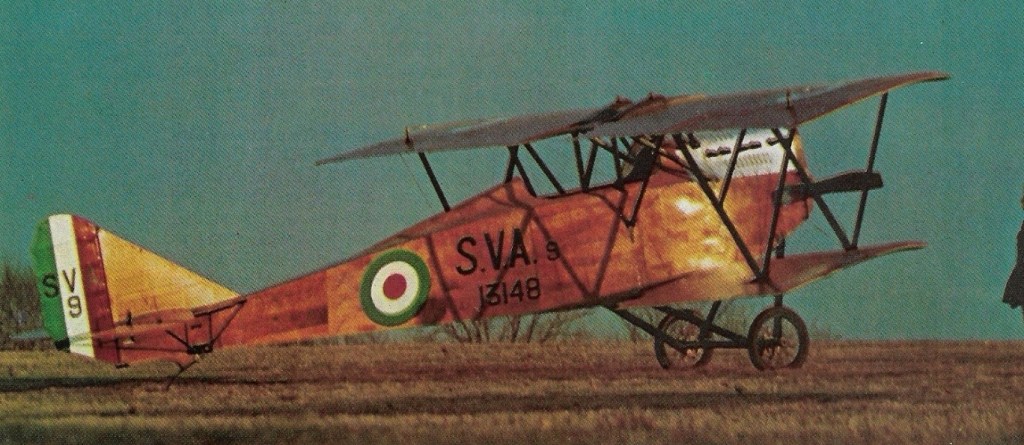
Ansaldo SVA.1 / SVA.2 / SVA.3 / SVA.4 / SVA.5 / SVA.6

Ansaldo SVA.5

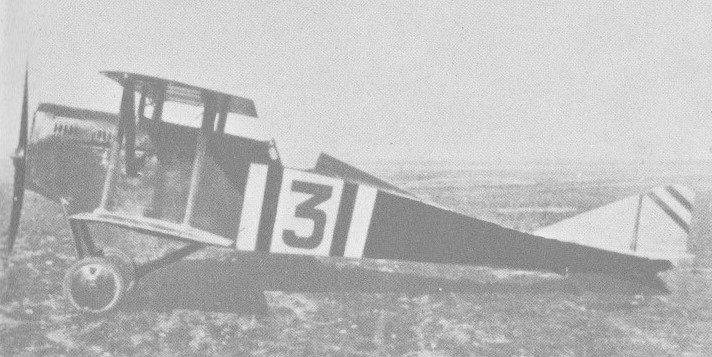
The 1917 SVA.1 was a single-engine one-seat biplane utility aircraft. The SVA.2 was the production version of the SVA.1.

The SVA.3 was a fast-climbing interceptor version of the SVA.2

A production version of the SVA.2 equipped for reconnaissance was designated SVA.4.

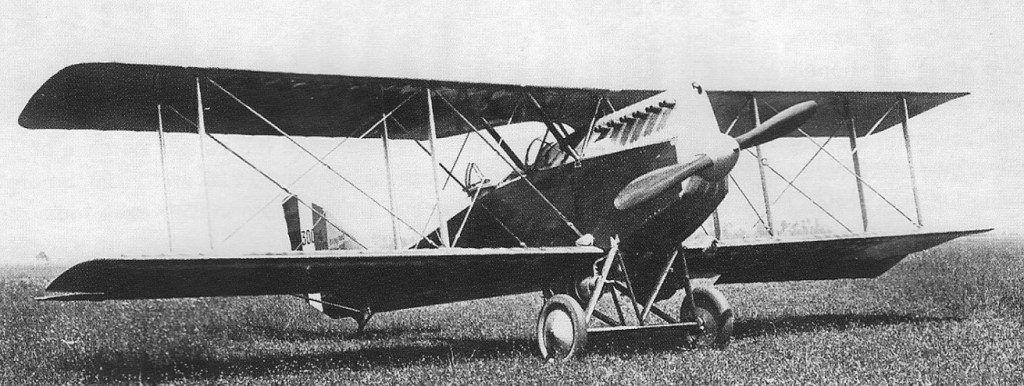
The SVA.5 production version of the SVA.2 was a fighter. Notable for fast reconnaissance flights and record-breaking. The SVA.5 had Warren truss wing bracing, later a characteristic of Fiat biplanes.

Ansalado SVA5 Article

Armament was two Vickers machine guns mounted above the fuselage forward of the cockpit on the fighter. The reconnaissance version carried one gun and 220 lb of bombs.

The SVA.5 wings were of wooden construction, with Warren-truss bracing and fabric covering. The flat-sided wooden fuselage was covered with plywood. Conventional control surfaces were fitted, with ailerons on the top wing only.

The fuel capacity was 40 gallons in the fighters, and 75 gallons in the reconnaissance version.

Delivery of the SVA.5 to Italian fighter-training schools began in the Autumn of 1917.

SVA.5

However, it is as a long-range reconnaissance aircraft that it eventually played its major role. Six squadrons and five smaller units received SVA.5s, and the best known being the 87th Squadron, known as ‘La Serenissima’, from Venice, which had the Lion of St.Mark painted on the fuselage of its aircraft. The first operational flights were made in March 1918. Two months later, an SVA.5 made a round trip of 440 miles to photograph the Zeppelin sheds at Friedrichshafen. In August 1918, seven SVA.s, led by a two-seat SVA.9, flew to Vienna and back, a distance of 625 miles, to drop leaflets on the Austrian capitol. On other occasions they dropped bombs.

SVA.5

Altogether 1295 SV.5s were built, including 50 Idro-AM seaplanes.

The SVA.6 was a prototype bomber version of the SVA.2

Reconnaissance
Engine: S.P.A. 6A, 220 hp
Wingspan: 31 ft
Wing area: 261 sq.ft
Length: 26 ft 8 in
Height: 9 ft 8 in
Empty weight: 1533 lb
MTOW: 2295 lb
Max speed: 136 mph at SL
Service ceiling: 22,000 ft

Ansaldo A1 Balilla

Ansaldo achieved aeronautical eminence in 1917 by providing a single-seat fighter of original Italian design (Italy having previously used French types). The aircraft was the A-1 Balilla (“Hunter”). About 150 built; others, license-built in Poland, served well into 1920s.

The Ansaldo A 1 Balilla was a basic biplane fighter design with a four-blade propeller and a 220 horsepower SPA 6A water-cooled in-line engine. A single pilot saw behind the biplane wing. Armament consisted of two 7.62mm British Vickers machine guns mounted forward of the cockpit seating area in a forward-firing fixed position. Endurance amounted to 1 hour and 30 minutes.

The A 1 appeared in the final stages of the First World War, limiting its use to post-war defence of Italy. Some models found their way into American hands and were converted to air racers fitted with a Curtiss powerplant. Still others would see combat at the hands of Russian and Polish flyers in the Russo-Polish war in 1920.

Ansaldo A 1 Balilla (Hunter)
Engine: SAP 6A water-cooled in-line, 220 hp
Length: 22.441 ft / 6.84 m
Height: 8.301 ft / 2.53 m
Wingspan: 25.197 ft / 7.68 m
Wing area: 228.197 sqft / 21.2 sq.m
Max take off weight: 1951.4 lb / 885.0 kg
Weight empty: 1378.1 lb / 625.0 kg
Max. speed: 119 kts / 220 km/h / 119kt
Service ceiling: 16404 ft / 5000 m
Wing load: 8.61 lbs/sq.ft / 42.00 kg/sq.m
Range: 324 nm / 600 km
Crew: 1
Armament: 2 x 7.62mm Vickers machine guns

Anglin J-6 Karatoo

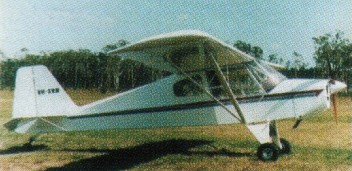
Designed by Jesse Anglin. Centre mounted joystick, rudder pedals, tailwheel steerable through rudder pedals. By 1995, marketed by Norman Aviation and Australian Aviation Works.

Engine: Subaru EA-81, 71 hp.
HP range: 71-90.
Wing span: 33 ft.
Wing area: 169 sq.ft.
Weight empty: 630 lbs.
Gross: 1058 lbs.
Fuel cap: 10 USG.
Height: 5.5 ft.
Length: 19 ft.
Speed max: 100 mph.
Cruise: 90 mph.
Range: 360 sm.
Stall: 38 mph.
ROC: 500 fpm.
Take-off dist: 200 ft.
Landing dist: 350 ft.
Service ceiling: 10,000 ft.
Seats: 2.
Landing gear: tail wheel.

Norman Aviation International Inc. J-6 Karatoo
Stall: 33 kt / 38 mph / 61 kmh
Cruise: 78 kt / 90 mph / 145 kmh
VNE: 87 kt / 100 mph / 161 kmh
Empty Weight: 249 kg / 550 lbs
MTOW Weight: 476 kg / 1050 lbs
Climb Ratio: 500 ft/min / 3 m/s
Take-off distance (50ft obstacle): 200 ft / 61 m
Landing distance (50ft obstacle): 350 ft / 107 m

Karatoo C
Engine: 105 hp.
HP range: 85-115.
Wing span: 33 ft.
Wing area: 148.5 sq.ft.
Height: 6.25 ft.
Length: 20.5 ft.
Gross: 1300 lbs.
Weight empty: 700 lbs.
Fuel cap: 16 USG.
Speed max: 110 mph.
Cruise: 95 mph.
Range: 500 sm.
Stall: 36 mph.
ROC: 1000 fpm.
Take-off dist: 300 ft.
Landing dist: 250 ft.
Service ceiling: 10,000 ft.
Seats: 2.
Landing gear: tail wheel.

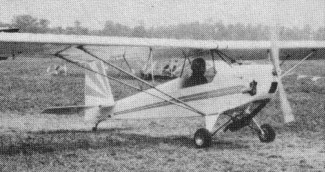
Anglin J-4 Sportster / Skyseeker Aircraft J-4 Sportster

Centre mounted joy stick, rudder pedals, tailwheel steerable through rudder pedals. The Skyseeker J-3 Kitten and J-4 Sportster were to be manufactured in Canada by Modern Aviation Canada Inc.

Empty wt: 240 lbs.
Wing span: 29 ft.
Wing area: 121 sq.ft.
Height: 5 ft ’3 in.
Length: 16 ft 3 in.
Fuel cap; 5 USG.
Engine: Rotax 277 (268 cc) 28 hp.
Static thrust: 210 lbs.
Max wt: 540 lbs.
Stall: 25 mph.
Max speed: 63 mph.
Vne: 120 mph.
Climb rate: 800 fpm @ 45 mph.
Design limit: +6, -4g.
Glide ratio: 12-1.
Wing loading: 4.46 lbs/sq.ft.
Power loading: 20.0 lbs/hp.

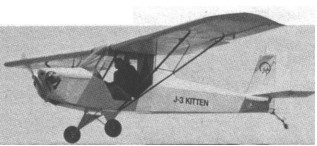
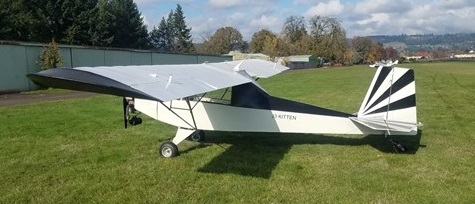
Anglin J-3 Kitten / Skyseeker Aircraft J-3 Kitten

Centre mounted joy stick, rudder pedals, tailwheel steerable through rudder pedals. The Skyseeker J-3 Kitten and J-4 Sportster were to be manufactured in Canada by Modern Aviation Canada Inc. One of the first Canadian production Kittens was bought in 1985.

J3 Kitten

Engine: Rotax 277 (268 cc) 28 hp.
Static thrust: 210 lbs.
Wing span: 30 ft 6 in.
Wing area: 126 sq.ft.
Height: 5 ft 3 in.
Length: 16 ft 3in.
Max wt: 550 lbs.
Empty wt: 250 lbs.
Fuel cap; 5 USG.
Stall: 25 mph.
Max speed: 63 mph.
Vne: 120 mph.
Climb rate: 700 fpm @ 45 mph.
Design limit: +6, -4g.
Glide ratio: 12-1.
Wing loading: 4.47 lbs/sq.ft.
Power loading: 19.64 lbs/hp.