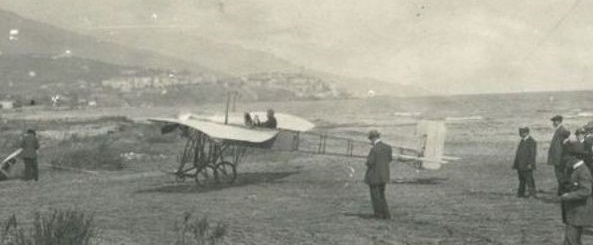
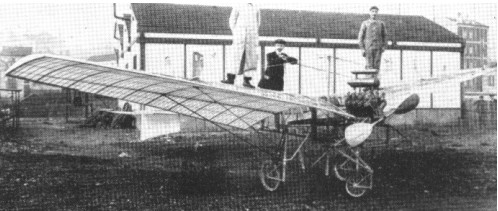
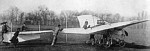
This 1912 Gnôme-engined monoplane was used by Antonio “Nino” Cagliani for crossing the Mediterranean, from Pisa to Corsica. He needed 1:43 hours to cover the distance, flying about 140 km over the waters, marking a new World Record. Such distances over water have been tried, but never been completed before.
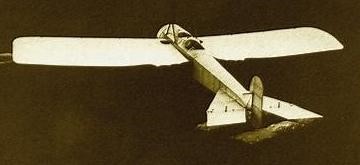
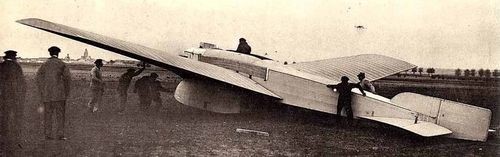
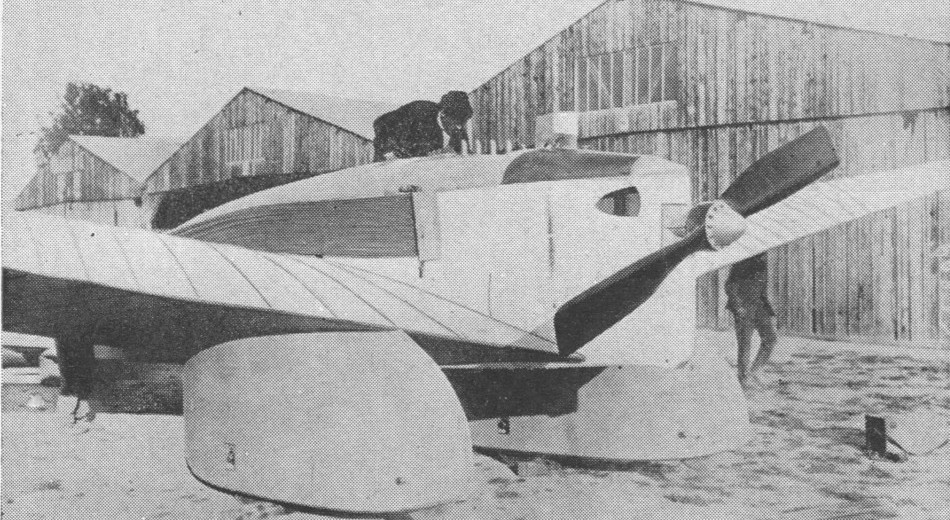
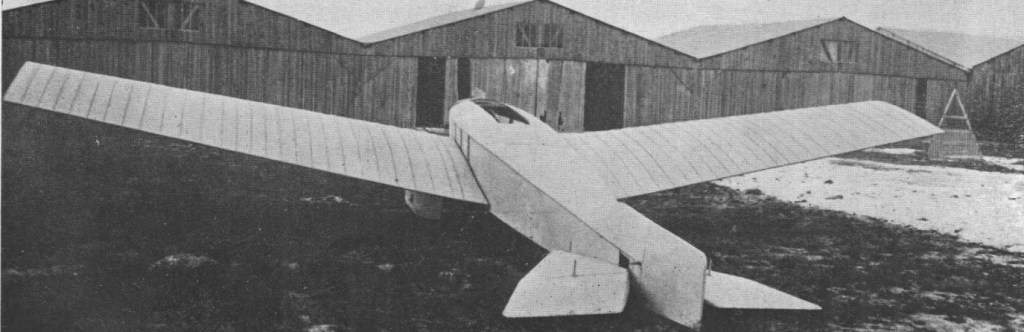
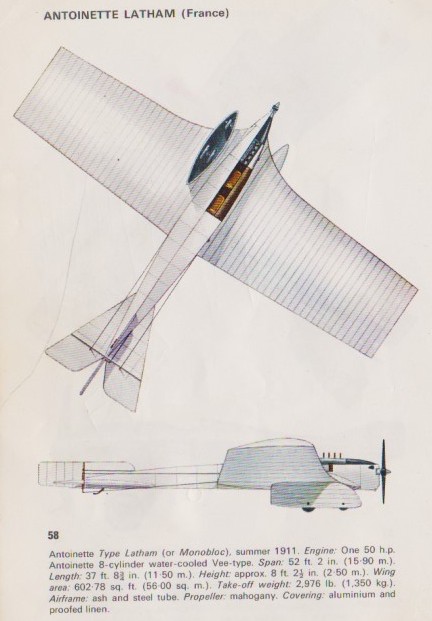
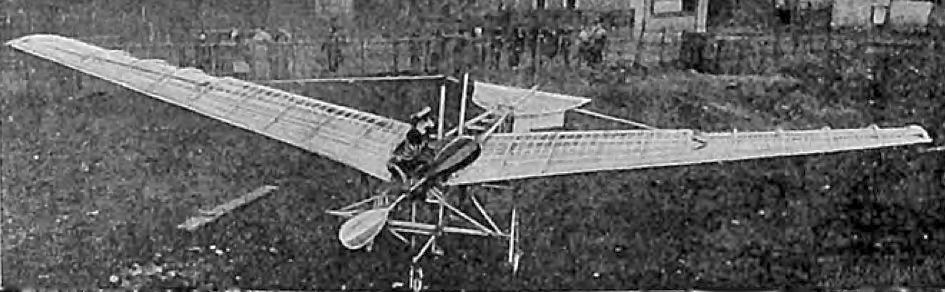
The Antoinette Monobloc of 1911 was the last design of the soon liquidated, and then-named firm “Antoinette Aéroplan-Ateliers”. Powered by a 50-60 hp Antoinette engine, the Leon Levavasseur-designed machine, aka the Antoinette Blindé, aka the Antoinette Latham, never left the ground.
One of the first streamlined aircraft, it had a cantilever wing, without any external bracing, a spatted four wheel main undercarriage, and was extensively armoured for protection from ground fire. It was too heavy to fly more than a few yards.
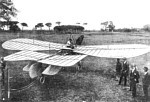
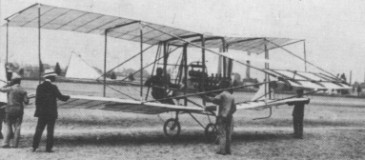
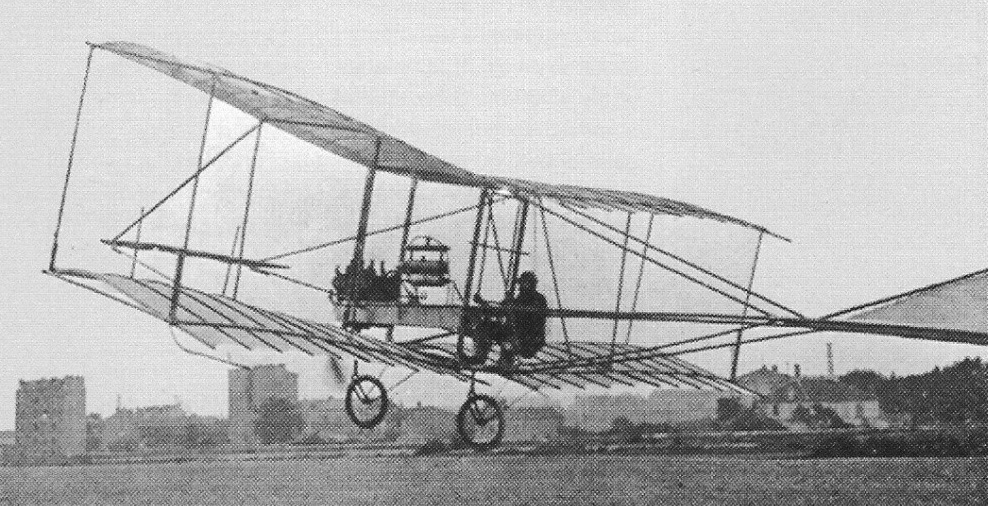
Aeroplane of bamboo construction was incremental improvements to the Gastambide-Mengin II, by French Army Capitaine Ferdinand Ferber also known as the Antoinette III, and powered by an Antoinette motor of 50 hp. On September 22, 1909 at Boulogne, while preparing for a cross-channel attempt, Capitaine Ferber, b.1862, was killed on this machine when after a half-hour flight it overturned when it struck a mound during its landing.
It has two identical wings, one on top of the other.
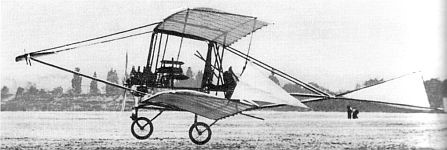
The Antoinette I was very similar to the Antoinette II, but No. II with ailerons and also carried the first passenger.
First flown in February 1908, the Antoinette II was also known as the Gastambide-Mengin II.
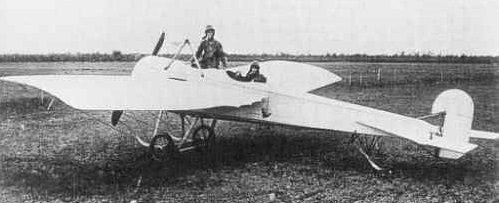
Characterized by its tricycle undercarriage and low-mounted rudder, this monoplane was designed and built by Léon Levavasseur and fitted with a 50-hp Antoinette V-8 engine.
The relatively successful machine made at least seven flights and went through several different design iterations.
The Gastambide-Mengin led to the later Antoinette.
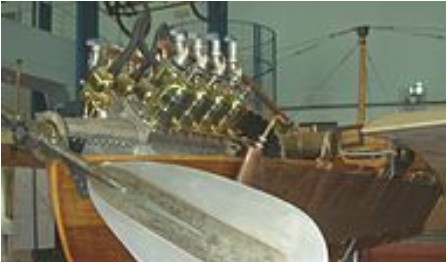
Antoinette VII aircraft, showing Antoinette V8 engine
The Antoinette 8V was an early French eight-cylinder, liquid-cooled, V engine, the first gasoline-fueled, spark plug ignition engine of any kind produced with fuel injection in quantity. It was typically rated at (60+ hp). First produced in 1907 it was used on a number of early French aircraft.
Antoinette 8V Type: 8-cylinder liquid-cooled V engine Bore: 110 mm (4.33 in) Stroke: 105 mm (4.13 in) Displacement: 8.0 L (487 cu in) Length: 1,120 mm (44 in) Width: 630 mm (25 in) Height: 540 mm (21 in) Dry weight: 95 kg (209 lb) Fuel system: direct injection Cooling system: Liquid-cooled Power output: 50 kW (67 hp) at 1,100 RPM Power-to-weight ratio: 0.7 kW/kg (0.32 hp/lb)
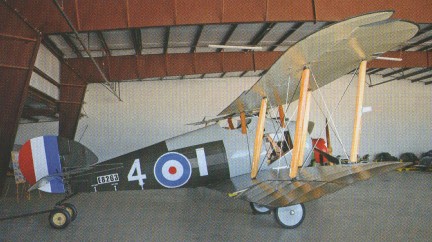
Chuck Wentworth’s Antique Aero spent four years constructing an authentic Sopwith 7F.1 Snipe replica for Javier Arango’s Aeroplane Collection at Paso Robles, California. The aircraft was made using original plans and even includes a pair of original (but deactivated) Cooper bombs. Built with a le Rhone rotary engine, arrangements had been made to obtain a Bentley in 2010.
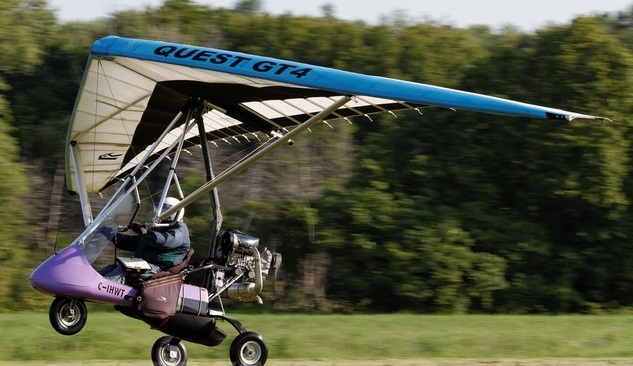
The MA-32 is a two-seat design that was originally developed for European microlight competition flying. The aircraft has a standard empty weight of 321 lb (146 kg). It features a cable-braced hang glider-style high-wing, weight-shift controls, an open cockpit, tricycle landing gear and a single engine in pusher configuration.
The aircraft is made from bolted-together aluminum tubing, with titanium used on the carriage structure and wing attachment. The wing is covered in Dacron sailcloth. Its 33.8 ft (10.3 m) span wing is supported by a single tube-type kingpost and uses an “A” frame control bar. A number of single or double surface purpose-designed trike wings are optional, including the Aeros Still-17, Aeros Stream-16, Aeros Stranger 2, Aeros Profi, Aerossa Sprinter-15, Aerossa Stratos and the Aerossa Stratos-13. The landing gear uses a unique curved, slab-sided, main gear leg design made from fiberglass that reduces aerodynamic drag. All wheels have suspension and the steerable nose wheel also features a drum brake. A fiberglass cockpit fairing is optional. Series engines include the Rotax 447 two-stroke powerplant of 40 hp (30 kW), Rotax 503 of 50 hp (37 kW), the liquid-cooled Rotax 582 of 64 hp (48 kW), the Rotax 912 and 912S four-stroke powerplants of 80 hp (60 kW) and 100 hp (75 kW) and the HKS 700E of 60 hp (45 kW).
The aircraft can all be quickly folded for storage or ground transportation.
Designed and produced by Antares Aircraft the MA-32 was at one time marketed by Leading Edge Air Foils as the LEAF Antares. The aircraft are supplied as kits for amateur construction.
As of 2005, 200 had been built, and still in production in 2011, the unit cost was US$37,000 for the Antares MA-33MR912 model.
Antares MA 34R 912 Ranger
Variants:
MA-32 Base two-seat model Engine: Rotax 447, 40 hp (30 kW) Propeller: 6-bladed composite Wingspan: 10.3 m (33.8 ft) Wing area: 15.5 m2 (167 sq ft) Empty weight: 146 kg (321 lb) Gross weight: 250 kg (551 lb) Fuel capacity: 19 litres (4.2 imp gal; 5.0 US gal) Maximum speed: 124 km/h (77 mph, 67 kn) Cruise speed: 64 km/h (40 mph, 35 kn) Stall speed: 45 km/h (28 mph, 24 kn) Range: 320 km (200 mi, 170 nmi) Service ceiling: 6,000 m (19,700 ft) Crew: one Capacity: one passenger
MA-32 R503 Two-seat model Engine: Rotax 503, 50 hp (37 kW)
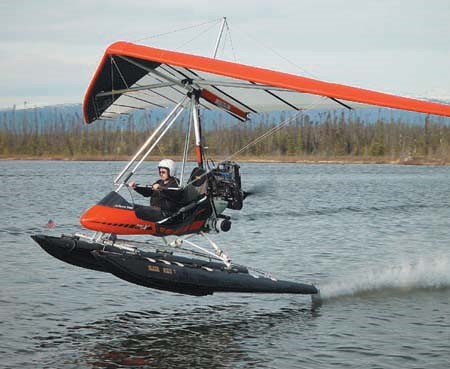
MA-32 R582 G Two-seat model Engine: Rotax 582, 64 hp (48 kW) optional twin floats
MA-33 / MA-33M R582 Two-seat model Engine: Rotax 582, 64 hp (48 kW)
MA-33M R912 Two-seat model Engine: Rotax 912 80 hp (60 kW) or HKS 700E of 60 hp (45 kW)
MA-34 R912 Ranger Two-seat model Engine: Rotax 912, 80 hp (60 kW) Fuel tank: 15 U.S. gallons (57 L; 12 imp gal)
MA-34R912S Beaver Two-seat model Engine: Rotax 912ULS, 100 hp (75 kW)
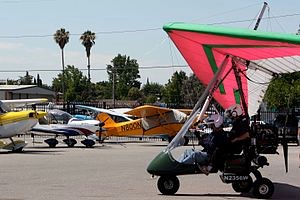
MA-34 Open Country Two-seat model Engine: Rotax 912ULS, 100 hp (75 kW) tundra tires Aeros Stratos 15.5 wing
MA-34 R582XB Crop Duster Two-seat model Engine: Rotax 582, 64 hp (48 kW) spray equipment for aerial application
LEAF Antares 503 Base model marketed by Leading Edge Air Foils circa 2000 Engine: Rotax 503, 50 hp (37 kW) Aeros Stream-16 wing Two-seat model
LEAF Antares 582 Model marketed by Leading Edge Air Foils circa 2000 Engine: Rotax 582, 64 hp (48 kW) Aeros Stranger-15 wing Two-seat model
The Antares A-10 Solo Ukrainian ultralight trike is a single-seat derivative of the two-seat Antares MA-32. It was designed to comply with the Fédération Aéronautique Internationale microlight category, including the category’s maximum gross weight of 450 kg (992 lb). The aircraft has a maximum gross weight of 450 kg (992 lb). The aircraft was supplied as a kit for amateur construction or complete and ready-to-fly. The A-10 was distributed as a kit in the United States where it is approved for the Experimental – Amateur-built category.
The aircraft design features a cable-braced hang glider-style high-wing, weight-shift controls, a single-seat open cockpit with a cockpit fairing, tricycle landing gear with wheel pants and a single engine in pusher configuration.
The aircraft is made from bolted-together aluminum tubing, with a single-piece composite mainwheel spring system and a titanium front wheel fork for off-airport landings. The double surface wing covered in Dacron sailcloth. Its 10 m (32.8 ft) span wing is supported by a single tube-type kingpost and uses an “A” frame weight-shift control bar. Optionally a “topless” wing, lacking the kingpost, can be fitted. The powerplant is a twin cylinder, air-cooled, two-stroke, dual-ignition 50 hp (37 kW) Rotax 503 engine or optionally a 40 hp (30 kW) Rotax 447 engine.
A number of different wings can be fitted to the basic carriage, including the standard Aeros Stranger 2, or Aeros Still 17. Optional wings include the Aeros Stranger 2M, Aeros Stream 16 or Aeros Profi
In production in 2018, the unit cost was US$25,000.
Antares A-10R503 SOLO Engine: 1 × Rotax 503, 37 kW (50 hp) Prop “E” gearbox reduction ratio: 2.62:1 Propeller: 3-bladed ground adjustable Length: 2.51 m (8 ft 3 in) Wingspan: 10 m (32 ft 10 in) Wing area: 14 m2 (150 sq ft) Empty weight: 170 kg (375 lb) Gross weight: 450 kg (992 lb) Fuel capacity: 19 litres (4.2 imp gal; 5.0 US gal) Maximum speed: 140 km/h (87 mph; 76 kn) Cruise speed: 83 km/h (52 mph; 45 kn) Stall speed: 43 km/h (27 mph; 23 kn) Service ceiling: 6,200 m (20,300 ft) g limits: +6/-2 Rate of climb: 5 m/s (980 ft/min) Seats: one