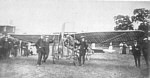
The 1910 Armstrong monoplane was designed and built by Gordon Armstrong in the UK.
The 1910 Armstrong monoplane was designed and built by Gordon Armstrong in the UK.
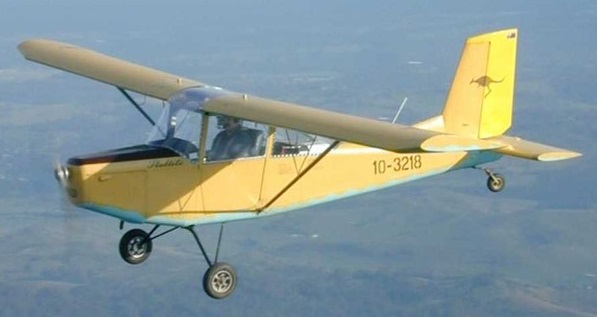
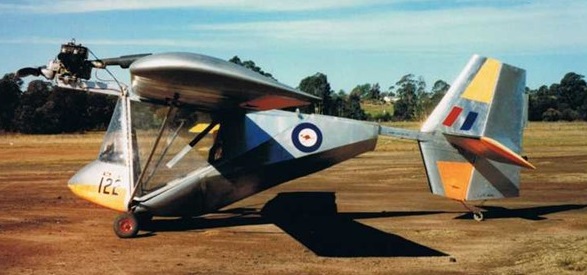
The ArmourKraft Stolite was a project designed by Arthur Armour to be built by his apprentice while he was building something else. It took three years to build, working two nights a week after work. The wings are from the ArmourKraft Super Cricket.
Design to fit Australian 95:10 class, MTOW 300kg (661lb), single seat, it was powered by a Rotax 503, registered 10-3218, and first flew in 1999 at The Oaks, NSW, Australia.
After a minor incident, aircraft was rebuilt in the next ‘class’ allowing more weight and two seats, and was fitted with a Rotax 582, and registered 19-3218.
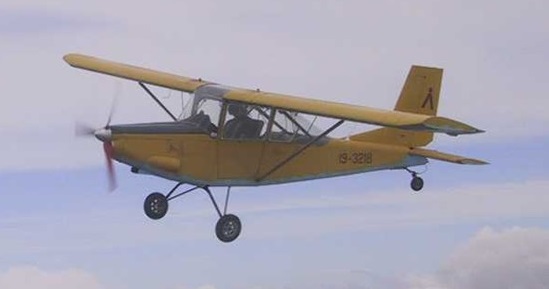
Eventually the 582 failed, so an old Rotax 912 was fitted.
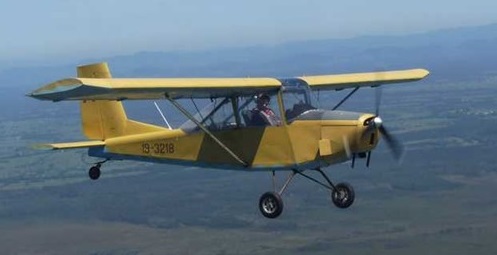
The 912 was required for another project and removed, to be replaced with a modified BMW R100 bike engine.
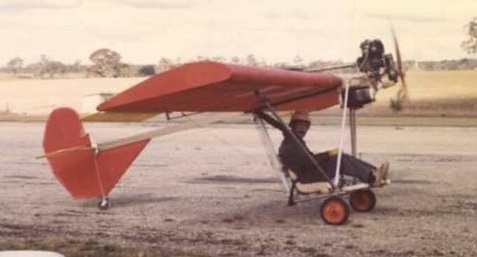
The Super Cricket was the first ultralight Arthur Armour completed. It was rebuilt from a cloned machine bought to build up flying time.
Registered 10-0122 and originally powered by a modified Yamaha 350 bike engine, it would barely fly.
After the first rebuild, it still wouldn’t fly well, so a Rotax 503 was fitted. That made it fly.
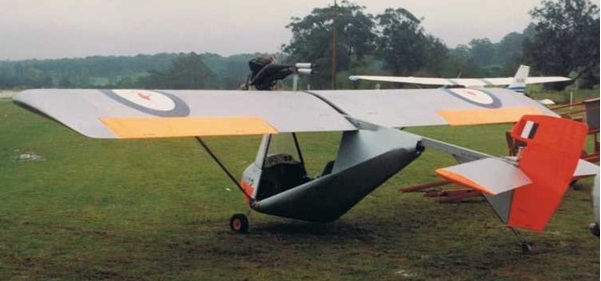
It was slowly improved over a couple of years until blown over in a storm and parted out.
Engine: Rotax
Prop: Catto
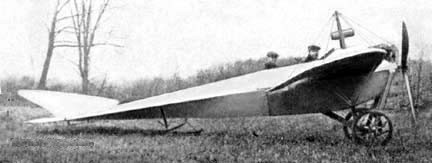
The 1910 Armitage 2-seater monoplane was designed and built by George Armitage in the USA.
In 1909 in the USA, George Armitage built a single-seater monoplane. Reportedly it made 57 flights.
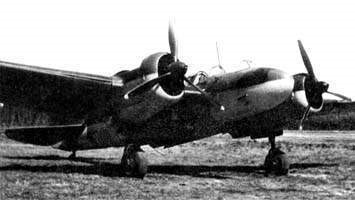
Between March 11 and 16, 1938, tests were carried out on an experimental version of the SB equipped with an open cockpit for the instructor pilot, located in the position of the navigator’s cockpit.
For this purpose, a series SB was taken from the production batch of Factory 22 and equipped with a second cabin with double control and all the necessary instrumentation for the instructor. First flying in March 1938, this cabin was designed in such a way that it could easily replace the navigator’s cabin directly in the operational units.
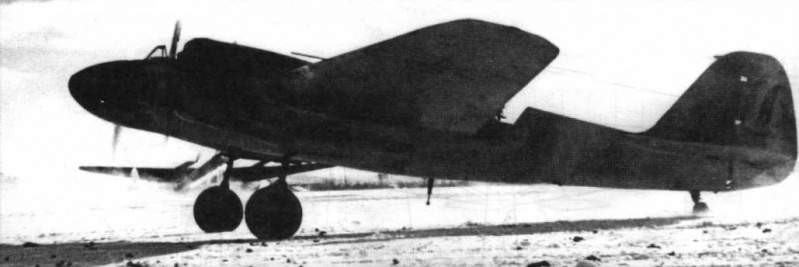
After the tests, which were favourable, a small series was developed as the Arjanguelsky USB (Russian: Архангельский УСБ). During 1938, 110 cabins were prepared for instructors, of which 29 were located in new aircraft and the other 81 were delivered to the units for operational conversion.
At least one was captured by the Finnish forces during the Winter War, being used by T-LeLv 17 of their Air Force.
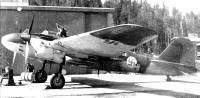
USB
Engines: 2 x М-100А, 860 hp
Wingspan: 20.33 m
Length: 12.57 m
Height: 3.48 m
Wing area: 256.00 m²
Empty weight: 4138 kg
Normal takeoff weight: 5738 kg
Maximum speed: 425 km / h
Cruising speed: 315 km / h
Ascent speed: 437 m / min
Practical ceiling: 9000 m
Practical range: 900 km
Accommodation: 3
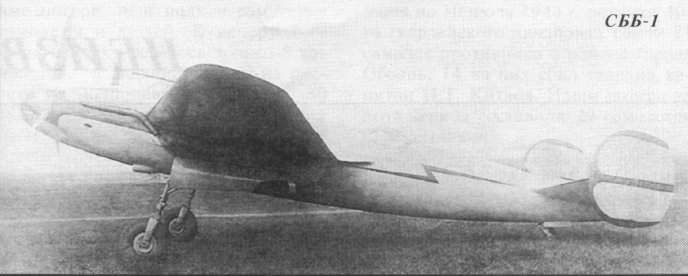
Arjanguelsky SB-B (Russian: Архангельский СБ-Б). The SB-B was the last attempt to keep the SB in service.
Parallel to the development of the SB-RK 2M-105 model, the bureau led by Arjanguelsky began work on a short-range, high-speed bomber in 1939. Initially, the project received factory index S (with this designation tests were performed in the wind tunnel of the model in TsAGI), but soon the name was changed to B. The new design was a radical modification of the model with the aim of obtaining much higher performance and better technological processes to facilitate construction.
The crew was three: pilot, navigator and radio operator-gunner.
The main advantage of the model lay in the aerodynamic improvements. Although similar in configuration to previous models, the B featured a double-tail unit.
The biggest changes focused on improving the aerodynamics. The wingspan was reduced and the wingtips modified. In general, the wing area was reduced to 40 sq.m. The tail unit was modified to carry double tails. The power nacelles were once again aerodynamically improved.
In the structure of the SB-B it was decided to use open profiles instead of metal tubes. Also noteworthy is the extensive use of rivets and stamped parts instead of welds. Due to the war, aluminum production was scarce. For this reason, the ends and the area of the wings between the stringers were built using bakelite sheets glued to the metal structure, which allowed to obtain a higher quality and high resistance surface. To avoid perforations in this structure, the decision was made not to attach the main undecarriage into the wings.
The powerplant was again modified. The Klimov M-105TK engine included a TK-2 turbocharger that made it possible to reach 612 km / h at a height of 9000 meters. The use of the Klimov M-106 was also foreseen, with which according to the calculations it would reach 587 km / h at 7000 meters of altitude. In both engine versions, the use of 3-SMV-2 three-bladed propellers with a diameter of 3.25 m was foreseen.
The radiators were located inside the wing with the intakes on the leading edge of the central plane and the outlets to the rear. They planned to use aluminum radiators developed in the SKB of the NKAP of Leningrad.
The tail wheel of the landing gear could be retracted in flight, also to improve aerodynamics.
The normal operating capacity envisaged 600 kg of bombs, but the maximum capacity was 1000 kg, of which 800 kg could be located in the hold. The armament included bombs between 2.5 and 250 kg.
The defensive weapons included a normal caliber UltraShKAS machine gun in the nose with 600 rounds, operated by the navigator and another UltraShKAS with 800 rounds or a heavy caliber ShVAK-12 machine gun with 300 rounds, operated by the radio operator-gunner.
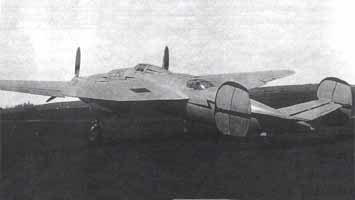
The performance of the new model far surpassed that of the standard SB bomber. However, the results still did not exceed the 600 km / h requested by the Defense Committee. The biggest problem was the ranga. With a cruising speed at 0.8 of the maximum speed the range with Klimov M-105TK engines, the calculations did not exceed 880 km and with Klimov M-106 engine 970 km. At the cost of reducing the offensive load, the range could be increased to 1,500 km. To solve these difficulties, the project envisaged the use of external fuel tanks of 520 kg to be located under the wings. In this case the take-off weight was 7025 kg.
In November 1939, after a detailed review of the model, the construction of the prototype was approved. By decision of the Defense Committee on 4 March 1940 two copies would be built, B-1 and B-2, at Factory No. 22. The first version would correspond to a fast bomber, while the second would correspond to a dive bomber. The B-2 would have a wider fuselage and nose with a different configuration.
The B-1 prototype with Klimov M-105 series engines was completed around October 1940 and flight tests immediately began. On October 2 the B-1 was taken off the list of Factory No.22 and ground work and test runs began. The problems presented by the Klimov M-105 engine, which ended with catastrophes in Nikolai Polikarpov’s aircraft, forced extreme care in the tests of the B-1, so it was decided to transfer the plane to the Central Airfield in Moscow where the November 6 took flight with test pilot Yu.K. Stankievich at the controls. After six flights, it was decided to return the plane to the airfield of Factory No.22 in Fili. On 26 November 1940, while landing at Fili the left landing gear was damaged.
Upon returning to the workshops, Arjangelsky decided to take the opportunity and carry out a series of improvements as a result of the test flights carried out. The plane was ready to fly again on February 20, 1941.
Between 24 March and 9 of June 1941 the factory tests piloted by Stankevich got excellent speed of 540 km / hr at 4900 meters. After minor refinements it was expected to increase this number by 20 – 25 km / h. The second prototype, the B-2, was built during the summer of 1941 and it was expected to achieve an increase of 40 to 60 km / h.
In November 1940 a high-ranking commission that included representatives of the TsAGI, the VVS and the NKAP made a comparison between the Petlyakov PB-100, the Yakovlev BB-22PB and the Arjanguelsky SB-RK and SB-B. As a result of this meeting, it was decided to promote the production of the PB-100 (future Pe-2) as the main dive bomber and to keep the BB-22 in production. The SB-B was not approved because at that time it had not yet passed the testing stage. However, the program received the green light to continue its course.
Despite the excellent results obtained by the SB-B, even superior in many respects than those of the Pe-2, the start of the war brought about the cancellation of the project. The prototype B-1 was sent to the rear deep once the decision to evacuate the KB of Arjanguelsky to the city of Omsk. What may have happened later is unknown. Arjanguelsky set about repairing the existing SB bomber and was eventually reinstated to the KB of Tupolev.
SB-B / B
Engines: 2 1050 hp М-105Р engines in the B-1
Wingspan: 16.00 m
Wing area: 46.0 m²
Length: 12.27 m
Height: 3.52 m
Empty weight: 4100 kg
Normal takeoff weight: 5980 kg
Maximum speed at sea level: 454 km / h
Maximum speed at height: 540 km / h
Cruising speed: 475 km / h
ROC: 788 m / min
Range at 80% maximum speed: 880 km
Ceiling: 10,100 m
Crew: 3: commander, navigator and radio operator-gunner.
Armament: 4 ShKAS 7.62 mm machine guns
Bombload: 8 max capacity was 1000 kg / normal weights 600 kg

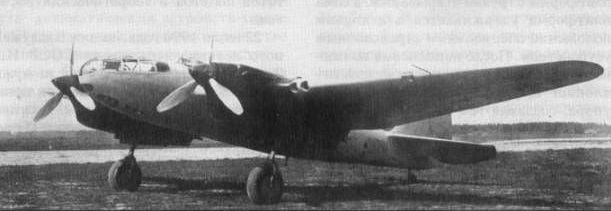
In early 1939, the construction bureau headed by Arjangelsky at Factory No.22 was working hard to improve the design of the SB fast bomber. The experience of the fighting in Spain, and the experiences of serial production allowed development work along two fundamental lines:
By decision of the Defense Committee of the 5 of May of 1939 is demanded of the bureau Arjanguelsky — “… present state test on June 15 , a model SB modernized with two engines Klimov M-105 and the following results: Speed maximum at 4500 m – 470 km / h and practical ceiling of 9500 m. A second example with two M-104 engines to be presented on July 1 with the same results as the previous model, excluding the maximum speed, which should be 470 km / h at 7000 meters. ” —.
The modernized model should begin production at Factory No.125 with deliveries beginning in April 1940. Factory No.22 had to prepare to start the production of copies with a Klimov M-106 engine from January 1940 and from March all the SBs to be delivered had to have this engine, which would allow reaching 500 km / h at 6500 m. height.
The armament also had to be modified with — “ a frontal ShKAS machine gun with 500 shots and in the upper middle position an Ultra-ShKAS with a cassette for 500 additional shots above the 800 shots of the ‘ SB. The weaponry in the lower hatch had to be removed. ” — The bomb load capacity had to also be modified to accommodate a capacity of 1000 kg in the following variants: 8 bombs of 100 kg in the interior bay and two bombs of 100 kg under the wings or 4 bombs of 250 kg (two interiors and two exteriors) or 3 500 kg bombs (one in the hold and two under the wings.
The 16 of May of 1939 finished the preparation with two motors Klimov M-105 which was renamed Arjanguelsky MMN (In Russian: Архангельский ММН). The name stood for Minor Modification of Object N (Малая Модификация самолета “Н”) – as the SB was factory known.
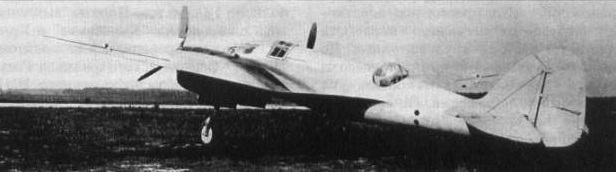
The main differences with the standard SB consisted of:
Use of Klimov M-105 engines with ViSh-22E three-bladed propellers
Decrease in wing area by 8 m².
Modifications in the wing structure to facilitate the production process.
Changes to the nose of the device to improve aerodynamics. The two bow machine guns were replaced by a single ShKAS with a greater firing angle.
Double controls in the navigator’s position.
The TUR-9 nacelle was replaced by the armored MV-3 and the lower firing point was permanently closed.
The manual landing gear removal system was moved to the cockpit.
New fuel tanks were introduced towards the wing end with a capacity of 205 liters. Total fuel capacity was increased to 2000 liters
The area of the ailerons and the shape of the vertical tail surface were slightly modified.
From 1 July to 16 of August of 1939 state tests were conducted by the engineer of the second rank test pilot Efimov. Khripkov. The results of the tests showed that with a cargo of 500 kg of bombs in the hold and normal takeoff weight of 6420 kg, the speed at sea level was 405 km / h and the calculated height of 4200 m – 458 km / h. The ascent time to 5000 meters was 9.3 minutes and the practical ceiling was 9000 meters.
With the calculated load of 1000 kg (four FAB-250 bombs) the takeoff weight reached 7240 kg, the speed at sea level – 383 km / h, at 4200 meters – 425 km / h and the ascent time to 500 meters – 13.8 minutes. The practical ceiling dropped to 8000 meters.
Despite the increase achieved in relation to the series SB, the result of the tests was negative since it was considered that the speed obtained did not satisfy the established requirements. It was also noted the poor defensive capacity and the deterioration of the landing performance. As a conclusion of the test plan report, it was written:
[…] « The flight characteristics of the MMN in horizontal flight, rate of climb and maneuverability are similar to those presented by the SB series specimens. Take-off is characterized by an increase in the run and greater action on the part of the pilot, which makes a good aerodrome necessary. Landing is more complex compared to the standard aircraft, as an approach is required at a speed of 180 km with flaps extended due to excessive running. This worsening of the results is motivated by the reduction of the wing surface. »
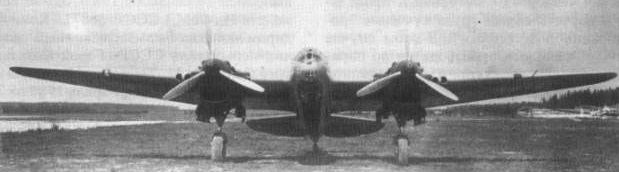
As an interesting detail, it is noteworthy that the report expressed its dissatisfaction with the decision to eliminate the lower firing point and the total closure of the hatch, which left the lower rear hemisphere completely unattended. The change in the upper shooting point was rated as highly positive.
In December 1939 the preparation of the second, known as MMN-2 was completed, this time with the Klimov M-104 powerplant. No documents have been found on the flight tests of this model, but it is known that it flew in January 1940.
MMN
Engines: 2 Klimov M-105 1050 hp
Wingspan: 18.0 m
Wing area: 48,214 m²
Length: 12.78 m
Height: 4.7 m
Empty weight: 4820 kg
Maximum takeoff weight: 6420kg
Wing loading: 133.5 kg / m²
Power load: 3.23 kg / hp
Speed at sea level: 360 km / h
Speed at 4200m: 458 km / h
Cruising speed: 398 km / h
Landing speed: 160 km / h
Ascent speed: 538 m / min
Ceiling: 9000 m
Range: 760 km
Take-off run with 500 kg: 520 m
Landing run with 500 kg and use of brakes: 665 m
Accommodation: 3 crew
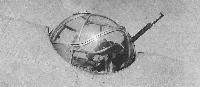
Armament: 1x 7.62 mm ShKAS machine gun in the nose and 1c 12.7 mm UltraShKAS in a MV-3 turret in dorsal position.
Bonbload: 1000 kg
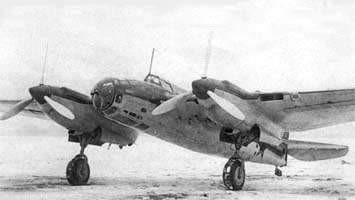
The war in Spain showed the obsolescence of the “fast” SB bombers. In an attempt to improve performance, the Arjanguelsky MMN had been developed with M-105 engines, but the results had not been as expected. In parallel, solutions had been developed to increase the range and fire capacity.
Already in 1939 the specialists of the NIP AV VVS together with the NII VVS and the TsAGI, developed the methodology for dive bombing for the SB bomber. The tests of the dive bomber SB had participated the crews of Major Zhdanov, Captain Kobalchuk and Major Lieutenants Subbotin and Piskunov.
As a result of this work, recommendations were created for the flight personnel of the operational units related to the use of the SB dive bomber, which was followed by the request to modernize the aircraft and its weapons.
SB aircraft with M-103 and M-104 engines had participated in the dive tests. The SB 2M-104 aircraft performed poorly due to problems with this engine. For the same reasons, the operational tests in the operating units of the SB with this engine were also unsuccessful.
Under these results the resolution No.230 of 29 July 1939 would see the SNK USSR establishing responsibility from January 1940 modernized copies SB 2M-105 with a rate productive no less than 1939 and from March introduce the version with M-106 engines and speed no less than 500 km / h from Factory No.22.
The October of 1940 the director of the Factory No.22 Okulov and Arjangelsky sent a letter to the NKAP (НКАП or People ‘s Committee for Aviation Industry) with satisfactory results of tests radiators inserted in the wing of the SB bomber with Klimov M-105 engines.
This new location considerably improved the aerodynamics. Authorization was received to continue experimenting with the new model that received the designation SB-RK (СБ-РК – Cамолет СБ с Радиаторами в Крыле – SB with wing radiator).
The field testing of five SB 2M-105 standard bombers with vish-22Ye chopped propellers began on 15 July 1940. In these, the PB-3 supports were installed. The second of these SB-RK N1 / 281 for the first time was equipped with aerodynamic brakes and an automatic dive system.
This equipment was produced by Factory No. 213 in Moscow. Testing of this SB-RK version took place between July 27 and August 11, 1940.
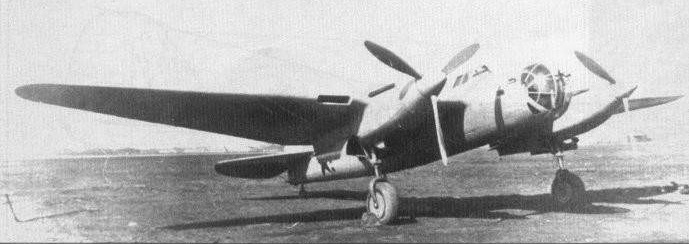
In parallel, an attempt was made to try to use the RS reactive rockets in a dive. As a result, it was found that the reactive force of these rockets in the SB affected the structure of the ailerons, so the decision was made not to use them in this aircraft.
Throughout this process and taking into account the results of the tests of the experimental models MMN 2M-105 and SB-RK 2M-105 and the development of the short-range bomber SB-B, the modernization process was continued.
From Resolution No.240 of the SNK USSR issued on 1 June 1940, the factory No.22 was tasked to prepare three SB-RK with improved aerodynamics for testing by August 15. It was required to obtain a maximum speed of 490 km / h at the height of the practical ceiling.
The general configuration, which was not modified, was that of a metal-built, cantilever mid-wing monoplane, fitted with a retractable tail wheel landing gear. The wingspan was reduced by 2.33 m, which led to the reduction of the wing area to only 48.7 m².
The engine exhaust pipes were modified to improve aerodynamics as well as the shape of the cowls. A reduction in the weight was also obtained by 270 kg, of which 110 kg were obtained by modifying the wing, 87 kg by modifying the engines and cowls and 70 kg by modifying the radiators.
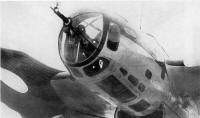
The pre-series SB-RK models replaced the nose of the SBs with the new F-1 bow section, with better aerodynamic lines, originally introduced on the Arjanguelsky MMN model. Another significant change was the modification of the shape of the canopy of the gunner-radio operator’s cabin, which lost height, reducing drag.
Other changes related to the construction of the plane were made. The coating of the extrusions in the centroplane, between frames 4 and 8, was made with bakelite plywood fixed with VIAM glue to the wood planes of frames 5, 6 and 7.
Important modifications were made to the drive structures by equipping the aircraft with new mounts and cowls. The radiators and the oil cooling system were modified. Fuel tanks were installed in the wing consoles with a capacity of 330 liters and new VISh-22Ye propellers of 3 meters in diameter and variable pitch.
The modification made to the nose of the aircraft made it possible to improve the navigator’s working conditions and guarantee communication with the pilot. In this position, the ability to control the aircraft was also installed in cases where the pilot was injured. Relative to the nose used on the Arjanguelsky MMN, the SB-RK featured enlarged glazing.
In order to provide the pilot with downward visibility through the navigator’s glass during landing and dive, his seat was moved to the left and the instrument panel to the right.
The aiming during the bombardment in horizontal flight was guaranteed by an NKPB-3 collimator designed to operate at night and at low altitude and another of the OPB-1M type, both located in the navigator’s cabin.
To ensure target tracking during dive bombing, the pilot had a PBP-1 collimator. An artificial dive horizon and an overload signal were installed on the instrument panel.
Under the wing consoles were installed mesh brakes with hydraulic operation system and an automatic dive exit system that was activated once the bombs were launched.
When diving and after releasing the command key, the aerodynamic brakes were extended perpendicular to the air flow. The pilot could know that the brakes were extended by means of mechanical markers that rose above the covering of the wing surface, between the 10 and 11 of the consoles.
The elevator trimmers were automatically raised, forcing them to descend. Once the bomb launch button was pressed, the trimmers returned to their normal position.
The defensive armament included three 7.62mm ShKAS machine guns positioned:
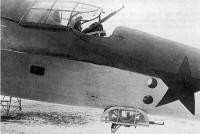
The bombing system was also improved in relation to the standard SB. In dive flights, the new model could carry 4 FAB-250 250 kg bombs (two in the external supports and two in the internal ones) or three FAB-500 bombs (two in the external supports and one in the internal one), using the NP-1 brackets developed at Factory No.22.
During the horizontal flight bombardment, three FAB-500s or six FAB-250s (four external and two internal) or 12 FAB-100 bombs (4 external and 8 internal) could be transported. The normal capacity of pumps was raised to 1000 kg, reaching 1500 in the overloaded version.
The SB-RK could also carry two VAP-500 type chemical weapons containers and two UJAP-500 universal chemical dispensers, located on the outer brackets. These two containers guaranteed to be able to use all the types of substances in the arsenal of the VVS.
With these modifications the speed increased by almost 60 km / h, the ceiling also increased to reach 10,100 meters and the range to 1,500 km, without detriment to the landing characteristics.
In October 1940, factory tests began on the first SB-RK prototype, which was selected as the basis for series production. By November 11, 11 flights had been made.
The results of these tests showed that overheating of the water and oil was recorded. Directional stability was not assessed as positive either.
On October 29, the second pre-series copy would leave the production workshops, which was used to test the weapon system. By this time the third copy was finished, which was delivered to the NII VVS for the development of state tests.
At the forefront of these tests was military engineer MI Yefimov. The test pilots were Major VI Zhdanov and Captain AM Khripkov. The tests were completed in January 1941 and the report of conclusions was signed by the head of the NII VVS General-Major AI Filin on January 20, 1941.
On January 31, this document was put for the signature of the head of the Main directorate of the VVS General-Lieutenant PV Rychagov. From 9 December of 1940 and under the order No.704 NKAP, the experimental model SB-RK was redesignated Ar-2. Around 1940 the Soviet denomination system had changed. According to the new system, each model reflected the origin of its design, using the first two letters of the name of the office or designer responsible for it, therefore the SB-RK was renamed Arjanguelsky Ar-2 (Russian: Архангельский Ар-2).
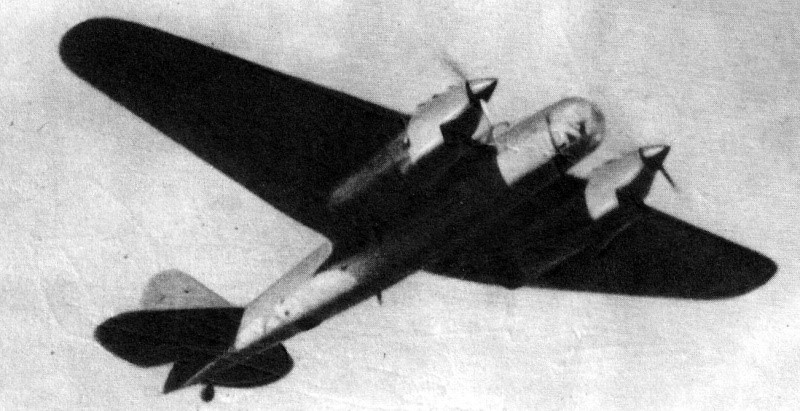
During the state tests, it was possible to reach a maximum speed of 475 km / h at 4,700 meters high with a weight of 6,600 kg. The ascent time to 5000 meters was set at 7.1 minutes.
With normal flight weight, the ceiling exceeded 10,000 meters and with a weight of 7,100 kg and two FAB-250 bombs on external supports, 9,000 meters were reached. The technical range with two FAB-250 bombs, flying at 5000 meters at a speed of 390 km / h was 990 km. The take-off run was 340 meters.
In the tests, it was possible to maintain flight with a single engine and 25 dives were made with angles between 40 and 75º, with the aerodynamic brakes retracted and extended in order to be able to measure the behavior of the plane in this maneuver.
Dives were also carried out with the launch of bombs. The dive speed was about 275 – 295 km / h at a height of 4000 meters. The initial exit speed of the dive was 550 km / h with a registered overload of 4.5 units.
The main problems were linked to the power plant. In winter conditions of -10º C, the water temperature reached values close to the maximum allowable, which meant that it would be impossible to use the plane in the summer. The engine oil was also reaching 110 degrees and the system was problematic. During the tests, 12 changes were made to the water and oil radiators.
Although the M-105 engines were fitted to the Ar-2 well after their tests at the unsuccessful Polikarpov SPB, they were not yet ready for production.
It was pointed out that the 7.62 mm machine guns did not guarantee the necessary defense in the conditions of modern combat, but this was a deficiency of practically all the Soviet models of the time, so it was not considered so important.
The report concluded: “The Ar-2 aircraft, produced on the basis of the SB aircraft, considerably exceeds the SB series aircraft due to its performance, but due to its speed it does not exceed modern domestic or foreign medium bombers … The characteristics of Ar-2 flights are similar to those of the SB, but the control is lighter.
For its control and visibility of the pilot can be flown in formation … The plane Ar-2 will enter service with the units of the VVS of the Red Army provided with limited use their motive power … “
In February 1941, the Ar-2 N1 / 511 was delivered to the NII VVS, which tried to resolve the indications of the first tests. In this example the M-105R engines (version made for use in bomber aircraft. It is characterized by the reduction of the reduction ratio, a power of 1100 horsepower) were moved forward by 150 mm with the aim of improving directional stability.
New 3.1 meter VIT1T-22E propellers were installed. The drive reduction was modified to take better advantage of the new propellers. New, more compact louver aero brakes and reactive tailpipes were fitted to harness the exhaust gases to generate additional thrust.
They worked with special interest in improving the finish of the plane’s surface. This allowed obtaining a maximum speed at sea level of 443 km / h and 512 km / h at 5000 meters.
It seems that it only remained to improve the aerodynamics a bit and improve the armament to achieve the dive bomber desired by the VVS, but luck was not in favor of the Ar-2. The successes achieved by the PB-100 (Petlyakov Pe-2), which had managed to reach 540 km / h in tests without difficulty, demonstrated the potential of this model, which would soon begin to be mass-produced at factories No. 22 and No.39.
Moreover, the 29 of January of 1941 made its first flight dive bomber “103” 2 AM-37, designed from the outset for this purpose and predecessor of the renowned Tupolev Tu-2. From the first tests, the VVS hoped to obtain an attack aircraft capable of outperforming all known models of this type, both domestic and foreign.
As a result of these changes in the environment issued November to February of 1941 the resolution of the Defense Committee which suspended mass production of the bomber Yakovlev Yak-4 (formerly BB-22 2M-105) in the factory No.81 and of the Arjanguelsky Ar-2 2M-105 at Factory No.22.
As AA Arjanguelsky had been in charge of the development of the MoV-2 project with an AM-38 engine, as of April 10 and by virtue of NKAP order No. 309, the entire work group was transferred to the Factory. No.32 to be in charge of the projection and production of this model.
Much has been argued about this decision. Although the Petlyakov Pe-2 had higher speed than the Ar-2, it actually also had several drawbacks: it had a lower offensive load capacity, had poor take-off and landing characteristics, which caused 30% of the model’s losses and was a new aircraft, while the Ar-2 was a derivative of the well-known SB, which greatly facilitated unit conversion.
Post-war analyzes have theoretically shown that the Ar-2 may have been more effective than the Petlyakov Pe-2 in the dive bomber role, being second only to the Tupolev Tu-2. This disadvantage of the Pe-2 increased in the final period of the war. Upon entering enemy territory, the VVS encountered a large number of well-defended objects and solid constructions (bunkers and fortified constructions) that required great explosive power to destroy them.
Under these conditions, the low capacity of the Pe-2 was insufficient and the large Petlyakov Pe-8 bombers were too vulnerable to antiaircraft defense. The Ar-2 may have played a far more significant role at this stage of the contest with its ability to dive 6 FAB-250 or 3 FAB-500 bombs on these targets.
Some 190 copies were produced before production at Factory No.22 was reassigned to the Petlyakov Pe-2 in the first half of 1941.
Arjangelsky continued work to improve the design of the SB on other models, the most prominent of which was the SB-B.
Since 1940, the Ar-2 was assigned to units already equipped with the SB bomber, which made it possible to speed up the transition process to the new model.
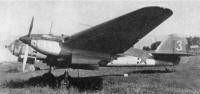
For 1 of June of 1941 in units of SVV 164 copies Ar-2 2M-105, of which 147 (three out of service) located directly in combat units, the remaining units of the direction of were VVS and at Factory No.22.
In the initial conditions of the war, with the withdrawal of the Soviet forces and the lack of organization of the fighting forces, the Ar-2 bombers were unable to show their potential. On the other hand, the lack of air coverage and the poor preparation of many crews, contributed to the fact that a large number of these aircraft were lost in the first months of the war. According to the official data of the VVS, the losses of Ar-2 in 1941 accounted for 95 copies.
A certain quantity of Ar-2 remained operational until 1943.
It is noteworthy that the management and specialists of the Naval Fleet Aviation (AVMF), when creating the manning plans for their units for 1941, requested the Ar-2 as the main dive bomber and the Pe-2 as acting hunting escort. Unfortunately this request was not honored.
Units that used the model:
In the VVS:
2 SBAP of the 2 SAD
46 SBAP of the 7SAD
54 SBAP of the 54 SAD
13 SBAP of the 9 SAD
33 BAP of the 19 BAD
27 IAP (Fighter squad that used the model as a trainer in dive bombing)
In the VMF:
73 BAP of the 10 SAD in the Baltic Fleet
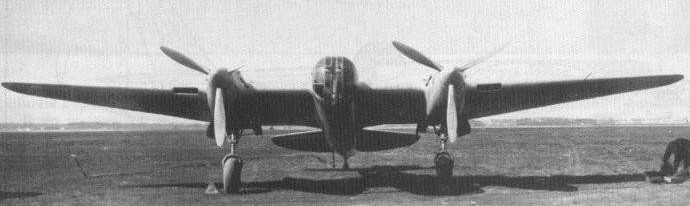
SB-RK Prototype
Engines: 2 x 1050 hp
Klimov M-1 05
Propellers: VISh-22E
Wingspan: 18.00 m
Length: 12.27 m
Wing area: 48.2 m²
Empty weight: 4430 kg
Normal take-off weight: 6300 kg
Wing loading: 131kg / m²
Maximum speed at sea level: 410 km / h
Maximum speed at 4700 m: 480 km / h
Cruising speed: 320 km / h
Ascent time to 5000 m: 7.25 min
Service ceiling: 10 100 m
Practical range: 1500 km
Armament: 4 x ShKAS 7.62 mm machine guns
Internal bombload: 600 kg
External bombload: 1,500 kg
Crew: 3
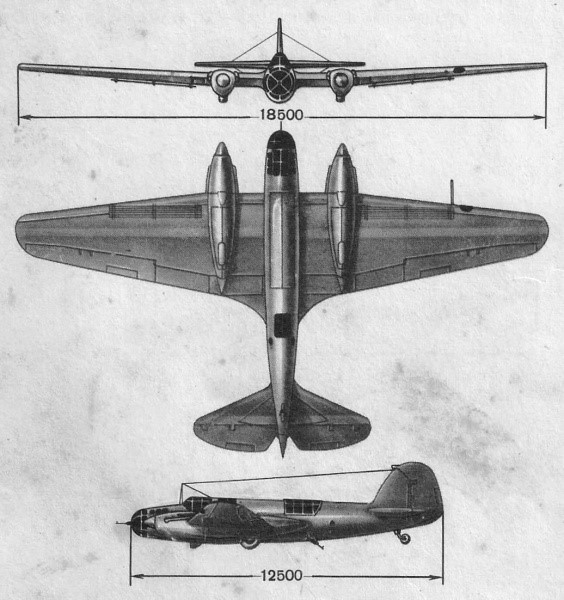
Ar-2 serial from 1940
Engines: 2 x 1100 hp Klimov M-105R
Wingspan: 18.00 m
Length: 12.50 m
Wing area: 48.2 m²
Empty weight: 5106 kg
Normal take-off weight: 6600 kg
Maximum takeoff weight: 8150 kg
Wing loading: 139 kg / m²
Maximum speed at sea level: 415 km / h
Maximum speed at 4700 m: 475 km / h
Ascent time to 5000 m: 7.1 min
Practical range: 1500 km
Service ceiling: 10 100 m
Armament: 3 x 7.62 mm ShKAS machine guns
Internal bombload: six 100kg bombs, or two 250kg bombs, or one 500kg bomb
External bombload: up to 1000kg of bombs underwing (500kg under each wing)
Crew: 3
1941 serial Ar-2
Engines: 2 x 1100 hp Klimov M-105R
Wingspan: 18.00 m
Length: 12.78 m
Wing area: 48.2 m²
Empty weight: 6500 kg
Normal take-off weight: 7200 kg
Wing loading: 135 kg / m²
Maximum speed at sea level: 443 km / h
Maximum speed at 4700 m: 512 km / h
Time to 5000 m: 6.55 min
Service ceiling: 10 100 m
Practical range: 1500 km
Armament: 3 x 7.62 mm ShKAS machine guns
Internal bombload: six 100kg bombs, or two 250kg bombs, or one 500kg bomb
External bombload: up to 1000kg of bombs underwing (500kg under each wing)
Crew: 3
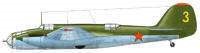

Engine: Rotax 503, 52 hp.
HP range: 52-65.
Height: 6 ft.
Length: 8.5 ft.
Wing span: 32 ft.
Wing area: 500 sq.ft.
Speed max: 26 mph.
Cruise: 26 mph.
Range: 100 sm.
ROC: 150 fpm.
Take-off dist: 450 ft.
Landing dist: 50 ft.
Service ceiling: 10,000 ft.
Fuel cap: 5 USG.
Weight empty: 225 lbs.
Gross: 650 lbs.
Seats: 1-2.
Landing gear: nose wheel.

