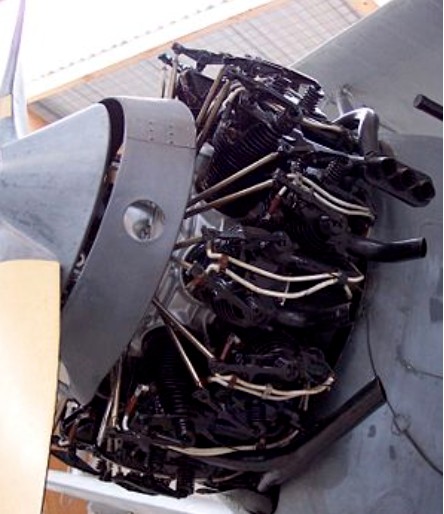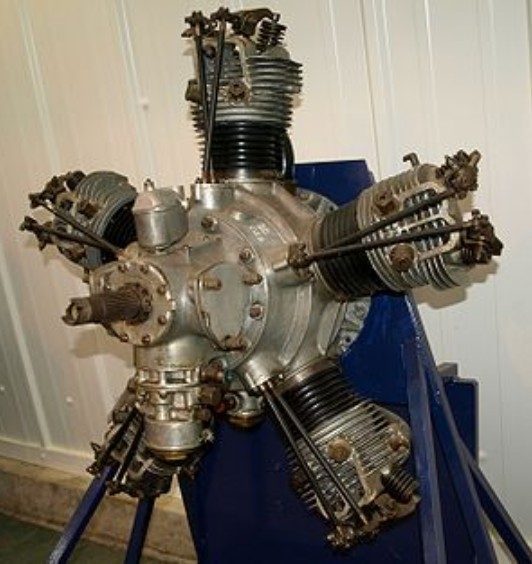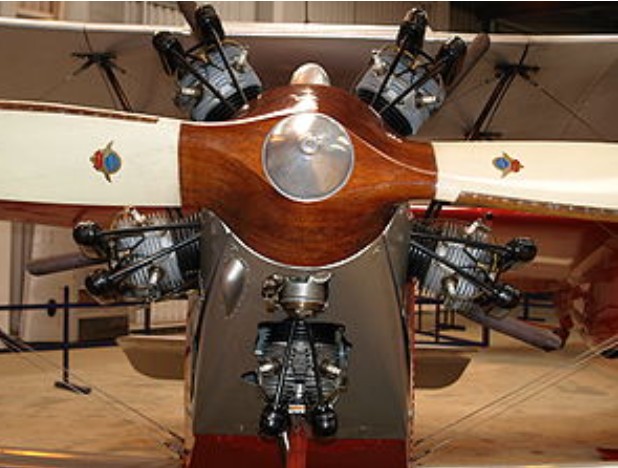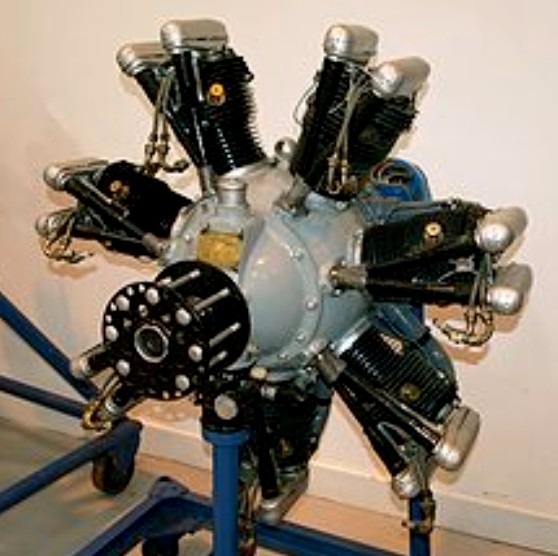
Armstrong Siddeley Mongoose

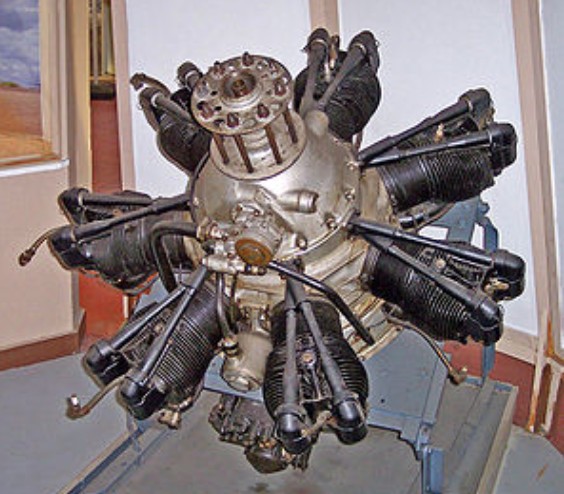
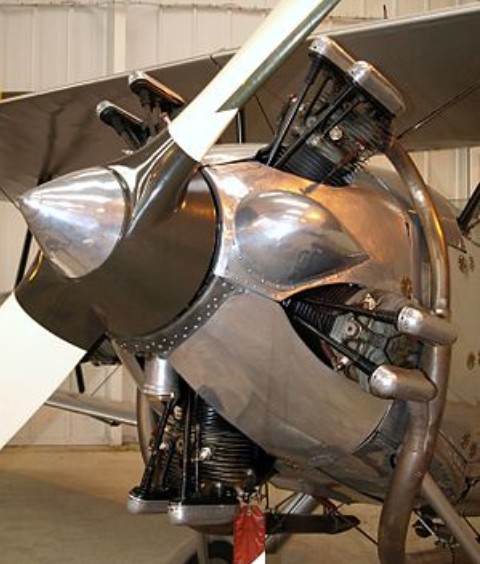
The Armstrong Siddeley Mongoose is a British five-cylinder, single-row, air-cooled radial aero engine produced by Armstrong Siddeley.

First run in 1926, it was used in the Hawker Tomtit trainer and Parnall Peto seaplane amongst others.

The engine features twin forward-mounted ignition magnetos and enclosed valve rockers, the cylinders being the same as those used for the earlier Jaguar engine. An unusual feature of the Mongoose is the vertical position of the lower cylinder, a design thought likely to promote oil fouling of the spark plugs.

Built in several variants, power output ranged between 135 and 155 hp (100-115 kW).

With a displacement of 540 cubic inches (9 litres) the Mongoose had a maximum power output of 155 horsepower (115 kilowatts).

The Mongoose was later developed into the Serval.

Variants:

Mongoose I
1926, 135 hp.

Mongoose II
1930, 155 hp.

Mongoose III
1929.

Mongoose IIIA
1929, civil use.

Mongoose IIIC
1929, Military use based on IIIA.

Applications:

Avro 504N
Avro 504R
Avro Tutor
Avro Type 621 Trainer
Handley Page Hamlet
Handley Page Gugnunc
Hawker Tomtit
Parnall Peto

Specifications:

Mongoose I
Type: 5-cylinder single-row radial
Bore: 5 in (127 mm)
Stroke: 5.5 in (139.7 mm)
Displacement: 540 cu in (8.9 L)
Length: 36.6 in (93 cm)
Diameter: 45.6 in (116 cm)
Dry weight: 340 lb (154 kg)
Valvetrain: Overhead poppet valves
Fuel type: 77 Octane petrol
Cooling system: Air-cooled
Reduction gear: Direct drive, left-hand tractor
Power output: 138 hp (103 kW) at 1,750 rpm at sea level
Compression ratio: 5:1
Power-to-weight ratio: 0.4 hp/lb (0.67 kW/kg)
Armstrong Siddeley Lynx / Alfa Romeo Lynx

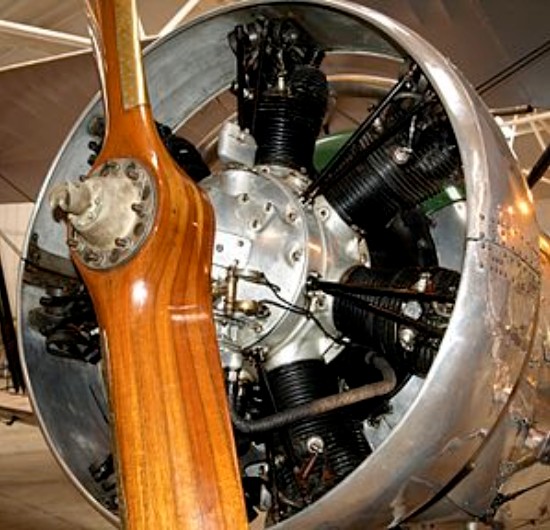
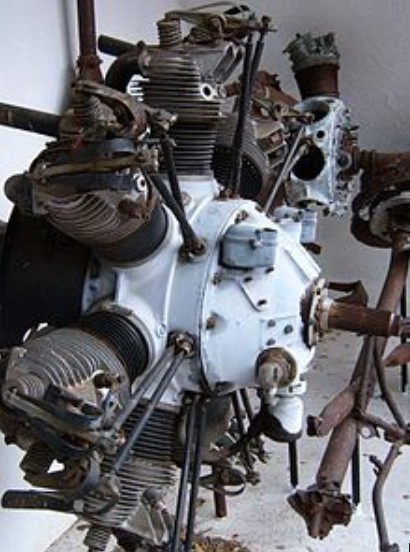
The Armstrong Siddeley Lynx is a British seven-cylinder aero engine developed by Armstrong Siddeley from the Armstrong Siddeley Jaguar. Testing began in 1920 and 6,000 had been produced by 1939. In Italy Alfa Romeo built a 200 horsepower (150 kW) licensed version of this engine named the Alfa Romeo Lynx.

Approximately 6000 were built.

Armstrong Siddeley Lynx

Variants:

Lynx I
1920, 150 hp.

Lynx II
1920, 184 hp.

Lynx III
1924, 200 hp.

Lynx IV
1929, 180 hp.

Lynx IVA
1930, 188 hp.

Lynx IVC
1929, 208/225 hp.

Lynx IV(G)
1929, Geared propellor drive.

Lynx IV(MOD)
1929, 188 hp, reconditioned and modified Lynx IV.

Lynx IV(S)
1928, 200 hp, Fully supercharged.

Lynx V / Lynx Major became Armstrong Siddeley Cheetah
1930, increased bore and stroke, name changed from Lynx V to Lynx Major then Cheetah. Effectively half a Panther.

Applications:

Airspeed Courier
Airspeed Envoy
Albatros L 68
Avro 504
Avro 618 Ten
Avro Avocet
Avro 641 Commodore
Avro 626
Avro Sea Tutor
Avro Tutor
BAT Bantam
Blackburn Lincock
Boulton Paul Bittern
Canadian Vickers Vanessa
Canadian Vickers Varuna
Canadian Vickers Vedette
Cierva C.8
de Havilland Hawk Moth
Fairchild FC-2
Fokker C.VII
Fokker F.VIIA
Gloster Grouse
Messerschmitt M 18
Morane-Saulnier MS.230
Nieuport-Delage NiD 39
Larynx
Parnall Parasol
Raab-Katzenstein RK-26
Wackett Warrigal
Saro Cloud
Saro Cutty Sark
Supermarine Seamew
Vickers Vireo
VL Tuisku
Westland Wagtail

Alfa Romeo Lynx
Breda Ba.19
Breda Ba.25
IMAM Ro.10

Specifications:

Lynx IV
Type: 7-cylinder air-cooled radial engine
Bore: 5.0 in (127 mm )
Stroke: 5.5 in (140 mm)
Displacement: 756 cu in (12.4 L)
Length: 45.6 in (1,158 mm)
Diameter: 42 in (1,067 mm)
Dry weight: 525 lb (238 kg )
Valvetrain: Overhead valve, 2 valves per cylinder
Fuel system: Carburettor
Cooling system: Air-cooled
Power output: 187 hp (139 kW) at 1,700 rpm cruise / 215 hp (160 kW) at 1,900 rpm max
Power-to-weight ratio: 0.35 hp/lb (0.6 kW/kg)

Armstrong Siddeley Leopard

The Armstrong Siddeley Leopard was a British 14-cylinder twin-row air-cooled radial aero engine developed in 1927 by Armstrong Siddeley. It was the most powerful radial engine in the world when introduced.

Variants:

Leopard I
700 hp, medium supercharged. Direct drive propeller.

Leopard II
700 hp, geared epicyclic drive.

Leopard III
800 hp, two-valve cylinder head, direct drive.

Leopard IIIA
800 hp, geared epicyclic drive.

Applications:
Blackburn Iris
Junkers Ju 52
Hawker Dantorp
Hawker Horsley

Specifications:

Leopard I
Type: 14-cylinder twin-row air-cooled radial engine
Bore: 6.0 in (152.4 mm)
Stroke: 7.5 in (190.5 mm)
Displacement: 2,970 cu in (48.6 L)
Length: 60.85 in (1546 mm)
Diameter: 58 in (1473 mm)
Dry weight: 1,466 lb (665 kg)
Valvetrain: Overhead valve, four valves per cylinder
Fuel type: Petrol
Cooling system: Air-cooled
Power output: 700 hp (522 kW) at 1,650 rpm at sea level
Compression ratio: 5.00:1
Fuel consumption: 45 gal/hr (169 l/hr) at cruise speed
Power-to-weight ratio: 0.47 hp/lb

Armstrong Siddeley Jaguar

The Jaguar was developed from the Royal Aircraft Factory RAF.8 design proposal of 1917, and was engineered to use a gear driven supercharger. The Jaguar was a petrol-fuelled air-cooled 14-cylinder two-row radial engine design. First run on 21 June 1922 initial performance was not as expected, as a result the bore was increased to 5.5 in (139.7 mm) with all variants after the Jaguar I using this dimension. Throughout its career the Jaguar suffered from vibration due to a lack of a crankshaft centre bearing.

The Jaguar III was first used in 1923, followed in 1925 by the Jaguar IV and in 1927 by the Jaguar VI. The most powerful version of the engine, the Jaguar VIC, produced a maximum of 490 hp (365 kW) on takeoff at 1,950 rpm and weighed 910 lbs (413 kg). The later Lynx was designed using one row of Jaguar cylinders.

Variants:

Jaguar I
1922, 300 hp.

Jaguar II
1923, 385 hp, increased bore, capacity 1,512.5 cu in (24.8 L).

Jaguar III
1923, 385 hp.

Jaguar IIIA
1923, 380 hp.

Jaguar IV
1925, 385 hp, twin carburettors

Jaguar IVA
420 hp, Geared propeller drive.

Jaguar IVC
1928, 400 hp, revised connecting rod design, enclosed valve gear.

Jaguar IV(S)
1925, 365 hp, fully supercharged.

Jaguar V
1928.

Jaguar VI
1927.

Jaguar VI(S)
1928, supercharged version of Jaguar VI.

Jaguar VIC
1927, 470 hp, geared propeller drive version of Jaguar VI.

Jaguar VID
1928.

Jaguar VIIA
1929, 400 hp, fully supercharged.

Jaguar VIII
1928, 405 hp, fully supercharged, geared propeller drive

Applications:

Airco DH.4
Airco DH.9
Armstrong Whitworth Ajax
Armstrong Whitworth Aries
Armstrong Whitworth Argosy
Armstrong Whitworth Atlas
Armstrong Whitworth Siskin
Armstrong Whitworth Starling
Armstrong Whitworth Wolf
Avro 642
Blackburn Airedale
Blackburn C.A.15C
Blackburn Turcock
Boulton Paul P.71
De Havilland Dormouse
De Havilland DH.50
De Havilland Giant Moth
De Havilland Hyena
Fairey Ferret
Fairey Flycatcher
Fokker C.V
Fokker D.XVI
Gloster Gnatsnapper
Gloster Grebe
Handley Page Hampstead
Hawker Danecock
Hawker Hawfinch
Hawker Hoopoe
Hawker Woodcock
Larkin Lascowl
Martinsyde ADC 1
Nieuport Nighthawk
Parnall Plover
RAAF Experimental Section Warrigal II
Supermarine Air Yacht
Supermarine Nanok
Supermarine Southampton
Vickers Vellore
Vickers Vespa
Vickers Viastra
Vickers Vimy Trainer
Westland Wapiti
Westland Weasel

Jaguar I
Type: 14 cylinder 2-row radial engine
Bore: 5 in (127 mm)
Stroke: 5 in (127 mm)
Displacement: 1,375 cu in (22.5 L)
Length: 41 in (1,041 mm)
Diameter: 43 in (1,092 mm)
Dry weight: 710 lb (322 kg)
Supercharger: Gear driven
Fuel system: Carburettor
Cooling system: Air-cooled
Power output: 680 hp (507 kW)
Compression ratio: 5:1
Fuel consumption: 19 gal/hr (71 L/hr) at cruise
Power-to-weight ratio: 0.95 hp/lb (1.6 kW/kg)

Armstrong Siddeley Hyena

The Armstrong Siddeley Hyena was a British aero engine developed by Armstrong Siddeley. Designed in the 1930s, it was an unusual experimental radial engine with inline cylinder banks. First run in 1933, it was flown using an Armstrong Whitworth A.W.16 fighter aircraft as a test bed. Unresolved problems with cooling of the rear cylinders prevented the engine from going into production. Few details of this engine survive as company records were lost.

Hyena
Type: 15-cylinder 3-row radial engine with inline banks.
Bore: 5.3 in (137 mm)
Stroke: 4.88 in (125 mm)
Displacement: 1,615.58 cu in (26.6 L)
Valvetrain: Overhead poppet valves
Supercharger: Medium supercharged
Fuel type: 77 Octane petrol
Cooling system: Air-cooled
Reduction gear: Epicyclic geared, left hand tractor
Power output: 618 hp at 2,000 rpm at sea level

Armstrong Siddeley Genet

The Armstrong Siddeley Genet was a five-cylinder, air-cooled, radial engine for aircraft use built in the UK, first run in 1926. It developed 80 hp at 2,200 rpm in its final form and was a popular light aircraft powerplant. The Genet was later developed inti the Genet Major.

Variants and applications:

Genet I
Genet I producing 65 hp.
Avro 618 Ten
Avro Avian prototype
Blackburn Bluebird I
BFW M.23
Cierva autogyros. C.9 and C.10
Drzewiecki JD-2
Fleet Fawn
Junkers A50 Junior
Saro Cutty Sark
Southern Martlet
Westland-Hill Pterodactyl

Genet II
The Genet II produced 80 hp due to an increased compression ratio of 5.25:1.
ANEC IV
Avro Avian
Blackburn Bluebird II
Cierva C.19 autogyro
Darmstadt D-18
de Havilland DH.60 Moth
Fairchild 21
Klemm Kl 25
Nicholas-Beazley NB-8G
Parnall Imp
Robinson Redwing II
Southern Martlet
Westland Widgeon

Genet IIA
Also 80 hp and with minor differences to the Mark I.
Robinson Redwing II

Specifications:

Genet I
Type: 5-cylinder single-row radial
Bore: 4 in (101.6 mm)
Stroke: 4 in (101.6 mm)
Displacement: 251.43 cu in (4.1 L)
Length: 28.5 in (724 mm)
Diameter: 34 in (863.6 mm)
Dry weight: 168 lb (76 kg)
Valvetrain: Overhead poppet valves
Cooling system: Air-cooled
Reduction gear: Direct drive, Left hand tractor
Power output: 65 hp at 1,800 rpm
Compression ratio: 5.2:1
Power-to-weight ratio: 0.38 hp/lb

Armstrong Siddeley Cougar

The Armstrong Siddeley Cougar was an aero engine developed by Armstrong Siddeley in 1945. The design was a departure from earlier Armstrong Siddeley engines in many ways, it was the company’s only nine-cylinder radial design. Although the engine was tested it did not find an aircraft application and was not produced.

Cougar
Type: 9-cylinder single-row air-cooled radial engine
Bore: 5.5 in (140 mm)
Stroke: 5.5 in (140 mm)
Displacement: 1,176 cu in (19 l)
Length: 51.5 in (1,308 mm)
Diameter: 49.5 in (1,257 mm)
Dry weight: 1,020 lb (463 kg)
Valvetrain: Overhead valve operated by pushrods
Supercharger: 1 stage gear driven 8.17:1 supercharger
Fuel system: R.A.E.-Hobson AS/C2 fuel injection to supercharger with automatic boost control
Fuel type: 100/130 aviation gasoline (D.E.D. 2475)
Oil system: pressure fed at 80 psi (551,580.58 Pa), dry sump, 100 S.U. (20.5 cs) grade oil (D. E.D. 2472B)
Cooling system: Air-cooled
Power output:
(Take-off) 850 hp (634 kW) at 2,800 rpm at 46.0 inHg / +8.0Lb boost for 15 minutes
(Maximum) 730 hp (544 kW) at 2,700 rpm at 7,500 ft (2,286 m)
(Normal) 690 hp (515 kW) at 2,500 rpm at 6,000 ft (1,829 m)
(Cruising) 500 hp (373 kW) at 2,300 rpm at 10,500 ft (3,200 m)
Specific power: 0.76 hp/cu in (34.6 kW/l)
Compression ratio: 6.3:1
Specific fuel consumption: 0.46 lb/hp/hr (0.011 kg/kW/hr)
Oil consumption: 0.012 lb/hp/hr (0.005 kg/kW/hr)
Power-to-weight ratio: 0.83 hp/lb (1.362 kW/kg)

Armstrong Siddeley Genet Major / Civet     

Genet Major

The Armstrong Siddeley Genet Major is a British five-cylinder (later seven-cylinder), air-cooled, radial engine for aircraft, designed and built by Armstrong Siddeley and first run in 1928. It developed 140 horsepower (104 kW).

In Royal Air Force use the seven-cylinder version was known as the Civet I. The Feliform names used are in line with company convention, the and Civet both being large cat-like carnivores.

Armstrong Siddeley Civet

Variants and applications:

Genet Major I
The Genet Major 1 was a five-cylinder engine of 105 horsepower (78 kW) that was closely related to the Genet I but with increased bore and stroke.

Applications:

Avro Avian
Avro 619
Avro 624
Avro 638 Club Cadet
Cierva C.19 Autogiro
Civilian Coupé
Saro Cutty Sark
Southern Martlet
Westland IV

Genet Major 1A (Civet I)
The Genet Major 1A (or Civet I in RAF service) was a seven-cylinder development of the Genet Major I, nominally rated at 145 horsepower (108 kW).

Applications:

Avro Avian
Avro Cadet
Avro Rota
Cierva C.30A Autogiro
RWD-6 (not specified 7-cylinder Genet Major sub-type)
Saro Cutty Sark
Westland Wessex

Genet Major III
As Genet Major IA but with cylinders using cast rocker boxes.

Genet Major IV
A geared propeller drive version of the Genet Major IA, 160 horsepower (120 kW).

Applications:

ANBO V

Specifications:

Genet Major IA/Civet I
Type: 7-cylinder single-row radial piston engine
Bore: 4.25 in (107.95 mm)
Stroke: 4.5 in (114.3 mm)
Displacement: 452.01 cu in (7.3 L)
Length: 38.8 in (985.5 mm)
Diameter: 38.15 in (970 mm)
Dry weight: 327 lb (148 kg)
Valvetrain: Overhead poppet valves
Fuel type: 77 Octane petrol
Cooling system: Air-cooled
Reduction gear: Direct drive, Left hand tractor
Power output: 165 hp (123 kW) at 2,425 rpm at sea level
Compression ratio: 5:1
Power-to-weight ratio: 0.5 hp/lb

Armstrong Siddeley Deerhound

The Deerhound I was a triple-row, 21-cylinder, air-cooled radial engine design with the unusual feature of inline cylinder banks. Unlike earlier Armstrong Siddeley engines the Deerhound featured overhead camshafts to operate its poppet valves, using one camshaft for each row of three cylinders.

Flight testing began in 1938 using an Armstrong Whitworth Whitley II, serial number K7243, during which cooling problems were encountered with the rear row of cylinders. This problem was solved by engineering a ‘reversed-flow’ cooling system with a large air duct at the rear of the cowling taking in air and directing it forward to exit behind the propeller. The project suffered a severe setback when the Whitley crashed on takeoff in March 1940, fatally injuring its crew. The accident was attributed to an incorrect elevator trim setting and was not related to the engines. A single prototype Deerhound III was built and ran, and survived until the late-1970s before being scrapped. Development work on the early engines was cancelled by the Air Ministry on 23 April 1941 (when the company factory was bombed) with running of the Mk III being allowed to continue until 3 October 1941, at which point all records were ordered to be handed over to Rolls-Royce.

A projected increased capacity variant known as the Boarhound was planned but never built, and a related much larger design, the Wolfhound, existed on paper only. The latter engine featuring six banks of four cylinders, would have had a displacement of around 61 litres (3,733 cu in) and a projected takeoff power rating of 2,600–2,800 horsepower (1,900–2,100 kW).

In all 11 engines were built.

Variants:

Deerhound I
1,115 hp (831 kW): four built.

Deerhound II
1,500 hp (1,118 kW), capacity enlarged to 41 L (2,509 cu in) by increasing bore and stroke: six built.

Deerhound III
1,800 hp (1,342 kW), major redesign by Stewart Tresilian: one engine built.

Applications:
This engine’s sole aircraft application was in a modified Armstrong Whitworth Whitley which was used as a testbed.

Specifications:

Deerhound I
Type: 21-cylinder, 3-row air-cooled radial engine with 7 inline banks
Bore: 5.26 in (135 mm)
Stroke: 4.95 in (127 mm)
Displacement: 2,259.75 cu in (38.19 L)
Valvetrain: Overhead camshaft
Supercharger: Fully supercharged
Fuel type: 87 Octane Avgas
Cooling system: Air-cooled
Power output: 1,115 hp (831 kW) at 1,500 rpm

Armstrong Siddeley Lynx Major / Cheetah

Cheetah X

The Armstrong Siddeley Cheetah is a seven-cylinder British air-cooled aircraft radial engine of 834 cu in (13.65 lt) capacity first run in 1935 and produced until 1948. Early variants of the Cheetah were initially known as the Lynx Major.
The Cheetah was used to power many British trainer aircraft during World War II including the Avro Anson and Airspeed Oxford.

The Cheetah was developed from the earlier Lynx using the increased bore cylinders from the Armstrong Siddeley Panther but the engine retained the stroke of the Lynx. Initially only direct-drive variants were produced with later engines being made available with propeller reduction gear of various ratios. Superchargers were also available for later variants, both geared and directly driven by the crankshaft.

The basic design of the Cheetah remained unchanged from its introduction in 1935 to the last examples built in 1948. It was the first engine of its type to be certified for 1,200 hours of operational time between overhauls, with over 37,200 examples built.

Variants:

Lynx V (Lynx Major)
1930, 230 hp (171 kW).

Cheetah V
1935, 270 hp (201 kW) at 2,100 rpm.

Cheetah VA
1935, 285 hp (212 kW) at 2,425 rpm.

Cheetah VI
1935, 307 hp (229 kW) at 2,425 rpm.

Cheetah VIA
1936, as Mk VI but with Mk IX cylinders.

Cheetah IX
1937, 345 hp (257 kW) at 2,425 rpm.

Cheetah X
1938, 375 hp (280 kW) at 2,300 rpm.

Cheetah XI
345 hp (257 kW) at 2,425 rpm, geared version of Cheetah X.

Cheetah XII
Similar to Mk X, adapted for target drone aircraft.

Cheetah XV
420 hp (313 kW) at 2,425 rpm.

Cheetah XVII
1948, 385 hp (287 kW) at 2,425 rpm.

Cheetah XVIII
385 hp (287 kW) at 2,425 rpm, carburettor modified for aerobatics.

Cheetah XIX
355 hp (265 kW) at 2,425 rpm

Cheetah 25
345 hp (257 kW) at 2,425 rpm, Cheetah XV uprated to 475 hp (355 kW) at 2,700 rpm, modified constant-speed unit.

Cheetah 26
385 hp (287 kW).

Cheetah 27
1948, 385 hp (287 kW).

Applications:
Airspeed Consul
Airspeed Courier
Airspeed Envoy
Airspeed Oxford
Airspeed Queen Wasp
Airspeed Viceroy
Avro 626
Avro 652
Avro Anson
Blackburn Lincock
Bristol Bulldog
626 Prefect
CASA C-201 Alcotán
de Havilland Hawk Moth
Edgar Percival Prospector
Handley Page H.P.R.2
Hispano HS-42
IAe.22 DL
Kingsford Smith PL.7
Koolhoven F.K.51
Marinens Flyvebaatfabrikk M.F.8
Marinens Flyvebaatfabrikk M.F.10
Percival Provost (prototype)
VEF JDA-10M

Specifications:

Cheetah IX
Type: Seven-cylinder single-row supercharged air-cooled radial engine
Bore: 5.25 in (133 mm)
Stroke: 5.5 in (140 mm)
Displacement: 834 cu in (13.65 L)
Length: 52.8 in (1,342 mm)
Diameter: 47.6 in (1,210 mm)
Dry weight: 637 lb (289 kg)
Valvetrain: Two pushrod-actuated valves per cylinder
Supercharger: Centrifugal, 5.4:1 reduction
Fuel system: Claudel-Hobson carburettor
Fuel type: 87 octane rating petrol
Cooling system: Air-cooled
Reduction gear: No
Power output: 338 hp (252 kW) at 2,100 rpm for takeoff

345 hp (257 kW) at 2,425 rpm at 7,875 ft (2,400 m)
Specific power: 0.41 hp/cu in (18.83 kW/L)
Compression ratio: 6.35:1
Specific fuel consumption: 0.45 lb/hp/hr (271 g/kW/hr)
Oil consumption: 0.24–0.45 oz/hp/hr (9–17 g/kW/hr)
Power-to-weight ratio: 0.54 hp/lb (0.89 kW/kg)