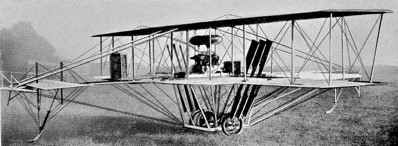
The Aviatik Versuchs-Doppeldecker of 1910 was an experimental first machine designed and built by Julius Spengler. Notable for its twin triple-superimposed propellers driven via chains by a 50 hp Argus engine in the wings, and its unique undercarriage.
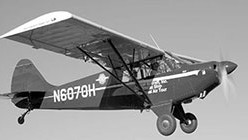
The Husky A1-A, conceptually based on the Piper Super Cub, is a completely new design, created in 1986 and fully certified in 1987. The prototype was N6070H. By 2008 over 650 had been made and were in use all over the world.
The taildragger Husky A-1B continues the tradition with tremendous short and soft field abilities even with a healthy load and functions on wheels, floats or skis. Aviat refined the design in 2005, improving the ailerons and flaps, as well as offering the Husky with an optional 200 hp powerplant and composite, 82-inch propeller. The FAR 23 certified A-1B Husky takes off in 200 feet and lands in 350 feet fully loaded. On water takeoff it takes six seconds. With a useful load of 800 pounds, 20,000 ft service ceiling, top speed of 145 miles per hour, 33 miles per hour power on stall and 800 nautical mile range.
Featuring a STOL Clark-Y wing, the first production was in 1987. Price $105,000 (1998). 395 had been produced by the end of 1997 (including Christen production).
A-1C Husky
The A-1C increases its useful load by 192 pounds, and can carry up to 842 lbs, and can fly 800 miles without refueling. 60% Span semi-fowler flaps allow shorter take-offs and landings and removal of spades and the installation of advanced performance ailerons stability during flight, as well as during take-offs and landings. The aileron is mass and aerodynamically balanced. The aileron has a deeper chord and shorter span. The A-1C has a stick force pressure that is about four pounds. Designed to provide three flap settings, 10°, 20° and 30°, the handle activates the flaps with considerably shorter travel. The leverage point for deployment is always in front of the pilot. The handle offers better leverage, takes less effort and is less cumbersome to operate. The A-1B-160, A-1C-180 and 200 were designed to meet rigid government specs. It is certified to fly with a gross weight in excess of a full ton. Optional is the 200hp Lycoming IO-360 A1D6 engine in place of the standard 180 hp O-360 engine. The IO-360 is equipped with a positive-flow fuel injection system that offers much better fuel distribution. Fuel injection also eliminates the requirement for carburetor heat and its associated controls. This IO-360 is an angle valve engine, as opposed to the parallel valve O-360. The IO-360 used in the Husky is equipped with a mass-balanced crankshaft. The IO-360 weighs some 23 pounds more than an O-360, due largely to the mass balancers. The 80″ Hartzell Constant Speed propeller comes standard. Also available with this engine package, is the 205cm MT propeller, which is close to 20 pounds lighter than a metal prop. The lighter prop makes the basic weight of the 200-hp powerplant package nearly unchanged from a 180-hp model with a metal prop. The 200-hp installation includes a second oil cooler and a cowl flap to better manage engine temperatures. The switch to an angle valve engine, the addition of the cowl flap, and other modifications wouldn’t fit in a standard Husky cowling, so Aviat designed a new cowling. Aviat were one of the first manufacturers to introduce the airbag in an aircraft. The airbags are much like those found in automobiles. The difference being that the Husky’s airbags deploy away from the pilot or passenger. Airbags are mounted in seat belt webbing and follow the path of least resistance, beginning with zero pressure in the bag.
The 2002 Husky Pup is a 160hp Piper J-3 Cub lookalike for $110,000.
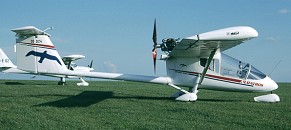
Aviasud Engineering from Fréjus, France developed a 2-seat highwing ULM-aeroplane with push-propeller. Production of the AE-209 Albatros started in 1992, and the Albatros was available with the 2-stroke Rotax 582 or the 4-stroke Rotax 912 engine. The Albatros classique is equipped with a tail wheel; the Albatros tricycle is equipped with a nose wheel or tail wheel. The wings can be folded, which reduces the needed parking space in the hangar.
After Aviasud went defunct, Micronef ULM had the Albatros built under contract in Poland.
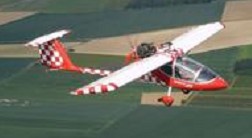
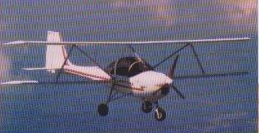
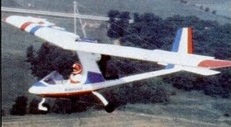
The Aviasud AE-206 Mistral was designed by Francois Goethals and Bernard d’Otreppe and developed by Aviasud Engineering in Fréjus, France, was flown first in 1985. A three-axis, tricycle landing gear, microlight biplane powered by a Rotax 532 engine, the Mistral is a side-by-side two-seated ULM (Ultra Light Motorised aircraft) with forward swept wings. Manufactured by Aviasud Industries in Fréjus, France, the first delivery took place in April 1986. Over two hundred have been built in France. The Mistral was manufactured in Brasil under licence by Ultraleger Industria Aeronáutica Ltda. The Mistral remained in production by Ultraleger until 2004. Their Mistral B and C were powered by a 65 hp 2 cylinder, 2 stroke liquid cooled Rotax 582 UL-DCDI engine. On 4 May 1987 a Mistral was flown to the geographic North Pole by Nicolas Hulot. Following the closure of Aviasud, the Mistral was built by Aeriane circa 1998. Almost entirely built in composites, the entire lower wing acts as ailerons.
Aeriane Mistral
Stall: 35 kt / 40 mph / 65 kmh Cruise: 72 kt / 83 mph / 133 kmh VNE: 89 kt / 103 mph / 165 kmh Empty Weight: 215 kg / 474 lbs MTOW Weight: 390 kg / 860 lbs Climb Ratio: 600 ft/min / 3,85 m/s Glide Ratio: 10,8 Take-off distance (50ft obstacle): 620 ft / 190 m Landing distance (50ft obstacle): 1100 ft / 335 m
Aeriane Mistral Empty weight: 215 kg Wing span: 9.4 m Wing area: 16.4 sq.m Fuel capacity: 60 lt Certification: Vz Engine: Rotax 582, 64 hp MAUW: 390 kg Seats: 2 Max speed: 160 kph Cruise speed: 133 kph Minimum speed: 60 kph Climb rate: 3.85 m/s Fuel consumption: 15 lt/hr
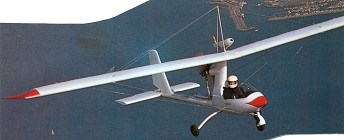
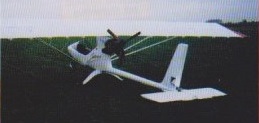
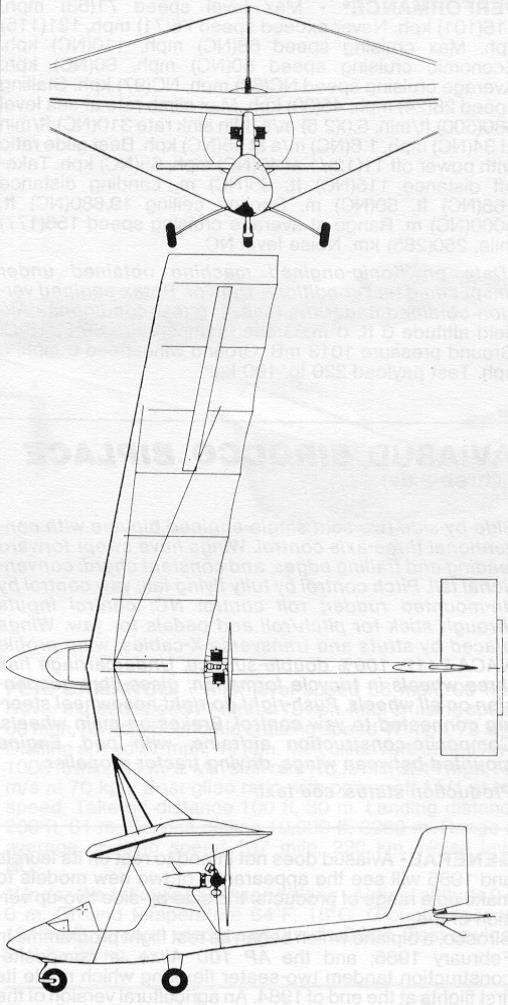
Single seat single engined high wing monoplane with conventional three axis control. Wing has swept back leading and trailing edges, and constant chord; conventional tail. Pitch control by fully flying tail; yaw control by fin mounted rudder; roll control by halfspan spoilers; control inputs through stick for pitch/roll and pedals for yaw. Wing braced from above by kingpost and cables, from below by cables; wing profile modified TK7315 McCready; double surface. Undercarriage has three wheels in tricycle formation with additional tailskid; steel spring suspension on nosewheel and glass fibre suspension on main wheels. Push right go right nosewheel steering connected to yaw control. Brake on nosewheel. Glass fibre/polyester fuselage, partially enclosed. Engine mounted below wing driving pusher propeller. Leading edge in stratified glass fibre/epoxy and tail in stratified glass fibre/polyester; fuselage spar bi-directional stratified.
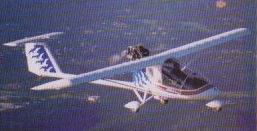
Designed by Frangois Goethals and Bernard d’Otreppe who are both engineers, and laid out with the help of a computer, this Sirocco is a result of the experience acquired with the Libellule and although it is of a similar configuration it is a completely new machine, despite the confusion generated by its initial title of Libellule MkIL It is one of the very few microlights which has undergone a complete flight test programme, both static and in flight, Frangois being a specialist in fluid mechanics and Bernard d’Otreppe in the study of composite structures. Out of this programme has come what they believe is the optimum wing profile for the Sirocco, the TK 7315 from the American Paul McCready, with 14% chord thickness.
Amongst the original ideas used on the machine is a foldable wing which can be stored in a tube 19.0ft x 10 inch (5.80 x 0.25 m). The fuselage comes down to 19. 0 x 2.0 x 5.0 ft (5.80 x 0.60 x 1.50 m) which makes for easy transport on a trailer, while alternatively, the wing can be carried on a roof rack and the rest of the machine towed on its own undercarriage. Fitted with an adjustable rudder bar to allow for pilot’s height, the Sirocco also has a trimmer for the elevator. Its spoilers seem particularly efficient and it can roll from 45O one side to 45 O the other side in 4 seconds. The Sirocco, the prototype of which made its first flight on the 26 July 1982, has been on sale since January 1983. Options include an instrument panel, VHF or CB radio equipment and a ballistically deployed parachute.
Construction: Aluminium, Fibreglass, Dacron.
Francois Goethals and Bernard D’Otreppes’ company Aviasud built the Sirocco between 1983 and the early 1990.
In 1984 the kit cost $8553 to $11,302 with three engine options.
Aeriane Sirocco
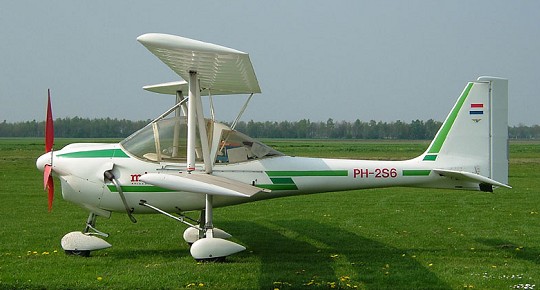
It was then taken over by Aériane, then the Sirocco license was sold to the ACLA company based in the Netherlands, which produced a modernized version as the Sirocco NG.
Midland Ultralights Ltd built the Sirocco 377GB to BCAR Section S in 1984.
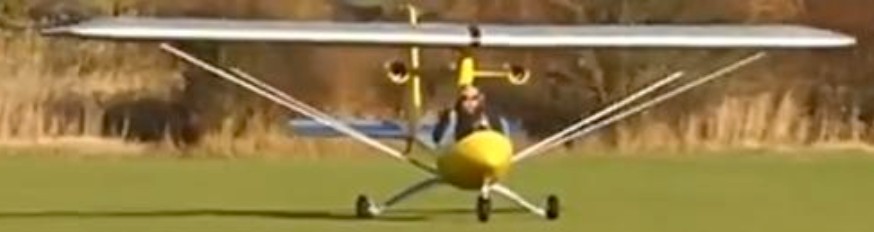
The Sirocket comes from a legendary ULM: There was a major transformation of the prototype Sirocco NG by Dave Stephens and Dean Arnold to create the jet Sirocket classified in the British category of Single Seat Derugalated (SSDR).
Engine: JPX PUL425, 26hp at 4600rpm. Propeller diameter and pitch 39 x 18 inch, 1.00 x 0.45 m. No reduction. Max static thrust 150 lb, 68 kg. Power per unit area 0.17hp/ft., 1.9hp/sq.m. Fuel capacity 5.3 US gal, 4.4 Imp gal, 20.0 litre. Length overall 19.0 ft, 5.80 m. Height overall 8.9 ft, 2.70 m. Wing span 33.2 ft, 10. 12 m. Constant chord 4.6 ft, 1.38 m. Dihedral 0 degs. Sweepback 10 degs. Tailplane span 7.2 ft, 2.20 m. Fin height 3.7ft, 1.10m. Total wing area 151 sq.ft, 14.1sq.m. Total spoiler area 6.9 sq.ft, 0.64 sq.m. Fin area 4.3 sq.ft, 0.40 sq.m. Rudder area 4.1 sq.ft, 0.38 sq.m. Total elevator area 15.6 sq.ft, 1.45 sq.m. Wing aspect ratio 7.3/1. Wheel track 5.9 ft, 1.80 m. Wheelbase 4.7 ft, 1.40 m. Nose¬wheel diameter overall 12 inch, 30 cm. Main wheels diameter overall 12 inch, 30 cm. Floats, 10.2ft, 3.10m. Empty weight 232 lb, 105kg. Max take off weight 461 lb, 209 kg. Payload 229 lb, 104 kg. Max wing loading 3.05 lb/sq.ft, 14.9 kg/sq.m. Max power loading 17.7 lb/hp, 8.0kg/hp. Load factors; +6.7, 3.6 ultimate. Max level speed 71 mph, 115 kph. Never exceed speed 75 mph, 120 kph. Max cruising speed 65 mph, 105 kph. Economic cruising speed 53 mph, 85 kph. Stalling speed 24 mph, 40 kph. Max climb rate at sea level 680 ft/min, 3.5 m/s. Min sink rate 240 ft/min at 31 mph, 1.2 m/s at 50 kph. Best glide ratio with power off 12/1 at 40 mph, 65 kph. Take off distance 115 ft, 35 m. Land¬ing distance 165 ft, 50 m. Service ceiling 10,500 ft, 3200 m. Range at average cruising speed 186 mile, 300 km.
Designed by Vladimir Federov, a motorised glider. The kit for this glider comes from the Penza factory via St Petersburg and Hamburg. First flown in December 1999. The name “Russia” applies only in the UK and the USA; officially it is the AC5m. The company behind the US entrant at the World Class Design Competition in Oerlinghausen in 1993 was so impressed by the simplicity and construction of the prototype Russian entry that they purchased it and offered to aid the Group Mechta to get established in the USA. Mechta Sailplanes LLC took over the distribution in 1994 and aggressively marketed the glider to the extent that a second assembly plant was established at Penza to supplement the Moscow unit. This raised the annual production to 48. Russia Sailplanes Inc of Bozeman. Montana was set up in 1997 to take the Russia to the next level in the USA. This relatively small glider, with a wingspan of only 12.6m, is powered by a 28 hp, carburetted, 313cc, single-cylinder, two-stroke, retractable Compact Radial MZ35 engine. Motori Zanzottera in Italy originally designed the engine, with manufactur¬ing rights acquired by Compact Radial Engines of Canada.
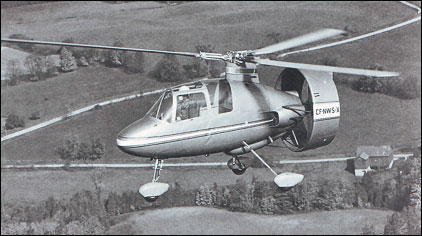
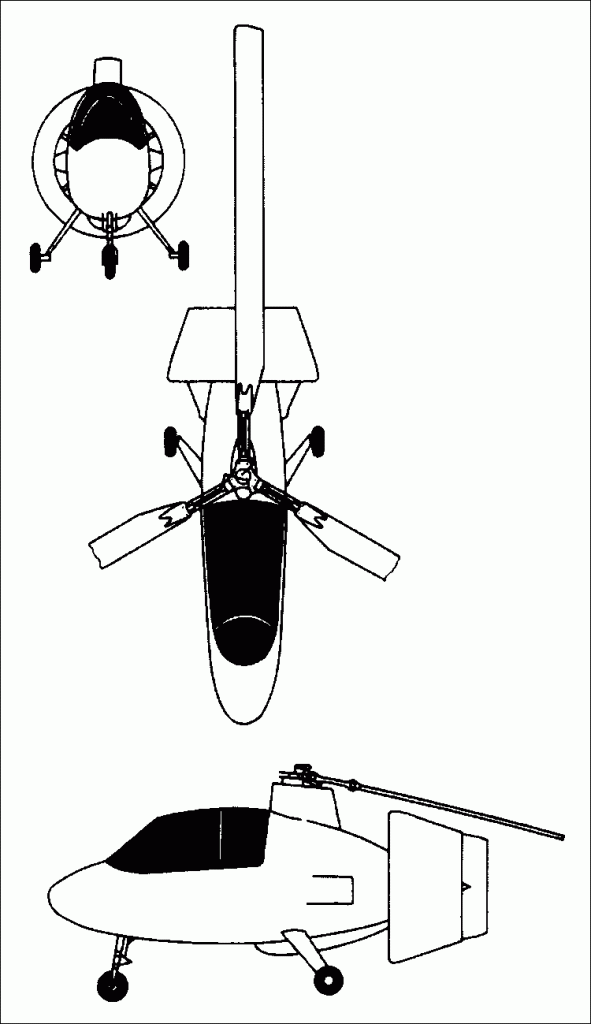
This two-seat Gyroplane was a compound aircraft flew in spring 1960 as an experimental machine, and a small production run followed.
The all-metal fuselage had a tandem two-seat cockpit in the front enclosed by a large bubble canopy, and a 180hp Lycoming O-360-A engine in the rear driving a pusher propeller inside a circular duct. The 2/180A was fitted with a fixed tricycle undercarriage and had a three-blade rotor fitted with compressed air tip nozzles to assist ‘jump starting’. The top rotor had three blades, with flapping hinges. The blades had steel tube and leading edge spars, wood core, and fiberglass covering, and used a NACA 0015 configuration. The plane had a non-retractable tricycle landing gear with a steerable nose wheel and disc brakes. The prototype (CF-LKF-X) first flew in early 1960 but was subsequently damaged beyond repair.
It was followed by a second aircraft (CF-MTV-X) on 16 February, 1961. This 2/180B prototype used a mechanical drive to the rotor. Avian then built the first of three pre-production prototypes (CF-NWS-X) with a larger annular duct, no tail fins and a more extensively framed cockpit canopy. These were followed by a ‘certification prototype’ (CF-JTO-X) which had further canopy modifications, spring steel undercarriage legs and a 200hp Lycoming IO-360 engine. The Avian 2/180 was certificated in 1968, but it seems that the company went out of business shortly after without starting production.
Avian 2/180 Engine: 1 x Lycoming IO-360, 150kW Main rotor diameter: 11.28m Fuselage length: 4.92m Height: 2.95m Take-off weight: 862kg Empty weight: 590kg Max speed: 193km/h Cruising speed: 179km/h Service ceiling: 4280m Range: 640km Rate of climb SL: 5m/s Seats: 2