single-seat very light aircraft/motorglider, originally the Janowski J-5 and then offered by Alpha.
Piston
Aviation Enterprises Magnum VLA

The Magnum light aircraft has an all composite hydraulic fully retracting tricycle undercarriage, 30% Fowler flaps with low drag cruise setting, 160 kts continuous cruise on 100 hp, 1000 nautical miles range, 200 kg crew, 50 kg baggage, room for skiis, 21:1 L/D ratio, and a max 21 deg alpha
Stall: 45 kt / 52 mph / 83 kmh
Cruise: 137 kt / 158 mph / 254 kmh
VNE: 155 kt / 178 mph / 287 kmh
Climb Ratio: 800 ft/min / 4 m/s
Glide Ratio: 21:1
Aviation Composites Mercury
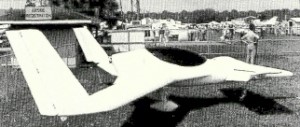
After mixed results with the MicroLight prototype, carmaker Lotus still wanted to build a business for the ultralight canard pusher, and when the arrangements with Rutan didn’t work out, they sought backing to continue alone. When that wasn’t approved, Lotus went looking for partners and teamed up with the Eipper company, a big ultralight builder in those days (now no longer in business) to distribute it in the USA, while Malcolm Lawrence’s Aviation Composites of Thatcham in Berkshire, was to distribute it in the UK and Europe.
Lotus originally planned to build the basic structure themselves, with Aircraft Composites finishing and distributing it. It was then decided that the materials (epoxy glass) and the quality control techniques were not part of the Lotus core business, and Aircraft Composites agreed to take over the development and build, with the help of Peter Jackson’s Specialised Mouldings (a well-known firm in motorsport).
Since Lotus was struggling to cope with the aftermath of Colin Chapman’s death, Aircraft Composites moved into taking over the whole project. Instead, Aviation Composites used the design’s features as a basis for a different aircraft. The company employed VariEze builder Ivan Shaw, and built a similar but much heavier version, the two-seat Mercury prototype (G-INAV c/n AC001).
The Mercury featured an all-composite canard configuration with a four-cylinder Magnum pusher engine. The Mercury incorporated various modifications from the Rutan design and Shaw had several problems with it. First of all, it apparently exhibited some not-so-attractive flight characteristics, and its development program suffered a number of developmental problems, among them, the failure to obtain an acceptable engine. When the Magnum engine proved unsatisfactory, and a 40 hp Norton rotary engine was fitted instead. However, testing the brand new aircraft engine of a motorcycle company on an airframe that hasn’t yet been properly flight-tested was not a good idea.
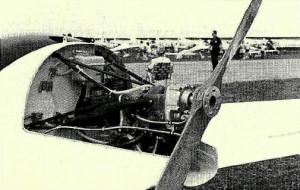
Initially, the aircraft was to be available by February 1986 and Aviation Composites intended to obtain UK certification in the motor-glider category before introducing the type to the US market. However, these setback seriously compromised the fledgling company’s chances to offer a proven model on the market any time soon. Aviation Composites therefore approached Scaled Composites requesting developmental help. While assisting Ivan Shaw, now the company’s production manager on the program, with flight testing (the plane was test-flown by Douglas B. Shane, one of Rutan’s own test pilots), Scaled discovered a poor spin recovery characteristic, and found out the virtue of using of engine power to aid in recovery from a deep stall in a canard pusher-type, using this successfully on several occasions during high angle of attack testing of the Mercury.
Once Aviation Composites realized that changes would be necessary to obtain adequate spin recovery characteristics, the next step should have been to equip the aircraft with a spin recovery parachute and to develop an appropriate aerodynamic fix for the problem. Instead, they discontinued support of the flight testing and further development, and sued RAF for all of their expenses to date—allegedly amounting to several million dollars—claiming that they should have more thoroughly tested the Model 97 in 1983 to find a possible flaw in spin recovery.
The case was scheduled for trial in federal court during January ’91. Burt Rutan best summed up the situation when he declared: “there seems to be no basis, however, these exercises have an enormous effect on our time and distract from our ability to concentrate on things more productive and enjoyable.” The case dragged on (way beyond Lotus being taken over by GM in 1986) and was eventually dropped. The backers disappeared, and Aircraft Composites went into bankruptcy. As for the original MicroLight prototype, it was lost in an accident in which the owner and test pilot of the aircraft were killed, giving some credence to Aircraft Composites’ claim that the design was faulty.
Engine: Norton 40 hp
Maximum speed est: 87 kt
Range est: 290 nm
Seats: 2
Aviation AdVentures Mustang

This 2/3-scale P-51D Mustang is fully aerobatic and seats two Since the original fighter had a liquid-cooled Rolls-Royce Merlin engine with an external radiator affixed to the underside of its fuselage, Aviation Ad Ventures chose to go the liquid-cooled route. The airplane utilizes a conventional metal structure — welded tubular 4130 steel fuselage frame and riveted aluminum flight surfaces and controls. It is covered with a fiberglass shell from rudder to spinner and features hydraulic gear retraction and flush-riveted surfaces. The new production prototypes have a Bendix Fuel Injection system and Electronic Ignition for better performance. For those homebuilders who prefer to build their own powerplants, a modified kit, the “Mustang Plus,” contains everything except the engine, propeller and instruments. According to Aviation AdVentures, extensive efforts have been made to maintain authenticity in both performance and appearance.
Engine 330-hp 351C1D Ford or 350 CID Chevrolet V8.
Cruise 277 mph.
Cruise 267mph.
Stall 77mph.
Rate of Climb 3131 fpm.
T/O run 1063ft.
Ldg roll: 1400 ft
Range: 540 mls.
Gross wt: 2660lbs.
Empty wt: 1930lbs.
Wing span: 23.9ft
Length: 20.5ft.
Aviatik 1910 biplane
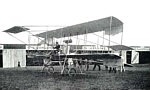
The 1910 Aviatik biplane was designed and built by Baron P. de Caters in Belgium.
Aviatik Schul-Doppeldecker
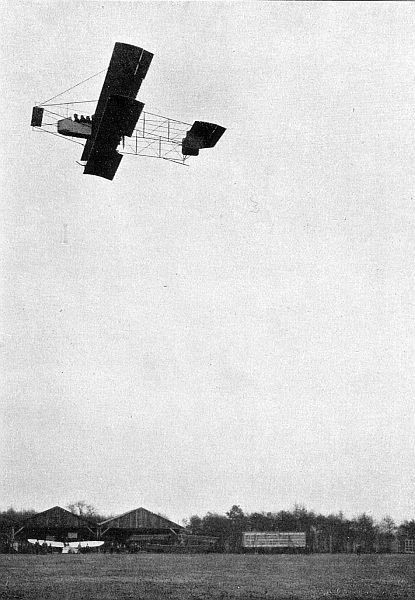
This particular machine was the first Aviatik biplane that received a 100 hp engine. In November 1912 aviator Arthur Faller planned to perform a promotion flight from Habsheim to the “Feldberg”, the highest mountain in the Black Forest, but while waiting for suitable weather conditions he undertook several record-breaking multiple-passenger flights. One such flight took place on January 30, 1913 at Flugplatz Habsheim carrying three passengers, lasting 2 hours and 3 minutes, breaking the standing world-record of 1 hour and 35 minutes set on January 25, 1912 by Dipl.-Ing. Grulich on a Harlan Eindecker, yet others with 3, 4, 5 and 6 passengers followed or predated that event.
Aviatik Gr.1
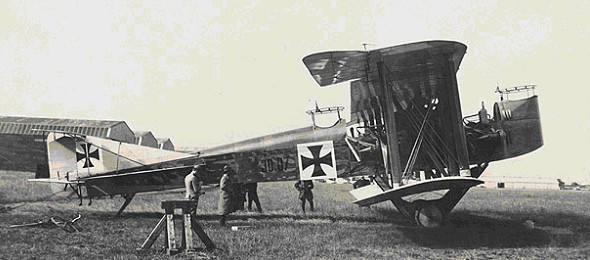
Prototype
Aviatik D / Lohner Serie 115
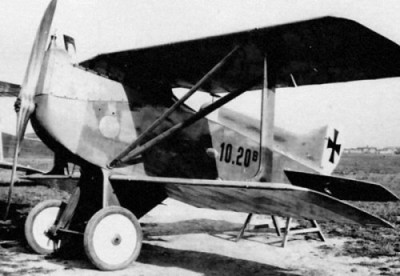
The D.I was designed to replace the Hansa-Brandenburg D.I series. The Aviatik D.I holds the distinction of becoming the first indigenously-designed fighter to be build in whole in Austria.
The D.I began life in prototype form in August of 1916 with a first flight recorded on January 24th, 1917. The test flight proved fatal, however, and took the life of its test pilot. As such, the initial design was revised to compensate for defects and three more prototypes soon emerged, each charged with a distinct development purpose as well as its 8mm Schwarzlose machine gun fitted to the top wing assembly. After additional testing, production aircraft were ordered and delivered – these with the synchronized (via a propeller interrupter gear) 2 x 7.92mm Schwarzlose forward-firing machine guns along the upper sides of the engine.
Design-wise, the Aviatik D.I was of a conventional single-seat biplane arrangement. Wings were fitted as an upper and lower staggered assembly of equal span with parallel struts and single bays. The engine – an Austro-Daimler water-cooled inline producing 200 horsepower – was fitted to the extreme forward portion of the fuselage and powered a two-blade propeller. The undercarriage was of a fixed arrangement and made up of two main landing wheels and a tail skid. The spacious cockpit was situated aft of the engine at about amidships and offered a relatively good field of vision (as good as vision gets in a biplane). The pilot sat behind the upper wing assembly (which was held relatively close to the top of the engine compartment) behind a simple windscreen in an open-air cockpit. The fuselage tapered into the empennage which featured a single large vertical tail fin and applicable horizontal planes. Performance specifications included a top speed of 115 miles per hour, a service ceiling of approximately 20,100 feet and operational endurance totaling 2 hours, 30 minutes.
Often called the Berg Scout, in honour of the chief designer of Austro Hungarian Aviatik, Julius von Berg, this basic single seat scout design was originally designated Serie 30.14. Though primary manufacture of the Aviatik D.I was handled by Austrian Aviatik, license-production was also undertaken at multiple facilities. These included Lohner, Lloyd, MAG, Thone und Fiala and WKF under various batch series designations and differed mainly in horsepower output of their selected Austro-Daimler engines. In all, roughly 700 of all types were produced from 1917 into 1918. Deliveries began in the Fall of 1917 and continued on into October of 1918.
Development was protracted and production did not begin until early 1917, the sub type hav¬ing by this time progressed to Type 30.21. As the D.I, this was ordered in large numbers (possibly as many as 1200) and about 700 were delivered by Aviatik (Serie 38), WKF (Serie 84), MAG (Serie 92), Thbne und Fiala (Serie 101) and Lohner (Serie 115). Repeat batches with higher numbers were ordered, the bulk of those delivered having the 200 hp engine and final batches the 235 hp version.
Built by the Austrian-Hungarian Aeroplane Works in Vienna-Stadlau, this type was used for recce duties by the Austrian Air Force during the Great War.
When in action, early-form D.Is exhibited engine overheating issues and structural weaknesses (namely the fabric tearing away from the understructure or loss of parts and wings while at high speeds). The guns on the original production models were also situated well out of reach of the pilot meaning that a jammed gun stayed jammed until the pilot landed his mount for repairs. As production continued, the structure received attention in areas and was reinforced based on pilot feedback. Likewise, the guns were now moved within reach of the pilot. Engine overheating was solved in-the-field by simply flying without the engine covers on.
The engine made the D.I unpopular because it tended to overheat badly; most photographs show the top cowling panels, and sometimes the side panels, removed to assist cooling. Initial armament was a single 8 mm Schwarzlose machine gun mounted above the upper wing to fire over the propel¬ler, but two of these guns, with synchronizing gear, in the top decking flanking the cylinders became standard armament. In almost every case the guns were so far forward that the pilot could not reach them to clear a stop¬page, though many pilots fitted string to the cocking handles.
The D.1 was replaced progressively from the Balkan and Italian fronts during 1918 by the preferred Albatros scouts.
The D.I appeared in a revised form as the D.II with a cantilever low wing assembly. The D.II was produced in limited quantities in two batches beginning in 1918 but arrived too late to see useful delivery to combat units. The D.I was also considered in a few other notable “one-off” prototype forms – mainly the D.III, a high-altitude variant fitting a Hiero engine of 230 horsepower and the Dr.I (Type 30.24), a triplane design based on the D.I biplane.
D.I Srs 38
D.I Srs 138
D.I Srs 238
D.I Srs 338
D.I Srs 84
D.I Srs 184
D.I Srs 284
D.I Srs 384
D.I Srs 92
D.I Srs 101
D.I Srs 115
D.II Srs 39
D.II Srs 339
Engine: 185 hp Daimler
Wingspan: 8.4 m
Length: 7.6 m
Loaded weight: 865 kg
Maximum speed: 186 kph
Service ceiling: 6400 m
Endurance: 3 hr 30 min
Armament: one synchronized machine gun incl. one flanking the cockpit
Aviatik D.I
Engine: 1 x Austro-Daimler liquid-cooled 6-cylinder, 200 horsepower.
Length: 6.95 m (22 ft 93in)
Wingspan: 26 ft 3 in (8.00m)
Height: 8.14 ft (2.48m)
Empty Weight: 1,475lbs (669kg)
Maximum Take-Off Weight: 1,878lbs (852kg)
Maximum Speed: 115mph (185kmh; 100kts)
Maximum Range: 225miles (362km)
Service Ceiling: 20,177ft (6,150m)
Armament: 2 x 8mm Schwarzlose synchronized forward-firing machine guns.
Accommodation: 1
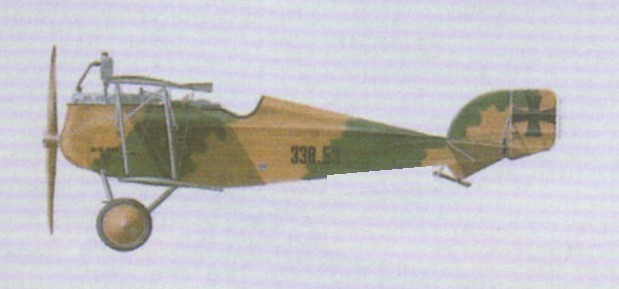
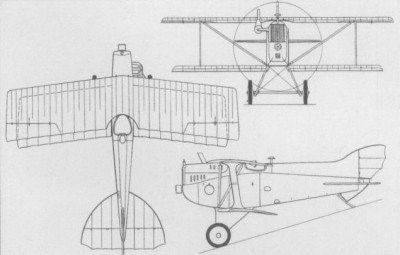
Aviatik C.I / C.II / C.III / Berg C.I / C.II / C.III
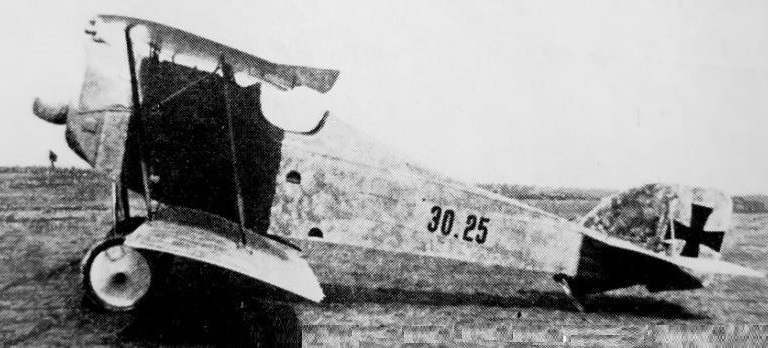
The Aviatik C.I was designed from the outset with military use in mind, sporting a single 7.92mm Parabellum machine gun for self-defense.
Following the Aviatik B.I, Aviatik produced their first full military-ready design in the Aviatik C.I series, a biplane reconnaissance aircraft.
The C.I was a single-engine, twin-seat biplane with a Mercedes D.II 6-cylinder engine producing upwards of 120 horsepower and driving a two-blade propeller. The observer was seated in the front – just behind the engine – and the pilot was at rear. The forward observer had a single 7.92mm Parabellum machine gun on a flexible mounting. It was soon found that the field of fire for the observer was quite restricted and the rearward seating position of the pilot was ill-suited when compared to other aircraft types coming out at the time. Later examples of the C.I began seating the observer (with gun) to the rear and the pilot forward. This new arrangement produced the designation of “C.Ia”. This version was built by both Aviatik and the Hannoversche Waggonfabrik.
The C.I series as a whole would be replaced by a small series of the improved C.II, with 200hp Benz Bz.IV engine.
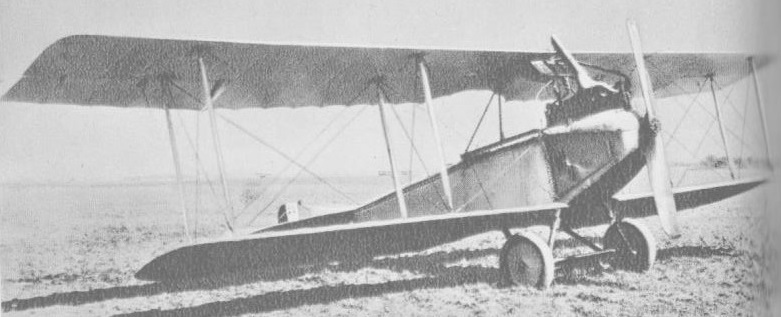
The final production model was the C.III of early 1916, which was originally designed with the old crew arrangement but quickly changed to a rear observer layout. Powered by the 160 hp D.III, it had a cleaner and more streamlined nose, with propeller spinner faired into an improved engine installation, and was much faster than the C.I despite usually having twin machine-guns. A light bombload could be carried, and for some months the C.III was used in the first German Kampfgeschwader (bombing wings), though its main duty continued to be reconnaissance.
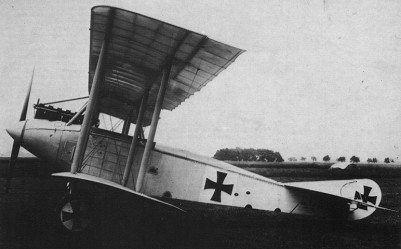
C.I
Engine: 1 x Mercedes D.II 6-cylinder, 120hp.
Length: 26 ft 0 in ft (7.92m)
Span: 12.50 m (41 ft 0.25 in)
Height: 9.68ft (2.95m)
Maximum Speed: 88mph (142kmh; 77kts)
Service Ceiling: 11,483ft (3,500m)
Armament: 1 x 7.92mm Parabellum
Accommodation: 2
Maximum Take-Off Weight: 2,954lbs (1,340kg)
C.II
Engine: Mercedes, 160 hp
Wingspan upper: 40 ft 8 in
Wingspan lower: 37 ft 5 in
Wing area: 430 sq.ft
Length: 26 ft
Height: 10 ft 5 in
Empty weight: 1863 lb
Loaded weight: 2831 lb
Wing loading: 6.6 lb/sq.ft
Max speed: 82 mph at SL
Service ceiling: 11,500 ft
Time to 6000ft: 22 min
Endurance: 4.5 hr
Armament: 2 x mg
Crew: 2
C.III
Span: 11.75 m (38 ft 51 in)
Length: 8.09 m (26 ft 6.25 in)
Gross weight: 1337 kg (2948 lb)
Maximum speed: 161 km/h (100 mph).
Srs 37
Srs 137
Srs 47
Srs 83
Srs 183
Srs 91
Srs 114
Srs 214
Aviatik B.I / B.II / B.III / Oesterreichische-Ungarische Flugzeugfabrik B.I / B. II / Aviatik B.III
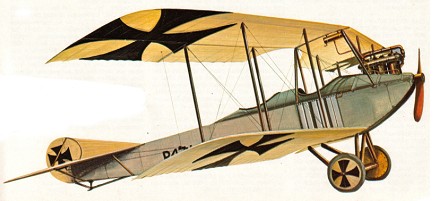
On the outbreak of the First World War, the company moved from Miffilhausen, which was near the Western Front, to Freiburg im Breisgau, on the other side of the Rhine. Here the B.I was designed, and flown in late 1914 (probably in November). A two seat biplane, it was powered by a 100 hp Mercedes D.1 six cylinder water cooled engine. A small series was built for the Imperial Air Service, supplementing the pre-war aircraft of similar design, one of which became the first aircraft to be shot down in air combat, on October 5, 1914.
During the winter of 1914 15 the company’s Austro Hungarian subsidiary, Osterreichisch Ungarisch Flugzeugfabrik Aviatik of Vienna, designed and went into production with a developed version, the B.II. Powered by a 120 hp Austro Daimler, this differed mainly from the B.I in having angular elevators and rudder with large horn balances; it could also carry two 10 kg (22 lb) bombs, but guns were not originally fitted. Limited production, designated Serie 32, was undertaken for the Austro Hungarian Flying Service, and from about April 1915 the B.II was an observation machine on the Russian Front.
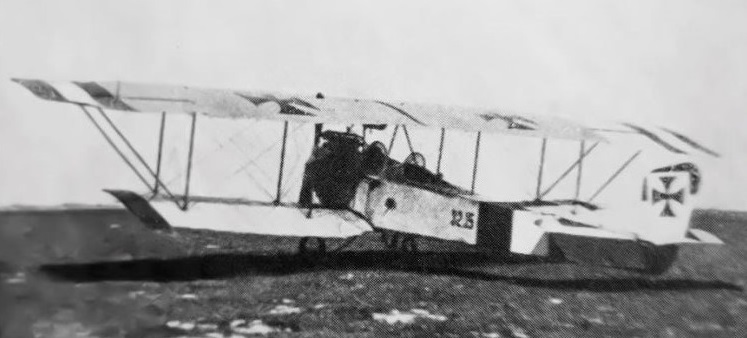
In the spring of 1915 production switched to the more powerful B.III, with a 160 hp Austro Daimler with the radiator repositioned above the cylinders. The wings were larger, with swept back tips, and pilot and observer sat in a single large cockpit, the observer having a rifle or often a 7.92 mm Schwarzlose machine gun either on an infantry tripod or a spigot mounting on the upper longerons. The B.III had a sluggish response to control, so production reverted to the Serie 34, which was virtually a B.II with the 160 hp engine (but B.II side radiator) and machine-gun; most Serie 33 (B.III) and Serie 34 had racks for three 10 kg bombs. Hundreds were delivered, but by 1916 they were all being relegated to training.
Span: 14.00 m (45 ft 11 in)
Length 8.00 m (26 ft 3 in) (small variations according to sub type)
Gross weight (B.I) 860 kg (1900 lb)
Gross weight (B.II) 870 kg (1918 lb)
Maximum speed (all): 110 km/h (68 mph) approx

