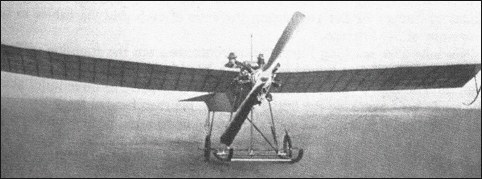
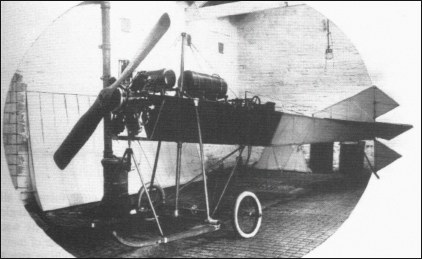
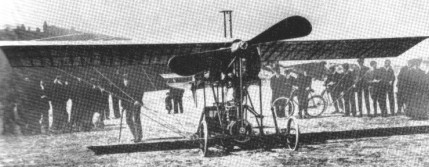
The Blackburn Second Monoplane (sometimes described as The Light Type Monoplane) of 1910 used the then new and untried Isaacson 40-hp radial engine. It first flew from Filey Sands in Yorkshire on 8 March 1911. Surviving damage on that occasion, it subsequently went on to achieve a number of successful flights (and landings).
This aircraft marked the acceptance of Robert Blackburn as a leading British aircraft designer.
Engine: Isaacson 40-hp radial Wingspan: 30 ft Length: 32 ft Max speed: 60 mph Number built: 1
With tail dragger or tricycle gear configuration, the BK1 is a design to carry up to 6 ft 4 in 250lb pilot, 30 lbs of baggage, at 130 mph for 400 miles with an hour reserve. At the time it could be built from scratch for under $10K. In 2005 a BK-1 was flown 1200 miles to Oshkosh in 10 flight hours, with 2 fuel stops. The BK-1 also appeared at Sun-N-Fun 2006 and Oshkosh 2006.
Engine: Great Plains 1835 Volkswagen, 60 hp Wing Span: 19 feet 4 inches Length: 15 feet 4 inches Cockpit Width: 24 inches Cockpit Height: 40 inches (curved canopy) Leg Room: 50 inches (firewall to seat back bulkhead) Fuel Capacity: 15 USgallons Empty Weight: 430 pounds Gross Weight: 800 pounds Fuel: 90 Pounds (15 USGallons) Pilot Size: Up to 250 lb – 6 foot 4 inches tall Baggage: up to 30 lb Takeoff Distance: 700 feet Landing Distance: 700 feet Rate of Climb: 750 fpm @ 65 mph IAS (initial) Max Continuous Cruise: 130 mph Fuel burn max cruise :3.5 USgallons per hour. Range 400 miles with reserves. Economy Cruise: 100 mph Economy fuel burn: 2.5 USgallons per hour. Economy range: 500 miles with reserves. Top Speed: 145 mph
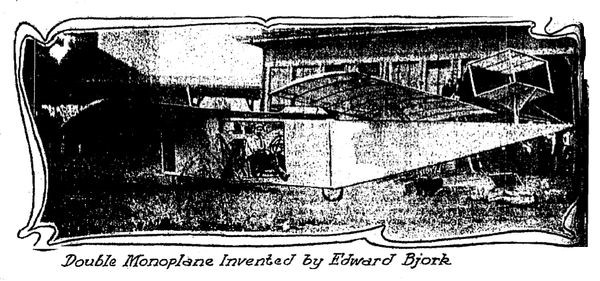
Constructed in September 1910 by Edward Bjork, a Chicago building contractor residing at 934 Fletcher Street. His machine was forty feet in length by twenty in width. He constructed it in a shed at Evanston Avenue and Byron Place.
Bjork was a member of the Swedish-American Aerial Club of Chicago – a manufacturer of aerial machines that failed to conduct the business for which it was created.
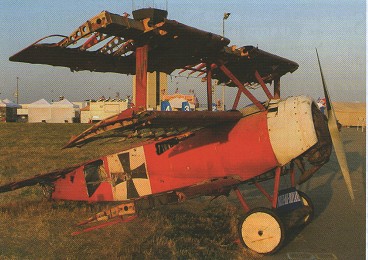
Bitz Flugzeubau in Germany built two Fokker Dr.1 triplanes in 1964 for the film industry. They featured in such films as ‘Blue Max’ and ‘Von Richthofen and Brown’.
After filming, one triplane, owned by ex-RCAF pilot Lynn Garrisin’s Blue Max Aviation, was stolen from storage Leixlip, Ireland. It resurfaced in a ‘Wing and Wheels’ auction in Florida years later however title was regained through the Courts and it was moved to Chino for restoration. From here it was stolen again. It was then abandoned at a Los Angeles A&P technician’s shop and following closure of the business, stored in the ‘owners’ back yard. After being overgrown in shrubbery, new owners of the house discovered it many years later. The legal process began again and the aircraft returned to the Garrison family.
The two were: c/n 001 G-ATIY, became EI-APW c/n 002 G-ATJM, EI-APY, N78001
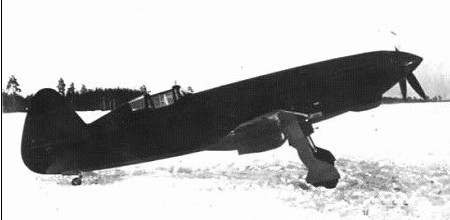
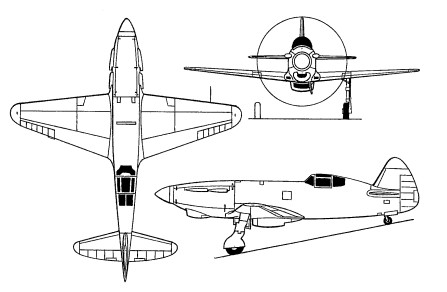
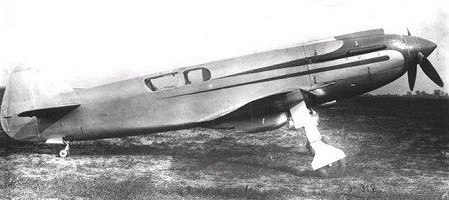
The SK-2 single-seat fighter was evolved from the SK-1 (skorostnoye krylo, or high-speed wing) aircraft tested during the winter of 1939-40 as a direct result of high-speed wing research conducted at the TsAGI (Central Aerodynamics and Hydrodynamics Institute) by a team headed by Matus Bisnovat. The SK was the smallest possible airframe capable of accepting a 12-cylinder Vee engine, with every effort made to reduce drag (eg, a flush-fitting cockpit canopy which could be raised, together with the pilot’s seat, for takeoff or landing). The SK-2, flown in October 1940, had a similar small-area wing and 1050hp Klimov M-105 12-cylinder liquid-cooled Vee engine, but with an orthodox cockpit, conventional carburettor and oil cooler air intakes, revised vertical tail surfaces and an armament of one 7.62mm and two 12.7mm machine guns. The SK-2 was of all-metal construction with dural pressed sheet stressed wing skinning and a semi-monocoque fuselage. Flight test results were allegedly promising, but not enough to warrant replacing established fighter types in production.
SK-2 Engine: 1 x 1050hp Êëèìîâ Ì-105 Take-off weight: 2300 kg / 5071 lb Empty weight: 1850 kg / 4079 lb Wingspan: 7.30 m / 24 ft 11 in Length: 8.28 m / 27 ft 2 in Height: 2.60 m / 9 ft 6 in Wing area: 9.57 sq.m / 103.01 sq ft Cruise speed: 530 km/h / 329 mph Ceiling: 10500 m / 34450 ft Range: 620 km / 385 miles Crew: 1 Armament: 1 x 7.62 mm, 2 x 12.7mm mg
SK-1 Engine: 1 x 1050hp Klimov Ì-105 Take-off weight: 2300 kg / 5071 lb Empty weight: 1505 kg / 3318 lb Wingspan: 7.30 m / 24 ft 11 in Length: 8.00 m / 26 ft 3 in Wing area: 9.57 sq.m / 103.01 sq ft Cruise speed: 524 km/h / 326 mph Ceiling: 10300 m / 33800 ft Range: 1000 km / 621 miles Crew: 1
A 1928 three seat commercial biplane. Powered by a 90 hp Curtiss engine, the Imperial had a maximum speed of 90mph (145 kmh).
The first Bird Wing took McCrum and his assistants 63 days to build at a cost of US$12.000. The prototype flew over 5000 passengers over a period of 15 months.
Among the many pilots who flew the birds wing was Hap Arnold and Charles Lindbergh. McCrum suggested a comprehensive program of courses of flight training, which included training flight in a Bird Wing, and build the aircraft from scratch. The Bird Wing Imperial was tested to meet the requirement of 1931 and 50 were ordered, then cancelled at the beginning of the great Depression.
McCrum revised the plans for the Bird Wing again in the 1950s to install a 450 hp 336 kW Pratt & Whitney R-985 Wasp Junior radial engine and a 3 inch fuselage widening to convert the design into an agricultural aircraft which never went into production.
Bird Wing Model 1 Engine: 1 × Curtiss OX-5, 90 hp / 67 kW Propeller: 2-bladed wooden fixed pitch Wingspan: 31 ft 4 in / 9.55 m Wing area: 303.5 sq ft / 28.20 sq.m Airfoil: Aeromarine 2 Length: 23 ft 6 in / 7.16 m Height: 8 ft 7 in / 2.62 m Empty weight: 1.236 lb / 561 kg Gross weight: 2.255 lb / 1023 kg Fuel capacity: 34.5 US gal / 28.7 imp gal / 131 l Maximum speed: 90 mph / 140 km / h / 78 kn Rate of climb: 460 ft / min / 2.3 m / s Service ceiling: 10.000 ft / 3.000 m Cruise speed: 75 mph 121 km / h, 65 kn Landing speed: 30 mph / 26 kn / 48 km / h Wing loading: 6.95 lb / sq ft / 33.9 kg / sq.m Power / mass: 0.04 hp / lb 0.066 kW / kg Crew: Capacity: 2 pax
Bird Wing No. 2 Upper and lower ailerons
Bird Wing No. 4 Engine: Hisso, 180 hp / 134 kW
Bird Wing Imperial 1930 Engine: Wright Whirlwind R-540, 165 hp / 123 kW Max speed: 118 mph / 190 km / h
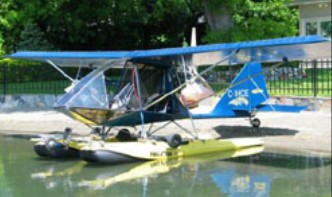
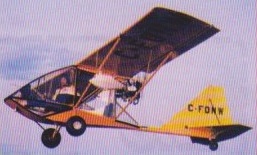
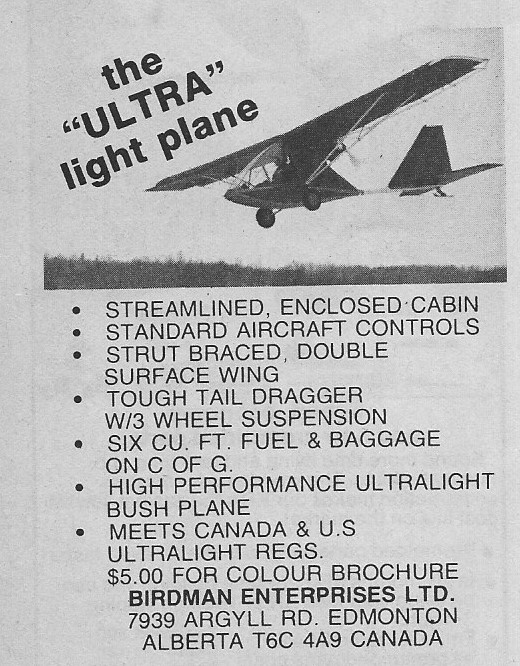
First flown in 1988 the Chinook single seat single engined high wing monoplane had conventional three axis control. Wing has unswept leading and trailing edges, and constant chord; conventional tall. Pitch control by elevator on tail: yaw control by fully flying rudder; roll control by one third span ailerons; control inputs through stick for pitch/roll and pedals for yaw. Wing braced from below by struts; wing profile double surface. Undercarriage has two wheels with tailskid; bungee suspension on tailskid and bungee suspension on main wheels. Push right go right nosewheel steering connected to yaw control. No brakes. Aluminium tube framework, totally enclosed. Engine mounted at wing height driving pusher propeller. The Chinook WT 11 was a completely new design, bearing no relationship to the Atlas, and powered by a Rotax 277 engine. Developed by a homebuilder from Poland, Vladimir Talanczuk, the Chinook had over 150 are on order, with around 10 delivered by 1983. The Chinook WT 11 uses a steerable tailskid. The emphasis with the Chinook is very much on attracting pilots used to conventional light aircraft, and the manufacturer points out that the controls will fall naturally to hand for such pilots, with floor mounted stick and conventionally operated rudder pedals and steering. A set up time of 15 min from trailer is claimed, with two persons. Option of Rotax 377 on WT-11. Aircraft Sales and Parts, established in 1988, was ultimately started by Brent Holomis (now, President of ASAP) who began his ultralight flying in the original Birdman Chinook WT2S. His dreams were to resurrect the Chinook aircraft of the early 1980’s. In late 1989, after nearly 2 years of redesign work was completed with the assistance of engineers from the University of Alberta, he was able to introduce the new Chinook Plus 2, with the wider cabin, the stronger undercarriage, the new modified wings and tail along with the more resilient ceconite fabric.
Chinook Plus 2 Speed max: 95 mph Cruise: 83 mph Range: 298 sm Stall: 32 mph ROC: 1200 fpm Take-off dist: 250 ft Landing dist: 450 ft Service ceiling: 15,000 ft Engine: Rotax 582, 65 hp HP range: 44-75 Fuel cap: 9 USG Weight empty: 380 lb Gross: 900 lb Height: 5.83 ft Length: 17.67 ft Wing span: 32 ft Wing area: 154.5 sq.ft Seats: 2 tandem Landing gear: tail wheel.
Chinook PLUS 2 Stall: 28 kt / 32 mph / 51 kmh Cruise: 63 kt / 72 mph / 116 kmh VNE: 100 kt / 115 mph / 185 kmh Empty Weight: 191 kg / 420 lbs MTOW Weight: 476 kg / 1050 lbs Climb Ratio: 1000 ft/min / 5 m/s Glide Ratio: 10:1 Take-off distance (50ft obstacle): 200 ft / 61 m Landing distance (50ft obstacle): 300 ft / 91 m Price 2009: 17995 USD
Chinook PLUS 2 Engine: Rotax 582 Stall: 28 kt / 32 mph / 51 kmh Cruise: 72 kt / 83 mph / 134 kmh VNE: 100 kt / 115 mph / 185 kmh Empty Weight: 209 kg / 460 lbs MTOW Weight: 476 kg / 1050 lbs Climb Ratio: 1200 ft/min / 6 m/s Glide Ratio: 10:1 Take-off distance (50ft obstacle): 200 ft / 61 m Landing distance (50ft obstacle): 300 ft / 91 m Price 2009: 19995 USD
Chinook PLUS 2 Engine: HKS 700E Stall: 28 kt / 32 mph / 51 kmh Cruise: 65 kt / 75 mph / 121 kmh VNE: 100 kt / 115 mph / 185 kmh Empty Weight: 218 kg / 480 lbs MTOW Weight: 476 kg / 1050 lbs Climb Ratio: 1200 ft/min / 6 m/s Glide Ratio: 10:1 Take-off distance (50ft obstacle): 200 ft / 61 m Landing distance (50ft obstacle): 300 ft / 91 m Price 2009: 20995 USD
Chinook Plus 2 Engine: Rotax 912 Stall: 30 kt / 35 mph / 56 kmh Cruise: 72 kt / 83 mph / 134 kmh VNE: 100 kt / 115 mph / 185 kmh Empty Weight: 236 kg / 520 lbs MTOW Weight: 476 kg / 1050 lbs Climb Ratio: 1400 ft/min / 7 m/s Glide Ratio: 10:1 Take-off distance (50ft obstacle): 100 ft / 30 m Landing distance (50ft obstacle): 350 ft / 107 m Price 2009: 27500 USD
Chinook WT-11 Construction: Aluminium, Dacron. Engine: Rotax 277 (268 cc) 28 hp. Propeller diameter and pitch: 50 x 30 inch, 1.27 x 0.76 m. V belt reduction, ratio 2.0/1. Max static thrust 175 lb, 79 kg. Length overall: 17.5 ft, 5.33 m. Height overall 5.5ft, 1.68m. Wing span 35.0ft, 10.67m. Constant chord 3.9 ft, 1.20 m. Sweepback 0 degs. Total wing area 138 sq.ft, 12.8 sq.m. Wing aspect ratio 8.9/1. Glide ratio: 10-1. Power per unit area 0.20 hp/sq.ft, 2.2 hp/sq.m. Fuel capacity 5.0 US gal, 4.2 Imp gal, 18.9 litre. Empty weight 230 lb, 104 kg. Max take off weight 590 lb, 268 kg. Payload 360 lb, 163 kg . Max wing loading 4.28 lb/sq.ft, 20.9 kg/sq.m. Max power loading: 21.1 lb/hp, 9.6kg/hp. Load factors; >+5.5, > 2.0 ultimate. Max level speed 63 mph, 101 kph. Never exceed speed 90 mph, 145 kph. Cruising speed 55 mph, 88 kph. Stalling speed: 25 mph, 40 kph. Max climb rate at sea level 750 ft/min, 3.8 m/s.
Chinook HKS – Engine: HKS 700E, 60 hp. Length: 18 ft Height: 5 ft 10 in Wing Span: 32 ft Wing Area: 154.5 sq.ft Seats: Tandem Empty Weight: 460 lb Gross Weight: 1050 lb Fuel Capacity: 9 USG Strut Tanks (Opt 14 USG Wing Tanks) Design Load Factors: +4/-2G Vne: 115 mph Top Level Speed: 90 mph Cruise Speed: 75 mph Power Off Stall clean:35 mph Power Off Stall, Flaperons: 32 mph Rate of Climb: 1000-1200 fpm Take of Distance: 200-250 ft Glide Ratio: 10:1 Service Ceiling: 15,000 ft
Engine: Rotax 582, 65 hp Vne: 115 mph Top Level Speed: 95 mph Cruise Speed: 83 mph Power Off Stall clean: 35 mph Power Off Stall Flapersons: 32 mph Rate of Climb: 1200 fpm Take of Distance: 200 ft Glide Ratio: 10:1 Service Ceiling: 15, 000 ft Propeller: 2 or 3 blade Wooden or Composite Diameter: 67″ in Max
Engine: Rotax 503, 50 hp Empty Weight: 406 lbs Length: 17 ft 8 in Height: 5 ft 10 in Wing Span: 32 ft Wing Area: 154.5 sq.ft Seats: Tandem Gross Weight: 1050 lbs Fuel Capacity: 10 USG Design Load Factors: +4/-2G Vne: 115 mph Top Level Speed: 85 mph Cruise Speed: 72 mph Power Off Stall clean: 35 mph Power Off Stall Flapersons: 32 mph Rate of Climb: 1000 fpm Take of Distance: 250 ft Glide Ratio: 10:1 Service Ceiling: 15,000 ft Propeller: 2 or 3 blade Wooden or Composite Diameter: 67″ in Max
Chinook 912 Engine: Rotax 912, 80HP Prop: 2 or 3 blade Wooden or Composite Diameter: 64″ in Maximum Diameter Length: 18 ft Height: 5 ft 10 in. Wing Span: 32 ft Wing Area: 154.5 sq.ft Seats: Tandem Empty Weight: 520 lbs Gross Weight: 1050 lbs Fuel Capacity: 9 USG Strut Tanks (Opt 14 USG Wing Tanks) Design Load Factors: +4/-2G Vne: 115 mph Top Level Speed: 95 mph Cruise Speed: 80 mph Power Off Stall clean: 36 mph Power Off Stall Flaperons: 33 mph Rate of Climb: 1300 fpm Take of Distance: 150 ft Glide Ratio: 10:1 Service Ceiling: 15,000 ft.
ASAP Chinook Plus Empty weight: 172 kg Wing span: 9.75 m Wing area: 14.40 sq.m Fuel capacity: 2 x 34 lt Engine: Rotax 503, 52 hp MAUW: 407 kg Seats: 2 Max speed: 135 kph Cruise speed: 115 kph Minimum speed: 51 kph Climb rate: 5 m/s Fuel consumption: 9.5 lt/hr Kit price (1998): Can$7250
Birdman Enterprise’s first Ultralight design was called the Atlas and was similar in concept to the Eipper formance Quicksilver. Like the Quicksilver, it was offered with two control systems, the hybrid Atlas XC or the three axis Atlas 3A.