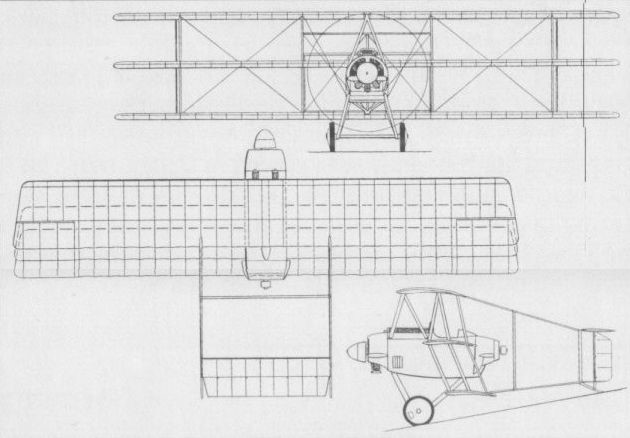
The S-3, S-4, and S-5 followed in quick succession, each a refinement of its predecessor, and each adding to Sikorskys’ piloting experience.
Engines – Power
Sikorsky S-1 / S-2

For the time being Sikorsky decided to enter the field of fixed-wing design and began construction of his first airplane. His S-1 biplane was tested early in 1910, and, although its 15-horsepower engine proved inadequate, a redesigned airframe with a larger engine (S-2) carried him on his first short flight. On 16 June 1910 it flew about 800 ft at 2 to 3 feet altitude. It crashed a few days later after a 49 second flight.

S-2
Engine: Anzani, 25 hp
Top speed: 50 mph
Sikorsky 1909 Helicopter
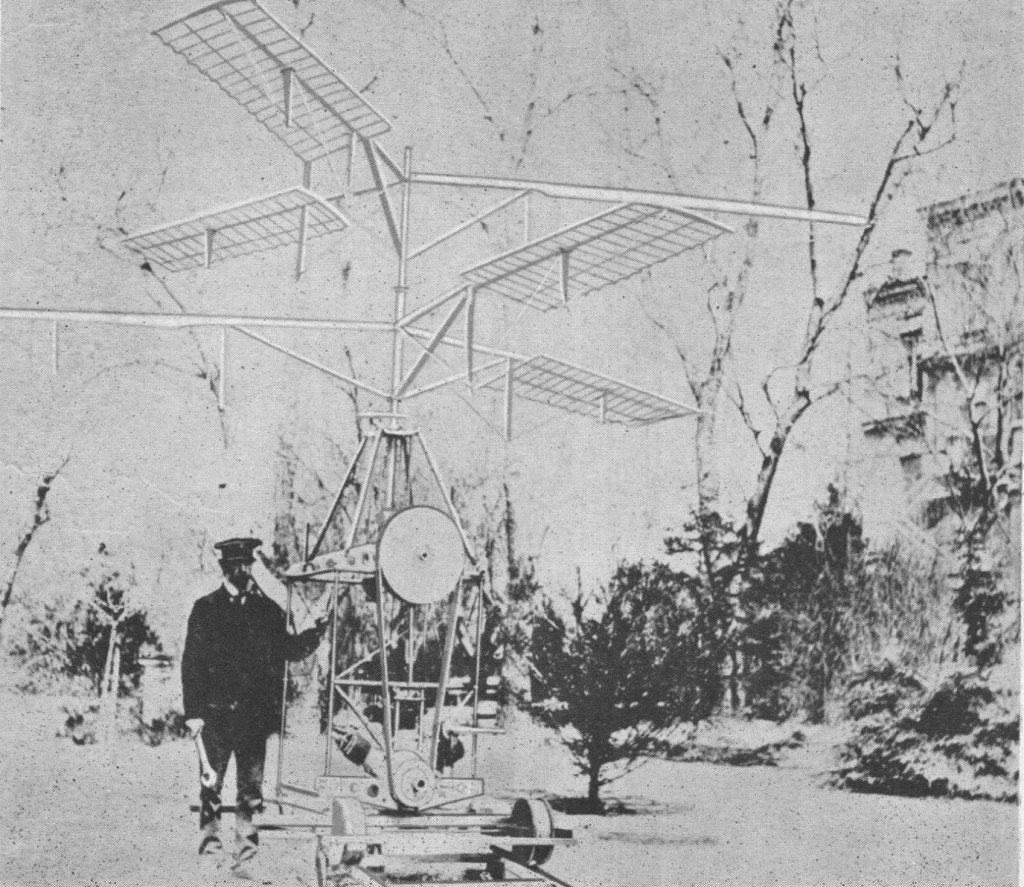
In Kiev in May of 1909 Igor Sikorsky began construction of a helicopter. Its failure revealed some of the practical obstacles. Powered by a three-cylinder, 25-hp Anzani engine that drove coaxial, twin blade rotors, the H-1 shook wildly but did not have enough power to lift itself off of the ground. A second machine with a larger engine was tested in 1910, but also failed to fly. He then made a major decision: “I had learned enough to recognize that with the existing state of the art, engines, materials, and-most of all-the shortage of money and lack of experience … I would not be able to produce a successful helicopter at that time.” In fact, he had to wait 30 years before all conditions could be met.
Sigismund 1912 monoplane
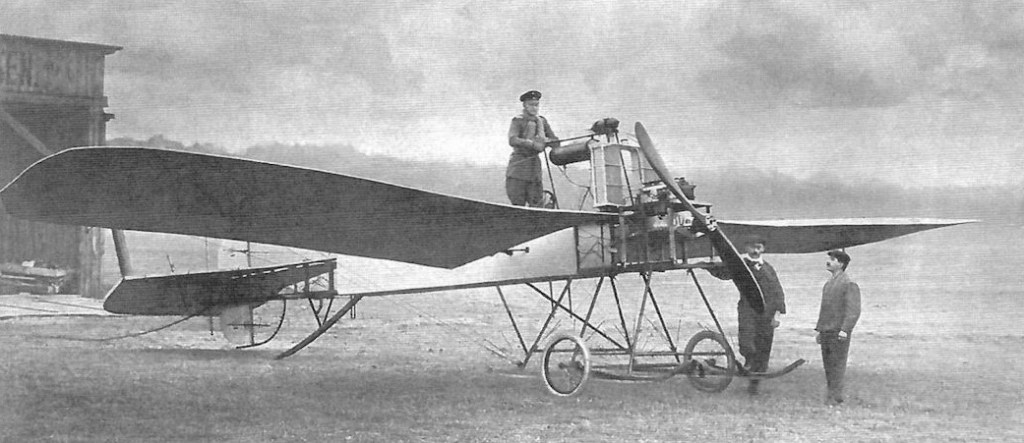
In 1912 Prinz Sigismund vein Preussen, Berlin, built two monoplanes.
Engine: Argus, 100 hp
Wing span: 13 m
Wing area: 323 sq. ft
Length: 9 m
Weight: 950 lb / 430 kg
Useful load: 395 lb / 180 kg
Max speed: 56 mph / 90 km
Siersma SRC-1
Designed by Earl Chelsea, Gerard Rogers and Herman Siersma, the 1962 Siersma SRC-1 was a single-place cabin, mid-wing monoplane midget racer,
Eleven years in construction, it was registered N4190C and first flew on 2 February 1962.
Engine: 85hp Continental C-85-12J
Wingspan: 17’0″
Length: 20’0″
Useful load: 330 lb
Max speed: 200 mph
Cruise: 170 mph
Stall: 85 mph
Range: 500 mi
Seats: 1
Sierra / Aircraft Industries BLW-1 / BLW-2
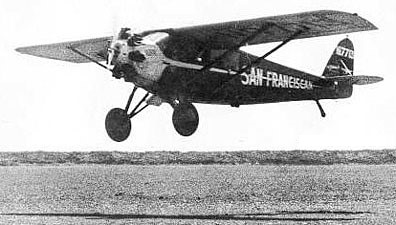
Designed by H Sherman Tharpe, two 1929 Sierra were built with ATC 2-151. Priced at $8,000 and designated BLW-1 and BLW-2 registered NX215H and NX/NR7713, the latter as San Franciscan in unsuccessful endurance record attempts June-Aug 1929 at Mills Field, San Francisco (piloted by Jim Warner). It is said to have been sold after WW2 to someone in South America.
The design reappeared in the Hawke Duster.
Engine: 130hp Comet
Wingspan: 36’0″
Length: 25’8″
Useful load: 909 lb
Max speed: 125 mph
Cruise: 100 mph
Stall: 47 mph
Range: 400 mi
Seats: 3
Sierra Standard
In 1919 the Sierra Aircraft Co produced the Sierra Aircraft Co Standard. It was likely a surplus Standard J-1 modified to accommodate the company’s business of aerial surveys. Eliel later went on to become president of Fairchild Aerial Surveys.
Siemetzki Asro 4
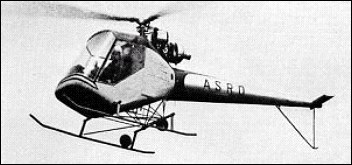
The ASRO-3 was used to develop the ultra-light side-by-side two-seater ASRO-4. Of welded steel tube construction covered with light-alloy, it had a fully enclosed fuselage pod and tapered tubular tailboom. It was fitted with an 130 shp BMW 6012 turboshaft mounted behind the rotor gearbox driving three-blade main and two-bladed tail rotors of composite construction.

The ASRO 4 was first displayed at the 1964 Hanover Air Show.
This machine flew in May 1964, and was tested for some while before being abandoned without achieving certification.
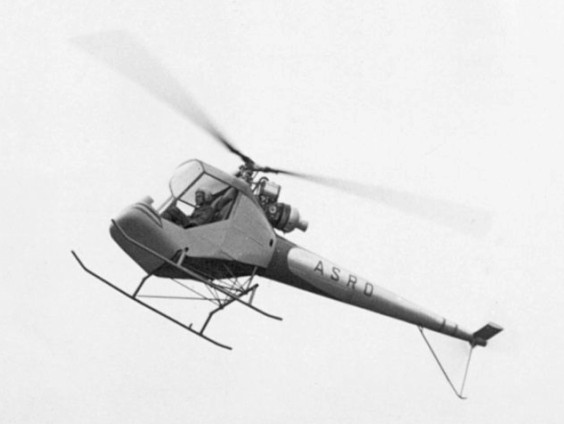
ASRO 4
Engine: BMW 6012, 100/130hp
Rotor diameter: 7.22m
Rotor disk area: 403.45 sq.ft (37.48 sq.m)
Fuselage length: 5.78m
Height: 7 ft 11 in (2.41 m)
Empty weight: 840 lb
Max takeoff weight: 1,360 lb
Max speed: 99 mph / 160km/h
Cruise speed: 90 mph (144 kmh)
Climb: 985 ft (300 m)/min
Service ceiling: 12,467 ft (3,800 m)
Endurance: 1 hr 20 min
Siemetzki Asro 3
Alfons Siemetzki of Kirchdorf am Iller, privately-built the ASRO 3T ultra-light single-seater. This experimental helicopter was an open-frame steel-tube machine of conventional layout, with a rudimentary windshield to protect the pilot, a skid undercarriage and a 65 shp BMW 6002 turboshaft engine mounted amidships. A conventional rotor system, with two-blade main and tail rotors.
The single-seat ASRO 3-T was built by Alfons Siemetzki and made its first flight on 29 December 1961, piloted by USAF Captain Stanley Frick.
The ASRO-3 was used to develop the ASRO-4
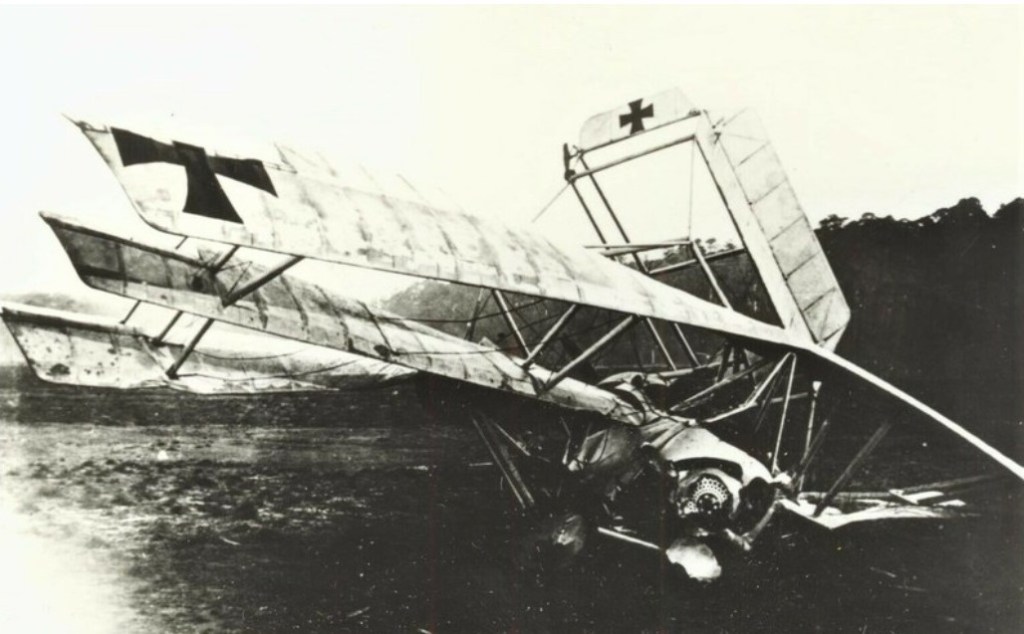
Siemen Schkukert DDr.I
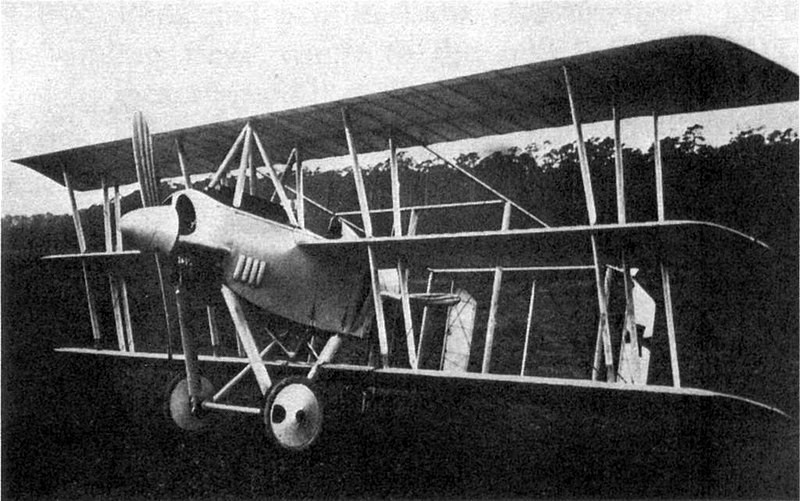
The Siemens-Schuckert DDr.I was a World War I German twin engine, push-pull configuration triplane fighter aircraft.
The DDr.I was one of the first aircraft to have two engines on the same centre line, one in tractor configuration and the other a pusher. It was a triplane with constant chord, straight edged, square tipped wings of equal span and marked stagger. These were divided into two bays by pairs of near-parallel interplane struts. The upper wing was braced over the fuselage with a pair of N-form struts, leaning inward from the upper fuselage to common mountings on the wing centre line. The middle wing of the triplane was positioned at shoulder height on the fuselage and the lower wing passed unbraced below. There were short span ailerons on each wing.
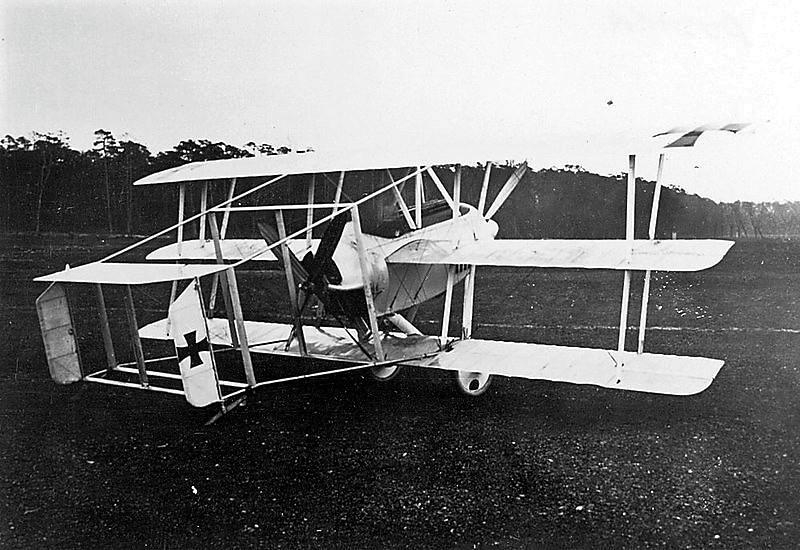
The smoothly faired and contoured short fuselage of the DDr.I positioned the open pilot’s cockpit between two 110 hp (82 kW) Siemens-Halske Sh.I nine cylinder rotary engines, one with a two blade tractor propeller and the other driving a four blade pusher turning just aft of the lower wing trailing edge. The empennage was mounted on four longitudinal, tubular outrigger beams, braced with vertical and transverse members. There were no fixed rear surfaces; the single piece, constant chord elevator reached between the two upper beams and a pair of similarly shaped rudder went from the upper to the lower beams, hinged further aft than the elevator but with their lower ends on a hinged frame that moved with it. The DDr.I had a fixed conventional undercarriage, with its mainwheels on a single axle mounted on wide spread V-struts attached to the lower fuselage at the lower corner points of each engine’s firewall.
Engine control problems and a lack of stability experienced in the first flight, made on 9 November 1917, led to a crash; the aircraft was not rebuilt and plans for a more powerful version, the DDr.II, powered by two 160 hp (119 kW), Siemens-Halske Sh.III eleven cylinder rotary engines were abandoned.
Powerplant: 2 × Siemens-Halske Sh.1, 82 kW (110 hp) each
Propellers: 2/4-blade; the tractor propeller had two blades and the pusher four.
Wingspan: 10.9 m (35 ft 9 in)
Wing area: 30 m2 (320 sq ft)
Length: 5.8 m (19 ft 0 in)
Empty weight: 680 kg (1,499 lb)
Gross weight: 910 kg (2,006 lb)
Crew: One
Armament: 2×7.9 mm (0.311 in) calibre LMG 08/15 (Spandau) synchronised machine guns