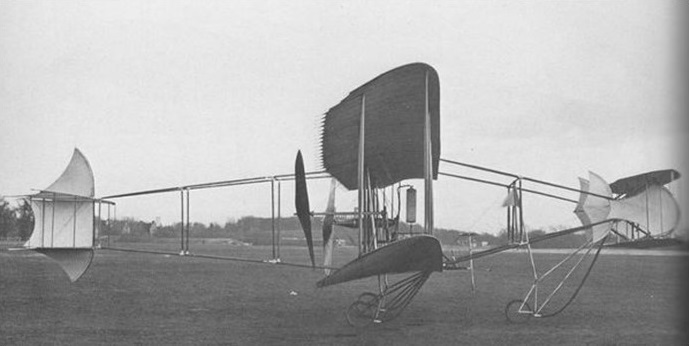
Siemen Schkukert Bourcart Biplane

A 5-seater Siemens-Schuckert Werkes biplane designed by Max Bourcart with a combination steel tubing and wood construction, powered by a 50 hp Argus engine, and chain-driven to the two propellers. First flown on 9 march 1910, a 1000 m straight-line flight piloted by Bourcart. The second, and last flight, was made on March 11, piloted by Bourcart with two passengers, ending in a crash landing. Bourcart had patented such a construction on September 9, 1902 [German Patent 145547 – Flugmaschine mit zwei Luftschrauben, deren Flügel ineinandergreifen].
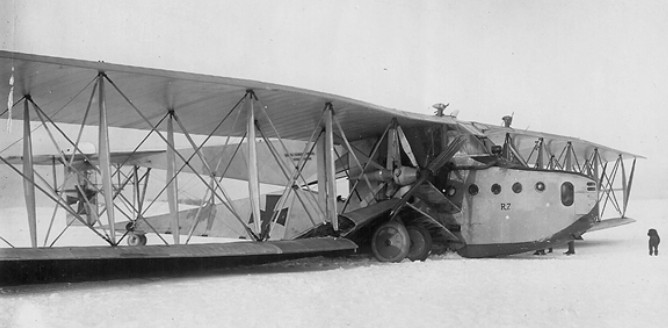
Siemen Schkukert R.VII

In October 1914 Siemens started design of four-engined aircraft similar to that of Sikorsky in Russia. As entirely new venture company sponsored designs by two Steffen brothers leading to giants R.I-VII of 1915-1917.

The then relatively low engine power required lightest construction. This in turn required precision and caution, especially when landing – where such giant wooden aircraft were extra-sensitive. Many crashed.

Siemens Schuckert R 7

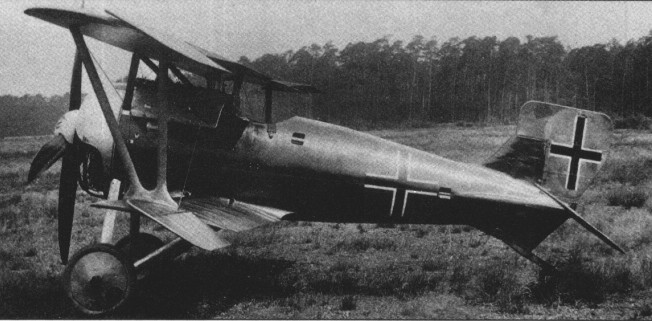
Siemen Schkukert D-IV

The D III was followed by the D IV, which introduced much aerodynamic refinement for slightly higher speed and still better climb rate. A total of 280 were ordered, but less than 140 D IVs were completed, most entering service after August 1918.

D IV
Engine: l x Siemens-Halske Sh.IIIa, 119kW (l60hp)
Span: 8.35m (27ft 4.75in)
Length: 5.7m (18ft 8.5 in)
Max TO weight: 735 kg (1,620 lb)
Max speed: 119 mph
Operational endurance: 2 hr
Armament: 2 x 7.92-mm (0.312-in) LMG 08/15 mg