Tokugawa Kaishiki No. 1

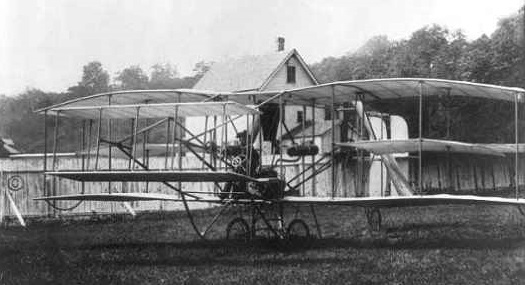
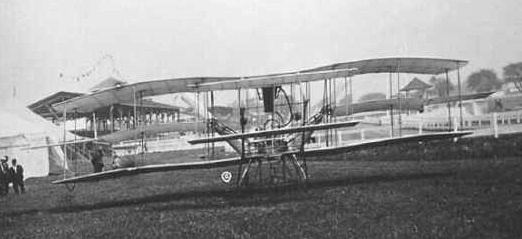
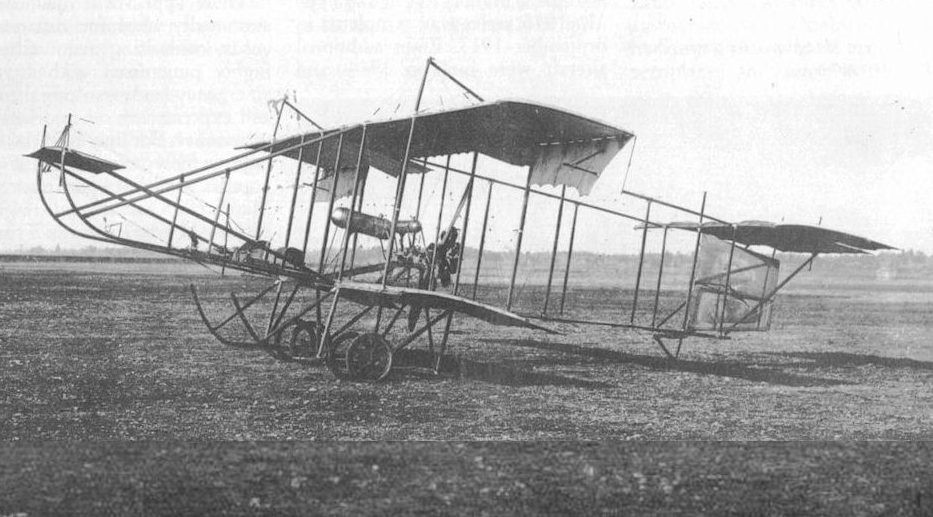
Japan’s very first Japanese-designed and manufactured aeroplane was the Kaishiki No. 1 (kaishiichigouki, 会式一号機), pusher aeroplane (propeller is behind the pilot, pushing the craft, as opposed to the puller type we commonly have nowadays that leads the aircraft) which was designed and flown by Captain Tokugawa Yoshitoshi (surname first), on October 13, 1911 at Tokorozawa in Saitama-ken (Saitama Prefecture).

The motor and propeller came from France, but everything else came from or was built in Japan. The aircraft’s frame was mostly made from hinoki (Japanese cypress), and was covered by two layers of silk glued together with sounds like liquid rubber.

All attachment fittings, bracing wires and turn buckles were purchased from iron works companies or bought from local hardware shops.

Differences from the Farman III design included a reduced wing area, which gave it more speed. The aerofoil had a larger front curve which was thought to provide better lift. Other differences between the Kaishiki No. 1 and the Farman III include the fact that ailerons were on the upper wing only, and the tail was simplified by having a single horizontal tail surface.

As well, the engine and propeller were mounted higher than in the original design, and therefore the undercarriage could be shortened. A windshield was added for the pilot.

When the aeroplane was constructed, it was called the Tokugawa Type, but was later officially identified as Kaishiki No.1 Aeroplane.

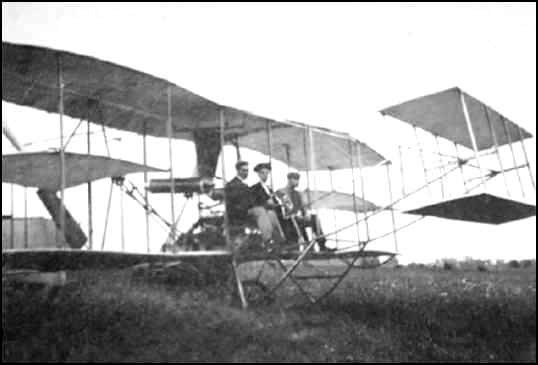
The aeroplane was moved to the Army facility and flying field at Tokorozawa where it made its first flight on October 13, 1911, piloted by Captain Tokugawa.

Captain Tokugawa Yoshitoshi

A later test flight on October 25, 1911 achieved an altitude of 50 meters (164 feet), reaching a top speed of 72 kilometers per hour (45 miles per hour).

Further testing had it reach 85 meters (278 feet) in altitude and flying a grand distance of 1,600 meters (1 mile).
Continued testing convinced the flight crew that the propeller ground clearance wasn’t high enough, as the blades would hit the grass below, slowing it down, causing the Kaishiki No. 1 to lose power.

Yamada dirigible and Kaishiki No.1

Actually, it was only after the providing greater clearance that the aircraft was given the Kaishiki No.1 moniker.
More changes ensued, including changeable landing skids in case one broke; twin rudders replaced by a single and larger rudder which was part of the advantage of the gained from the propeller slipstream meaning improved directional control.

Longer interplane struts on the aircraft were added to provide more spacing between the two wings.
One other alteration from the Kaishiki‘s original design was the removal of the pilot windshield, while it did provide protection from bug’s flying in the pilot’s mouth while screaming for joy as he flies through the air, the team felt that pilot needed to feel the air so as to get a better sense of the aeroplane’s speed.

Kaishiki No.1
Engine: 1 × Gnome Omega 7-cylinder, 50 horsepower
Propeller: 2-bladed wooden Chauvière
Length: 11.5 m (37 ft 9 in)
Upper wingspan: 10.5 m (34 ft 5 in)
Lower wingspan: 8.0 m (26 ft 3 in)
Height: 3.90 m (12 ft 10 in)
Wing area: 41.0 sq.m (441 sq.ft)
Empty weight: 450 kg (992 lb)
Gross weight: 550 kg (1,213 lb)
Maximum speed: 72 kph (45 mph)
Endurance: 3 hr
Crew: 2
Tokyo Imperial University Kokenki

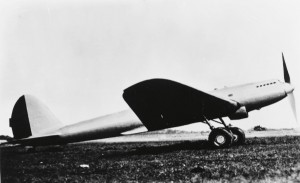
The aviation laboratory of the Tokyo Imperial University immediately became a mecca for Japanese students of aeronautics. Among its foremost achievements was the Kokenki, an experimental long-range monoplane that employed a domestically built airframe and a revamped version of a German engine. The plane flew over the Kanto Plain region, which includes Tokyo and its neighbouring prefectures, for 62 hours non-stop after taking off on May 13, 1938. The flight translated into a cruising distance of 10,651.01 km, a world record at the time and still Japan’s only aviation record certified by the International Aeronautical Federation.

Tokyo Yomiuri Y-1

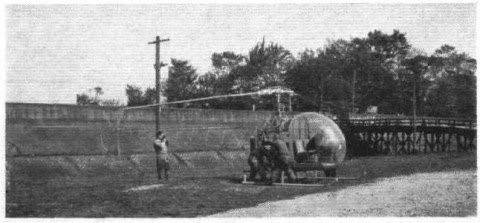
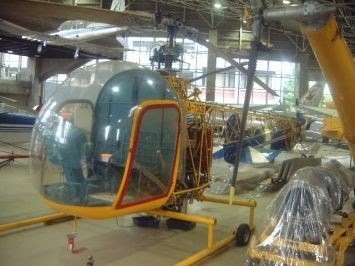
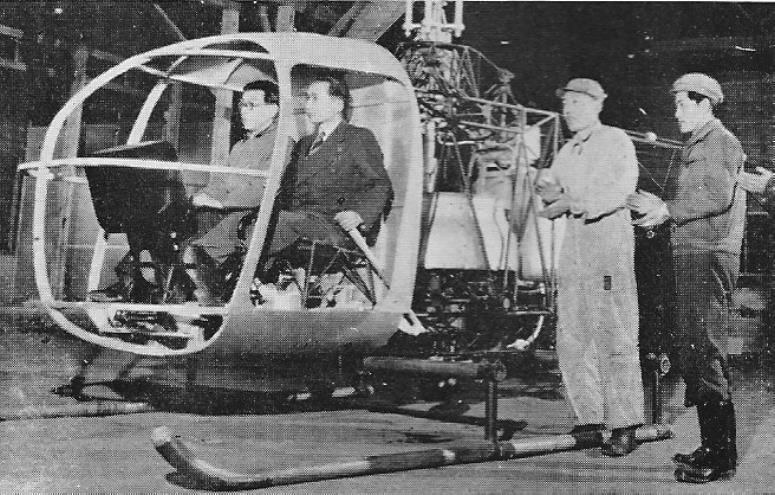
The first post-war Japanese helicopter designed for quantity production, the Yomiuri Y-1 developed as a project to commemorate the resumption of aviation by the Yomiuri Shimbun, and was produced with a prototype research subsidy from the Ministry of International Trade and Industry.

In 1953, Itogawa Eizo and Horikoshi Jiro, two of Japans most distinguised wartime aircraft designers, helped form the Japan Helicopter Association with a grant from MITI and the support of the Yomiuri Shimbun, a leading daily newspaper. Their design, the Yomiuri Y-1, was powered by the wartime Kamikaze-3 engine.

The project was abandoned when it failed to acquire U.S Patents for helicopter design. It took a lot of time to solve the anti-vibration measures, and it was not put into production.

Engine: Hitachi Jinphu III seven-cylinder radial, 150hp
Rotor diameter: 10.0m / 32 ft 10 in
Length: 12.2m / 40 ft 2 in
Height: 3.60m
Empty weight: 1,166 lb
Gross weight: 1,650 lb
Maximum speed: 156km/h / 96 mph
Cruising range: 200 mi
Seats: 2

Tokyo Aiba-Tsubame 8 / Aiba-Tsubame 9

Aiba-Tsubame 8

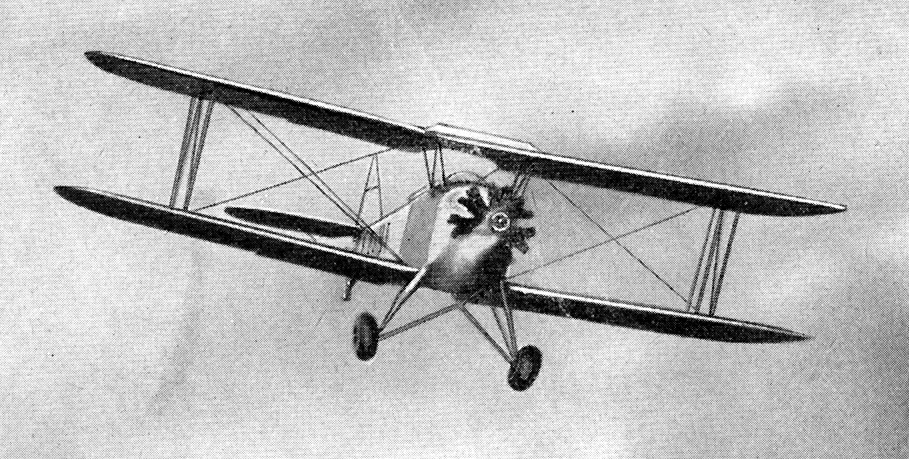
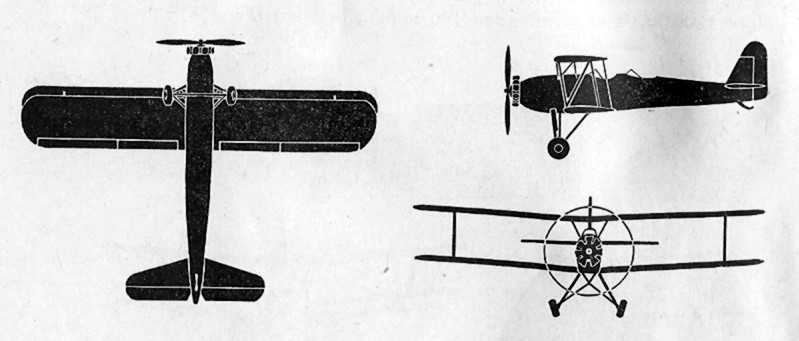
The Aiba-Tsubame 8 was an Advanced Trainer. Only the one was built.

The Tokyo Aviation Company modified the Aiba-Tsubame Model 8 trainer aircraft into Aiba-Tsubame Model 9.

Aiba-Tsubame 8
Engine: Tokyo Jimpu Radial, 150 hp or Gasuden Kamikaze 3-type, 160hp
Span: 29′ 6″ / 8.9m
Length: 22′ 10″ / 7m
Height: 6′ 6″ / 2.65m
Wing area: 22 sq.m
MTOW: 900kg
Max speed: 98 mph / 160km/h
Service ceiling: 4,400m
Range: 580km
Endurance: 4 hr

Aiba-Tsubame 8

Todhunter Blue Wren

Despite being registered as a microlight, it is really the prototype of what was hoped to become an amateur-built self-launching glider, built from a design that was originated by Reg Todhunter in Australia in the mid 1950s. Construction work begun in early 1980 and the aircraft first flew at Tocumwal, NSW, on 08-07-84 under a permit to fly issued by the Gliding Federation of Australia. It was then air freighted to California to take part in a homebuilt sailplane design competition instigated by the Soaring Society of America. The fly-off took place at Tehaehapi over 1-3 September 1984 and was won by the Rutan Solitaire. The aircraft was imported into New Zealand in 1996 by Neville Swan, following the death of the designer.

Although a glider, the aircraft was registered as a microlight in New Zealand (ZK-JGQ). The initial engine (a JPV PUL 425 horizontal twin 22 hp ) was replaced by a Koenig 3 cyl of 24 hp.

Todd 1909 Biplane

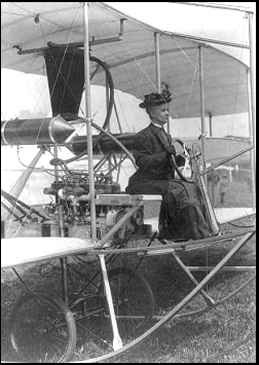
Miss [E.L.] Todd in her aeroplane, Sept 23, 1909

After years of effort, Miss E. Lillian Todd, of No. 131 West Twenty-third street, realized her ambition on Nov 7, 1910, when she had the pleasure of seeing a biplane, the work of her hands and brain, fly across the Garden City aviation field.

Designed and built by E. Lillian Todd and first flown by Didier Masson over the Garden City aviation field in Long Island during November of 1910.

Miss Todd was well known at the time, and her 1910 Biplane, powered by an eight cylinder 60 hp Rinek engine, was the first successful aeroplane built by an American woman. She then tried to get an engine, but met with repeated defeat, as the engines which she tried were not suitable. Finally a modified Rinek motor was declared satisfactory. Todd is told to have designed and built three full-size aircraft; her first – an engineless machine – in 1906.

A good sized crowd was on hand to witness the first attempt to fly the biplane. Mr. Didier Masson was the aviator. He ran the machine across the ground, then went to the air for twenty feet and made a turn at the far end, returning to the starting place, where he was enthusiastically received by Miss Todd and the crowd.

Todd in her plane with Didier Masson

Miss Elizabeth L. Todd has entered the lists as a competitor in several long-distance flights and she has her mechanicians at work in her aerodrome at Hempstead Plains on three machines she designed. She has made several flights and has learned to manipulate her planes and her engines in masterly style.

E. L. Todd at the Controls
Probably Sept., 1909

Todd Special

Built first as a Wittman Tailwind, Edward Todd rebuilt the aircraft in 1963 with the wings lowered and the engine raised. Registered N11Q, it was first flown in June 1963.

Engine: Lycoming O-290G, 125hp
Wingspan: 22’0″
Length: 19’6″
Useful load: 621 lb
Max speed: 170 mph
Cruise speed: 160 mph
Stall: 60 mph
Range: 805 mi
Seats: 2

Todd Light Express

The Light Express was built by Edgar B Todd in 1927 as a three-section parasol monoplane with a Clark-Y airfoil. A single seater, the baggage compartment was convertible into a passenger seat.

Only one was built.

Engine: Curtiss OX-5, 90hp
Wingspan: 40’0″
Length: 22’4″
Useful load: 330 lb
Max speed: 120 mph
Cruise speed: 110 mph
Stall: 55 mph
Range: 700 mi
Seats: 1-2