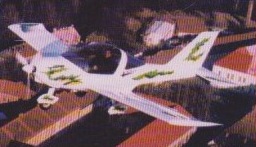
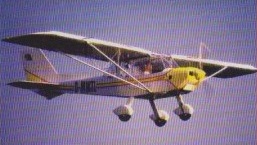
Toczołowski-Wulf TW-12

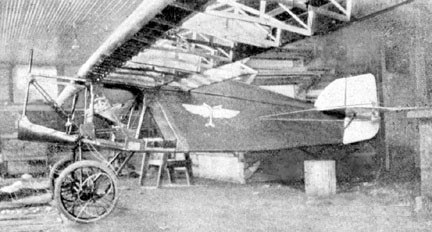
Henryk Toczołowski and Józef Wulf designed the TW-12 in 1929-30 but had to build the structure slowly in their spare time. They were both members of the P.W.S. Aero Club and eventually got permission to use the P.W.S. workshops but the TW-12 was not ready for flight until the second half of 1933. There is uncertainty about the date of the first flight, which one source gives as 29 September 1933 and another as 29 November 1933.

The TW-12 was an all-wood aircraft, with a cantilever, one piece low wing which was trapezoidal in plan. It was built around twin spars and covered in a mixture of plywood and fabric.

It was powered by a 60–66 kW (80–88 hp) five cylinder Armstrong-Siddeley Genet radial engine. The fuselage, with rectangular section structure and rounded decking, was plywood covered. The TW-12 had two open, tandem cockpits fitted with dual control. Its landing gear was fixed and conventional.

Early flight testing revealed some handling problems, particularly at low speeds in the landing approach. After some modifications the TW-12 went to the I.B.T.L. at Warsaw for official airworthiness tests , which led again to concerns about the low speed handling and also about the low fuel capacity (8.8 imp gal (40 l; 10.6 US gal)). In the summer of 1935 the TW-12 was allowed to fly as a single-seater, with the forward cockpit covered over and with a rudder of increased area.

On its release from the I.B.T.L., the WT-12 was scheduled to take part in the P.W.S. Club rally on 28 July 1935 at their home base at Biała Podlaska. According to one account, Antoni Uszacki decided to take advantage of a strong tail wind to fly it from Warsaw to Lviv, some 370 km (230 mi) away. Despite the limited fuel capacity (40 l (8.8 imp gal; 11 US gal), he arrived safely though with a dry tank .The club began to use the TW-12 as a trainer but its career was soon cut short by a landing crash with Tadeusz Arcinowski at the controls.

Another account states that Uszacki flew it at the rally but only achieved last (6th) place, and that Arcinowski flew it soon afterwards from Warsaw to Lviv but crashed on landing.

two seat version
Engine: 1 × Armstrong-Siddeley Genet, 60–66 kW (80–88 hp)
Wingspan: 10.5 m (34 ft 5 in)
Wing area: 14.5 sq.m (156 sq ft)
Length: 6.5 m (21 ft 4 in)
Height: 2.2 m (7 ft 3 in)
Empty weight: 285 kg (628 lb)
Max takeoff weight: 500 kg (1,102 lb)
Fuel capacity: 8.8 imp gal (40 l; 10.6 US gal)
Maximum speed: 170 km/h (106 mph; 92 kn) at sea level
Cruise speed: 155–150 km/h (96–93 mph; 84–81 kn)
Service ceiling: 2,900 m (9,500 ft)
Rate of climb: 2.8–2.2 m/s (550–430 ft/min)
Landing speed: 70 km/h (43 mph)
Crew: One pilot
Capacity: One pupil
TMM-Avia T-10 Frigate

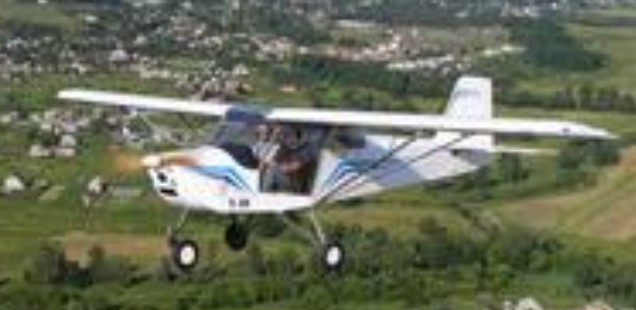
T-10 is a very light multipurpose aircraft, intended for pilot training, crop spraying, and aerial patroing. The airplane’s fugelage frame work has truss structure, made of stainless steel. The wing (double spar, all wooden) and horizontal empennage are foldable along the fuselage, which facilitates the airplane’s assembly, disassembly, transportation and storage.

T-10 tricycle non-retractable landing gear, enables it to operate from ground, grass and paved runways. As additional option it can be equipped with a Cobra recovery system. The T-10 Frigate as a ready-to-fly airplane 2009 Price: 42500 euro or as a kit (21 600 euro).

Stall: 33 kt / 39 mph / 62 kmh
Cruise: 81 kt / 93 mph / 150 kmh
VNE: 103 kt / 118 mph / 190 kmh
Empty Weight: 315 kg / 694 lbs
MTOW Weight: 550 kg / 1213 lbs
Climb Ratio: 1200 ft/min / 6,2 m/s
Glide Ratio: 11
Take-off distance (50ft obstacle): 360 ft / 110 m
Landing distance (50ft obstacle): 230 ft / 70 m

TM Designs Porche 914

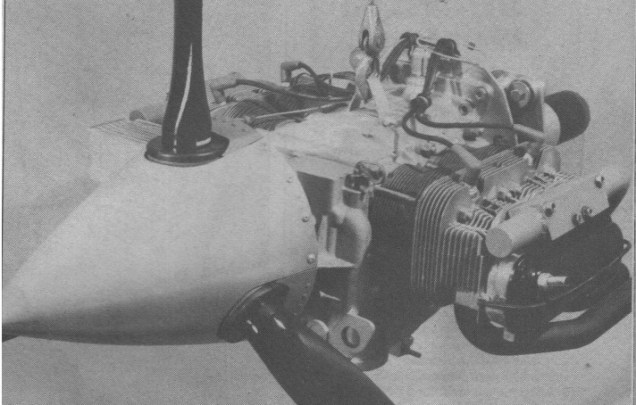
An aircraft conversion for the automotive VW Type IV Porsche 914 engine, normally used aboard the VW 411, VW 412, late-model VW buses and the Porsche 914. This conversion offers an oil filter, oil cooler, starter, alternator and vibration-type mounts.

The prototype Porsche engine is a standard-displacement 1800cc VW 412 powerplant. Parts are available to increase the CID, plus a Posa carburetor of the fuel-injection type to replace the 29mm injector. Also, you can obtain plans for modifying the intake manifold slightly.

1800cc engine
Bore: 93mm
Stroke: 66mm
CID: 1793cc
Compression: 8.21
Firing Order: 1-4-3-2
Min. Octane Fuel: 90
Dry Weight: 1951 lb
Fuel Consumption: 4 gph
Alternator Output: 7 amps
SAE hp at rpm: 108 at 3800rpm
Torque ft/lb at rpm: 108 at 3800
Ignition System: 1 magneto
Fuel Induction: 1 injector

TM Aircraft TM-5

In 1980 one TM-5 (later TM-5A), N1053Y, was built. It was a two-place cabin, low-wing monoplane.

The TM-5B of 1981 was an aerobatic homebuilt.

TM-5
Engine: Continental A65, 65hp
Wingspan: 25’0″
Length: 18’3″
Useful load: 595 lb
Max speed: 128 mph
Cruise speed: 110 mph
Stall: 52 mph
Range: 340 mi
Seats: 2

TM-5A
Engine: Continental A65, 65hp
Wingspan: 25’0″
Length: 18’3″
Useful load: 595 lb
Max speed: 128 mph
Cruise speed: 110 mph
Stall: 52 mph
Range: 340 mi
Seats: 2

TM-5B
Engine: Continental, 100hp
Useful load: 574 lb
Max speed: 151 mph
Cruise speed: 120 mph
Stall: 52
Range: 270 mi
Seats: 2

TL Ultralight TL-3000 Sirius

A new high wing sister ship to the Sting the carbon fiber composite TL-3000 Sirius first series of test flights was completed, piloted by TL-Ultralight founder and president, Jiri Tlusty.

The Sirius displayed very responsive low speed handling and docile flight characteristics, powered by the Rotax series of aircraft engines and was available in an ULM and LSA version.

TL 3000 Sirius
Wingspan: 9.4 m / 30 ft 10 in
Wing area; 11.25 sq.m / 121 sq.ft
Height: 2 m / 6 ft 6 in
Length: 7 m / 23 ft Stall: 32 kt / 37 mph / 60 kmh
Empty Weight: 295 kg / 650 lbs
MTOW Weight: 472 kg / 1041 lbs
LSA MTOW: 600 kg / 1320 lb
Cruise: 116 kt / 134 mph / 215 kmh
VNE: 141 kt / 163 mph / 262 kmh
Climb Ratio: 1200 ft/min / 6.2 m/s
Fuel capacity: 130 lt / 34 Imp.Gal
Baggage capacity: 43 kg / 95 lb
Luggage compartment: 110x54x70cm / 43.3×21.2×27.5in

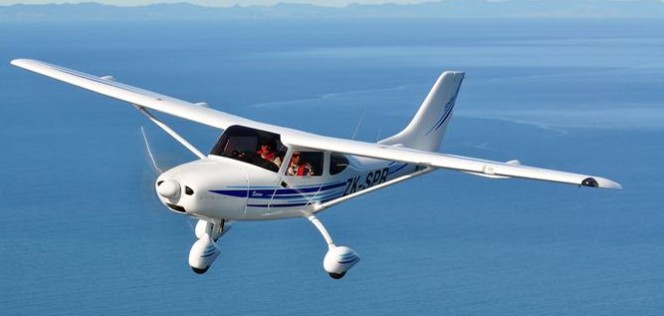
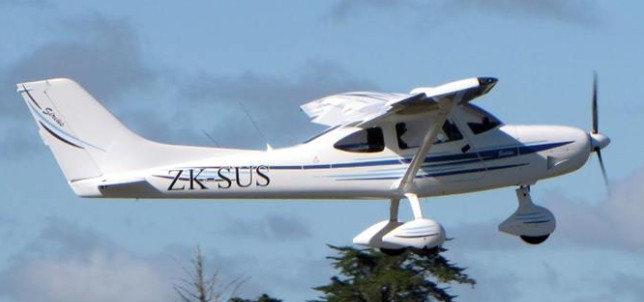
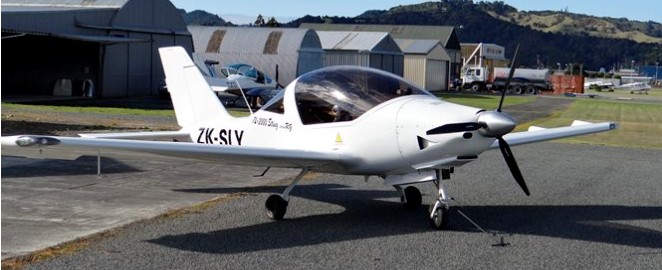
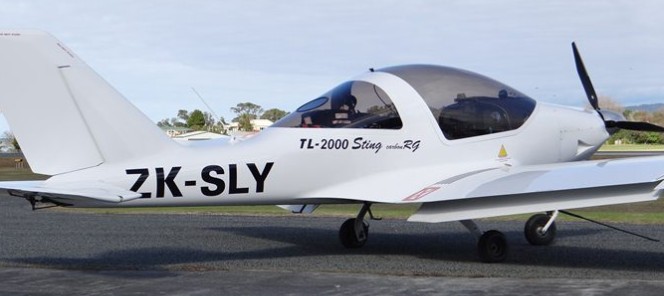
TL Ultralight TL 2000 Sting

The TL-2000 Sting was designed to achieve the highest speed of flight. The Whole Aicraft is made from Carbon Fibre, stressed to +6/-4 g, is fully certified by the Czech Civil Aviation Authorities.

The aircraft is fitted with dual steering and standard nose wheel configuration with the two main wheels being disc braked and a durable nose wheel, and can be dismantled for road transport in 10 minutes (similar to a glider). This Rotax-powered aircraft has split wing flaps and independent main wheel disc brakes.

The TL-2000 Sting Carbon maximum speed in horizontal flight of about 285 km/h and a minimum 63 km/h to a Vne of 305 km/h. The TL-2000 Sting Carbon offers an optional in flight adjustable propeller electronically controlled.

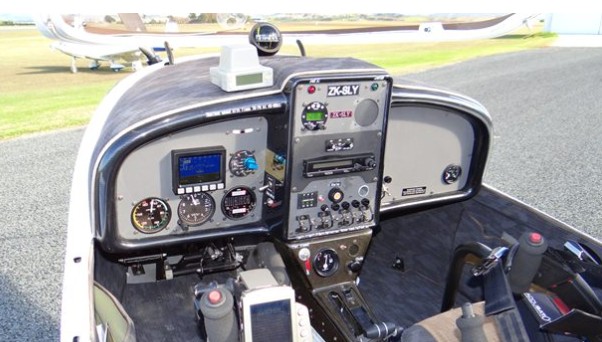
The TL-2000 Sting Carbon two seat, side by side cabin is roomy and an optional cabin heater can be installed. All control and flight instruments have been ergonomically positioned to maximise ease of use even when securely strapped in. The flaps to extend in two positions. take off is 15 degrees and for landing, 35 degrees.

The very latest in construction techniques enable a strong light and durable aircraft to be produced. If you need to take your Sting home, you can remove the wings easily in 10 minutes. The TL-STING is equipped with Rotax 912, 912 S or 914, and there are many types and construction of propellers.

Gallery

TL-2000 Sting Carbon / StingSport LSA aircraft
Engine: Rotax 912UL2, 80 hp
Prop: 3 blade Woodcomp ground adjustable
Stall: 35 kt / 40 mph / 65 kmh
Cruise: 130 kt / 149 mph / 240 kmh
VNE: 165 kt / 190 mph / 305 kmh
Empty Weight: 275 kg / 606 lbs
MTOW Weight: 450 kg / 992 lbs
Climb Ratio: 1600 ft/min / 8 m/s
Glide Ratio: 16:1

Sting Sport TL-2000
Engine: Rotax 912 ULS
TBO (hrs.): 1500 Horsepower@altitude: 100@SL
Fuel type: 100LL
Propeller type: Woodcomp/3-blade
Landing gear type: Tri./Fixed
Max ramp weight (lbs): 1320
Gross weight (lbs.): 1320
Landing weight (lbs.) 1320
Empty weight, std. (lbs.): 780
Useful load, std. (lbs.): 540
Useful fuel, std (gals.): 18
Optional fuel (gals.): 32
Payload, full std. fuel (lbs.): 432
Wingspan: 28 ft. 3 in.
Overall length: 20 ft. 4 in.
Height: 7 ft. 6 in.
Wing area (sq. ft.): 121.5
Wing loading (lbs./sq.ft.): 10.9
Power loading (lbs./hp): 13.2
Seating capacity: 2
Cabin width (in.): 44
75 % cruise (kts.): 115
Vso (kts.): 39
Best rate of climb, SL (fpm): 810
Service ceiling (ft.): 15,000
Takeoff ground roll (ft.): 490
Takeoff over 50 ft. obstacle (ft.): 940
Landing ground roll (ft.): 390
Landing over 50 ft. obstacle (ft.): 1150

TL Ultralight TL 96 Star

In 1996 the company started development of complete new type, the TL 96 Star. This took 2 years and it meant transition to complete new materials and technology. Star is made of glass fiber.

It is certificated in Germany, Spain, Italy, and others.

The TL-96 Star is a high performance glasscomposite aircraft with an empty weight of 265 kg. The cruise speed of the TL-96 is 200 km/hr.

2009 Price: 56000 EURO

TL-96 STAR
Stall: 35 kt / 40 mph / 65 kmh
Cruise: 108 kt / 124 mph / 200 kmh
VNE: 148 kt / 171 mph / 275 kmh
Empty Weight: 288 kg / 635 lbs
MTOW Weight: 450 kg / 992 lbs
Climb Ratio: 1200 ft/min / 6 m/s
Glide Ratio: 15:1
Take-off distance (50ft obstacle): 890 ft / 270 m
Landing distance (50ft obstacle): 980 ft / 300 m

Engine: Roax 912, 80 hp
Wing span: 9 m
Wing area: 12.1 sq.m
MAUW: 450 kg
Empty weight: 290 kg
Fuel capacity: 60 lt
Max speed: 280 kph
Cruise speed: 250 kph
Minimum speed: 65 kph
Climb rate: 5.8 m/s
Certification: vVz
Seats: 2
Fuel consumption: 9 lt/hr
Price (1998): 95 000 DM

TL Ultralight TL 232 Condor

The TL Ultralight TL-232 Condor Plus is a two-seat ultralight. The TL-232 Condor Plus is a further development of the TL-132 Condor. It is a two-place ultralight airplane with seats side-by-side. The TL-232 Condor Plus is the first Czech ultralight aircraft certified also for towing of ultralight and light gliders. It is feasible to tow banners, too.

It is an ideal platform for flight training and touristic flying including long-distance flights as well. The basic version is powered by Rotax 503 engine, equipped by a two-blade wooden propeller and basic flight instrumentation only. Upon request it could be delivered with all other Rotax engines (including Rotax 912), various propellers (including electrically in-flight adjustable ones), a wide range of other instruments as for example a GPS set, fuel consumption computer etc. A rocket recovery system belongs to optional extras.

It is a two-place ultralight airplane of latest generation with seats side-by-side in roomy and comfortable cockpit. The seats are adjustable and have inclinable backrests.

The TL-232 Condor Plus is a further development of the TL-132 Condor.

TL 232 Condor Plus

TL-232 Condor Plus
Stall: 32 kt / 37 mph / 60 kmh
Cruise: 81 kt / 93 mph / 150 kmh
VNE: 97 kt / 112 mph / 180 kmh
Empty Weight: 280 kg / 617 lbs
MTOW Weight: 450 kg / 992 lbs
Climb Ratio: 800 ft/min / 4,6 m/s
Glide Ratio: 1:14

TL 232 Condor Plus
Engine: Rotax 912, 80 hp
Wing span: 10.60 m
Wing area: 14.84 sq.m
MAUW: 450 kg
Empty weight: 280 kg
Fuel capacity: 70 lt
Max speed: 180 kph
Cruise speed: 170 kph
Minimum speed: 65 kph
Climb rate: 5.4 m/s
Certification: Vz
Seats: 2
Fuel consumption: 11 lt/hr
Price (1998): 79 000 DM