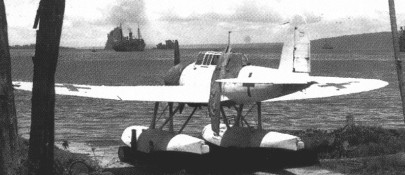
Aichi E13A1 / Watanabe E13A

E13A1

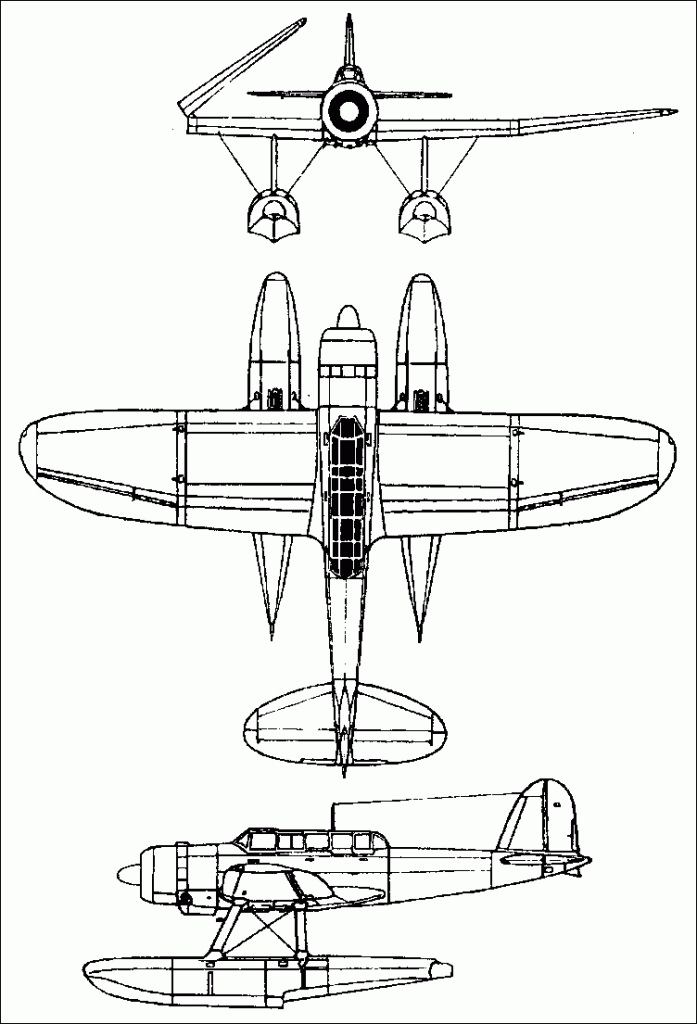
A naval staff specification issued to Aichi, Kawanishi and Nakajima in 1937 for a three-seat reconnaissance seaplane to replace the six-year-old Kawanishi E7K2 float biplane resulted in the Aichi E13A monoplane (of which 1,418 were produced). A prototype was completed late in 1938 and after competitive trials with the Kawanishi E13K in December 1940 was ordered into production as the Navy Type 0 Reconnaissance Seaplane Model 1.

The E13A was a three-crew low-wing monoplane aircraft with pontoons fitted in place of traditional landing gear systems.

Japanese cruisers and seaplane tenders carried the first aircraft from 1941, carrying a single 250kg bomb. The E13 flew a series of raids on the Hankow-Canton railway and soon afterwards E13A1 floatplanes accompanied the Japanese 8th Cruiser Division for reconnaissance patrols during the strike against Pearl Harbour in December 1941.
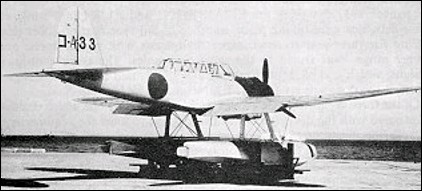
Though limited in number at first, the E13A series made some initial carrier-based land-strikes and reconnaissance missions that promoted the use of this aircraft type. As such, the floatplane would be fielded regularly with future cruiser groups and mounted to catapults on Japanese battleships. Standard armament would consist of 1 x 20mm downward-firing cannon and a single 7.7mm machine gun in the rear cockpit. External stores were limited to a single 551lb bomb or depth charge as needed.
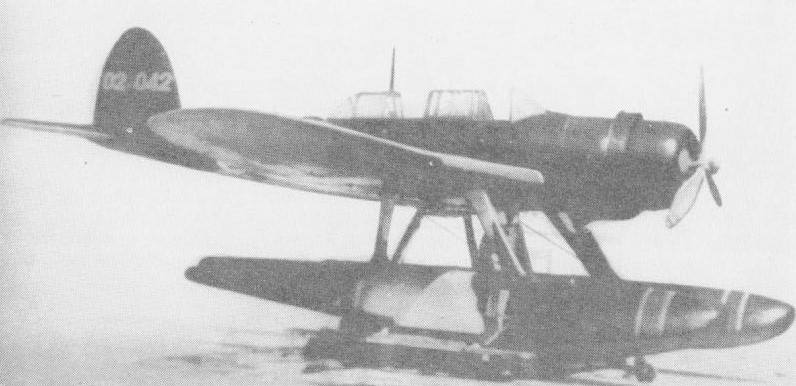
As production switched to Kyushu Hikoki KK at Zasshonokuma and accelerated, the seaplanes (codenamed ‘Jake’ by the Allies) were embarked in the battleships and cruisers of the Kantais (fleets), including the battleship Haruna and cruisers Chikuma and Tone of Vice Admiral Nagumo’s Carrier Striking Force at the Battle of Midway.

In all, it is estimated that by mid-1943 more than 250 E13A1s were at sea aboard Japanese ships.

The Aichi E13A would serve through to the end of the war, though limited by the power of the new generation of American carrier-based fighters. “Jakes would later be relegated to Kamikaze attacks. In the end, there were 1,418 production models.

Aichi E13A — Palau

First coded ‘June’ when it was thought to be a bomber, ‘Jake’ wasn’t identified as a reconnaissance aircraft until examples were captured. For a while both names were used but ‘Jake’ seemed easier to remember and became the sole code identification.
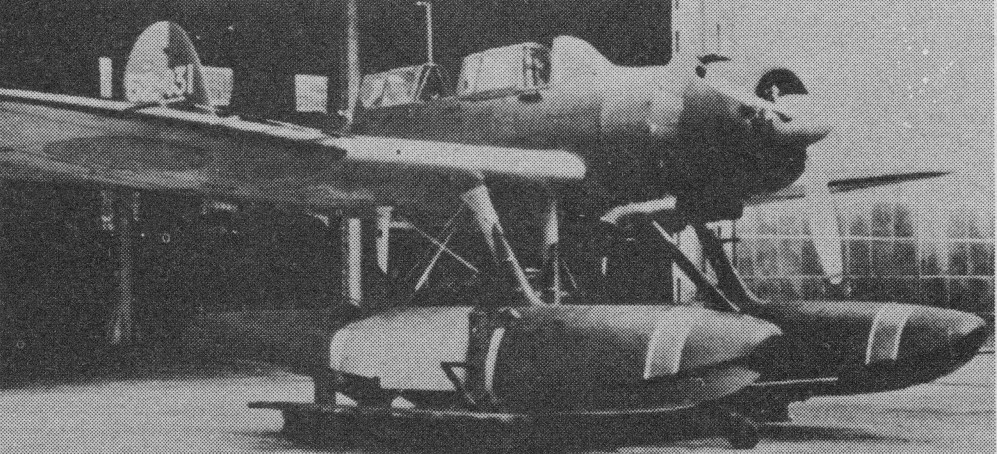
Gallery

Aichi E13A1a (Jake)
Engine: 1 x Mitsubishi Kinsei 43 14-cylinder radial, 1,080hp.
Length: 37.07ft (11.3m)
Wingspan: 47.57ft (14.50m)
Height: 15.42ft (4.70m)
Empty Weight: 5,825lbs (2,642kg)
Maximum Take-Off Weight: 8,818lbs (4,000kg)
Maximum Speed: 234mph (377kmh; 204kts)
Maximum Range: 1,298miles (2,089km)
Service Ceiling: 28,642ft (8,730m)
Armament:
1 x 20mm cannon (in downward-firing ventral position)
1 x 7.7mm machine gun (in rear cockpit position)
Maximum external bombload: 551 lbs.
Accommodation: 3
Hardpoints: 1
Aichi E11A

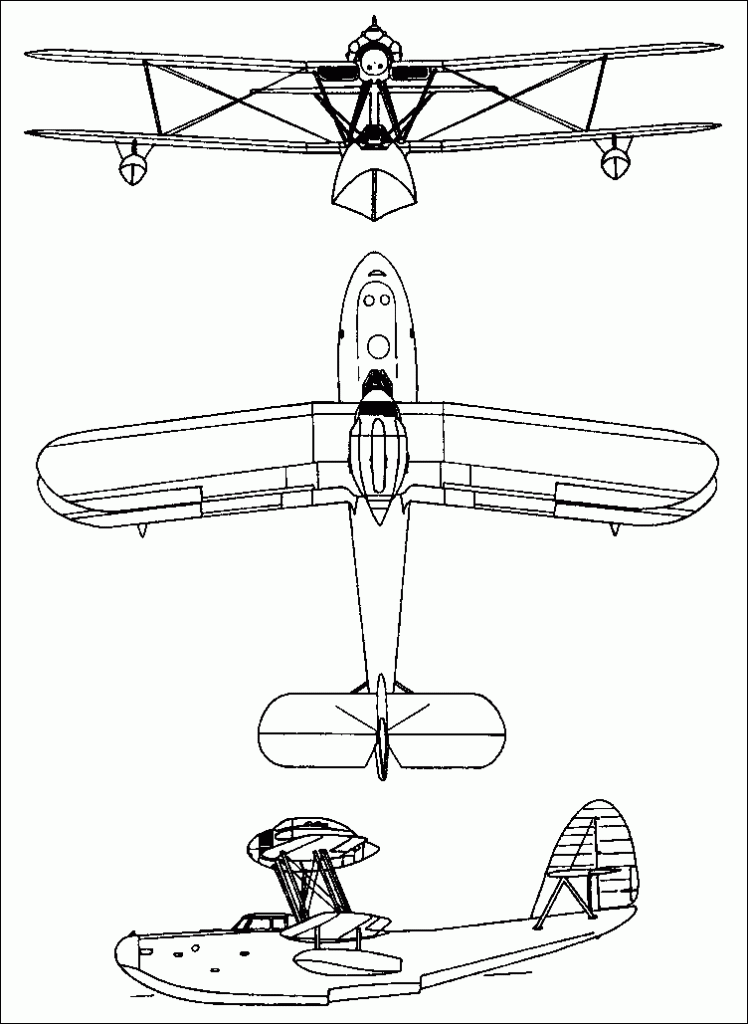
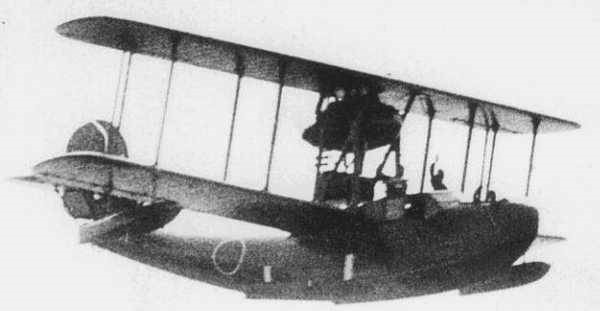
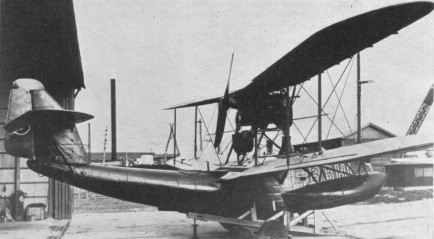
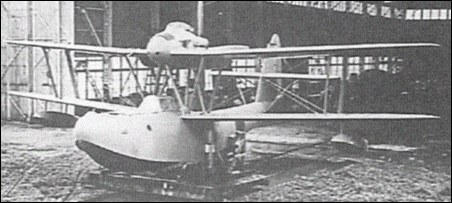
The E11A was planned to a 1936 requirement for a successor to the same company’s E10A as the noctur-nal spotter carried by Japanese battleships and cruis¬ers, and first flew in June 1937. The Aichi prototype was evaluated competitively against the Kawanishi El1K, and ordered into production during April 1938 with the full designation Navy Type 98 Night Recon¬naissance Seaplane, and the short designation E11A1 (reconnaissance seaplane, 11th in series, built by Aichi, 1st model). Including prototypes, production up to 1940 amounted to just 17 aircraft, and these saw limited operational service in the opening rounds of Japan’s Pacific campaign in the Second World War.
Of biplane configuration, the two-step hull carried a braced tail unit, with the tail-plane and elevator mounted almost halfway up the fin. Accommodation was provided for a crew of three, and there was an open bow position that could be used during on-water manoeuvres, or mounting a defensive machine gun. Balancer floats were mounted beneath each lower wing, close to the wingtip. The engine was a Hiro Type 91 Model 22 inline engine, mounted at the centre-section of the upper wing, and driving a pusher propeller with spinner.

E11A1
Engine: 1 x Hiro Type 91 Model 11 inline piston, 620-hp (462-kW)
Maximum speed: 135 mph (217 kph) at 7,875 ft (2,400 m)
Climb to 9,845 ft (3,000 m): 18 min 32 sec
Service ceiling: 14,520 ft (4,425 m)
Range: 1,209 miles (1,945 km)
Weight empty: 4,248 lb (1,927 kg)
Maximum take-off weight: 7,275 lb (3,300 kg)
Wing span: 47 ft 6.5 in (14.49 m)
Length: 35 ft 1.75 in (l0.7lm)
Height: 18ft 0.5 in (5.50m)
Armament: one 7.7-mm (0.303-in) machine-gun

Aichi E10A

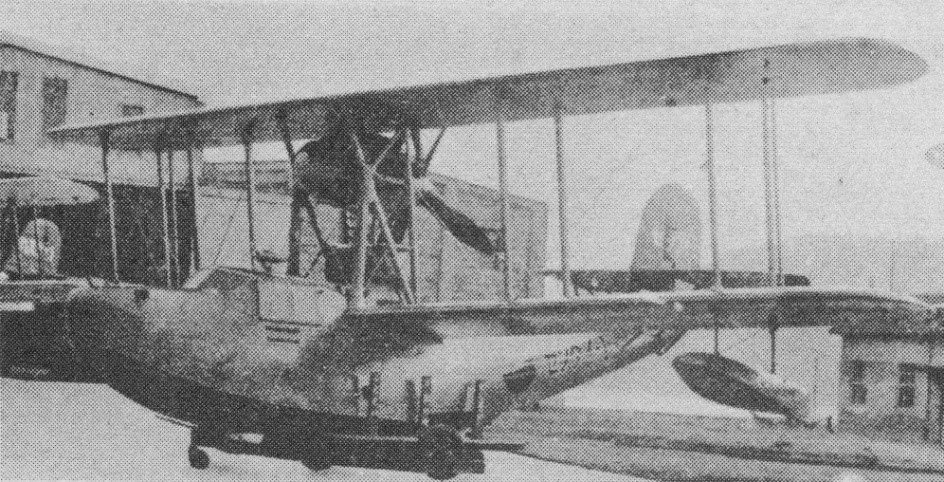
In 1934, based on experience of testing the Experimental 6-Shi Night Reconnaissance Flying boat, the Imperial Japanese Navy drew up a specification for a new night reconnaissance aircraft, intended to shadow enemy fleets during the cover of darkness, with orders being placed with Aichi and with Kawanishi.

Aichi’s design, with the company designation AB-12, was a single-engined biplane flying boat of all-metal construction. Its two-bay wings folded rearwards to save space on board ship, while its crew of three were accommodated in an enclosed cabin. It was powered by a pusher water-cooled Aichi Type 91 engine, driving a four-blade wooden propeller.

The first prototype flew in December 1934, and when tested proved to have superior stability to the competing Kawanishi E10K, and so was ordered into production.

The AB-12 entered service in August 1936 with the Japanese Navy as the Type 96 Night Reconnaissance Seaplane, with the short designation E10A. The allied code name ‘Hank’ was assigned before its appearance or manufacturer was known.

Fifteen aircraft were built for the Imperial Japanese Navy serving from 1936, remaining in service until 1941, being phased out in 1941 before the Japanese attack on Pearl Harbour.

E10A
Powerplant: × Aichi Type 91 W-12, 370 kW (500 hp) to 485 kW (650 hp)
Propeller: 4-bladed wooden fixed-pitch pusher
Wingspan: 15.5 m (50 ft 10 in)
Wing area: 52.1 m2 (561 sq ft)
Length: 11.219 m (36 ft 10 in)
Height: 4.5 m (14 ft 9 in)
Empty weight: 2,100 kg (4,630 lb)
Gross weight: 3,300 kg (7,275 lb)
Wing loading: 63.2 kg/m2 (12.9 lb/sq ft)
Power/mass: 0.113 kW/kg (0.069 hp/lb)
Maximum speed: 206 km/h (128 mph, 111 kn) at sea level
Cruise speed: 106 km/h (66 mph, 57 kn) at 1,000 m (3,281 ft)
Range: 1,852 km (1,151 mi, 1,000 nmi)
Service ceiling: 4,120 m (13,520 ft)
Time 3,000 m (9,843 ft): 17 minutes 42 seconds
Guns: 1× 7.7 mm machine gun flexibly mounted in nose
Crew: 3

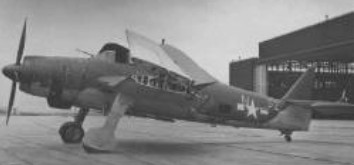
Aichi AM-23 / B7A Ryusei

The Imperial Japanese navy drew up the specification for a large torpedo/ dive-bomber to replace the Nakajima B6N and Yokosuka D4Y in 1941

The experimental Nakajima Homare 11 twin-row radial powerplant developing around 1342kW was selected as the specification called for an internal bombload of up to 500kg or the carriage of an 800kg torpedo externally.
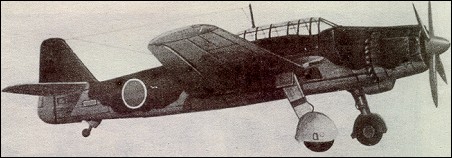
Aichi began work and its AM-23 prototype flew in mid-1942. This aircraft, then designated Navy Experimental 16-Shi Carrier Attack Bomber (Aichi B7A1), was a mid-wing monoplane of inverted gull-wing configuration, with the main units of the retractable tail-wheel landing gear, mounted at the ‘elbows’ of each wing. A section of each outer wing panel folded for carrier stowage. The fuselage and tail unit were conventional, providing enclosed accommodation for a crew of two. An underside provision was allowed for the carrying of a single 1,764lb torpedo. Additionally, two forward-firing fixed 20mm cannons were mounted in the leading wing edges. A single defensive 13mm machine gun was allotted for the rear cockpit position.

Aichi B7A Ryusei Article

It was almost two years before the type was ordered into production as the Navy Carrier Attack Bomber Ryusei (Shooting Star), or Aichi B7A2. Apart from nine prototype B7A1s, only 80 examples were completed by Aichi before its factory was destroyed in the serious earthquake of May 1945; an additional 25 were built by the Navai Air Arsenal at Omura.

By the time these aircraft entered service, when they were allocated the Allied codename ‘Grace’, the Japanese navy no longer had any carriers from which they could operate, with the result that they saw only limited use from land bases.

B7A1
Engine: Nakajima Homare 11, 1875 hp
Wingspan: 47 ft 3 in
Max speed: 337 mph at 20,345 ft

B7A2
Engine: 1 x Nakajima NK9C Homare-12, 1370kW / 2,000hp
Wingspan: 14.4 m / 47 ft 3 in
Length: 11.5 m / 37 ft 9 in
Height: 4.08 m / 13 ft 5 in
Wing area: 35.4 sq.m / 381.04 sq ft
Take-off weight: 5625-6500 kg / 12401-14330 lb
Empty weight: 3810 kg / 8400 lb
Max. speed: 565 km/h / 351 mph / 306kt
Service Ceiling: 11250 m / 36900 ft
Range w/max.fuel: 3300 km / 2051 miles
Range w/max.payload: 1800 km / 1118 miles
Crew: 2
Armament: 2 x 20mm cannons, 13mm machine-gun, 800-kg torpedo or 800kg of bombs

Aichi AB-2

The Aichi AC-1 was an experimental 330 hp nine-cylinder air-cooled radial engine. First run in 1929, it was used to power the newly designed Aichi AB-2, a catapult-launched reconnaissance seaplane.

The AB-2 with its AC-1 engine is noted for being the first shipboard reconnaissance seaplane and engine combination designed and manufactured entirely in Japan, without foreign assistance. This was a major turning point, not only for Aichi, but for all of the other Japanese aircraft and engine manufacturers, as they no longer need rely on foreign designs.

The engine proved to be a disappointment by not performing as expected. On one test flight, an exhaust fire spread to the airframe and the aircraft was lost, and, soon after, the project ended.

Aichi Tokei Denki Kabushiki Kaisha

The Aichi Watch and Electric Machinery Co, Nagoya, Japan.
Aichi Tokei Denki Kabushiki Kaisha was established in 1899 as a manufacturer of electrical equipment and watches, but first built airplanes in 1920 and aero engines in 1927.
From 1920s essentially a supplier to the Japanese Navy, but built civil types also, including a mail plane for the Japan Air Transport Company. Aichi established a working relationship with Ernst Heinkel Flugzeugwerke in Germany. Wishing to contend in early 1931 for an Imperial Japanese navy requirement for a two-seat carrier-based dive-bomber, Aichi requested Heinkel to design and build an aircraft to meet the navy’s specification. Required for operation with float or wheel landing gear, the resulting Heinkel He 50 prototype flew in the summer of 1931 with twin floats. A second version, with wheel landing gear, was supplied to Aichi under the export designation He 66.
The aircraft DIA type of 1934 sank US gunboat Panay in 1937. Later D3A monoplane was perhaps the most famous of the company’s types, duplicating German interest in dive-bombers. Code-named “Val” by the Allies, this type attacked Pearl Harbor December 7,1941, and was also successful against British warships in the Indian Ocean. H9A1 twin-engined flying-boat was built in numbers; also notably E16A reconnaissance floatplane; B7A attack bomber; and the M6A catapultlaunched submarine-borne bomber, intended to attack such targets as the lock gates of the Panama Canal.

Ahrens AR-404

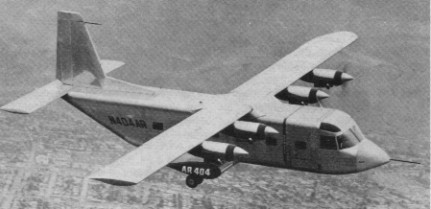
Ahrens developed AR 404 twin-turboprop 30 passenger or cargo transport, intended to be simple to maintain and having a constant square-section fuselage to provide maximum volume.

Designed by Peter Ahrens in Cali¬fornia for production in Puerto Rico

The prototype N404AR first flew on 1 December 1976, piloted by Herman “Fish” Salmon, followed by the first production-standard aircraft built in Puerto Rico in October 1979, but program halted through lack of funding.

The Ahrens 404 is designed for simple manufacture, harsh conditions, easy repair, the four turboprop utiliplane featured an aft loading ramp.

One other was built, N1028G.

AH 404
Engines: 4 x 420hp GMC-Allison 250-B17B
Wingspan: 65’0″
Length: 48’4″
Useful load: 9400 lb
Max speed: 210 mph
Cruise: 160 mph
Range: 1380 mi
Seats: 31

AgustaWestland Project Zero

The first eVTOL technology demonstrator was the Agusta Westland Project Zero hybrid tiltrotor/lift fan aircraft. It was developed to investigate the use of all electric propulsion and other advanced technologies in a vertical lift aircraft. Project Zero was approved in December 2010 and by June 2011, a full-scale demonstrator performed an initial tethered flight at Cascina Costa, Italy. The Project Zero demonstrator was not flown in forward flight.

Agusta P.111      

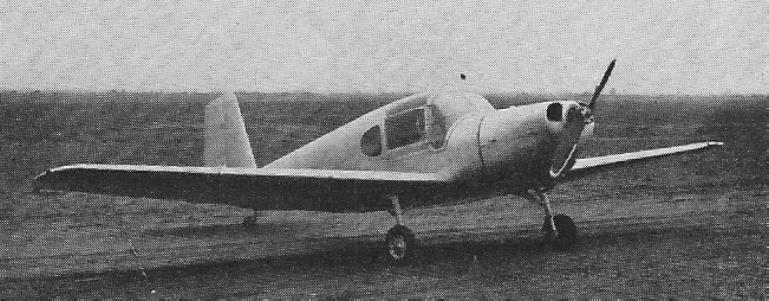
The Agusta P.111 designed by Ing. Ermenegildo Preti was built in 1951 by by Construzioni Aeronautiche Giovanni Agusta, was derived from the CVV P.110 and intended as a three-seat basic trainer and communications monoplane.

Differing from the P.110 primarily in having a fixed, tailwheel undercarriage, and a 185 hp Lycoming O-435-1 engine, the P.111 did not receive production orders, and only a sole prototype flew.

Engine: 185 hp Lycoming O-435-1
Wingspan: 34 ft 9 in
Length: 24 ft 3.25 in
Height: 9 ft
Loaded weight: 2425 lb
Max speed: 136 mph
Cruise: 118 mph
Range: 404 mi