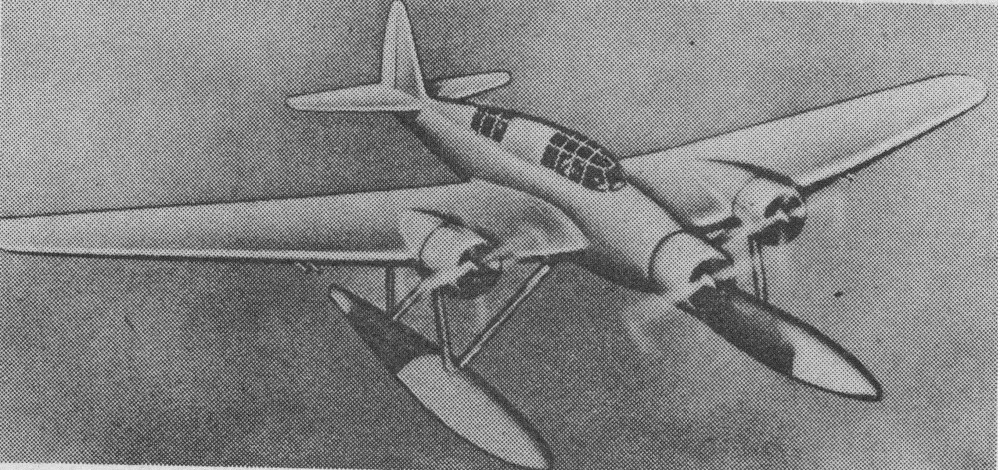
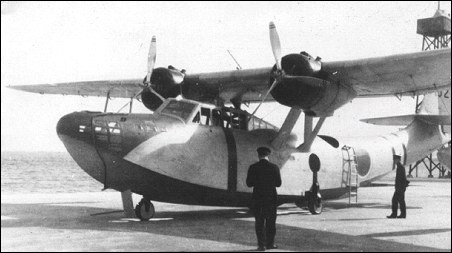
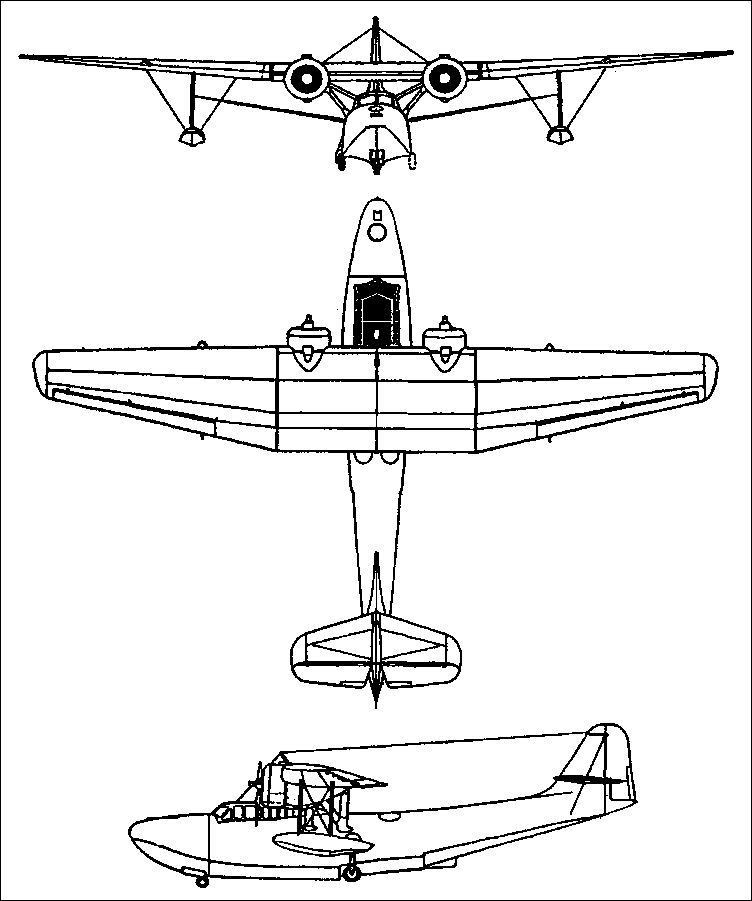
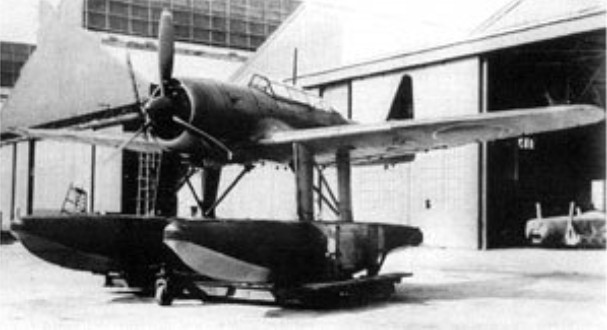
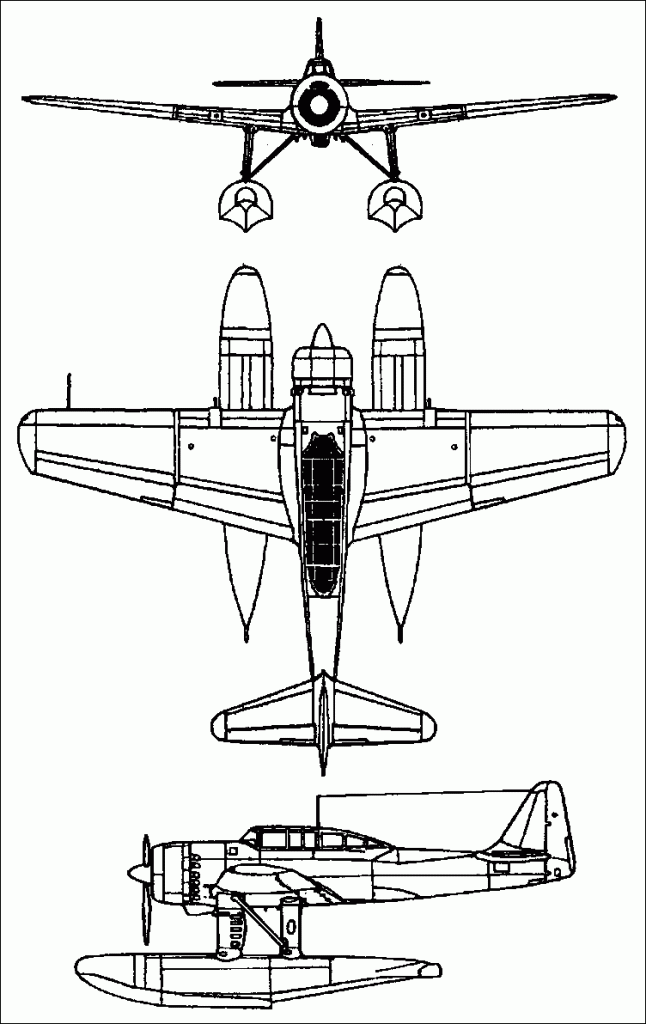
The Aichi AI-104 Type 98 Reconnaissance Floatplane never existed, yet it was described in detail in recognition manuals as late as February 1943. It may have been a mis-identified Italian CANT Z.506B that was illustrated in December 1938 Japanese magazines.
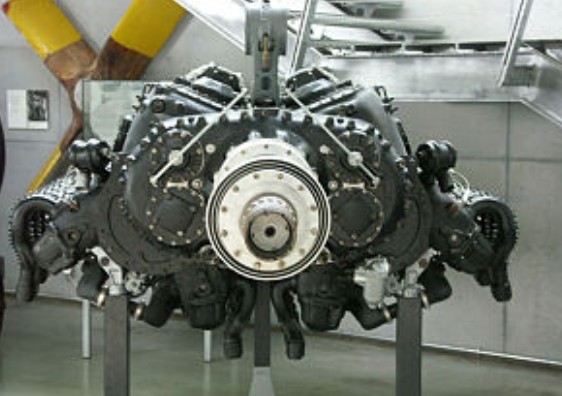
DB 610 gearbox end showing same two-engine arrangement
The Aichi Kokuki KK Ha-70 was a compound engine composed of two 1,700 hp 12-cylinder liquid-cooled inverted V-12 Aichi Atsuta aircraft engines mounted to a common gearbox, first run in 1945. The only aircraft powered by the Ha-70 was the Yokosuka R2Y, an Imperial Japanese Navy Air Service (IJNAS) prototype reconnaissance aircraft that was designed and built near the end of World War II. Contents
In common with Daimler-Benz, Aichi Kokuki KK joined two Aichi Atsuta engines to drive a single propeller through a combining gearbox in very similar fashion to the Daimler Benz DB 606 (two Daimler-Benz DB 601 engines coupled to a gearbox),
The Yokosuka R2Y prototype reconnaissance aircraft required a new engine of 3,400 hp (2,535 kW) and after studying the Daimler-Benz DB 606A-2 engine that powered the Heinkel He 119 single-engine reconnaissance bomber, Aichi determined that the required horsepower could be attained by coupling two Atsuta engines with a common gearbox. To obtain the required power the Atsuta would require up-rating by at least 300 hp (224 kW) horsepower; Aichi continued to improve the Atsuta 32, eventually extracting the required 1,700 hp (1,268 kW)
The two inverted Vee Atsuta engines were mounted side-by-side, each rotated outboard from the centre-line so that the inner banks were upright, with sufficient room between them for the exhaust manifolds. The engines were attached to a gearbox that combined the two separate engine drives into a single output shaft.
Fitted to the R2Y the Ha-70 was mounted behind the pilot, requiring a long drive shaft to drive the nose-mounted gear box that mounted the six-bladed propeller.
Type: Two coupled twelve-cylinder liquid-cooled supercharged 60° inverted Vee aircraft piston engines Bore: 150 mm (5.91 in) Stroke: 160 mm (6.30 in) Displacement: 33.93 L (2,070.5 in³) each, 67.86 L (4141 in³) total Valvetrain: Two intake and two sodium-cooled exhaust valves per cylinder actuated via a single overhead camshaft per cylinder block. Supercharger: Gear-driven single-speed centrifugal type supercharger[3] Fuel system: Direct fuel injection Oil system: Dry sump with one pressure and two scavenge pumps Cooling system: Liquid-cooled Power output: Takeoff: 2,500 kW (3,400 horsepower)
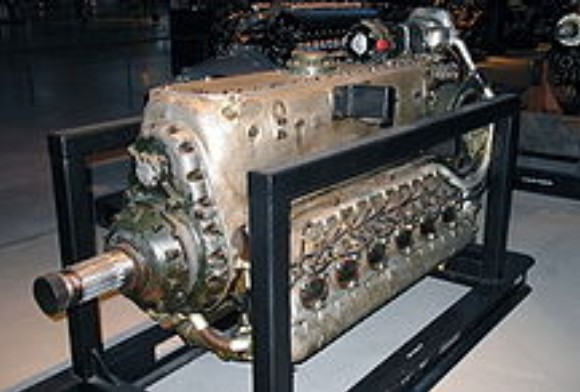
The Aichi Kokuki KK AE1A Atsuta (Japanese:アツタ or 熱田) was a Japanese licensed version of the German Daimler-Benz DB 601A 12-cylinder liquid-cooled inverted-vee aircraft engine. The Atsuta (first rn in 1942) powered only two models of Imperial Japanese Navy Air Service (IJNAS) aircraft aircraft in World War II. The Imperial Japanese Army Air Service (IJAAS) used the same engine (manufactured by Kawasaki as the Ha-40) to power its Kawasaki Ki-61 Hien (Allied reporting name “Tony”) fighter. Contents
Daimler-Benz granted Aichi Kokuki KK, a part of the Aichi Clock and Electric Co. (Aichi Tokei Denki KK), a license to manufacture the DB 600A through D models in November, 1936. At that time the Aichi Aircraft Company was building only the Nakajima Kotobuki 9-cylinder air-cooled radial engine at its Atsuta Engine Plant, located in south central Nagoya. It was necessary to re-tool the factory for the production of the new Daimler-Benz engine. Two DB-600 series engines were imported that year and three the next, all to be used as production patterns.
It was the Imperial Japanese Navy’s common practice to use a coded designation while an engine was in experimental or pre-production status. This engine was coded “AE1A”, which decodes as: A=Aichi Tokei Denki KK, E=Liquid-cooled, 1=Aichi’s first liquid-cooled engine model, and A=first version of that engine model. It was the Imperial Japanese Navy’s common practice to refer to its engines by name, while the Imperial Japanese Army referred to its engines by their engine (Japanese: Hatsudoki abbreviated Ha) model number. Ha numbers were assigned in sequence as the engine design was accepted.
The Japanese method of identifying model numbers of aircraft engines is unique in that the model number always has two digits and may be followed by one or more letters. The first digit represents the major version of the engine and the second number represents the minor version of that model engine. The model number follows the name (IJNAS engines) or the Ha number (IJAAF engines).
The first model number assigned to an engine is always 11, meaning the first major design and first minor version of that design. A major change to the design increments the first number and resets the second number to one. A minor change to the engine model increments the second number by one. If a very minor change is made, suffix letters are added after the model number.
When the AE1A engine was accepted by the IJNAS, its coded designation was dropped and a name was chosen. It is from the Atsuta factory that the engine name was derived.
The first production engine was the Atsuta 12 rated at 1200 hp. The model number 12 indicates this was the first model with one minor change.
By early 1938 the Japanese Navy had also acquired the German He 118 V4 two-seat dive bomber aircraft, along with its production rights. This aircraft was powered by the DB 601A. By 1939, eleven of the more advanced model DB 601A engines were imported. Manufacturing rights were updated for Aichi and granted to Kawasaki to build this model. The new engine received AE1P as its experimental designation.
When the AE1P design was accepted, Aichi’s version became the Atsuta 32 and Kawasaki’s version became the Ha-40.
The Atsuta 12 rated at 1200 hp was chosen to power the Yokosuka D4Y1 when it went into production. The D4Y2 was powered by the 1400 hp Atsuta 32 when it became available. The success of both airplanes was attributed to the slender lines of the high powered liquid-cooled engine.
A new top-secret aircraft that was to be transported and launched from a large submarine was ordered by the IJN in the spring of 1942 as the 17-Shi Special Attack Bomber. That aircraft became the Aichi M6A Serian (Shisei-Seiran), along with its M6A1-K Ninzan (Shisei-Seiran Kai) land-based trainer version.
Four preproduction M6A aircraft were completed, a firsthand account stating that one had a 1,200 hp Atsuta 12 engine, while the others three had Atsuta 32’s. The first aircraft’s engine was later changed to an Atsuta 32.
Eighteen M6A1 Special Attack Bomber versions followed, and these had the Atsuta 32 engine as well. Lastly, two of the original M6A1 prototypes were converted into M6A1-K Nanzan land-based training aircraft.
Aichi manufactured 873 Atsuta series engines during World War II. These were shared between the twenty-two M6A1/M6A1-K and all D4Y1/2 aircraft. Peak production of the Atsuta 32 engine was in May, 1944, when 107 engines were produced.
A serious problem with the Aichi and Kawasaki version of the Dailmer-Benz engine was that that of holding a close tolerance fit between the crankshaft and its bearings on this fairly long engine. The result was that the engine proved to be prone to crankshaft failure. Additionally, there was often great difficulties obtaining engine components which, along with repeated air attacks on the Atsuta engine plant, eventually brought engine production to a standstill.
Maintenance difficulties with the Atsuta and Ha-40 engines eventually led to the installation of the more reliable Mitsubishi Kinsei 62 radial engine for the D4Y3 model 33, and the Mitsubishi Ha-112 radial air-cooled engine for the Army’s Kawasaki Ki-61, which then became known as the Ki-100 Type 5 Fighter. Such a modification was not possible for the M6A1 as it could only use the liquid-cooled inverted-vee type engine, as it had to fit the submarine’s confined hangar. The M6A1 Seiran then became the only Japanese airplane that retained the inverted-vee engine installation throughout the war.
Postwar evaluation by the Air Technical Service Command’s Foreign Aircraft Evaluation Center for the Air Force (located at Wright Field and Freeman Army Airfield) found the Atsuta engine’s standard of workmanship was not as good as that of the Army’s Kawasaki Ha-40, and far worse than Mitsubishi and Nakajima.
Type: Twelve-cylinder liquid-cooled supercharged 60° inverted Vee aircraft piston engine Bore: 150 millimetres (5.91 in) Stroke: 160 millimetres (6.30 in) Displacement: 33.93 L (2,071 cu in) Length: 215 cm (84.65 in) Width: 71.2 cm (28.03 in) Height: 106 cm (41.73 in) Dry weight: 715 kg (1,576 lb) Valvetrain: Two intake and two sodium-cooled exhaust valves per cylinder actuated via a single overhead camshaft per cylinder block. Supercharger: Gear-driven single-speed centrifugal type supercharger[10] Fuel system: Direct fuel injection Oil system: Dry sump with one pressure and two scavenge pumps Cooling system: Liquid-cooled Reduction gear: 0.532:1 (AE1A); 0.4:1 (AE1P) Power output: Takeoff: At sea level: 1,400 hp (1,419 PS) at 2,800 rpm Cruise: At 1,700 m (5,600 feet): 930 kW (1,250 hp) at 2,600 rpm (AE1A) Cruise: At 1,000 kW (1,340 hp) at 2,600 rpm (AE1P) Cruise: At 5,000 m (16,000 feet): 960 kW (1,290 hp) at 2,600 rpm (AE1A) Compression ratio: 7.2:1 (AE1A); 7.5:1 (AE1P)
The Aichi AC-1 was an experimental 330 hp nine-cylinder air-cooled radial engine. First run in 1929, it was used to power the newly designed Aichi AB-2, a catapult-launched reconnaissance seaplane.
The AB-2 with its AC-1 engine is noted for being the first shipboard reconnaissance seaplane and engine combination designed and manufactured entirely in Japan, without foreign assistance. This was a major turning point, not only for Aichi, but for all of the other Japanese aircraft and engine manufacturers, as they no longer need rely on foreign designs.
The engine proved to be a disappointment by not performing as expected. On one test flight, an exhaust fire spread to the airframe and the aircraft was lost, and, soon after, the project ended.
Specifications Type: Nine-cylinder, air-cooled, Radial aircraft piston engine Valvetrain: Two overhead valves per cylinder Supercharger: gear driven single-speed centrifugal Fuel system: Carburetor Oil system: Dry sump with scavenging pump and pressure pump Cooling system: Air-cooled
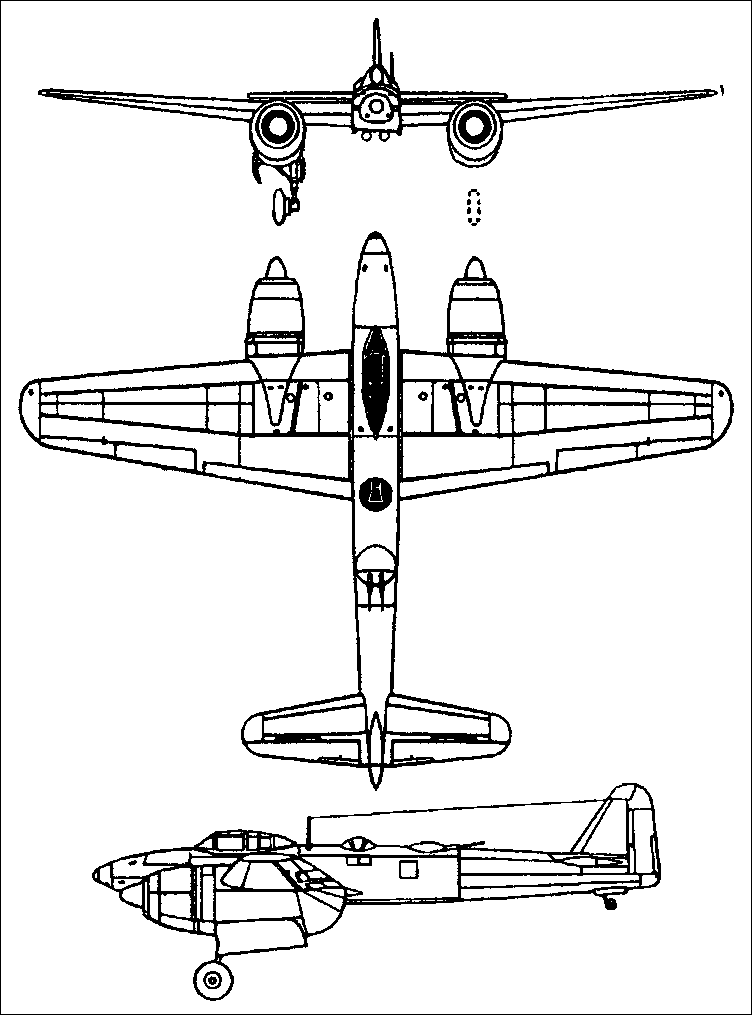
The Aichi S1A Denko of 1945 was never flown. Both prototypes of the Homare 22-powered night interceptor were destroyed during bomb attacks.
S1A Engine: 2 x Nakajima NK9K-S “Homare-22”, 1500kW Wingspan: 17.5 m / 57 ft 5 in Length: 15.1 m / 49 ft 6 in Height: 4.61 m / 15 ft 1 in Wing area: 47.0 sq.m / 505.90 sq ft Take-off weight: 10180-11510 kg / 22443 – 25375 lb Empty weight: 7320 kg / 16138 lb Max. speed: 580 km/h / 360 mph Cruise speed: 440 km/h / 273 mph Ceiling: 12000 m / 39350 ft Range w/max.fuel: 1670 km / 1038 miles Range w/max.payload: 2500 km / 1553 miles Crew: 2
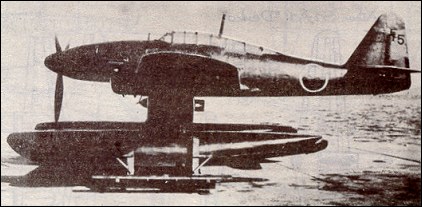
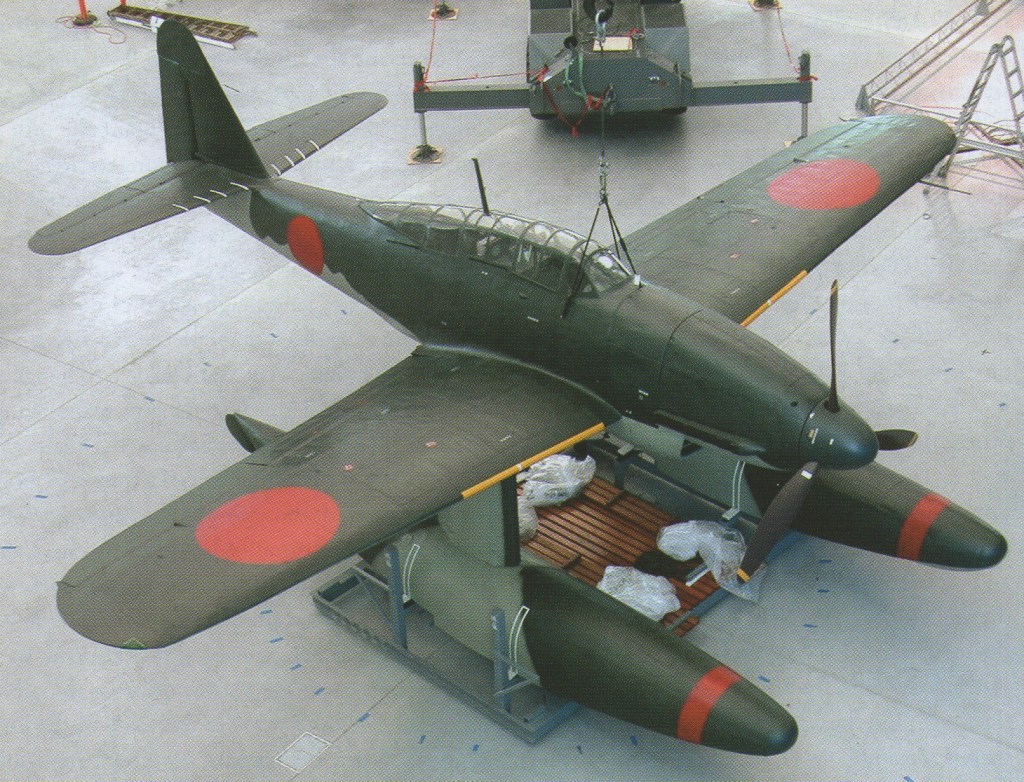
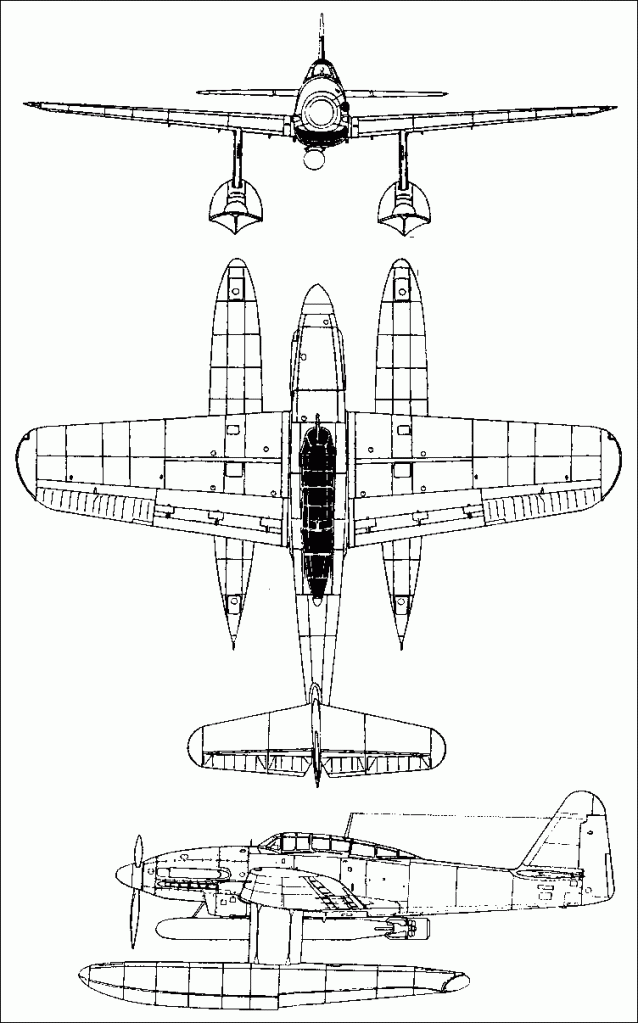
The Aichi M6A-1 Seiran attack floatplane was to be housed in water-tight containers and released from Japanese Navy I-400 class submarines. The wings rotated back and folded flat against the fuselage. Part of the horizontal and vertical stabiliser also folded.
The first prototype flew in November 1943 and a total of 28 were built. The design was in full production in 1945, with the aircraft and its submarine counterparts being readied for an attack on the Panama Canal when the war ended.
The Aichi M6A Seiran (translated as “Mountain Haze”) was a single engine design, powered by a Atsuta 32 inline piston engine of 1,400 horsepower driving a three-blade propeller. Crew accommodations amounted to one personnel and standard armament is known to consist of a single 500lb bomb, mounted under the fuselage presumably. Design of the aircraft consisted of a low-monoplane type with a single rudder aft. The cockpit was situated at center above the wing roots.
At the end of May 1945, at the instigation of Admiral Yamamoto, a series of I-400 submarines were ordered, each able to carry three special duty aircraft. A catapult stretched from the cylinder hangers in the starboard hold, forward to the bow.
The aircraft were twin seater Aichi M6A1 Seiran seaplanes specially designed for a bombing raid on the Panama Canal. The Seirans were powered by German Daimler-Benz DB601A of 1400 hp. They were designed to drop off the crew after the raid, be ditched beside the submarine and sink at once. On 25 June 1945 the plan was halted.
On 25 June 1945, Imperial Japanese Headquarters halted preparations for the Japanese 1st Submarine Flotilla to attack the Panama Canal, and issued new orders: In view of the American threat to the main Japanese islands, the 12 Seiran aircraft were ordered to find a suitable opportunity to launch a kamikaze raid (operation Hikari) against US aircraft carrier, but the surrender came before the operation could be carried out.
A land-based derivative known as the M6A1K “Seiran Kai” was utilized for pilot training purposes. Landing gear was of the standard two-front with a tail wheel at rear for this land-based variant.
Aichi M6A1 Seiran Engine: 1 x Aichi Atsuta Type 32 inline radial, 1,400hp. Wingspan: 12.26 m / 40 ft 3 in Length: 11.64 m / 38 ft 2 in Height: 4.58 m / 15 ft 0 in Wing Area: 27.0 sq.m / 290.63 sq ft Take-Off Weight: 4040-4445 kg / 8907 – 9800 lb Empty Weight: 3300 kg / 7275 lb Maximum Speed: 295mph (474kmh; 256kts) Cruise Speed: 300 km/h / 186 mph Maximum Range: 1,243miles (2,000km) Service Ceiling: 32,480ft (9,900m) Armament: 1 x 13mm machine-gun, 850-kg torpedo or 1 x 800-kg bomb or 2 x 250-kg bombs Crew: 2 Hardpoints: 1
The first prototype flew in September 1940 and a total of 30 were built.
H9A1 Engine: 2 x Nakadjima Kotobuki-42, 530kW Wingspan: 24.0 m / 78 ft 9 in Length: 16.95 m / 55 ft 7 in Height: 5.25 m / 17 ft 3 in Wing area: 63.3 sq.m / 681.35 sq ft Take-off weight: 7500 kg / 16535 lb Empty weight: 4900 kg / 10803 lb Max. speed: 315 km/h / 196 mph Cruise speed: 220 km/h / 137 mph Ceiling: 6780 m / 22250 ft Crew: 5 Passengers: 3 Armament: 2 x 7.7mm machine-guns, 250kg of bombs
Aichi (along with Nakajima and Mitsubishi) submitted their monoplane design designed by a team under Tokuhishiro Goake to a 1936 Japanese Navy specification (11-Shi) for a carrier-based dive-bomber to replace the aging D1A biplane series. Only Aichi’s and Nakajima’s submissions were pressed for further development with the request for a full working prototype.
The initial prototype was completed in December of 1937 and first flew in 1938 and fitted with Nakajima Hikari 530kW / 710 horsepower engines. Despite a poor showing, a second improved prototype was made in an attempt to address issues in stability, strength and power. The second prototype was selected for production over the Nakajima model.
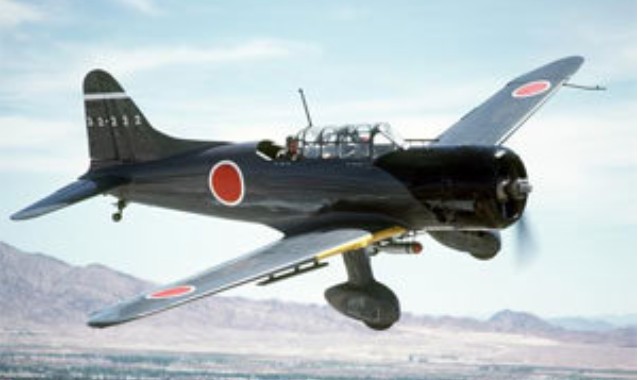
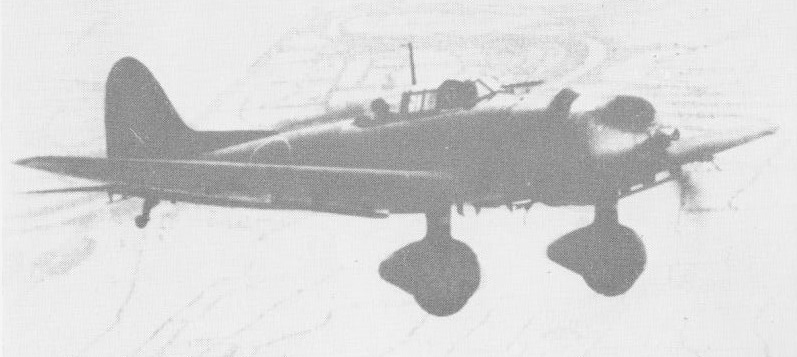
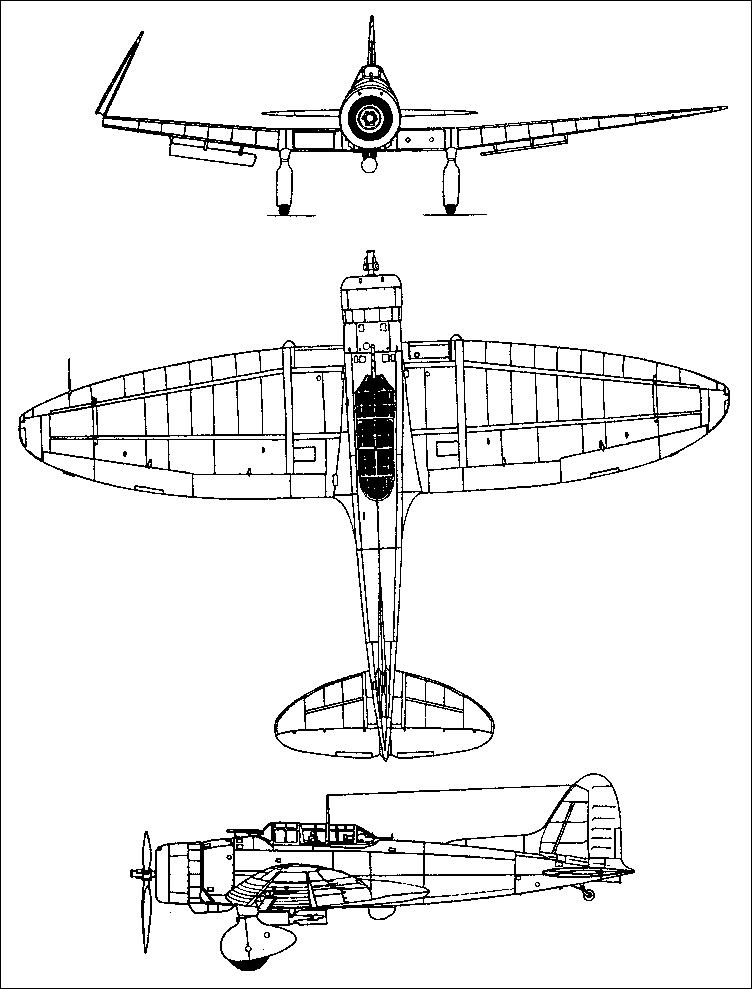
Production D3A1 aircraft features included slightly smaller elliptical wings, with narrow dive brakes and carrying spatted landing gears, a 1000 hp / 745kW Mitsubishi Kinsei 43 radial in a redesigned cowling, tandem cockpits under transparent canopies, one movable and two fixed machine guns, and normal bombload of one 250 kg (551 lb) weapon on swinging arms, plus two 60 kg (132 lb) under the outer wings. A dorsal fin extension considerably improved the aircraft’s manoeuvrability. Carrier trials were flown in August 1940, and substantial numbers of D3Als were operational from land bases in China and Indo China from October 1940.
Standard armament of production models was 3 x 7.7mm machine guns. Two Type 97 Light Machine Guns were fixed to fire forward and controlled by the pilot while a single Type 92 Heavy Machine Gun was fitted in a flexible mount in the rear cockpit.
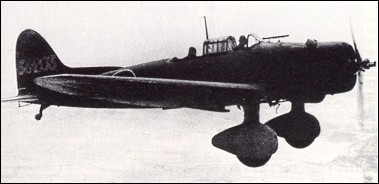
Early “Vals” were flown in limited land-based operations in the Indo-China theatre though the rest of the war would see them operating in unison with her Imperial Japanese Navy carrier-based counterparts. The D3A series of aircraft (code named “Val” by the Allies) were thought to be all but extinct when the war in the Pacific began. The awakening came in the form of the surprise attack on Pearl Harbour as D3A’s made up the principle attack air arm in that assault.
At Pearl Harbor, 126 aircraft dive bombed targets with great accuracy, and were the only type in the first wave of attackers. Subsequently the D3A1, or Type 99 carrier based bomber Model 11, was in the forefront of Pacific battles, receiving the Allied code name ‘Val’. In April 1942 a very small force sank the cruisers HMS Dorsetshire and Cornwall and the carrier Hermes, achieving direct hits with more than four bombs out of five. But in the battles of the Coral Sea, off Guadalcanal, Santa Cruz and the Solomons, both the D3A1 and the Japanese aircraft carriers suffered such crippling losses and forced withdrawal by most of the survivors to land bases.
In June 1942 production of the D3A1 ended after 478 were built, replaced by the more powerful and better streamlined D3A2 with 1300 hp Kinsei 54, and increased fuel capacity.
D3A2
Aichi built a total of 816 of this model, the Type 99 Model 22, by June 1944, and Showa also built 201 by the end of the war. Like all Japanese warplanes of the post 1942 period, the D3A2 had no chance. Nearly all operated from land airstrips, suffered severe losses and accom¬plished little. By mid 1944 most were in use as trainers (D3A2 K), but large numbers were then reassigned to front line duty in the Kamikaze role focusing in and around the areas of Leyte and Okinawa during the final year of the war.
Production amounted to 476 D3Als and 1,016 D3A2. The Allied reporting name was ‘Val’.
D3As would end up being responsible for the destruction of more Allied shipping vessels than any other Axis aircraft during the war.
Prototype Nakajima Hikari 1 Radial, 530kW
D3A1 Engine: Kinsei 44, 1075 hp
D3A1 Engine: 1 x Mitsubishi Kensei-53, 750kW Wingspan: 14.36 m / 47 ft 1 in Length: 10.20 m / 33 ft 6 in Height: 3.85 m / 12 ft 8 in Wing area: 34.9 sq.m / 375.66 sq ft Take-off weight: 3650 kg / 8047 lb Empty weight: 2408 kg / 5309 lb Max. speed: 385 km/h / 239 mph Cruise speed: 295 km/h / 183 mph Ceiling: 9300 m / 30500 ft Range: 1500 km / 932 miles Crew: 2 Armament: 3 x 7.7mm machine-guns, 1 x 250-kg bomb, 2 x 60-kg bombs
D3A2 Engine: 1 x Mitsubishi Kinsei 54 radial, 1,300 horsepower. Span: 14.365 m / 47 ft 1.5in Length: 10.195 m / 33 ft 5.5 in Height: 12.63ft (3.85m) Gross weight: 3800 kg / 8377 lb Empty Weight: 2,570kg / 5,666 lb Maximum speed: 430 km/h (267 mph / 232kt) at 18,536 ft Maximum Range: 840miles (1,352km) Rate-of-Climb: 1,640ft/min (500m/min) Service Ceiling: 34,449ft (10,500m) Max range: 970 mi Bombload; 816 lb Armament: 2 x 7.7mm fixed forward-firing machine guns 1 x 7.7mm trainable machine gun in rear cockpit position. Bombload: 1 x 551lb bomb under-fuselage OR 2 x 132lb bombs under wings Accommodation: 2 Hardpoints: 3
D3A Engine: 1 x Mitsubishi Kinsei, 1,045 hp Length: 34.75 ft / 10.57 m Wing span: 47.7 ft / 14.53 m Weight empty: 5,770 lb / 2,617 kg Max speed: 270 mph / 430 kph Range: 840 miles / 1,350 km Crew: 1 pilot and 1 gunner Armament: 2 x mg Bomb load: 550 lb / 250 kg
Aichi Tokei Denki Kabushiki Kaisha, which was to become a significant aircraft design and construction company during World War II, had been established in Japan during 1899 as a manufacturer of electrical equipment and watches.
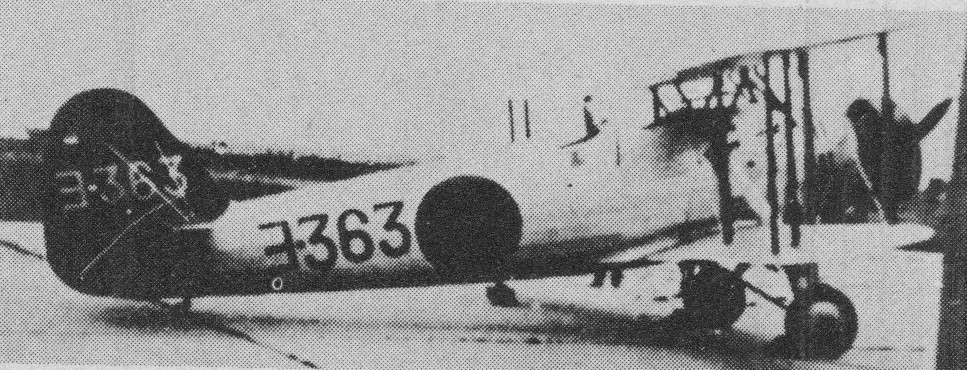
Aichi established a working relationship with Ernst Heinkel Flugzeugwerke in Germany and wishing to contend in early 1931 for an Imperial Japanese navy requirement for a two-seat carrier-based dive-bomber, requested Heinkel to design and build an aircraft to meet the navy’s specification. Required for operation with float or wheel landing gear, the resulting Heinkel He 50 prototype flew in the summer of 1931 with twin floats. A second version, with wheel landing gear, was supplied to Aichi under the export designation He 66.
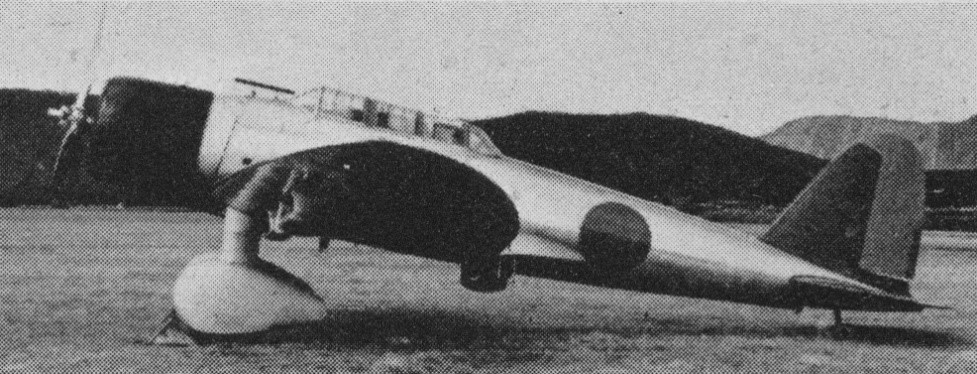
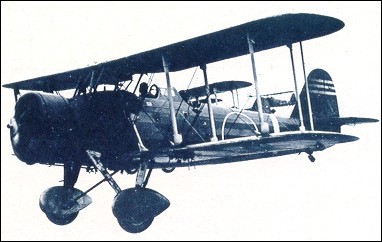
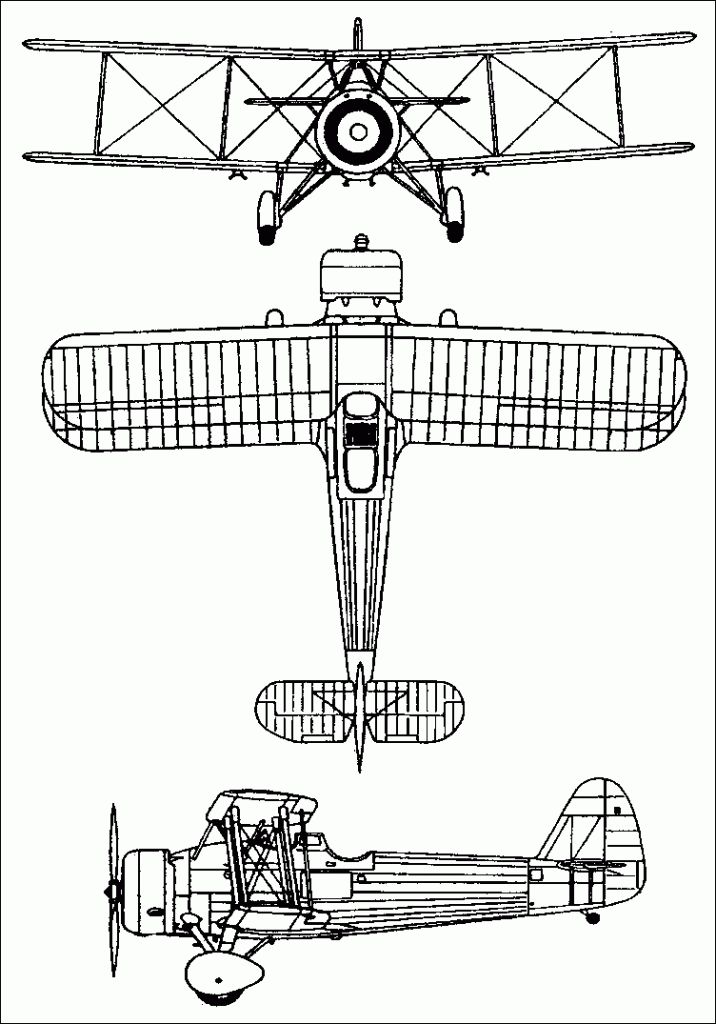
The He 66 was a two-bay biplane of metal construction with metal and fabric covering. The braced tail unit was conventional, and landing gear of fixed tailskid type. As supplied it was powered by a 365kW Siemens SAM-22B (Jupiter VI) radial engine. Modifications carried out by Aichi included strengthening of the landing gear, and installation of a 418kW/580 hp Nakajima Kotobuki 2 Kai 1 radial engine. In this form the Aichi Special Bomber was successful in trials against competing prototypes from Nakajima and Yokosuka, and was ordered into production as the Navy Type 94 Carrier Bomber (Aichi D1A1) in 1934. By 1937 162 production aircraft built, had the radial engine enclosed by a Townend ring, and other modifications included the introduction of slightly swept wings, and replacement of the tailskid by a non-castoring tailwheel. The last 44 had 433kW Kotobuki 3 engines.
Aichi’s design team under Goake created an improved D1A2 with 730¬hp Nakajima, Hikaru 1 engine in a full length NACA cowl, spats and improved windshields. Production of this version totalled 428.
Aichi D1A2
The first A2 flew late in 1936 and by 1940 Aichi had delivered no fewer than 428 as Type 96 carrier bombers. Most saw action in China, one unit dive bombing and sinking the US gunboat Panay in the Yangtze in 1937. Only a small number of D1A1s remained in use with training units at the time of Japan’s attack on Pearl Harbor, on 7 December 1941. By December 1941 only 68 D1A2s were the serving in second-line units, and these were allocated the Allied codename ‘Susie’.
D1A1 Engine: Nakajima Kotobuki 2 Kai 19 cylinder radial 580 hp Span: 11.4 m / 37 ft 4.75 in Length: 9.3 m / 30 ft 6 in Armament: two synchronized 7.7 mm (0.303 in) Type 92 machine guns, one 7.7 mm (0.303 in) Type 92 machine gun in the rear cockpit. 1 x 250 kg (551 lb) bomb under fuselage, 2 x 30 kg (66 lb) bombs under wings.
D1A2 Engine: 1 x Nakadjima “Hikari 1”, 545kW Wingspan: 11.1 m / 36 ft 5 in Length: 9.3 m / 30 ft 6 in Height: 3.41 m / 11 ft 2 in Wing area: 34.7 sq.m / 373.51 sq ft Take-off weight: 2610 kg / 5754 lb Empty weight: 1516 kg / 3342 lb Max. speed: 310 km/h / 193 mph Ceiling: 6800 m / 22300 ft Range: 930 km / 578 miles Crew: 2 Armament: 3 x 7.7mm machine-guns, 1 x 250-kg bomb, 2 x 30-kg bombs
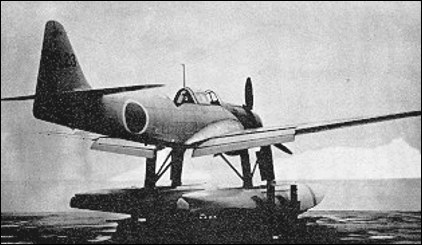
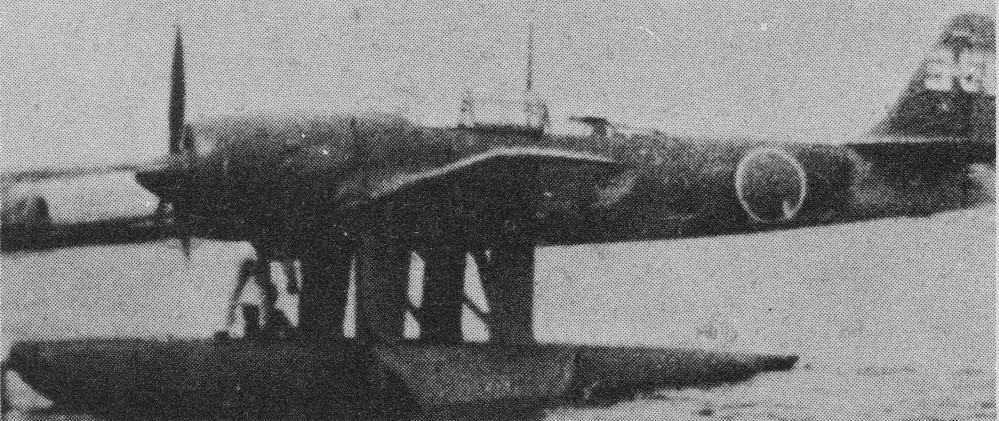
The E16A (“Auspicious Cloud”) floatplane was devised as a direct successor to the E13A “Jake” series. The E16A has crew accommodations for a pilot and a rear-cockpit gunner. Pontoons were fitted underside in place of traditional landing gears. Standard armament was 2 x 20mm forward-fixed cannons in the wings and a single 7.7mm machine gun for the rear gunner. An under fuselage position was utilized for strike runs, though the primary use of the aircraft was of carrier-based reconnaissance.
The first prototype flew in 1942, entering service in 1943, and first saw service during the Philllipines campaign. The E16A was intended as a reconnaissance type, but was often used as a ground attack aircraft and dive bomber. Allied code named ‘Paul’.
E16A1
The Aichi E16A was powered by a single Mitsubishi three-blade MK8D Kinsei 54 14-cylinder radial piston engine and could achieve a service ceiling of nearly 33,000 feet while reaching speeds of over 270 miles per hour. 256 total examples of the E16A were ever produced and of only made up of the single E16A-1 model designation.