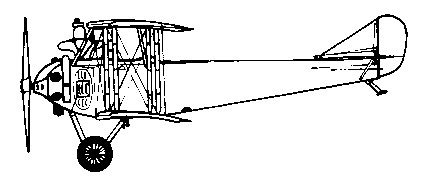
Anderson, Greenwood & Co AG-14 / AND-51

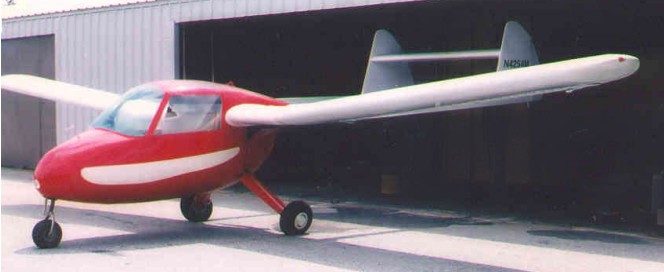
Anderson, Greenwood & Company was organized in 1945 to design and manufacture airplanes. Its first model, the AG 14, was ready five years later. An all-metal pusher, the cabin seats two side-by-side with dual controls.
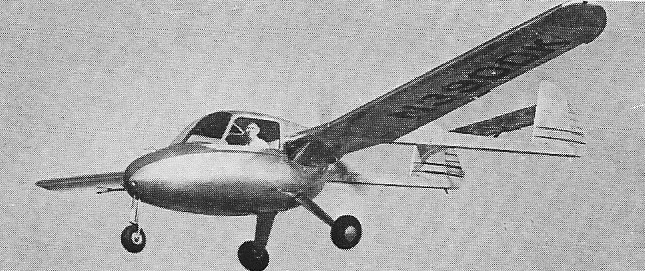
First flying on 1 October 1947, the AG 14 was certificated on 21 September 1950, but the Korean War came along and only 5 AG14’s were ever produced during 1950-1953.
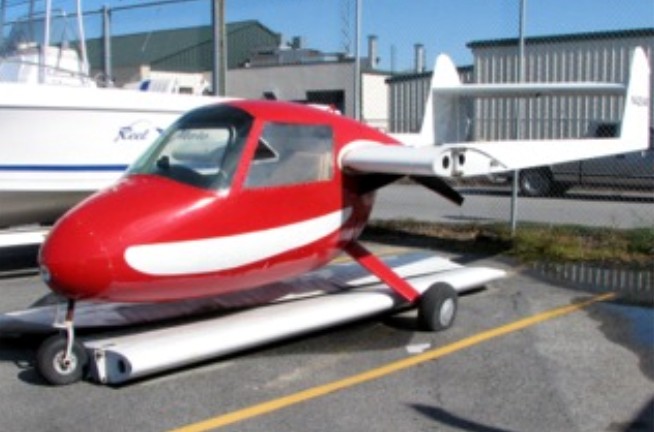
One AG-14 prototype was built in 1947, NX80828, which received the Approved Type Certificate 4A1. It was later re-designated as AND-51.

The five AG-14 production examples built in 1950 were N9300K to N9304K, c/ns 1 to 5), later redesignated AND-51-A, with the same Approved Type Certificate 4A1. C/n 2 later became N4254M and c/n 3 later became N314AG.

One plane modified in 1962 as Mississippi State Univ XAZ-1. Advertised c.1964 by Space Enterprises as Space Coupe AG-14 with 100hp Continental O-220, but no record of production.

Gallery

Engine: Continental C90, 90 hp
Wing span: 34 feet 7 in
Wing area: 120 sq.ft
Length: 22 feet
Height: 7 ft 9 in
Empty weight: 850 lb
Loaded weight: 1400 lb
Top Speed: over 120 mph
Landing Speed: 49 mph
Cruising range: 4 hours
Service Ceiling: 16,500
Rate of Climb: over 700 f.p.m.
Anderson EA-1 Kingfisher             

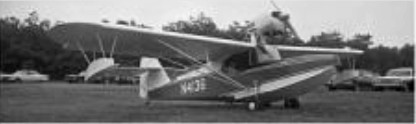
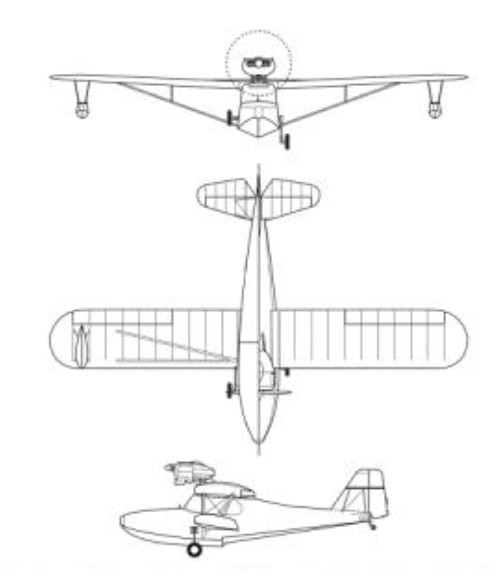
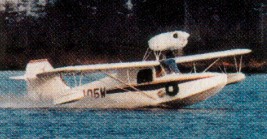
Earl Anderson, a Boeing 747 Captain, spent nine years developing the EA-1 Kingfisher at a cost of $5,500, and first flew it on 24 April 1969. At that time, it used a 100-hp Continental 0-200, similar to the Volmer VJ-22 Sportsman, which served as a design inspiration. Later, Anderson switched to a 115-hp Lycoming 0-235-C1, and by January 1975 had logged more than 600 hours on the amphibian. Seating two people side-by-side in an enclosed cabin, the Kingfisher uses standard Piper J-3 Cub wings, with tip floats of mahogany and plywood covered with fiberglass. The fuselage also is wooden, the framework covered with plywood and fiberglass. The landing gear is retractable.

200 sets of plans had been sold by 1978.

Gallery

Engine: 100 hp Continental O-200
Prop: 2 blade fixed pitch, wood
Max speed: 96 mph
Cruise speed: 85 mph
Range: 322 miles
Empty weight: 1032 lb
MTOW: 1540 lb
Wingspan: 36 ft 2 in
Length: 23 ft 6 in
Wing area: 178.5 sq.ft

Engine: Lycoming O-235, 115 hp.
Span 37 ft l in.
Wing Area 185 sq.ft.
Height 8 ft 4 in.
Length 23 ft 7 in.
Gross Weight 1600 lb.
Empty Weight 1092 lb.
Fuel 20-26 USgal.
Vmax 113 mph.
Cruise 90 mph.
Climb 650 fpm.
Stall 42 mph.
Ceiling 13,500 ft
Range 330 sm.
Seats 2.
Landing gear:
Retractable tail wheel.

Engine: Continental O-200A, 100 hp.
Span 37 ft l in.
Wing Area 185 sq.ft.
Height 8 ft 4 in.
Length 23 ft 7 in.
Gross Weight 1600 lb.
Weight empty: 1050 lbs.
Fuel cap: 20 USG.
Speed max: 95 mph.
Cruise: 85 mph.
Range: 280 sm.
Stall: 42 mph.
ROC: 700 fpm.
Take-off dist: 1000 ft (land), 2000 ft (water).
Seats 2.
Landing gear: Retractable tail wheel.

Anders Kiev / Russian Empire Airship Kiev

Russian non-rigid dirigible “Kiev” «Киев» was designed and constructed by Fedor Ferdinandovich Anders [Федор Фердинандович АНДЕРС].

The first flight is given as August 6, 1911 in the city of Kiev. It is claimed that the non-rigid “Kiev” was the first Russian dirigible built with private funds that carried passengers commercially.

Engine: 1 x 50 hp
Envelope: 1000 cu.m
Length: 35.5 m
Diameter: 7 m

Andreasson BA-6

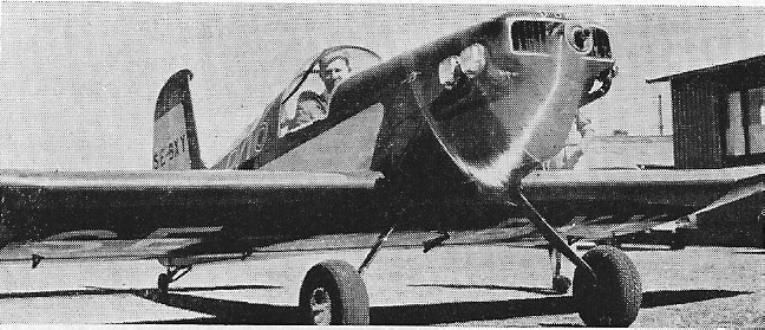
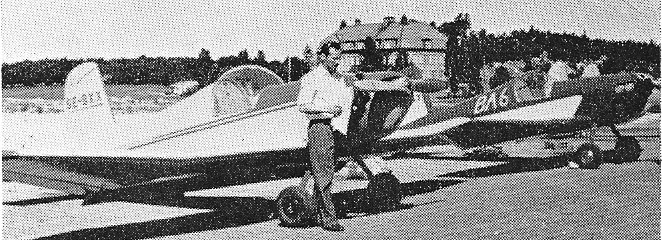
Designed by Björn Andreasson and first flown in 1955, the BA-5 single-seat aerobatic sports monoplane was developed primarily for amateur construction.

The BA-6 is of all-wood construction and, with the exception of the fabric-covered control surfaces, has plywood covering. Fully aerobatic, The BA-6 has a Cessna-type spring-steel cantilever landing gear. Landing flaps are fitted.

SE-BXX and SE-BXY

The first two built were fitted with Continental A65 65hp engines and the airframe will take the Continental C85.

Engine: Continental A65, 65 hp
Wingspan: 23 ft
Length: 16 ft 5 in
Height: 5 ft
Max speed: 145 mph
Landing speed: 34 mph
Time to 20,000ft: 6 min
Range: 1200 mi

Andreasson BA-4 / Crosby Aviation Ltd BA-4B

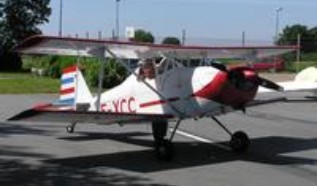
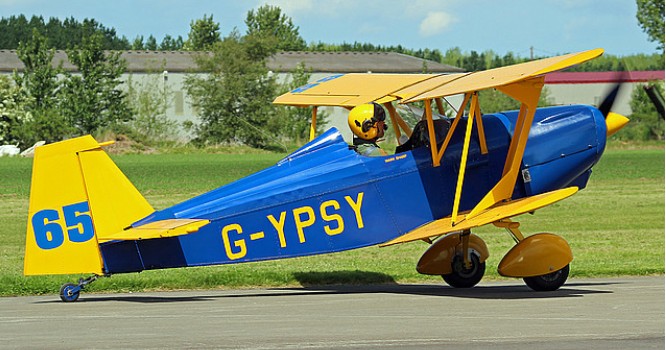
Designed by Björn Andreasson as a homebuilt in 1944 as the single-seat biplane BA-4 was built at Malmo Aviation’s plant at Bulltofta, Sweden.

In 1966 it was designated as the BA-4B c/n 1 registered SE-XBS and was powered by a Continental O-200-A.

The rights to the design were sold to Peter J.C. Phillips who formed Crosby Aviation Ltd to market kits and plans of the BA-4B. The prototype was imported to the UK in 1968 as G-AWPZ.

Andreasson BA-4B

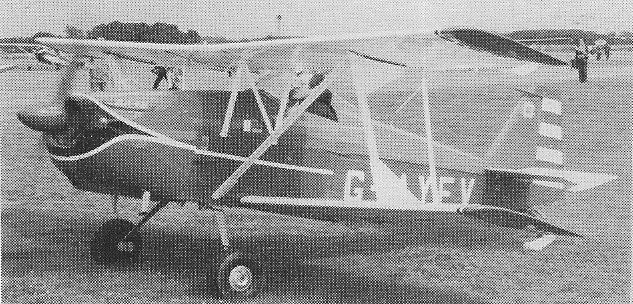
Three aircraft were laid down for initial sales at Knutsford, Cheshire, UK, and all were completed, including G-AYFU, V and W.

Crosby Aviation built G-AYFV

Crosby Aviation offered two versions: the BA-4B with a Rolls-Royce/Continental O-200-A; and the Super BA-4B with a Rolls-Royce/Continental O-240-A.

Gallery

BA-4B
Engine: Rolls-Royce/Continental O-200-A
Wingspan: 18.06 ft
Length: 15.04 ft
Empty Weight: 330 kg / 728 lbs
MTOW Weight: 450 kg / 992 lbs
Stall: 52 kt / 60 mph / 96 kmh
Cruise: 113 kt / 130 mph / 210 kmh
VNE: 130 kt / 149 mph / 240 kmh
Take-off distance (50ft obstacle): 890 ft / 270 m
Landing distance (50ft obstacle): 1530 ft / 465 m

Super BA-4B
Engine: Rolls-Royce/Continental O-240-A
Wingspan: 18.06 ft
Length: 15.06 ft

Anatra D.I Anadis

Experimental fighter aircraft, Russia, 1916

Engine: Salmson 9U (Canton-Unné), 148 hp
Length: 25.427 ft / 7.75 m
Wingspan: 37.402 ft / 11.4 m
Wing area: 398.268 sqft / 37.0 sqm
Max take off weight: 2568.8 lb / 1165.0 kg
Weight empty: 1466.3 lb / 665.0 kg
Max. speed: 83 kts / 153 km/h
Wing load: 6.36 lb/sq.ft / 31.00 kg/sq.m
Crew: 1
No. built: 1

Anatra D Anade

The Anatra D reconnaissance aircraft of 1915 was a German Albatros derivative, with a rotary engine.

Engine: Gnome Monosoupape, 99 hp
Length: 25.262 ft / 7.7 m
Wingspan: 37.73 ft / 11.5 m
Wing area: 376.74 sqft / 35.0 sqm
Max take off weight: 1907.3 lb / 865.0 kg
Max. speed: 71 kts / 132 km/h
Service ceiling: 13123 ft / 4000 m
Wing load: 5.13 lb/sq.ft / 25.00 kg/sq.m
Endurance: 4 h
Armament: 1x MG