Designed in Mexico as an ag aircraft, the prototype Tauro 300 first flew on 3 December 1968. An improved Tauro 350 with more powerful radial engine (350 hp) followed into production from 1977.
Tauro 300
Tauro 300 Engine: Jacobs R-755-A2M1, 300 hp Wing span: 37 ft 6.5 in / 11.44 m Length: 26 ft 11.25 in / 8.21 m Max cabin length: 3 ft 8 in / 1.12 m Max cabin width: 2 ft 10 in / 0.86 m Max cabin height: 4 ft 3 in / 1.295 m Empty weight: 1973 lb / 895 kg MTOW: 3542 lb / 1606 kg Max cruise SL: 78 kt / 90 mph / 145 kph Max ROC SL: 500 fpm / 152 m/min Service ceiling: 14,000 ft / 4250 m Range max fuel: 202 nm / 233 mi / 375 km Seats: 1 Hopper capacity: 230 USG / 191 Imp.G / 870 lt / 1764 lb / 700 kg
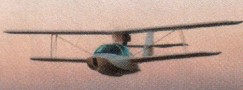
A variation from the original Petrel concept, The Seastar has a larger enclosed cockpit designed especially with larger pilot size and requirement in mind. The hull is wider and slightly longer from the previous models and an improved step in the hull, enhances water take-off capability greatly. A longer lower wing with the fuel tank in the wings adds to flying safety and overall performance. The complete “Seastar fast build kit” consisting of all structural noble hardware and components to construct the LSA aircraft.
Seastar Stall: 35 kt /40 mph /65 kmh Cruise: 78 kt /90 mph /145 kmh VNE: 97 kt /112 mph /180 kmh Empty Weight: 300 kg /661 lbs MTOW Weight: 600 kg /1323 lbs Climb Ratio: 800 ft/min /4 m/s Glide Ratio: 9 Take-off distance (50ft obstacle): 660 ft /200 m Landing distance (50ft obstacle): 820 ft /250 m
Seastar SP Engine: Rotax 912S, 100 hp HP range: 100-120 Wing span: 30.3 ft Length: 21.1 ft Wing area: 196 sq.ft Empty weight: 750 lb Gross weight: 1430 lb Fuel capacity: 20 USG Cruise: 100 mph Stall: 40 mph Range: 520 sm Rate of climb: 1000 fpm Takeoff dist: 260 ft Landing dist: 393 ft Cockpit width: 44 in Landing gear: retract, nose
A light civil amphibian flying-boat, with braced monoplane wing and pusher engine, from 1932, with progressive improvements. The tail was carried on streamlined structure attached to hull.
Based at Garden City, NY. Built Privateer light civil amphibian flying-boats, with braced monoplane wing and pusher engine, from 1932, with progressive improvements. Tail was carried on streamlined structure attached to hull.
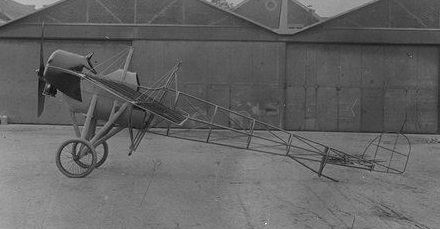
Two-seater designed by Félix Amiot, a famous designer of the 1920s and 30s, this first Amiot machine was built in a garage in the Quartier des Ternes, Paris during 1913. Test flown in 1913 at Issy-les-Moulinaeux but crashed on the field. Of all-metal construction, whereas Amiot had devised a unique method for fitting hollow metal pipes together; a system of construction that was patented in many countries. Félix Amiot started his firm Amiot–S.E.C.M in 1916, building Bréguet and Morane-Saulnier machines under licence.
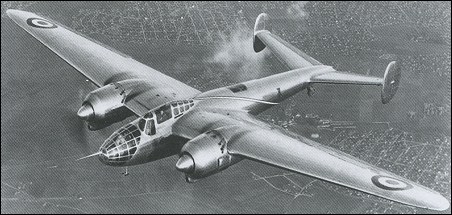
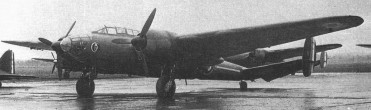
Developed from the Amiot 370 and the Amiot 340, converted to the Amiot 351.01 Gnome-Rhone 14N -20/21 761-kW (1,020-hp) engined prototype bomber, it was followed by production Amiot 351s and 354s. Each version had a streamlined all-metal fuselage, a tapered mid-wing with considerable dihedral and twin Gnome-Rhone 14N radial engines. They differed by the 351 having twin oval fins and rudders and the 354 a large single vertical tailplane. The Amiot 351 had shorter span and greater length than the Amiot 351.01, and was powered by two 708-kW (950-hp) 14N-38/39 radials, while the Amiot 354 was higher powered and reverted to the original tail unit.
Armament was a 20 mm HS 404 cannon on a flexible mounting at the rear of the crew canopy plus single 7.5 mm MAC machine-guns in nose and ventral positions. The bomb load was up to 1,200kg. Eighty-six Amiot 350 series aircraft had been completed including 17 351s and 45 354s, before the Germans occupied the Le Bourget factory in June 1940.
After a number of bombing and reconnaissance missions, the Amiots were converted by the Vichy French for long-range liaison flights.
Amiot 354 Engines: 2 x Gnome-Rhone 14N-48/49, 790kW (1,060 hp) Span: 22.83m (74ft 10.75 in) Length: 14.5m (47ft 6.75 in) Height: 13.39ft / 4.08m Empty Weight: 10,417lbs (4,725kg) Max T/O weight: 11300 kg (24,912 lb) Max speed: 298 mph (480kmh; 259kts) at 13,125 ft Operational range: 1,553 miles with max bombload. Maximum Range: 2,175miles (3,500km) Service Ceiling: 32,808ft (10,000m) Crew: 4 Armament: 1 x 20-mm HispanoSuiza cannon and 2 x 7.5-mm (0.295-in) MAC mg plus Internal bombload: 1200 kg (2,646 lb)
After its Amiot 143, the company produced the Amiot 340.01, modified from the long-range postal Amiot 341. First flown in December 1937 with two 686-kW (920-hp) Gnome-Rhone 14N-0/1 radials. Trials revealed the need for a fourth crew member, 761-kW (1,020-hp) 14N-20/21 engines, and a dihedralled tailplane with endplate vertical surfaces. This resulted in the Amiot 351.01.