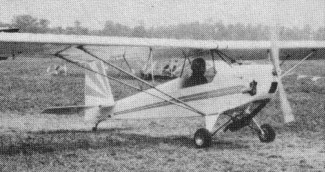
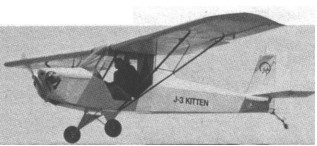
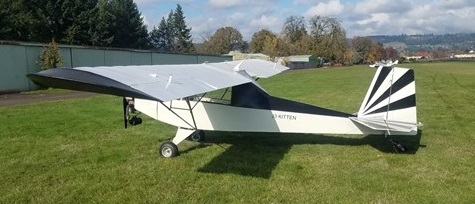
Centre mounted joy stick, rudder pedals, tailwheel steerable through rudder pedals. The Skyseeker J-3 Kitten and J-4 Sportster were to be manufactured in Canada by Modern Aviation Canada Inc.
Empty wt: 240 lbs. Wing span: 29 ft. Wing area: 121 sq.ft. Height: 5 ft ’3 in. Length: 16 ft 3 in. Fuel cap; 5 USG. Engine: Rotax 277 (268 cc) 28 hp. Static thrust: 210 lbs. Max wt: 540 lbs. Stall: 25 mph. Max speed: 63 mph. Vne: 120 mph. Climb rate: 800 fpm @ 45 mph. Design limit: +6, -4g. Glide ratio: 12-1. Wing loading: 4.46 lbs/sq.ft. Power loading: 20.0 lbs/hp.
Centre mounted joy stick, rudder pedals, tailwheel steerable through rudder pedals. The Skyseeker J-3 Kitten and J-4 Sportster were to be manufactured in Canada by Modern Aviation Canada Inc. One of the first Canadian production Kittens was bought in 1985.
J3 Kitten
Engine: Rotax 277 (268 cc) 28 hp. Static thrust: 210 lbs. Wing span: 30 ft 6 in. Wing area: 126 sq.ft. Height: 5 ft 3 in. Length: 16 ft 3in. Max wt: 550 lbs. Empty wt: 250 lbs. Fuel cap; 5 USG. Stall: 25 mph. Max speed: 63 mph. Vne: 120 mph. Climb rate: 700 fpm @ 45 mph. Design limit: +6, -4g. Glide ratio: 12-1. Wing loading: 4.47 lbs/sq.ft. Power loading: 19.64 lbs/hp.
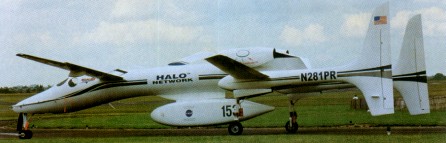
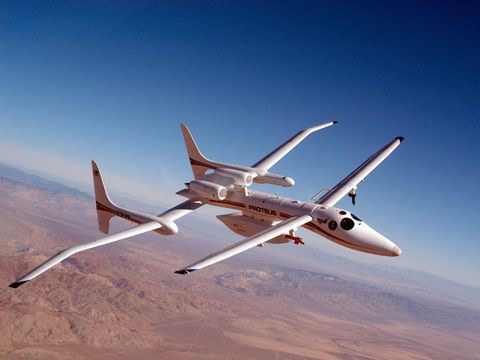
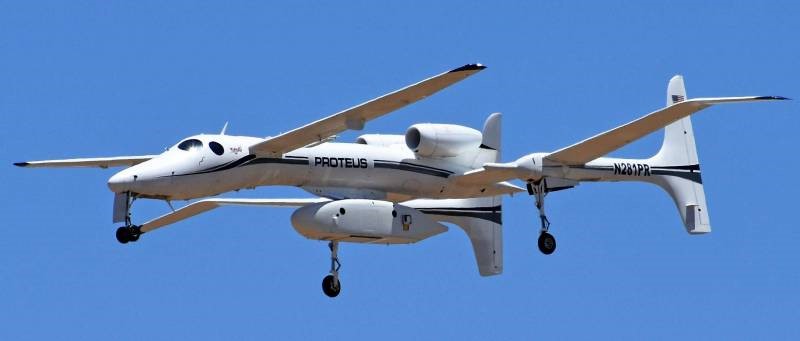
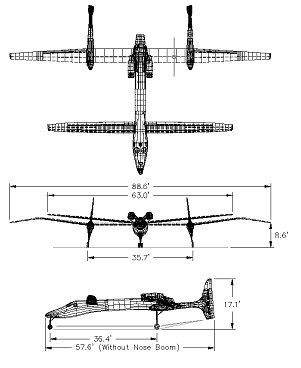
Proteus is a twin turbofan high altitude multi mission aircraft powered by Williams International FJ44-2E engines first flown in July 1998. It is designed by Burt Rutan to carry payloads in the 2000-pound class to altitudes above 60,000 feet and remain on station up to 14 hours. Heavier payloads can be carried for shorter missions. It is intended for piloted as well as for UAV missions. Missions for Proteus include telecommunications, reconnaissance, atmospheric research, commercial imaging, and space launch.
The Proteus is designed with long wings and a low wing loading needed for efficient high altitude loiter. It excels in stability and low noise. It is capable of dynamic maneuvers, needed to operate in adverse conditions. The crisp, short takeoff and landing uses the unique “three-mains” landing gear design intended to increase crosswind and wet runway capability without the use of spoilers.
Engines: 2 x Williams/RR FJ44-2E turbofan, 2293 lb thrust. Op alt: 60,000 ft.
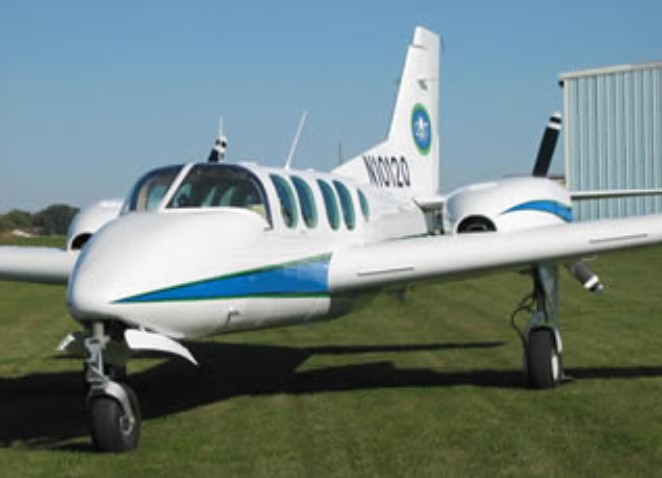
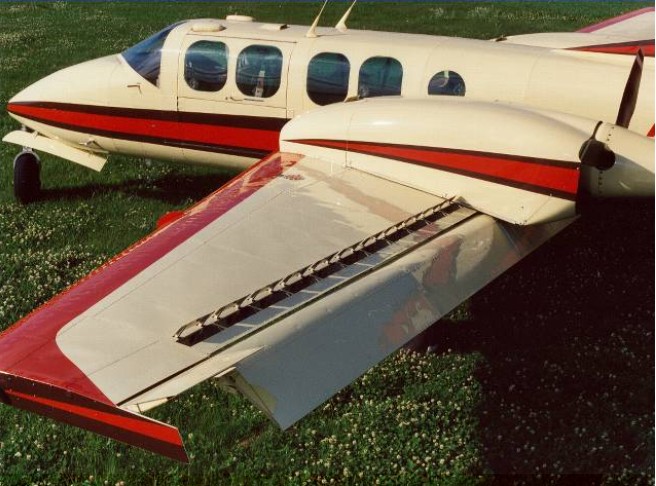
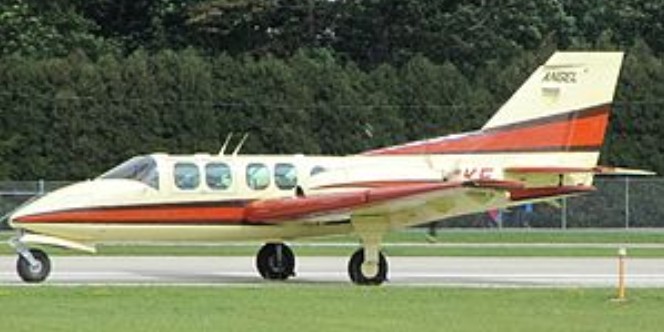
The eight-seat Model 44 Angel STOL missionary, executive and utility aircraft was certificated in 1992, featuring twin piston engines with pusher propellers. Originally The King’s Engineering Fellowship Model 44 Angel, developed by donations for missionary duties and designed by Carl Mortenson.
Design work began at the home of designer Carl Mortenson in 1972, with work on the prototype beginning in 1977, also from the designer’s home. In 1980 the project was moved to the municipal airport in Orange City, Iowa.
The Angel, with fully retractable landing gear and seating for eight offers STOL-capability. With easy seat removal, the Angel can economically carry one or two medical stretcher patients and one or two paramedics.
The Angel’s metal construction is simple, with the capability to use the short rough airstrips. The Angel comes equipped with large, low-pressure main tires for soft ground and rugged main gear. The cabin has been designed and tested for overturn loads, the engine mounts designed to contain the engines for loads up to 20g’s, and the seats crash-tested to absorb energy and restrain occupants to 26g’s.
First flown on 13 January 1984, the Angel was certified to FAR 23 in the USA by the Federal Aviation Administration (FAA) in late 1992.
Engines: Lycoming IO-540-M1C5 300HP(224 kW) @2700 RPM TBO: 2,000 hours Fuel Grade: 100 LL (minimum grade) Propeller: 2 Hartzell HC-E3YR – 2 ALTF/FLC-7458, 76″ dia (75 In min) CS, 3-blade, feathering Wing Span: 39 ft 11.5 in (12.18 m) Wing Area: 225.40 sq ft (20.94 sq.m) Aspect Ratio: 7.08 Length: 33 ft 3 in Height: 11 ft 6 in (3.51 m) Max takeoff weight; 5,800 lbs (2,631 kg) Standard Empty Weight: 3,880 lb (1,760 kg) Standard Useful Load: 1,920 lbs Fuel Capacity: 222 U.S. Gallons usable fuel (1,332 LBS) Cabin Cargo (w/o seats): 84 cu ft, 1,400 lbs Baggage Compartment : 10 cu ft, 200 lbs Minimum takeoff roll: 658 ft Take-off Over 50 ft obstacle: 1,404 ft Take-off Maximum effort: 1,270 ft Landing Distance: 568 ft Landing Distance 50 ft obstacle: 1,046 ft Standard Climb: 1,345 fpm SE Rate of Climb: 196 fpm Service Ceiling (100 fpm): 19,015 ft Single Enging Ceiling (50 fpm): 3,868 ft Maximum Level Speed: 180 kt IAS Cruise @75% pwr (30 min res): 175 kt; Range: 1,137 nm; Endurance: 6.5 hr Cruise @65% pwr (30 min res): 169 kt; Range: 1,266 nm; Endurance: 7.5 hr Cruise @55% pwr (30 min res): 158 kt; Range: 1,406 nm; Endurance: 8.9 hr Cruise @45% pwr (30 min res): 145 kt; Range: 1,493 nm; Endurance: 10.3 hr Cruise @35% pwr (30 min res): 131 kt; Range: 1,720 nm; Endurance: 13.1 hr Vne Never exceed speed: 209 kias Vno Max structural cruising: 174 kias Va Maneuvering speed at 5,800 lb: 139 kias Va Maneuvering speed at 4,200 lb: 121 kias Vle Max landing gear extension speed: 130 kias Vlo Max landing gear operating speed: 130 kias Vfe Max flaps extended speed: 104 kias Vmc Minimum control speed: 65 kias Vy Best rate of climb: 101 kias Vs1 Power off stall, flaps up: 71 kias Vs0 Power off stall, flaps down: 57 kias Crew: One, pilot Capacity: 7 passengers
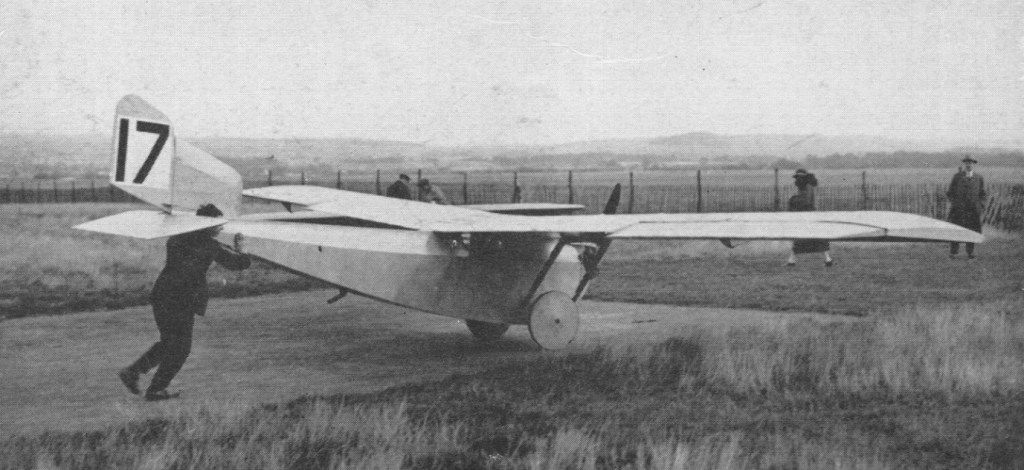
Built in 1924 by the Air Navigation and Engineering Company at Addlestone, Surrey, for the Air Ministry’s light aeroplane competition for two-seaters fitted with engines of up to 1,100 cc, the ANEC was eliminated from the trials owing to problems with the valve springs in its Anzani engine. Entered in the 1925 King’s Cup by Maj J.C. Savage, it did not take part, again owing to engine maladies. After being fitted with a 32 h,p, Bristol Cherub III engine and a strutted undercarriage, the machine finally came into its own, winning the Air League Challenge Cup Race, a 11 6 mile round trip from Castle Bromwich to Woodford, on July 16, 1927. Subsequently operated from Heston aerodrome by Air Commodore Alien Wheeler, the ANEC was withdrawn from use at West Mailing in 1937 before being moved to Old Warden for storage. The fuselage of G EBJO was restored over a three year period in the mid 1990s by Don Cashmore at Radcliffe on Trent in Nottinghamshire, and delivered back to Old Warden in October 1997 for completion by Shuttleworth engineer Andy Preslent. The fuselage and wings were reunited in October 2000. The ANEC then flew with an ABC Scorpion 2 engine restored by two of Shuttleworth’s engine specialists, Phil Norris and Bryan Avery.
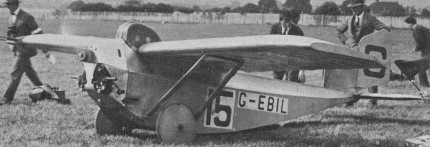
Intent on encouraging British aviation progress, the Daily Mail offered a prize of £1,000 in 1923 for a ‘motor glider’ competition. The Duke of Sutherland offered £500 for the longest flight on one gallon of petrol in an aeroplane with an engine of not more than 750cc capacity. So the Royal Aero Club organised a Light Aeroplane Competition at Lympne in Kent. The ANEC l, G EBIL, was designed by W. S. Shackleton and was one of Britain’s first ultra light aircraft. It was entered in the 1923 Lympne Trials, and in the hands of J. H. James reached a height of 14,000ft after earlier flying 87.5 miles on a single gallon of petrol, powered with the 698cc Blackburne Tomtit. Later it went to Martlesham for testing and acquired service number J7506. It was re engined with a 1000cc Anzani, becoming the ANEC 1A, and was returned for civilian use. With shortened wings it won the high-speed prize at the 1925 Lympne Trials at 83.76 mph. Registration marks were cancelled on January 22, 1926
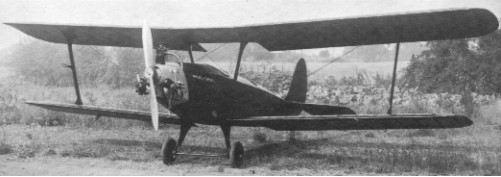
The 1910 Edward F Andrews pusher biplane, the first two-engine airplane, powered by two 36hp Adams-Farwell rotary engines, was designed and built by Edward F. Andrews in the USA.
Andrews designed and constructed the single-place open cockpit biplane, which flew at Daytona Beach for about 100 yards at an altitude of six feet before the rear elevators vibrated loose and the machine came apart.
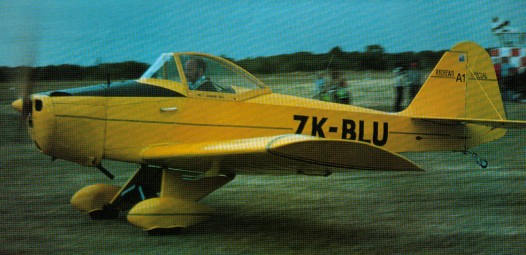
The idea was for an aircraft of low initial cost and low operating cost to enable the many young people of the day to follow up their Private Pilot Licence with a modestly priced 200 hours needed for their Commercial Licence. That was the original concept of the Andrews A.1 and the whole philosophy of its design. The structural design of the A.1 was heavily influenced by the limitations of small production lines and the need to be built in workshops which normally catered for maintenance with the addition of some simple tooling. This aircraft, of which there is only one in existence (ZK-BLU), was the pioneer post-war homebuilt in New Zealand. It was built to Certificate of Airworthiness standard during the 1950’s by a CAD aeronautical engineer, Mr Cliff Andrews, although it later flew under a Permit to Fly. It first flew in 1957 but was largely inactive until 1973 when it was restored by Mr Andrews and sold to Alan Rowe of Lower Hutt. The aircraft’s construction employs a welded tube fuselage and tailgroup, and wings constructed of two wooden spars with a Warren-girder metal truss structure between. The whole airframe is fabric-covered.
Engine: Continental A65, 65 hp. Span: 24 ft 0 in Wing area: 115.5 sq.ft Length: l9 ft 0 in Height: 5 ft 7 in Empty weight: 700 lb MAUW: 950lb Max speed: 102 mph at SL Cruise: 94 mph. ROC: 450 fpm. Range: 270 miles.