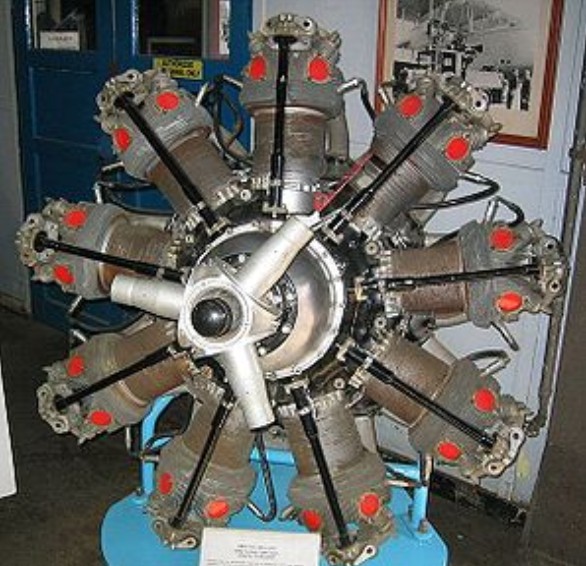
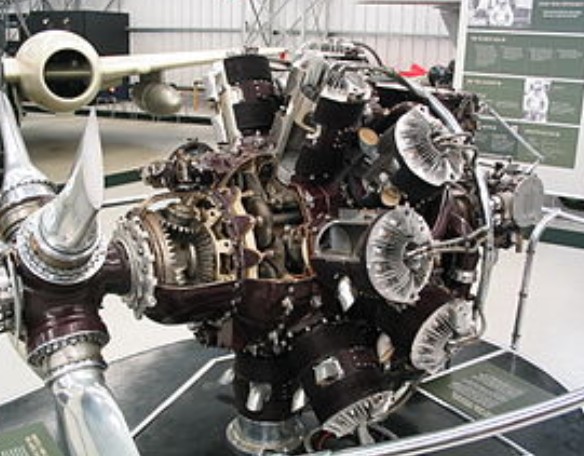
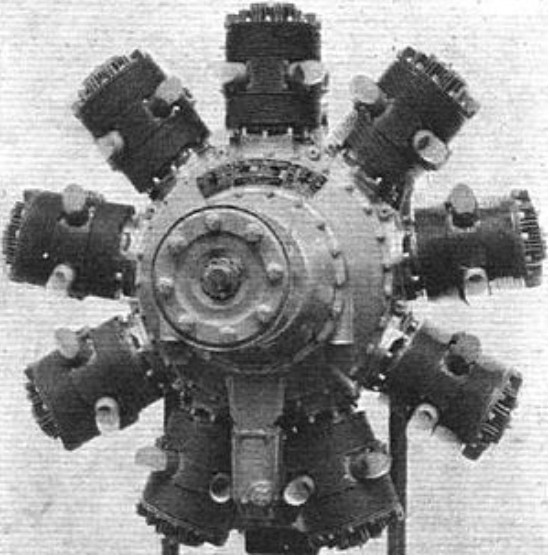
The nine-cylinder, single-row, air-cooled radial Pegasus was designed by Sir Roy Fedden as the follow-on to the Bristol Aeroplane Company’s Bristol Jupiter, following lessons learned in the Mercury effort. The Mercury was a small engine that produced about as much power as the Jupiter, through a combination of supercharging that improved the “charge”, and various changes to improve the operating RPM. Power of a piston engine can be calculated by multiplying the charge per cylinder by the number of cycles per second; the Mercury improved both and thereby produced more power for a given size. The primary advantage was a much improved power-to-weight ratio due to better volumetric efficiency.
The Pegasus was the same size, displacement and general steel/aluminium construction as the Jupiter, but other improvements allowed the maximum engine speed to be increased from 1,950 to 2,600 rpm for take-off power. This improved performance considerably from the Jupiter’s 580 hp (430 kW), to the first Pegasus II with 635 hp (474 kW), to 690 hp (515 kW) in the first production model Pegasus III, and eventually to the late-model Pegasus XXII with 1,010 hp (750 kW) thanks to the two-speed supercharger (introduced on the Pegasus XVIII) and 100-octane fuel. This gave rise to the claim “one pound per horsepower” reflecting the excellent power-to-weight ratio.
Some notable users of the Pegasus were the Fairey Swordfish, Vickers Wellington, and Short Sunderland. It was also used on the Anbo 41, Bristol Bombay, Saro London, Short Empire, Vickers Wellesley and the Westland Wallace.
Like the Jupiter before it, the Pegasus was also licensed by the PZL company in Poland. It was used on the PZL.23 Karaś and PZL.37 Łoś bombers. In Italy Alfa Romeo built both the Jupiter (126-RC35) and the Pegasus under licence, with the engine based on the Pegasus designated as the Alfa Romeo 126-RC34 with the civil version as the 126-RC10. In Czechoslovakia it was built by Walter Engines and was known as the Pegas.
Approximately 32,000 Pegasus engines were built. The Pegasus set three height records: in 1932, 1936 and 1937. It was used for the first flight over Mount Everest, and in 1938 set the world’s long-distance record.
The Pegasus was produced in many variants, early prototype engines were unsupercharged but the majority used a geared supercharger, either single-speed or two-speed. Variant differences included compression ratios, propeller reduction gear ratios and accessories.
Applications: ANBO IV Blackburn Baffin Blackburn Ripon Blackburn Shark Boulton Paul Mailplane Boulton Paul Overstrand Boulton Paul Sidestrand Bristol Bombay Bristol Type 118 Bristol Type 120 Bristol Type 138 Douglas DC-2 Fairey TSR I Fairey Seal Fairey Swordfish Fokker C.X Fokker D.XXI-5 Gloster Goring Handley Page H.P.43 Handley Page H.P.47 Handley Page H.P.51 Handley Page Hampden Handley Page H.P.54 Harrow Hawker Audax Hawker Hart Hawker Osprey Junkers Ju 52 Junkers Ju 86K-4 Koolhoven FK.52 Letov Š-328 LWS-6 Żubr PZL.23 Karaś PZL.37 Łoś Saro London Savoia-Marchetti SM.95 Short Mayo Composite Short Sandringham Short Sunderland Short Empire Short Syrinx Supermarine Stranraer Supermarine Walrus Vickers Type 253 Vickers Valentia Vickers Vanox Vickers Vellox Vickers Vespa Vickers Viastra X Vickers Victoria Vickers Vildebeest Vickers Vincent Vickers Virginia Vickers Wellington Vickers Wellesley Westland Wallace Westland Wapiti Westland PV.7 Westland-Houston PV-3
Specifications:
Pegasus XVIII Type: 9-cylinder, single-row, supercharged, air-cooled radial engine Bore: 5.75 in (146 mm) Stroke: 7.5 in (190 mm) Displacement: 1,753 in³ (28.7 L) Length: 61 in (1,549 mm) Diameter: 55.3 in (1,405 mm) Dry weight: 1,111 lb (504 kg) Valvetrain: Four pushrod-actuated valves per cylinder – two intake and two sodium-filled exhaust Supercharger: Two-speed centrifugal type supercharger Fuel system: Claudel-Hobson carburettor Fuel type: 100 Octane petrol Oil system: Dry sump with one combination pressure/scavenge pump Cooling system: Air-cooled Reduction gear: Farman epicyclic gearing, 0.5:1 Propeller: Rotol three-blade with variable pitch Power output: 965 hp (720 kW) at 2,475 rpm for takeoff at sea level 835 hp (623 kW) at 2,250 rpm at 8,500 ft (2,590 m), maximum continuous climb power 965 hp (720 kW) at 2,600 rpm at 13,000 ft (3,960 m), maximum power (emergency combat – 5 minutes only) Specific power: 0.55
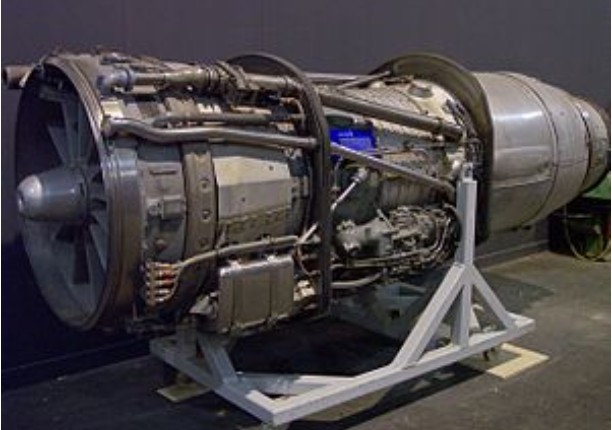
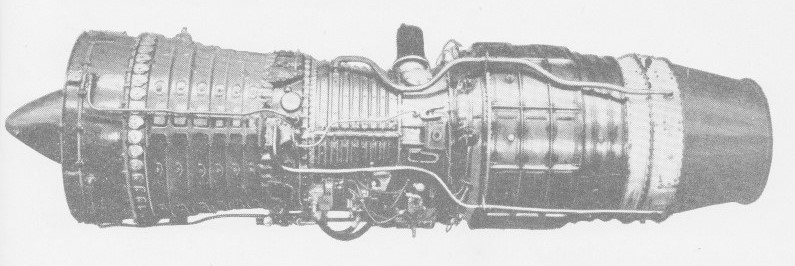
At the end of World War II, the Bristol Engine Company’s major effort was the development of the Hercules and Centaurus radial piston engines. By the end of 1946, the company had only 10 hours of turbojet experience with a small experimental engine called the Phoebus which was the gas generator or core of the Proteus turboprop then in development. In early 1947, the parent Bristol Aeroplane Company submitted a proposal for a medium-range bomber to the same specification B.35/46 which led to the Avro Vulcan and Handley Page Victor. The Bristol design was the Type 172 and was to be powered by four or six Bristol engines of 9,000 lbf (40 kN) thrust.
The thrust required of the new engine, then designated B.E.10 (later Olympus), would initially be 9,000 lbf (40 kN) with growth potential to 12,000 lbf (53 kN). The pressure ratio would be an unheard of 9:1. To achieve this, the initial design used a low pressure (LP) axial compressor and a high pressure (HP) centrifugal compressor, each being driven by its own single-stage turbine. This two-spool design made the compression more manageable, enabled faster engine acceleration (“spool up”), and reduced surge. The design was progressively modified and the centrifugal HP compressor was replaced by an axial HP compressor. This reduced the diameter of the new engine to the design specification of 40 in (100 cm). The Bristol Type 172 was cancelled though development continued for the Avro Vulcan and other projects.
Gas-flow diagram of Olympus Mk 101.The first engine, its development designation being BOl.1 (Bristol Olympus 1), had six LP compressor stages and eight HP stages, each driven by a single-stage turbine. The combustion system was novel in that ten connected flame tubes were housed within a cannular system: a hybrid of separate flame cans and a true annular system. Separate combustion cans would have exceeded the diameter beyond the design limit and a true annular system was considered too advanced.
In 1950, Dr (later Sir) Stanley Hooker was appointed as Chief Engineer of Bristol Aero Engines.
The BOl.1 first ran in May 1950 and produced 9,140 lbf (40.7 kN) thrust. The next development was the BOl.1/2 which produced 9,500 lbf (42 kN) thrust in December 1950. Examples of the similar BOl.1/2A were constructed for US manufacturer Curtiss-Wright which had bought a licence for developing the engine as the TJ-32 or J67. The somewhat revised BOl.1/2B, ran in December 1951 producing 9,750 lbf (43.4 kN) thrust. The engine was by now ready for air testing and the first flight engines, designated Olympus Mk 99, were fitted into a Canberra WD952 which first flew with these engines derated to 8,000 lbf (36 kN) thrust in August 1952. In May 1953, this aircraft reached a world record altitude of 63,668 ft (19,406 m). (Fitted with more powerful Mk 102 engines, the Canberra increased the record to 65,876 ft (20,079 m) in August 1955.)
The Olympus 551 ‘Zephyr’ was a derated and lightened version of the BOl.6 and rated at 13,500 lbf (60 kN) thrust. The engine was the subject of a licence agreement between Bristol Aero Engines and the Curtiss-Wright Corporation – the engine being marketed in the USA as the Curtiss-Wright TJ-38 Zephyr. There were hopes to fit the Olympus 551 to the Avro Type 740 and Bristol Type 200 trijet airliners which did not progress beyond the project stage. Curtiss-Wright also failed to market the engine.
Bristol Aero Engines (formerly Bristol Engine Company) merged with Armstrong Siddeley Motors in 1959 to form Bristol Siddeley Engines Limited (BSEL) which in turn was taken over by Rolls-Royce in 1966.
The performance specification for TSR2 was issued in 1962. It was to be powered by two BSEL Olympus Mk 320 (BOl.22R) engines rated at 30,610 lbf (136.2 kN) with reheat at take-off. The engine was a cutting edge derivative of the Olympus Mk 301 with a Solar-type afterburner.[32] The engine first ran in March 1961 and was test flown in February 1962 underslung Vulcan B1 XA894 and was demonstrated at the Farnborough Air Show in September. In December 1962 during a full power ground run at Filton, the engine blew up after an LP turbine failure, completely destroying its host Vulcan in the subsequent fire.
On its first flight in September 1964 the engines of the TSR-2 were scarcely flightworthy being derated and cleared for one flight. Nevertheless, the risk was deemed acceptable in the political climate of the time. With new engines, the TSR-2 XR219 flew another 23 times before the project was cancelled in 1965.
Plans to civilianise the Olympus go back as far as 1953 with the unveiling of the Avro Atlantic airliner based upon the Vulcan. However, most of the civilian derivatives, except for supersonic airliners, were developed from the BOl.6.
One project that got beyond the drawing board was a supersonic development of the Gloster Javelin, the P370, powered by two BOl.6, 7, or 7SR engines. The design evolved into the P376 with two BOl.21R engines rated at 28,500 lbf (127 kN) with reheat. Eighteen aircraft were ordered in 1955. The project was abandoned the following year.
As early as 1952, Bristols had considered the use of reheat, or afterburning, to augment the thrust of the Olympus. Initially, a system called Bristol Simplifed Reheat was devised which was tested on a Rolls-Royce Derwent V mounted in an Avro Lincoln. Later it was tested on an Orenda engine in Canada and on an Olympus Mk 100 in the Avro Ashton test bed. Fully variable reheat became possible after an agreement with the Solar Aircraft Company of San Diego which manufactured bench units for the Olympus Mks 101 and 102.
As of 2012, the Olympus remains in service as both a marine and industrial gas turbine. It also powered a restored Avro Vulcan XH558.
Variants:
BOl.1/2A
BOl.1/2B
BOl.1/2C
BOl.2
BOl.3 Of all the early initial developments, BOl.2 to BOl.5 (the BOl.5 was never built), perhaps the most significant was the BOl.3. Even before the Vulcan first flew, the Olympus 3 was being suggested as the definitive powerplant for the aircraft. In the event, the ‘original’ Olympus was continuously developed for the Vulcan B1. The BOl.3 was described in 1957 as “a high-ended product intermediate between the Olympus 100 and 200 series.”
BOl.4
BOl.5 not built
BOl.6 (Mk.200)
BOl.7 (Mk.201)
BOl.7SR
BOl.11 (Mk.102)
BOl.12 (Mk.104)
BOl.21 (Mk.301)
BOl.21R
BOl.22R (Mk.320)
Olympus Mk 100 (BOl.1/2B) Similar to Olympus Mk 99 rated at 9,250 lbf (41.1 kN) thrust for second Vulcan prototype VX777. First flew September 1953.
Olympus Mk 101 (BOl.1/2C) Larger turbine, 11,000 lbf (49 kN) thrust for initial production Vulcan B1 aircraft. First flew (XA889) February 1955.
Olympus Mk 102 (BOl.11) Additional zero stage on LP compressor, 12,000 lbf (53 kN) thrust for later production Vulcan B1 aircraft.
Olympus Mk 104 (BOl.12) Designation for Olympus Mk 102 modified on overhaul with new turbine and burners, 13,000 lbf (58 kN) thrust initially, 13,500 lbf (60 kN) thrust on uprating, standard on Vulcan B1A.
‘Olympus 106’ Used to describe the development engine for the Olympus 200 (BOl.6). Possibly a corruption of BOl.6 (Olympus 6).
The initial design of the second generation ‘Olympus 6’ began in 1952. This was a major redesign with five LP and seven HP compressor stages and a canullar combustor with eight interconected flame tubes. In spite of a much greater mass flow, the size and weight of the BOl.6 was little different to earlier models.
Rival manufacturers Rolls-Royce lobbied very hard to have its Conway engine installed in the Vulcan B2 to achieve commonality with the Victor B2. As a consequence, Bristols undertook to complete development using company funds and peg the price to that of its fully government-funded rival.
Olympus Mk 97 This early engine tested an early annular combustion chamber. It was test flown on Bristol’s Avro Ashton test bed WB493.
Olympus Mk 202 Disputed. Either Olympus Mk 201 modified with rapid air starter, or Olympus Mk 201 with redesigned oil separator breathing system. This was the definitive ‘200 series’ engine fitted to Vulcans not fitted with the Mk 301. The restored Vulcan XH558 is fitted with Olympus Mk 202 engines.
‘Olympus Mk 203’ Very occasional reference to this elusive mark of engine can be found in some official Air Publications relating to the Vulcan B2. It is also noted in a manufacturer’s archived document dated circa 1960.
Olympus Mk 301 (BOl.21) Additional zero stage on LP compressor. 20,000 lbf (89 kN) thrust. Later Vulcan B2 aircraft plus nine earlier aircraft retrofitted. Later derated to 18,000 lbf (80 kN) thrust. Restored to original rating for Operation Black Buck.
Olympus 510 series With a thrust in the region of 15,000 lbf (67 kN) to 19,000 lbf (85 kN), the 510 series were civilianised versions of the BOl.6. A team was sent to Boeing at Seattle to promote the engine in 1956 but without success.
Olympus 551
Specifications:
Olympus 101 Type: Axial flow two-spool turbojet Length: 152.2 in (387 cm) Diameter: 40 in (100 cm) Dry weight: 3,615 lb (1,640 kg) Compressor: Axial 6 LP pressure stages, 8 HP stages Combustors: Cannular 10 flame tubes Turbine: HP single stage, LP single stage Fuel type: AVTUR or AVTAG Maximum thrust: 11,000 lbf (49 kN) Specific fuel consumption: .817 Power-to-weight ratio: 3.04:1
The Bristol Neptune was a seven-cylinder air-cooled radial engine developed in 1930. It had the same size cylinders as the earlier Mercury and Titan engines, 5.75 in (146 mm) x 6.5 in (165 mm) which gave a displacement of 1,182 cu in (19.3 L) and produced a maximum of 320 horsepower (239 kW). The Neptune was effectively a seven-cylinder version of the Titan.
Applications: Bristol Type 110
Specifications:
Neptune I Type: 7-cylinder air-cooled radial engine. Bore: 5.75 in (146 mm) Stroke: 6.5 in (165 mm) Displacement: 1,182 cu in (19.3 L) Diameter: 48.4 in (1229.3 mm) Dry weight: 630 lb (286 kg) Designer: Roy Fedden Valvetrain: Overhead valve, Four valves per cylinder Fuel type: 73-77 octane petrol Cooling system: Air-cooled Reduction gear: Direct drive, left hand tractor Power output: 295 hp (220 kW) at 1,700 rpm (rated power), 320 hp (239 kW) at 1,870 rpm at sea level Compression ratio: 5:1 Power-to-weight ratio: 0.5 hp/lb (0.83 kW/kg)
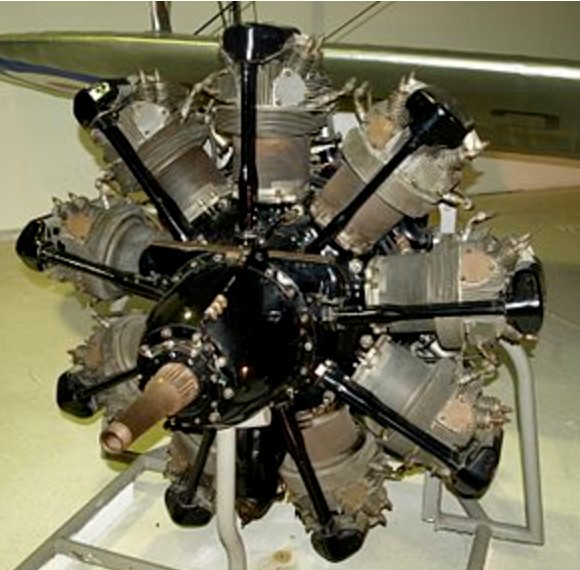
The nine-cylinder, air-cooled, single-row, piston radial Mercury was developed by the Bristol Aeroplane Company in 1925 as their Bristol Jupiter was reaching the end of its lifespan. Although the Mercury initially failed to attract much interest, the Air Ministry eventually funded three prototypes and it became another winner for the designer Roy Fedden.
With the widespread introduction of superchargers to the aviation industry in order to improve altitude performance, Fedden felt it was reasonable to use a small amount of boost at all times in order to improve performance of an otherwise smaller engine. Instead of designing an entirely new block, the existing Jupiter parts were re-used with the stroke reduced by one inch (25 mm). The smaller capacity engine was then boosted back to Jupiter power levels, while running at higher rpm and thus requiring a reduction gear for the propeller. The same techniques were applied to the original Jupiter-sized engine to produce the Pegasus.
The Mercury’s smaller size was aimed at fighter use and it powered the Gloster Gauntlet and its successor, the Gloster Gladiator. It was intended that the larger Pegasus would be for bombers but as the power ratings of both engines rose, the Mercury found itself being used in almost all roles including twin-engine light bomber, Bristol Blenheim.
In 1938 Roy Fedden pressed the Air Ministry to import supplies of 100 octane aviation spirit (gasoline) from the USA. This new fuel would allow aero engines to run at higher compression ratios and supercharger boost pressure than the existing 87-octane fuel, thus increasing the power. The Mercury XV was one of the first British aero engines to be type-tested and cleared to use the 100-octane fuel in 1939. This engine was capable of running with a boost pressure of +9 lbs/sq.in and was first used in the Blenheim Mk IV.
The Mercury was also the first British aero engine to be approved for use with variable-pitch propellers.
The Bristol company and its shadow factories produced 20,700 examples of the engine. Outside the United Kingdom, Mercury was licence-built in Poland and used in their PZL P.11 fighters. It was also built by NOHAB in Sweden and used in the Swedish Gloster Gladiator fighters and in the Saab 17 dive-bomber. In Italy, it was built by Alfa Romeo as the Mercurius. In Czechoslovakia it was built by Walter Engines. In Finland, it was built by Tampella and mainly used on Bristol Blenheim bombers.
Variants:
Mercury I (1926) 808 hp, direct drive. Schneider Trophy racing engine.
Mercury II (1928) 420 hp, compression ratio 5.3:1.
Mercury IIA (1928) 440 hp
Mercury III (1929) 485 hp, compression ratio 4.8:1, 0.5:1 reduction gear.
The rationale behind the single sleeve valve design was two-fold: to provide optimum intake and exhaust gas flow in a two-row radial engine, improving its volumetric efficiency; and to allow higher compression ratios, thus improving its thermal efficiency. The arrangement of the cylinders in two-row radials made it very difficult to utilise four valves per cylinder, consequently all non-sleeve valve two- and four-row radials were limited to the less efficient two-valve configuration. Also, as combustion chambers of sleeve-valve engines are uncluttered by valves, especially the hot exhaust valves, being comparatively smooth they allow engines to work with lower octane number fuels using the same compression ratio. Conversely, the same octane number fuel may be utilised while employing a higher compression ratio, or supercharger pressure, thus attaining either higher economy, or power output. The down-side was the difficulty in maintaining sufficient cylinder and sleeve lubrication.
Bristol had introduced their first sleeve-valve designs in the 750 horsepower (560 kW) class Perseus and the 500 hp (370 kW) class Aquila that they intended to supply throughout the 1930s. Aircraft development in the era was so rapid that both engines quickly ended up at the low-power end of the military market and, in order to deliver larger engines, Bristol developed 14-cylinder versions of both. The Perseus evolved into the Hercules (First run in January 1936), and the Aquila into the Taurus.
In 1937 Bristol acquired a Northrop Model 8A-1, the export version of the A-17 attack bomber, and modified it as a test bed for the first Hercules engines.
The first Hercules engines were available in 1939 as the 1,290 hp (960 kW) Hercules I, soon improved to 1,375 hp (1,025 kW) in the Hercules II. The major version was the Hercules VI which delivered 1,650 hp (1,230 kW), and the late-war Hercules XVII produced 1,735 hp (1,294 kW). The Hercules powered a number of aircraft including Bristol’s own Beaufighter heavy fighter design although it was more commonly used on bombers. The Hercules also saw use in civilian designs, culminating in the 735 and 737 engines for such as the Handley Page Hastings C1 and C3 and Bristol Freighter. The design was also licensed for production in France by SNECMA. Except for the 2000 hp-range versions in the 1950s until there were lubricating oil improvements, it was considered to be one of the more reliable aircraft engines of the era.
A total of over 57,400 Hercules engines were built.
Applications: Armstrong Whitworth Albemarle Avro Lancaster B.II Avro York C.II Bristol Beaufighter Bristol Freighter Bristol Superfreighter Breguet 890 Mercure Fokker T.IX Folland Fo.108 Handley Page Halifax Handley Page Hastings Handley Page Hermes Nord Noratlas Northrop 8A (One Swedish 8A-1 was bought by Bristol to test the engine) Northrop Gamma 2L Saro Lerwick Short S.26 Short Seaford Short Solent Short Stirling Vickers Valetta Vickers Varsity Vickers VC.1 Viking Vickers Wellesley Vickers Wellington
Specifications:
Hercules II Type: 14-cylinder, two-row, supercharged, air-cooled radial engine Bore: 5.75 in (146 mm) Stroke: 6.5 in (165 mm) Displacement: 2,360 in³ (38.7 L) Length: 53.15 in (1,350 mm) Diameter: 55 in (1,397 mm) Dry weight: 1,929 lb (875 kg) Valvetrain: Gear-driven sleeve valves with five ports per sleeve — three intake and two exhaust Supercharger: Single-speed centrifugal type supercharger Fuel system: Claudel-Hobson carburettor Fuel type: 87 Octane petrol Cooling system: Air-cooled Reduction gear: Farman epicyclic gearing, 0.44:1 Power output: 1,272 hp (949 kW) at 2,800 rpm for takeoff 1,356 hp (1,012 kW) at 2,750 rpm at 4,000 ft (1,220 m) Specific power: 0.57 hp/in³ (26.15 kW/l) Compression ratio: 7.0:1 Specific fuel consumption: 0.43 lb/(hp•h) (261 g/(kW•h)) Power-to-weight ratio: 0.7 hp/lb (1.16 kW/kg)
The Bristol Draco was an air-cooled 9-cylinder radial engine from the British manufacturer Bristol Aeroplane Company. It was essentially a version of their Pegasus converted to use a fuel injection system.
The carburettor had only a simple butterfly valve, while two injection pumps supplied the cylinders with fuel, one handling four cylinders and the other, five. Injection was into the manifold before they split into the two intake valves for each cylinder. First run in 1935, the engine was flight tested in a Westland Wapiti. Since the expenditure did not bring considerable improvements the development was stopped.
Draco Type: Nine-cylinder air-cooled radial engine. Bore: 5.75 in (146 mm) Stroke: 7.5 in (190 mm) Displacement: 1,753 cu in (28.7 L) Length: 43.5 in (1,105 mm) Diameter: 55.5 in (1,410 mm) Dry weight: 1,093 lb (495.8 kg) Designer: Roy Fedden Valvetrain: Overhead valve Supercharger: Medium supercharged Fuel system: Fuel injected Cooling system: Air-cooled Reduction gear: Geared epicyclic, reduction ratio 0.5:1, left hand tractor Power output: 570 hp at 2,000 rpm Compression ratio: 5.3:1 Power-to-weight ratio: 0.52 hp/lb
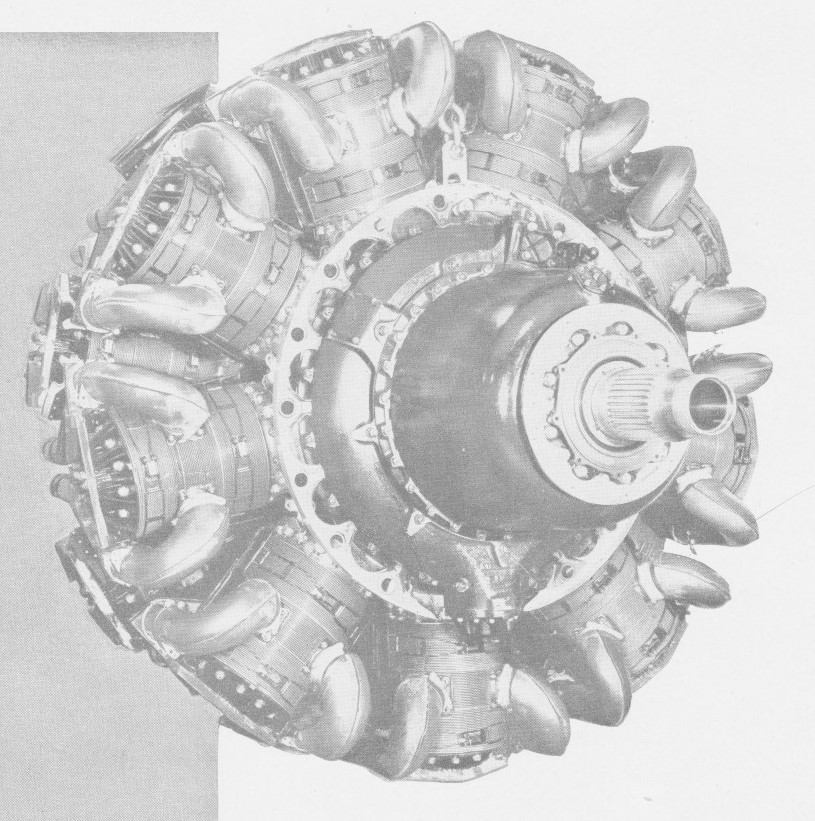
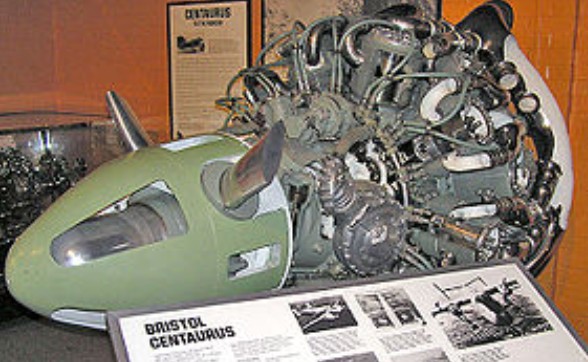
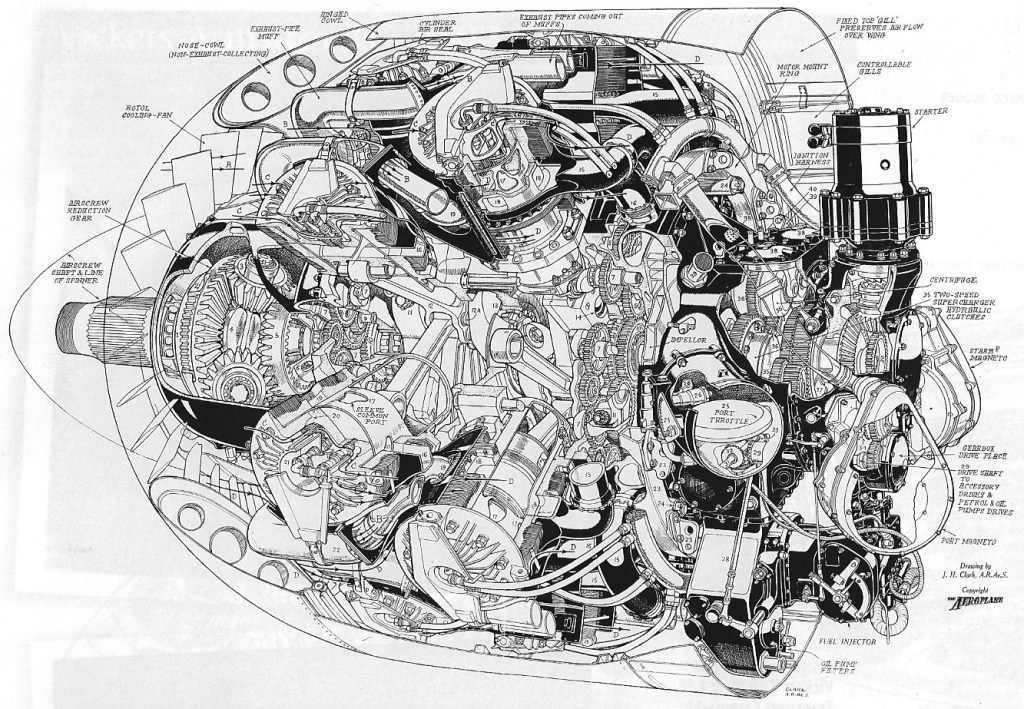
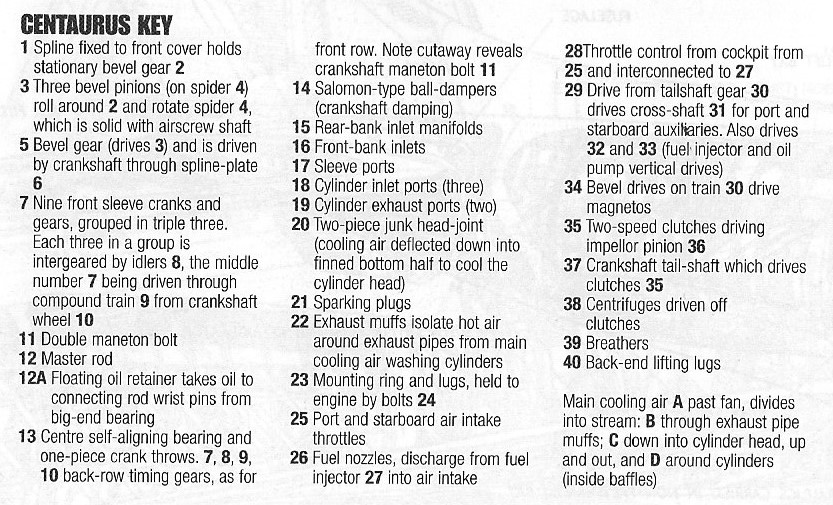
The sleeve valve Centaurus was based on the mechanicals of the 5.75 in (146 mm) piston from the original 1918 Jupiter. The Jupiter piston was still in use in the contemporary 14-cylinder Hercules, which was being brought into production during the design of the Centaurus. The Centaurus had a cylinder capacity of 3,270 in³ (53.6 lt), making it one of the largest piston aircraft engines to enter production, while that of the Hercules was 2,364 cubic inches (38.7 l). The nearly 40% higher capacity was achieved by increasing the stroke from 6.5 to 7 in (170 to 180 mm), and by changing to two rows of nine cylinders instead of two rows of seven, but the overall diameter of the Centaurus was only just over 6% greater.
While Bristol maintained the Centaurus dated from July 1938 (when it was originally type-tested), production could not start until 1942 owing to the need to get the Hercules into production and improve the reliability of the entire engine line. Nor was there any real need for the larger engine at this early point in the war, when most military aircraft designs were intended to mount engines of 1,000 hp or a little more. The Hercules’ approximately 1,500 hp was simply better suited to the existing airframes then in production.
In fact, the Centaurus did not see any use until near the end of the war, first appearing on an upscaled version of the Vickers Wellington, the Warwick. Other wartime, or just-postwar, applications included the Bristol Brigand and Buckmaster, Hawker Tempest and Sea Fury, and the Blackburn Firebrand and Beverley. The engine also saw post-war use in civilian airliners, including the ill-fated Bristol Brabazon.
By the end of the war in Europe, around 2,500 examples of the Centaurus had been produced by Bristol.
A projected enlarged capacity version of the Centaurus was designed by Roy Fedden, cylinders were produced for this engine but it was never built. Known as the Bristol Orion (a name used previously for a variant of the Jupiter engine, and later re-used for a turboprop one) this development was also a two-row, 18 cylinder sleeve valve engine with the displacement increased to 4,142 cubic inches (67.9 l).
The Centaurus was produced in 34 distinct variants ranging from the 2,000 hp (1,490 kW) Centaurus I to the 2,405 hp (1,793 kW) Centaurus 663 for the Airspeed Ambassador airliner. The most powerful variants were the 2,625 hp (1,957 kW) Centaurus 170, 173, 660, 661 and 662.
The Aquila was developed two years after the larger Perseus, both being sleeve valve designs. The primary difference was in size, the Perseus was based on the 5.75 by 6.5 in (146 by 170 mm) cylinder used in the Mercury engine, while the Aquila used a new and smaller 5 by 5.375 in (130 by 136.5 mm) sized cylinder. The result was a reduction in displacement from 1520 to 950 cubic inches (24.9 to 15.6 L).
First run in 1934, the first Aquila engine delivered 365 horsepower (272 kW) but soon developed into more powerful versions as improvements were worked into the line and by 1936 it had improved to 500 hp (370 kW). This would have made it an excellent replacement for the Bristol Jupiter, which ended production at 590 hp (440 kW) three years earlier, but by this time almost all interest was on ever-larger engines. The Aquila was never used in production, but further developments led to the Bristol Hercules, Bristol Taurus, and Bristol Centaurus.
Applications: Bristol Bulldog Bristol Bullpup Bristol Type 143 Vickers Venom
Aquila I Type: Nine-cylinder single-row naturally aspirated air-cooled radial engine Bore: 5 in (130 mm) Stroke: 5.375 in (136.5 mm) Displacement: 950 cu in (15.6 L) Length: 41 in (1,000 mm) Diameter: 46 in (1,200 mm) Dry weight: 776 pounds (352 kg) Valvetrain: Sleeve valve Supercharger: Medium supercharged Fuel system: Claudel-Hobson carburettor Fuel type: 73 octane rating petrol Cooling system: Air-cooled Reduction gear: 0.5:1 turning a Hamilton Standard variable pitch propeller Power output: 493 hp (368 kW) at 2,600 rpm for takeoff Specific power: 0.52 hp/in³ (23.59 kW/l) Compression ratio: 7.3:1 Specific fuel consumption: 0.46 lb/(hp•h) (282 g/(kW•h)) Oil consumption: 0.21 oz/(hp•h) (8g /(kW•h)) Power-to-weight ratio: 0.64 hp/lb (1.05 kW/kg)
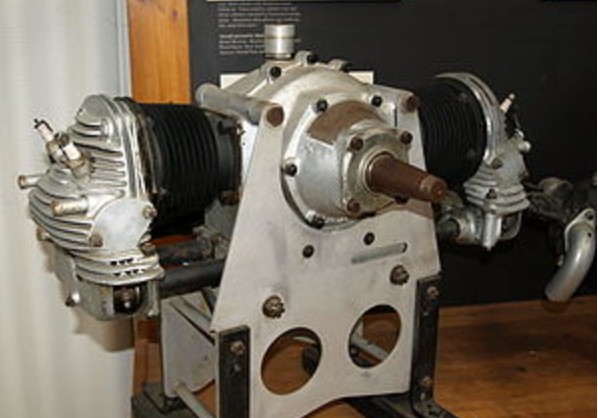
The Bristol Cherub is a British two-cylinder, air-cooled, aircraft engine designed and built by the Bristol Aeroplane Company. Introduced in 1923 it was a popular engine for ultralight and small aircraft in the 1930s.
Variants:
Cherub I Initial direct drive version introduced in 1923. Bore and stroke of 3.35 by 3.8 inches (85 mm × 97 mm) for a displacement of 67 cu in (1.095 L). 32 horsepower (24 kW) at 2,500 rpm.
Cherub II Geared down (2:1) version of the Cherub I.
Cherub III An improved and slightly larger (1.228 L) direct drive version introduced in 1925.
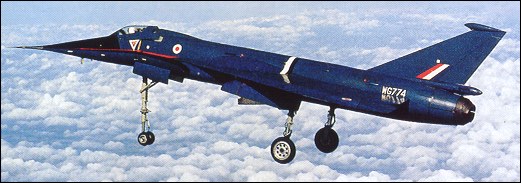
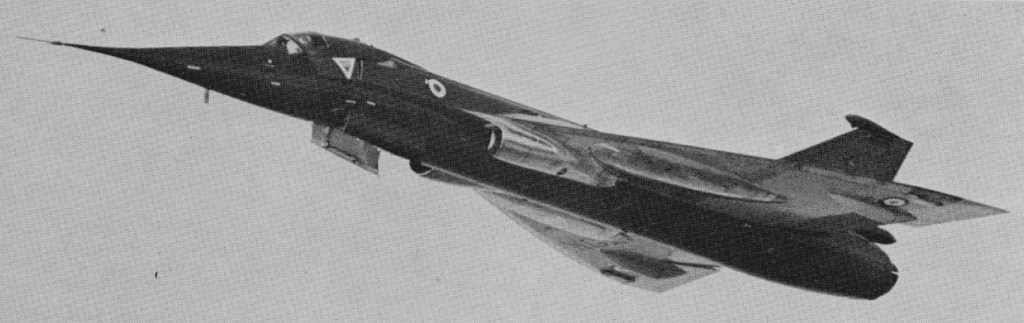
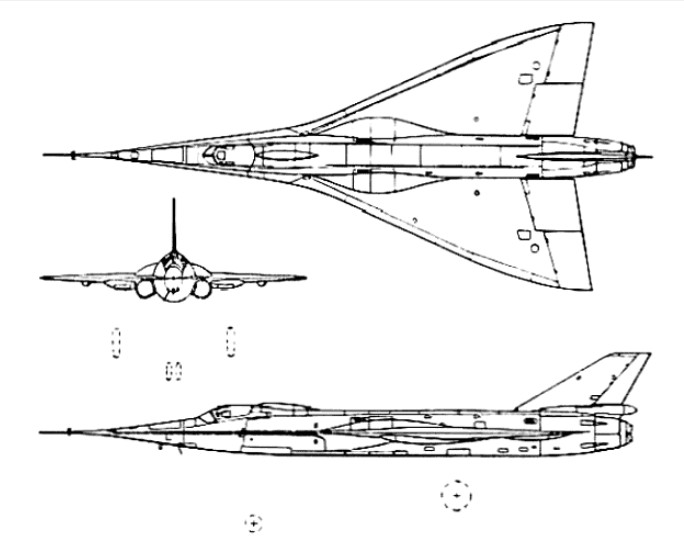
The last of the ‘Bristol’ aircraft was the purely research aeroplane, the Type 221. With the B.188, they furnished valuable information on the structural and aerodynamic problems associated with supersonic flight. The Type 221, first flown was on May 1, 1964, was a modified version of the record breaking Fairey Delta 2 and used to investigate the handling and control characteristics of the slender ogival wing, which was again to feature in the Concorde.
Engine: 1 x 5000kg Wingspan: 7.62 m / 25 ft 0 in Length: 17.55 m / 57 ft 7 in Height: 3.96 m / 12 ft 12 in Wing area: 46.82 sq.m / 503.97 sq ft Max. speed: 1707 km/h / 1061 mph Crew: 1