In the mid 1950s Bristol Aircraft Ltd began work on a turbine-powered helicopter using a B.171 Syvamore Mk 3 with an increased fin area. Under the name Bristol 203 it was to be an 11-seat machine and parts from the incomplete 179th and 180th Sycamore airframes were used in the prototype machine. This project was abandoned when the company was taken over by Westland, although some of its finer points were later incorporated in the Lynx.
Engines – Power
Bristol B.198 / B.223
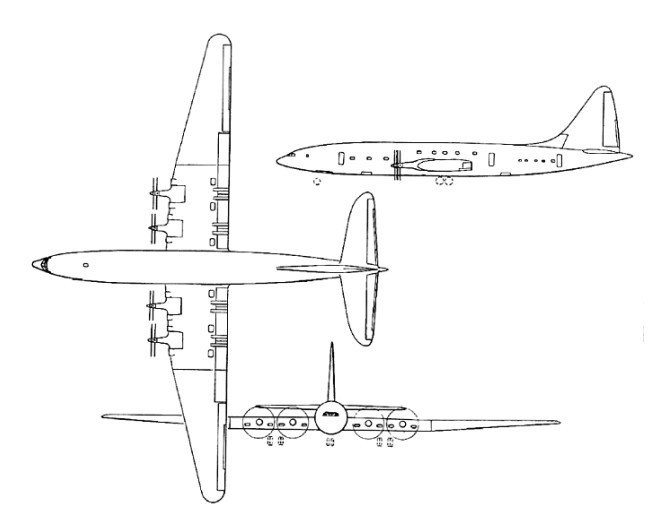
In the late 1950s the Bristol aircraft design team, under the leadership of Dr Archibald E. Russell, was awarded important MoS contracts for design and feasibility studies in the development of a supersonic transport. After an outline design for a thin delta wing with pencil fuselage had been accepted, the Bristol Type 198 was projected. This would have been a trans Atlantic range delta aircraft powered by six Bristol Olympus engines. The government decided that this 380,000 lb machine was too heavy and asked for a smaller design, capable of carrying 100 passengers across the Atlantic, with a maximum weight of 250,0001b. This resulted in the Type 223 which formed the basis for the British contribution to the collaborative venture with France which was agreed in November 1962 and resulted in Concorde.
Concorde 002, G BSST, made its inaugural flight from Filton on 9 April 1969
Bristol B.191 / B.192 Belvedere
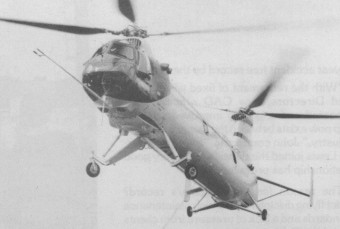
Undertaken by Bristol in response to Royal Navy and Canadian naval specifications were the models 191 and 193.
The Bristol 191 was a ship-based development of Type 173 with modified fuselage, u/c etc.
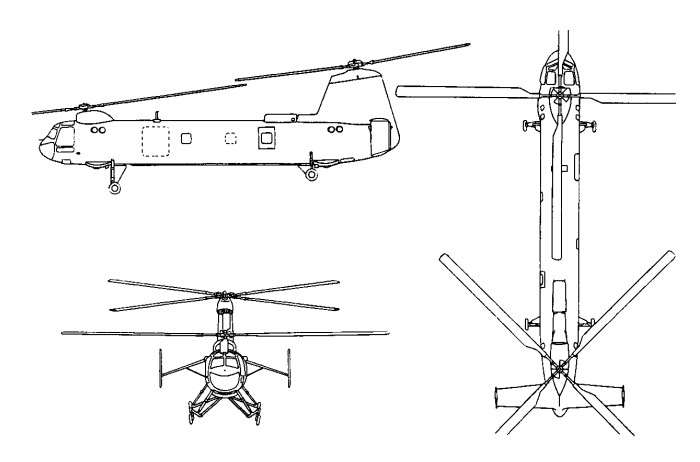
The Bristol 192 was the production version of Model 191 for RAF use with two cabin windows only, starboard cargo hatch, cargo hoist beneath fuselage, large anhedralled tailplane and powered by two 1465shp Napier Gazelle 2 turboshafts, derated to 920shp. In the initial configuration, the 192 had a purely manual system of control and wooden rotor blades but power controls and metal blades were standardized on the fifth prototype built in 1960. The prototype Type 192 (XG447) first flying on 5 July 1958 at Westonsuper-Mare, was demonstrated at the Farnborough air show in September 1952. That year, three pre-production aircraft were assigned to the RAF for a series of trials for which they were based at Odiham.
As the Westland Belvedere this entered service with the Royal Air Force, though this was only after the 191 and 193 had been cancelled by the RAF and Royal Canadian Air Force respectively.
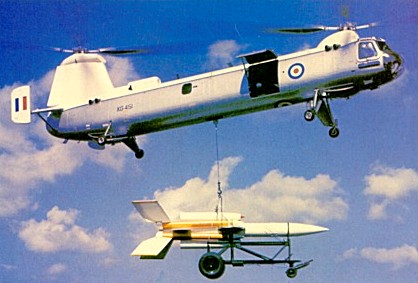
Twenty-six of these helicopters were ordered and used for some years for military transport, not only in the United Kingdom, but also in the Middle and Far East. The Belvedere was withdrawn from service in March 1969.
The production Bristol 192s had an all-metal, skinned fuselage and an anhedral tailplane, compared with the dihedral one of the Type 173. The two rotors had four metal blades and the front wheels of the fixed quadricycle landing gear were self-castoring. The helicopter’s maximum capacity was 30 seats or 2700kg internal payload. The instrumentation also permitted night flying.
As the 192C it was tested by BEA and offered its 24 passengers a unique high-speed service between London and Paris. British European Airways leased a Belvedere briefly but never used it in commercial service.
On May 30, 1961, C T D Hosegood flew from London to Paris in 1 hour 41 min 28 sec and on June 2, 1961, from Paris to London in 1 hour 40 mm 55 sec. This is the equivalent of 202.32km/h outwards and 203.51 km/h on the return flight.
Bristol B 192 Belvedere HC Mk I
Engines: 2 x Napier Gazelle 2, 1627 shp, 1092kW
Fuselage length: 54.134 ft / 16.5 m
Length with rotors turning: 27.36m
Height: 17.388 ft / 5.3 m
Rotor diameter: 48.885 ft / 14.91 m
Max take off weight: 18522.0 lbs / 8400.0 kg
Empty weight: 5277kg
Max. speed: 119 kts / 220 km/h
Service ceiling: 13123 ft / 4000 m
Range: 378 nm / 700 km
Crew: 2 + 25 PAX / 2700kg
Bristol B.188
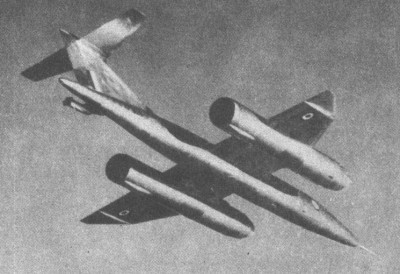
The Bristol 188 was designed to research structures for sustained supersonic flight, particularly in support of the Avro 730 reconnaissance aircraft. This required the aircraft to ‘soak’ at Mach 2.6 for at least 30 minutes.
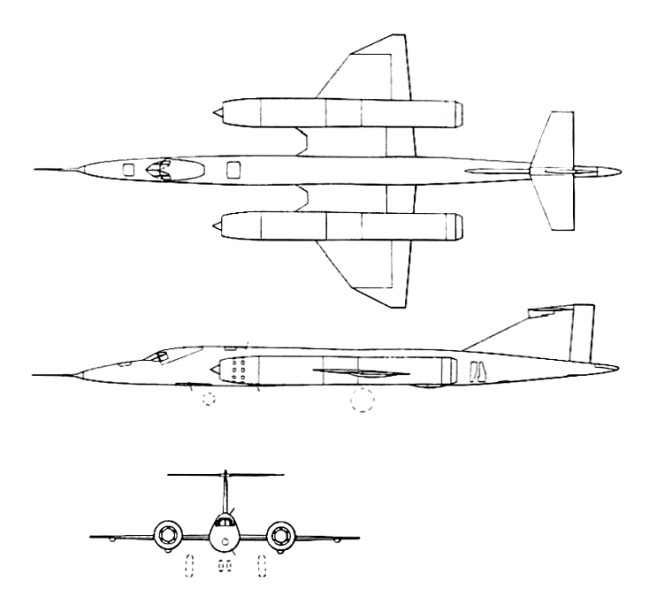
The Bristol Type 188 research aircraft XF962 was built for high speed research. Two examples were built, constructed mainly of stainless steel and highly polished natural metal finish. Powered by two de Havilland Gyron Junior turbojets, the type first flew on 29 April 1963 and subsequently attained Mach 1.88 at 36,000 ft. However, the 188 had an extremely high fuel consumption and was only able to remain airborne for about 25 minutes.
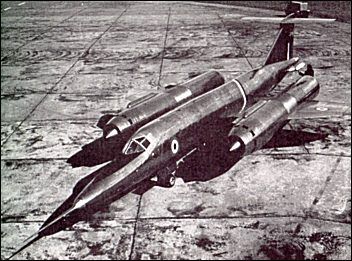
Take-off speed was nearly 483km/h, but in all other respects the 188’s speed was slower than desired, being able to achieve Mach 2.0 for only a couple of minutes. The whole project cost a huge GBP20 million and failed to achieve its objectives. It was wound down rather than develop the engines further. Test pilot Godfrey Auty was voted the ‘man most likely to eject in the coming year’ by his peers but never had to.
In 1964 the B.188 was indefinitely grounded, less than two-years after the first of two flew. A third never reached flight. The most expensive research aircraft built in Britain, the B.188 which a list of projects up to Mach 3 was to be flying for 12 to 15 years. For some time, one plane was cannibalised to support another.
B.188
Engines: 2 x de Havilland Gyron Junior DGJ.10R turbojets, 6350kg
Wingspan: 10.69 m / 35 ft 1 in
Length: 21.64 m / 70 ft 12 in
Height: 4.06 m / 13 ft 4 in
Wing area: 36.79 sq.m / 396.00 sq ft
Max. speed: 1932 km/h / 1201 mph
Crew: 1
Bristol MF / Bullfinch
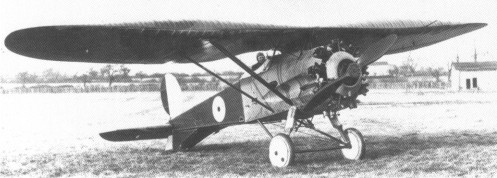
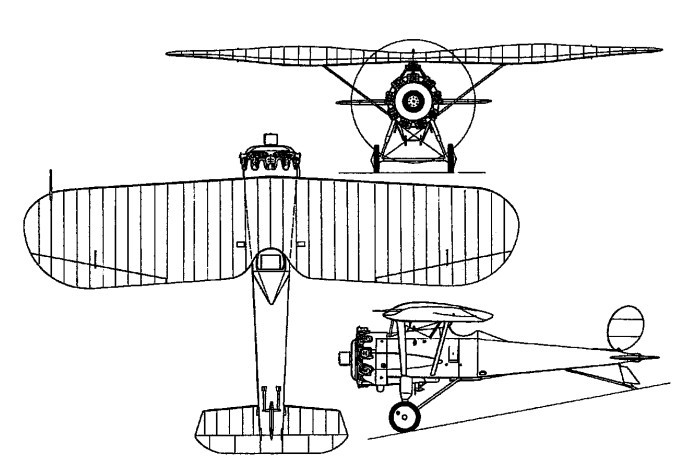
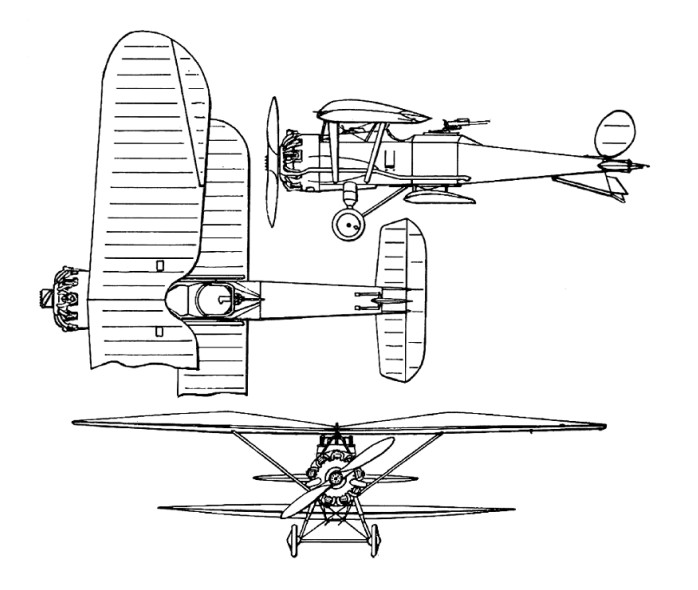
Captain Frank Barnwell designed the MF as an all-metal parasol-wing monoplane that could be flown as the MFA single-seat fighter or MFB two-seat reconnaissance plane. The latter had an extra fuselage section behind the cockpit for the gunner’s position and, below this on a short cabane arrangement, a cantilever second wing. In April 1921 the Air Ministry ordered three prototypes with wooden wings. Bristol proposed the name Pegasus, but this did not conform with current British practise and the two MFAs became Bullfinch Mk Is while the sole MFB became the two-seat Bullfinch Mk II.
By March 1922, when the name Bullfinch was officially adopted, the decision had been taken to complete two of the prototypes as single-seaters, these being delivered in April 1923. Armed with two 7.7mm Vickers machine guns, the Bullfinch single-seaters were flown experimentally by the RAF and were found to offer a relatively good performance on the 425hp of a Bristol Jupiter III radial, but no production order was forthcoming.
The Mk II was first flown on 15 February 1924 and delivered in March 1924. The Bullfinch II differed from the single-seat model primarily in having a 91.4cm section housing a self-contained gunner’s cockpit inserted in the fuselage immediately aft of the pilot’s cockpit and beneath which was attached a cantilever lower wing, the resultant shift of the centre of pressure compensating for the change in the CG. The only other change consisted of the repositioning of the main undercarriage members farther aft. The rear cockpit was fitted with a Scarff-mounted 7.7mm Lewis gun, and structural weight was increased by 145kg. The 425hp Jupiter III engine was insufficiently powerful to cater for the additional 400kg of the two-seater in fully loaded condition and the performance of the Bullfinch II suffered.
Both variants were fully evaluated, but no orders followed.
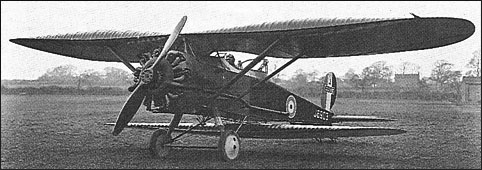
Principal versions – Bullfinch Mk I (single-seat fighter prototype) and Bullfinch Mk II (two-seat reconnaissance prototype).
Bullfinch Mk.I
Engine: one 450-hp (336-kW) Bristol Jupiter III radial
Maximum speed 135 mph (217 km/h) at 15,000 ft (4,570 m)
Srvice ceiling 22,000 ft (6,705 m)
Endurance 4 hours 0 minutes.
Empty weight 2,175 lb (987 kg)
Maximum take-off weight 3.205 lb (1,454 kg).
Wing span 38 ft 5 in (11.71 m)
Length 24 ft 5 in (7.44 m)
Height 10 ft 9 in (3.27 m)
Wing area 267.0 sq ft (24.80 sq.m).
Armament: two 0.303-in (7.7-mm) fixed machine guns.
Bullfinch Mk.II
Engine: 425hp Jupiter III
Take-off weight: 1854 kg / 4087 lb
Empty weight: 1132 kg / 2496 lb
Wingspan: 11.71 m / 38 ft 5 in
Length: 8.38 m / 27 ft 6 in
Height: 3.28 m / 10 ft 9 in
Wing area: 36.32 sq.m / 390.94 sq ft
Max. speed: 193 km/h / 120 mph
Bristol B.175 Britannia
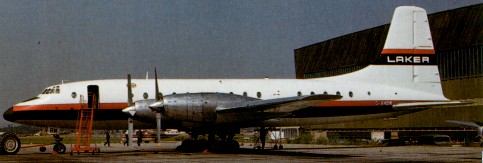
The Type 175 began as a Medium Range Empire (MRE) design to meet BOAC requirements set down in MoS Specifica¬tion 2/47.
Designed to carry 32-36 passengers and be powered by four Bristol Centaurus 662 sleeve-valve engines, the aircraft’s size was soon increased and consideration given to the installation of Bristol Proteus turbines or Napier Nomad compound engines.
After some delay, in June 1948 the Ministry of Supply ordered three Centaurus-powered prototypes but stipulated that the second and third should be capable of conversion to Proteus-engined aircraft. When the first prototype emerged in 1952 it was a much bigger aeroplane with accommodation for more than 80 passengers and powered by Proteus 625 engines.
Prototypes were ordered in February 1948 and the first of these was airborne at Filton on 16 August 1952, powered by Bristol’s new Proteus turboprop.
Bristol B.175 Britannia Article
The second prototype was lost after only 51hr flying and a major engine fault delayed entry into service with BOAC until February 1957. On 1 February 1957 BOAC began operating Britannia 102 with 2,906kW Proteus 705 and up to 90 seats on its London-Johannesburg services.
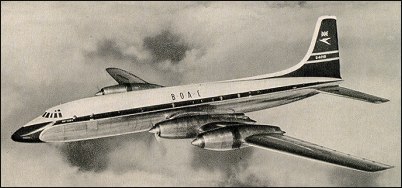
A number of versions were developed from the Series 100 aircraft and on 19 December 1957, BOAC began the first turbine-powered North Atlantic service when it put Britannia 312 on the London-New York route. These were 3.12m longer, had accommodation for up to 139 passengers, were powered by 3,070kW Proteus 755 and had a 13,608kg increase in max weight. On the day that BOAC introduced Britannias on the North Atlantic, El Al flew a Britannia 10,328km non-stop from New York to Tel Aviv.
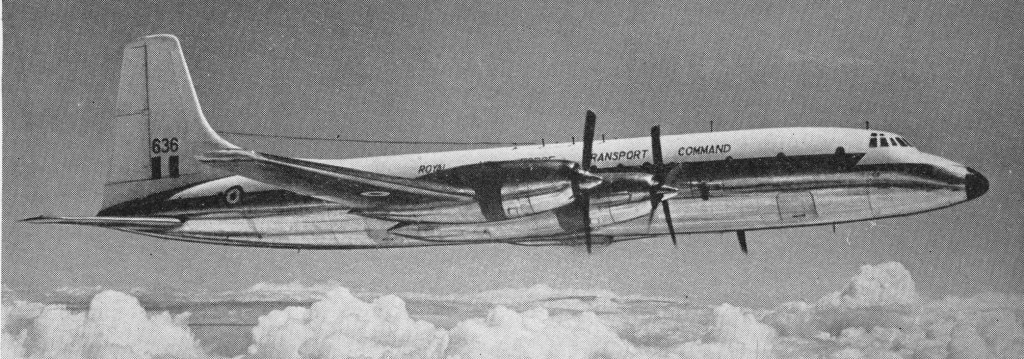
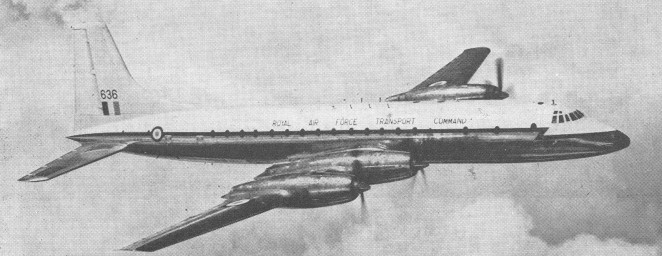
The Bristol Britannia entered RAF Transport Command service with No.99 Squadron, at Lyneham, Wiltshire, in mid-1959. As Britannia C.1, twenty Britannia 250 were operated with strengthened floor and large freight loading doors. Three Britannia C.2s were purchased by the Ministry of Supply for use on trooping flights.
The Britannia 310 was ordered by BOAC, El Al, Hunting Clan, Canadian Pacific Airlines and Cubana.
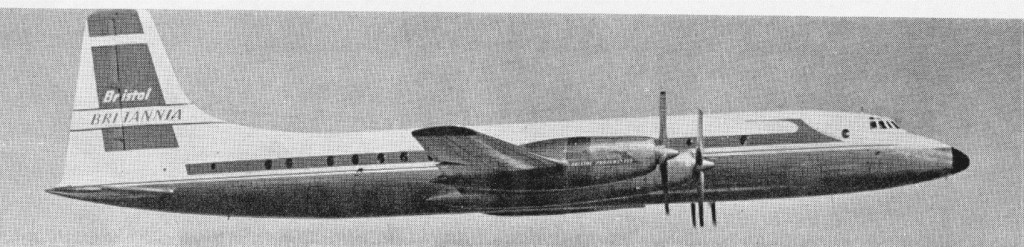
Only 85 Britannias were built at Filton and by Shorts at Belfast.
Canadair developed the Britannia design into the military CL-28 Argus and CL-44 Yukon and the CL-44 series of passenger and cargo aircraft.
Variants:
100 Series
90 passenger airliner
All built at Filton
Engines: four Bristol Proteus 705, 4,400 h.p.
Length: 114 feet
Height: 36 feet 8 inches
Wing Span: 142 feet 3 inches
Weight (empty): 88,000lbs
Weight (all-up): 155,000lbs
Range: 3,450 miles
101 – Two prototypes, initially powered by Proteus 625, later 705
102 – 25 ordered by BOAC. The last ten were cancelled in favour of the 300 series.
200 Series
All-cargo stretched version of the 100 series, with an extra 10 ft in length.
Five options from BOAC, but cancelled in favour of the 310. None built.
250 Series
As 200 series, but mixed passenger and freight
Length: 124 feet 3 inches
Height: 37 feet 6 inches
Wing Span: 142 feet 3 inches
Weight (empty): 90,500lbs
(90,600lbs for 253)
Weight (all-up): 185,000lbs
Range: 2,268 miles
252 – Three ordered by Royal Air Force and given the designation C Mark 2. All built at Belfast.
253 – 22 ordered by Royal Air Force, with designation C Mark 1. All but the last five were built at Belfast, the remainder were built at Filton
300 Series
As 200 series, by passenger only. Capable of carrying up to 139 passengers.
Engines: 4 x 4,400 h.p. Bristol Siddeley Proteus 705 turboprop
Length: 124 feet 3 inches (37.89 m.)
Height: 37 feet 6 inches
Wing Span: 142 feet 3 inches (43.38 m)
Weight (empty): 92,500lbs
Weight (all-up): 185,000lbs
Econ cruise: 355 m.p.h. (570 kph)
Range: 3,496 miles
Range 4,268 miles (6,869 km.) with max. payload of 28,000 lb (12,700 kg)
Crew: 9
Pax cap: 133
301 – one prototype, built at Filton
302 – Ten ordered by BOAC. Order cancelled in favour of 305 Series, later 310 series. Two were completed, but not delivered. Both were built at Belfast.
305 Series
As 300, but with increased fuel capacity
Length: 124 feet 3 inches
Height: 37 feet 6 inches
Wing Span: 142 feet 3 inches
Weight (empty): 90,000lbs
Weight (all-up): 185,000lbs
Range: 4,268 miles
306 – 1 built, leased to El Al. built at Belfast
307 – 2 ordered by Air Charter. One was a conversion of the sole 306, the other was built at Belfast.
307F – 1960’s conversion of 307 to freighter (both Series 307 aircraft converted)
308 – 2 ordered by Transcontinental, built at Belfast.
308F – 1960’s conversion of 308 to freighter (both Series 308 aircraft were converted)
309 – 1 ordered by Ghana Airways, built at Belfast.
310 Series
Initially known as 300LR. As 305 series, but with strengthened fuselage skin and undercarriage.
Engines: 4 x Bristol Proteus, 4120 shp
Length: 124 feet 3 inches (37.89 m)
Height: 37 feet 6 inches
Wing Span: 142 feet 3 inches (43.38 m)
Weight (empty): 82,500lbs
Weight (all-up): 185,000lbs
Range: 4,268 miles
Max level speed: 385 mph (616 kph)
311 – one prototype, built at Filton.
312 – 19 ordered by BOAC, all built at Filton.
Engine : 4 x Proteus 755, 4064 shp
Length: 124.245 ft / 37.87 m
Height: 37.5 ft / 11.43 m
Wingspan : 142.224 ft / 43.35 m
Max take off weight : 185030.4 lb / 83914.0 kg
Max. speed : 345 kts / 639 km/h
Service ceiling : 26247 ft / 8000 m
Range : 5004 nm / 9268 km
Crew : 5 + 133 PAX
312F – 1960’s conversion of 312 to freighter (five converted)
313 – Four ordered by El Al, all built at Filton.
314 – Six ordered by Canadian Pacific, all bar one built at Belfast.
317 – Two ordered by Hunting-Clan Air Transport, all built at Filton.
318 – Four ordered by Cubana, all built at Filton.
320 Series – as Series 310, with a few modifications, giving increased maximum range.
Length: 124 feet 3 inches
Height: 37 feet 6 inches
Wing Span: 142 feet 3 inches
Weight (empty): 86,400lbs
Weight (all-up): 185,000lbs
Range: 4,268 miles
324 – Two ordered by Canadian Pacific

Bristol B.173
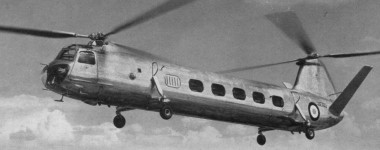
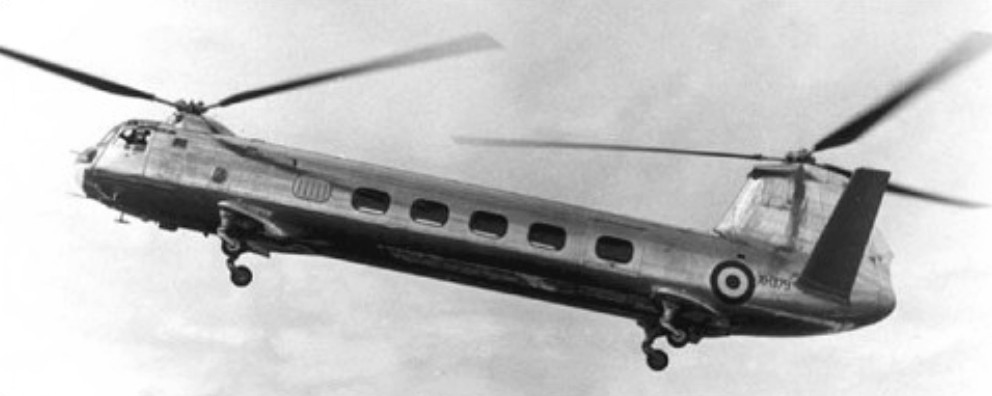
The Bristol 173 was the first helicopter specifically designed for commercial operation and passenger transport in particular. Two Mk.1 prototypes were begun in 1948 to Ministry of Supply Specification E.4/47.
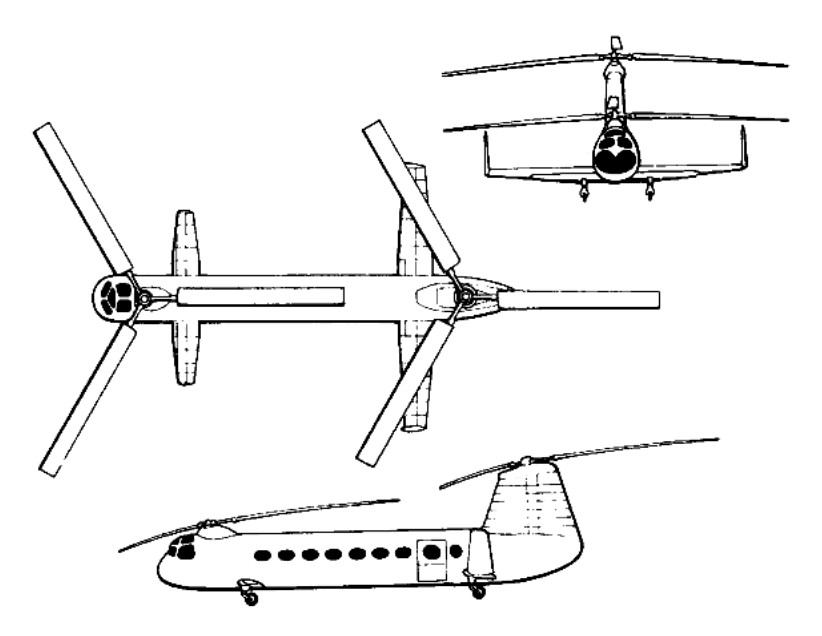
Ground tests started in 1951. It had two three-blade counter-rotating rotors, but it could fly on one Alvis Leonides 73 engine and the centre of gravity could be displaced. The two rotors were synchronized by a shaft in conjunction with a gearbox. In the event of a breakdown the shaft could transmit power from the working engine. The rear rotor was carried on a pylon which was part of the vertical fin structure. Two tailplanes were set at a sharp angle to improve longitudinal and lateral stability.
The 173 had virtually the 171 Sycamore Mk. 3’s transmission system, rotor assemblies and engine installation, except that one engine rotates in the opposite direction to the other.
Ground resonance originally caused some trouble. The problem was overcome by linking the right- and left-hand oleo-struts of the undercarriage by small-bore hydraulic piping. The latter formed the two arcs of a circle seen above the upper part of the legs.
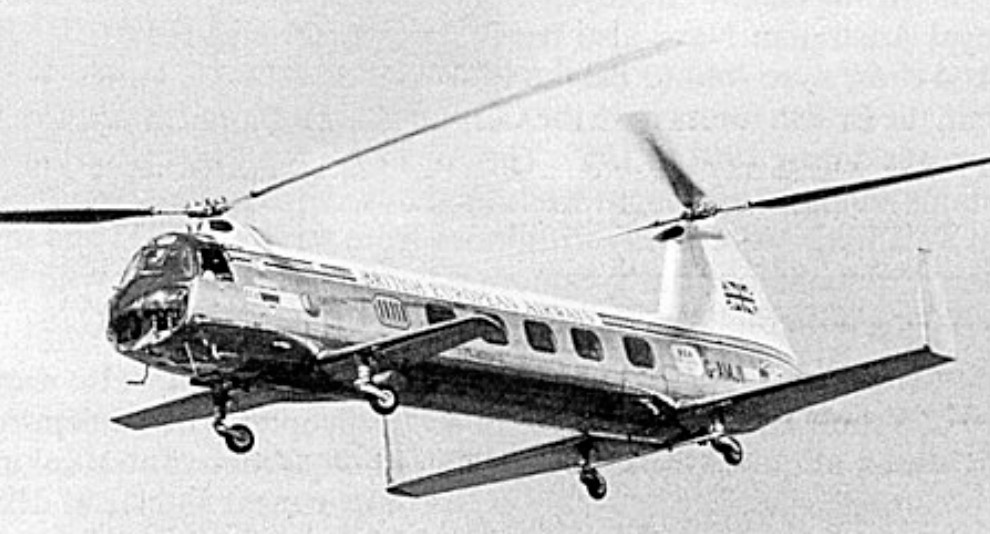
The first, G-ALBN, made its maiden flight on 3 January 1952, after some eight months of ground trials and tethered flights. It was Britain’s first tandem-rotor helicopter design, and in this early form was powered by two 575hp Alvis Leonides 73 piston engines and could carry ten passengers. In 1953 this machine was handed over to the Admiralty for Naval trials. Trials were carried out with this aircraft in 1953, from the aircraft carrier HMS Eagle.
On 31 August 1953 a prototype 173 Mk.2 (G-AMJI) was flown, differing from the first machine in having two pairs of stub wings to off-load the rotors, the rear pair carrying upright fins at their extremities. These features were later removed, G-AMJI reverting to the Vee-tailed configuration of the Mk.1 and joining its stablemate for Naval trials as XH379. On 20 July 1956 it was delivered to BEA and returned to the civil register for handing trials in BEA colours.
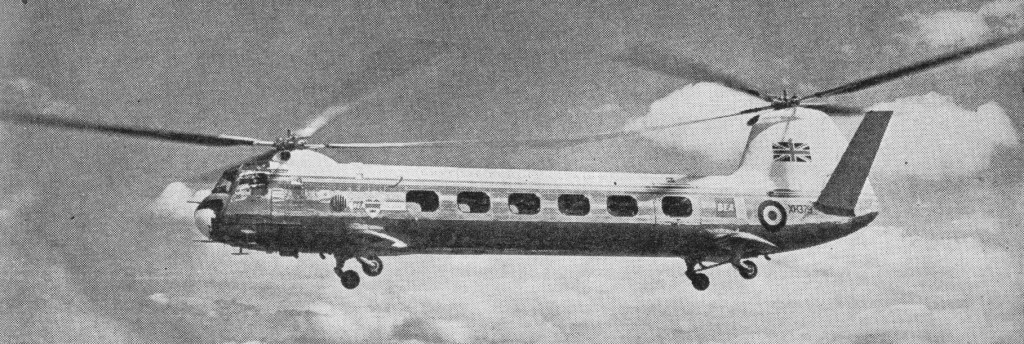
It was based at Gatwick for the period of the trials before being written off in a landing accident in 1956.
The Mk.3, with more powerful engines, (two Alvis Leonides Majors rated at 850shp each) as well as metal instead of wooden four-bladed rotors, marked a greater advance. Seating was up from 14 in the Mk.1 and 2 to 16 in the Mk.3. three were ordered but the Mk.3 suffered from cooling problems and its service trials in 1956 were not entirely successful.
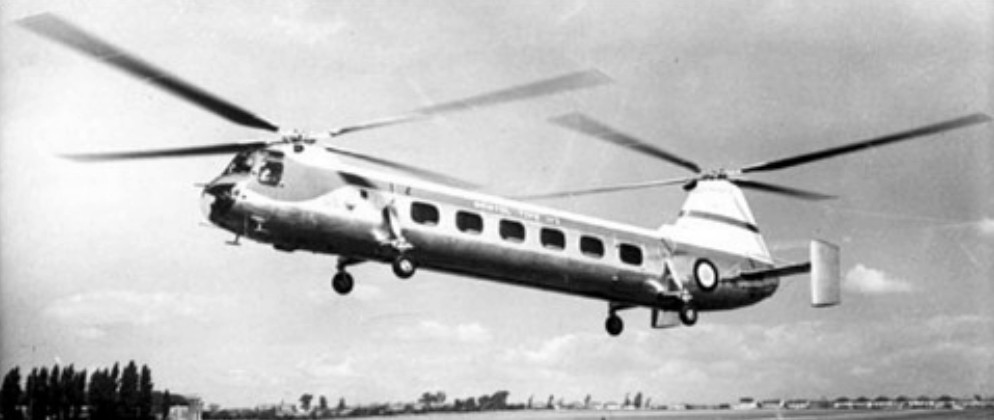
In the event, only one (XE286) was flown, the other two being utilised for ground testing. In 1956 the Royal Navy decided to adopt the Bristol machine for the antisubmarine role, placing an order for sixty-eight aircraft. The production version, to be known as the Bristol 191, was to have folding rotor blades and a shorter fuselage, to enable it to use existing carrier deck-lifts, and the rear legs of the quadricycle undercarriage shortened to facilitate loading of an external torpedo.
The Bristol 173 Mk.3 was offered to BEA.
In July 1958 the Bristol 192 made its maiden flight and this marked the successful climax to the development of the 173.
Bristol 173 Mk.1
Engines: two 550 b.h.p. Alvis Leonides 73 radial
Rotor diameter: 48 ft. 6.75 in. / 14.81m
Overall length: 23.83m
Fuselage length: 54 ft. 2 in.
Weight fully loaded: 4808kg / 10,600 lb
Empty weight: 3537kg
Cruising speed: 137km/h
Inclined climb: 360m/min
Absolute ceiling: 5975m / 19,600 ft
Range: 450km / 281 miles at 85 m.p.h. with full load
Pax seats: 14
Bristol 173 Mk.2
Engines: two 550 b.h.p. Alvis Leonides 73 radial
Pax seats: 16
Bristol 173 Mk.3
Engines: two Alvis Leonides Majors, 850shp
Pax seats: 16
Bristol B.171 Sycamore
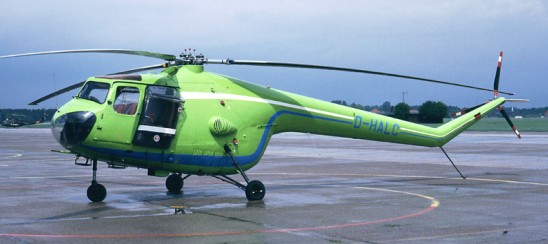
A helicopter department was set up in 1945 as part of the aircraft division at Filton, and Austrian-born Raoul Hafner, who had devoted himself to rotary wing research in the thirties, moved to England before the Second World War and took charge in 1944.
Design studies, under Raoul Hafner, were started in June 1944 and, since no suitable British engine was available at that time, the two Mk.1 prototypes (VL958 and VL963) were built with 450hp Pratt & Whitney 11-985 Wasp Junior radial engines. These were 2-seaters, conforming to Ministry of Supply specification E.20/45.
The design featured a light alloy cabin section and a stressed-skin tailboom attached to a central engine and gearbox mounting, the rotor head being fitted with three wooden monocoque blades. The crankshaft lay horizontally, with power transmitted to the vertical driveshaft through a gearbox. The three rotor blades were made of wood with leading edges in hardwood.
After component testing, ground running of the completed airframe began on 9 May 1947, the first flight (VL958) was made by H. A. Marsh on 27 July 1947.
Bristol B.171 Sycamore Article
The second aircraft (VL963) joined the test programme in February 1948 and on 25 April 1949, to facilitate its flight to the Paris Salon, it became the first British helicopter to be granted a civil certificate of airworthiness.
The third airframe appeared in the static park at the 1948 SBAC exhibition at Famborough.
This was followed by the first flight on 3 September 1949 of the one and only Mk.2, built as a 4-seater to specification E.34/46 and powered by a 550hp Alvis Leonides 71 LE 21 HM piston engine in a horizontal position with the crankshaft running vertically. This eliminated the lower gearbox which not only saved weight but made the engine more accessible for checking and repairs, and increased the seating from two to five. It was of metal construction with a three-blade main rotor and was designed as an air taxi (four-five seats) and for military tasks such as air observation and casualty evacuation. This aircraft formed the basis for the first production series, although numerous detail modifications were made to individual machines in these batches, some becoming standard on later production aircraft. Seating was increased to six.
A second take-off attempt ended abruptly when the rotor disintegrated. With a strengthened rotor, development flying was resumed while work continued on the assembly of 15 production Mk 3s with a smaller Alvis Leonides 73 engine. Airframe changes included a shortened nose and an 0.20m increase in cabin width to accommodate three passengers on the rear seat; in order to maintain essential systems in the event of engine failure, and the accessory drive was transferred from the engine to rotor gearbox. The Sycamore had a simple auto-throttle which the pilot could override.
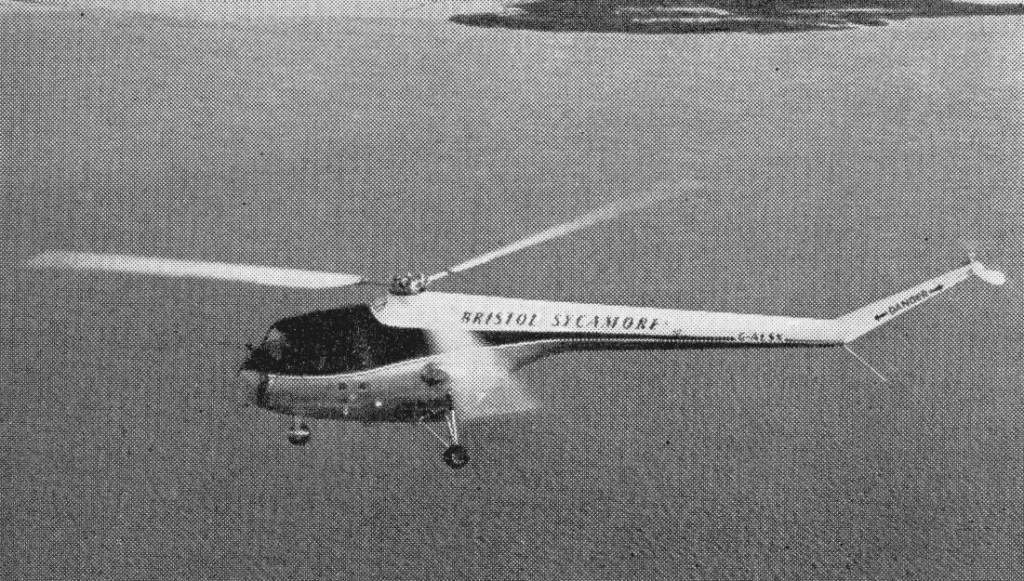
The Type 171 was manufactured at Filton and Weston-super-Mare.
Two Mk 3A were bought by British European Airways. They had a slightly superior performance to the Mk3 and greater baggage capacity, with a freight hold behind the engine bay. BEA began an experimental service with these helicopters between Eastleigh and Heathrow airport in 1954, which lasted for about two years.
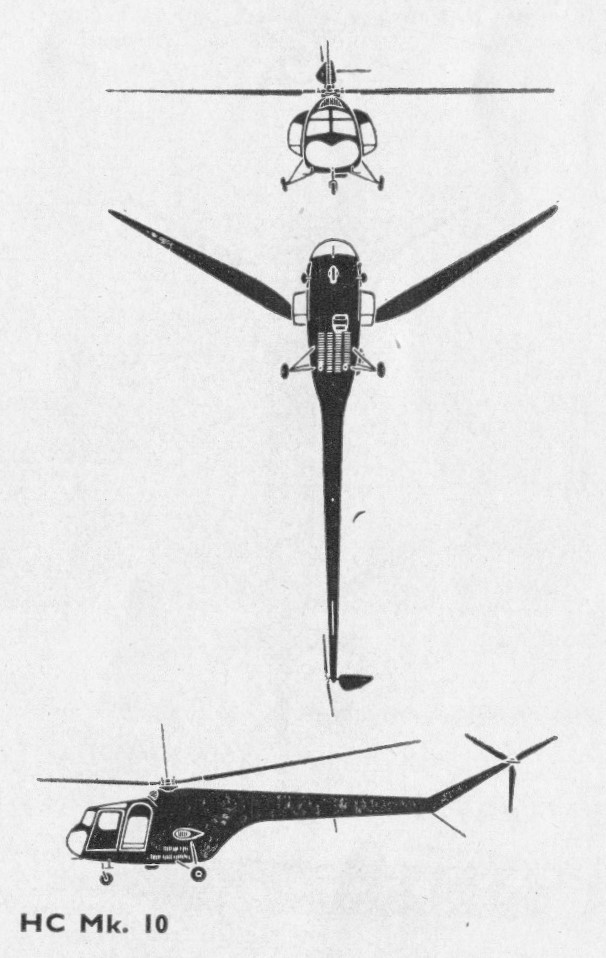
The first two production batches, totalling twenty-five aircraft, included one HC Mk.10 ambulance for evaluation by the Army Air Corps; four HC Mk.11’s for Army communications work; four HR Mk.12’s for RAF search and rescue duties, evaluated by Coastal Command; and two winch-equipped HR Mk.13’s for similar trials with Fighter Command. These were collectively to Mk.3 production standard, with 520hp Leonides 73 engines. Two Mk.3A’s with improved performance, a shorter nose and extra baggage space behind the engine bay, were completed for British European Airways. Of the remaining dozen machines, five were to Mk.4 standard, also with Leonides 173 engines and having four cabin doors; these were built for the Royal Australian Navy (three HR Mk.50), Royal Australian Air Force (one) and RAF (one HR Mk.14). All of these were completed to Mk.3 standard with a Leonides 173 engine. The remaining seven aircraft were a mixture of Mk.3 and Mk.4 reserved for military trials or civil demonstration.
The 1950 Mk.4 with four access doors, a longer-stroke landing gear, a bigger baggage compartment and an hydraulic winch and the pilot’s position moved from port to starboard. This was primarily intended for search and rescue and air ambulance duties, and was supplied to the RAF (two HR.13s and 80+ HR.14), Belgian Air Force (three Mk.14B), Royal Australian Navy (three HR.50 & seven HC.51, equipped with winches for air-sea rescue duties, initially with No. 275 Squadron) and West German Government (50 Mk.52).
No. 275 Squadron, RAF. received its first helicopter on 13 April 1953. Sycamores also operated in the light assault and reconnaissance roles in Malaya, Cyprus and Borneo, joining No.194 Squadron in Malaya in 1954 and No.284 in Cyprus late in 1956.
In August 1955 a 171 took part in the first British air-to-ground television transmission involving the use of a helicopter.
The Bristol Type 171 Sycamore Mk.4 was the final production version of this machine. 178 examples of which had been completed when the last was delivered in 1959. Of these 50 were built in 1957-1959 for the Federal Germany as the Sycamore Mk.52, most serving with the Luftwaffe but 4 being delivered to the Navy, joined later by a further four from the Luftwaffe stocks. The German Sycamore Mk.52 helicopters were withdrawn from service in 1972-1973.
In the mid 1950s Bristol Aircraft Ltd began work on a turbine-powered helicopter using a Mk 3 with an increased fin area. Under the name Bristol 203 it was to be an 11-seat machine and parts from the incomplete 179th and 180th Sycamore airframes were used in the prototype machine. This project was abandoned when the company was taken over by Westland, although some of its finer points were later incorporated in the Lynx.
Mk.1
Engine: 450hp Pratt & Whitney 11-985 Wasp Junior radial
Seats: 2
Mk.2
Engine: 550hp Alvis Leonides 71 LE 21 HM
Main rotor: three-blade
seats: 4-5.
Mk.3
Engine: 520hp Leonides 73
Length: 46.161 ft / 14.07 m
Rotor diameter: 48 ft 6.75 in / 14.81 m
Max take off weight: 5600.7 lb / 2540.0 kg
Max. speed: 93 kt / 173 km/h
Range: 232 nm / 430 km
Crew: 2+3
Mk.3A
Engine: 520hp Leonides 73
Mk.4
Engine: Leonides 73, 520 hp
Cabin doors: 4
Fuselage length: 46 ft. 2in.
Loaded weight: 5,400 lb.
Max. speed: 141 m.p.h.
Ceiling: 15,500 ft.
Typical range: 268 miles at 92 m.p.h.
Seats: 4-5
HR.13
Engine: 1 x Alvis Leonides 73 radial, 410kW
Rotors: 3-blade main; 3-blade tail.
Rotor diameter: 48 ft. 6.75 in.
Fuselage length: 46 ft. 2in.
Loaded weight: 5,400 lb.
Max. speed: 141 m.p.h.
Ceiling: 15,500 ft.
Typical range: 268 miles at 92 m.p.h.
Seats: 4-5
HR.14
Engine: 1 x Alvis Leonides 73 radial, 410kW
Main rotor diameter: 14.81m
Rotors: 3-blade main; 3-blade tail.
Length with rotor blades folded: 14.07m
Height: 3.71m
Max take-off weight: 2540kg
Empty weight: 1728kg
Loaded weight: 5,400 lb.
Max speed: 204km/h
Cruising speed: 169km/h
Ceiling: 15,500 ft.
Endurance: 3h
Typical range: 268 miles at 92 m.p.h.
Seats: 4-5
Bristol Sycamore HR 50/51 (RAAF)
Ordered: 1952
Number purchased: 13
First delivered: 1953
Last delivered: 1961
Engine: One 520 hp Alvis Leonides Mk72 7 cylinder radial
Rotor diameter: 48 ft 6.75 in
Rotors: 3-blade main; 3-blade tail.
Loaded Weight 5,600 lb
Fuselage length: 46 ft. 2in.
Height: 12 ft 2 in
Initial Rate of Climb: 1,300 ft/min
Ceiling: 4,000 ft
Speed: 127 mph (max sea level), 91 mph (cruising)
Range: 238 miles
Armament: Nil
Seats: 4-5
Crew: 2
Experience:
Hal Jowers
Back in 1968, I was hired by Associated Helicopters in Bankstown, NSW to ferry their one flyable, of 5-hulls & a hanger-full of spare parts they had bought surplus at the time, up to Port Keats Mission (about 200nm S.W. of Darwin) and work a mineral exploration contract.
The ole Sycamore was a more-than-interesting bird – to say the least! With that short-arm collective (+/- 15-inches fulcrum to end) / rt. angle throttle and direct NO hydrolic-assist linkage to the swash-plate: it was like physically lifting the bird WITH ONE ARM!!! … Add to that; a fully-castering nose gear and a 40-gal. liquid ballast system that had to be transferred during lift-off, so extra collective friction was necessary to hold it while reaching for the transfer-pump handle – otherwise; you were instantly back on the ground with a much bigger, LIFE-FULL OF GROUND RESONANCE problem to handle!!! … Albeit; once you had her in the air, all you had to be concerned with was the sporadic – no plausible answer why – 0.5 – 1.5 second engine STOPS that gave your heart its EXTRA exercise for the day.
Having acquired some 85-hours flt.time in the course of that experience; upon return to Sydney I was fortunate to be in conversation with some old RAN Sycamore drivers who expressed no small amount of chagrin that I had been so successful, as to still be alive to enjoy that moment with them. I allowed as how My Holy Spirit keeper obviously had other things for Me to do, before He punches My “ticket”. … All of that was at +/- 2,200, of the final 13,420 flt.hrs. He has blessed Me with. … God Speed!!!
Bristol B.170 Freighter
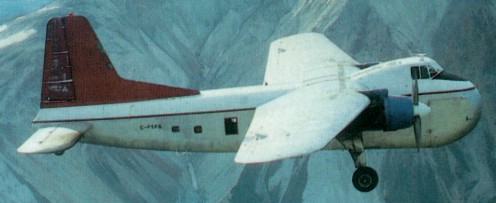
An immediate postwar civil aircraft project, Type 170, was a freighter derived from the Bombay military transport. The Type 170 was designed as a passenger, freight/passenger or all-freight transport aircraft to Specification 22/44 to carry a high payload on short-range flights. Because the campaign against the Japanese in Burma was still under way, a second Specification (G.9/45) was issued to provide a military transport capable of carrying into jungle areas a three-ton payload, including heavy trucks, guns, 28 stretchers and attendants, 36 fully equipped troops, 23 paratroops or other military loads. Large twin nose-doors facilitated loading and unloading of cargo.
The first of the two prototypes flew on 2 December 1945, by which time it was too late to see service during World War II. But surveys had shown that there was a genuine need for a similar aircraft for post-war commercial services and so the Freighter and Wayfarer were put into production, with nose-doors for loading freight or mixed passenger/freight-carrying and without nose-doors but seating for 36 passengers respectively.
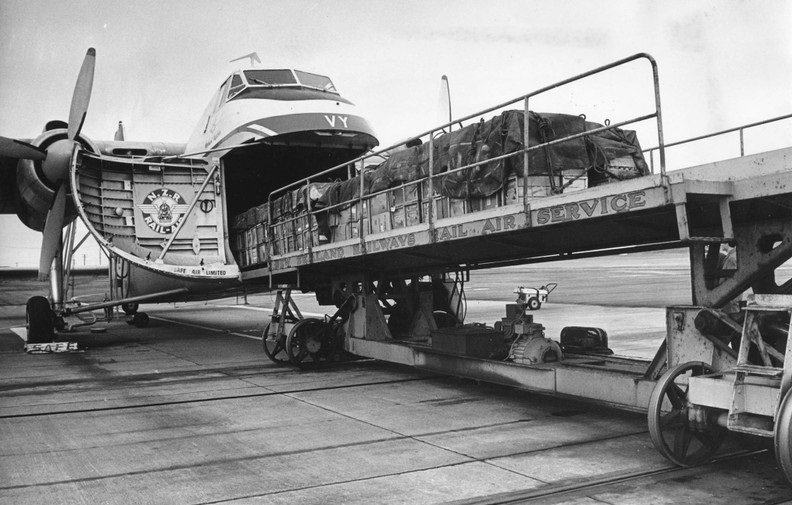
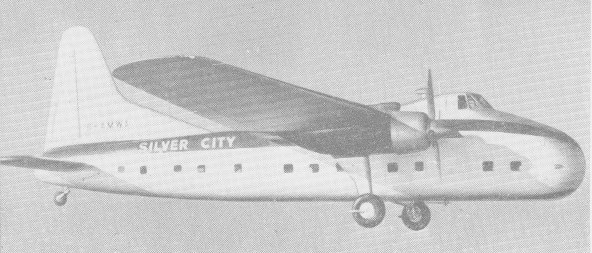
Of the 214 Bristol Type 170 built between December 1945 and March 1958, the the Mk 32 with a 5 ft lengthened fuselage, was ordered by Silver City Airways. This version could accommodate two or three cars and 23 passengers.
Apart from the large numbers of commercial versions which were supplied for use in all parts of the world for a variety of duties, the Type 170 was also produced as a military transport and served with the RAAF, and RCAF (Mk 31 freighter version). A major user of the B-170 was the Pakistani Air Force, buying 38 in all.
The RNZAF also became one of the major users of the B-170, buying 12, and operating them in the tactical transport role in New Zealand and South East Asia and flying them with a single pilot, a navigator and a signaller; and eventually losing two in accidents before retiring of the remainder in 1977.
In 1957 the two B.170s used at R.R.E. Defford as flying test beds for the development of air interception radar were scrapped. They were VR380 (ex-G-GAPV) and VR382 (ex-G-AGUT).
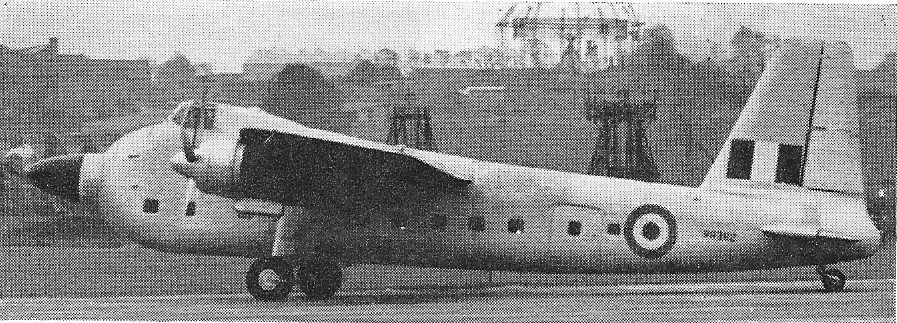
The biggest civil user was Safe Air who operated 14 in all with a maximum of 11 at any one time. The penultimate Bristol Freighter was built in early 1958 and delivered to Safe Air as ZK-BVM.
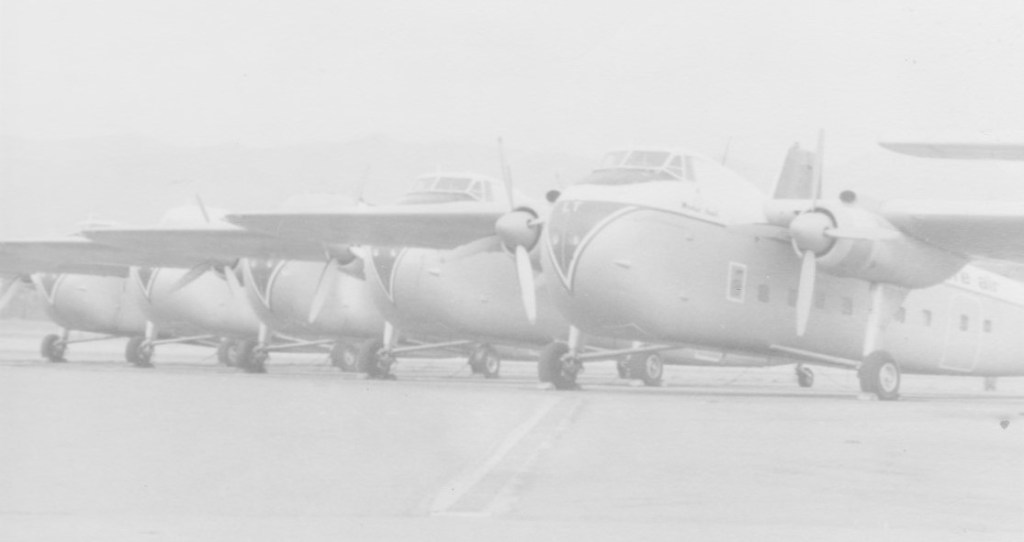
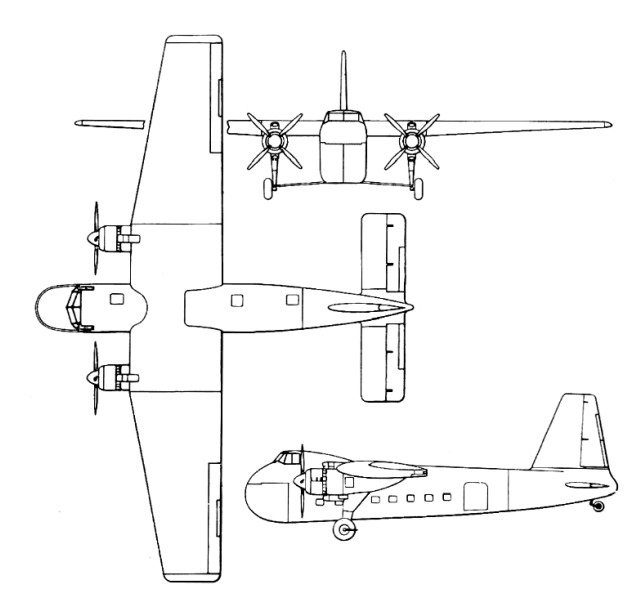
Engines: 2 x Bristol Hercules 734, 1455kW
Take-off weight: 19967 kg / 44020 lb
Empty weight: 12415 kg / 27371 lb
Wingspan: 32.9 m / 107 ft 11 in
Length: 20.8 m / 68 ft 3 in
Height: 8.6 m / 28 ft 3 in
Wing area: 138.1 sq.m / 1486.49 sq ft
Max. speed: 360 km/h / 224 mph
Cruise speed: 254 km/h / 158 mph
Ceiling: 7000 m / 22950 ft
Range w/max.fuel: 3800 km / 2361 miles
Range w/max.payload: 1200 km / 746 miles
Crew: 2-3
Passengers: 44-56
Mk.31
Engines: Bristol Hercules 734, 2000 hp
Wingspan: 108 ft
Length: 68 ft 4 in
Height: 21 ft 6 in
Wing area: 1487 sq.ft
Empty weight: 25,547 lb
Loaded weight: 44,000 lb
Max cruise: 193 mph at 10,000 ft
ROC: 1380 fpm
Range, 12,000 lb payload: 420 mil
Service ceiling: 24,500 ft
Mk.31M
Engines: 2 x Bristol Hercules 735, 1980 hp.
Wing span: 108 ft.
Empty wt: 27,760 lb.
MAUW: 46,000 lbs.
Max speed: 230 mph @ 3,000 ft.
Bristol B.167 Brabazon
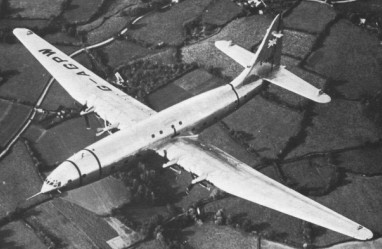
The Brabazon was a large trans Atlantic airliner project, designed to meet one of the postwar requirements formulated by the Inter-Departmental Committee under the chairmanship of Lord Brabazon of Tara. This committee was set up in 1943 to decide on the types of aircraft likely to be needed after the end of the war, able to carry 100 passengers non-stop from London to New York. Filton’s submission for an eight engined, 160 ton aeroplane drew extensively upon design studies that had been made in 1942 for a long range bomber. The Bristol Aeroplane Company was given leave to proceed with two fully pressurised prototypes, the name Brabazon chosen for the type.
In 1945 construction of the prototype commenced in October. Many problems were encountered during the next four years leading up to the first flight on 4 September 1949. There was extensive testing of design innovations both on the ground and in the air. The huge Brabazon Hangar was built at Filton to accommodate the assembly of the two prototypes and a new runway was laid, involving the demolition of a village and closure of a dual carriageway. Six and a half years later, in 1949, the first Brabazon was ready at Filton. The only aircraft to be completed, G AGPW, had flown only 400hr when it was decided to abandon the project in 1953. Structural and flight control problems associated with gust alleviation were behind the political and financial decision to scrap the giant.
With a 70 m (230 ft) wing span and 15.25 m (50 ft) high to the tip of its fin, eight 2500 hp Bristol Cen-taurus piston engines driving contra rotating propellers were mounted in pairs within its wing. The maiden flight took place on 4 September 1949. The second aircraft would have been powered by Bristol Proteus turboprops in coupled pairs. It was expected that the Mk 1 would be retained for experimental flight research into the problems associated with very large aircraft, while the Mk 2 would be furnished to carry 100 passengers by day or night, plus a flight crew of seven and eight stewards. However, although the Mk 1 flew well and BEA wanted to use it between London and Nice, France, fatigue cracks in the propeller mounting and other problems ended the project.
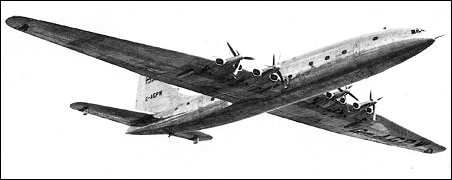
The Brabazon was flown to the Farnborough Air Show with only three hours’ total flying time, before touring seaside resorts to give taxpayers a sight of the aircraft their money had paid for. Its thick wing was designed to lift at low airspeeds (160 kph/100 mph) at take-off, but was hopelessly inefficient for high speed flight. The Brabazon was too slow, and American airliners then reaching the market offered better performance at much lower cost. Late in 1952 the British government reported that ‘neither the civil airlines nor fighting services could foresee any economic use for it’ and ordered the prototype, with 400 hours of flight time, and a second unfinished Brabazon to be broken up. The two machines and all the jigs were sold for £10,000, though they cost £12,500,000.
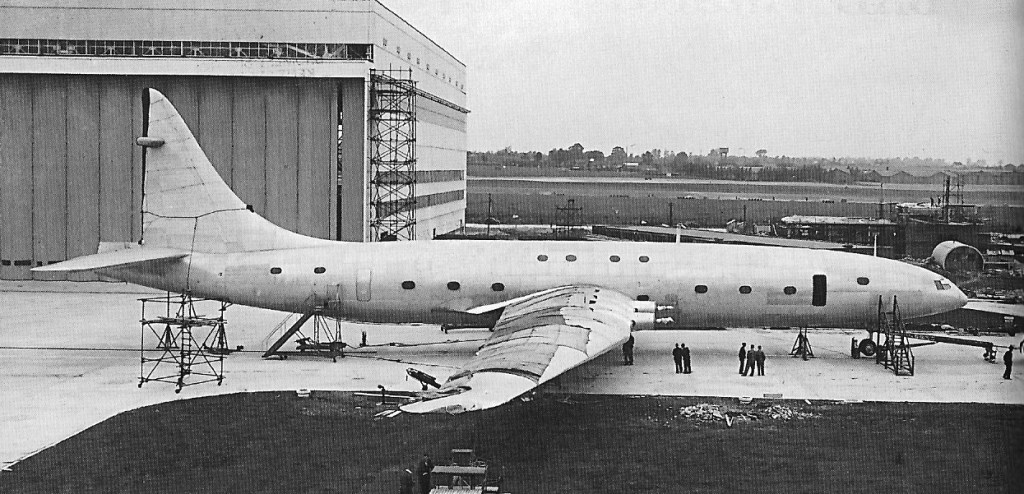
Bristol 167 Brabazon
Engines: 8 x Bristol Centaurus 20, 1863kW, 2466 hp
Max Take-off weight: 131542 kg / 290002 lb
Empty weight: 65816 kg / 145100 lb
Wingspan: 70.1 m / 229 ft 12 in
Wing load : 54.53 lb/sq.ft / 266.00 kg/sq.m
Length: 53.95 m / 177 ft 0 in
Height: 15.24 m / 50 ft 0 in
Wing area: 493.95 sq.m / 5316.83 sq ft
Max. speed: 483 km/h / 300 mph
Cruise speed: 402 km/h / 250 mph
Cruising altitude : 24934 ft / 7600 m
Ceiling: 7620 m / 25000 ft
Range: 8850 km / 5499 miles
Passengers: 50-180
Crew: 3