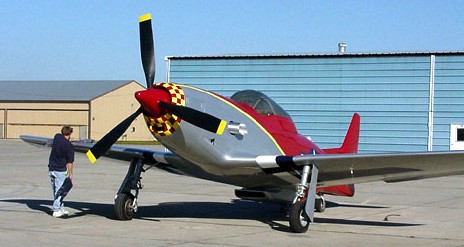
The P-51 is a full size Carbon Fiber Mustang manufactured by Cameron and Son’s Aircraft. This aircraft is available with a 1450 hp turbine, or can be fitted with a Rolls Merlin. It is capable of speeds in the mid 400mph range. There are three options on the canopy, the standard P-51D, a 9ft bubble, or a low profile racing canopy. Also available are standard P-51D wing tips. The cockpit features dual controls. The kit is built from 12 major components, making it the fewest part count aircraft of its kind.
Cruise: 420 mph Stall: 87 mph Range: 580 sm Rate of climb: 4200 fpm Takeoff dist: 1250 ft Landing dist: 1750 ft Engine: Allison, 1750 hp HP range: 1150-3500 hp Fuel capacity: 250 USG Empty weight: 4500 lb Gross weight: 6000 lb Length: 36 ft Wing span: 37 ft Wing area: 233 sq.ft Seats: 2 Landing gear: tailwheel
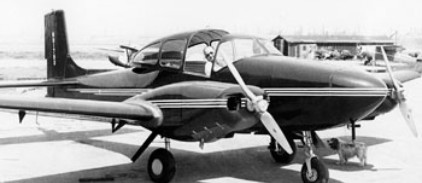
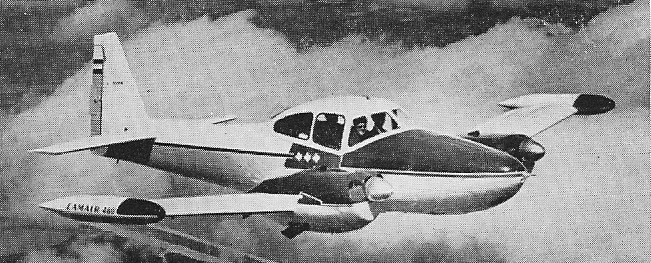
The Camair flew for the first time in 1953 and was designed to meet the requirements of the Cameron Iron Works. The company was so pleased with the results of the prototype (powered by two 225 hp Continentals) that it decided to produce similar conversions of the Navion single-engine airplane on a commercial basis.
The designation Camair 480 indicates the combined power of the twin 240 hp Continental powerplants used in the production model. Starting with a North American/Ryan Navion, structural modifications were carried out to allow for the increased horsepower and weight of the two engines, while aerodynamic, comfort, and styling refinements were added, including increased fin and rudder area, a longer fuselage nose, and two 29 Imp.Gal wingtip tanks. Building of new aircraft was suspended; however, the Camair Aircraft Corp. continued to supply spare parts to Twin Navion owners.
Camair 480
In all, four models were built: the Model A prototype with two 225 hp Continentals, the Model B with twin 240 hp Continentals, the Model C with twin 260 hp Continentals, and the Model D with two 300 hp Continentals.
480 Engines: 2 x Continental O-470-B, 240 hp Span: 34 ft approx. Length: 27 ft 11 in Empty weight: 2730 lb Loaded weight: 3930 lb Cruise 75 %: 192 mph ROC: 1750 fpm Service ceiling: 22,000 ft Range: 900 mi
D Engines two 300 hp fuel-injected Continentals Gross wt. 4,500 lb Empty wt. 3,000lb Fuel capacity 188-200USG Top 215 mph Cruise 200 mph Stall 60 mph Initial climb rate 2,000fpm Ceiling 22,000ft Range 900sm Takeoff run 400ft Landing roll 600ft Seats 4
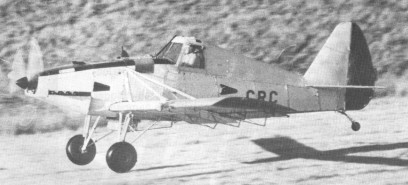
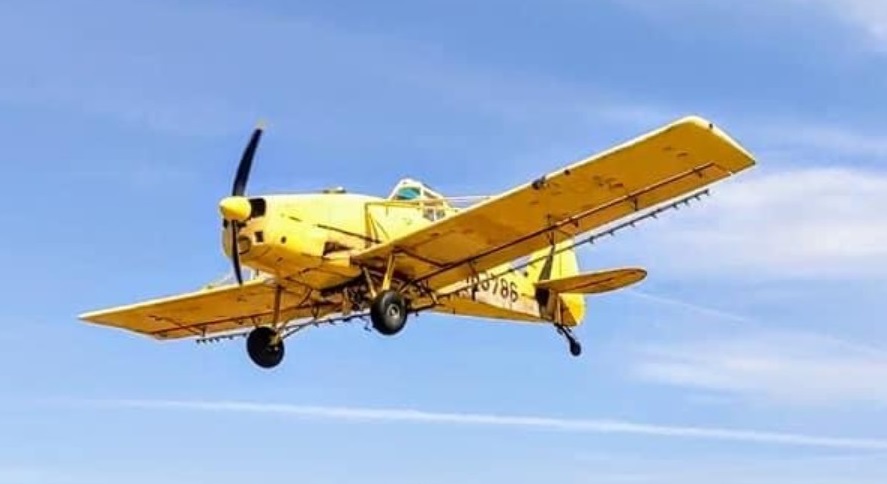
A scaled up version of the 235 hp CallAir A-9. Production of the B-1 ceased after ownership of the design passed the North American Rockwell company as they favoured their S2R Thrush Commander.
ZK-CRC pilot Robin “Hank” Calder, Albury, Canterbury, New Zealand January 1978
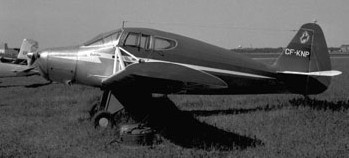
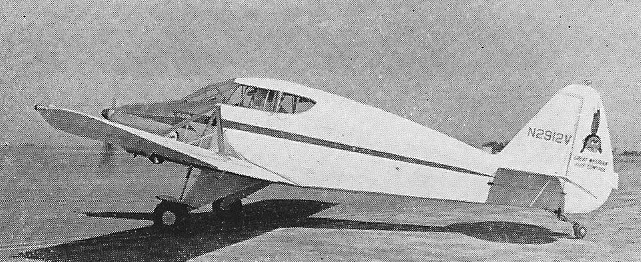
The first CallAir flew in 1941 and was designated the Model A. The last version was introduced in 1957 and was named the A-6. Throughout the years of its existence, the basic difference between any of the models was the powerplant; otherwise, the Model A-4 differed little externally from the original Model A. The CallAir was built with mixed construction: fabric-covered wooden wings and a fabric-covered steeltube fuselage.
The Model A-2, with a 125-hp Lycoming, and the Model A-3, with a 125-hp Continental, were produced during the years between 1946 and 1948.
Call-Air 100 Model A-2
The first production models of the A-4 appeared in 1955, and the major refinement was the addition of 25 more horsepower with the installation of a 150-hp Lycoming. All models shared the same two-to three-seat cabin and low wing with exposed struts.
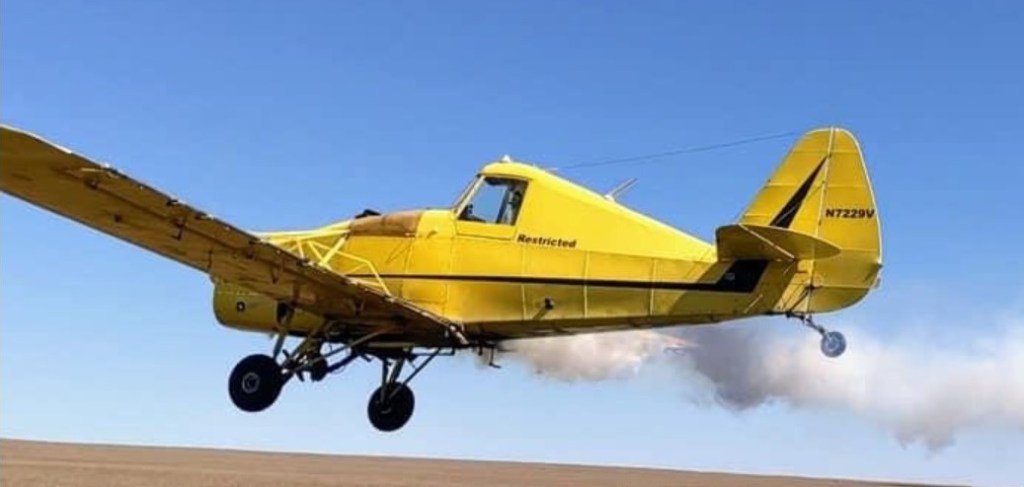
Another version of the CallAir was introduced in 1956 and was basically an agricultural development of the Model A-4. Designated the A-5, it was normally flown as a single-seater with the cockpit offset to the starboard side due to the inclusion of the dust hopper.
The Model A-6 flown in 1957 was identical, apart from another jump in horsepower to a 180-hp Lycoming.
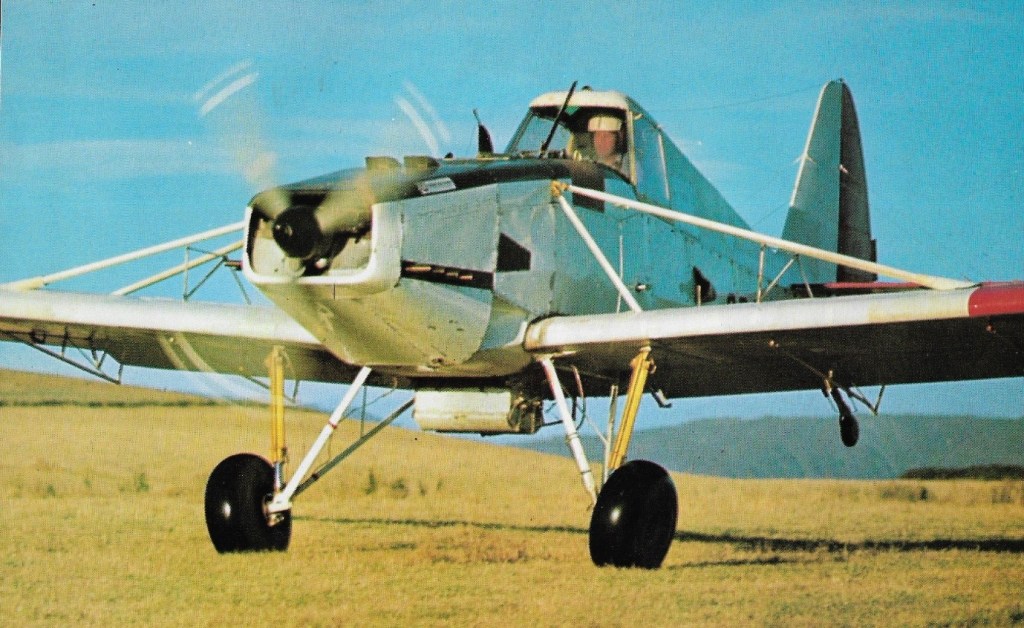
CallAir A-9 courtesy Larry in NC
The Intermountain Manufacturing Co. developed a series of low-priced agricultural aircraft from the CallAir, and the first airplane rolled off the production line in 1963. The A-9 featured a 235-hp Lycoming; its top speed was now 130 mph, and its climb rate was now 650 fpm. The dust hopper was moved to a position in front of the cockpit.