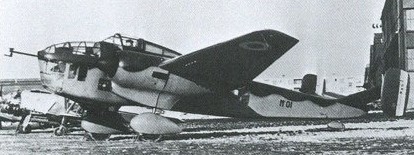
The first prototype NC.530 Exp flew on 29 June 1939, the second NC.530.01 on 29 December 1939. Further development was cancelled due to occupation of France in 1940.
The first prototype NC.530 Exp flew on 29 June 1939, the second NC.530.01 on 29 December 1939. Further development was cancelled due to occupation of France in 1940.
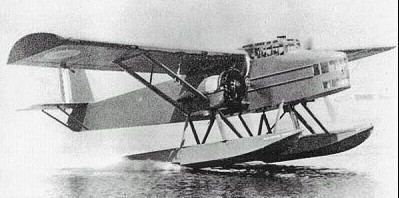
A floatplane trainer, some were used for reconaissance in 1939. The NC.470 was initially developed by Farman as the F.470. Germany captured 14 in 1942. Approx 24 built.
NC.471
Engines: 2 x 500hp Gnome-Rhone 9Kgr
Take-off weight: 6000 kg / 13228 lb
Empty weight: 3710 kg / 8179 lb
Wingspan: 24.45 m / 80 ft 3 in
Length: 16.1 m / 53 ft 10 in
Height: 4.85 m / 16 ft 11 in
Wing area: 95.0 sq.m / 1022.57 sq ft
Max. Speed: 230 km/h / 143 mph
Cruise speed: 190 km/h / 118 mph
Ceiling: 6000 m / 19700 ft
Range: 1140 km / 708 miles
Crew: 6
Armament: 1 x 7.5mm machine-gun, 200kg of bombs
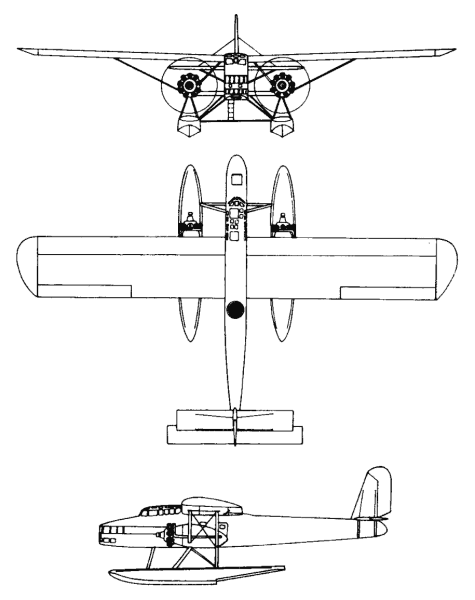
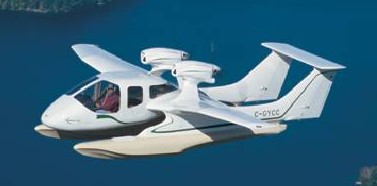
Aerocat co-designer Kirk Creelman has been working in the field of Composite Aircraft Design for over a quarter century and the Aerocat marks the culmination of his experience with composite design, form, flow and function.
With rivetless seams, a low-drag coefficient and retractable gear, the Aerocat is a four-place aircraft on the kitplane market. The cabin measures 59″ wide across the pilots chairs and 63″ wide across the passenger and baggage area. This aircraft capable of a 180 mph cruise (at 55%) with either twin 135 hp Jabirus or 250 hp turbocharged engine. Range at 55% Cruise is a 1,100 nm.
Aerocat Amphibian also offers the multi-platform concept, designed to house a single or twin configuration, and a purchase option which may or may not include floats. All Aerocats come off the production line with a “Floats-Capable” airframe.
The design is by co-designers Y.C. Cheng and Kirk Creelman. They devised an airframe that could accommodate a choice of twin or single powerplant options. The power arch configuration allows for a single 210 to 300 HP engine mounted in the middle of the arch or the twin 135 Jabiru Option mounted on each side of the arch.
The pusher type propulsion mounted high on the arch also serves to keep the props high and dry for on-water applications.
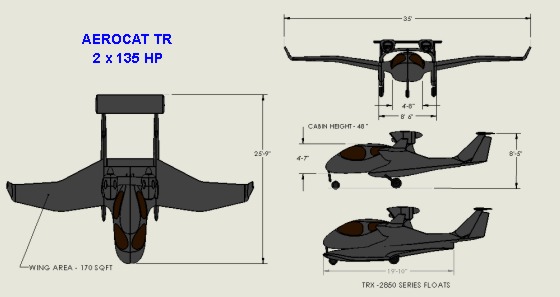
Aerocat TR
Engine: 2 x Jabiru 3300 EFI, 135 hp
Max Gross Weight: 2700 lbs
Standard Empty Weight: 1600 lbs
Useful Load: 1100 lbs
Usable Fuel Capacity: 68 USG/260 lt
Full Fuel Payload: 680 lbs
Takeoff: 450 ft
Takeoff (50 ft object): 550 ft
Climb rate: 1200 ft/min
Stall Speed with Flaps: 50 mph
Cruise Speed (75% Pwr): 180 mph
Cruise Range with Res: 900 nm
Max Range (55% pwr): 1000+ nm
Landing Ground Roll: 450 ft
Landing over 50′ Object: 550 ft
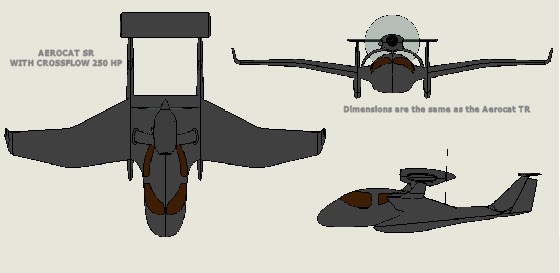
Aerocat SR
Engine: Crossflow CF4-20THO, 250 hp
Takeoff: 450 ft
Takeoff (50′ object): 550 ft
Climb rate: 1200 ft/min
Stall Speed with Flaps: 50 mph
Cruise Speed (75% Pwr): 185 mph
Cruise Range with Res (55% Pwr): 900 nm
Landing Ground Roll: 450 ft
Maximum Range (55% power): 1000+ nm
Landing over 50′ Object: 550 ft
Maximum Gross Weight: 3000 lbs
Standard Empty Weight: 1750 lbs
Useful Load: 1250 lbs
Usable Fuel Capacity: 68 gal/260 Lt
Full Fuel Payload: 840 lbs
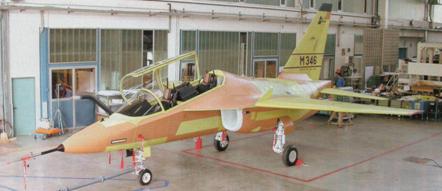
Powered by two 7,0001b thrust Honeywell F124 turbofans, the fly by wire M 346 advanced jet trainer was launched in January 2000 following cessation of the joint Italian/Russian Yak 130 technology development programme which ran from April 1996 to December 1999, accumulating some 300hr flying.
The prototype M-346 first flew in July 2004.
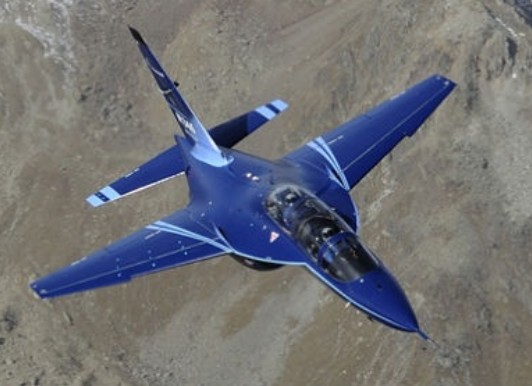
Textron will offer a US-made version of the Italian light jet under the designation Beechcraft M-346N.
In 2025 Textron Aviation Defense started a nationwide demonstration tour to promote its Beechcraft M-346N advanced jet trainer for the U.S. Navy. The M-346N took off from Beech Factory Airport in Wichita, Kansas, where it was assembled. The aircraft is part of a broader integrated training system originally developed by Leonardo and adapted for U.S. Navy needs by Textron under the Beechcraft name.
Assembled in the United States by Beechcraft, the M-346N is a tandem-seat, twin-engine jet equipped with digital flight controls, advanced avionics, and a modern cockpit layout. Features include a quadruple-redundant fly-by-wire system, Head-Up Displays (HUD), Large Area Displays (LAD), and hands-on throttle and stick controls in both cockpits. It also incorporates safety systems such as Automatic Ground Collision Avoidance (Auto-GCAS).
Powered by two Honeywell F124-GA-200 turbofan engines, the M-346N has a maximum cruise speed of over 590 knots and a service ceiling of 45,000 feet. Its features an elevated rear cockpit provides instructors with a clear field of view.

Textron says more than 100 M-346 aircraft built by Leonardo are already in service worldwide, logging over 150,000 flight hours by 2025. These numbers reflect a platform that has been tested and adopted by air forces in at least 20 countries.
Engine: 2 x ITEC F124-GA-200, 6250 lb.
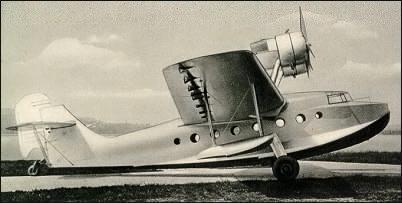
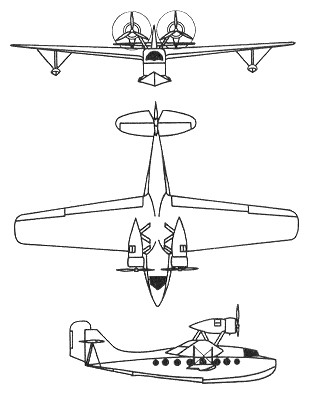
The prototype MC.94 commercial amphibian flew for the first time in 1935 powered by two 574kW Wright SGR-1820-F air-cooled radial engines, and fitted with retractable wheels which swung forward into streamlined casings in the leading edges of the wings. The two pilots had a fully enclosed cockpit, and up to 12 passengers a main cabin equipped with a toilet to the rear, baggage in an aft compartment and marine gear in a nose compartment.
The first five production MC.94 (without the retractable wheels of the prototype) were similarly powered. The only other production aircraft were six similar flying-boats with 596kW Alfa Romeo 126 RC.10 engines. All MC.94 served initially with Ala Littoria.
Engine: 2 x Alfa Romeo 126-R.C.10, 550kW
Take-Off Weight: 8200 kg / 18078 lb
Empty Weight: 5350 kg / 11795 lb
Wingspan: 22.8 m / 74 ft 10 in
Length: 16.2 m / 53 ft 2 in
Wing Area: 76.0 sq.m / 818.06 sq ft
Max. Speed: 292 km/h / 181 mph
Cruise Speed: 250 km/h / 155 mph
Ceiling: 6000 m / 19700 ft
Crew: 3
Passengers: 12
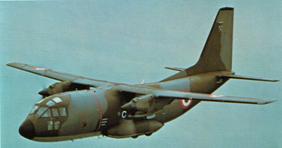
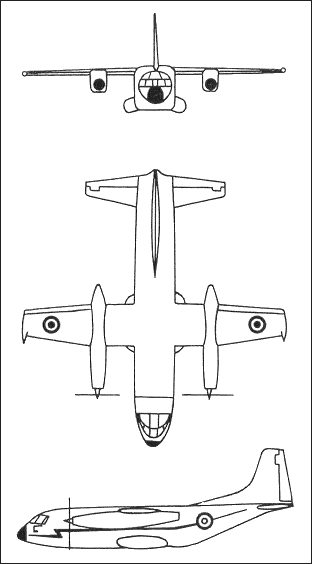
The project began with Fiat’s submission in the NATO NBMR 4 design competition for a tactical V/STOL (vertical/short takeoff and landing) transport with jet lift engines. One of more than 12 entries, it was the only project to be pursued to the hardware stage, though the V/STOL feature was abandoned. Originally the powerplants were all Rolls Royce, the main engines being two Dart turboprops. Four lift jets were to be installed in the rear of each turboprop nacelle. The design changed, lift jets were removed, and new models appeared for including ASW (antisubmarine warfare), military and civil cargo transport, which had outer wings of greater span. In 1966 the design changed to two General Electric T64 main engines and later the 3400 shp T64 P4D single shaft engine with Hamilton propeller, and put into licence production by the Fiat engine company.
The original contract was awarded by the Italian air force in 1963 to what was then Societa per Aviazioni Fiat.
Initially two prototype G222s were built, the first flying at Turin on July 18, 1970. A production programme was agreed in which Fiat make fuselages at Pomiglio d’Arco, Naples. Wing centre sections are made by Piaggio and outer panels by Aermacchi; tails by SIAI Marchetti; landing gear by CIRSEA; and various other airframe sections by SACA. The Italian air force ordered 44 G222 transports, and Aeritalia marketed the aircraft, achieving limited success with orders for three from Argentina and one from Dubai. A prototype ECM version, the 222VS, equipped with extensive electronic installations and with accommodation for 10 systems operators, was also produced in 1978.
The G.222 entered service in 1976 as a tactical airlifter, certified for operation with a crew of two and can take-off and land on grass strips. Its volumetric capacity allows loads of up to 20,000 lbs, 53 fully equipped soldiers, parachute 42 paratroopers, or to air drop heavy loads up to 11,000 lbs. The plane has a hold accessed by a rear ramp/door for the straight-in loading of bulky items. Production was completed in 1989 with the 90th plane. The type’s major operator was the Italian air force, though smaller quantities were exported to several countries, of which the single largest operator is Libya with a special version produced to avoid export restrictions on American engines and equipment. Principal versions: G222 (basic tactical transport), G222RM (navaid calibration model), G222SAA (firefighting model), G222T (version for Libya with European avionics and engines for improved hot-and-high performance), G222V5 (electronic warfare model).
The transport version had some export success, customers including Argentina (3), Dubai (1), Libya (20), Nigeria (4), Somalia (4), the USA (10) and Venezuela (8). Some G.222s were converted to the radio/radar calibration role and for fire-fighting duties.
G.222
Engine: 2 x 3,400-shp (2,535-kW) Fiat-built General Electric T64-GE-P4D turboprops.
Installed pwr: 5070 kW.
Span: 28.7 m.
Length: 22.7 m.
Height: 32 ft 2 in (9.80 m).
Wing area: 82 sq.m/ 882.67 sq ft.
Empty wt: 14,590 kg.
MTOW: 28,000 kg.
Payload: 9000 kg.
Cruise speed: 440 kph.
Initial ROC: 520 m / min.
Max speed: 336 mph /540 kph / 292kt @ 15,010 ft (4,575 m)
Service Ceiling: 25,000ft / 7,620m
T/O run: 660 m.
Ldg run: 545 m.
Fuel internal: 12,000 lt.
Range/payload: 1371 km with 9000 kg
Range/payload: 851 miles (1,370km) with maximum payload.
Capacity: 53 pax.
Crew: 3.
G222T
Engines: 2 x 4,860-shp/3,624-kW Rolls-Royce Tyne Mk 801 turboprops
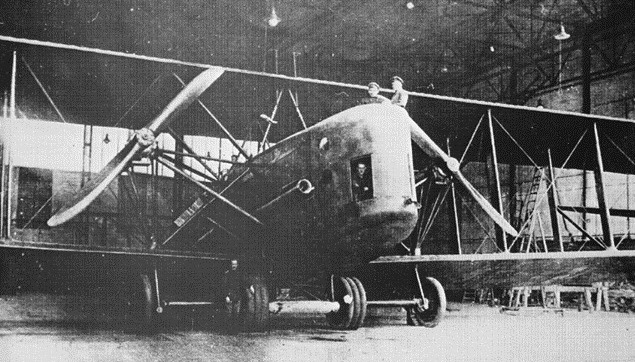
During 1916 AEG received an order for two R.I Giant four engine heavy bombers. R was an abbreviation of “Riesenflugzeug” (giant aircraft). All four engines were grouped inside the fuselage and drove four blade propellors at 750 rpm via shafts and gearboxes; a combination leather cone and dog clutch. Two blade propellors were installed later.
One R.I was completed (R.I 21/16) and made its first flight in 1916. During a trial night flight on 3 September 1916 this aircraft broke up in the air with a loss of all seven crew. This crashed was caused by propellor delaminating because of insufficient hardening of the glues. A second machine, R.I 22/16, was still incomplete at the end of World War 1 and eventually scrapped.
Engine: 4 x Mercedes D.IVa, 260 hp
Wing span: 118 ft 1.5 in
Length: 63 ft 11.5 in
Empty weight: 19845 lb / 9000 kg
Loaded weight: 28,003 lb / 12,500 kg
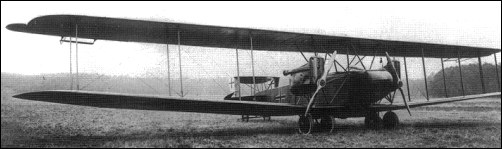
A larger three-bay design and carrying three times the bomb load of the G.II, the G.V entered service in 1918.
The G.V was AEG’s last bomber, the end of the war prevented the G.V from becoming operational and it was after the war that a number were operated as six-passenger civil transports by Deutsche Luft-Reederei – an airline company financed by and connected with AEG.
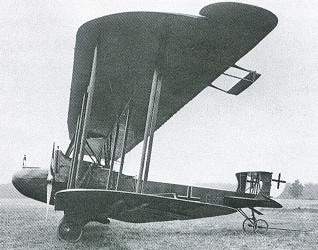
In 1919 the G.V was the only large German 1914-18 aircraft employed commercially to any great extent. As a makeshift transport (with an open cockpit for passengers) a Limousine version was developed. This had a new cabin fairing attached to enclose the passenger area, a downward-hinging fuselage nose to provide a baggage locker (which could also act as a buffer if the aircraft overturned) and a toilet aft of the cabin. One was recorded as flying from Berlin to Eskjo, Sweden in 4 hours and seven minutes.
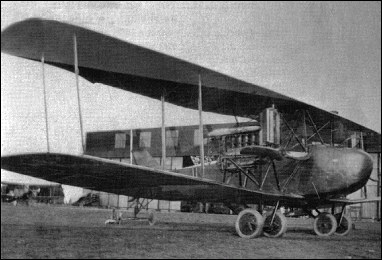
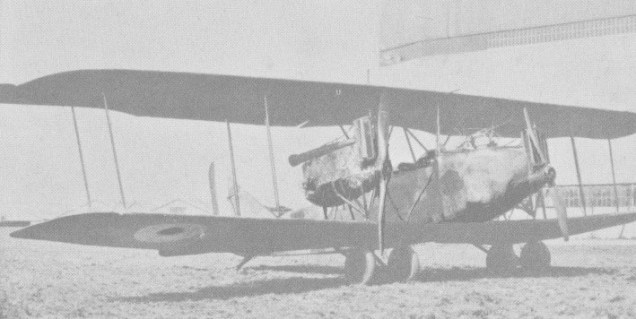
The AEG G.IV was produced in 1915 and entered frontline service by 1916, seeing action through to the end of the war in 1918.
The twin-engine, three-man aircraft was of a biplane design with two steel tube spars, wooden ribs, and wooden leading edge and wire trailing edge. Ailerons were on the top wing only. Of welded steel tube construction and covered in fabric except the plywood skinned nose section, the crew of four could change positions through connected cockpits.
Up to 882lbs of ordnance was carried on the aircraft and this was complimented with two defensive machine gun positions at fore and aft of the pilots mid-position.
The G.IV served the German air force in an offensive capacity but was limited by the short range when carrying a crew of three and full bomb load it was used mainly as a tactical bomber between allied lines on the Western Front. Without a bomb load, it was able to be used for long range reconnaisance and aerial photography. The units equipped with the G.IV fought against the Italians on the Southern Fronts to good effect and would even be called upon to complete night bombing missions. About 50 G.IVs were being used for night bombing behind Allied lines in August 1918.
Small numbers were built for assessment by the Schistas at the front. These included the G.IVb with a three bay wing cellule of increased span, and the G.IVK with a 20mm Becker cannon in the nose.
An example was captured almost intact by the Allied forces and evaluated in flight in the UK, where it was found to be deficient in elevator control and extremely difficult to land. The absence of a passenger in the front gunner’s cockpit apparently made the machine almost uncontrollable.
About 500 of the 542 AEG G bombers built were of G.IV type. Fifty were still in use in France in August 1918.
G.IV
Engines: 2 x Mercedes D.IVa, 260hp
Prop: 2 blade wooden
Wingspan: 60 ft 4.5 in / 18.4m
Length: 31 ft 9.5 in / 9.7m
Height: 12 ft 9.5 in / 3.9m
Wing area: 721.21 sq.ft / 67 sq.m
Empty wt: 5291 lb / 2400 kg
MTOW: 8003 lb / 3630 kg
Fuel capacity: 123 Imp Gal
Climb to 3280 ft / 1000m; 5 min
Max speed: 103 mph / 165 kph / 89kt
Service ceiling: 14,765 ft / 4500 m
Time to 9000ft: 24 min
Max endurance: 4-5 hr
Maximum Range: 466miles / 750km
Max bomb load: 882 lb / 400 kg
Crew: 3
Armament: 2 x trainable 7.92mm LMG 14 Parabellum
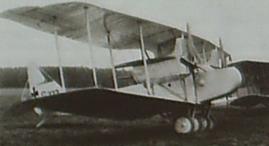
A 1916 development of the AEG G.II equipped with 164kW Mercedes D IV engines driving opposite turning propellers. Produced in limited numbers, the G.III could carry a 50% increase in bomb load on the G.II but was built only for limited service, mostly away from the major fronts.
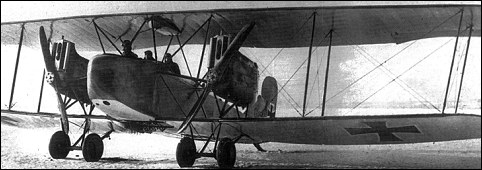
Engines: 2 x Mercedes D.IV, 220 hp.
Bombload: 661 lb / 300 kg

