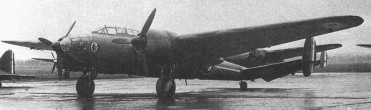
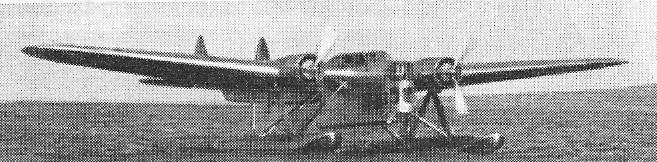
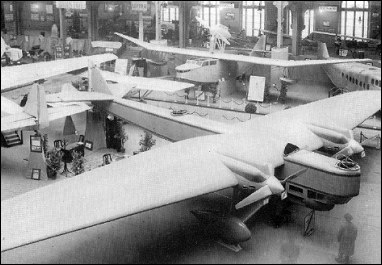
After its Amiot 143, the company produced the Amiot 340.01, modified from the long-range postal Amiot 341. First flown in December 1937 with two 686-kW (920-hp) Gnome-Rhone 14N-0/1 radials. Trials revealed the need for a fourth crew member, 761-kW (1,020-hp) 14N-20/21 engines, and a dihedralled tailplane with endplate vertical surfaces. This resulted in the Amiot 351.01.
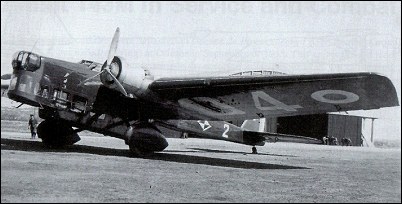
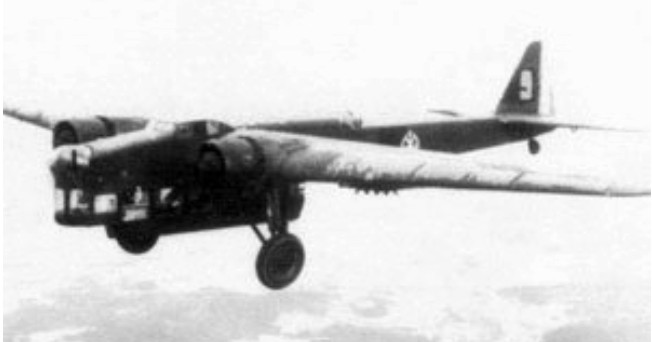
First flown in August 1934, the Amoit 143 was an all-metal cantilever high-wing monoplane with an enclosed pilot’s cockpit, manually operated nose and dorsal gun turrets and a glazed ventral ‘balcony’ housing the bomb-aimer’s position forward and the ventral gunner’s position at the rear. The fixed undercarriage had wheel spats.
Meeting a requirement for a Multiplace de Combat (Multi-seat combat aircraft) for the French Air Ministry, the first 50 aircraft was delivered in the winter of 1935-6 to Escadres GB 1/22 and GB 11/22 at Chartres and from aircraft number 31 the fuselage was slightly lengthened. Normal bomb load was 900kg, with 1,600kg as the overload weight, the internal capacity 800kg and the rest carried underwing. Equipped with a nose turret with a single 7.7mm Lewis gun, a dorsal turret with twin 7.7 mm Lewis guns and twin Lewis mounting in the ventral location, from 1941 onwards these were replaced by single MAC 7.5mm machine-guns in each position. In August 1939 91 Amiot 143s were still in service with first-line Escadres, 29 with training units and six in storage. The Amiots carried out a number of daylight reconnaissance sorties during September 1939, and also carried out a number of night reconnaissance and leaflet-dropping missions up to the end of the year, reaching into Germany as far as Neustadt. Until the French surrender, Amiot 143s dropped a total of 528 tonnes of bombs in night raids. From May 1940 Amiot 143s were used for transport and training duties by the Vichy French, except for a few impressed by the Germans. The Total production was 138 aircraft.
Amiot 143 Engines: 2 x Gnome-Rhone Kirs 14-cylinder radial, 870hp Length: 59.91ft (18.26m) Wingspan: 80.48ft (24.53m) Height: 18.64ft (5.68m) Empty Weight: 13,448lbs (6,100kg) Maximum Take-Off Weight: 21,385lbs (9,700kg) Maximum Speed: 193mph (310kmh; 167kts) Maximum Range: 1,243miles (2,000km) Service Ceiling: 25,919ft (7,900m) Accommodation: 4 – 6 Armament: 4 x 7.5mm MAC 1934 machine gun Maximum bombload: 3,527lbs
A day and night bomber, reconnaissance and attack aircraft, the Amoit 140 was selected for service by the Armee del’Air in 1933 as the 140M. Forty production aircraft were built.
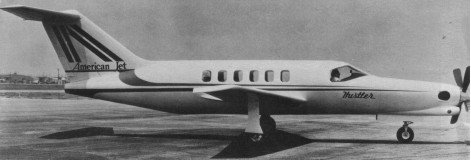
Unveiled at American Jet Industries plant in Van Nuys, California, in October, 1975, the seven place Hustler 400 turboprop/ turbojet has been modified since announcement was made. A major change was the redesign of the tail to a “T” tail configuration, and other changes include an increase of 52 inches in the wing span and installation of double slotted Fowler flaps on the supercritical wing. Sixteen inches have also been added to the fuselage. An 850 shp United Aircraft of Canada turboprop PT6A 41 in the nose provides power for the Hustler while the Teledyne turbojet engine will be used for standby’ power in the event of an engine failure. According to American Jet’s data the standby engine will enable the aircraft to maintain an airspeed of 170 mph at 13,500 feet with the nose turboprop engine feathered. A top speed of 380 mph for the Hustler is predicted with a maximum range of 2970 miles. Three prototypes were under construction at the American Jet California facility; two were to be used for flight testing and the third for ground structural testing. The Hustler faces some serious hurdles; for instance, no certificated jet engine of the size required by the design existed. Only various engines used for APUs, missiles or drones. If, on the other hand, a “single engine” classification were sought, the jet engine being viewed merely as a JATO unit, then the Hustler would face the challenge of making the FAA’s 70 mph landing speed requirement with a wing loading of at least 36 pounds per square foot. The Hustler was powered by a Pratt & Whitney PT6A-41 turboprop in the nose and a standby turbojet in the tail and made its first flight on January 12, 1978. Gulfstream American decided to replace the 850 shaft horsepower Pratt & Whitney PT6 turboprop engine in the nose of the Hustler with a 900 shp Garrett TPE331. The Pratt & Whitney JT15D remains Gulfstream’s choice for the Hustler’s rear mounted turbofan. Maximum takeoff weight was been increased to 10,000 from 9,500. Flight testing of the Gulfstream American Hustler 500 began late in January 1981 at Van Nuys, California, and continued at Mojave. This second Hustler prototype was powered by a 900 shp Garrett AiResearch TPE 331 10 501 turboprop in the nose and a 2,200 lb st (1000 kgp) Pratt & Whitney JT15D 1 turbofan in the tail.
Hustler 400 A Engine: Pratt&Whitney PT6A-41, 838 shp & Teledyne turbojet Length: 37.795 ft / 11.52 m Height: 10.761 ft / 3.28 m Wing span: 32.644 ft / 9.95 m Wing area: 185.141 sq.ft / 17.2 sq.m Max take off weight: 7497.0 lb / 3400.0 kg Weight empty: 3999.9 lb / 1814.0 kg Cruising speed: 343 kts / 636 kph Wing load: 40.59 lb/sq.ft / 198.0 kg/sq.m Range: 1303 nm / 2414 km Crew: 1 Payload: 6 Pax
Hustler 500 Engine: 1 x Garrett AiResearch TPE 331 10 501, 900 shp turboprop & 1 x Pratt & Whitney JT15D 1 turbofan 2,200 lb st (1000 kgp)
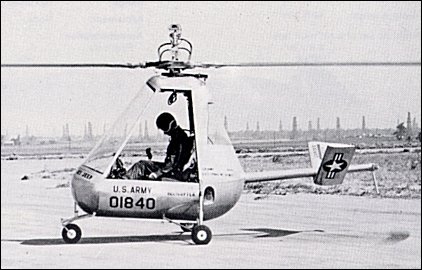
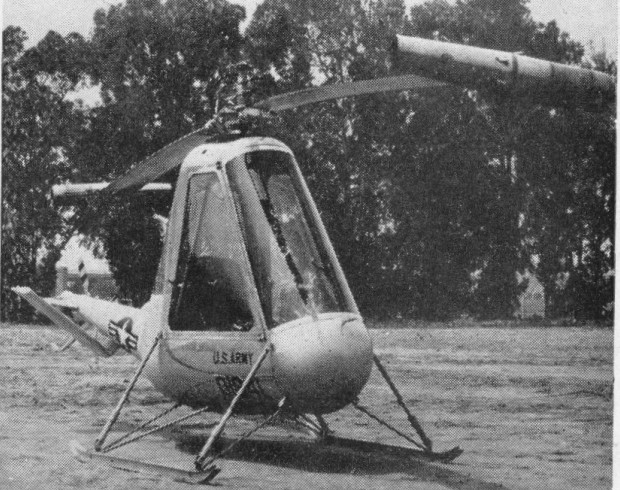
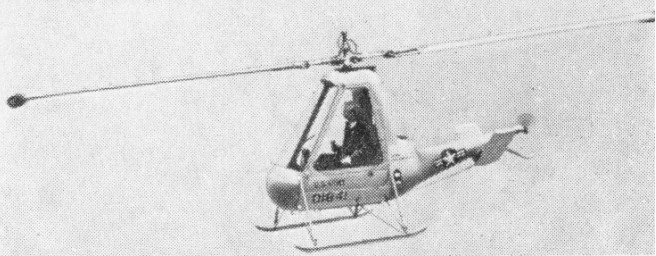
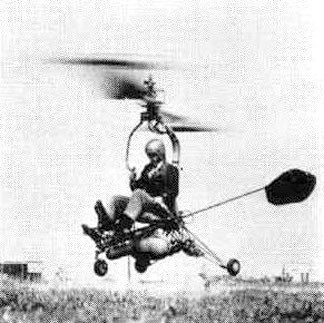
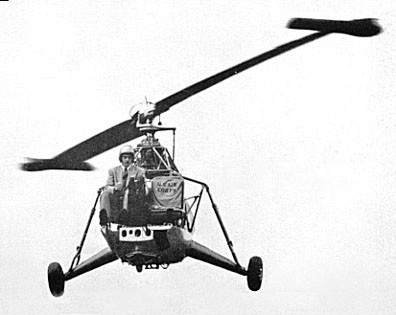
A 1950 Army specification called for a light, collapsible machine which could be used as both a light observation craft and as an air-droppable rescue vehicle for downed aircrew. American Helicopter responded with the Model XA-8 single-seat lightweight helicopter, design of which began in 1951 with the sponsorship of both the Army Transportation Corps and the USAF. American Helicopter was awarded a development contract in June 1951, and the first of a total of five XH-26s flew for the first time in June 1952.
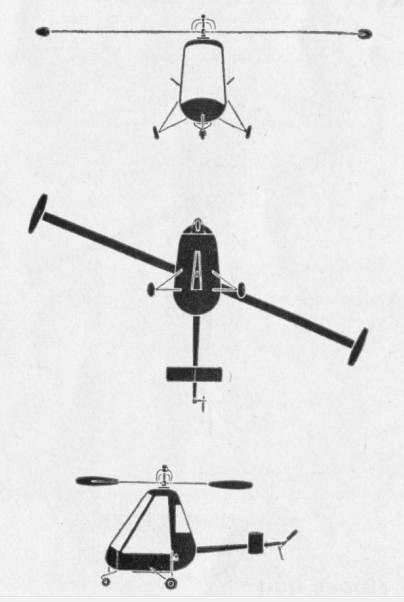
The XH-26 was designed from the beginning to be both collapsible and air-droppable and its construction and size reflected both requirements. Twelve feet long and six feet tall, the helicopter could be transported in a five foot by five foot by fourteen foot container and could be unpacked and assembled by two men in less than thirty minutes. The machine’s fuselage was built primarily of aluminum and fiberglass and featured a glazed, pyramid-shaped cockpit. The XH-26 was powered by two pulse-jet engines, one fixed to the tip of each main rotor blade, and could burn virtually any type of fuel. The Army and Air Force jointly evaluated the five XH-26 prototypes from 1952 to 1954 but neither service procured the type in quantity.
American Helicopter H-26 Engine: 2 x American Helicopter XPJ49-AH-3 7.5 in pulse-jets, 16.2kg Main rotor diameter: 8.23m / 27 ft Rotors: 2-blade, tip-powered main; 2-blade tail. Fuselage length: 3.73m Height: 1.88m Empty weight: 135kg MAUW: 1,040 lb. Max speed: 130km/h / 80 mph Cruising speed: 110km/h Service ceiling: 2280m Range: 160km / 105 miles at 70 mph with normal load Crew: 1
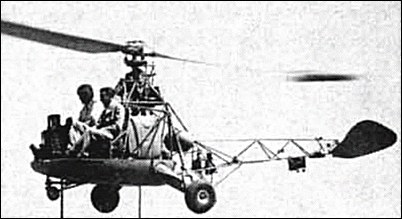
The first project of the American Helicopter company was the two-seat open-cockpit XA-5 “Top Sergeant”, which was based on the lower fuselage and undercarriage of a Sikorsky R-6 with an open rear boom and small rudder. It was driven by two tip-mounted 43kg AJ 8.75 pulse-jet engines driven by a fuselage-mounted compressor, and made its first flight in January 1949.
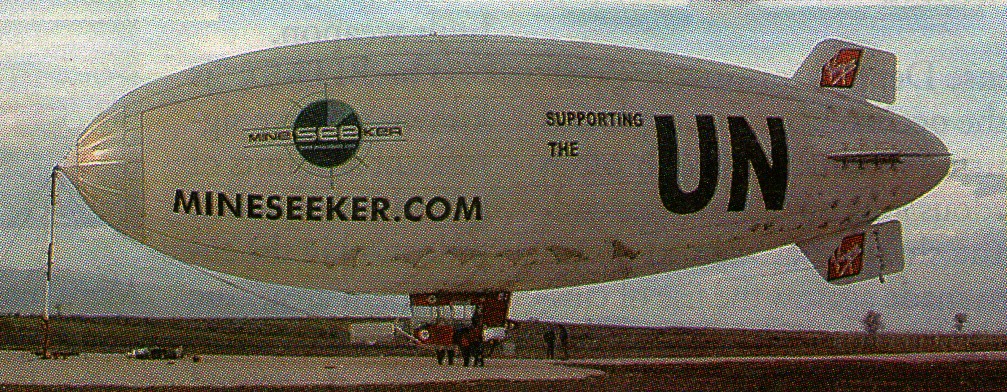
The U.K.’s Defense Evaluation and Research Agency (DERA) cornpleted field trials in Kosovo of a prototype of an ultrawideband synthetic aperture radar being developed to detect mines and unexploded ordnance. The project was run by Mineseeker, a joint venture between DERA and The Lightship Group, a company owned by Virgin Atlantic chief Richard Branson. Mineseeker aims to employ airships as mobile sensor platforms to detect and delineate mined areas and unexploded cluster bombs and other ordnance. In addition to serving as a realistic test bed for DERNs ultrawideband radar, the airship was also fitted with electro-optic sensors. The Kosovo deployment provided valuable imagery and data for the U.N.’s Mine Action Coordination Center (MACC) which is conducting mine clearance operations in the country. Feasibility flight trials of the radar mounted on a helium-filled, nonrigid airship were conducted by DERA in January in the U.K. The same 40-meter-long A60+ airship, built by the American Blimp Corp., was used in Kosovo. Data generated from the ultrawideband radar deployment in Kosovo is being studied by DERA officials in the U.K. The sensor is intended to locate and differentiate metal and plastic mines. The deployment began with the manned airship starting operations four days later, operating from bases in Kosovo and Italy. Over a period of six weeks, the Mineseeker team surveyed 30 sites in Kosovo, locating, identifying and mapping recorded minefields, as well as searching for unexploded ordnance from cluster bomb strikes.
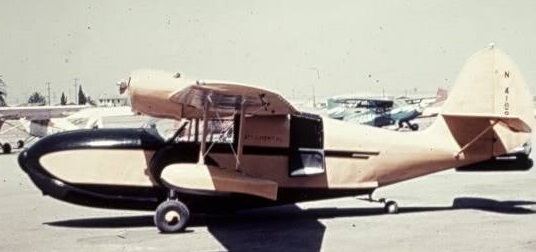
Allied Aviation Corp was developing, in 1945, the prototype of the Allied Trimmer light twin-engined flying-boat amphibian. Manufacturing rights acquired by Commonwealth Aircraft Inc., Kansas City, Missouri. 3 seat