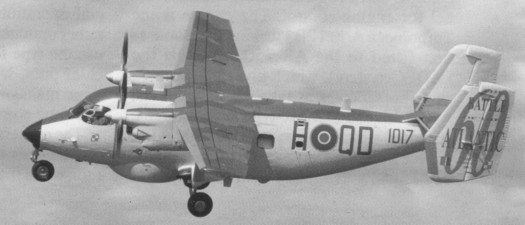
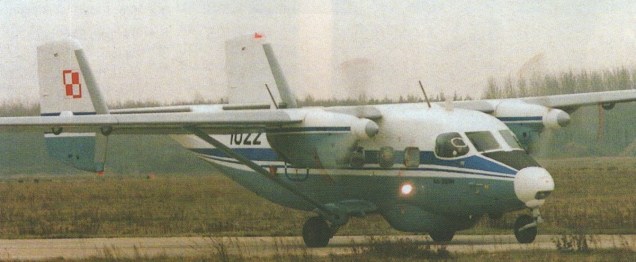
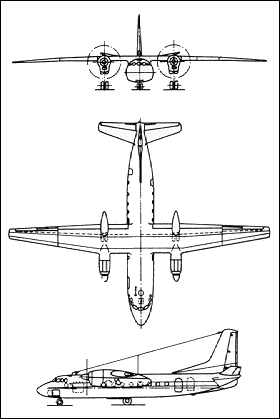
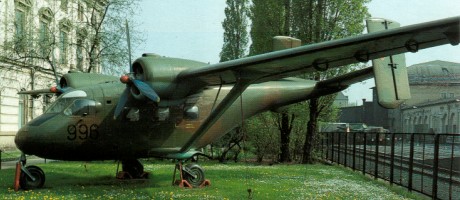
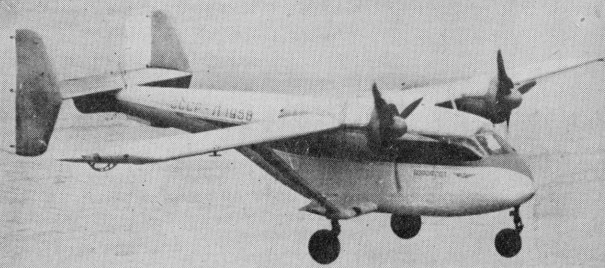
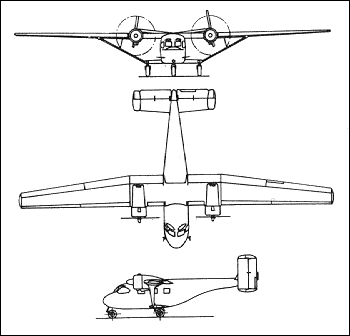
With the NATO reporting name Cash, the An-28 Was designed for STOL performance with up to 19 passengers. A development of the piston-engined An-14, the first prototype flew in September 1969 and had a retractable landing gear and Isotov TVD-850 engines. Production An-28 have a non-retractable tricycle type landing gear and two 723kW Glushenkov TVD-10B turboprops. Operational in 1969, the An-28 went into production in Poland (still in production in 1999) by WSK “PZL-Mielec” as the M-28 Bryza / Skytruck.
An-28RM
Engine: 2 x turbo prop TVD-10B, 705kW Wingspan: 22.1 m / 72 ft 6 in Length: 13.0 m / 42 ft 8 in Height: 4.5 m / 14 ft 9 in Take-off weight: 5100 kg / 11244 lb Empty weight: 3000 kg / 6614 lb Max. speed: 350 km/h / 217 mph Cruise speed: 300 km/h / 186 mph Ceiling: 6000 m / 19700 ft Range w/max.fuel: 1300 km / 808 miles Range w/max.payload: 1000 km / 621 miles Crew: 1-2 Passengers: 15-26
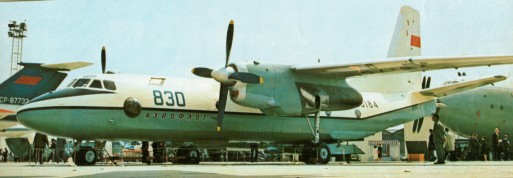
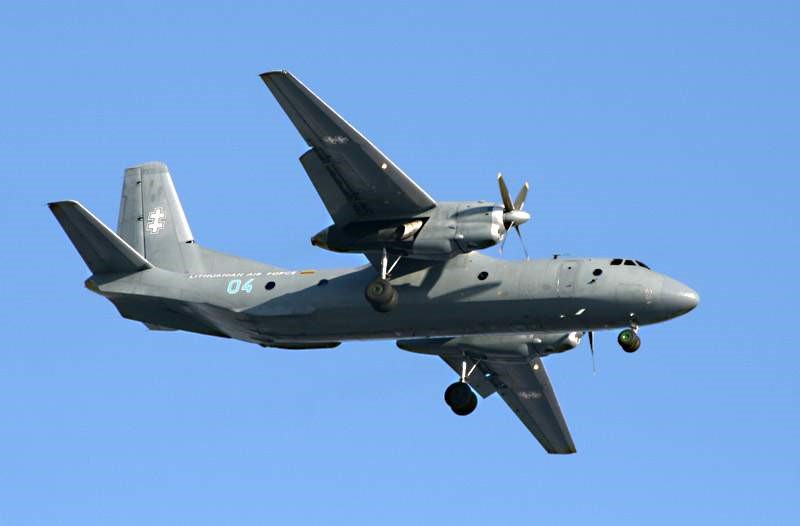
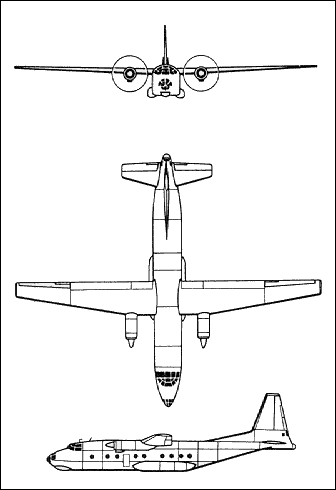
NATO code name ‘Curl’, the Antonov An-26 is a twin-engine transport aircraft first flown in May 1969 and exhibited at the 1969 Paris Air Show. A militarised development of the An-24 airliner, the pressurised An-26 flew first in 1968 and differs from the An-24 in featuring a rear loading ramp, more powerful lvchenko turbine-engines and an auxiliary turbojet in the right engine nacelle. An improved An-26B version was announced in 1981 with an improved freight handling system.
An-26B
Approximately 1,410 An-26s and An-26Bs were built by GAZ 473 at Kiev, 1968-85, before being superseded in production by An-32. Production of the An-26 Curl twin-turboprop transport and its hot-and-high derivative, the An-32 Cline, continued in 1987. They were widely exported, serving in more than 20 countries. It was developed into the An-26 (freighter), the An-30 (survey/photo) and the An-32 (hot and high version). A derivative Y7H-500 was built by Xian Aircraft Company, in China.
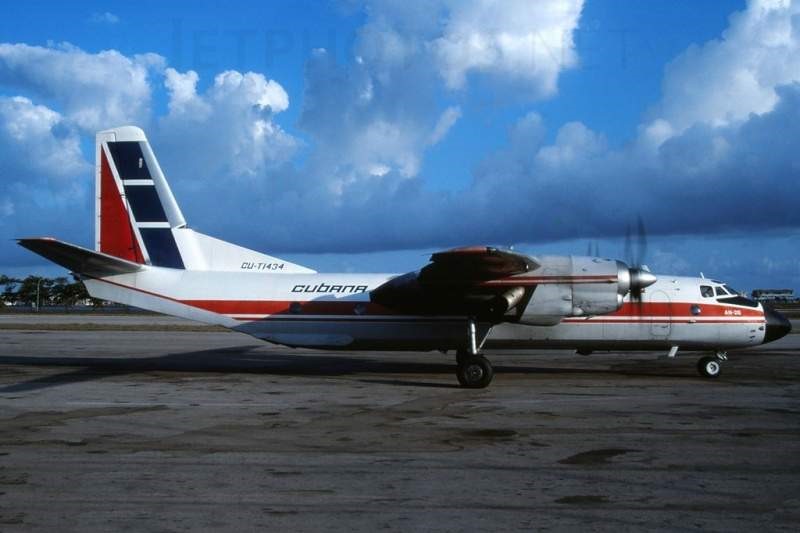
The Antonov An-26 arrived in Cuba in late 1978 and early 1979. The fleet consisted of two squadrons numbered from FAR 12-20 to FAR 12-39. In the first half of the 80s, more aircraft of this type were incorporated, reaching more than 30, of which 4 became Aerocaribbean.
The remaining AN-26s begin to change their military paint scheme, known as “chipojos” to the Cubana de Aviación paint scheme but without belonging to the airline. In 1994 with the emergence of Aerogaviota, most of these aircraft were painted with the new scheme. At present (2014) only around 5 Antonov An-26 aircraft remain active.
Variants: An-26: standard version of tactical transport. An-26B: Equipped with two Ivchenko Al-24VT turboprops, of greater power. An-26BRL: Research version for frozen areas. An-26L: Track calibration version. An-26M: Air ambulance. An-26P: Fire control plane. An-26RTR: Electronic warfare and signals intelligence version. An-26ST: Special missions version manufactured for the Air Force of the German Democratic Republic. An-26Z-1: Signal intelligence aircraft (SIGINT). Y-7H: Chinese version of military transport (No license). Y-7-500: Chinese civil cargo version (Unlicensed).
Engine: 2 x turbo prop AI-24T, 2075kW and 1 x turbo-jet RU-19-300, 8.8kW Wingspan: 29.2 m / 95 ft 10 in Length: 23.8 m / 78 ft 1 in Height: 8.6 m / 28 ft 3 in Wing area: 75.0 sq.m / 807.29 sq ft Take-off weight: 24000 kg / 52911 lb Max payload: 5.500kg / 40 passengers. Max. speed: 540 km/h / 336 mph Cruise speed: 430 km/h / 267 mph Ceiling: 7500 m / 24600 ft Range w/max.fuel: 2550 km / 1585 miles Range w/max.payload: 980 km / 609 miles Crew: 5 Passengers: 38-40 Hold cap: 1765 cu.ft.
Engines: 2 × Progress AI-24VT turboprop, 2,103 kW / 2,820 hp Wingspan: 29.20 m Wing area: 74.98 m² Length: 23.80 m Height: 8.58 m Empty weight: 15,020 kg Maximum takeoff weight: 24,000 kg Load: 5,500 kg Cruise speed: 440 km / h (237 knots, 273 mph) Range: 2,550 km; 1,100 km at full load Service ceiling: 7,500 m (24,600 ft) Rate of climb: 8 m / s (1,575 ft / min) Crew: 5 (2 pilots, 1 radio operator, 1 flight engineer, 1 navigator) Capacity: 40 passengers
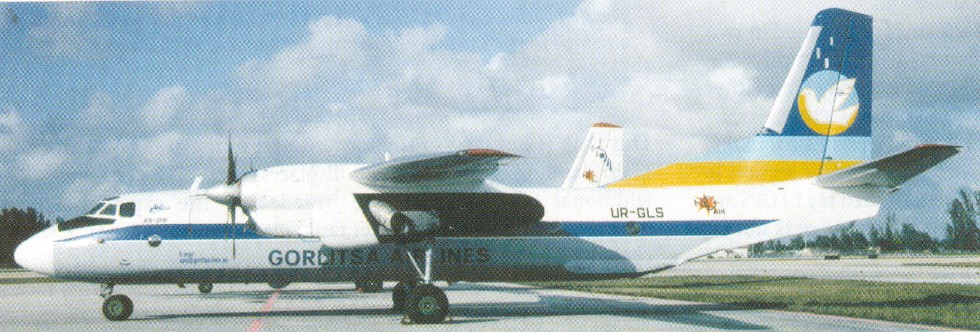
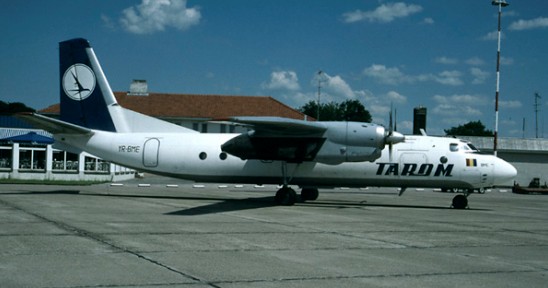
Development of this twin-turboprop transport was started in 1957, to replace piston-engined Li-2 and Il-14’s types on Aeroflot’s internal feederline routes. The An-24 was intended originally to carry 32 to 40 passengers, but when the first of two prototypes flew on 20 October 1959, it had been developed into a 44-seater. It was followed by a second prototype and five preproduction An-24. On the prototype, the engine nacelles extended only a little past the wing trailing-edges: production An-24 have lengthened nacelles with conical rear fairings. A ventral tail fin was also added on production models of the passenger-carrying version, which are supplemented by the An-24T and An-26 specialised freight-carrying versions of the same basic design. Flight testing was completed in September 1962 and the An-24 entered service on Aeroflot’s routes from Moscow to Voronezh and Saratov in September 1963.
Normal accommodation is for two pilots, a navigator, a steward and up to 44 passengers in four-abreast seats, mounted in pairs. The front cabin is movable to make possible alternative mixed passenger-freight payloads, all passenger seats can be removed. The cabin is 48 ft 1.5 in long, 9 ft 5 in wide and 6 ft 5 in high, with a volume of 2750 cu.ft and floor area of 439 sq.ft. In the standard version, there is a luggage compartment forward of the passenger cabin on the port side, with a freight hold on the starboard side. Entry to the cabin is via a door at the rear, on the port side, with built-in airstairs.
The An-24 is designed to operate from airfields of limited size, with paved or natural runways and can be fitted with rocket-assisted take-off units to permit operation with a full load of cargo at ambient temperatures above 30°C. Two were taken to the Antarctic in late 1969, to replace piston-engined Il-14 used previously for flights between Antarctic stations.
Deliveries of the An-24V started in 1962. The An-24RV features a small turbojet in the right engine nacelle to boost takeoff performance and up to 5 crew and 50 passengers.
Production ended in 1979 with over 1460 An-24 variants were built in Kiev, Irkutsk and Ulan Ude in the former USSR/Ukraine. An An-24 variant entered production in China as the Xian Y-7.
It was widely exported, serving in more than 20 countries. It was developed into the An-26 (freighter), the An-30 (survey/photo) and the An-32 (hot and high version).
The An-24RT variant became the basis for a developmentally improved design in the An-26 “Curl”.
An-24T Length: 77.20ft (23.53m) Wingspan: 95.80ft (29.20m) Height: 27.30ft (8.32m) Maximum Speed: 280mph (450kmh; 243kts) Maximum Range: 398miles (640km) Service Ceiling: 27,559ft (8,400m) Accommodation: 2 + 44 Engines: 2 x ZMBD Progress (Ivchenko) AI-24A turboprop engines generating 2,250eshp each.
Engine: 2 x turbo prop AI-24, 1875 kW Wingspan: 29.2 m / 95 ft 10 in Length: 23.5 m / 77 ft 1 in Height: 8.3 m / 27 ft 3 in Wing area: 72.5 sq.m / 780.38 sq ft Take-off weight: 21000 kg / 46297 lb Empty weight: 14248 kg / 31412 lb Cruise speed: 500 km/h / 311 mph Ceiling: 8400 m / 27550 ft Range w/max.fuel: 2280 km / 1417 miles Range w/max.payload: 750 km / 466 miles Crew: 2 Passengers: 44-50
The Antonov designed An 14A Ptchelka (Bee), first flown on March 15, 1958, entered service with Aeroflot as a successor to the An 2 biplane, after five and a half years of flight testing and modification. Production began both for Aeroflot and the Soviet armed forces at the Progress Plant at Arsenyev in 1965 and by the mid-1970s well over 300 aircraft had been delivered. The military version, first seen at the Domodedovo air display in 1967, appeared not to differ from the civilian passenger version externally.
The An-14A featured an increase in wing span and the introduction of 300 hp AI 14RF engines.
The An-14 was a light transport used for agricultural and air ambulance duties which eventually evolved into the 19-seat An-28, and was produced by PZL Mielec in Poland until at least 1991. It entered service with only one division of Aeroflot, in Khazakistan.
Carrying the NATO reporting name Clod, An-14 were also in service with the air forces of Bulgaria, the German Democratic Republic and Guinea.
An-14A Engine: 2 x AI-14RF, 220 kW Wingspan: 21.4 m / 70 ft 3 in Length: 11.0 m / 36 ft 1 in Height: 4.2 m / 13 ft 9 in Wing area: 43.5 sq.m / 468.23 sq ft Take-off weight: 4410 kg / 9722 lb Empty weight: 2310 kg / 5093 lb Payload: 1,323 lb (600 kg) Max. speed: 350 km/h / 217 mph Cruise speed: 106 112 mph (170.5 180 km/h) Ceiling: 5000 m / 16400 ft Range: 1550 km / 963 miles Range w/max.fuel: 780 km / 485 miles Range 1,235 lb (560 kg) payload, 1 hr res: 453 mls (730 km). Range w/max.payload: 300 km / 186 miles ROC: 1,020 fpm (5.18 m/sec) SE ROC: 300 ft/min (1.5 m/sec) Take off distance: 295 ft (90 m) fully loaded Landing distance: 361 ft (110 m). Crew: 1 Passengers: 7-9
The An-8 military and civil transport aircraft was designed for the Soviet Air Force and Aeroflot. Both aircraft carried the NATO reporting name Camp. First flown in February 1955, the prototype military An-8 was exhibited at Tushino in 1956, powered by two 3,800kW Kuznetsov turboprop engines and with a cannon in a tail turret. 151 were built in several versions.
Engine: 2 x turbo-prop Kuznetsov AI-20D, 3810 kW Take-off weight: 43400 kg / 95681 lb Empty weight: 24400 kg / 53793 lb Wingspan: 37.0 m / 121 ft 5 in Length: 30.7 m / 100 ft 9 in Wing area: 117.2 sq.m / 1261.53 sq ft Max. speed: 520 km/h / 323 mph Cruise speed: 450 km/h / 280 mph Ceiling: 9600 m / 31500 ft Range w/max.fuel: 3900 km / 2423 miles Range w/max.payload: 1000 km / 621 miles Armament: 2 x 23mm machine-guns Crew: 6 Passengers: 70
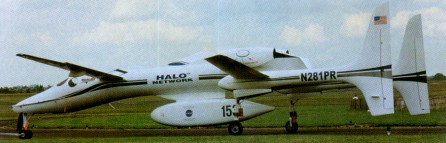
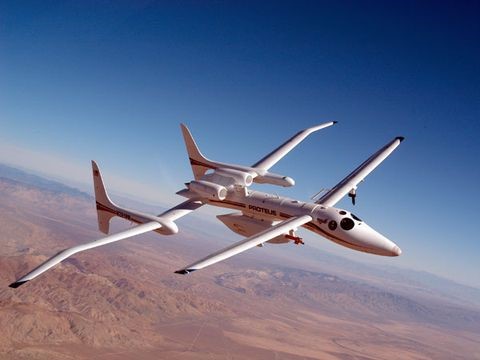
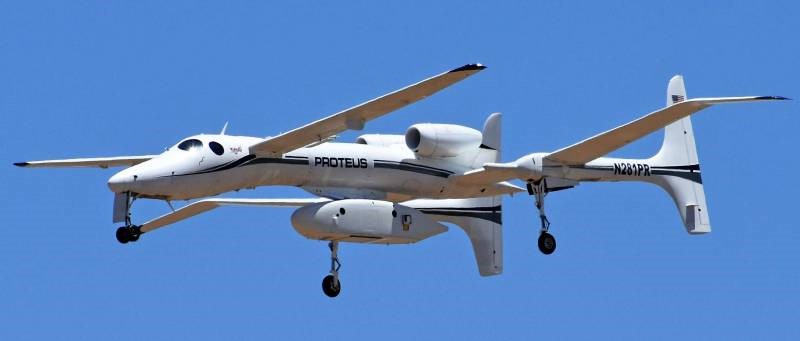
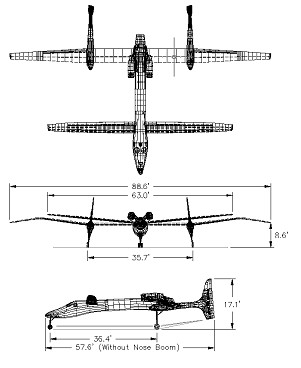
Proteus is a twin turbofan high altitude multi mission aircraft powered by Williams International FJ44-2E engines first flown in July 1998. It is designed by Burt Rutan to carry payloads in the 2000-pound class to altitudes above 60,000 feet and remain on station up to 14 hours. Heavier payloads can be carried for shorter missions. It is intended for piloted as well as for UAV missions. Missions for Proteus include telecommunications, reconnaissance, atmospheric research, commercial imaging, and space launch.
The Proteus is designed with long wings and a low wing loading needed for efficient high altitude loiter. It excels in stability and low noise. It is capable of dynamic maneuvers, needed to operate in adverse conditions. The crisp, short takeoff and landing uses the unique “three-mains” landing gear design intended to increase crosswind and wet runway capability without the use of spoilers.
Engines: 2 x Williams/RR FJ44-2E turbofan, 2293 lb thrust. Op alt: 60,000 ft.
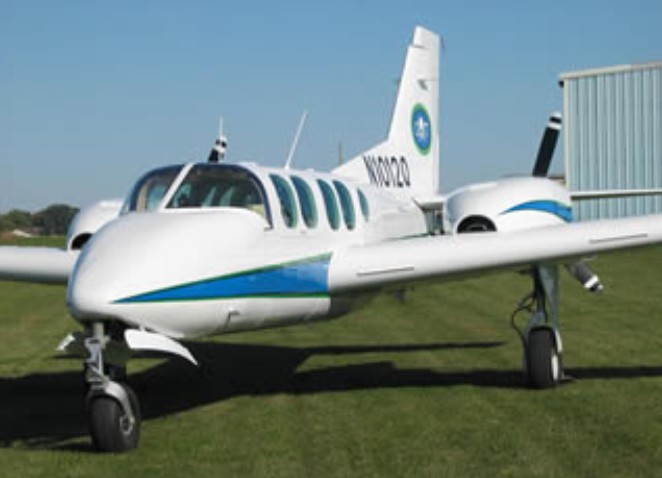
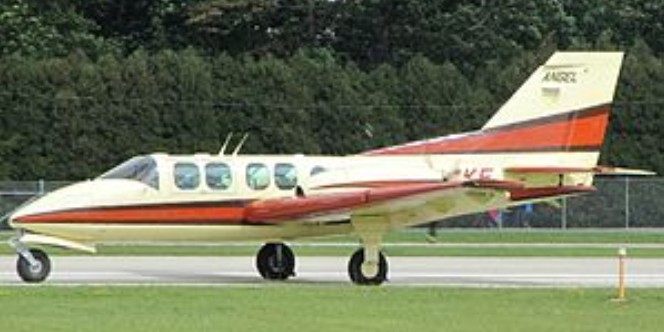
The eight-seat Model 44 Angel STOL missionary, executive and utility aircraft was certificated in 1992, featuring twin piston engines with pusher propellers. Originally The King’s Engineering Fellowship Model 44 Angel, developed by donations for missionary duties and designed by Carl Mortenson.
Design work began at the home of designer Carl Mortenson in 1972, with work on the prototype beginning in 1977, also from the designer’s home. In 1980 the project was moved to the municipal airport in Orange City, Iowa.
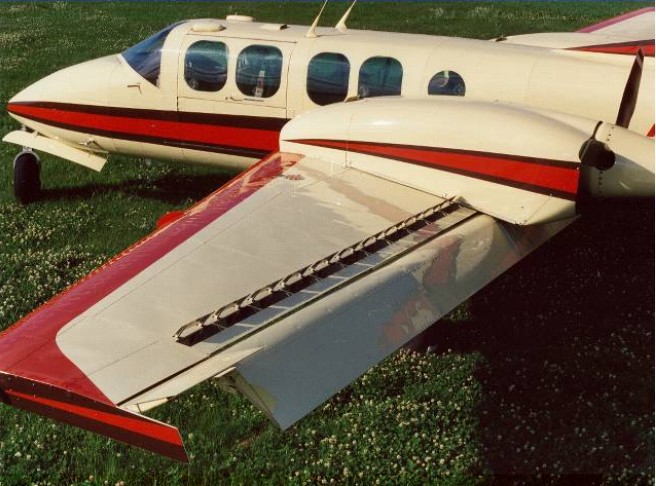
The Angel, with fully retractable landing gear and seating for eight offers STOL-capability. With easy seat removal, the Angel can economically carry one or two medical stretcher patients and one or two paramedics.
The Angel’s metal construction is simple, with the capability to use the short rough airstrips. The Angel comes equipped with large, low-pressure main tires for soft ground and rugged main gear. The cabin has been designed and tested for overturn loads, the engine mounts designed to contain the engines for loads up to 20g’s, and the seats crash-tested to absorb energy and restrain occupants to 26g’s.
First flown on 13 January 1984, the Angel was certified to FAR 23 in the USA by the Federal Aviation Administration (FAA) in late 1992.
Engines: Lycoming IO-540-M1C5 300HP(224 kW) @2700 RPM TBO: 2,000 hours Fuel Grade: 100 LL (minimum grade) Propeller: 2 Hartzell HC-E3YR – 2 ALTF/FLC-7458, 76″ dia (75 In min) CS, 3-blade, feathering Wing Span: 39 ft 11.5 in (12.18 m) Wing Area: 225.40 sq ft (20.94 sq.m) Aspect Ratio: 7.08 Length: 33 ft 3 in Height: 11 ft 6 in (3.51 m) Max takeoff weight; 5,800 lbs (2,631 kg) Standard Empty Weight: 3,880 lb (1,760 kg) Standard Useful Load: 1,920 lbs Fuel Capacity: 222 U.S. Gallons usable fuel (1,332 LBS) Cabin Cargo (w/o seats): 84 cu ft, 1,400 lbs Baggage Compartment : 10 cu ft, 200 lbs Minimum takeoff roll: 658 ft Take-off Over 50 ft obstacle: 1,404 ft Take-off Maximum effort: 1,270 ft Landing Distance: 568 ft Landing Distance 50 ft obstacle: 1,046 ft Standard Climb: 1,345 fpm SE Rate of Climb: 196 fpm Service Ceiling (100 fpm): 19,015 ft Single Enging Ceiling (50 fpm): 3,868 ft Maximum Level Speed: 180 kt IAS Cruise @75% pwr (30 min res): 175 kt; Range: 1,137 nm; Endurance: 6.5 hr Cruise @65% pwr (30 min res): 169 kt; Range: 1,266 nm; Endurance: 7.5 hr Cruise @55% pwr (30 min res): 158 kt; Range: 1,406 nm; Endurance: 8.9 hr Cruise @45% pwr (30 min res): 145 kt; Range: 1,493 nm; Endurance: 10.3 hr Cruise @35% pwr (30 min res): 131 kt; Range: 1,720 nm; Endurance: 13.1 hr Vne Never exceed speed: 209 kias Vno Max structural cruising: 174 kias Va Maneuvering speed at 5,800 lb: 139 kias Va Maneuvering speed at 4,200 lb: 121 kias Vle Max landing gear extension speed: 130 kias Vlo Max landing gear operating speed: 130 kias Vfe Max flaps extended speed: 104 kias Vmc Minimum control speed: 65 kias Vy Best rate of climb: 101 kias Vs1 Power off stall, flaps up: 71 kias Vs0 Power off stall, flaps down: 57 kias Crew: One, pilot Capacity: 7 passengers
The 1910 Edward F Andrews pusher biplane, the first two-engine airplane, powered by two 36hp Adams-Farwell rotary engines, was designed and built by Edward F. Andrews in the USA.
Andrews designed and constructed the single-place open cockpit biplane, which flew at Daytona Beach for about 100 yards at an altitude of six feet before the rear elevators vibrated loose and the machine came apart.
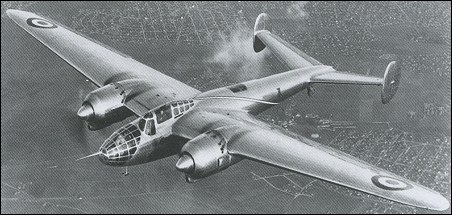
Developed from the Amiot 370 and the Amiot 340, converted to the Amiot 351.01 Gnome-Rhone 14N -20/21 761-kW (1,020-hp) engined prototype bomber, it was followed by production Amiot 351s and 354s. Each version had a streamlined all-metal fuselage, a tapered mid-wing with considerable dihedral and twin Gnome-Rhone 14N radial engines. They differed by the 351 having twin oval fins and rudders and the 354 a large single vertical tailplane. The Amiot 351 had shorter span and greater length than the Amiot 351.01, and was powered by two 708-kW (950-hp) 14N-38/39 radials, while the Amiot 354 was higher powered and reverted to the original tail unit.
Armament was a 20 mm HS 404 cannon on a flexible mounting at the rear of the crew canopy plus single 7.5 mm MAC machine-guns in nose and ventral positions. The bomb load was up to 1,200kg. Eighty-six Amiot 350 series aircraft had been completed including 17 351s and 45 354s, before the Germans occupied the Le Bourget factory in June 1940.
After a number of bombing and reconnaissance missions, the Amiots were converted by the Vichy French for long-range liaison flights.
Amiot 354 Engines: 2 x Gnome-Rhone 14N-48/49, 790kW (1,060 hp) Span: 22.83m (74ft 10.75 in) Length: 14.5m (47ft 6.75 in) Height: 13.39ft / 4.08m Empty Weight: 10,417lbs (4,725kg) Max T/O weight: 11300 kg (24,912 lb) Max speed: 298 mph (480kmh; 259kts) at 13,125 ft Operational range: 1,553 miles with max bombload. Maximum Range: 2,175miles (3,500km) Service Ceiling: 32,808ft (10,000m) Crew: 4 Armament: 1 x 20-mm HispanoSuiza cannon and 2 x 7.5-mm (0.295-in) MAC mg plus Internal bombload: 1200 kg (2,646 lb)