a four-seat general-purpose lightplane, the Merkury, with twin piston engines mounted on the high wing was first flown 1997.
2 Engines
Aviation Trader ATL-90 Accountant
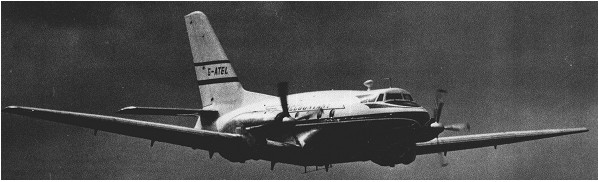
Designed as a 28-seater, 60ft long, with a wingspan of 82 ft, and powered by two Dart RDa6 Mk 510 turboprops, each of 1780 hp. Nobody knows why it was called the Accountant – but the Accountant paid for it out of Air Charter’s cash flow.
The Accountant design was partly based on the use of a segmented tensioned skin production method. The problem with the tension skin was that, in order to keep the metal evenly stressed, the curves of the fuselage had to come to a long, pointed end, which strictly limited the freight capacity of the aircraft. By the time it was built, the Accountant’s rear end was largely taken up with struts to support a large separate tail-section, while the upper half of the flight deck was stuck on the front.
First flown on 9 July 1957, the press was invited in July 1957 to first flight of the prototype, which The Aeroplane described as a “plump silver partridge”. The plane performed well enough, but Laker had already decided against the tension-skin construction, and plans were drawn for a conventional fuselage.
Unhappily, he could find no-one to go into partnership with him to build it. The Accountant was flown at the 1957 Farnborough Air Show, but there were already two rivals in the air: the Handley Page Herald, and the Fokker Friendship. The programmes was cancelled in January 1958, by which time the prototype had completed over 200 hrs. The engines and equipment were removed and the aircraft left in open storage.
Its optimum cruising altitude, powered by two Rolls Royce Dart 510 (R.Da.6) turboprops, would have been 30,000 ft. With S.B.A.C. reserves the Accountant would have carried a passenger pay¬load of 8,363 lb for 400 nautical miles, or 6,135 lb. for 1,000 n.m. and 2,422 lb. for 2,000 n.m. At a mean weight of 20,000 lb. in I.S.A. conditions the Accountant’s top cruising speed (13,600 r.p.m.) was expected to be 250 knots (290 m.p.h.).
It was scrapped in 1959.
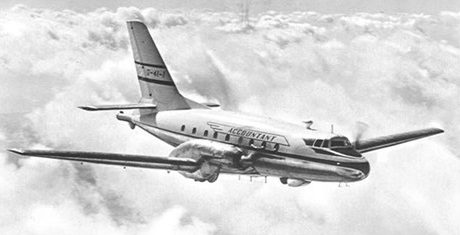
Engines: 2 x Dart RDa6 Mk 510 turboprops, 1780 hp.
Pax cap: 28.
Length: 60ft.
Wingspan: 82 ft.
MAUW: 28,000 lb
Max cruise: 285 mph at 20,000 ft
Aviatik Gr.1
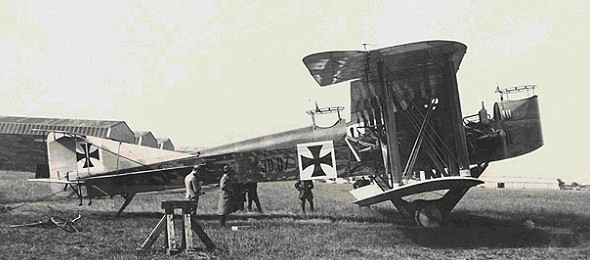
Prototype
Aviasud Sirocco / Aériane Sirocco / ACLA Sirocco NG / Midland Ultralights Sirocco 377GB
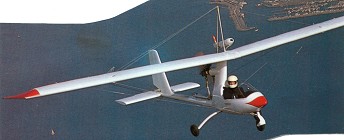
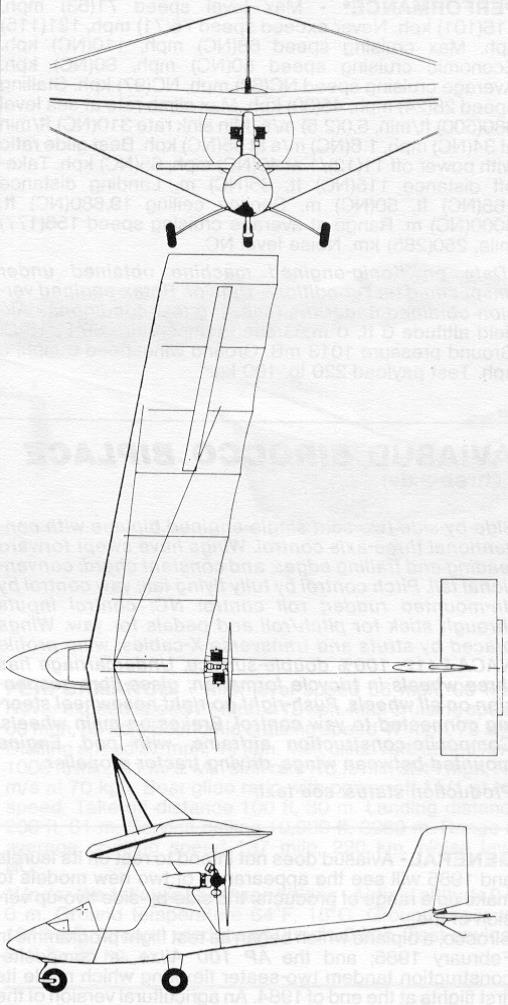
Single seat single engined high wing monoplane with conventional three axis control. Wing has swept back leading and trailing edges, and constant chord; conventional tail. Pitch control by fully flying tail; yaw control by fin mounted rudder; roll control by halfspan spoilers; control inputs through stick for pitch/roll and pedals for yaw. Wing braced from above by kingpost and cables, from below by cables; wing profile modified TK7315 McCready; double surface. Undercarriage has three wheels in tricycle formation with additional tailskid; steel spring suspension on nosewheel and glass fibre suspension on main wheels. Push right go right nosewheel steering connected to yaw control. Brake on nosewheel. Glass fibre/polyester fuselage, partially enclosed. Engine mounted below wing driving pusher propeller. Leading edge in stratified glass fibre/epoxy and tail in stratified glass fibre/polyester; fuselage spar bi-directional stratified.
Designed by Frangois Goethals and Bernard d’Otreppe who are both engineers, and laid out with the help of a computer, this Sirocco is a result of the experience acquired with the Libellule and although it is of a similar configuration it is a completely new machine, despite the confusion generated by its initial title of Libellule MkIL It is one of the very few microlights which has undergone a complete flight test programme, both static and in flight, Frangois being a specialist in fluid mechanics and Bernard d’Otreppe in the study of composite structures. Out of this programme has come what they believe is the optimum wing profile for the Sirocco, the TK 7315 from the American Paul McCready, with 14% chord thickness.
Amongst the original ideas used on the machine is a foldable wing which can be stored in a tube 19.0ft x 10 inch (5.80 x 0.25 m). The fuselage comes down to 19. 0 x 2.0 x 5.0 ft (5.80 x 0.60 x 1.50 m) which makes for easy transport on a trailer, while alternatively, the wing can be carried on a roof rack and the rest of the machine towed on its own undercarriage. Fitted with an adjustable rudder bar to allow for pilot’s height, the Sirocco also has a trimmer for the elevator. Its spoilers seem particularly efficient and it can roll from 45O one side to 45 O the other side in 4 seconds. The Sirocco, the prototype of which made its first flight on the 26 July 1982, has been on sale since January 1983. Options include an instrument panel, VHF or CB radio equipment and a ballistically deployed parachute.
Construction: Aluminium, Fibreglass, Dacron.
Francois Goethals and Bernard D’Otreppes’ company Aviasud built the Sirocco between 1983 and the early 1990.
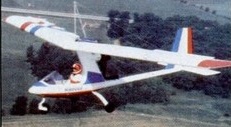
In 1984 the kit cost $8553 to $11,302 with three engine options.
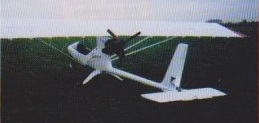
It was then taken over by Aériane, then the Sirocco license was sold to the ACLA company based in the Netherlands, which produced a modernized version as the Sirocco NG.
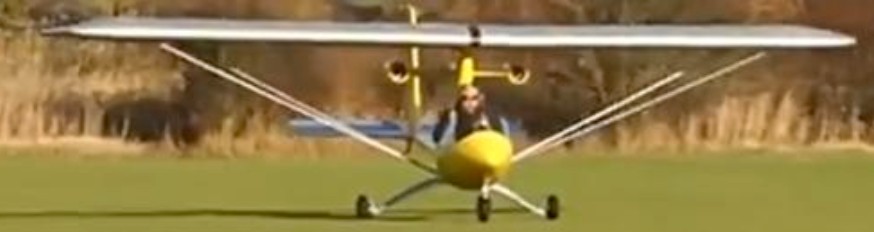
Midland Ultralights Ltd built the Sirocco 377GB to BCAR Section S in 1984.
The Sirocket comes from a legendary ULM:
There was a major transformation of the prototype Sirocco NG by Dave Stephens and Dean Arnold to create the jet Sirocket classified in the British category of Single Seat Derugalated (SSDR).
Engine: Konig 43RD (430 cc) 27 hp.
Static thrust: 150 lbs.
Empty wt: 252 lbs.
Wing span: 33 ft 2 in.
Wing area: 167 sq.ft.
Length: 19 ft.
Fuel cap; 5 USG.
Max wt: 544 lbs.
Stall: 24 mph.
Max speed: 63 mph.
Vne: 71 mph.
Climb rate: 500 fpm @ 41 mph.
Design limit: +6.7, -3.6g.
Glide ratio: 12-1.
Wing loading: 3.26 lbs/sq.ft.
Power loading: 20.15 lbs/hp.
Engine: JPX PUL425, 26hp at 4600rpm.
Propeller diameter and pitch 39 x 18 inch, 1.00 x 0.45 m.
No reduction.
Max static thrust 150 lb, 68 kg.
Power per unit area 0.17hp/ft., 1.9hp/sq.m.
Fuel capacity 5.3 US gal, 4.4 Imp gal, 20.0 litre.
Length overall 19.0 ft, 5.80 m.
Height overall 8.9 ft, 2.70 m.
Wing span 33.2 ft, 10. 12 m.
Constant chord 4.6 ft, 1.38 m.
Dihedral 0 degs.
Sweepback 10 degs.
Tailplane span 7.2 ft, 2.20 m.
Fin height 3.7ft, 1.10m.
Total wing area 151 sq.ft, 14.1sq.m.
Total spoiler area 6.9 sq.ft, 0.64 sq.m.
Fin area 4.3 sq.ft, 0.40 sq.m.
Rudder area 4.1 sq.ft, 0.38 sq.m.
Total elevator area 15.6 sq.ft, 1.45 sq.m.
Wing aspect ratio 7.3/1.
Wheel track 5.9 ft, 1.80 m.
Wheelbase 4.7 ft, 1.40 m.
Nose¬wheel diameter overall 12 inch, 30 cm.
Main wheels diameter overall 12 inch, 30 cm.
Floats, 10.2ft, 3.10m.
Empty weight 232 lb, 105kg.
Max take off weight 461 lb, 209 kg.
Payload 229 lb, 104 kg.
Max wing loading 3.05 lb/sq.ft, 14.9 kg/sq.m.
Max power loading 17.7 lb/hp, 8.0kg/hp.
Load factors; +6.7, 3.6 ultimate.
Max level speed 71 mph, 115 kph.
Never exceed speed 75 mph, 120 kph.
Max cruising speed 65 mph, 105 kph.
Economic cruising speed 53 mph, 85 kph.
Stalling speed 24 mph, 40 kph.
Max climb rate at sea level 680 ft/min, 3.5 m/s.
Min sink rate 240 ft/min at 31 mph, 1.2 m/s at 50 kph.
Best glide ratio with power off 12/1 at 40 mph, 65 kph.
Take off distance 115 ft, 35 m.
Land¬ing distance 165 ft, 50 m.
Service ceiling 10,500 ft, 3200 m.
Range at average cruising speed 186 mile, 300 km.
Engine: Rotax 377.
Prop: 140cm.
Wingspan: 10.12m.
Length: 5.85m.
Weight: 128 kgs.
Fuel capacity: 40 Ltr.
Econ cruise speed: 35 kts.
Stall: 22 kts.
Aeriane Sirocco
Empty weight: 135 kg
Wing span: 10 m
Wing area: 14 sq.m
Fuel capacity: 40 lt
Engine: Rotax 447 ES, 35 hp
MAUW: 240 kg
Seats: 1
Max speed: 120 kph
Cruise speed: 100 kph
Minimum speed: 45 kph
Climb rate: 5 m/s
Fuel consumption: 5 lt/hr
Price (1998): 500 000 FB hc
Midland Ultralights Ltd Sirocco 377GB
Wing area: 13.99 sq.m
Span: 10.31 m
Standard mean chord: 1.357 m
Empty wt dry: 138 kg
MTOW: 238 kg
Fuel capacity: 20 lt
Pilot/baggage weight min: 120 lb / 55 kg
Pilot/baggage weight max: 200 lb / 91 kg
Vne: 86 mph
Manoeuvering speed: 53 mph
ROC: 800 fpm
Stall: 27 mph
Aviaimpex Yanhol / Angel
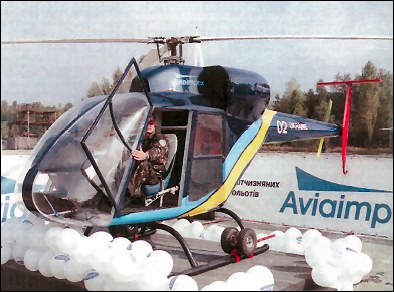
With the prototype structurally complete, the Aviaimpex Yanhol was displayed to the media on 31 August 2001. First flight was planned for June 2002.
Of pod-and-boom configuration, with T-tail and landing skids, the three seat helicopter has three-blade main and two-blade tail rotors.
COSTS: US$120.000 in Ukraine; US$150.000 export (2002),
Enghines: Two Rotax 912 ULS, 73.5kW.
Main rotor diameter: 8.28m
Tail rotor diameter: 1.30m
Length: 7.45m
Height: 2.475m
Max. take-off weight: 870kg
Empty weight: 524kg
Max. payload: 350kg
Max. speed: 184km/h
Max. cruising speed: 165km/h
Range max. fuel: 340km
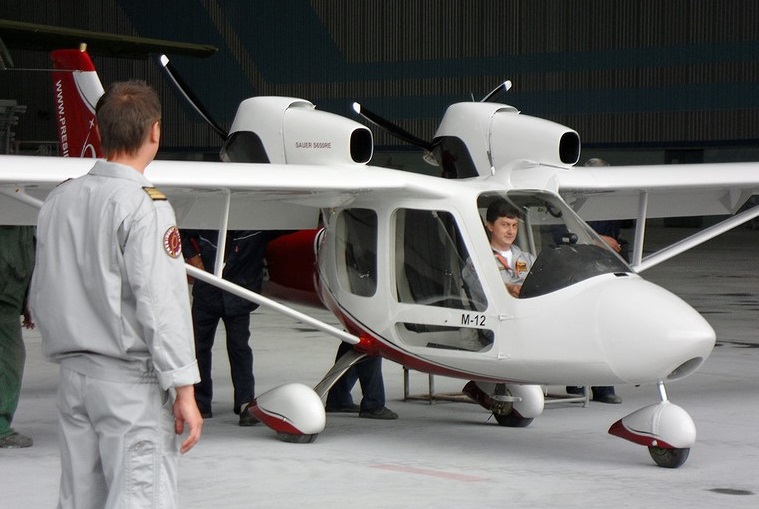
Aviacor M-12 Kasatik
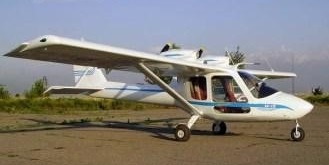
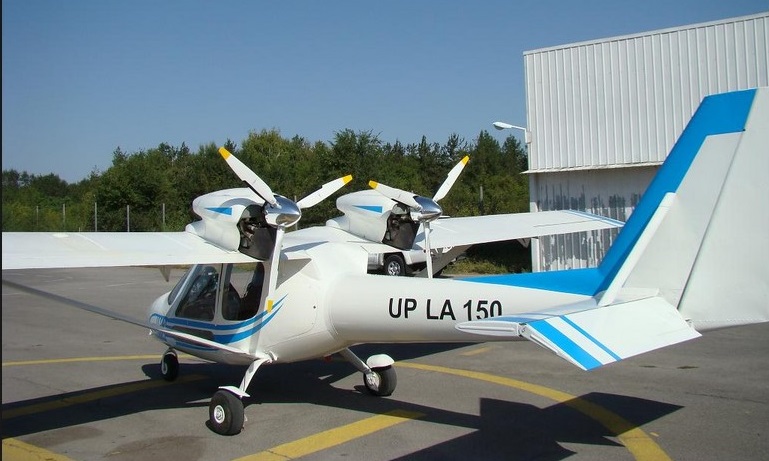
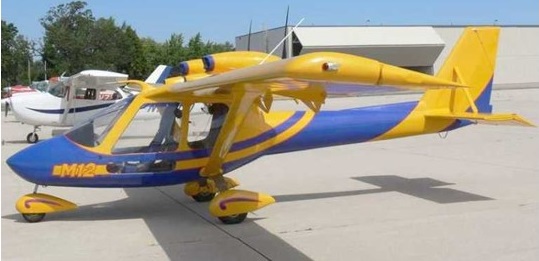
First flown in 1993, a three-seat recreational and utility lightplane.
Wing Span: 10.2 m
Length: 6.7 m
Height: 2.2 m
Absolute Ceiling: 10000 ft
Optimum Ceiling: 8000ft
Maximum Speed: 102 kts
Optimum Speed: 80 kts
MTOW: 700 kg
Fuel Capacity: 70 ltr
ROC 0-100ft: 1000 fpm
ROC 100-300ft: 500 fpm
Maximum Range: 280 NM
Seats: 3
Avia Ltd Accord-201
seven-seat lightplane with twin piston engines on its high-mounted wing (first flown 1994).
Avia Ltd
Founded 1991, has developed the Accord-201 seven-seat lightplane with twin piston engines on its high-mounted wing (first flown 1994). A four-seat business jet was under development as the Accord-Jet.
Avia B-158
A 1938 twin-engined medium bomber, prototype only
Atlas Aviation Beta XTP-1 / XDM / CSH-2 Rooivalk / Red Hawk / Red Kestrel

Born out of the South African Air Force’s need for an escort and close air support helicopter, the Rooivalk programme was initiated in the early 1980s by Atlas Aviation. The Alpha XH-1 was purely a test-bed for weapon and cockpit systems. It was fitted with a GA-1 Rattler 20mm cannon in a steerable turret, linked to a Kukri helmet-mounted sight. Following on from the Alpha XH-1 research, Denel comimssioned two Puma helicopters to develop the systems required for the Rooivalk. During 1987, the first of two XTP-1 Puma-based test-beds were built and used to evaluate engines, avionics, optronics, weapons and associated control systems for the larger airframe. These test-beds also included the use of locally-produced composite materials used in both airframe and rotor systems.
Puma J1 first flew in 1986 and was the primary avionics, weapons and flight control systems’ test bed.
A highly modified version of the Aérospatiale SA.330 Puma, the XTP-1 has been under development since 1981, and a prototype was revealed in May 1987. Principal upgrades include the installation of an under-fuselage GA-1 20mm cannon turret with a helmet-mounted sight for the gunner and internal ammunition storage, two large stub wings with a total of four pylons for rocket pods, and a redesigned tail unit with a ventral fin and modified horizontal stabiliser.
Puma J2 flew shortly afterwards, its primary task being to develop the weapons systems and integrate them with the aircraft and the other on hoard systems. Concurrently two missile tests were conducted: the first studied the effect of missile blast on the tail boom and the other studied the accuracy of the weapons and associated systems.
The first Rooivalk prototype was unveiled in January 1990 and the second prototype, or advanced design model, flew for the first time in May 1992. It differed from the original experimental design model in having the production 1553B databus and full anti-armour mission equipment fitted. It was also armed with the 20mm cannon fitted in a TC-20 chin turret.
From the J model Pumas the Rooivalk started to take shape in the form of the initial experimental development model (XDM). XDM first flew on 11 February 1990 and began testing aircraft dynamics before progressing on to validate mechanical, aerodynamic and structural design, moving through to expand the flight envelope. It is fitted with an articulated rotor head which allows it to loop, giving it that per¬formance edge over an adversary. Denel also claims that the maximum speed was taken out of the design envelope allowing 196kt in forward flight.
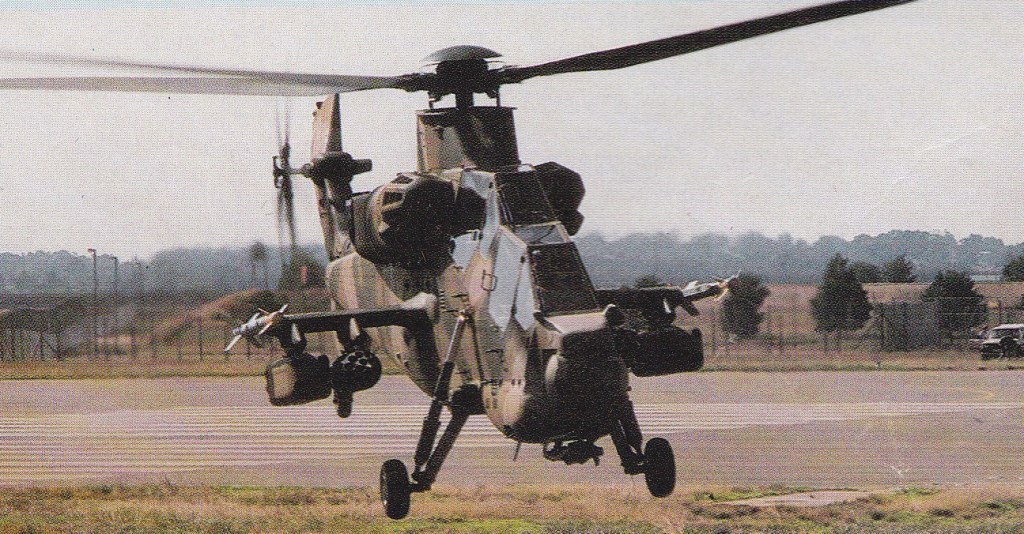
The Rooivalk’s fuselage is mostly metal but with some composites. It has stepped tandem cockpits, with the pilot in the rear and the co-pilot/gunner in the front. The cockpit canopies are formed from flat plate on single curvature sheets to minimise glint from the sun. The twin Topaz turboshaft engines are uprated versions of the Turbomeca Turmo IV and the main rotor is similar to that fitted to the Aerospatiale Puma. An automatic flight control system is fitted, with auto-hover and auto-land. The Rooivalk is designed to operate at low level (under 15m) and at high speeds.
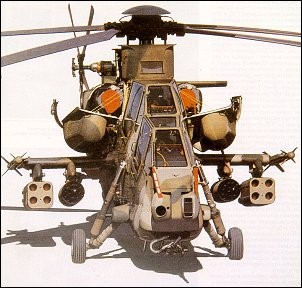
This tandem-seat helicopter is based around a Puma transmission and dynamics and has been built using composite materials. Powered by two Turbomeca Makila turboshafts developing 1175kW it has an all-up-weight of 3245kg. The helicopter can be armed with an assortment of weapons and is capable of operating day or night. Weapons include: 20mm cannon fitted in a TC-20 chin turret or larger DEFA 30mm cannon in a TC-30 chin turret, 2 x 18-tube rocket pods, 2 box launchers for 4 laser beam-riding ZT-35 anti-tank guided missiles, 2 Kukri or Darter Infra-Red homing air-to-air missiles.
The South African Air Force purchased four Rooivalk CHS-2s in 1993 and intend to eventually operate a Squadron of at least 16 Rooivalks. The Rooivalk entered service in late 1996.The Rooivalk was also offered to the British Army to fulfil their Attack Helicopter requirement.
By 1999 was called the Red Hawk.
CSH-2
Engine: 2 x Turbomeca Makila 1A2, 1470kW.
Instant pwr: 1492 kW.
Rotor dia: 15.58 m.
Length with rotors turning: 18.73m
Fuselage length: 16.4m
Height: 4.59m
Empty weight: 5910kg
MTOW: 8750 kg.
Payload: 2030 kg.
Max speed: 167 kt / 309km/h
Max cruise: 150 kt / 278km/h
Max range (internal fuel): 700 km.
Range with max fuel: 705km
Range MTOW with external fuel: 1260km
Service ceiling: 6100m
HIGE: 18,200 ft.
HOGE: 16,500 ft / 5545m
Crew: 2
Engine: 2 x Topaz (Turboméca Makila 1K2), 1794 shp
Rotor diameter: 51.115 ft / 15.58 m
Length: 54.626 ft / 16.65 m
Height: 17.028 ft / 5.19 m
Max take off weight: 19293.8 lb / 8750.0 kg
Weight empty: 13031.6 lb / 5910.0 kg
Max. speed: 167 kt / 309 km/h
Cruising speed: 150 kt / 278 km/h
Initial climb rate: 2198.82 ft/min / 11.17 m/s
Service ceiling: 16503 ft / 5030 m
Maximum range: 680 nm / 1260 km
Range: 378 nm / 700 km
Endurance: 4 h
Crew: 2
Armament: 1x MG 20mm, 8-16 Miss. ext., 4x A/A Miss. V3B Kukri, max. 2030kg


