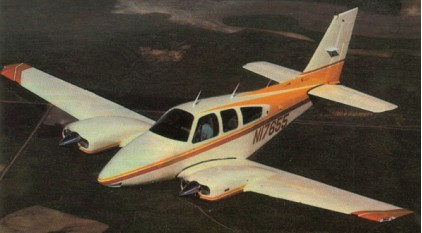
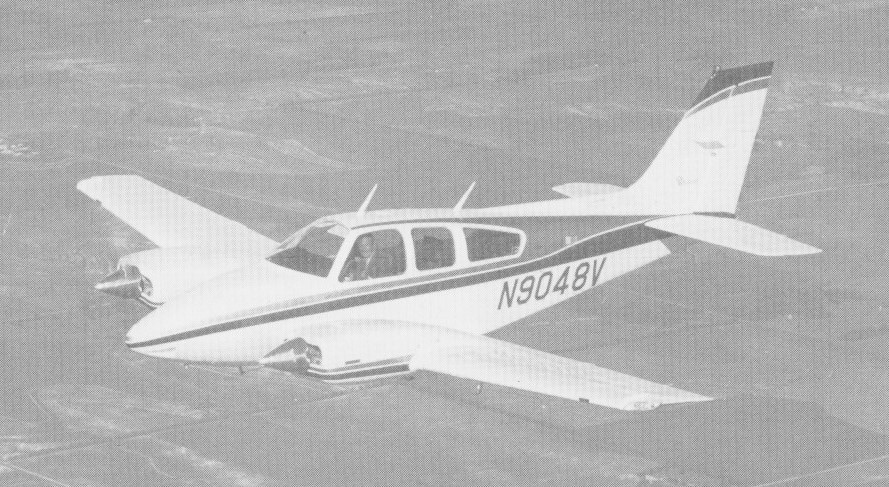
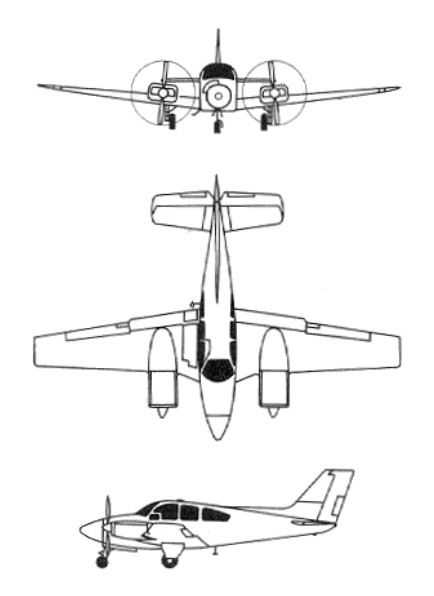
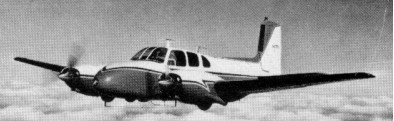
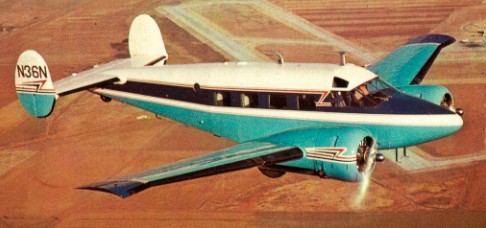
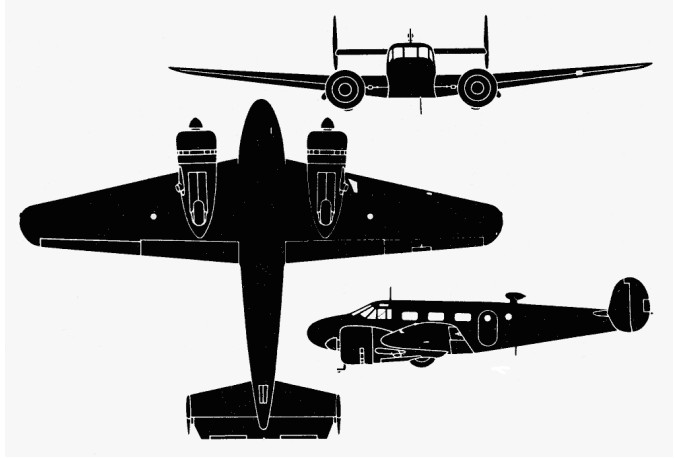
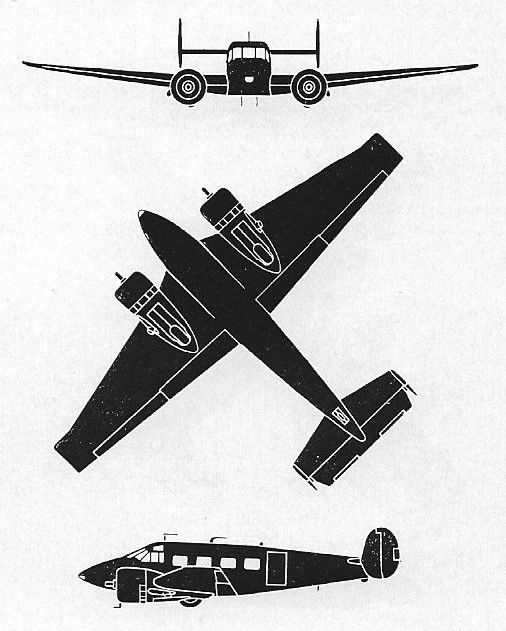
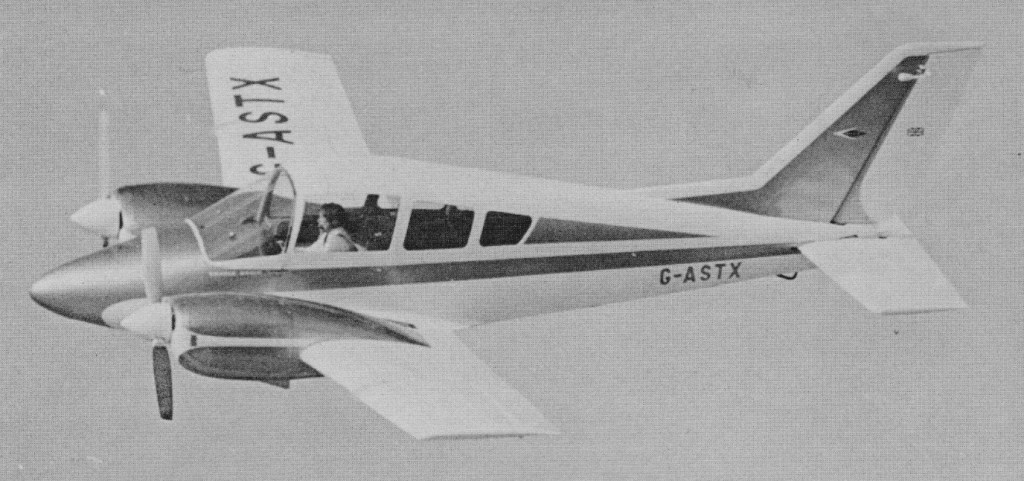
Developed from the earlier Model 95 Travel Air, the Beech Model 95-55 Baron was first flown on 29 February 1960. It differed mainly by having more powerful 260-hp Continental IO 470 series engines, plus design refinements that included swept vertical tail surfaces, and improved all-weather capability. The B55 Barons are powered by 260 hp Continental engines, which have 1,500 hour TBOs, provided their exhaust valves are either nickel coated or nimonic; otherwise a 1,200 hour TBO applies.
Deliveries of the 95-55 began in November 1960 with a list price of US$58,000, and this twin-engined four/five-seat aircraft resulted in further improvement and development of the type. The original 55 Baron became the A55 model. The Model B55, introduced in 1963, had four-seat and optional five/six-seat accommodation, and in 1965 an additional Model C55 was made available with more powerful 213kW / 285-hp Continental IO-520-C engines. The Model C55 incorporated a number of improvements, including increased tailplane span and an extended nose baggage compartment, and was developed later as a separate Baron model distinct from the B55.
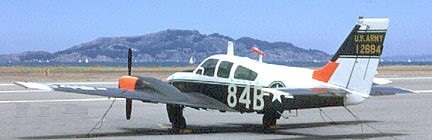
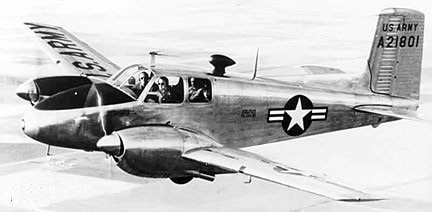
A few months before the introduction of the C55, the US Army announced that the Model 95-B55 had been chosen for military service as an instrument trainer, which was ordered in an initial quantity of 55 under the designation T-42A Cochise (65-12679/12733).
Beech T-42A 65-12684
Ten more were procured for US Army service (66-4300/4309) plus, in 1971, five for delivery to the Turkish army (71-21053/21057) under the Military Assistance Program. By 1984, production of civil and military 95-B55 Barons was in excess of 2,400 and 1,201 examples of the Model E55 (formerly C/D55) had been delivered when production ended.
In September 1967 deliveries began of a new Model 56TC Baron. This introduced two 283kW / 380-hp Avco Lycoming TIO-541-E1B4W turbocharged engines, providing improved performance. Air-conditioning was available as an option. The higher cost of this version of the Baron attracted only 93 sales, and production ended in December 1971. The C55 became the D55 and finally the E55, Beechcraft’s high performance, high payload Baron. Optional equipment on the 58, E55 and B55 are heavy-duty brakes that offer up to 50 per cent greater stopping power.
95-55 1960 Engines: 2 x Continental IO-470-L, 260 hp Seats: 4-5 Sweptback fin and rudder
A55 1962 Optional 6th seat
BE-B55 Baron / T-42A Cochise First built: 1961. Engine: 2 x Continental IO-470-L, 260 hp. TBO: 1500 hrs. Prop: Hartzell 2 blade, constant speed 78 in. Seats: 4/6. Length: 28 ft. Height: 9 ft. 7 in Wingspan: 37 ft. 10 in Wing area: 199 sq.ft. Wing aspect ratio: 7.2. Max ramp wt: 5121 lbs. Max take off wt: 5100 lbs. Standard empty wt: 3236 lbs. Max useful load: 1885 lbs. Max landing wt: 5100 lbs. Wing loading: 25.6 lbs/sq.ft. Power loading: 9.8 lbs/hp. Fuel, std: 136 USG Max useable fuel: 816 lbs. Climb rate: 1693 fpm @ 107 kts. Climb gradient: 949 ft/nm. Rate of climb @ 8000 ft: 1000 fpm. Service ceiling; 19,300 ft. SE rate of climb: 397 fpm @ 100 kts. SE climb gradient: 238 f/nm. SE ceiling: 6400 ft. Max speed: 201 kts. Cruise @ 65% power @ 8,000ft: 180 kts. Cruise speed, 8,000 ft 75% power: 188 kt Fuel flow @ 65% power @ 8,000ft: 136 pph / 23.7 USgph Fuel consumption 75% power: 27.3 USgph Endurance @ 65% power @ 8,000ft: 5.7 hr. Max range (w/ res) 75% power: 798 nm Max range (w/ res) 65% power: 830 nm Stalling speed clean: 79 kts. Stall speed gear/flaps down: 73 kts. Turbulent air penetration speed: 157 kts. Retractable undercarriage. Takeoff ground roll: 1400 ft Landing ground roll: 1467 ft Cabin width: 42 in Cabin height: 50 in Baggage capacity: 700 lb
C55 1964 Engines: 2 x Continental IO-520-C, 285 hp
D55 1968
E55 1970
Colemill Presidential 600 / Beech Baron B55 Engines: 2 x Continental IO-520-E, 300 hp. Seats: 6. Wing loading: 25.6 lb/sq.ft. Pwr loading: 8.5 lb/hp. Max TO wt: 5100 lb. Empty wt: 3200 lb. Equipped useful load: 1777 lb. Payload max fuel: 925 lb. Range max fuel/ 75% cruise: 1040 nm/4.4 hr. Service ceiling: 19,700 ft. 75% cruise: 204 kt. Vmc: 66 kt. Stall: 66 kt. 1.3 Vso: 86 kt. ROC: 2500 fpm. SE ROC: 490 fpm @ 94 kt. SE ceiling: 13,500 ft. Min field length: 1840 ft. Fuel cap: 852 lb.
C55 Engines: 2 x 285 hp Continental IO 520. Fuel cap: 144 USG.
BE-E55 Baron First built: 1966. Engine: 2 x Continental IO-520-CB, 285 hp. TBO: 1700 hrs. Prop: Hartzell 2 blade, constant speed 78 in. Seats: 4/6. Length: 29 ft. Height: 9.2 ft. Wingspan: 37.8 ft. Wing area: 199 sq.ft. Wing aspect ratio: 7.2. Max ramp wt: 5324 lbs. Max take off wt: 5300 lbs. Standard empty wt: 3291 lbs. Max useful load: 2033 lbs. Max landing wt: 5300 lbs. Wing loading: 26.6 lbs/sq.ft. Power loading: 9.3 lbs/hp. Max useable fuel: 996 lbs. Climb rate: 1682 fpm @ 101 kts. Climb gradient: 999 ft/nm. Rate of climb @ 8000 ft: 1000 fpm. Service ceiling; 19,100 ft. SE rate of climb: 388 fpm @ 100 kts. SE climb gradient: 233 f/nm. SE ceiling: 6600 ft. Max speed: 208 kts. Cruise @ 65% power @ 8,000ft: 190 kts. Fuel flow @ 65% power @ 8,000ft: 161 pph. Endurance @ 65% power @ 8,000ft: 6 hr. Stalling speed clean: 83 kts. Stall speed gear/flaps down: 73 kts. Turbulent air penetration speed: 156 kts. Retractable undercarriage.
The Twin Bonanza first flew in November 1949 (TC 5A4). Widening the Model 35 Bonanza fuselage to accommodate three abreast and placing an engine on each wing equalled the Twin Bonanza.
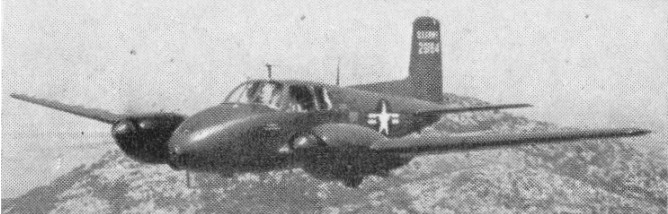
The US military used the Twin Bonanza as the L-23 Seminole, redesignated as U-8 in 1962. Four YL-23 were purchased in 1952 [52-1800/1803]. These were followed by 55 L-23A models [52-6162/6216] (most rebuilt later as L-23D.
Beech YL-23 62-1801
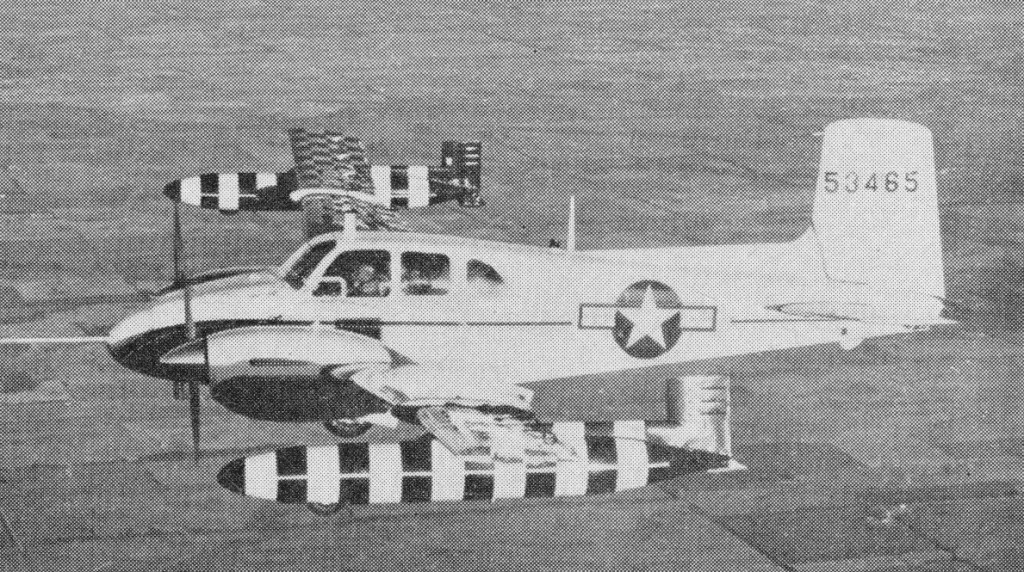
Forty L-23B [53-6153/6192] were purchased and a single XL-23C [55-3465] in 1955, converted to U-8G.
L-23 trials included “flying fuel tanks” to greatly increase fuel loads with the extra wing area attached to the tanks offsetting the greater weights involved.
Both civil and military versions continued to be developed through various marks. By 1955, 96 L-23As and Bs were built.
L-23B
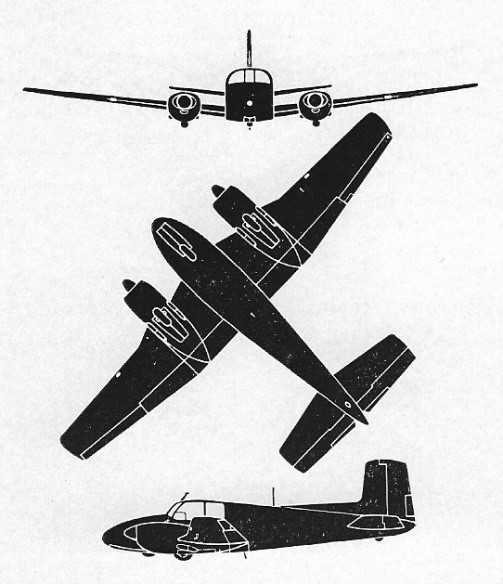
In 1958 the US Army sought an upgrade which lead to the development of the L-23F with its enlarged cabin. It was the first post-war light twin to reach quantity production in the United States, and late models grossed 7300 pounds. Built with 260, 275, 295, and 340-hp Lycoming engines, the Twin Bonanza design has proved highly versatile. Beech produced the military U8 Seminole, the civil Queen Air and early King Airs from the Twin Bonanza wing, and Swearingen has marketed a conversion of the basic Twin Bonanza as the Excaliber.
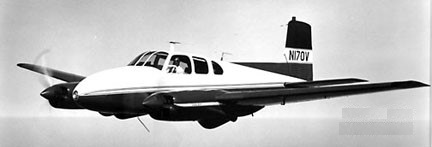
Swearingen Excalibur N170V
The design started life as a six-seater, and a seventh was added on the J model in 1960. There is so much room inside that numerous luxury executive interiors have been custom-installed. The aircraft has also been successful as an ambulance plane with room for a stretcher and medical attendants, in addition to the crew.
From the L23F derivative of the Model 50 Twin Bonanza Beech developed the civil Model 65 Queen Air with it first flying on 28 August 1958.
C50 Engines: two 275-hp Lycoming GO-480-F6 Wing span: 45 ft 3.5 ft Wing area: 277.06 sq.ft Length: 31 ft 6.5 in Height: 11 ft 4 in Gross Wt. 5500 lb Empty Wt. 3800 lb Fuel capacity 33 USG Top 205 mph Cruise 65%: 197 mph at 10,000 ft Stall 64 mph Initial climb rate 1450 fpm Ceiling 20,000 ft Range 920 sm Takeoff distance (50’) 1350 ft Landing distance (50’) 1210 ft Seats 4-6
D50A-E Engines two 295-hp Lycomings Seats 6. Gross Wt. 6300 lbs. Empty Wt. 3981 lbs. Fuel capacity 180 USG. Top speed 214 mph. Cruise 203 mph. Stall 71 mph. Initial climb rate 1450 fpm. Ceiling 20,000 ft. Range 1650 sm. Takeoff distance (50’) 1260 ft. Landing distance (50’) 1452 ft.
Beechcraft 1958 D50A Twin Bonanza Engine: Lyc. GO-480G2D6, 295 hp TBO: 1400 hr Fuel type:100LL Propeller: Const. spd. Landing Gear type: Tri./Retr. Gross weight: 6300 lb Empty weight, std: 4090 lb Useful load: 2210 lb Fuel: 134 USgal Payload, full std. fuel: 624 lb Wingspan: 45 ft. 3 in. Overall length: 31 ft. 6.5 in. Height: 11 ft. 4 in. Wing area: 277 sq. ft Seating capacity: 7 Cabin width: 54 in Cabin height: 51 in Baggage capacity: 500 lb Cruise speed, 8,000 ft 75% power: 203 kt Cruise speed, 8,000 ft 65% power: 201 kt Max range (w/ res) 65% power: 825 nm Fuel consumption 70% power: 37 US gph Fuel consumption 65% power: 34 US gph Stall speed (gear, flaps down): 71 kt Best rate of climb: two engines: 1450 fpm Best rate of climb: one engine: 300 fpm Service ceiling two engines: 20,000 ft Service ceiling one engine: 7000 ft Takeoff ground roll: 905 ft Landing ground roll: 700 ft
Beechcraft E-50 Twin Bonanza Business Twin, USA, 1957 Engine : 2 x Lycoming GSO 480 B1 B6, 316 hp Length: 31.529 ft / 9.61 m Height : 11.516 ft / 3.51 m Wingspan : 45.21 ft / 13.78 m Wing area : 276.958 sq.ft / 25.73 sq.m Max take off weight : 4795.9 lb / 2175.0 kg Weight empty : 5009.8 lb / 2272.0 kg Max. weight carried : 1991.1 lb / 903.0 kg Max. speed : 198 kt / 366 km/h Initial climb rate : 1614.17 ft/min / 8.20 m/s Service ceiling : 24606 ft / 7500 m Wing load : 17.43 lb/sq.ft / 85.0 kg/sq.m Range : 864 nm / 1600 km Endurance : 5 h Crew : 2+5
J50 Engines two 340-hp Lycomings. Seats 6-7. Gross Wt. 7300 lbs. Empty Wt. 4460 lbs. Fuel capaci.ty 230 USG. Top speed 235 mph. Cruise 223 mph. Stall 82 mph. Initial climb rate 1270 fpm. Range 1650 sm. Ceiling 29,150 ft. Takeoff distance (50’) 1450 ft. Landing distance (50’) 1840 ft.
Excalibur / Beech Twin Bonanza Engines: 2 x Lycoming IGSO-540-A1A, 380 hp. Seats: 6/7. Wing loading: 22.7 lb/sq.ft. Pwr loading: 9.6 lb/hp. Max TO wt: 7300 lb. Empty wt: 4768 lb. Equipped useful load: 2200 lb. Payload max fuel: 820 lb. Range max fuel/ 75% cruise: 797 nm/3.5 hr. Range max fuel / 55% cruise: 1343 nm/ 6.7 hr. Service ceiling: 30,000 ft. 75% cruise: 226 kt. 55% cruise: 202 kt. Vmc: 78 kt. Stall: 72-78 kt. 1.3 Vso: 93 kt. ROC: 1900 fpm. SE ROC: 340 fpm @ 102 kt. SE ceiling: 17,500 ft. Min field length: 2612 ft. Fuel cap: 1380 lb.
Excalibur Excalibur 800 / Beech Twin Bonanza Engines: 2 x Lycoming IO-720-A1B, 400 hp. Seats: 6/7. Wing loading: 22.7 lb/sq.ft. Pwr loading: 9.5 lb/hp. Max TO wt: 7600 lb. Empty wt: 4768 lb. Equipped useful load: 2500 lb. Payload max fuel: 1120 lb. Range max fuel/ 75% cruise: 901 nm/4.4 hr. Range max fuel / 55% cruise: 1156 nm/ 6.3 hr. Service ceiling: 22,200 ft. 75% cruise: 204 kt. 55% cruise: 185 kt. Vmc: 78 kt. Stall: 71-80 kt. 1.3 Vso: 92 kt. ROC: 1870 fpm. SE ROC: 440 fpm @ 102 kt. SE ceiling: 11,800 ft. Min field length: 2178 ft. Fuel cap: 1380 lb
YL-23
L-23A Engines: 2 x 260hp O-435
L-23B Engines: 2 x 260 h.p. Lycoming GO-435-17 Span: 45 ft. 3 in. Weight: 5.500 lb. Max. Speed: 202 m.p.h. Sats: 6 Range: 985 miles at 190 m.p.h.
XL-23C
L-23D / E/F-50 / U-8D / RU-8D / RU 8D Seminole 1958 Engines: 2 x 340hp O-480 Useful load: 2026 lb Max speed: 233 mph Cruise speed: 203 mph Range: 1355 mi Seats: 6 No built: 85 [56-3695/3718, 57-6029/6094, 57-3084/3101, 58-1329/1353, -1357/1364, -3048/3092, 59-2535/2543, -4990/4992], included remanufactured L-23As.
RL 23D Radar photo-observation, from civil E50 No built: 9
L-23E / U-8E / D-50 Engines: 2 x 295hp GO-480 No built: 6 [56-4039/4044], plus 1 civil to military to civil [N1779G=66-15360=N5375G=N888JE=N74GV].
The Beechcraft Model 40A was an experimental twin-engine aircraft based on the Bonanza. Only one prototype was built in 1948. It featured a unique over/under arrangement of two 180-hp Franklin engines mounted on top of each other and driving a single propeller.
The plane had a different engine cowl from a standard Bonanza, and the nose gear could not fully retract, but otherwise it greatly resembled the production Bonanzas of the time.
Certification rules demanded a firewall be fitted between the two engines, however, thus stopping development.
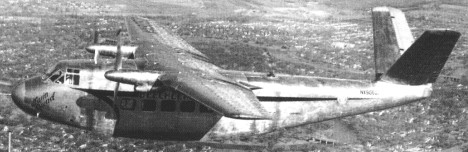
The Twin Quad was an unpressurized, 20-passenger entrant into the feeder-line market. The name ‘Twin Quad’ came from the two horizontally-opposed, 400hp (300kW) Lycoming GSO-580 engines buried transversely in each wing to drive a single propeller through a common gearbox. The Twin Quad also had a V-tail similar in shape to that of the Bonanza. The first flight of the prototype was on October 1, 1947, at Wichita, Kansas. Following more than a year of flight testing, it was damaged beyond economical repair in a forced landing. By then, Beech had learned that the feeder-line market could not support a new design. Even had there, the unique powerplant installation would have required considerable development to achieve the reliability needed for airline service.
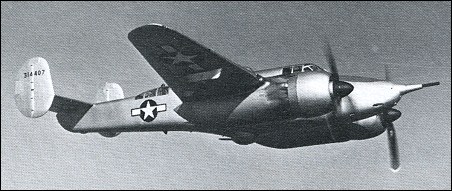
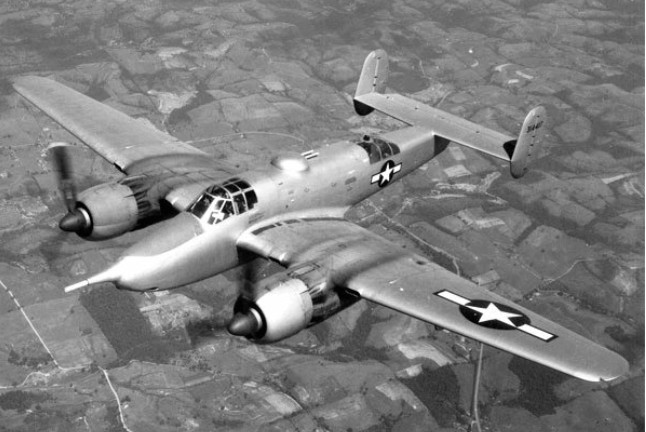
The XA-38 was a developmental twin-engine heavy fighter produced by Beech. Only two XA-38 prototypes were ever built with the project ultimately shelved at the end of the war.
The United States Army Air Force entered into a contractual agreement with Beech Aircraft in December of 1942 after considering the company’s Beechcraft Model 28. The contract called for two initial prototypes to be built as the XA-38 to fulfill a requirement replacing the Douglas A-20 Havocs then in service. This new aircraft would have to exceed in all areas the A-20. The XA-38 achieved first flight on May 7th, 1944 with Beech test pilot Vern Carstens at the controls, from the Beech airfield in Wichita, Kansas. It was then flown to Elgin Field in Florida to undergo testing with the US Army.
Design of the XA-38 centered around the large 75mm cannon armament mounted in the nose. The cannon was positioned as such that the barrel protruded from the nose cone assembly of the all-metal airframe. The fuselage was of a conventional design featuring a forward cockpit area and a rear gunner station and fit together as four main sections for ease of maintenance and repairs. Wings were mid-mounted monoplane airfoil of NACA-2300 series, joining the fuselage to each side of the cockpit and designed with a heated leading edge and surfaces. On the wings were twin Wright R-3350-53 radial engines of 2,700 horsepower each, driving three-bladed, constant speed Hamilton Standard propellers. Cooling was provided for through circular cowlings and controlled via automatic flaps. The engine nacelles were fitted to the wing leading edges. The empennage was conventional and featured a horizontal tailplane with two vertical tail fins. The undercarriage was a typical “tail dragger”, with two forward single-wheeled landing gears and a single-wheeled tail system – all fully retractable via hydraulics with a backup pneumatic emergency system. Crew accommodations was the pilot and a gunner under separate glazed canopies. The gunner sat in a dorsal position on the empennage.
While the primary armament of the XA-38 was its nose-mounted 75mm cannon (the entire forward nose section was hinged to open upwards for easy access to the cannon), this was augmented by 6 x .50 caliber Browning air-cooled heavy machine guns. Two were fitted to the lower forward nose section in a forward-firing fixed position while the remaining four were placed in dorsal and ventral General Electric remote-controlled turrets (two machine guns to a turret). These turrets were tracked via periscope sights by the gunner in his rear cabin. Additional external stores could be carried. With its accessible hinged nose assembly, the XA-38 was envisioned to fit other adaptable armament systems.
The XA-38 posted stable flight characteristics but was most notable for her top speed. Her speed was comparable to the single-engine fighters of her day. The XA-38 fell by the wayside as the B-29’s took her engines, the need for dedicated attack craft dwindles and the war came to its inevitable close a year later. It is known that one of the XA-38 prototypes fell the way of the scrap yard while the whereabouts of the other prototype are unknown.
Beechcraft XA-38 Destroyer (Model 28) Engines: 2 x Wright GR-3350-43 Cyclone radial, 2,300 hp each. Length: 15.76 m / 51 ft 8 in Wingspan: 20.45 m / 67 ft 1 in Height: 5.33 m / 17 ft 6 in Maximum Speed: 370mph (595kmh; 321kts) Maximum Range: 1,625miles (2,615km) Service Ceiling: 27,800 ft Armament: 1 x 75mm T15E1, 6 x 12.7mm Browning machine guns External stores: 2,000lbs Crew: 2 Hardpoints: 2 Empty Weight: 22,481lbs (10,197kg) Maximum Take-Off Weight: 36,330lbs (16,479kg)
The expansion of US training facilities in 1941 created a need for trainer aircraft to conserve raw materials, notably aluminium and magnesium alloys, would have to be needed for first-line types.
Built as the model 25 prototype, Beech’s T.A. Wells engineering team evolved the Beech Model 26, which was the first all-wood trainer to be accepted by the US Army Air Force, designated AT-10 Wichita. The design avoided the use of compound curves and of hot moulding processes for the structure’s sub-assemblies, allowing them to be sub-contracted to non-specialist wood-working firms: 85 per cent of the airframe was manufactured on this basis, with final assembly by Beech.
Metal airframe parts were limited to engine nacelles and cowlings, and panelling around the cockpit section. The wooden fuel tanks were lined with synthetic rubber. For operation as a multi-engined conversion trainer, the Wichita was equipped with dual controls and an autopilot, and entry to the cockpit was via rearward-sliding side windows.
The AT-10 was powered by two 220kW Lycoming R-680-9 engines, and by 1943 Beech had completed four contracts, for 150, 191, 1,080 and 350 aircraft respectively, bringing the total built at Wichita to 1,771. The last of these was delivered on 15 September 1943. Beech then supplied engineering and production data to the Globe Aircraft Corporation of Dallas, Texas, so that an additional 600 could be manufactured.
Engines: 2 x Lycoming R-680-9 radial, 295 hp /220kW Take-off weight: 2781 kg / 6131 lb Loaded weight: 2155 kg / 4751 lb Wingspan: 13.41 m / 43 ft 12 in Length: 10.46 m / 34 ft 4 in Wing area: 27.68 sq.m / 297.94 sq ft Max. speed: 319 km/h / 198 mph Ceiling: 5150 m / 16900 ft Range: 1239 km / 770 miles
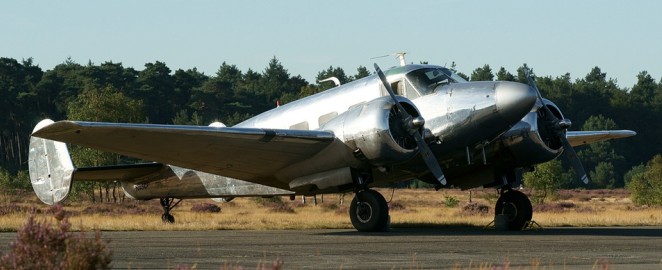
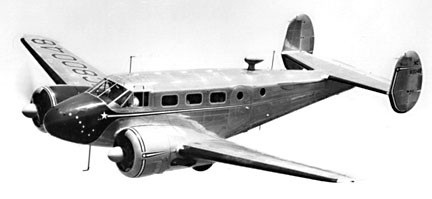
Beech began in 1935 the development of a six/eight-seat commercial transport identified as the Beech Model 18. Designed by Ted Wells, this was a a low-wing monoplane of all-metal construction, with a semi-monocoque fuselage of light alloy, a cantilever tail unit incorporating twin end-plate fins and rudders, and electrically retractable tailwheel landing gear. Float or ski landing gear later became optional. The initial engine installation was two 239kW Wright R-760-E2 radial engines mounted in wing leading-edge nacelles, and accommodation for two crew and six passengers.
The initial 1937 Model 18A (ATC 630) was first flown on 15 January 1937 (certified on 4 March 1937) and the first one, NC15810, was delivered to the Ethyl Corporation in that year at an equipped price of $32,752. It was later converted to a model 18B. About five were built, the rest going to Canada.
An improved Model 18B (ATC 656) with lower-powered 285hp Jacobs engines also sold in small numbers in 1937 for $33,500. Four were built; NC15810, NC18567, NC18569, and NC18583.
By the time war had broken out in Europe, only 39 Model 18 had been sold, even with five versions powered by Wright, Pratt & Whitney and Jacobs engines had been manufactured.
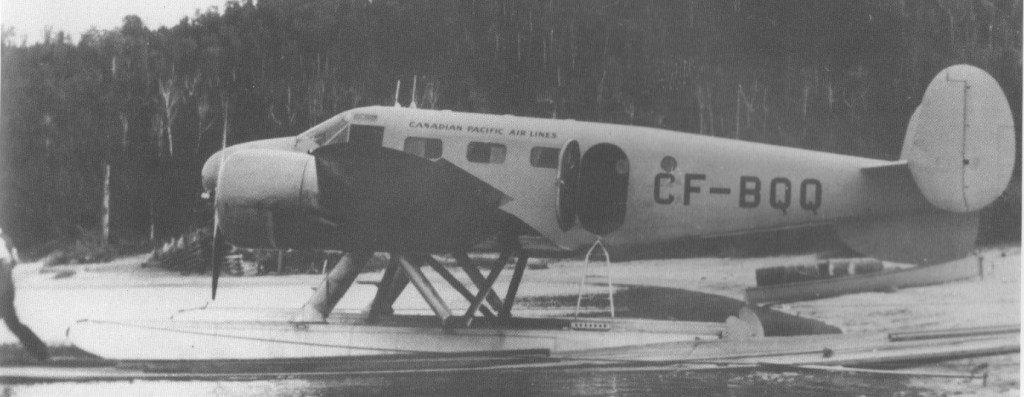
The ability to operate on skis and floats was an advantage in Canada.
A-18A CF-BQQ
The Model D18-C Expeditor could be converted to a Model E18-S if Pratt & Whitney engines replaced the original Continentals.
The Model 18D (ATC 684) of 1939 had 200hp / 246kW Jacobs L-6 engines, giving improved performance. Only 34 of these were sold in 1940, for $37,000 but the wartime demand for these aircraft was to total more than 4,000. A18D also amended under this ATC issued in 1940.
Beech 18G N6B
The first military version was supplied to the Philippine Army Air Corps. Dwight D. Eisenhower, as Chief of Staff of the American mission to the Philipines, selected the Beech 18 for service with the Army Air Corps.
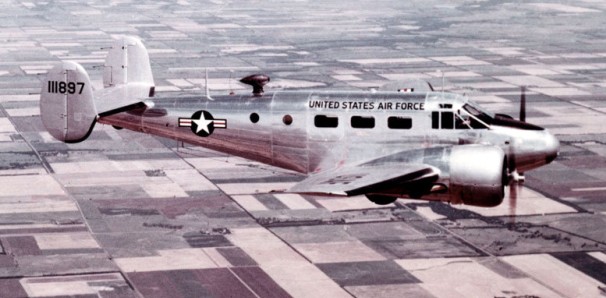
In total the US forces used purchase-built and impressed Model 18s as light transports under the overall designations C-45 (1,401 USAAF aircraft) and JRB (377 US Navy aircraft), the same basic airframe was used in larger numbers as a trainer.
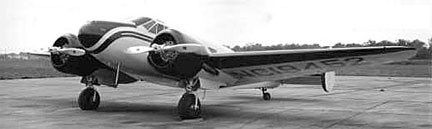
A total of 5,200 1939 18S model (ATC 710) were built going to the Army Air Corp as AT-7, AT-11, C-45, and F-2; and to USN as JRB-1 and SNB-1.
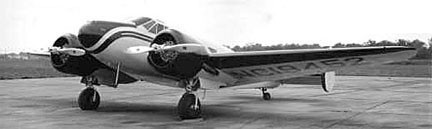
Beech 18-S NC19452
The 1938 A18D (ATC 684) was powered by 330hp Jacobs and sold for $37,000. Sixty-six were built, including SA18D float version under an ATC amendment in 1940.
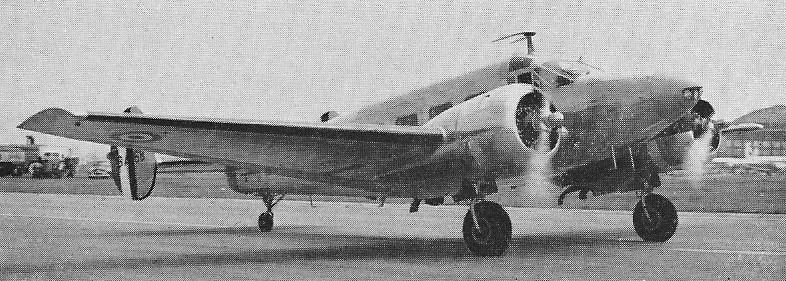
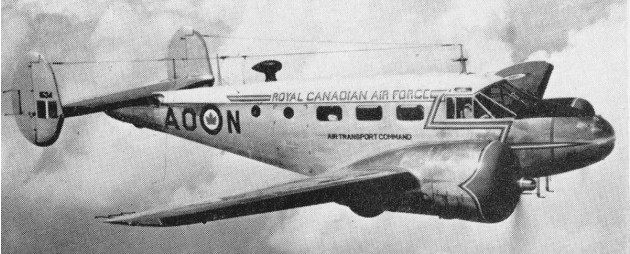
The first US Army Air Corps order, placed during 1940, was for 11 aircraft under the designation C-45, for use as staff transports. These were similar to the civil Model B18S. Subsequent procurement covered 20 C-45As for use in a utility transport role, with interior and equipment changes being made in the 223 C-45Bs that followed. Some of these aircraft were supplied to the UK under Lend-Lease, being designated Expediter I in RAF service. The USAAF designations C-45C, C-45D and C-45E were applied respectively to two impressed B18S civil aircraft, two AT-7s completed for transport duties, and six AT-7Bs similarly modified. Major and final production version for the USAAF was the seven-seat C-45F, with a slightly longer nose and of which at least 1,137 were built. Lend-Lease deliveries served with the Royal Navy and RAF as Expediter Iis, and with the Royal Canadian Air Force as Expediter IIIs. All of the C-45 designations were changed to a new UC-45 category in January 1943.
The RCAF received its first Expeditors in 1939 and flew them until the Services were unified in 1968. Retirement from the Canadian Forces came in 1970.
In 1940 six were delivered to the Nationalist Chinese government as M18R (or AT18R) with bomb racks, machineguns and a bombardier position in the nose, and one delivered to Sweden equipped as a flying hospital. Sixty-one were built with six M-18R appearing on the US civil register (NX25474 to 25479), possibly the Chinese airplanes.
In 1941, the Beech AT-7 Navigator was introduced to provide navigation training, equipped with three positions for trainee navigators, plus a dorsal astrodome and 336-kW (450-hp) R-985-25 radials. A total of 577 were built, being followed by six AT-7As with float landing gear and a large ventral fin. Nine AT-7Bs, basically winterized AT-7s were built to USAAF order: five were supplied to the UK, one being used by Prince Bernard of the Netherlands during his wartime exile. The AT-7C final version of the Navigator had R-985-AN-3 engines, production totalling 549.
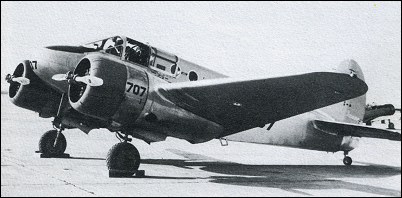
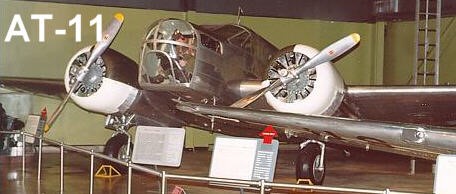
The AT (advanced trainer) version of the Model 18 appeared during 1941. The AT-11 Kansan (originally named Kansas) with R-985-AN-1 engines, for the USAAF was a bombing and gunnery trainer. It incorporated a small bomb bay capable of holding up to 1000 lb of light bombs, had small circular portholes in place of the standard rectangular cabin windows, a redesigned nose to provide a bomb aiming position, and two 7.62mm machine-guns, one in the nose, the other in a dorsal turret.
AT-11 Kansan
The AT-11 was the standard WW II bombing trainer; about 90 percent of the more than 45,000 AAF bombardiers trained in AT-11s. Student bombardiers normally dropped 100-lb. sand-filled practice bombs. In 1943, the AAF established a minimum proficiency standard of 22 percent hits on target for trainees. Combat training missions were flown taking continuous evasive action within a ten-mile radius of the target and final target approaches had to be straight and level and no longer than 60 seconds. After September 30, 1943, these missions were generally flown using the Norden Bombsight and the C-1 automatic pilot, the aircraft being guided by the bombardier student during the bombing run.
Production from 1941 to USAAF orders totalled 1,582 and of them, 36 were converted for navigation training as AT-11As. Twenty-four AT-11s ordered by the Netherlands for service in the Netherlands East Indies were, instead, taken on charge by the USAAF. They were delivered to the Royal Netherlands Military Flying School at Jackson, Mississippi, in early 1942.
The 1942 B18S featured an upgrade interior and electric system. Fourteen went to USAAF as C-45.
The last of the US Army Air Force’s wartime versions of the Beech Model 18 were photographic reconnaissance F-2s. 14 civil Model B18S were purchased and converted with cabin-mounted mapping cameras and oxygen equipment. They were supplemented later by 13 F-2As with four cameras, converted from C-45As, and by 42 F-2Bs, which were conversions from UC-45Fs: these had additional camera ports in both sides of the fuselage.
The 1944 C18S Expediter (ATC 757) sold from $63,000, going to USAAF as C-45/AT-7 and to USN as JRB/SNB.
Beech built a total of 4,526 C-45 military version for the Army Air Forces between 1939 and 1945 in four versions, the AT-7 “Navigator” navigation trainer, the AT-11 “Kansan” bombing-gunnery trainer, the C-45 “Expeditor” utility transport anf the F-2 for aerial photography and mapping. The AT-7 and AT-11 versions were well-known to WW II navigators and bombardiers, for most of these men received their training in these aircraft. Thousands of AAF pilot cadets also were given advanced training in twin-engine Beech airplanes.
The 1947 D18C Feeder Twin (ATC 770) was designed as a short-route air carrier. Powered by 525hp Continental engines, four were built, priced at $64,250. The D18CT Feeder Twin had added equipment, and increased baggage area. Sixteen sold at $64,890.
In June 1948, under a general revision of the USAF designation system, all of the surviving F-2 photo/reconnaissance aircraft were redesignated RC-45A. Similarly, AT-7, AT-7C and AT-11 s dropped their A prefix: at the same time a small number of drone-directors converted from UC-45Fs and given the designation CQ-3 became instead, DC-45Fs.
The US Navy and US Marine Corps used more than 1,500 Model 18s. Initial versions were similar to the US Army’s F-2, this being designated JRB-1, and followed by a JRB-2 transport, and JRB-3s and JRB-4s equivalent to the C-45B and UC-45F respectively. The designations SNB-1 (320 aircraft), SNB-2 (509 aircraft and 376 SNB-2C) and SNB-3 were applied respectively to aircraft that were equivalent to the USAAF’s AT-11, AT-7, and AT-7C. US Navy ambulance and photographic versions were the SNB-2H and SNB-2P respectively; the SNB-3Q was an electronic counter-measures trainer.
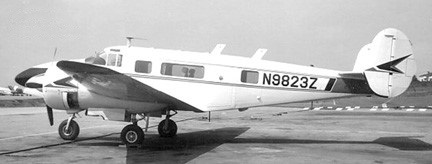
During 1951-2, about 900 in-service USAF UC-45E, T-7 and T-11 aircraft were re-manufactured to zero-time condition and modernised, and given the new designations C-45G and C-45H. The C-45G had an autopilot and R-985-AN-3 engines, the C-45H no autopilot and R-985-AN-14B engines. At the same time, US Navy SNB-2s, SNB-2Cs, and SNB-2Ps were remanufactured under the designations SNB-5 and SNB-5P. Later, with introduction of the tri-service unified designation scheme in 1962, in-service SNB aircraft were redesignated TC-45J and RC-45J respectively in the training and photographic roles.
Post war Beech resumed manufacture of the civil Model 18, and in 1953 introduced a larger and improved version of the D18S.
Beech D18S NC80048
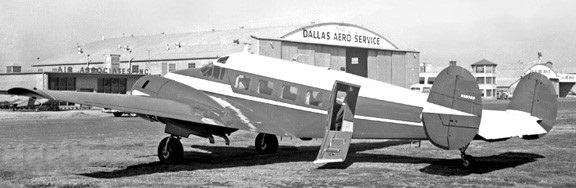
Known as the Super 18 (E18S), the prototype was flown for the first time on 10 December 1953. Structural improvements included external refinements to reduce drag, Geisse safety landing gear for cross-wind operations, a separate flight deck, and improved soundproofing. Wingspan was increased and integral steps fitted. All-up weight was increased with the cabin accommodating five to seven passengers. Some were supplied to the French Armee de l’Air.
The 1946 D18S Executive (ATC 765) sold from $63,550 with around 1,000 by 1953. USAF version was the C-45G.
E18S Super 18
The 1953 E18S Executive Super Twin, or Super 18 (ATC 765) first flew on 10 December 1953. Selling for $61,500, 464 were built before replaced in 1962 by the H18. Powered by 450hp P&W R-985 Wasp Jr engines they were nine-place.
The 1959 G18S were an improved E18S with two-piece windshield and a large center cabin window. One hundred and fifty-six were built.
The last of the model 18 were the 1962 H18 ten-place. One hundred and forty-nine were built, priced at $179.500.
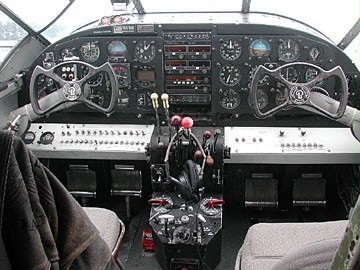
Beech H18 Panel
Progressive improvements continued throughout the production of 754 Super 18s, the last examples of the final Model H18 version being built during 1969. The H18 Super-Liner is an advanced version with more engineering improvements than any previous model, including electric cowl flaps, a redesigned exhaust system, lightweight props, and automatic oil coolers.
In September 1963 Beech introduced optional factory-installed retractable tricycle landing gear which had been developed by Volpar Inc. of Los Angeles, California. Some other options include fuel injection, air conditioning, an autopilot and weather radar. Post-war production of the Model 18 finally come to an end in with the tri-gear H18S Super 18 leaving the factory in 1969. In 1969, the last 10 planes were sold to Japan, ending a 32-year production cycle.
In total, the Beech 18 line had 32 variants, and more than 9,000 civil and military planes had been built when the last one (a Super 18H) rolled off the assembly line on 26 November 1969, accounting for the longest production run in aviation history.
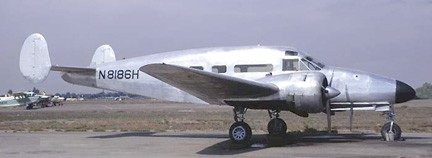
Beech D18S Rausch “headroom” conversion N8186H
Pacific Airmotive Super 18S N36068
In 1940 Volpar offered conversion of Beechcraft 18 to executive light transport with tricycle or conventional gear, redesigned nose, custom interior etc.
Volpar 18 NC19452
C-45G N8823Z
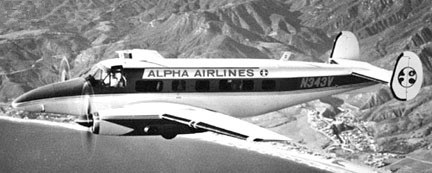
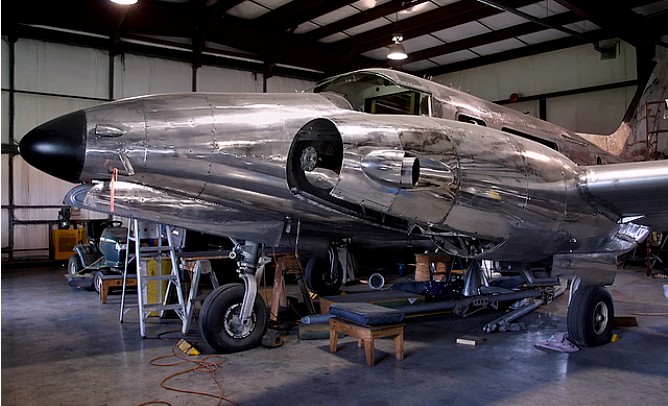
Volpar also offered conversions of standard Beech 18s to Volpar Turbo 18 standard, with tricycle landing gear and TPE331 turboprop engines kits, and also the lengthened turboprop-powered 15-passenger Volpar Turboliner, first flying in December 1964. Conversions offered by other manufacturers have included the nine-passenger Dumod I and 15-passenger Dumod Liner retaining the original Pratt & Whitney R 985 radial piston engines, offered by Dumod Corporation with larger windows and glass-fiber control surfaces; and Pacific Airmotive Corporation’’ 10-passenger PAC Tradewind and turboprop-powered PAC Turbo Tradewind. The Tradewind, a re-manufactured D-18, offering tricycle gear, new windscreen, increased fuel capacity and other updated equipment.
Volpar Super 18 NC343V
Pacific Airmotive Tradewind
Available from Hamilton Aviation in late 1981 were the Hamilton Westwind II STD and Westwind III turboprop-powered conversion of 17-and eight-passenger capacity respectively. The Westwind III was powered by 579 ehp United Aircraft of Canada turboprops. In production for over 32 years, more than 9100 airplanes in 32 variants were built.
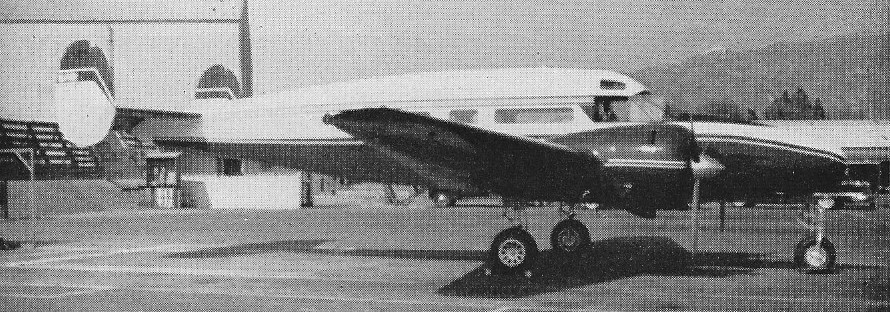
Around 1960 Rausch Engineering modified Beech 18 with a tricycle undercarriage and extended nose. The cabin windows were altered in shape and the fuselage deepened.
Rausch Engineering modified Beech 18
In 1964 Conrad International Corp offer an FAA certified re-worked C-18S, Certified at 10,200 MTOW, modifications at Ft. Lauderdale included tricycle gear, oval passenger windows, airstair door, cargo door and executive interior for nine passengers.
18A Engines: 2 x Wright R-760-E2, 320 hp / 239kW Useful load: 2400 lb Max speed: 202 mph Cruise: 167 mph Cruise: 55 mph Range: 800 mi Crew: 2 Passengers: 6
Beechcraft A-18A 1940 Engines: 2 x Wright Whirlwind, 350 hp Wingspan: 47 ft 8 in Length: 34 ft 3 in Height: 9 ft 5 in Empty weight: 4600 lb MAUW: 7500 lb Cruise: 205 mph Range: 1200 mi Crew: 1-2 Max passengers: 9
18D 1938 Engines: 2 x Jacobs L-6, 300 hp / 246kW Wingspan: 47 ft 8 in Length: 31 ft 11 in Height: 9 ft 5 in Empty weight: 4336 lb MAUW: 7200 lb Cruise: 195 mph Range: 800 mi Crew: 1-2 Max passengers: 9
D18S Engines two 450-hp Pratt & Whitney R-985-AN-14B Wasp Junior. Gross Wt. 8750 lbs. Empty Wt. 5770 lbs. Fuel capacity 206-286 USG. Wing Span: 47ft 7in (14.5m) Length: 32ft (9.74m) Height: 9ft 8in (2.95m) Top speed: 230 mph. Cruise: 211 mph. Stall: 77 mph. Initial climb rate 1190 fpm. Range 985 sm. Ceiling 20,500 ft. Takeoff distance (50’) 1760 ft. Landing distance (50’) 1460 ft. Seats 5-7.
E18S Engines: 2 x Pratt & Whitney R-985, 450 hp. Prop: Hamilton Standard Constant speed 95 in. Pwr loading: 17.7 lbs/hp. Wing span: 49 ft 8 in. Wing area: 310 sq.ft. Wing loading: 31.2 lbs/sq.ft. Length: 35 ft 2.5 in. Height: 10 ft 5 in. Seats: 5 pax. Crew: 2. MTOW: 9700 lbs. Max ldg wt: 9400 lbs. Empty wt: 5910 lbs. Fuel cap: (Std) 198 USG, (with aux.) 318 USG. Max cruise: 214 mph. Maneuvering speed: 153 mph. Stall, clean: 93 mph, Flap & U/c: 84 mph. Vmc: 94 mph. T/o dist: 1455 ft, (50 ft) 1980 ft. Ldg dist: 1036 ft, (50 ft) 1850 ft. ROC S/L: 1410 fpm. SE ROC: 255 fpm. Service ceiling: 21,000 ft. SE Service ceiling: 7750 ft. Max endurance @ 155 mph, std fuel, no res: 4.2 hr, 651 sm. Max range with aux fuel, no res: 6.7 hr, 1038 sm.
C-45 Expeditor / 18S Engines: 2 x 450 h.p. Pratt & Whitney R985-AN-1 Wingspan: 47 ft. 8 in. Length: 33 ft. 11.5 in. Loaded weight: 8,727 lb. Max. Speed: 218 m.p.h. Ceiling: 26,000 ft. Typical range: 1,200 miles at 160 m.p.h. at 5,000 ft. with normal load. Seats: 2 plus 6 passengers.
E18S Super 18 Engines: 2 x Pratt & Whitney R-985-14-ANB Empty weight: 6150 lb Loaded weight: 9300 lb Max speed: 234 mph at 5000 ft Cruise: 207 mph at 5000 ft ROC: 1250 fpm Wingspan: 49 ft 8 in Length: 35 ft 2.5 in Height: 9 ft 6 in Wing area: 361 sq.ft
H18S Super 18 Engines: 2 x Pratt & Whitney R-985-AN-14B, 336kW Take-off weight: 4491 kg / 9901 lb Empty weight: 2651 kg / 5844 lb Fuel capacity: 198-318 USG Wingspan: 15.15 m / 49 ft 8 in Length: 10.73 m / 35 ft 2 in Height: 2.84 m / 9 ft 4 in Wing area: 33.51 sq.m / 360.70 sq ft Max. speed: 354 km/h / 220 mph Cruise speed: 298 km/h / 185 mph Stall: 87 mph Initial climb rate: 1400 fpm Ceiling: 6525 m / 21400 ft Range: 3060 km / 1901 miles Takeoff distance (50’) 2072 ft. Landing distance (50’) 1850 ft. Seats 9-10 Undercarriage: tri-gear
Beechcraft UC-45 Expeditor Engines: 2 x Pratt & Whitney R-985-AN-1 Wasp Junior radial, 450hp each. Length: 34.15ft (10.41m) Width: 47.67ft (14.53m) Height: 9.68ft (2.95m) Maximum Speed: 224mph (360kmh; 194kts) Maximum Range: 1,181miles (1,900km) Rate-of-Climb: 1,850ft/min (564m/min) Service Ceiling: 26,017ft (7,930m) Accommodation: 2 + 8 Empty Weight: 6,173lbs (2,800kg) Maximum Take-Off Weight: 7,496lbs (3,400kg)
C-45A / F-2A / RC-45A / UC-45A Range: 850 mile (with 2,500 pounds of cargo or six pax).
C-45B Expediter I / UC-45B / JRB-3
C-45F Expediter II / Expediter III / F-2B / RC-45A / UC-45F / JRB-4 Seats: 7
AT-7C Navigator / T-7C / SNB-3 Engines: 2 x R-985-AN-3
AT-11 Engine: 2 x Pratt & Whitney R-985-14B
AT-11 Kansan / Kansas / T-11 / SNB-1 six/seven-seat bombing and gunnery trainer Engines: 2 x Pratt & Whitney R-985-AN-1, 336kW (450 hp) Span: 14.50m (47ft 8in). Length: 10.41 m (34ft 2in). Height: 9 ft. 7 3/4 in Max T/O weight: 3959 kg (8,727 lb). Max speed: 215 mph at sea level. Cruising speed: 150 mph Operational range: 850 miles Service Ceiling: 20,000 ft Bomb load: 1000 lb Armament: 2 x 7.62mm (0.3-in) machine-guns Original Cost: $67,000
AT-11A / T-11A Navigation training conversion of AT-11. Engines: 2 x R-985-AN-1
C-45G Engines: 2 x R-985-AN-3, 450 hp Empty weight: 5,785 lb (2624 kg) Loaded weight: 9,000 lb (4082 kg) Span: 47 ft 7 in (14.5 m) Length: 33 ft 11 in (10.3 m) Height: 9 ft 3 in (2.8 m) Wing Area: 349 sq ft (32.4 sq m) Undercarriage: tailwheel.
C-45H Expeditor Engines: Two Pratt & Whitney R-985, 450 hp Span: 47 ft 8 in Length: 34 ft 2 in Height: 9 ft 2 in Max weight: 9,300 lb Maximum speed: 219 mph Cruising speed: 150 mph Range: 1,140 miles Service Ceiling: 18,200 ft Original Cost: $57,838
UC 45J Undercarriage: tricycle
CQ-3 / DC-45F Drone-directors converted from UC-45Fs
SNB-2
SNB-2C
SNB-2H
SNB-2P
SNB-3Q
SNB-5
SNB-5P
TC-45J Trainer
RC-45J Expediter Photographic role
Volpar Turboliner II / Beechcraft 18 Engines: 2 x Garrett TPE 331-1-101B, 705 shp. Seats: 17 Wing loading: 30.75 lb/sq.ft. Pwr loading: 8.15 lb/hp. Max TO wt: 11,500 lb. Empty wt: 6820 lb. Equipped useful load: 4442 lb. Payload max fuel: 206 lb. Range max fuel/cruise: 2041 nm/7.7 hr. Service ceiling: 24,000 ft. Max cruise: 243 kt. Vmc: 84 kt. Stall: 80-84 kt. 1.3 Vso: 104 kt. ROC: 1500 fpm. SE ROC: 225 fpm @ 111 kt. SE ceiling: 13,000 ft. Min field length: 3245 ft. Fuel cap: 2025/3654 lb.
Volpar Turbo 18 / Beechcraft 18 Engines: 2 x Garrett TPE 331-1-101B, 705 shp. Seats: 9. Wing loading: 27.51 lb/sq.ft. Power loading: 7.3 lb/hp. Max TO wt: 10,286 lb. Empty wt: 6200 lb. Equipped useful load: 3844 lb. Payload max fuel: 190 lb. Range max fuel/cruise: 1822 nm/6.5 hr. Service ceiling: 26,000 ft. Max cruise: 253 kt. Vmc: 85 kt. Stall: 77-80 kt. 1.3 Vso: 100 kt. ROC: 1700 fpm. SE ROC: 560 fpm @ 109 kt. SE ceiling: 14,000 ft. Min field length: 2380 ft. Fuel cap: 2025/3654 lb. Undercarriage: tricycle
Dumod I Engines: Pratt & Whitney R 985 radial Passenger capacity: 15
This Bede creation is essentially a two- or four-seat version of the BD-5. Though the plans call for two Xenoah three-cylinder engines driving a common shaft, it is possible to fit the BD-7 with any engine from 100 to 200 hp. In any case, the powerplant(s) drives a variable-pitch pusher prop and is fed by wing tanks of either 50 or 80 gallons total capacity. As with the BD-5, the tricycle landing gear is fully retractable and the canopy-covered cabin is heated. The materials used in the construction of the BD-7 are the same as those used for its little brother.
Engines: two 70-90 hp Xenoahs. Gross Wt: 2000 lbs. Empty Wt: 960 lbs. Fuel capacity: 50-80 USG. Wingspan: 24’. Length: 20’6”. Top speed: 220 mph. Cruise speed: 210 mph. Stall: 65 mph. Climb rate: 1500 fpm. Ceiling: 25,000 ft. Takeoff run: 500 ft. Landing roll (50’): 700 ft. Range: 1000 sm.