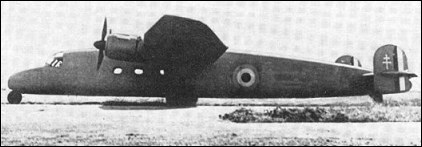
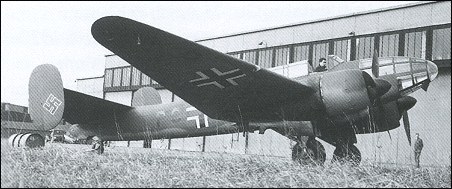
High-wing transport built in occupied France by Breguet, designed for Lufthansa after the war. The Bv 144 was a shoulder-wing aircraft. It had a variable incidence wing, turning round a tubular spar. Two were built, but only one made a few flights.
Engines: 2 x BMW 801A, 1560hp Span: 26.90m Length: 21.90m Height: 5.10m Wing area: 89.40 sq.m Empty weight: 9910kg Max Take off weight: 14100kg Max speed: 460km/h Cruising speed: 410km/h at 4000m Service ceiling: 8,600m Range: 1550km Crew: 3 plus 18 passengers
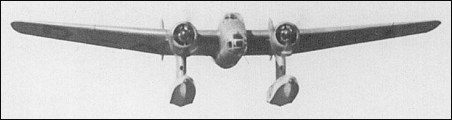
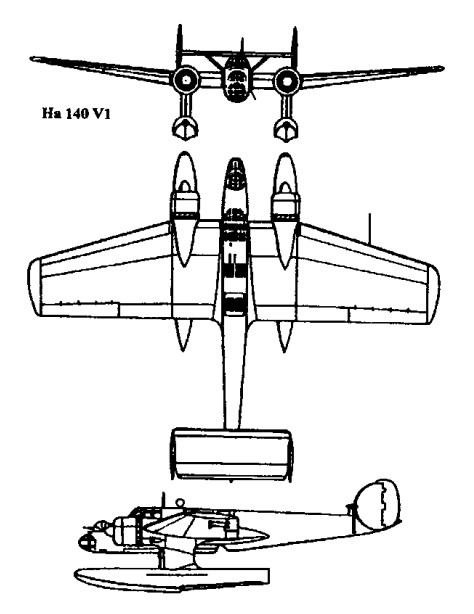
A twin-engined torpedo-bomber floatplane, based on the Ha.139 long-range mailplane, the Ha.140 was first flown on 30 September1937, and competed with the He-115. According to some sources the Luftwaffe actually preferred the Ha 140, but Blohm & Voss did not have the production capacity to meet the orders. Others claim that the aircraft had unacceptable handling. Only four were built.
Engines: 2 x BMW 132K, 830 hp Propellers: 3 blade metal variable pitch Wing span: 22,00 m Length: 16,74 m Height: 3,50 m Empty weight: 6300 kg MTOW: 9227 kg Power loading: 5,558 Kg/hp Max speed: 333 Kmh Range: 2000 km
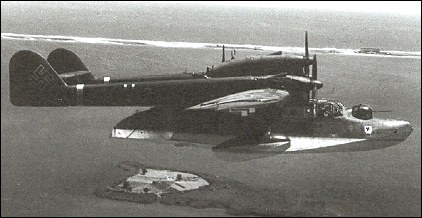
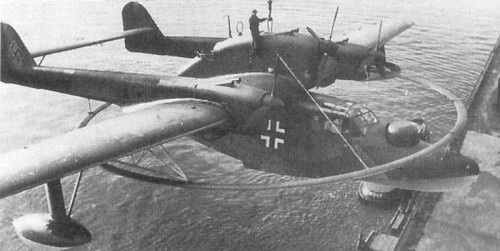
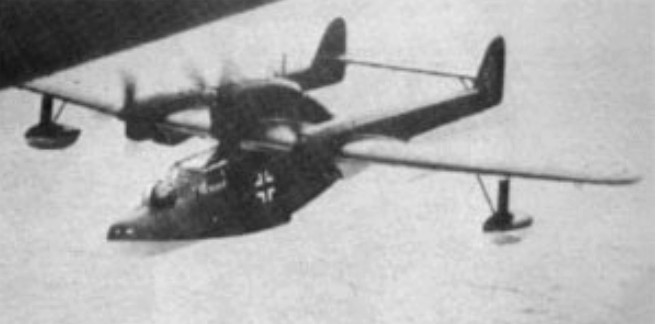
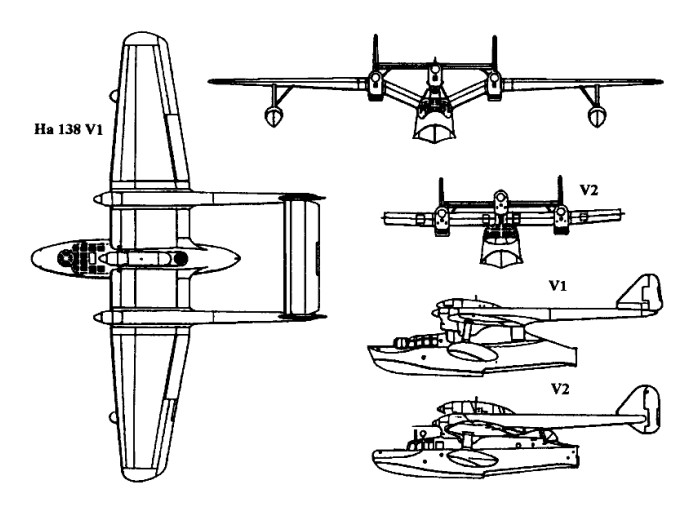
German patrol flying boat. The Blohm und Voss shipyard’s aircraft subsidiary was Hamburger Flugzeugbau, so the first two prototypes were designated Ha 138. Both flown in 1937, they were powered by three 600 hp / 447kW Junkers Jumo 205C-4 heavy oil diesel engines. The third machine, the Bv 138A 01 of 1938, was greatly modified with larger hull and flat (as distinct from gull) wing, and the tail booms were redesigned. Fuel oil was carried inside the tubular main spar. In 1939 delivery began of 25 Bv 138A 1 ocean patrol boats, but they seldom carried their armament and were soon relegated to transport, serving in this role during the invasion of Norway in April 1940.
In October 1940, when the A 1 was first deployed to French bases, the 21 Bv 138B 1 began to enter service. These were much better performers, with 880 hp Jurno 205D diesels and a turret at each end of the hull mounting a 20 mm MG 151/20 cannon.
In 1941 43 Blohm und Voss delivered 227 of the C 1 version, with many detail refinements and a 13 mm (0.51 in) MG 131 in an open cockpit behind the centre engine. Constant speed propellers were standard, the centre unit having four blades and the outers reversing for water manoeuvres. The inner wing carried four stores racks, each rated at 150 kg (331 lb), usually occupied by depth charges.
The Bv 138 finished its career in a mine-sweeping role, carrying a large degaussing “hoop” around its fuselage to explode magnetic mines. A total of 273 production Bv 138s were completed.
Ha 138 Engines: 3 x 600 hp / 447kW Junkers Jumo 205C-4 heavy oil diesel
Bv 138A 01 Engines: 3 x 600 hp / 447kW Junkers Jumo 205C-4 heavy oil diesel
Bv 138A-1 Engines: 3 x 880 hp Jumo 205D diesels Armament: 2 x 20 mm MG 151/20 cannon.
Bv 138B-1 Engines: 3 x Junkers Jumo 205C-4
Bv 138C-1 Engine: 3 x 746kW Junkers Jumo 205D 12-cylinder diesel engines Max take-off weight: 17650 kg / 38912 lb Wingspan: 26.94 m / 88 ft 5 in Length: 19.85 m / 65 ft 1 in Height: 5.90 m / 19 ft 4 in Max. speed: 285 km/h / 177 mph / 154kt Ceiling: 5000 m / 16400 ft Range: 4300 km / 2672 miles Armament: 2 x 20mm MG 151/20 cannon, 13mm (0.51 in) MG 131 + 1 x 7.92mm machine-gun, four stores racks, each rated 150 kg (331 lb)
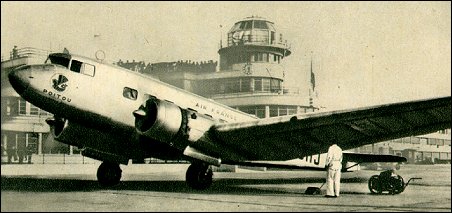
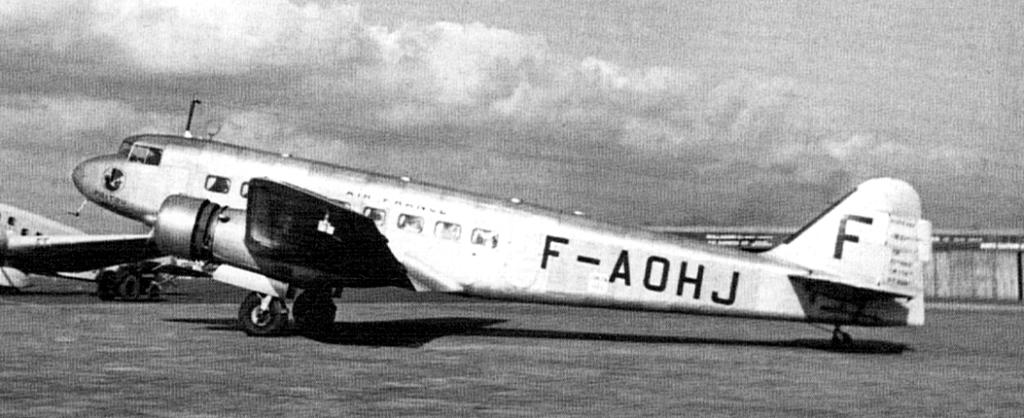
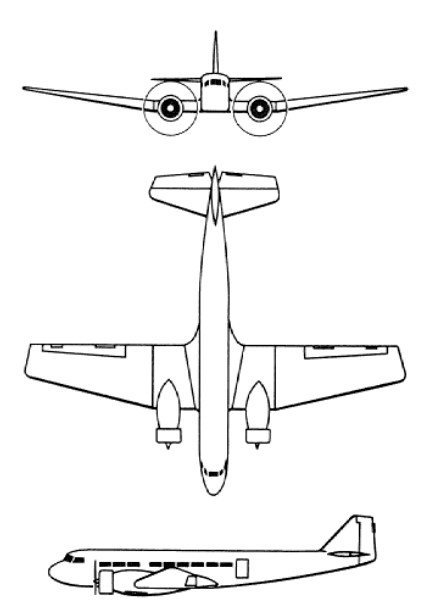
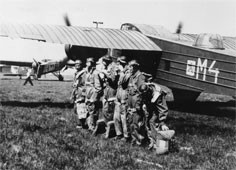
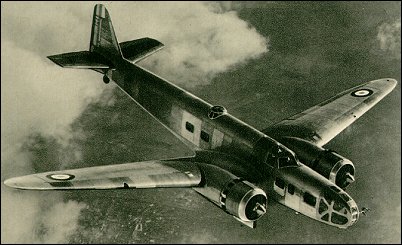
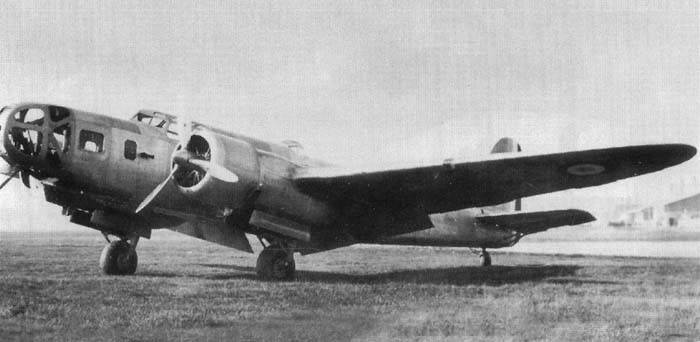
An all-metal cantilever low-wing monoplane, powered by two Gnome-Rhone radial engines and fitted with retractable landing gear, the Bloch M.B.220 was produced in only limited quantities. The prototype flew in December 1935, followed by 16 production aircraft. Normal crew comprised four, and there was comfortable accommodation for 16 passengers, with eight seats on each side of a central cabin aisle. By mid-1938 10 M.B.220s had been delivered, and the type was utilised fully on Air France’s European routes. The first service by the type on the Paris-London route was flown by the fifth aircraft (Aunis, F-AOHE) on 27 March 1938, with the scheduled time for the flight cut to 1 hour 15 minutes.
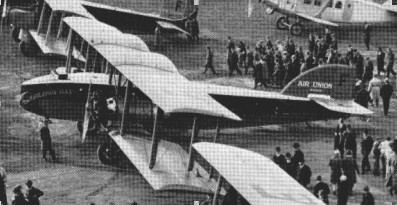
Croyden 1939
During World War II most M.B.220s were mobilised initially for service with Armee de I’Air military transport units. Later, examples of the M.B.220 operated under German, Free French and Vichy French colours in Europe, North Africa and the Middle East. At least five examples survived the war, being modified as M.B.221s with Wright Cyclone R-1820-97 engines. They flew short-range Air France European routes, but by 1949 four had been sold off to SANA (Societe Auxiliaire de Navigation Aerienne), and within about a year all had been withdrawn from service.
MB.220 Engines: 2 x Gnome-Rhone 14NO, 655kW Take-off weight: 9160 kg / 20194 lb Empty weight: 6410 kg / 14132 lb Wingspan: 22.2 m / 72 ft 10 in Length: 19.3 m / 63 ft 4 in Wing area: 72.0 sq.m / 775.00 sq ft Max. speed: 343 km/h / 213 mph Cruise speed: 295 km/h / 183 mph Ceiling: 7000 m / 22950 ft Range: 1400 km / 870 miles Crew: 3 Passengers: 16
The Bloch MB.210.01 prototype flew for the first time in November 1934as a bomber developed from the MB.200 with cleaner lines, a new tail, smooth metal fuselage skinning, the wing dropped from the shoulder to the low-set position, and retractable landing gear in place of the original strut-braced and spatted fixed gear A second prototype was designated Bloch 211 N°1 Verdun. Following tests, the production version was ordered as the Bloch 210. A cantilever low-wing monoplane which retained the angular lines of the high-wing Bloch 200, the Bloch 210 was powered by two 678kW Gnome-Rhone 14N engines and had a retractable landing gear, the main units of which retracted into the engine nacelles. Armament comprised single 7.5mm MAC machine-guns in a nose turret and semi-retractable dorsal and ventral positions. Maximum bomb load was 1,730kg. The first production machine flew on 10 December 1935. As part of its opposition to the Nationalist cause in the Spanish Civil War, France supplied 35 MB.210s to the Republicans. In March 1937 the arrival of these aircraft allowed many of the obsolescent Breguet Bre.19s to be phased out of service with Grupo num 22, which received a mixed complement of Potez Po.540s and MB.210s. Though useful by the standards of the civil war, there was little that these bombers could achieve against the Nationalists’ steadily growing air superiority, and none survived to fall into Nationalist hands at the end of the war.
A total of 283 were eventually built for the Armee de l’Air, with which they served in the BN5 (five-crew night bomber) category. Final deliveries to the air force were made in February 1939, by which time the aircraft was obsolete. By September 1939 238 Bloch 210s served with French bomber Groupes, employed on limited night operations including leaflet raids. However all were withdrawn from first-line service by June 1940. Twenty-four Bloch 210s had also been exported to Romania in 1938. Ex-Vichy aircraft were supplied by the Germans to Bulgaria in 1942.
MB.210Bn.5 five-seat night heavy bomber. Engines: 2 x Gnome-Rhone 14N-10/11, 679kW (910 hp). Span: 22.80m (74ft 9.75 in). Length: 18.8m (6l ft 8.25in). Max T/O weight: 10200 kg (22,487 lb). Max speed: 200 mph at 11,480 ft. Operational range: 1,056 miles. Armament: 3 x 7.7-mm (0.303-in) mg plus provision for up to 1975 kg (4,354 lb) of bombs carried internal
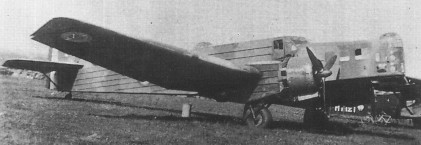
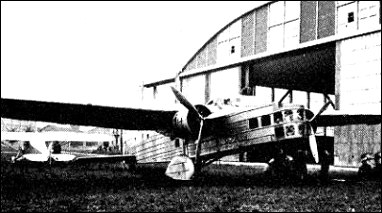
When, in 1932, the French air ministry circulated its specification for a five-seat night bomber, there were eight proposals from five companies. Both Bloch and Farman were successful on this occasion, although the resulting production aircraft were completed in differing bomber categories. The MB.200 was finalised as a four-seat bomber, with a cantilever high-wing monoplane of all-metal construction, and non-retractable tail-wheel type landing gear. The prototype Bloch M.B.200.01 had two 567kW Gnome-Rhone 14Krsd radial engines, and was first flown in July 1933. Subsequent flight testing resulted in an initial order for 25 aircraft, placed on 1 January 1934, despite the maximum speed of the prototype 18 per cent below estimate. When the production M.B.200 began to enter service towards the end of the year, it was found to be both reliable and viceless, and though production aircraft had more powerful Gnome-Rhone engines, still slow. 208 were eventually supplied to the Armee de I’Air, built by Bloch (4), Breguet (19), Hanriot (45), Loire (19), Potez (111) and SNCASO(10). At the beginning of World War II seven front-line bomber groupes were still equipped with these obsolete aircraft, but at the time of the German offensive all had been relegated to a training role. The type had also been built under licence in Czechoslovakia by Aero and Avia, and these were seized by the Germans, serving as crew trainers and for general duties, as were those which had been captured in France. Many were passed on to German satellites.
Aero built 44 Bloch 200 heavy bombers as the MB.200, and Avia licence built 70 machines powered by two 700 Walter K-14 engines.
Engine: 2 x Gnome-Rhone 14Kirs/Kjrs radial piston engines, 649kW Take-off weight: 7280 kg / 16050 lb Loaded weight: 4463 kg / 9839 lb Wingspan: 22.45 m / 73 ft 8 in Length: 16 m / 52 ft 6 in Height: 3.9 m / 12 ft 10 in Wing area: 67 sq.m / 721.18 sq ft Max. speed: 285 km/h / 177 mph Ceiling: 8000 m / 26250 ft Range: 1000 km / 621 miles
Aero MB-200 Engines: two 800 Walter K-14 Propellers: three-blade metal Wingspan: 22.45 m Length: 16 m Empty weight: 4474 kg Maximum speed: 205 km.p.h Climb to 4000 m: 15 min Service ceiling: 6000 m Armament: five machine guns in three turrets Bombload : 1500 kg Undercarriage: fixed Crew: 4 -5
The design originated in 1936 with the MB-170.01 two-seat fighter, which flew for the first time on 15 February 1938 with two 708-kW (950-hp) Gnome-Rhone 14N-6/7 radials and an underfuselage cupola intended for defensive armament or reconnaissance equipment, but the undercarriage collapsed on landing a month later. On 30 July the three-seat MB-170-02 was air-tested. The M.B.170.02 second prototype was configured as a pure bomber without the cupola but with an extensively glazed nose and larger vertical surfaces for improved directional stability.
Several operational variants were proposed, but the only types to enter service in World War II were the M.B.174 reconnaissance and attack bomber, and the M.B.175 light bomber.
Further development led to the Bloch 174.01, which flew on 5 January 1939 and series production at three SNCASO factories was ordered the following month. The M.B.174 prototype had 768-kW (1,030-hp) 14N-20/21 engines and revised accommodation, leading to the definitive model with more power and a number of refinements.
The MB-174 was a low-wing monoplane with two 850kW Gnome-Rhone 14N-48/49 radial engines in close-fitting cowlings. It had twin fins and rudders of oval form. The nose was extensively glazed, and pilot and dorsal gunner were accommodated under a raised glazed canopy. Defensive armament comprised two fixed forward-firing wing machine-guns, twin guns on a flexible mounting at the rear of the crew canopy and three further guns ventrally mounted to fire to the rear. All machine-guns were of the 7.5mm MAC 1934 type.
56 Bloch 174 A3 reconnaissance aircraft had been completed by the time of the June 1940 capitulation.
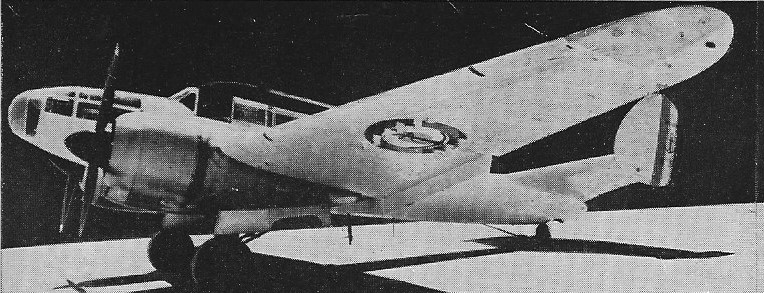
MB.175
The MB-174 was developed into the MB-175 B3 bomber, with an enlarged bomb bay capable of carrying a maximum of 600kg of bombs, requiring a new centre section.
Only 20 had been accepted when the Germans took over deliveries, using 56 MB-175s as trainers. The French Navy took delivery of a post-war MB-175T torpedo-bomber version, 79 being built.
M.B.174.01 Prototype. Engines: 2 x Gnome-Rhone 14N-6/7 radial, 708-kW (950-hp).
M.B.174 Reconnaissance and attack bomber. Seats: 3. Span: 17.9m (58ft 8.75 in) Length: 12.25m (40ft 2.25in). Engines: 2xGnome-Rhone 14N-48/49, 820kW (1,100 hp). Armament: 7×7.5-mm (0.295-in) MAC machine-guns plus provision for up to 400kg (8812 lb) bombs internal MTOW: 7160 kg (15,784 lb). Max speed: 329 mph at 17,060 ft. Operational range: 802 miles with max bombload.
MB.175 Engines: 2 x 2 x 1000 hp Gnome-Rhone 14N-48/49 Wingspan: 58 ft 11 in Wing area: 456.6 sq.ft Length: 40 ft 9.25 in Height: 10 ft Empty weight: 19,361 lb Loaded weight: 18,959 lb Max speed: 335 mph Cruise: 317 mph Range: 2050 mi Armament: 3 x 20mm cannon Bombload: 8 x rocket and 1 x torpedo
M.B.175.A3 Light bomber. Take-off weight: 7160 kg / 15785 lb Wingspan: 17.92 m / 58 ft 10 in Length: 12.23 m / 40 ft 1 in Max. speed: 530 km/h / 329 mph Range: 2000 km / 1243 miles
Bloch 134 B4 Engines: 2 x Gnome-Rhone 14N 48/49, 1140 hp TO pwr, 1035 hp at 15,750 ft Wingspan: 70 ft 5.25 in Wing area: 661.98 sq.ft Length: 52 ft 9 in Empty weight: 14,312 lb Loaded weight: 21,662 lb Max speed: 323 mph at 16,400 ft Range at 275 mph with 567.5 Imp Gal: 1678 miles Range at 275 mph with 445 Imp Gal: 1243 miles Armament: 1 x fixed forward firing 7.5mm MAC 1934 mg (500rds), 1 x 20mm Hispano 404 cannon (120rds) dorsal turret, 1 x 7.5mm MAC 1934 mg (800rds) ventral trap Bombload – with 445 Imp.Gal fuel: 96 x 22 lb, 24 x 110 lb, 8 x 220 lb, or 6 x 440 lb bombs Bombload – with 567.5 Imp.Gal fuel: 64 x 22 lb, 16 x 110 lb, 8 x 220 lb, or 4 x 440 lb bombs
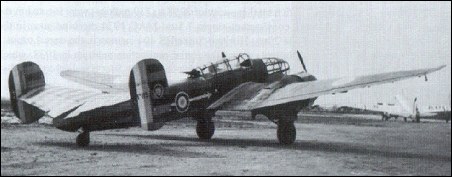
The Bloch MB.130 and its derivatives were a series of French monoplane reconnaissance bombers developed during the 1930s. The MB.130 was developed in response to the August 1933 French Aviation Ministry request for a reconnaissance and tactical bomber.
The low-wing Bloch 130 was a smaller version of the Bloch 210, but with a fixed and trousered undercarriage. The Bloch 130.01 Guynemer prototype first flew on 29 June 1934. Despite very ordinary performance, soon entered production, 40 machines being ordered in October 1935. An improved version, the MB.131 was first flown on 16 August 1936, but still needed more work to overcome its deficiencies. The radically revised second prototype which flew on 5 May 1937 eventually formed the basis for series production, with aircraft being manufactured by SNCASO, the nationalised company that had absorbed Bloch and Blériot.
As with the Potez 540, given the role that the aircraft was expected to fill, the evaluation was cursory and simply confirmed that the aircraft was completely unsuited to the intended role and should not be considered further.
A total redesign led to the Bloch 131, with a glazed nose and tall single fin and rudder, and powered by two 708kW Gnome-Rhone 14N radial engines. A retractable undercarriage was fitted. Armament comprised 7.5mm machine-guns in nose, dorsal turret and ventral positions.
The single Bloch 133, with a new twin fin and rudder tailplane, was later converted to a standard Bloch 131.
One hundred and thirty-nine production Bloch 131 were built for the Armee de l’Air in the RB4 category as four-crew machines intended for bombing and reconnaissance. The first six aircraft were delivered by June 1938, the rest by September 1939. Entering service in June 1938, the MB.131 went on to equip seven reconnaissance Groupes, six in metropolitan France and one in North Africa. Upon the outbreak of the war, the metropolitan Groupes suffered heavy losses in attempts at daylight reconnaissance of Germany’s western borders. From October 1939 they were restricted to flying night missions, though they still suffered heavy losses even then, and for training. The max bomb load in various combinations was 800kg. By May 1940, all metropolitan units had been converted to Potez 63.11 aircraft, with only the African groupe retaining them for front-line duty.
Following France’s capitulation, the Vichy regime used surviving Bloch 131s for target-towing. 21 planes were reported captured by the Luftwaffe in inoperable condition, but photographic evidence suggests at least a few flew for the Nazis.
Bloch MB.131 Engine: 2 x Gnome-Rhône 14N-10/11, 610kW(950 hp) Take-Off Weight: 6500 kg / 14330 lb Wingspan: 20.0 m / 65 ft 7 in Length: 17.9 m / 58 ft 9 in Wing Area: 52.0 sq.m / 559.72 sq ft Max. Speed: 400 km/h / 249 mph Cruise Speed: 350 km/h / 217 mph Service ceiling: 23,785 ft Range: 2000 km / 1243 miles Crew: 5 Armament: 3 × 7.5 mm (.295 in) MAC 1934 machine guns Bombload: 4 × 200 kg (440 lb) or 6 × 100 kg (220 lb) or 8 × 50 kg (110 lb) or 64 × 10 kg (22 lb) bombs