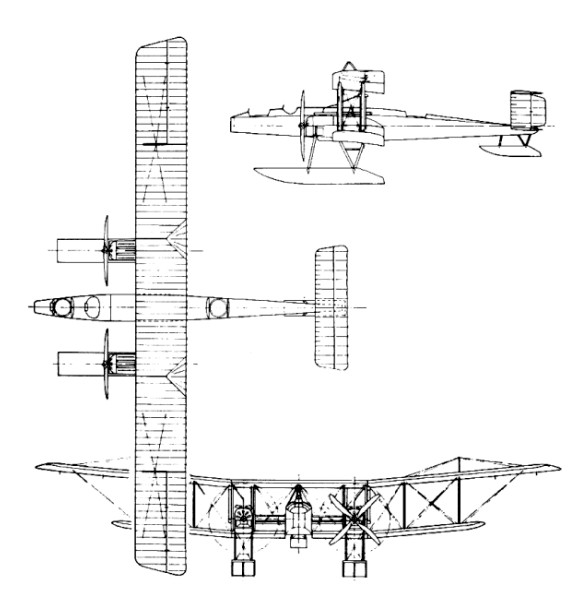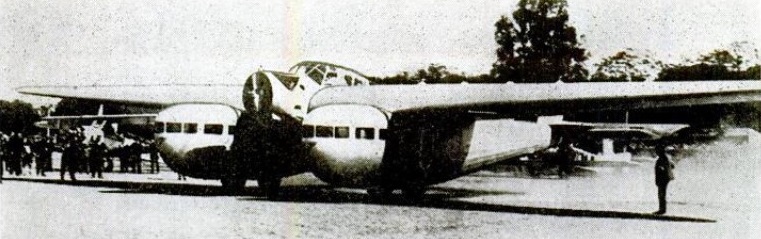
The Bleriot B-125 had tandem Hispani-Suiza 500 hp engines as standard. Between the two powerplants is the pilot’s cabin while the passenger cabins are at the nose of each of the double fuselage. Each fuselage nose carriers six seats.
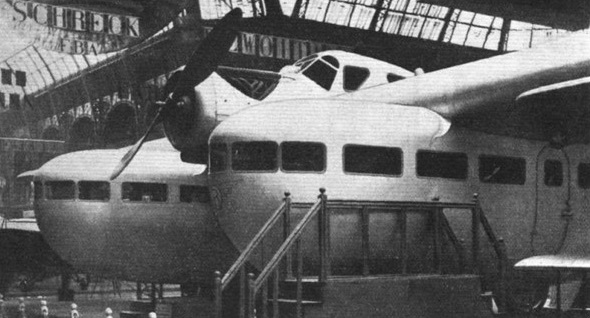
The Bleriot B-125 had tandem Hispani-Suiza 500 hp engines as standard. Between the two powerplants is the pilot’s cabin while the passenger cabins are at the nose of each of the double fuselage. Each fuselage nose carriers six seats.
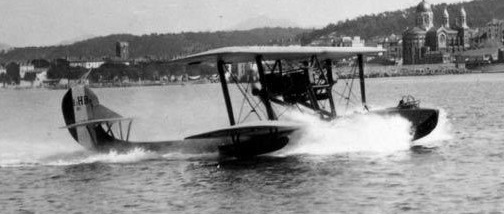
The Blanchard Brd.1 was a French reconnaissance flying boat used by the French navy in the 1920s. It was a large biplane with two engines mounted in the gap between the wings, each engine driving a pusher propeller.
First flown in 1922, twenty-four were built, primarily operated by the French Navy Aéronautique Maritime Escadrille 5R1 from 1923. They were retired in 1926.
In 1924, one Brd.1 was used to set several world altitude records for seaplanes.
Engines: 2 × Hispano-Suiza 8Fe, 205 kW (275 hp)
Wingspan: 19.00 m (62 ft 4 in)
Wing area: 85.0 m2 (914 ft2)
Length: 13.85 m (45 ft 5 in)
Height: 5.00 m (16 ft 5 in)
Empty weight: 2,465 kg (5,434 lb)
Gross weight: 3,930 kg (8,664 lb)
Maximum speed: 170 km/h (106 mph)
Service ceiling: 3,500 m (11,480 ft)
Crew: three, pilot, navigator, and gunner
Armament:
1 × 7.7 mm machine gun in flexible mount in bow
1 × 7.7 mm machine gun in flexible mount in rear fuselage
Bombload: 290 kg (640 lb)
A 1936 twin-engine twelve passenger low wing monoplane airliner, built but never flown.
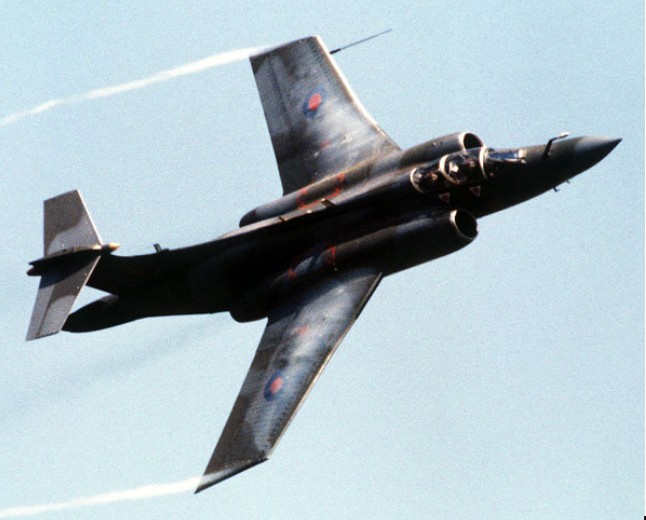
The Specification was known as the N.A.39 (its official number was M.148T) and Blackburn, once their tender was accepted, were given just under three years to get the first aircraft into the air, the target date for first flight being April 1958. To speed development, the Ministry of Supply ordered a large batch of twenty pre production aircraft, enough to carry out all the aerodynamic and engine development, the systems and weapons development and to equip the I.F.T.U. with the Navy.
Blackburn B.103 Buccaneer Article
Flight development brought about alterations as problems were encountered, and solved. A flutter problem was discovered in the high tailplane and fixed by the installation of inertia weights in the tailplane tips.
Originally the aircraft had been intended to have a retractable flight refuelling probe but this was found unsatisfactory and a re¬movable probe was standardised. On 30th April 1958 Derek Whitehead took XK486, the first Blackburn N.A.39, on its maiden flight from the R.A.E. airfield at Thurleigh, Beds. Initially the Buccaneer was powered by two D.H. Gyron Juniors.
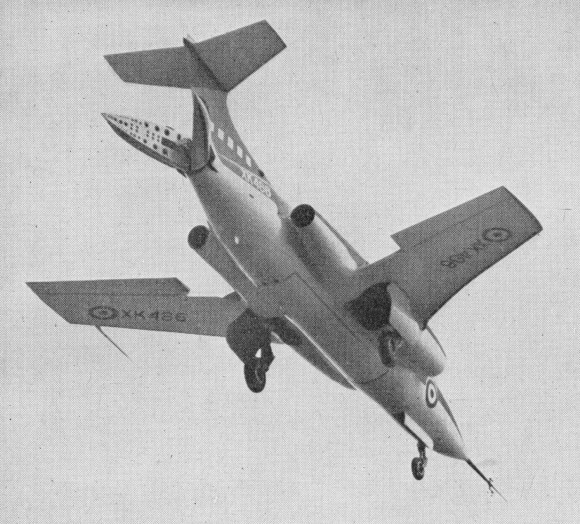
The twenty aircraft ordered and given the serial numbers XK486-XK491 and XK523 XK536 inclusive, and nine of these were to be used primarily by Blackburn’s for development of the whole weapons system, five were for Ministry of Supply trials work, and six for the Royal Navy for use by the Intensive Flying Trials Unit.
The first navalised Buccaneer appeared in January 1959, an interim naval aircraft, but with arrester hook and folding wings.
In September 1958 a production contract for forty Buccaneer S.1 aircraft was signed and they were allocated the serial numbers XN922 XN935, XN948-XN973.

The Buccaneer features mid-set wings with compound sweepback, swept tail services, with tailplane mounted at the top of the fin. The ailerons droop to supplement flaps during landing. Air is blown over wings, ailerons, flaps and tailplane to reduce take-off and landing speeds. The tail-cone splits along the centreline to act as an airbrake. The outer wings fold upwards for stowage on board ships.
The whole production run came out of Brough between July 1962 and December 1963. The Buccaneer. S.1 entered operational service with the Royal Navy in July 1962. Able to carry an 8,000 lb (3,628 kg) load of conventional or nuclear weapons, distributed between internal stowage and underwing pylons, it was superseded by the more powerful Spey engined Buccaneer S.2 in October 1965.

Although the Buccaneer S.1 had proved reasonably satisfactory, certain drawbacks came to light during its service. These centred around the Gyron Junior engine. The first was that, with the possibility of an engine failure on take off or landing (when the full BLC blow was operating), the single engine performance of the aircraft was critical; the second disadvantage was lack of range.
Hawker Siddeley re engined the aircraft with Rolls Royce Speys. Two of the DB machines were returned from Ministry of Supply trials work for modification into the prototypes for the new Spey engined version, to be known as the Buccaneer S.2. These aircraft were XK526 and XK527; the former flew first in the new configuration on 17th May 1963, being followed by the second on 1 9th August 1963.
The first batch of ten production aircraft had by then been ordered and given he serials XN974 XN1983. The first of these was completed and flown a year later on 6th June 1964, by which time the first two prototypes were completing a satisfactory programme of development flying.
XN974 was the first production S.2 aircraft, making its first flight from the British Aerospace airfield at Holme-on-Spalding Moor on 5 June 1964. It went straight to the Royal Aeronautical Establishment, Bedford, for work trials and then to HMS Eagle for sea trials. In 1965 it went to the USA for hot weather testing and achieved a record on its return flight from Goose Bay to Lossiemouth by becoming the first Fleet Air Arm aircraft to fly the transatlantic route non-stop without refuelling; on 4 October 1965, completing the 1,950 miles (3,138 km) between Goose Bay, Labrador, and Lossiemouth, Scotland, in 4 hrs 16 mins.
Four of this batch went for R. & D. work, XN974, ‘975, ‘976 and ‘983. XN975 and XN974 flew the Boscombe trials, the former doing the deck landing trials in several stints aboard Ark Royal.
Eighty four production Buccaneer S.2s were built in the years that followed with the following serial allocations: XN974 to XN983; XT269 to XT288; XV152 to XV168; XV332 to XV361; and XV863 to XV869.
The first operational Buccaneer S.2 squadron was No. 801 which served aboard H.M.S. Victorious.
In August 1964 it was reported that South Africa, rebuffed by the US State Department in bid to buy Grumman Intruders because of its race policies, was buying British Buccaneers instead.
During the early 1970s the Buccaneer was acquired for the R.A.F. and was equipped to use the Martel air to surface missile. 43 new S.Mk 2Bs were built for the RAF, the last of them delivered in 1977. This development provided a spin off for the Royal Navy and in the mid 1970s the F.A.A.’s Buccaneers were re¬designated as S.2C (non Martel) and S.2D (Martel equipped). This gave the squadron a greatly enhanced anti ship capability and in September 1974 the squadron embarked for the first time in Ark Royal with a full complement of S.2Ds. The squadron began its last commission in April 1978. On 27th November 1978 No. 809 took off from Ark Royal for the last time, in the Mediterranean, flew its aircraft direct to the R.A.F. Maintenance Unit at St. Athan, and disbanded there.

It left FAA service with the decommissioning of HMS Ark Royal in 1978, with the remaining 62 examples being transferred to the RAF. The last squadrons were disbanded in 1993.
From 1972 two squadrons of Buccaneers served in RAF Germany until replaced by Tornados in 1984. Maritime strike/attack and reconnaissance then became the aircraft’s primary role, along with the secondary task of carrying laser designator equipment for precision attacks.
South Africa operated 16 of the S.50 version from 1965 to 1991.
A total of 144 aircraft were built for the Royal Navy.
Royal Air Force Buccaneers first saw combat during the 1990-91 Gulf War (Operation ‘Granby’), 22 years after entering service. Twelve Buccaneers were deployed at short notice to the Gulf during Operation ‘Granby’ to designate targets for Royal Air Force Tornados and Jaguars. Although the Buccaneer was seen in 1969 as an interim type pending the development of the Panavia Tornado, the last examples were not retired until March 1994.
S.1
Engines: 2 x de Havilland Gyron turbojet, 7100 lb.
Wing span: 44 ft 0 in (13.41 m).
Width wings folded: 20 ft
Length: 63 ft 5 in (19.33 m).
Height: 16 ft 3 in (4.95 m).
Max TO wt: 45,000 lb (20,412 kg).
Max level speed: 720 mph (1159 kph).
S.2
Wing span: 13.4m (44 ft). Hardpoints: 4.
Seats: 2
Engines: two Rolls-Royce RB Spey Mk.101 turbofans, 11,100 lb thrust.
Maximum speed at sea level: 690 mph (Mach 0.92)
Tactical radius: 500-600 miles
Range: 2000 miles.
S.Mk 2B
Engine: two 11,100 lb, 50.4kN thrust Rolls Royce RB 168 1A Spey Mk 101 turbofan.
Take-off weight: 20800 kg / 45856 lb
Wingspan: 13.0 m / 42 ft 8 in
Length: 19.0 m / 62 ft 4 in
Height: 4.9 m / 16 ft 1 in
Wing area: 46.5 sq.m / 500.52 sq ft
Max. speed: 1159 km/h / 720 mph
Cruise speed: 1038 km/h / 645 mph
Range w/max.fuel: 3456 nm / 6200 km / 3853 miles
Crew: 2
Max internal /external weapon load: 16,000 lb (7,257 kg).
S.50
Wing span: 13.4m (44 ft).
Hardpoints: 4.


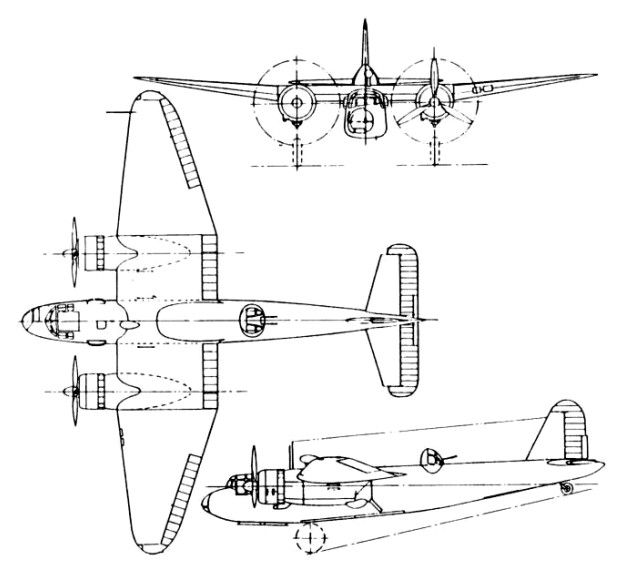
The Botha was designed for Coastal Command RAF as a three-seat twin-engined reconnaissance-bomber, able to carry a torpedo internally or up to 907kg of bombs. Defensive armament was a single 7.69mm Vickers machine-gun forward and a dorsal turret with two Lewis guns.
The first prototype made its maiden flight on 28 December 1938 and the first production Bothas entered service with No 608 Squadron on 28 June 1940, but remained in first-line service only until November of that year. A handful of operational Bothas also went to No 502 Squadron, but were also withdrawn rapidly. Although the Botha was a failure as a torpedo-bomber – mainly due to being underpowered – large numbers served as pilot, navigation, bombing, gunnery and radio trainers until 1944.
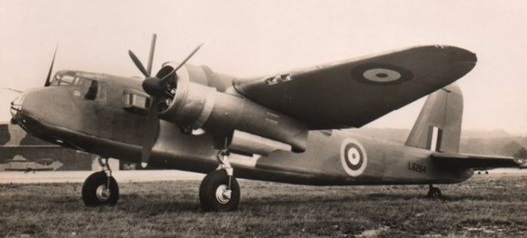
Engine: 2 x Bristol Perseus X A, 917 hp, 694kW
Length: 51 ft 1 in / 15.58 m
Height: 14 ft 8 in / 4.46 m
Wingspan: 58 ft 12 in / 17.98 m
Wing area: 517.964 sq.ft / 48.12 sq.m
Max take off weight: 18453.6 lb / 8369.0 kg
Weight empty: 11832.0 lb / 5366.0 kg
Max speed: 217 kts / 401 km/h / 249 mph
Cruising speed: 184 kts / 341 km/h / 211 mph
Service ceiling: 17503 ft / 5335 m
Wing load: 35.67 lb/sq.ft / 174.00 kg/sq.m
Range: 1104 nm / 2044 km
Crew: 4
Armament: 3x cal.303 MG (7,7mm), 907KG Bomb./Torp./DepthChrg.
1932

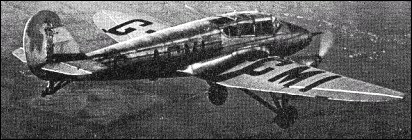
The Blackburn Segrave Meteor was designed in 1929 by Sir Henry Segrave, Technical Director of the Aircraft Investment Corporation. This corporation had substantial interests in the Blackburn Airplane & Motor Co and Saunders Roe. The prototype, G-AAXP, was built by Saunders-Roe and flown on 28 May 1930 at Cowes.
A four-seat cabin monoplane powered by two 89kW de Havilland Gipsy Ills or similar engine. It had an all-wooden fuselage. It was flown in the 1930 King’s Cup Race, and registration finally cancelled in September 1938.
The production of an all-metal machine was given to Blackburn, a number of parts being made by Saunders-Roe. Two production machines, known as Blackburn Segraves were built; G-ABFP and G-ABFP. G-ABFP registration was cancelled in December 1934.
G-ABFR was used on the Hull-Grimsby ferry in 1932. Its last owner was British Air Transport Ltd of Redhill. It was withdrawn in August 1939.
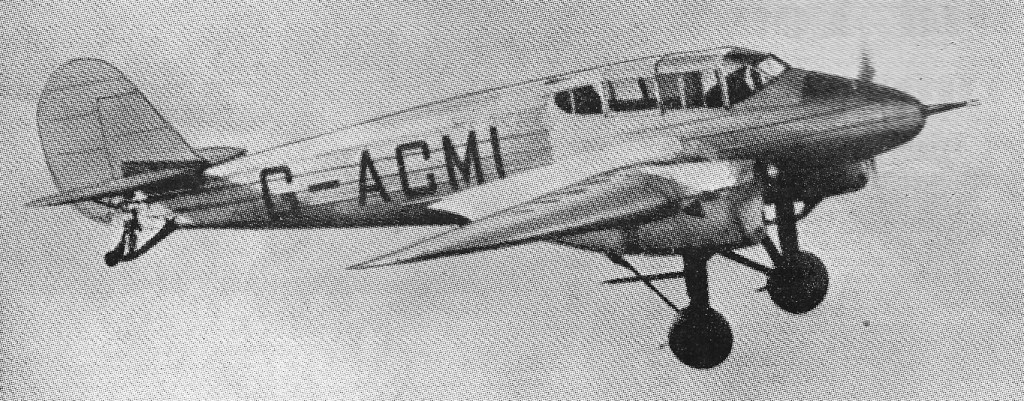
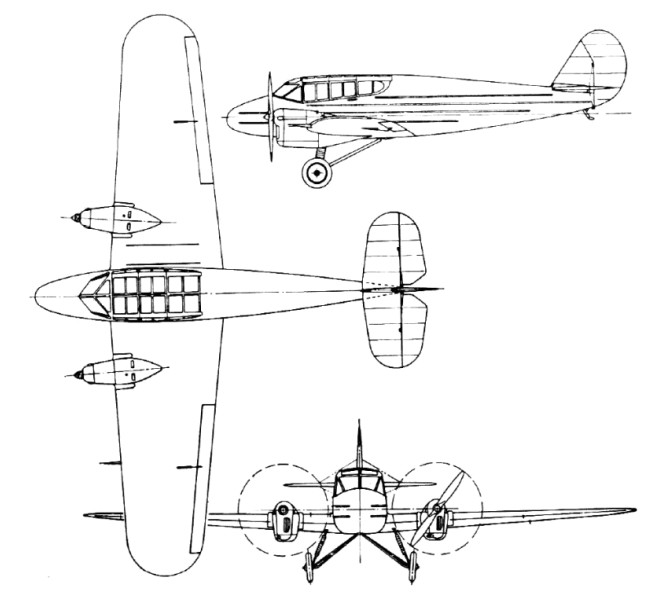
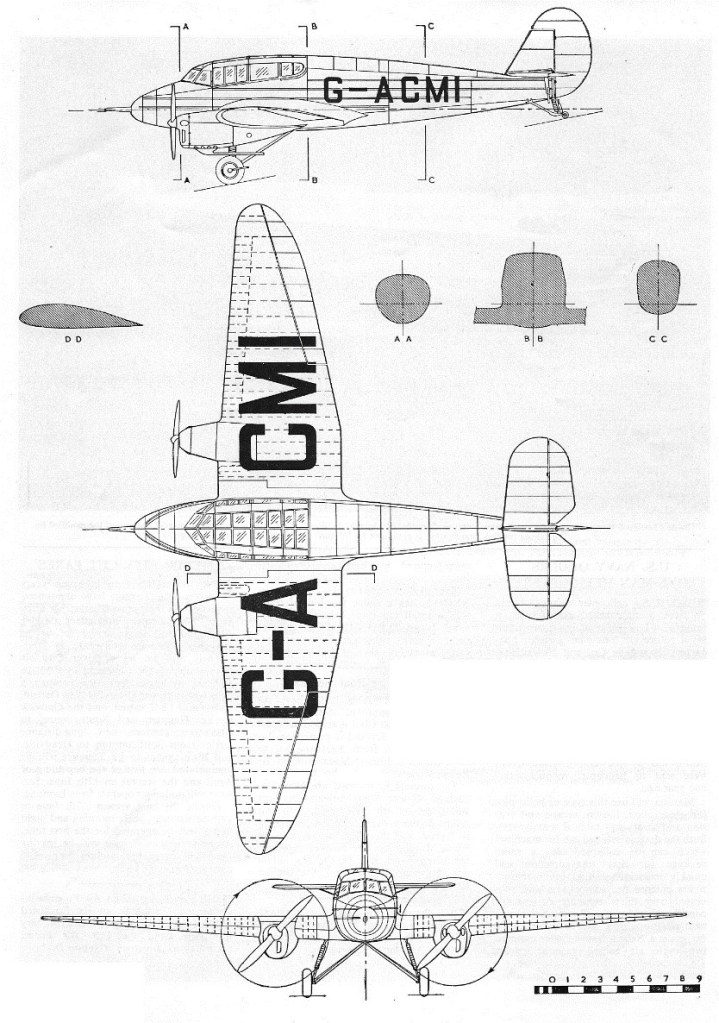
A fourth, G-ACMI, had an experimental Duncanson single-spar wing. This spar was hollow and carried fuel.
G-ACMI was powered by Gipsy Majors, the others having Gipsy III’s. G-ACMI was originally registered G-ABZJ for a time at the end of 1932 but never carried these letters.
Two were built by Piaggio as P.12s.

The Blackburn Kangaroo was originally designed as a naval reconnaissance and bomber seaplane in 1916, but was later converted to a landplane.
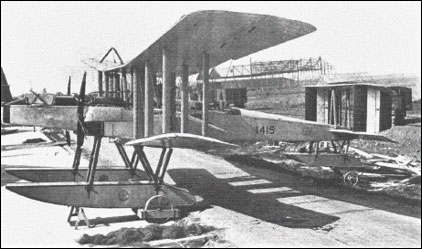
Two complete prototypes were produced, the first flying in July 1916. These prototype aircraft, known collectively as the Blackburn GP (“GP” for “General Purpose”), featured floats and were designed for use as anti-submarine aircraft
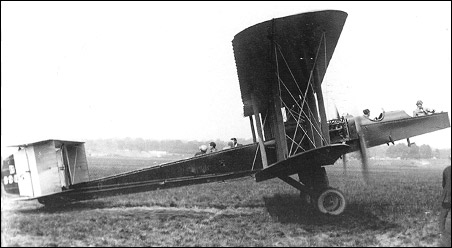
From this, a land-based version was developed as the Blackburn R.T.1 Kangaroo (Reconnaissance Torpedo Type 1). Despite the sub-par performance output of the Rolls-Royce Falcon II series engines (250 horsepower), the Royal Air Force deliveries began sometime in January of 1918 with units made combat-ready the same year. After the sixth production aircraft was complete, an attempt to boost performance was made with the introduction of the Rolls-Royce Falcon III engines developing 270 horsepower each.
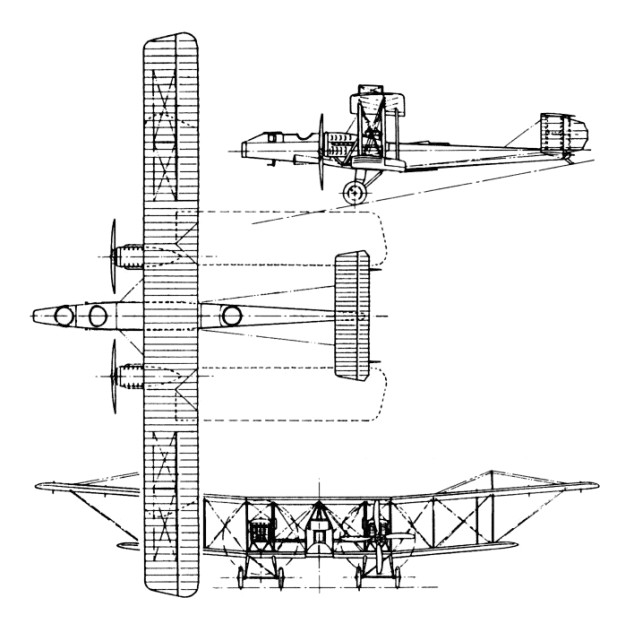
Externally, the Kangaroo featured a long box-type straight fuselage. A crew of three was positioned about the forward portion and consisted of the pilot in the center cockpit, a gunner in the forward cockpit and a rear gunner in the far aft cockpit. All three positions were separated from one another. The fuselage was straddled by two engines with either a two- or four-blade propeller. The undercarriage was fixed and featured individual two-wheel bogie front landing gear systems and a tail skid. The main landing gears were positioned just under the engines. Wings were biplane and featured three bays with parallel struts and associated cabling. The wings were of an unequal span. The wings – outboard of the engines – could be swiveled back via hinges and folded against the tail section. The long empennage was fitted with twin vertical tail fins and horizontal plane.
10 were issued to No 246 Squadron (the only unit to operate the type) at Seaton Carew, on the Durham coast, from January 1918. Operations began on 1 May, the Kangaroos flying more than 600 hours on anti-submarine patrols over the North Sea between then and 11 November. During that time they were credited with 12 U-boat sightings and 11 attacks, one of which, on 28 August, resulted in the shared destruction of UC 70 with the destroyer HMS Ouse.
After the war, Kangaroos were used in limited numbers as dual-control trainers up to 1929, when the aircraft was officially retired from service. Several also made their way into the civilian passenger market for a time, ferrying up to 8 people.
The Blackburn Kangaroo was operated exclusively with No. 246 Squadron of the British RAF as well as the Peruvian Army Flying Service. Only 20 of the type were ultimately produced.
Performance from the twin Rolls-Royce Falcon III liquid-cooled, V-12 270 horsepower engines netted a maximum speed of 98 miles per hour with a range out to 487 miles. A rate-of-climb of 480 feet per minute was possible as was a service ceiling of 12,992 feet. As a bomber the Kangaroo could call upon up to 920lbs of ordnance. Self-defense was handled by two 7.7mm Lewis-type machine guns, one mounted in the forward cockpit and the other in the rear cockpit.
Engine: 2 x 255hp Rolls-Royce Falcon II 12-cylinder inline engines
Take-Off Weight: 3636 kg / 8016 lb
Wingspan: 22.82 m / 74 ft 10 in
Length: 14.02 m / 45 ft 12 in
Height: 5.13 m / 16 ft 10 in
Max. Speed: 161 km/h / 100 mph
Ceiling: 3200 m / 10500 ft
Armament: 2 x 7.62mm, 450kg of bombs
Crew: 4
Engines: 2 x Rolls-Royce Falcon III V-12, 270hp each.
Length: 44.16ft (13.46m)
Width: 74.87ft (22.82m)
Height: 16.83ft (5.13m)
Maximum Speed: 98mph (158kmh; 85kts)
Maximum Range: 487miles (784km)
Rate-of-Climb: 480ft/min (146m/min)
Service Ceiling: 13,000 ft (3,960m)
Armament:
1 x 7.7mm Lewis machine gun in forward cockpit
1 x 7.7mm Lewis machine gun in rear cockpit
Bombload: 920lbs
Accommodation: 3
Hardpoints: 1
Empty Weight: 5,284lbs (2,397kg)
Maximum Take-Off Weight: 6,288lbs (2,852kg)
1916
Engine: 2 x 150hp Sunbeam Nubian or 190hp Rolls-Royce water-cooled in-line engine
Take-Off Weight: 3904 kg / 8607 lb
Empty Weight: 2651 kg / 5844 lb
Wingspan: 22.81 m / 74 ft 10 in
Length: 14.02 m / 45 ft 12 in
Height: 5.13 m / 16 ft 10 in
Wing Area: 81.75 sq.m / 879.95 sq ft
Max. Speed: 156 km/h / 97 mph
Ceiling: 3353 m / 11000 ft
Armament: 2 x 7.7mm machine-guns, 4 x 100kg bombs or a torpedo