CAMS 55

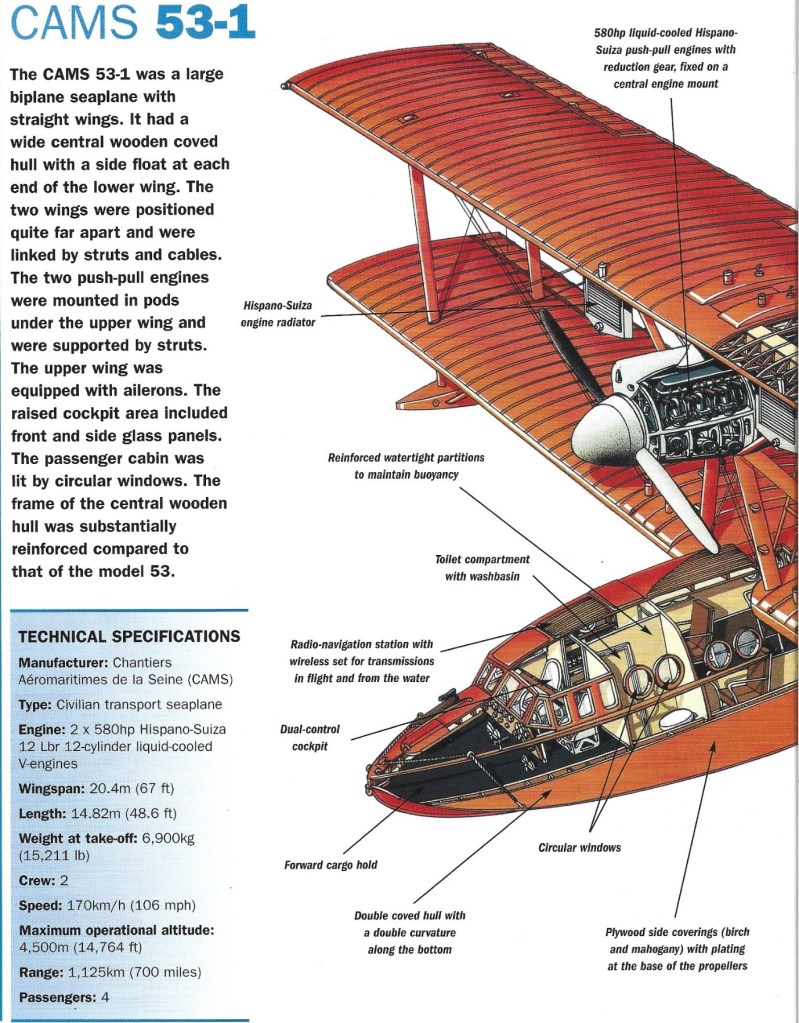
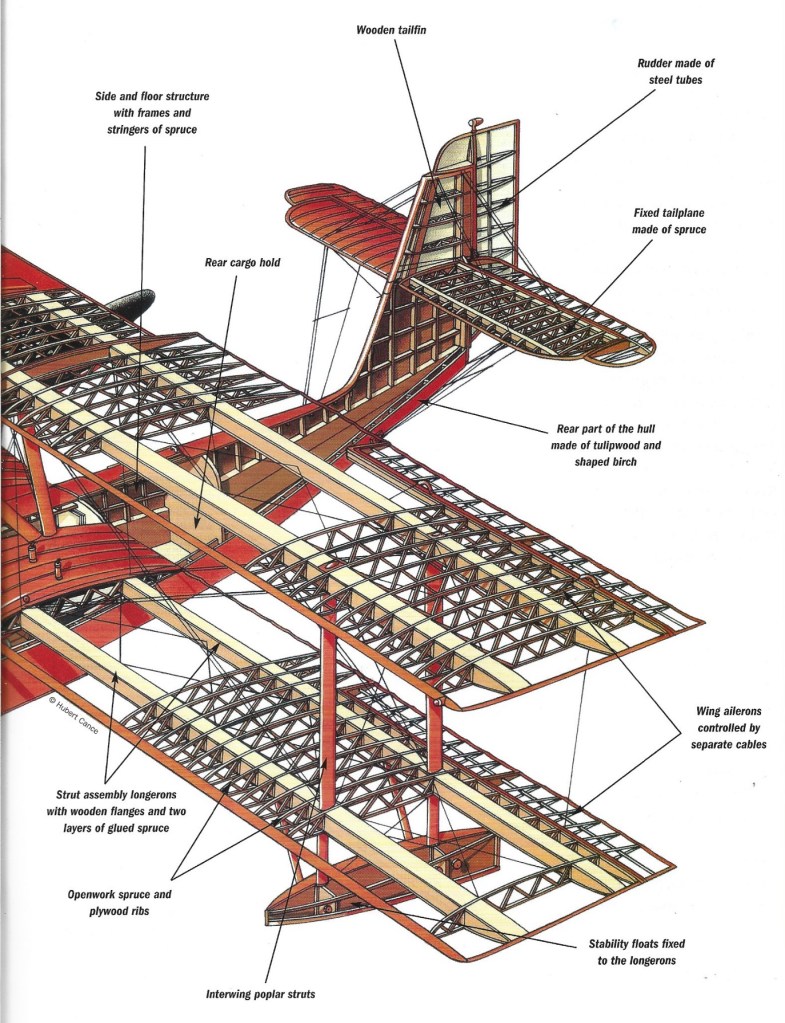
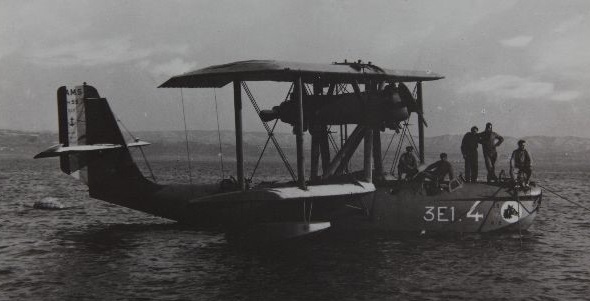
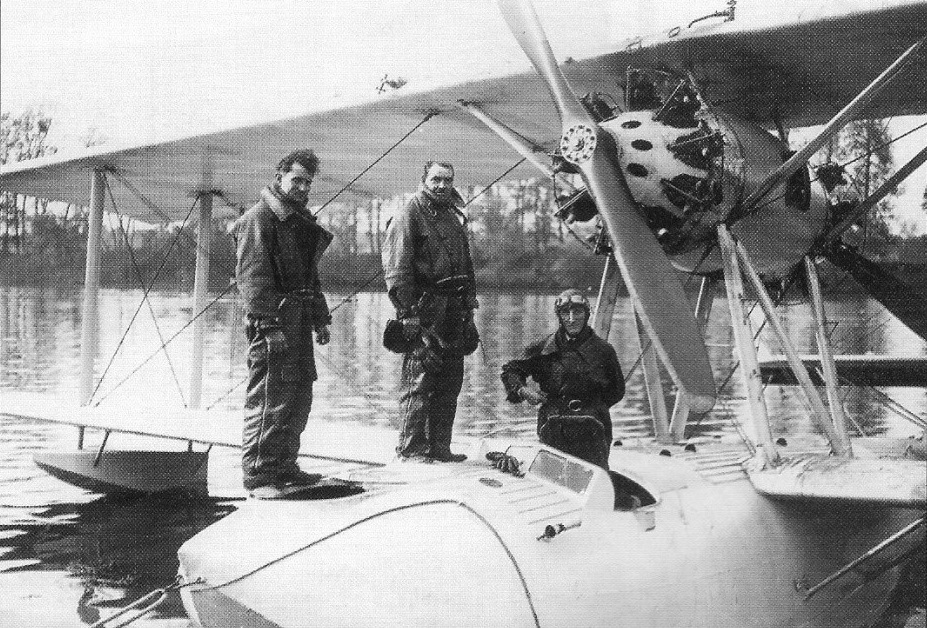
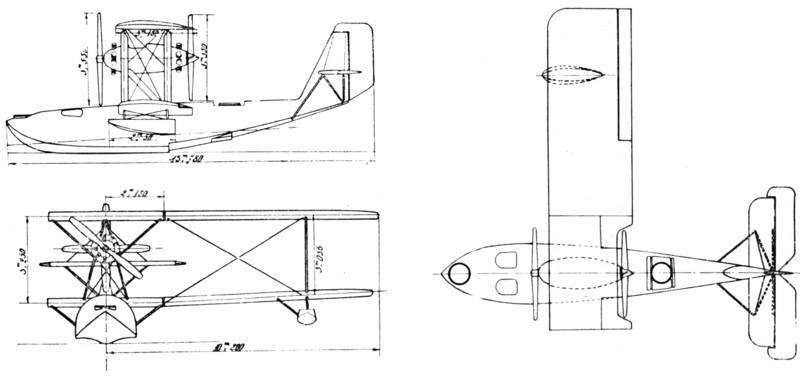
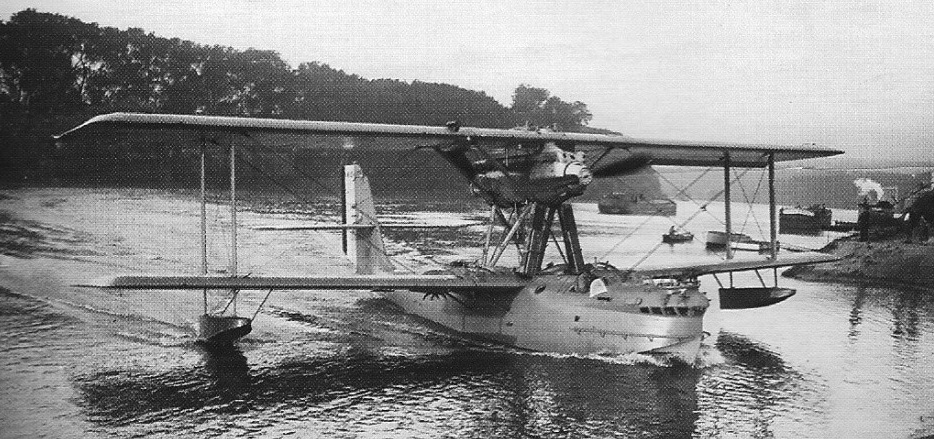
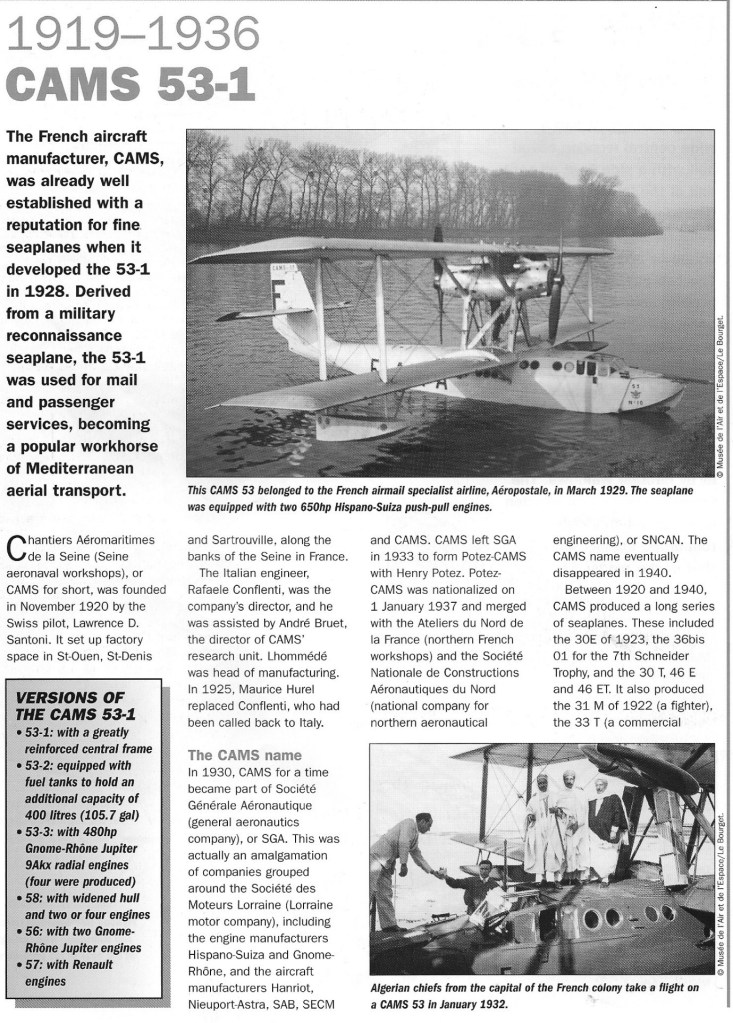
The CAMS 55 design was derived from the unsuccessful CAMS 51 and followed the familiar Chantiers Aéro-Maritimes de la Seine (CAMS) formula of a conventional biplane flying boat configuration with tandem tractor-pusher engines mounted in the interplane gap. The cockpit was open, and there were open gun positions in the bow and amidships. The bow also incorporated an observation balcony with windows sloped to afford a good downward view.
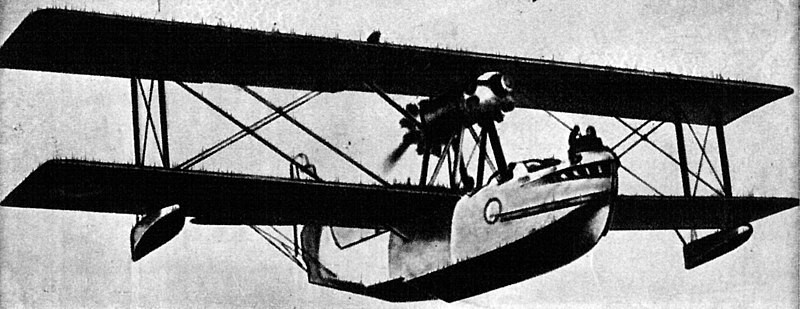
A single prototype was followed by two aircraft to compare different engine installations, one with air-cooled radials and the other a liquid-cooled V engine; in the end, the French Navy ordered some of each. Eventually, 15 escadrilles were equipped with CAMS 55s of various subtypes, replacing the Latham 47 in some units, and in turn being relegated to secondary duties when the Breguet Bizerte became available in 1936. Twenty-nine remained in service at the outbreak of World War II, with the last examples serving with Escadrille 20S in Tahiti until January 1941.

Variants:

55.001 – prototype with Hispano-Suiza 12Lbr engines (one built).

55J – engine test version with Gnome et Rhône licence-built Bristol Jupiter engines (two built).

55H – engine test version with Hispano-Suiza 12Lbr engines (two built).

55/1 – production version with Hispano-Suiza 12Lbr engines (43 built).

55/2 – production version with Gnome et Rhône licence-built Bristol Jupiter engines (29 built).

55/3 – version with all-metal hull for French Navy requirement for long-range flying boat. Prototype destroyed early in test programme (one built).

55/6 – version with all-metal hull and floats, saving 400 kg (882 lb) of structural weight; deemed too expensive to produce (one built).

55/10 – version with geared Gnome et Rhône Jupiter engines and increased fuel tankage (32 built, including four tropicalised machines).
Powerplant: 2 × Gnome et Rhône 9Kbr, 370 kW (500 hp) each
Propeller: 4-bladed fixed pitch
Wingspan: 20.4 m (66 ft 11 in)
Wing area: 113.45 m2 (1,221.2 sq ft)
Length: 15.03 m (49 ft 4 in)
Height: 5.41 m (17 ft 9 in)
Empty weight: 4,590 kg (10,119 lb)
Gross weight: 6,900 kg (15,212 lb)
Maximum speed: 195 km/h (121 mph, 105 kn)
Cruise speed: 150 km/h (93 mph, 81 kn)
Range: 1,280 km (800 mi, 690 nmi)
Service ceiling: 3,400 m (11,200 ft)
Rate of climb: 2.2 m/s (430 ft/min)
Crew: 4
Armament: 4 × trainable 7.5 mm (0.295 in) machine-guns
Bombload: 2 × 75 kg (165 lb) carried under lower wing

55/11 – long-range patrol version (one built).

55/14 – version with all-metal hull (one built).
CAMS 51

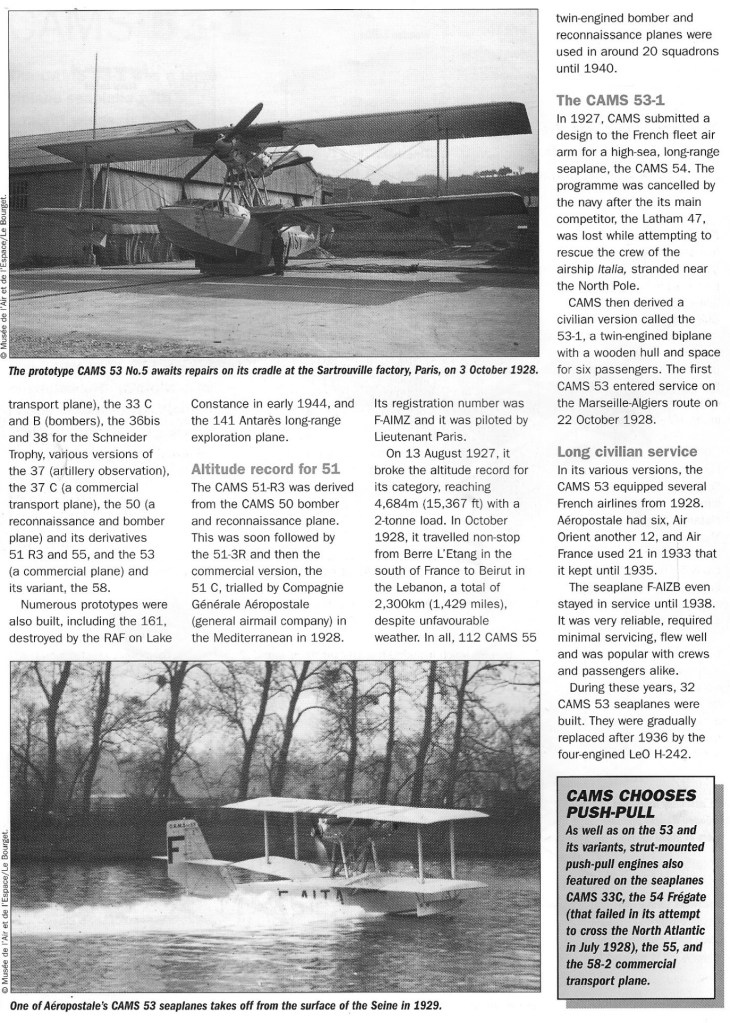
The CAMS 51 was a transport flying boat built in France in the mid-1920s. Designed by Maurice Hurel as a private venture by Chantiers Aéro-Maritimes de la Seine (CAMS), it was a conventional biplane with two radial engines mounted in a tractor-pusher installation in the interplane gap. The first flew in 1926.

One example (the 51C) was sold to Aéropostale, which used it for tests in preparation for transatlantic services.

CAMS also built a militarised version as the 51R3 in the hopes of interesting the French Navy in it as a reconnaissance aircraft, but no order was forthcoming.

A final aircraft was built as a record-breaking machine originally designated 51-3 R that broke the world payload-to-altitude record on 18 August 1927 by lifting 2,000 kg to 4,684 m (15,368 ft). This aircraft was later used as a pathfinder for French airmail routes to South America.

CAMS 51C
Powerplant: 2 × Gnome et Rhône 9Aa, 283 kW (380 hp) each
Wingspan: 20.40 m (66 ft 11 in)
Wing area: 115.0 m2 (1,237 sq ft)
Length: 13.78 m (45 ft 2 in)
Height: 5.00 m (16 ft 5 in)
Empty weight: 3,150 kg (6,945 lb)
Gross weight: 5,150 kg (11,354 lb)
Maximum speed: 200 km/h (125 mph, 109 kn)
Range: 100 km (620 mi, 540 nmi)
Service ceiling: 4,600 m (15,100 ft)
Crew: two
Capacity: four passengers

CAMS 51 R.3

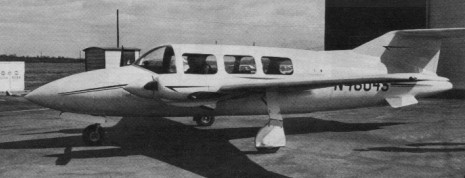
Camair Twin Navion

The Camair flew for the first time in 1953 and was designed to meet the requirements of the Cameron Iron Works. The company was so pleased with the results of the prototype (powered by two 225 hp Continentals) that it decided to produce similar conversions of the Navion single-engine airplane on a commercial
basis.

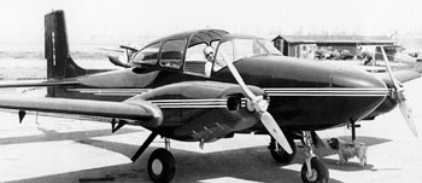
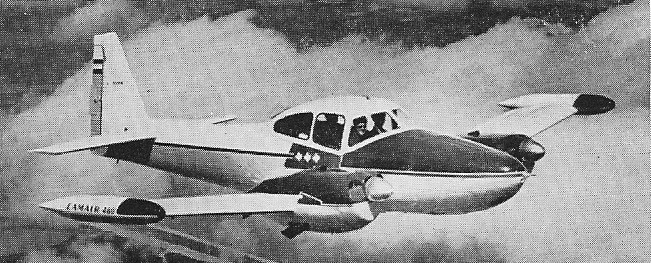
The designation Camair 480 indicates the combined power of the twin 240 hp Continental powerplants used in the production model. Starting with a North American/Ryan Navion, structural modifications were carried out to allow for the increased horsepower and weight of the two engines, while aerodynamic, comfort, and styling refinements were added, including increased fin and rudder area, a longer fuselage nose, and two 29 Imp.Gal wingtip tanks. Building of new aircraft was suspended; however, the Camair Aircraft Corp. continued to supply spare parts to Twin Navion owners.

Camair 480

In all, four models were built: the Model A prototype with two 225 hp Continentals, the Model B with twin 240 hp Continentals, the Model C with twin 260 hp Continentals, and the Model D with two 300 hp Continentals.

480
Engines: 2 x Continental O-470-B, 240 hp
Span: 34 ft approx.
Length: 27 ft 11 in
Empty weight: 2730 lb
Loaded weight: 3930 lb
Cruise 75 %: 192 mph
ROC: 1750 fpm
Service ceiling: 22,000 ft
Range: 900 mi

D
Engines two 300 hp fuel-injected Continentals
Gross wt. 4,500 lb
Empty wt. 3,000lb
Fuel capacity 188-200USG
Top 215 mph
Cruise 200 mph
Stall 60 mph
Initial climb rate 2,000fpm
Ceiling 22,000ft
Range 900sm
Takeoff run 400ft
Landing roll 600ft
Seats 4

Call 1908 Mayfly

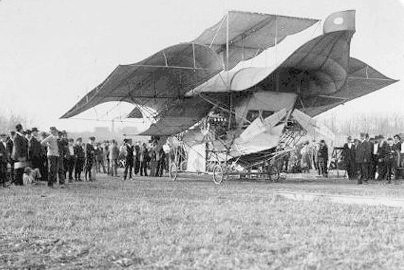
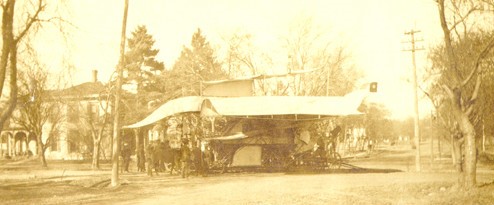
Henry Laurens Call was a writer, a member of the American Association for the Advancement of Science and the designer of this huge, complicated craft, which was powered by two 20hp Curtiss engines, spanned 41 feet and weighed 3,000lbs. It was intended to transport several passengers in the air, on water and on roads, with hot food and all kinds of comfort. However, Call stated that there were too many trees in Girard, Kansas where it was built, and the roads were not very good, so he was never been able to get up a speed of more than 18 miles per hour, rather than the thirty miles an hour he claimed was necessary for the ship to rise in the air.

Butterworth Westland Whirlwind  

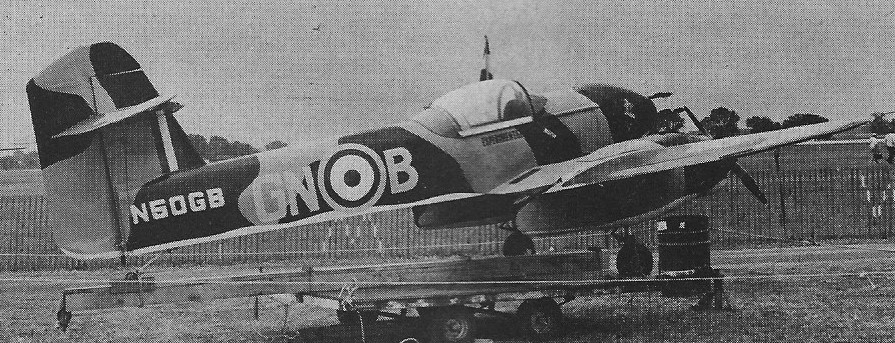
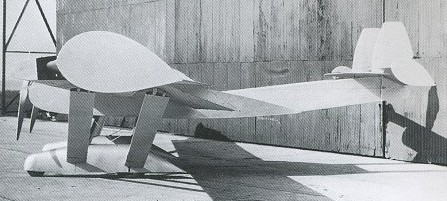
The Butterworth Westland Whirlwind was a 2/3 scale flying replica of the British Westland Whirlwind fighter aircraft of World War II that was built in the United States in the 1970s.

The aircraft was based on the wings and horizontal tail of a Grumman American AA-1A modified and mated to an all-new fuselage. Power was provided by two Volkswagen air-cooled horizontally opposed four-cylinder engines with the result bearing only a passing resemblance to the real Whirlwind.

First flying in July 1977, Butterworth marketed plans in the late 1970s and early ’80s, with at least 15 sets selling and at least three aircraft reportedly under construction by 1985.

Butterworth Westland Whirlwind
Engines: 2 × Volkswagen, 65 hp (49 kW) each
Wingspan: 28 ft 0 in (8.53 m)
Length: 19 ft 6 in (5.94 m)
Height: 7 ft 1 in (2.16 m)
Empty weight: 1,042 lb (472 kg)
Gross weight: 1,400 lb (635 kg)
Maximum speed: 145 mph (233 km/h, 126 kn)
Range: 700 mi (1,126 km, 610 nmi)
Service ceiling: 8,000 ft (2,440 m)
Crew: One pilot

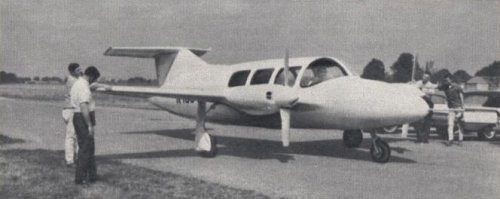
Burns BA-42

Burns Aircraft Co began development in 1964 of high-performance 6/8- seat business aircraft powered by two Continental flat-six engines. The prototype Burns BA-42 flew for the first time on 28 April 1966.
It was claimed that the Burns, thanks to superior aerodynamic refinement, would do on two 210 hp engines anything the Cessna 310 would do on two 260s. On closer examination, you discovered that when the Burns’ lighter weight and lower payload were taken into account, it would not.

Engines: 2 x Continental IO-360D, 210 hp
Propellers: constant-speed MacCauley
Wingspan: 8.7 m
Length: 9.75 m
Height: 2.3 m
Maximum weight: 1950 kg
Empty weight: 1086 kg
Maximum speed (sea level): 375 km/h
Cruise speed (at 3000 m altitude and with 75% of power): 275 km/h
Range (with 75% of power): 1450 km

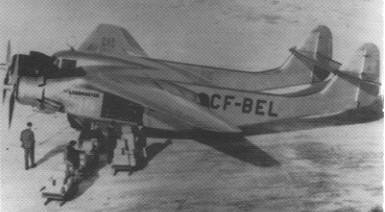
Burnelli CBY-3 Loadmaster / Canadian Car & Foundry CBY-3 Loadmaster

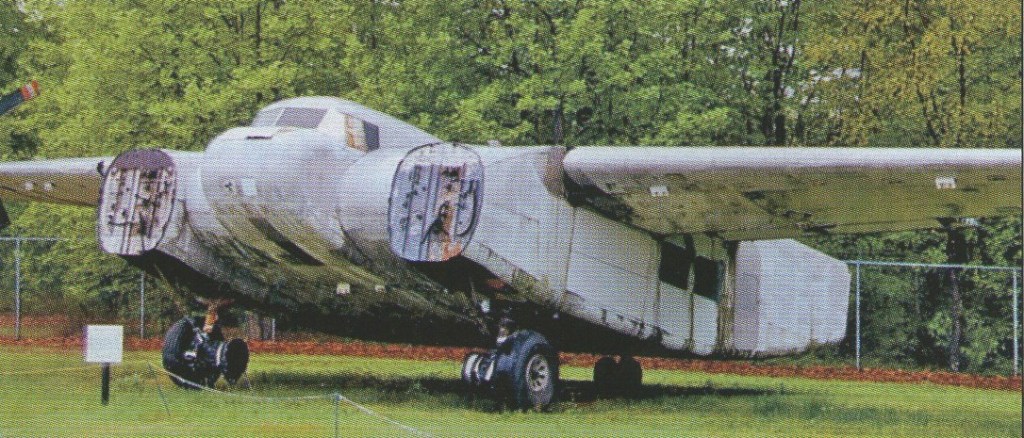
Can Car had a new aircraft it hoped would give the company access to the larger transport aircraft market. Cancargo Aircraft Manufacturing Co Ltd, a wholly owned subsidiary of the Canadian Car & Foundry Company was formed about 1950 to build the Burnelli Loadmaster transport. This was the CBY 3 Loadmaster, the brainchild of V J Brunelli, a long time advocate of the lifting fuselage as a means of increasing the efficiency of transport aircraft. The Brunelli design incorporated an aerofoil section fuselage between twin booms, which were extended forward to carry the engine nacelles and aft to carry the twin fins and rudders. The cockpit nacelle extended outwards from the fuselage between the engines and access to the freight or passenger compartments was by doors in each boom.


Although work was started on the CBY 3 in 1943 at Montreal, the prototype did not fly until late 1945. It proved to be overweight and underpowered with no obvious benefits to be derived from the lifting fuselage. An initial order of ten aircraft from Transportes Aereos Centro Americanos (TACA) of Nicaragua in passenger/cargo configuration was cancelled and despite numerous attempts over 12 years to sell the design, no further orders were forthcoming and the prototype made its last flight in 1959. It is now in the New England Air Museum at Windsor Locks, Connecticut, USA.
The rights in this aircraft were acquired in 1952 by Airlifts Inc. of Miami, and reverted eventually to Ballard Aircraft Corporation

Engines: 2 x Pratt & Whitney R-2000-2SD13G Twin Wasp
Wingspan: 86 ft
Length: 54 ft 7 in
Empty weight: 16,800 lb
Loaded weight: 27,000 lb
Max speed: 233 mph at 7500 ft / 208 mph at SL
Cruise: 193 mph at 10,000 ft
ROC: 1050 fpm
Range: 1200 mi

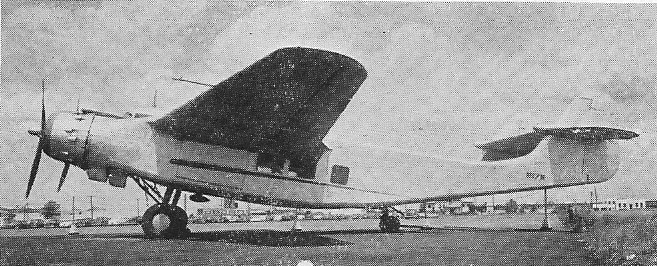
Burnelli CB-16 / Uppercu-Burnelli Aircraft Corp CU-16

The CB-16 monoplane was built as an executive transport for banker Paul W. Chapman and was designed by Vincent Burnelli. The design of Burnelli’s first monoplane embodied his ‘lifting body’ techniques, which involved a more extensive blending of the fuselage with the wing to provide greater lift – and accident survival. The high-wing, open-cockpit CB-16 is also notable for being the first multi-engined aircraft capable of single-engined operation, and possesses a retractable landing gear and an all-stressed metal design. Despite its promising nature and Burnelli’s ideas, the CB-16 was lost due to a maintenance error.

Engine: 2 x 371kW Curtiss Conqueror
Crew: 2
Passengers: 20
Wingspan: 27.40 m / 89 ft 11 in
Length: 14.00 m / 45 ft 11 in
Cruise speed: 185 km/h / 115 mph
Range: 1287 km / 800 miles