Aerocentre NC.1080

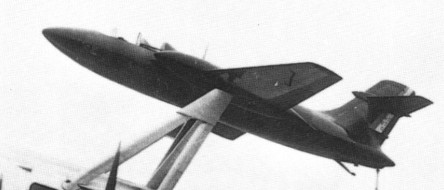
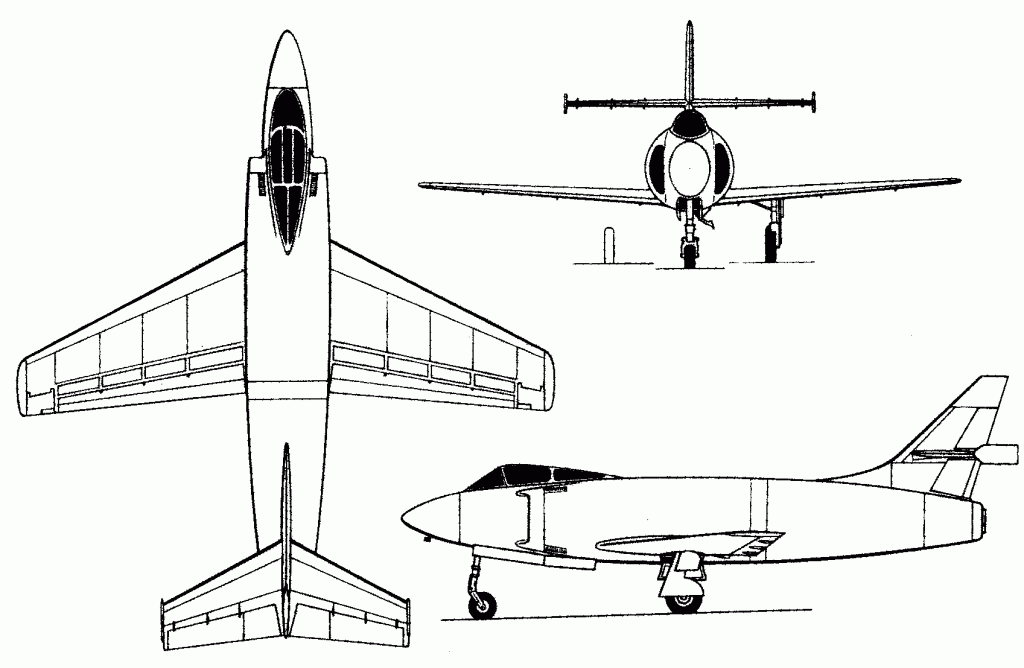
In June 1946, the Service Technique Aeronautique issued a preliminary requirement for a shipboard fighter armed with three 20mm or 30mm cannon and capable of carrying two 500kg bombs or eight 90mm rockets. Responding to this requirement, the SNCA du Nord tendered the Nord 2200, in competition with the Aerocentre NC 1080 and the Arsenal VG 90.

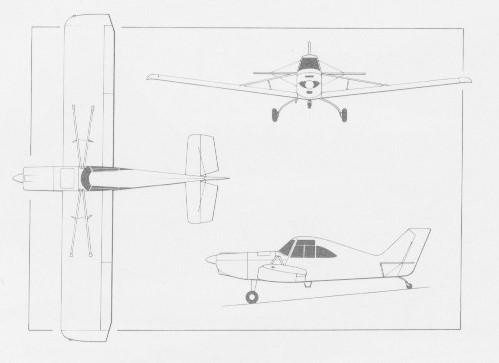
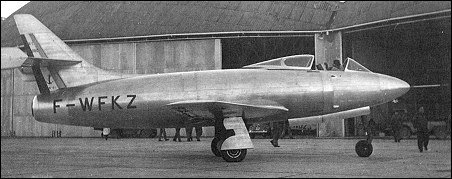
Designed under the direction of Ingenieur Pillon and built by the SNCA du Centre (Aerocentre), the NC 1080 was powered by a 2268kg Rolls-Royce Nene turbojet, featured 22 deg 30 min wing sweepback at quarter-chord and was intended to mount an armament of three 30mm cannon.
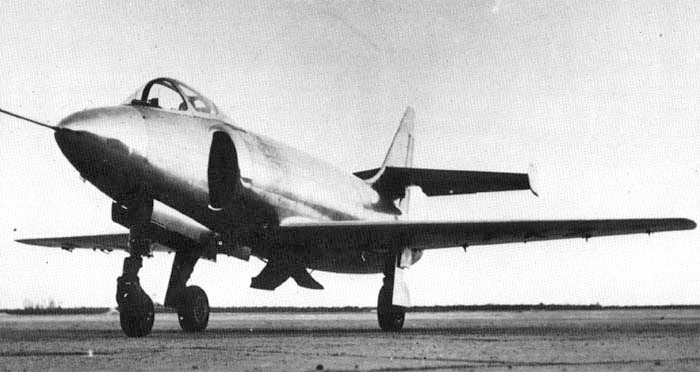
The prototype was flown on 29 July 1949, and modifications were immediately found necessary to the spoilers and tail surfaces. The Aerocentre had meanwhile been dispersed, but testing of the NC 1080 continued at Bretigny and Villaroche, servo controls being fitted in February-March 1950, and the aircraft being destroyed in an accident (the cause of which was never ascertained) on 10 April. No further development was undertaken.

Max take-off weight: 7700 kg / 16976 lb
Empty weight: 5141 kg / 11334 lb
Wingspan: 12.00 m / 39 ft 4 in
Length: 12.87 m / 42 ft 3 in
Height: 4.70 m / 15 ft 5 in
Wing area: 28.40 sq.m / 305.69 sq ft
Max. speed: 978 km/h / 608 mph
Range: 1550 km / 963 miles
Aerocentre NC.853 / NC.854 / Nord NC.853 / NC.854 / NC.858 / NC.859

The NC.859 of 1947 and NC.851 were developed into the NC.853.

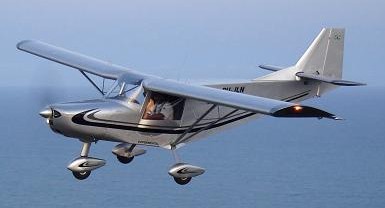
The NC.853 was a two-seat light monoplane powered by a 56kW Minie 4DC-32 engine, first flying on 15 March 1948.

100 NC.853s were produced for the Service d l’Aviation legere.

S.N.C.A.N. NC 858 S

Designed by the S.N.C.A. du Centre, production of the NC.853S two-seater was taken over in 1949 by S.N.C.A. du Nord.

From it were developed the 48kW Continental A65-powered NC.854, the four-seat NC.856 (78kW Walter), NC.858 (90 hp Continental C90-F), and NC.859 (105 hp Walter Minor 4-III). All are generally similar apart from the engines.

NC.853S

Gallery

NC.853
Engine: 56kW Minie 4DC-32A/B

NC.853S
Engine: 75 hp / 56kW Minie 4DC-32
Wingspan: 36 ft 11 in
Wing area: 166.2 sq.ft
Length: 22 ft 5 in
Height: 6 ft 10 in
Empty weight: 800 lb
Loaded weight: 1320 lb
Max speed: 102 mph
Cruise: 87 mph
Service ceiling: 11,480 ft
Range: 310 mi
Seats: 2

NC.854
Engine: 48kW Continental A65

NC.858
Engine: 90 hp Continental C90-F

NC.859
Engine: 105 hp Walter Minor 4-III

Aerocentre NC.271

NC.270.01

Planned shortly after the end of WW2, as a jet powered NC.270 bomber with two Rolls-Royce Nene turbojets, the airframe of this light bomber was based on curved lines with flying surfaces (including a T-tail) of modest sweep. Power was provided by two engines located in the wing roots, and the design envisaged an 11,023-lb (5000-kg) bombload carried internally plus a defensive armament of four 15-mm cannon in a TV-controlled tail barbette. Validation of the design was entrusted to a pair of reduced-scale machines, the engineless NC.271-01 and the rocket-powered NC.271-02. The NC.271-01 flew in 1949 (air-launched from a piggyback position above a Languedoc transport aeroplane), but before the NC.271-02 could be flown later in the same year the parent company folded and the whole NC.270 programne was terminated.

Aerocat Aerocat

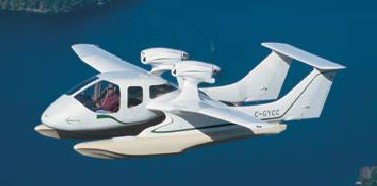
Aerocat co-designer Kirk Creelman has been working in the field of Composite Aircraft Design for over a quarter century and the Aerocat marks the culmination of his experience with composite design, form, flow and function.
With rivetless seams, a low-drag coefficient and retractable gear, the Aerocat is a four-place aircraft on the kitplane market. The cabin measures 59″ wide across the pilots chairs and 63″ wide across the passenger and baggage area. This aircraft capable of a 180 mph cruise (at 55%) with either twin 135 hp Jabirus or 250 hp turbocharged engine. Range at 55% Cruise is a 1,100 nm.
Aerocat Amphibian also offers the multi-platform concept, designed to house a single or twin configuration, and a purchase option which may or may not include floats. All Aerocats come off the production line with a “Floats-Capable” airframe.
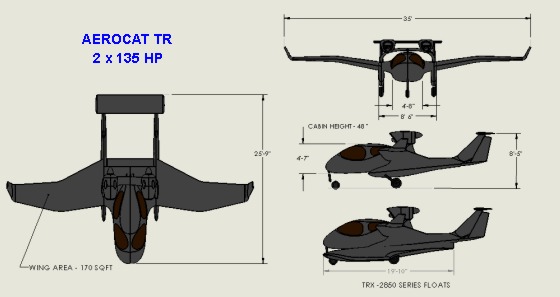
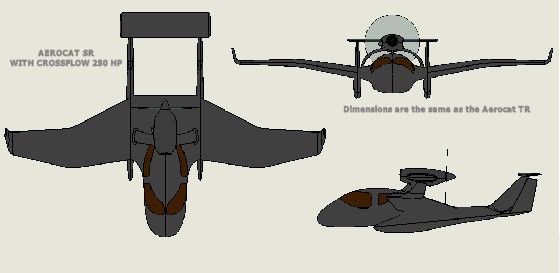
The design is by co-designers Y.C. Cheng and Kirk Creelman. They devised an airframe that could accommodate a choice of twin or single powerplant options. The power arch configuration allows for a single 210 to 300 HP engine mounted in the middle of the arch or the twin 135 Jabiru Option mounted on each side of the arch.
The pusher type propulsion mounted high on the arch also serves to keep the props high and dry for on-water applications.

Aerocat TR
Engine: 2 x Jabiru 3300 EFI, 135 hp
Max Gross Weight: 2700 lbs
Standard Empty Weight: 1600 lbs
Useful Load: 1100 lbs
Usable Fuel Capacity: 68 USG/260 lt
Full Fuel Payload: 680 lbs
Takeoff: 450 ft
Takeoff (50 ft object): 550 ft
Climb rate: 1200 ft/min
Stall Speed with Flaps: 50 mph
Cruise Speed (75% Pwr): 180 mph
Cruise Range with Res: 900 nm
Max Range (55% pwr): 1000+ nm
Landing Ground Roll: 450 ft
Landing over 50′ Object: 550 ft

Aerocat SR
Engine: Crossflow CF4-20THO, 250 hp
Takeoff: 450 ft
Takeoff (50′ object): 550 ft
Climb rate: 1200 ft/min
Stall Speed with Flaps: 50 mph
Cruise Speed (75% Pwr): 185 mph
Cruise Range with Res (55% Pwr): 900 nm
Landing Ground Roll: 450 ft
Maximum Range (55% power): 1000+ nm
Landing over 50′ Object: 550 ft
Maximum Gross Weight: 3000 lbs
Standard Empty Weight: 1750 lbs
Useful Load: 1250 lbs
Usable Fuel Capacity: 68 gal/260 Lt
Full Fuel Payload: 840 lbs

Aero Caproni Trento F5

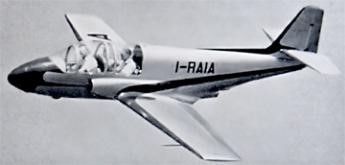
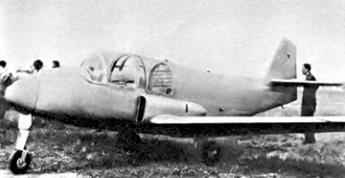
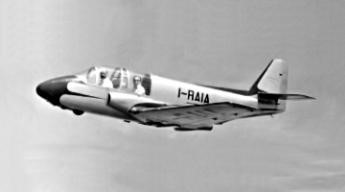
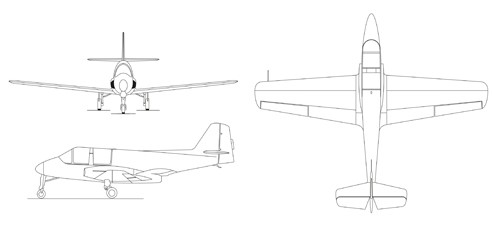
Postwar Caproni released the F5 in its new identity”Aero Caproni Trento”. It is a small low-wing monoplane, tandem two-seater.

An all wood, simple structure, the air inlets have been designed so they do not interfere with the wing. The Caproni F-5 is a cantilever monoplane, with the lower surface flush with the ventral surface of the fuselage.

The fuselage shell is oval section and single box, covered with birch plywood. The fuselage is in two parts; the first comprises the cockpit (two seats in tandem) and supports the front leg of the undercarriage; the second contains the engine and the empennage. The two sections are joined by bolts. The tail is cantilever.

The landing gear is a retractable tricycle. The front has oleo-pneumatic damping, with steering controlled by the rudder. This wheel retracting rearward. The main gear has oleo- pneumatic damping, with hydraulic brake swingarm (the hinge rotates around the wing spar). The landing gear retraction is mechanical ; it is effected by means of a crank attached to the right front position.

The first flight was performed by test pilot Ernesto Zanlucchi on 17 May 1952 on the Milan Malpensa airport.

The same day as the first flight, Zanlucci and Vico Rosaspina, flew a range of acrobatics including looping and incipient spin.

The first tests made it possible to record the maximum ground speed at 360 kph, and at 3,000 m the F5 reached 315 km.h.

During the test dive conducted at 3,000 m, having two people on board, 520 km / h were reached without showing any vibration

Gallery

Engine: Turbomeca Palas, 150 Kgp
Wingspan: 7.65 m
Length total: 6.625 m
Height: 6.2 m
Wing area: 10 m²
Empty weight: 490 Kg
Max weight: 750 Kg
Max speed: 360 km
Range: 300 km
Ceiling: 8000 m
Time to 3,000 m: 11 min
Landing distance clean: 241 m
Landing distance flaps & brakes: 154 m

AeroCad AeroCanard

A development of the CO-z Development Cozy, the AeroCanard is a 4 seat canard type aircraft with a Lycoming LIO-360 engine. It has a 1000-mile range and typically cruises at over 200 mph on less than 10 gallons per hour. The AeroCanard FG can be built from just the plans only or is also available as a complete quick build aircraft kit. The AeroCanard SB has a smaller body width at the front seats. The plans include instructions for building either aircraft. The AeroCanard is available as a “Plans Built” or complete quick build kit aircraft or as an option, purchasing as few or as many pre-fabricated fiberglass kit parts to help reduce the building time. The AeroCanard RG is effectively the FG model with an electrical retracting nose gear and electro-hydralic retractable main gear.
The AeroCanard-FG plans includes plans, CAD converted M-Drawings, and Section 3 – Pilot Operating Handbook and Flight Testing Manual.
The AeroCanard SX will have a forward opening canopy so both pilot and co-pilot can enter both sides of the fuselage. The top is the major change on the standard AeroCanard FG fuselage.
The wider turtleback, larger canopy and round rear windows have all been changed for more room in the fuselage. Builders can still change the rap-a-round canopy to a full bubble canopy just by cutting more of the fuselage top out or cut in a larger rear windows.

AeroCanard
Engine: Lycoming IO-360, 200 hp
HP range: 160-200
Speed max: 225 mph
Cruise: 205 mph
Range: 1000 sm
Stall: 68 mph
ROC: 1500 fpm
Take-off dist: 1000 ft
Landing dist: 1500 ft
Service ceiling: 25,000 ft
Fuel cap: 62 USG
Weight empty: 1200 lbs
Gross: 2150 lb
Height: 7.75 ft.
Length: 16.75 ft
Wing span: 28.1 ft
Wing area: 102.3 sq.ft
Seats: 4
Landing gear: nose wheel. Only nose wheel retractable.

AeroCanard FG
Engine: Lycoming IO-360, 200 hp
Hp range: 160-230
Max speed: 225 mph
Cruise: 205 mph
Stall: 68 mph
Range: 1000 sm
Roc: 1750 fpm
To dist: 800 ft
Ldg dist: 1500 ft
Fuel cap: 63.5 USG
Empty wt: 1200 lb
Mtow: 2150 lb
Useful Load Less Fuel: 950 lb
Fuel Useful: 63 USG
Fuel Tanks: No Switch/3.5 Gal Sump
Height: 7.8 ft
Length: 16.75 ft
Wingspan: 28.1 ft
Wing area: 102.3 sq.ft.
Seats: 4
Undercarriage: Nose/retractable
Type Seats Used: F/Bench R/Bench
Front Seat width: 42in
Rear Seat width: 39.5in
Head Room Width F/Seat: 38in
Speed Brake: Electric
Head Room Width R/Seat: 38in
Control Stick: 2 Side Sticks
Throttle Quadrant: Center
Brake Pedals (Adjustable): Both Sides 5in
Cockpit Heat: Nose Oil Cooler
Standard Main Wheels: 600-6
Nose Gear (Standard): Retrectable

AeroCanard RG
Engine: Lycoming IO-360, 200 hp.
Hp range: 160-230.
Max speed: 225 mph.
Cruise: 210 mph.
Stall: 68 mph.
Range: 1000 sm.
Roc: 1900 fpm.
To dist: 800 ft.
Ldg dist: 1500 ft.
Useable Fuel cap: 63 USG.
Useful Load Less Fuel: 950 lb
Fuel Tanks: No Switch/3.5 Gal Sump
Empty wt: 1150 lbs.
MTOW: 2150 lbs.
Height: 7.8 ft.
Length: 16.75 ft.
Wingspan: 28.1 ft.
Wing area: 102.3 sq.ft.
Seats: 4.
Undercarriage: Nose/ retractable.
Type Seats Used: F/Bench R/Bench
Rear Seat width: 39.5in
Head Room Width F/Seat: 38in
Front Seat width: 42in
Head Room Width R/Seat: 38in
Control Stick: 2 Side Sticks
Throttle Quadrant: Centre
Speed Brake: Electric
Brake Pedals (Adjustable): Both Sides 5in
Cockpit Heat: Nose Oil Cooler
Standard Main Wheels: 600-6
Nose Gear (Standard): Retractable

AeroCanard SB
Engine: Lycoming IO-360, 200 hp.
Hp range: 160-230.
Max speed: 220 mph.
Cruise: 200 mph.
Stall: 68 mph.
Range: 1000 sm.
Roc: 1500 fpm.
To dist: 1200 ft.
Ldg dist: 1500 ft.
Fuel cap: 52 USG.
Empty wt: 1150 lbs.
Mtow: 2050 lbs.
Useful Load less Fuel: 900 Lbs
Fuel Useful: 63 USG
Fuel Tanks: Selector/1.5 USG Sump
Height: 7.8 ft.
Length: 16.75 ft.
Wingspan: 28.1 ft.
Wing area: 102.3 sq.ft
Seats: 4.
Undercarriage: Nose/ retractable.
Front Seat: 42in
Rear Seat: 36in
Head Room Width F/Seat 36in
Head Room Width R/Seat: 36in
Engines Used: O-320 – IO-360
Control Stick: 2 Side Sticks
Throttle Quadrant: Centre
Brake Pedals (Adjustable): Both Sides 5in
Speed Brake: Electric
Standard Main Wheels: 600-6
Type Seats Used: F/Bucket R/Bucket
Nose Gear (Standard): Retrectable

AeroCanard Velocity FG
Empty Weight: 1300 Lbs
Gross Weight: 2250 Lbs
Front Seat width: 42.50″
Rear Seat width: 39.50″
Head Room Width Front Seat: 40.00″
Head Room Width Rear Seat: 38.00″
Engines Used: O-320 – IO-360
Control Stick: 1 Center Sick
Cockpit Heat: Nose Oil Cooler
Standard Main Wheels: 600-6 Single Puck
Useful Load Less Fuel: 950 Lbs
Fuel Useful: 65 USGal
Fuel Tanks: No Switch/5 Gal Sump
Nose Gear (Standard): Fixed

AeroCanard MKIV
Empty Weight: 1100 Lbs
Gross Weight: 2050 Lbs
Front Seat width: : 42.00″
Rear Seat width: 36.00″
Head Room Width Front Seat: 36.00″
Head Room Width Rear Seat: 36.00″
Engines Used: O-360
Control Stick: 2 Side Sticks
Cockpit Heat: Muff Off Exhaust
Standard Main Wheels: 500-5 Single Puck
Useful Load Less Fuel: 950 Lbs
Fuel Useful: 52 US Gal
Fuel Tanks: Selector/1.5 YSbGal. Sump
Nose Gear (Standard): Retractable

Aero Bravo Industria Aeronautica Bravo 700

The Bravo 700 is a two-seat civil utility aircraft manufactured by Aero Bravo in Brazil in both kit and ready-to-fly form. It is a high-wing monoplane of metal construction with fixed tricycle undercarriage and is classed as an ultralight under Brazilian aviation regulations. An agricultural version, the Bravo 700 Agrcola with spraying gear and a chemical tank with a capacity of 140 l (37 US gal) had been developed to flight-testing stage.

Engine: 1× Rotax 912, 60 kW (80 hp)
Wingspan: 9.0 m (29 ft 6 in)
Length: 6.58 m (21 ft 7 in)
Height: 2.1 m (6 ft 11 in)
Wing area: 13 sq.m (140 sq.ft)
Empty Weight: 270 kg / 595 lb
MTOW: 500 kg / 1102 lbs
Max speed: 190 km/h (119 mph)
Stall: 30 kt / 35 mph / 56 kmh
Cruise: 91 kt / 104 mph / 168 kmh
Service ceiling: 4,000 m (13,120 ft)
Rate of climb: 300 m/min (984 fpm)
Range: 840 km (525 miles)
Wing loading: 38 kg/sq.m (8 lb/sq.ft)
Power/weight: 0.12 kW/kg (0.07 hp/lb)
Crew: one pilot
Capacity: 1 passenger

Aero Boero AB.260 AG

Manufactured by Aero Boreo and first flown in December 1972 was the single seat AB 260 AG, Lycoming O 540 powered “fumigacion” aircraft for ag work. Built as a spray aircraft, it features a 500 litre spray capacity.

Engine: Lycoming O-540, 260 hp
Wingspan: 35 ft 9.25 in / 10.90 m
Length, tail up: 24 ft 5.25 in / 7.45 m
Empty weight: 1587 lb / 720 kg
MTOW: 2976 lb / 1350 kg
Ag tank capacity: 110 Imp.Gal / 500 lt / 1102 lb / 500 kg
Max cruise SL: 109 kt / 125 mph / 201 kph
Max ROC SL: 1345 fpm / 410 m/min
Service ceiling: 21,000 ft / 6400 m
Range max fuel: 377 nm / 435 miles / 700 km
Seats: 1

Aero Boero 210

A prototype Aero Boero 210 four seat light aircraft first flew in 1971.

Engine: Continental IO-360, 210 hp
Wingspan: 35 ft 2 in / 10.72 m
Length OA: 24 ft 3.25 in / 7.40m
Cabin length: 5 ft 8 in / 1.73 m
Cabin width: 3 ft 1 in / 0.94 m
Cabin height: 3 ft 11 in / 1.19 m
Cabin volume: 52 cu.ft / 1.50 cu.m
Empty weight equipped: 1477 lb / 670 kg
MTOW: 2425 lb / 1100 kg
Est. cruise 5900 ft / 1800m: 122 kt / 140 mph / 225 kph
Est. ROC SL 1180 fpm / 360 m/min
Est. Service ceiling: 19,675 ft / 6000 m
Seats: 4