Aerocomp Comp Air 6

First flown in January 1996, the Comp Air 6 featured seating for up to 6 people. It’s available with wheels (tricycle or tail-dragger), floats, or skis.
The Comp Air 6 is an efficient, economical cross-country cruising machine for pleasure or business. It will provide cruise speeds from 150 to 200 mph.

Comp Air 6
Engine: 220-300hp
Length: 24.5ft
Wingspan: 35ft
Height: 8ft
Cabin Width: 42.5in, 46in Widebody
Cabin Height: 53in
Seating Capacity: 4-6 place
Wing Area: 212 ft/sq
Wing Area Taper Wing: 178 ft/sq
Stall Speed: 39mph
Stall Speed Taper Wing: 53mph
Aspect Ratio: 5
Cruise: 160-190mph
Empty Weight: 1900lbs
Gross Weight: 3200lbs
Useful Load: 1300-1400lbs
Fuel Capacity: 80USG
Fuel Consumption: 12USG/hr
Max Range: 1000nm
G Loading: +4.5 / -2
Takeoff Distance: 750ft
Landing Roll: 750ft with braking
Cross Wind Landing: 17kts
Rate of Climb: 600-1800fpm

Comp Air 6
Engine: Franklin, 220 hp.
Speed max: 156 mph.
Cruise: 145 mph.
Range: 980 sm.
Stall: 43 mph.
ROC: 1700 fpm.
Take-off dist: 350 ft.
Landing dist: 375 ft.
Service ceiling: 18,000 ft.
Fuel cap: 82 USG.
Weight empty: 1490 lbs.
Gross: 2850 lbs.
Height: 8 ft.
Length: 25 ft.
Wing span: 34.5 ft.
Wing area: 212 sq.ft.
Seats: 6.
Landing gear: nose or tail wheel.

Comp Air 6 Widebody
Recommended Horsepower: 220 to 300
Height: 8ft
Length: 24ft
Wingspan: 35ft
Never Exceed (Vne): 257 mph (IAS)
Cruise Speed: 165 to 195 mph TAS
Stall Speed (mph IAS): 45-55 mph IAS
Takeoff Roll: 400 to 600 ft
Climb Rate: 600 to 1200fpm
Seats: 6
Gross Weight: 2850 lb (3200 or 3600 lb High Gross reinforcements available)
Empty Weight: 1500 to 2250 lb
Useful Load: up to1300 lb
Fuel Capacity: 60 USG std (120 USG option)
Cabin Width: 46″ or 47.5″ widebody options
Landing Gear: Tricycle or Tailwheel
Construction: Composite

Aerocomp Comp Air 4 (Comp Monster)

Comp Air supplies easy-to-assemble aircraft kits that use composite materials to achieve a strong, light-weight structure that, once bonded together, the fuselage becomes a single composite structure.
Exterior parts are delivered from the factory with a smooth shiny white gelcoat finish. The standard Comp Monster kit is designed to accept an engine from 150 to 180 hp. Higher power versions are also available.

Comp Monster
Engine: 150hp-180hp (250hp HP opt)
Length: 24.5ft
Wingspan: 35ft
Height: 8ft
Cabin Width: 42.5in, 46in Widebody
Cabin Height: 53in
Seating Capacity: 4 place
Wing Area: 212 ft/sq
Aspect Ratio: 5
Cruise: 140-160mph
Stall Speed: 39mph
Empty Weight: 1390lbs
Gross Weight: 2590lbs
Useful Load: 1000-1400lbs
Fuel Capacity: 60USG
Fuel Consumption: 8USG/hr
Maximum Range: 1000nm
G Loading: +4.5/-2
Takeoff Distance: 500ft
Landing Roll braking: 500ft
Cross Wind Landing: 17kts
Rate of Climb: 600-1200fpm

Engine: Lycoming O-360, 180 hp.
Speed max: 142 mph.
Cruise: 132 mph.
Range: 660 sm.
Stall: 42 mph.
ROC: 1200 fpm.
Take-off dist: 400 ft.
Landing dist: 550 ft.
Service ceiling: 16,000 ft.
HP range: 110-260.
Fuel cap: 52 USG.
Weight empty: 1350 lbs.
Gross: 2750 lbs.
Height: 8 ft.
Length: 26 ft.
Wing span: 35 ft.
Wing area: 212 sq.ft.
Seats: 4.
Landing gear: nose or tail wheel.

Engine: Lycoming O-360, 180 hp
Wing span: 10.67 m
Wing area: 19.5 sq.m
MAUW: 1247 kg
Empty weight: 612 kg
Fuel capacity: 197 lt
Max speed: 220 kph
Cruise speed: 212 kph
Minimum speed: 68 kph
Climb rate: 5 m/s
Seats: 4
Fuel consumption: 35 lt/hr
Kit price (1998): $23,900

Aero Concepts Discovery

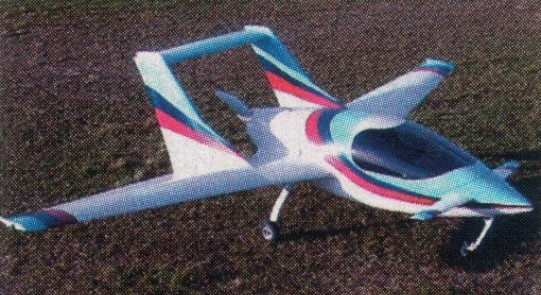
In the 1990’s, West Coast entrepreneur William Shaw and aeronautical engineer and aircraft designer Martin Hollmann, developed the three-wing design called Discovery. The carbon composite construction of the new Discovery is both strong and light, and the interior provides room and comfort for two, plus a baggage compartment. Originally designed as near 200 mph speedster, the Discovery has handling characteristics that will qualify it for the Light Sport Aircraft category (with factory speed reduction modifications).
The Discovery engineering team has used the three wing surface design to develop an airplane that is in both the high end experimental and the new LSA categories. “Three wing surface designs”, offer the best features of both conventional and canard winged airplanes. The high horizontal tail surface of the Discovery has efficient pitch control throughout the flight envelope and particularly at slower speeds. The small canard wing offers trim control and the safety advantage of slow speed stall resistance.

Engine: Lycoming O-360, 180 hp.
Hp range: 115-200.
Range: 810 sm.
Roc: 1500 fpm.
To dist: 800 ft.
Ldg dist: 1200 ft.
Fuel cap: 30 USG.
Empty wt: 860 lbs.
Mtow: 1620 lbs.
Length: 17.9 ft.
Wingspan: 30 ft.
Undercarriage: Nose / fixed.
Wing span: 30 ft.
Wing Cord (root): 4.91 ft.
Wing cord (tip): 3.16 ft.
Seating: 2 place (side by side)
Wing area: 125. sq. ft.
Wing aspect ratio: 7.44
Wing airfoil section: NASA (NLF-0215)
Wing loading (gross wt): 12.18 lb./sq. ft.
Carnard span: 7.9 ft.
Carnard chord (root): 1.33 ft.
Carnard chord (tip):.067 ft.
Carnard area: 7.90 sq. ft.
Carnard airfoil section: NASA (NLF-0215)
Carnard aspect ratio: 8.35
Horizontal tail span: 7.90 ft.
Horizontal tail chord: 2.00 ft.
Horizontal tail aspect ratio: 3.96
Horizontal tail area: 15.80 sq. ft.
Horizontal tail airfoil section: NASA (63218)
Length overall: 17.92 ft.
Fuel capacity: 30 USG
Wheel base: 71 in.
Max speed level flight sea level: 200 mph
Cruise 75% pwr: 170 mph
Stall speed (gross weight): 58 mph
Initial ROC at sea level: 1500 ft/min
Range @ 75% power (no res): 714 miles
Maneuvering speed: 135 mph
Never exceed speed: 240 mph
G-limits at gross weight: +6.4 / -3.2
Cabin width: 43.00 in
Cabin height: 39.00 in.
Baggage area: 24 cubic feet
Controls: Centre stick/dual controls

Aerochute Dual Deluxe

The Aerochute Dual is a two seater powered parachute designed specifically with safety and ease of operation in mind. The parachute is a 15 cell Ram Air canopy. It is 370 sq. ft. and made of a rip-stop nylon. The parachute is designed to be virtually stall or spin resistant. The engine is a Rotax 503 two stroke. It puts out 52hp. and is used with a 3 blade propeller. The fuel capacity is 30L which can give up to two hours flight time.

The Aerochute takes off from the ground with the parachute behind you. Once the engine is started the propeller blows the canopy up and the Aerochute takes off within 10 – 15m. Climbing and descending is controlled by using power through a foot throttle. Steering toggles (similar to parachutists) are used to turn left and right. Landing is achieved by backing the power off and flaring the parachute just above the ground.

Optional extras include tachometer 2″ 0-8000 rpm cdi, 2″ round dual cht, foot webbing, flight control sticks, front floor, and floor for sticks rear.

Gallery

Engine: Rotax 503 Dual Ignition, 52 hp
Propeller: IVO 3 Blade Composite
Empty Weight – airframe: 100 kg
Max Cockpit Wt: 200 kg
Wing Area: 367 sq.ft
Fuel Capacity: 29 lt
Endurance: approx 2 hr
Fabric: Rip Stop Nylon
Glide ratio: 4.5: 1
Sink Rate: 9.8 ft/sec
Wing Span: 35 ft
Wing Chord: 10.5 ft
Wing Load: 1.8lb/sq.ft
Undercarriage: 8″ Rear Wheels
Speed: 60-70 kph
VNE: 45 mph
Max Wind: 15 kts
Rate of Climb: 1000 fpm solo
Max Temperature: 40 C
Takeoff Roll: 10 – 15m
Noise Level: 76 dB
Max. cross wind: 5 knots.
Rigging time: 5-10 minutes

Aerochute

Aerochute Industries Pty Ltd was founded in 1989 by Stephen Conte, who, in conjunction with brother John developed the Aerochute Dual Seater which was specifically designed for customer satisfaction and safety.
The company first introduced the concept of the powered parachute into Australia in early 1989 as a single seat model. Since then development and design changes have led to the Aerochute Dual Seater. The company is engaged in the design, manufacture and construction of the Aerochute which it fabricates from raw materials into the parts needed to manufacture the finished product.
The Aerochute has been approved by the Civil Aviation Safety Authority of Australia. The company is an accredited training organisation for powered parachutes in Australia, and provides backup of spare parts and knowledge of the product.

March 1999

2001: Located in Melbourne, Australia.
2007: 12 Acheson Place, North Coburg, Victoria 3058, Australia

Aerochia LT-1

The LT-1 was designed by a surfboard maker who worked with Reno air racing champion Darryl Greenamyer on some of the pilot’s most recent composite airplanes. They expect the plane, which has a 21-foot wingspan, to have a maximum weight of less than 800 pounds and burn just three gallons per hour at cruise speed.

In development a few years, the Aerochia LT-1 carbon-fiber composite fuselage is powered by a two-cylinder, four-stroke HKS engine producing 60 horsepower. Aerochia expects to get speeds as great as 160 mph from the engine.

Aerocentre NC.3021 Belphegor

An experimental aircraft intended for high-altitude researches. The engine was a pair of DB605 coupled together to form a DB610 with an output of 2,950 h.p. which drove a single four bladed propeller. The crew of three occupied a pressure cabin with room for two observers.

The only prototype first flew on 6 June 1946. The engine overheated constantly and with money running out this one off only achieved some forty hours flying time before it was grounded and eventually scrapped.

Engine: 1 x 3000hp Daimler-Benz DB-610A piston engine
Take-off weight: 9971 kg / 21982 lb
Empty weight: 7367 kg / 16242 lb
Wingspan: 22.32 m / 73 ft 3 in
Length: 17.09 m / 56 ft 1 in
Height: 6.10 m / 20 ft 0 in
Wing area: 50.0 sq.m / 538.2 sq.ft
Max. Speed: 600 km/h / 373 mph
Ceiling: 13500 m / 44300 ft
Crew: 5

Aerocentre NC.2001 Abeille

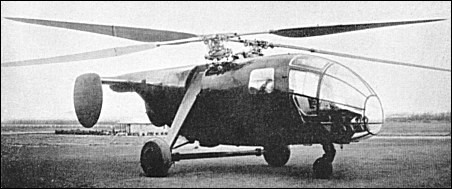
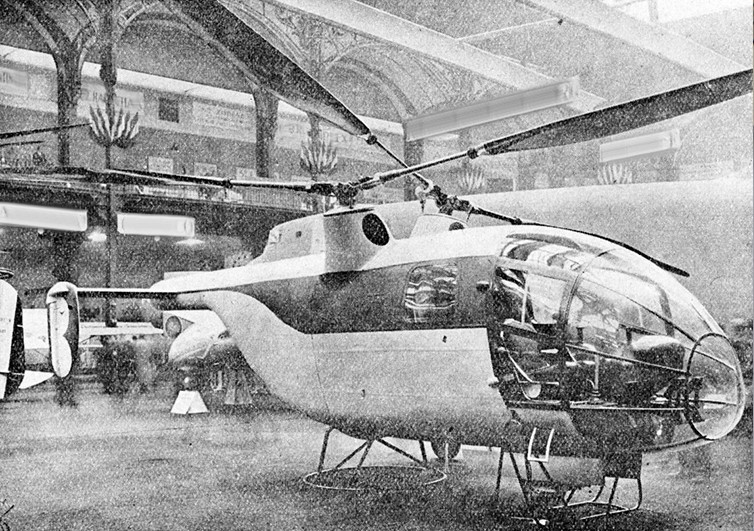
The Helicopter Division of SNCAC was established by Rene Dorand and designed and built three prototypes of the NC.2001 “Abeille” helicopter, the second of which was flown on 28 June 1949, following ground destruction of the first machine. It had twin inter-meshing two-blade rotors, an all-metal fuselage with an extensively glazed nose and accommodation for five people. The undercarriage was a fixed tricycle type and it had a tailplane with twin fins. The NC.2001 was powered by a 450hp Renault 12S00 piston engine. The project was discontinued on the dissolution of SNCAC in 1949 with only one flight having been made.

NC.2001
Engine: 1 x Renault, 335kW
Rotor diameter: 15.0m
Length: 9.7m
Max take-off weight: 2550kg
Max speed: 159km/h
Ceiling: 4880m