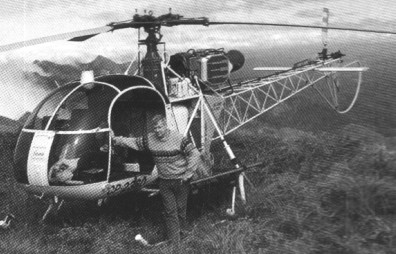
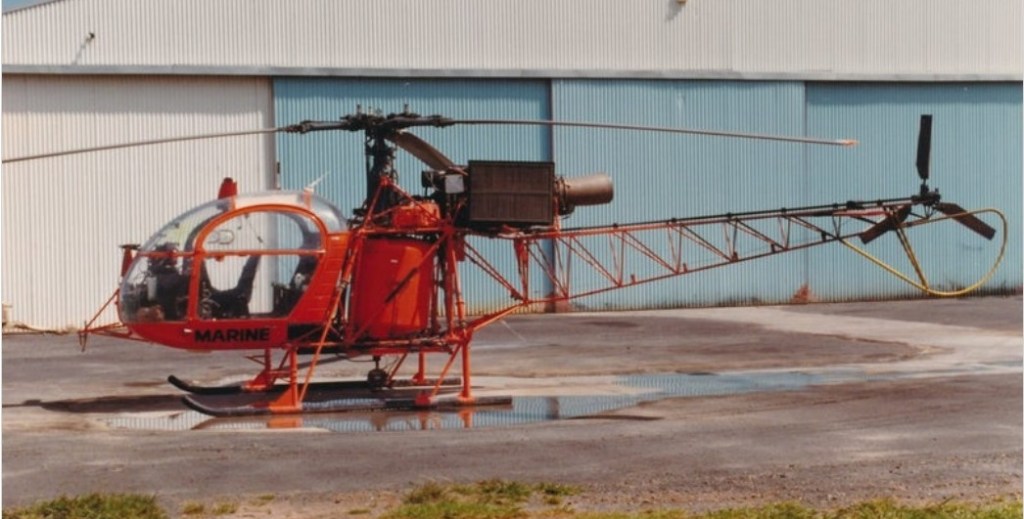
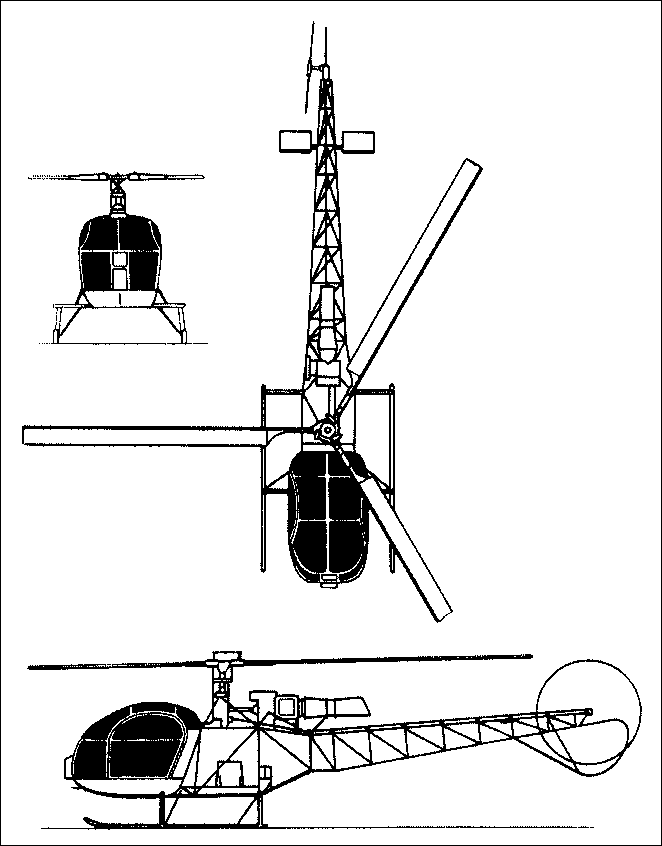
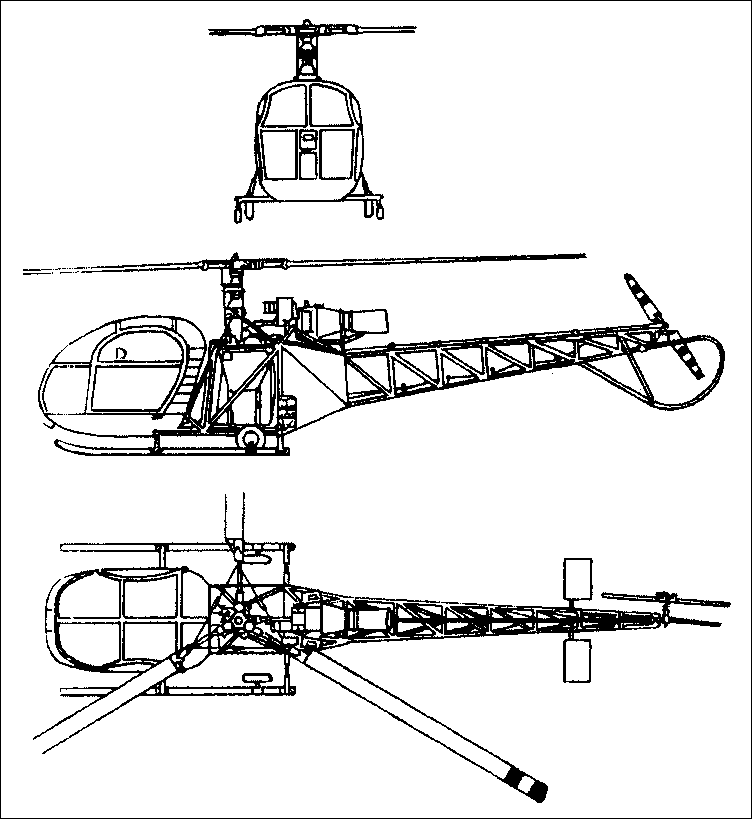
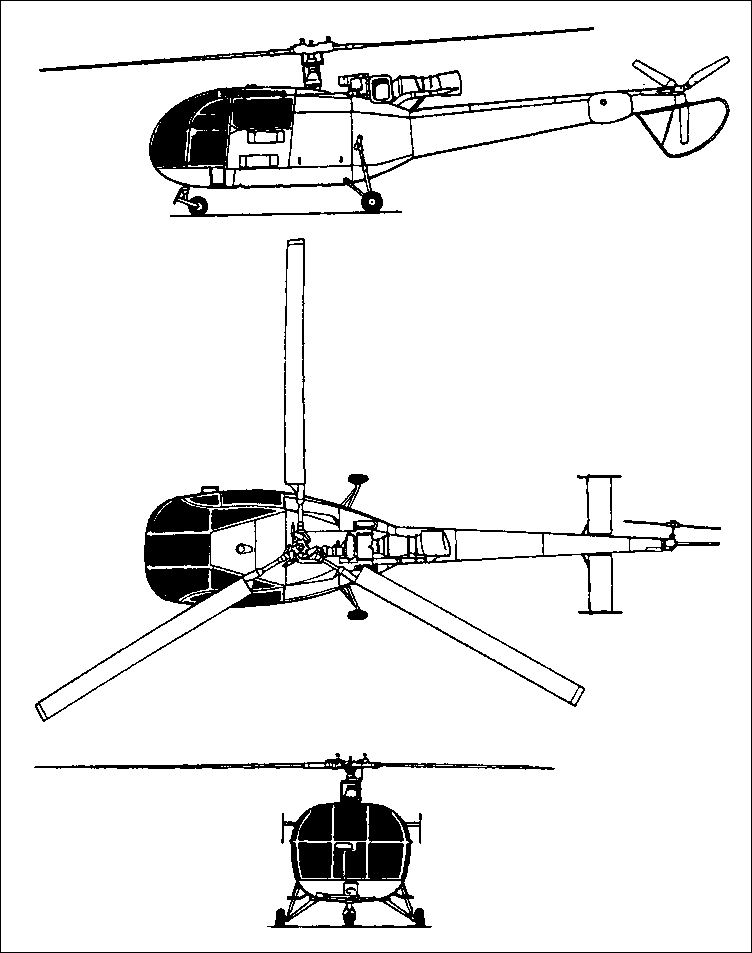
When production of the Alouette II ended, after more than 1,300 airframes had been completed, Sud (which later became part of Aerospatiale) concentrated on building the Lama. Initially evolved to meet an Indian armed forces requirement of 1968 and intended primarily for operations in ‘hot-and-high’ conditions, the basic design of the Aerospatiale SA 315B Lama combines a reinforced Alouette II airframe with SA 316B Alouette III dynamic components, including its Artouste power-plant and rotor system. The SA 315 prototype was first flown on 17 March 1969, received the French Certificate of Airworthiness on 30 September 1970, and given the name Lama in July 1971. Able to lift one tonne on the hook and excellent lifting properties have been put into good effect throughout the world. Although used throughout the world, the Lama was not produced in large quantities, with fewer than 400 built from 1970 to 1982.
SA-315B Lama ZK-HSK
From the outset the SA 315B excelled in load-to-altitude performance. In 1971 arrangements were completed for licence production of the SA 315B by HAL at Bangalore in India. The first Indian-assembled Lama flew on 6 October 1972, with deliveries commencing in December 1973. The HAL-produced Lama is renamed Chetak. On 21 June 1972 a Lama, with just a pilot on board, set an absolute height record for helicopters of 12442m / 40,814 ft.
The SA315B was available with either the Turbomeca Artouste IIIB of 858 shp or the Artouste IIA of 550 shp.
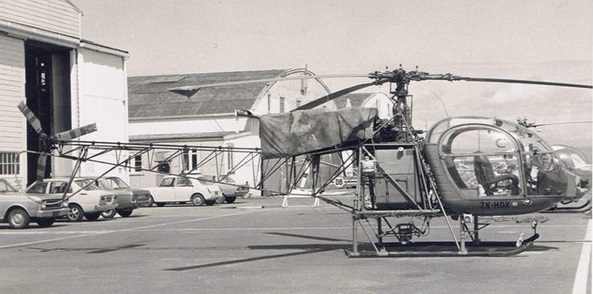
Aerospatiale SA315B Lama ZK-HDX
The SA 315B Lama can be fitted out for various commercial roles, such as a light passenger transport or for agricultural tasks, while the military variants include conversions for liaison, observation, photography, air/sea rescue (hoist capacity 160kg), transport (maximum external load 1135kg), ambulance (two stretchers and one medical attendant), and other tasks. Its altitude performance makes the SA 315B particularly suited for mountainous districts: the production Lama can transport underslung external loads of up to 1000kg at an altitude of 2500m. Another factor is its universal landing gear consisting of skids with removable wheels for ground handling, provision for floats for normal operations from water and emergency flotation gear, inflatable in the air.
In 1978 agreement was reached between Aerospatiale and Helibras in Brazil for the assembly of SA 315B Lama helicopters, leading to full licence production as the Gaviao, using French components.
SA-315B Lama Engine: Turbomeca Artouste IIIB, 858 shp TBO: 2500 hrs Rotor diameter: 36.155 ft / 11.02 m Seats: 5 Length: 42.388 ft / 12.92 m Height: 10.1 ft / 3.09m Fuselage length: 10.26m Underslung load: 1135kg Max ramp weight: 4300 lb MTOW: 4300 lb / 1950.0 kg Standard empty weight: 2244.7 lb / 1018.0 kg Max useful load: 2034 lb Max landing weight: 4300 lb Max sling load: 2500 lb Disc loading: 4.2 lb/sq.ft Power loading: 5 lb/hp Max rate of climb: 1083 fpm Max usable fuel: 1018 lb Service ceiling: 17,720 ft Hover in ground effect: 16,565 ft Max speed: 113 kts / 210 km/h HOGE: 15,100 ft Normal cruise @ 3000 ft: 103 kts / 190 km/h Fuel flow normal cruise: 369 pph Range: 275 nm / 510 km Endurance normal cruise: 2.6 hr Crew: 1 Passengers: 4
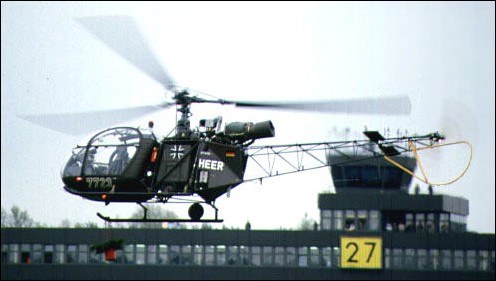
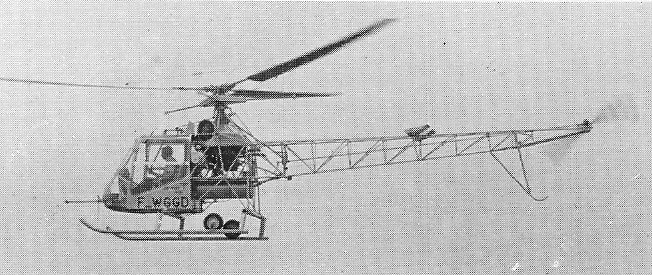
The SE.3120 Alouette I three-seat utility helicopter was designed primarily as an agricultural aircraft, but external panniers could be fitted. Powered by a 200 hp Salmson 9 NH engine, it first flew on 31 July 1951.
SE.3120 Alouette I
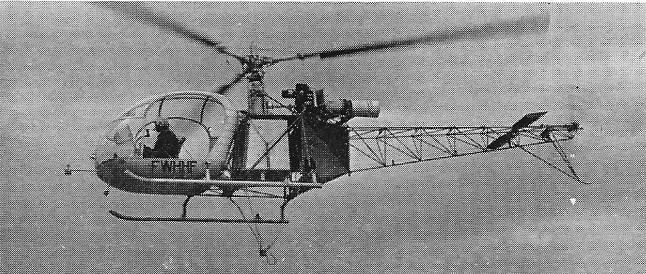
The basic airframe of the Sud-Est SE-3120 Alouette was completely redesigned to take the 269kW Turbomeca Artouste II turboshaft, and the first of two prototypes, designated SE 3130, was flown on 12 March 1955.
Following were three pre-production aircraft in 1956 as the Alouette II. This was granted a French Certificate of Airworthiness on 2 May 1956. Three months after the first flight the Alouette II set a new helicopter altitude record of 8209m. In 1957 Sud-Est merged with Sud-Aviation, at which time the designation of the Alouette II was altered to SE 313B, remaining unchanged after Sud’s take-over by Aerospatiale. It has three blade rotor with three degrees of freedom, pitch, in-plane motion and vertical flapping. Pitch is controlled by means of a stabilizing gyroscope. Even before flight testing had been completed, the Alouette II was showing its abilities as a mountain rescue aircraft. The second prototype Alouette II was in the Alps for performance tests in July 1956 when the test team learned that a climber was dying after having a heart attack in the Vallot Mountain refuge, one of the highest in Europe at 4362m. The first attempt at a rescue was unsuccessful, but the second worked: within five minutes of landing the helicopter had transported the climber to hospital in Chamonix, thereby saving his life. During the period 9-13 June 1958, an Artouste-powered Alouette II set up a helicopter altitude record of 10981m for all classes, and a height record of 9583m in the 1000/1750kg category. By September 1960 598 Alouette IIs had been ordered by customers in 22 different countries and the type was being assembled by Republic in the USA and Saab in Sweden although few were built.
SE 313 Alouette II
Production aircraft were delivered initially to fulfil orders from the French forces and civilian customers, but when production ended nine hundred and twenty-three of the Artouste-powered Alouette II’s had been built for customers in thirty-three countries. Three-hundred and sixty-three of these were built for the French services — particularly the Aviation Legere de I’Armee de Terre – and a further two hundred and sixty-seven were built for the Federal German Heeresfliegerei. Other large military operators of the Alouette II include the Belgian Army (thirty-nine), Swiss Army (thirty), all three Swedish air arms (total twenty-five), and Britain’s Army Air Corps (seventeen) as Alouette AH.2. Alouette II’s were also delivered to the air forces of Austria (sixteen), Cambodia (eight), Congo Leopoldville (three), Dominican Republic (two), Indonesia (three), Israel (four). Ivory Coast (two), Laos (two), Lebanon (three), Mexico (two), Morocco (seven), Netherlands (eight), Peru (six), Portugal (seven) and South Africa (seven). In all, at least 1,305 Alouette II were built. Alouettes of the ALAT have carried out firing trials using Nord AS.10 or AS.11 anti-tank missiles, while some of the Aeronavale’s machines have been used to carry homing torpedoes. A development of the Alouette II with a 298kW Turbomeca Turmo II engine, with the designation SE 3140, was announced in May 1957 and flown on 16 May 1957 but did not reach the production stage.
SE.3130 Alouette II
The SE.3150 an Artouste-powered development of it of which two were built. From the Alouette II, the SE.3131 Gouverneur executive version was derived.
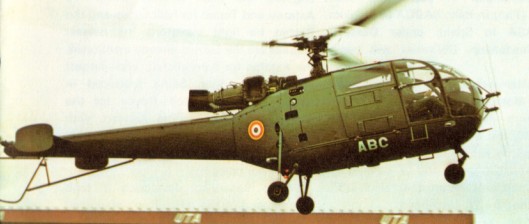
The first version of the Alouette III, the SE 3160 prototype flew in 1959. Production of the SA 316A (SE 3160) began in 1960 and remained in production until 1968. It was replaced by the SA 316B.
The Turbomeca Artouste IIIB turboshaft engine was the original variant produced, the Alouette III is recognized for its mountain rescue and adaptability for land and ship based applications. The Argentine Navy purchased 14 helicopters, 3 of the original design SE3160, 7 with the more powerful engine and strength upgrades in the SA316B and 4 machines of the SA319B with more power than the other two versions.
The Alouette III entered in service with the French Armed forces in 1960. Many were used by the Foreign Legion from 1964-1967. Three machines were delivered from France for local assembly in Australia, and were used by Royal Australian Air Force (RAAF).
Pakistan purchased 35 machines and used them in the Indo-Pakistani War of 1971. Two planes of the PAF were shot down in the war, and the Portuguese Colonial War, during 60’s and 70’s used large numbers of helos in Angola, Mozambique and Guinea, where it proved its qualities for use in dusty and hot flying conditions. One SA316B purchased by Argentina was on board the ARA General Belgrano when she was sunk by the HMS Conqueror S48 during the Falklands War with Great Britain in 1982.
Basically, the SE.3160 Alouette III is an enlarged and more powerful development of the Alouette II, with an Artouste IIIB turboshaft engine of 870/550shp and a strengthened transmission system. The cabin is enlarged to accommodate a pilot and 6 passengers, and the tailboom is an enclosed, all-metal semi-monocoque fuselage. The prototype, F-ZWVQ, first flew on 28 February 1959. The SE.3160 was revised in 1968 and redesignated SA.316A Alouette III for the first production series.
In 1963 Ireland ordered three Alouette III’s, two for delivery in 1963 and one in 1964.
A close-support version, the SA.3164 Alouette III Armee with a stepped windshield, was flown on 24 June 1964. This carried a 20mm cannon in front of the left-hand seat, and can be armed with 7.92mm machine-guns, pods of 18 or 36 HVAR rockets or Nord AS.11 or AS.12 anti-tank missiles on mountings on each side of the cabin. A naval version with a mooring harpoon and all-weather capability is being developed for anti-submarine and other shipboard roles. Various experimental developments followed, including an all-weather variant which made its initial flight on 27 April 1964. The SA.319 Alouette III prototype, F-ZWVQ, was basically an SA.316 fitted with a 600shp Turbomeca Astazou XIV turboshaft.
SA.319B Alouette III
The subsequent SA 316B, first flown on 27 June 1968, featured strengthened main and tail rotor transmissions and was generally slightly heavier, but could carry more payload. It became the principal production version, with first deliveries made in 1970, and was an immediate export success. Two versions have been built, the SA 316B with one 870 shp Turbomeca Artouste IIIB turboshaft engine derated to 570 shp, and the SA 319B with one 870 shp Turbomeca Astazou XIV turboshaft derated to 600 shp. The first experimental SA 319B prototype was completed and flown in 1967, but full production did not start until 1973. Those in service in an anti-armour role can carry a variety of cannon, machine-guns, rockets, and wire-guided missiles. Naval versions can deploy wire-guided missiles, but those intended specifically for an ASW role carry two homing torpedoes, or one torpedo and MAD equipment. The Alouette III has an external sling for loads up to 750kg or a rescue hoist which can lift 175kg. Another derivative, powered by the more economical Astazou IIA turboshaft engine and featuring a new centrifugal clutch, was far more successful. The first prototype, designated SA 3180, was flown on 31 January 1960 and after thorough trials an extension of the Alouette II French Certificate of Airworthiness was granted on 18 February 1964. Production, as the SA 318C with the Artouste IIID derated to 600shp, commenced in the same year, with first deliveries taking place in 1965. The SA 318C had a slightly higher level speed, longer range and was capable of lifting heavier loads, but is less suitable for operations in higher altitudes. The success of the basic Alouette II design was reflected in the growing number of civil and military customers: by 1 June 1967 a total of 988 Alouette IIs (including those with Astazous engines) had been ordered (and 969 delivered); by 21 May 1970 the total had increased to 1,200 (923 with Artouste and 277 with Astazou engines); this total included 450 Alouette IIs delivered to the French air force, army and navy as well as private customers. By the spring of 1975, when the production of this helicopter was terminated, the number of Alouette IIs sold had reached 1,300, and it was used by 126 civil and military operators in 46 countries. Production of the SE.3130 (which was redesignated SE.313B in 1967) has been gradually running down since about 1964, but output is still maintained of the SA.318C (originally SE.3180) which first flew on 31 January 1961 and received domestic type approval on 18 February 1964. This is basically the same airframe, but with a 550shp Astazou IIA shaft turbine (derated to 360shp) and the strengthened transmission system of the Alouette III. An initial fifteen Alouette II Astazou’s were built for the ALAT; by September 1967 orders had reached seventy-eight, for the Gendarmerie, the Federal German police force and other customers. A lighter-weight ‘long-life’ version was being developed during 1967, and one Alouette II Astazou was testing the Bolkow rigid-rotor system. It flew in this configuration on 24 January 1966. Production ended in 1975, by which time over 1300 had been built.
The SA 316B and the SA 319B both remained in series production up to the early 1980s, when the main production line in France was closed down. However, HAL of India continued to licence-build Alouette IIIs as the Chetak. In 2004, most of the Alouette III were retired from the French Air Force after 32 years of successful service, to be replaced by the Eurocopter EC 355 Ecureuil 2. In the same year, the Swiss Armed Forces announced the retirement of the Alouette III, from the front line by 2006, and entirely by 2010. Venezuelan Air forces retired their Alouette IIIs in the late 90s.
Hindustan Licence-manufactured SA-315B Lama and SA-316B Alouette III helicopters at Bangalore as Cheetah and Chetak respectively up to 1998 under a licence agreement finalised in 1962. Production gave way to the indigenously developed Advanced Light Helicopter (first flown August 1992). The first Indian-assembled Alouette III was flown on 11 June 1965. More than 250 had been completed at Bangalore in India for civil and military use. In addition to a number of military export customers, the USSR purchased eight Chetaks for civil use. A version for the Indian Navy is armed with two Mk.44 torpedoes and has a harpoon moor¬ing system and folding rotor blades for ship¬board operations. A podded magnetic anomaly detector may also be carried in place of one of the torpedoes. An armed variant for the Indian Air Force is equipped with four air-to-surface missiles, and has a roof mounted periscope sight.
Also built under licence in Roumania by CNIAR were the IAR-316 and IAR-317 Airfox. The IAR-316B Allouette III first flew on 13 November 1971. Production of the Alouette III continued in Romania for domestic and export customers in 1987. The IAR-317 Airfox is a Romanian developed light attack/training version of the Aérospatiale Alouette III helicopter. Its recon¬figured front fuselage has two seats in tandem, the rear seat raised for improved visibility; a hard nose; a fixed forward firing armament of two 7.62mm machine-guns in the lower front fuselage; six external weapons pylons; and armour protection for the crew and fuel tanks in the combat variant. The IAR-317 was due to enter production for the Romanian armed forces in 1986. The first flight took place in 22 September 1983, and two more prototypes were completed by the end of 1985. To the rear of the main rotor mast the Airfox is essentially an Alouette III, retaining the latter’s tail rotor and Turbomeca Artouste IIIB power plant. Performance is improved by the lighter, more streamlined nose, with a maximum cruise speed of 190km/hr (102kt) at maximum take-off weight, a 525km range on internal fuel, and 810km with two external tanks fitted. Service ceiling is more than 6,200m (20,350ft). Licence production in Switzerland by FFA totalled 60.
Designations: SE 3130 Alouette II SE 3140 SE.3150 SE.3160 Alouette III SA.3164 Alouette III Armee SA.3180 Alouette SE.3180 SE 313B Alouette II SA.316A Alouette III SA.316B Alouette III SA.316C Alouette III SA 318C SA.318C Alouette Astazou SA.319 Alouette III SA.319B Alouette III Alouette AH.2 Hindustan Aeronautics Ltd. HSA.316B Alouette III Hindustan Aeronautics Ltd. HSA.316B Chetak IAR-316B Alouette III IAR-317 Airfox
SE.3120 Alouette I Engine: 200 hp / 150kW Salmson 9 NH Rotor diameter: 38 ft / 11.60m Length: 34 ft 3 in / 10.45m Height: 9 ft 6 in Empty weight: 1650 lb / 750kg Loaded weight: 2750 lb / 1150kg Max speed: 78 mph / 125km/h Cruise: 62 mph ROC: 500 fpm Service ceiling: 4000m Range: 225km
Sud-Est SE 3130 B Alouette II / SA.313B Engine: Turboméca Artouste II C 6, 400 shp Length: 31.824 ft / 9.7 m Width of hull: 6.824 ft / 2.08 m Height: 9.022 ft / 2.75 m Rotor diameter: 33.465 ft / 10.2 m MTOW: 3307.5 lb / 1500.0 kg Weight empty: 2149.9 lb / 975.0 kg Max. weight carried: 1157.6 lb / 525.0 kg Max. speed: 92 kts / 170 km/h Initial climb rate: 826.77 ft/min / 4.20 m/s Service ceiling: 12959 ft / 3950 m Range: 302 nm / 560 km Endurance: 3 h Crew: 1 Payload: 4 Pax
SE 313 Alouette II Artouste Engine: Turbomeca Artouste IIC6, 530shp(derated to 360shp) 923 built
Aerospatiale SE-313B Alouette II Engine: 1 x Turbomeca Artouste II C6 turboshaft, 395kW Main rotor diameter: 10.2m Length blades folded: 9.7m Height: 2.75m Take-off weight: 1600kg Empty weight: 895kg Max speed: 185km/h Cruising speed: 165km/h Service ceiling: 2150m Range with max fuel: 565km Range 390kg payload: 300km Crew: 1 Passengers: 2
SA316B Engine: Astazou IV, 600 shp Fuselage length: 10 m / 33 ft Rotor dia: 36 ft 1.25 in / 11.02 m Max speed: 130 mph / 210 km/h
SA 316 Alouette III Engine: 1 x Turbomeca Artouste IIIB turboshaft, 570shp Length: 42.13ft (12.84m) Width: 36.15ft (11.02m) Height: 9.84ft (3.00m) Maximum Speed: 130mph (210kmh; 113kts) Maximum Range: 298miles (480km) Rate-of-Climb: 885ft/min (270m/min) Service Ceiling: 7,379ft (2,249m) Accommodation: 2 + 5 Hardpoints: 2 Empty Weight: 2,474lbs (1,122kg) Maximum Take-Off Weight: 4,850lbs (2,200kg)
Aerospatiale SA.316B Alouette III Engine: 1 x Turbomeca Artouste IIIB turboshaft, 649kW Main rotor diameter: 11.02 m Length rotors turning: 10.03 m Height: 3.0 m Take-off weight: 2200 kg Empty weight: 1143kg Max speed: 210km/h Cruising speed: 185km/h Service ceiling: 3200m Range max fuel: 540km Crew: 1 Passengers: 7
Aerospatiale SA 316B Alouette III Engine: Turbomeca Artouste IIIB, 850 hp (derated to 570 shp) Main rotor dia: 36 ft 1.75 in / 11.02 m Length rotors turning: 42 ft 1.5 in / 12.84 m Disc loading: 4.74 lb/sq.ft Pwr loading: 5.65 lb/hp Max TO wt: 4850 lb / 2200 kg Empty wt: 2474 lb 1122 kg Equipped useful load: 2321 lb Payload max fuel: 1322 lb Range max fuel/ cruise: 191 nm/ 1.9 hr Range max fuel SL: 258 nm / 298 mi / 480 km Service ceiling: 13,125 ft / 4000 m Max cruise SL: 101 kt / 115 mph / 185 kph Max range cruise: 96 kt Max ROC SL: 885 fpm / 270 m/min HIGE: 9510 ft HOGE: 4920 ft Max sling load: 1650 lb / 750 kg Fuel cap: 999 lb Seats: 7
SA318C Alouette II Artouste Engine: Turbomeca Astazou IIA turboshaft, 530shp derated to 360 shp Main rotor diameter: 33 ft 5 5/8 in / 10.20m Fuselage length: 32 ft 0 in / 9.75m Empty weight: 1961 lb / 890 kg MTOW: 3630 lb / 1650 kg Max cruise SL: 97 kt / 112 mph / 180 kph ROC SL: 1300 fpm / 396 m/min Service ceiling: 10,800 ft / 3300 m Range max fuel SL: 388 nm / 447 mi / 720 km Range with 1058 lb / 480 kg payload: 161 nm / 186 mi / 300 km Seats: 5 External load capacity: 1322 lb / 600 kg
SE 3160 Allouette III / Aerospatiale SA 319B Alouette III Engines: Turbomeca Astazou XIVB, 858 hp derated to 600 shp Rotor diameter: 36.155 ft / 11.02 m Length: 32.841 ft / 10.01 m Width of hull: 8.497 ft / 2.59 m Height: 9.744 ft / 2.97 m Max TO wt: 4960 lb Empty wt: 2486 lb Equipped useful load: 2412 lb Payload max fuel: 1413 lb Disc loading: 4.8 lb/sq.ft Pwr loading: 5.78 lb/hp Range max fuel/ cruise: 264 nm / 2.4 hr Service ceiling: 13,125 ft Max. speed: 113 kts / 210 km/h Max cruise: 107 kt Max range cruise: 90 kt ROC: 900 fpm HIGE: 10,400 ft HOGE: 5900 ft Max sling load: 1800 lb Fuel cap: 999 lb Seats: 7
HAL SA-315B Cheetah Engine: 1 x Hindustan Aeronautics/Turbomeca Artouste IIIB Instant pwr: 420 kW Rotor dia: 11.02 m MTOW: 2200 kg Payload: 325 kg Useful load: 780 kg Max speed: 113 kts Max cruise: 104 kts Max range: 560 km HIGE: 20,010 ft HOGE: 19,026 ft Service ceiling: 20,993 ft Crew: 2 Pax: 3
HSA.316B Alouette III Engine: 1 x Hindustan Aeronautics/Turbomeca Artouste IIIB Instant pwr: 420 kW Rotor dia: 11.02 m MTOW: 2300 kg Payload: 465 kg Useful load: 920 kg Max speed: 113 kts Max cruise: 100 kts Max range: 500 km HIGE: 12,136 ft HOGE: 8036 ft Service ceiling: 15,580 ft Crew: 2 Pax: 5/6
A side by side two seat single engined high-wing monoplane with conventional three axis control. Wing has unswept leading and trailing edges, and constant chord; conventional tail. Pitch control by elevator on tail; yaw control by fin mounted rudder; roll control by one third span ailerons; control inputs through stick for pitch/roll and pedals for yaw. Cantilever wing; wing profile NACA 23012; double surface. Undercarriage has three wheels in tail dragger formation; rubber suspension on all wheels. No ground steering (optional ground steering by differential braking). Optional brakes on main wheels. Aluminium tube framework, with optional pod. Engine mounted above wing driving pusher propeller. Wing and tail are made with stratified glass ribre/epoxy, vacuum molded; spar in carbon fibre. Designed by Alain Erval, the prototype of the two seater Intermezzo made its first flight on the 14 August 1982 and went on next to a test flight programme and detail modification, leading to sales in April 1983. This very original machine is a mixture of proven and classical solutions (NACA 23012 profiles for the wing and 0012 for the tail), combined with materials which are more common in gliding than in ultralights, such as layers of carbon fibre. The central section of the Intermezzo wing has no dihedral and the outer sections of the wing set at 8 degrees. To make garaging easy, this wing demounts like a glider wing into three 13.2 ft (4.0 m) sections and the empennage can be removed from the two spars which carry it. They come off in two parts, the horizontal section being a unit and the vertical another. Thanks to these arrangements, the structure is completely foldable to ease towing on a trailer. Production Intermezzos are supplied with dual controls. Another original point is that this machine is equipped as standard with fabric seats adjustable for the height of their occupants by laces; bucket seats are optional. It is fitted with a Hirth 493 cc engine (with electric start as an option), mounted by four bolts and with all electrical connections made via a single plug. This two seater is fitted with a tail dragger undercarriage. Production versions have an instrument panel with ASI, altimeter and rev counter. Options include a pod with windscreen, an integral canopy with this assembly, the glide ratio increases from 12 to 15/1 at 37 mph (60 kph) and air brakes.
Engine: Hirth 2701RR 179, 45 hp at 3600 rpm Propeller dia: 39 in, 1.0 m. Reduction ratio: 1.8/1 Max static thrust: 265 lb, 120 kg Power per unit area: 0.2 hp/sq.ft, 2.3 hp/sq.m Fuel capacity mains: 10.6 USG, 8.8 Imp gal, 40.0 lt Fuel capacity res: 5.3 US gal, 4.4 Imp gal, 20.0 lt Length overall: 19.8ft, 6.0 m Height overall: 7.2ft, 2.2m Wing span: 41.0ft, 12.5m Constant chord: 4.3ft, 1.3m. Dihedral: 8 degs Sweepback: 0 degs Tailplane span: 13.1 ft, 4.0 m Total wing area: 216 sq.ft, 20.0 sq.m Total aileron area: 8.6 sq.ft, 0.8 sq.m Fin area: 9.7 sq.ft, 0.9 sq.m Rudder area: 3.2 sq.ft, 0.3 sq.m Tailplane area: 43.2 sq.ft, 4.0 sq.m Total elevator area: 12.9 sq.ft, 1.2 sq.m Wing aspect ratio: 10.2/1 Wheel track: 6.7 ft, 2.0 m Tailwheel dia. Overall: 4 in, 10 cm Main wheels dia. Overall: 16 in, 40 cm Empty weight: 287 lb, 130kg Max take off weight: 662 lb, 300kg Payload: 375 lb, 170kg Max wing loading: 3.07 lb/sq.ft, 15.0 kg/sq.m Max power loading: 4.7 lb/hp, 6.7kg/hp Load factors: +6.6, 3.3 design Max level speed: 87 mph, 140 kph Never exceed speed: 124mph, 200kph Max cruising speed: 81mph, 130kph Econ. cruise speed: 71mph, 115kph Stalling speed: 28mph, 45 kph Max climb rate SL: 500 ft/min, 2.5 m/s Min sink speed: 31 mph, 50 kph Min sink rate: 240 ft/min, 1.2 m/s Best glide ratio: 12/1 at 37 mph, 60 kph Take off distance: 165ft, 50m Landing distance: 165ft, 50m Service ceiling: 12,500ft, 3800m Range at ave. cruise: 311 mile, 500km
The Vitamin is a paraglider for beginners and weekend pilots. Long brake travel helps beginners to sense the canopy. All sizes are – Lines: Cousin Trestec; upper dia. 1.1 Superaram 80 kg; lower dia. 2.2 Superaram 240 kg; med dia. 1.7 Superaram 155 kg; brake upper dia. 1.1 Dyanema 85 kg; brake lower dia. 2.0 Polyester 80 kg. Sail Cloth: Gelvenor/Porcher Marine
Vitamin power 38 moto
Vitamin 25 Cells: 31+ 8 Area: 25.0 sq.m Span: 10.97 m Aspect ratio: 4.81 Area projected: 21.87 sq.m Span projected: 8.32 m Aspect ratio projected: 3.56 Chord root: 2.765 m Chord tip: 0.6 m Total height: 6.91 m Take off weight: 60-80 kg Flight speed min: 21 km/h Flight speed trim: 36 km/h Flight speed max: 47 km/h Min.sink (opt. weight): < 1.2 m/s
Vitamin 27 Cells: 31+ 8 Area: 26.75 sq.m Span: 11.34 m Aspect ratio: 4.81 Area projected: 23.41 sq.m Span projected: 9.13 m Aspect ratio projected: 3.56 Chord root: 2.86 m Chord tip: 0.62 m Total height: 6.91 m Take off weight: 70-90 kg AFNOR: Standard Flight speed min: 21 km/h Flight speed trim: 36 km/h Flight speed max: 47 km/h Min.sink (opt. weight): < 1.2 m/s
Vitamin 30 Cells: 31+ 8 Area: 29.43 sq.m Span: 11.9 m Aspect ratio: 4.81 Area projected: 25.75 sq.m Span projected: 9.57 m Aspect ratio projected: 3.56 Chord root: 3.0 m Chord tip: 0.65 m Total height: 7.25 m Take off weight: 85-105 kg AFNOR: Standard Flight speed min: 21 km/h Flight speed trim: 36 km/h Flight speed max: 47 km/h Min.sink m/s (opt. wt): < 1.2 m/s
Vitamin 32 Cells: 31+ 8 Area: 32.0 sq.m Span: 12.41 m Aspect ratio: 4.81 Area projected: 28.0 sq.m Span projected: 9.98 m Aspect ratio projected: 3.56 Chord root: 3.13 m Chord tip: 0.68 m Total height: 7.56 m Take off weight: 100-125 kg AFNOR: Standard Flight speed min: 21 km/h Flight speed trim: 36 km/h Flight speed max: 47 km/h Min.sink m/s (opt. wt): < 1.2 m/s
Vitamin 38 Cells: 31+ 8 Area: 38.0 sq.m Span: 13.52 m Aspect ratio: 4.81 Area projected: 33.25 sq.m Span projected: 10.88 m Aspect ratio projected: 3.56 Chord root: 3.41 m Chord tip: 0.74 m Total height: 8.24 m Take off weight: 130-180 kg Flight speed min: 21 km/h Flight speed trim: 36 km/h Flight speed max: 47 km/h Min.sink m/s (opt. wt): < 1.2 m/s
Vitamin power 38 moto Cells: 31+8 Area: 38 sq.m Span: 13.52 m Aspect ratio: 4.81 Area projected: 33.25 sq.m Span projected: 10.88 m Aspect ratio projected: 3.56 m Total height: 8.24 m Take off weight: 130-350 kg Flight speed min: 21 km/h Flight speed trim: 36 km/h Flight speed max: 47 km/h Min.sink m/s (opt. wt): <1.2 m/s
In 1995 the Graffiti trike with the Stranger wing was certified. The wing has successfully undergone strength and aerodynamic testing in the course of the certification at DULV and within a year 80 Stranger wings had been sold.
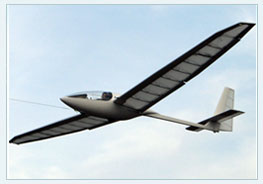
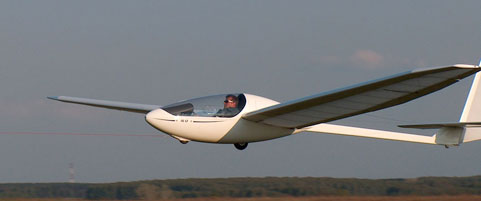
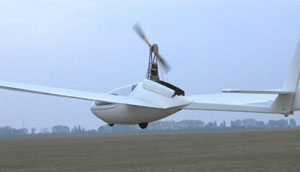
The AC-21 powered sailplane is an evolution of AL-12 design that was developed in Ukraine during 2000 – 2005 as a joint project by Aeros and Aerola. In 2006 it was decided to make a next step in the development of the sailplane, splitting the project and leaving production of AL-12 (now Alatus) in Aerola. AC-21 joins unique features of AL-12 incorporated in the new design. The AC-21 is all about maximum enjoyment of free flight. Sweet handling, slow flight capabilities and low sink rate allows exploring “microlift” conditions, when most other gliders are unable to stay in the air. AC-21 can turn really tight. AC-21 structural capacity has been increased keeping an aim to meet actual sailplane standards (+5.3 -2.65 G load factors). It gives us a chance of wider margin over current DULV and DAeC requirements for ultra light aircraft (+4/-2 G). Specifically the wing leading edge D-spar had to get stronger by 25%; the ribs structural capacity and rigidity was greatly increased and the ribs are now made of carbon. Powered by a Hirth F33 BS delivering 28 hp, it has a factory recommended TBO of 1000 hours at 75 % power. A newly designed fuselage insures laminar flow over its front, makes room for the engine and allows full enclosure of the propeller when in glider mode. There has also been an increase in the transparent part of the canopy, improving forward visibility.
AC-21 Engine: Hirth F33 BS, 28 hp Empty weight: 135 kg Мах. takeoff weight: 264 kg Wing span: 13.3 m Sail area: 13.5 sq.m Pilot weight: 60-110 kg Stall speed: 52-56 km/h Vne: 140 km/h Best glide ratio: 27 at 70 km/h Min. sink rate: 0.6 m/s at 67 km/h Climb w. Engine: 2.5 m/s
In 2005 the Aeros team took part in designing an entirely new product: the AL-12 ultralight sailplane and its powered version AL-12 M with a retractable power-unit. The idea of a sailplane that could have some of the positive features of hang gliders and rigid wing gliders, and the possibility of soaring flight while using narrow thermals and “microlift”, to takeoff from hang gliding sites, and the simplicity of quick rigging and ease of transportation appealed. The sailplane offered by Aeros takes off by air towing or winch towing, andallows mounting a retractable engine for autonomous takeoff and climb. The cockpit is equipped with adjustable pedals and seat back that can be adjusted to the pilot’s height up to 195 cm. There is a space for a backpack parachute. The sailplane can come complete with an optional rescue system. For transportation purposes all control and stabilizing surfaces are removed, the cabin is detached, the wing with the tail beam is put into a package 0,2 x 0,58 x 5,7 m. The 0,6 x 0,86 x 3 m cockpit can be transported either as a whole assembly or in parts (cockpit, fuselage spine fairing, cockpit enclosure). The rigging takes around 40 minutes.
AL12M -Powered version ultralight sailplane
On October, 8, 2005 the first flight of a powered sailplane AL-12M with a retractable power-unit took place. The sailplane was piloted by its chief design engineer and the Aerola company top-pilot Nikolay Kononenko. The AL-12M had been brought to the take-off field on a car roof rack and within an hour and a half the sailplane was rigged up and prepared for tests. The power-unit is based on Solo-210 engine (16 hp) and provides for self-taxiing, take-off and acceptable climb rate.During the first day six flights were performed and included air restarts.
AL-12 Empty weight: 80 kg Мах. takeoff weight: 185 kg Wing span: 13.3 m Sail area: 13 sq.m Pilot weight: 60-110 kg Stall speed: 34-40 km/h Мах. Airspeed: 140 km/h Best glide ratio: 27 (at 60 km/h) Min. sink rate: 0.5-0.6 m/s (at 45 km/h)
AL-12M Engine: Corsair Solo-210, 16 hp Empty weight: 120 kg Мах. takeoff weight: 220 kg Wing span: 13.3 m Sail area: 13 sq.m Pilot weight: 60-100 kg Stall speed: 39-45 km/h Мах. Airspeed: 140 km/h Best glide ratio: 27 (at 65 km/h) Min. sink rate: 0.8 m/s (at 45 km/h)
A single-engine all-composite high-wing side-by-side two-seater with a fixed tricycle landing gear (a steerable nose wheel included). Equipped with fully adjustable seats and a baggage compartment behind. Price 2009: 48500 EURO
Stall: 35 kt / 40 mph / 65 kmh Cruise: 103 kt / 118 mph / 190 kmh VNE: 130 kt / 149 mph / 240 kmh Empty Weight: 285 kg / 628 lb MTOW: 472 kg / 1041 lbs Climb Rate: 1200 fpm / 6 m/s Take-off distance (50ft obstacle): 580 ft / 178 m Landing distance (50ft obstacle): 630 ft / 192 m