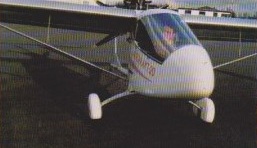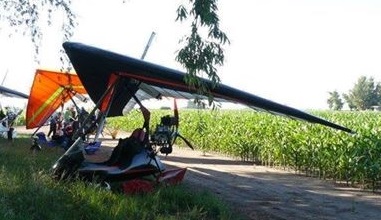
Aeros del Sur Manta         

Aeros del Sur is the importer of Aeros products for Argentina. The Manta was designed by mating the Aeros Profi trike wing with a new, locally designed carriage. The Manta was designed to comply with the Fédération Aéronautique Internationale microlight category, including the category’s maximum gross weight of 472.5 kg (1,042 lb), with a ballistic parachute.

The aircraft is made from a mix of bolted-together aluminum and steel tubing, with its double surface wing covered in Dacron sailcloth. Its 10 m (32.8 ft) span wing is supported by a single tube-type kingpost and uses an “A” frame weight-shift control bar.

It features a cable-braced hang glider-style high-wing, weight-shift controls, a two-seats-in-tandem, open cockpit, tricycle landing gear with wheel pants and a single engine in pusher configuration.

The standard powerplant is a twin cylinder, liquid-cooled, two-stroke, dual-ignition 64 hp (48 kW) Rotax 582 engine, but the HKS 700E four-stroke, dual-ignition 60 hp (45 kW) engine is optional, as are Hirth and Simonini powerplants.

In production in 2013, the aircraft was supplied as a complete ready-to-fly-aircraft.

Engine: 1 × Rotax 582, 48 kW (64 hp)
Propeller: 3-bladed composite
Wingspan: 10 m (32 ft 10 in)
Wing area: 15.4 m2 (166 sq ft)
Gross weight: 472.5 kg (1,042 lb)
Fuel capacity: 50 litres (11 imp gal; 13 US gal)
Wing loading: 30.68 kg/m2 (6.28 lb/sq ft)
Crew: one
Capacity: one passenger
Aeroric Dingo

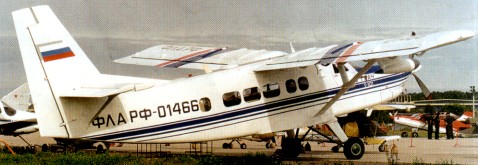
Aeroric Science and Production Enterprise has developed the Dingo passenger (up to nine seats) or cargo amphibious lightplane of unusual design, featuring an air cushion landing system which enables it to land on any surface; has twin-boom tail unit and single turboprop engine with pusher propeller. Mock-up displayed 1992, and prototype displayed in 1995 in incomplete form but not flown by 1998.

Aero Research Snark

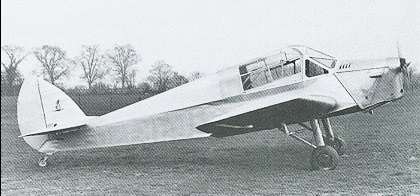
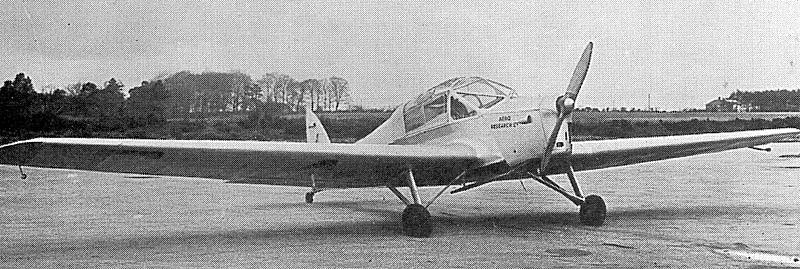
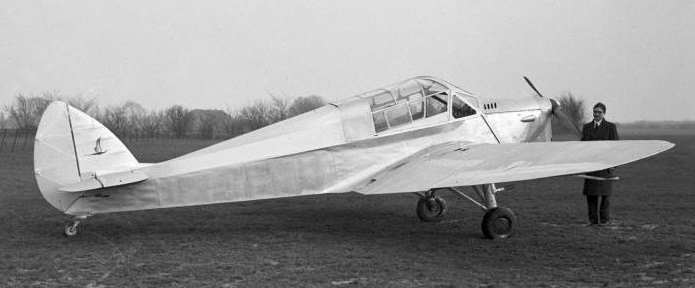
The Snark research aircraft G-ADDL c/ DB.2 was designed by Dr. N.A. de Bruyne and built by Aero Research Ltd in 1934. It was built to test low weight, bakelite-bonded plywood, stressed skin wing and fuselage structures

Apart from the structure the Snark was a conventional looking low-wing four-seat cabin monoplane, powered by a nose-mounted 130 hp (97 kW) de Havilland Gipsy Major piston engine. Registered G-ADDL the Snark first flew from Cambridge on 16 December 1934 flown by de Bruyne.

In May 1936 the Snark was transferred to the Royal Aircraft Establishment at Farnborough for research into the aerodynamics of thick wing monoplanes, with serial number L6103. The aircraft was sold by the RAE on 8 June 1938 but was destroyed by German bombing at Croydon Airport in 1940.

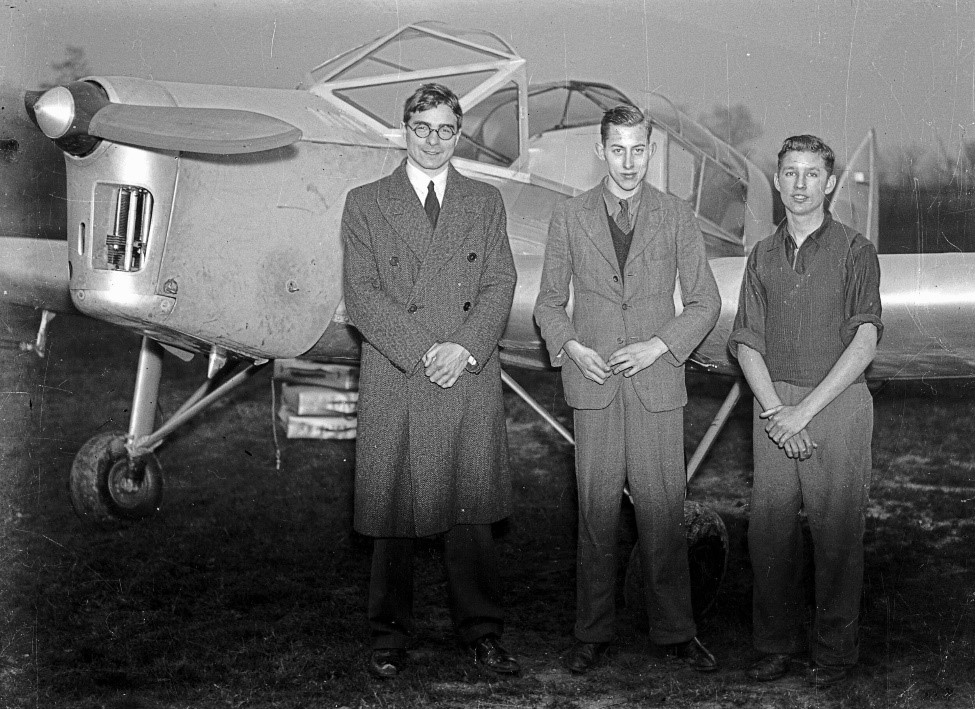
Dr Norman de Bruyne (left) with two of Aero Research’s staff members

Gallery

Powerplant: 1 × de Havilland Gipsy Major, 130 hp (97 kW)
Wingspan: 42 ft 6 in (12.95 m)
Length: 24 ft 7 in (7.49 m)
Empty weight: 1,200 lb (544 kg)
Gross weight: 2,200 lb (998 kg)
Maximum speed: 123 mph (198 km/h, 107 kn)
Cruise speed: 110 mph (177 km/h, 96 kn)
Range: 450 mi (724 km, 390 nmi)
Service ceiling: 15,500 ft (4,725 m)
Rate of climb: 600 ft/min (3.0 m/s)
Crew: 1
Capacity: 3

Aero Research Ladybird / de Bruyne-Maas Ladybird

The third design of Dr. N.A. de Bruyne, the Ladybird was a single seat, shoulder wing monoplane, powered by a Scott Squirrel.

It was started in 1936 at Duxford by Aero Research Ltd as c/n DB.3 G-AFEG. It was not finished and taken over for competition by J.N.Maas in 1937 and redesignated de Bruyne-Maas Ladybird and given a new c/n, M.1.

It first flew at Cambridge in 1937 but was re-engined in 1938 with a Bristol Cherub. It apparently spent most of its time flying as DB.3/M1.

It survives somewhere in the Peterborough area.

Engine: Bristol Cherub, 30 hp
Wingspan: 32.021 ft / 9.76 m
Wing area: 106.241 sq.ft / 9.87 sq.m
MTOW: 800.4 lb / 363.0 kg
Weight empty: 421.2 lb / 191.0 kg
Wing load: 7.59 lb/sq.ft / 37.0 kg/sq.m
Crew: 1

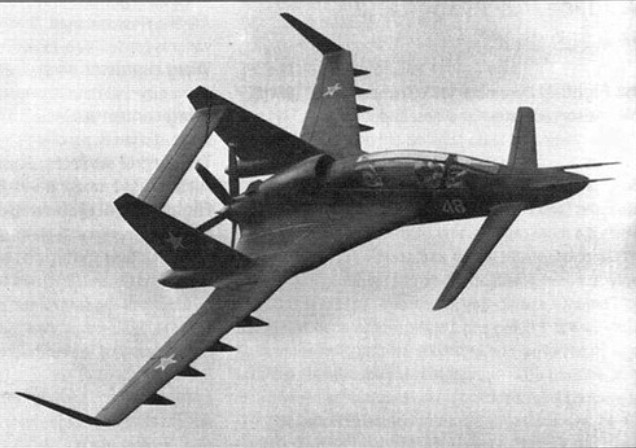
Aeroprogress T-411 Wolverine

Washington Aeroprogress in the USA offers the Aeroprogress/Khrunichev T-411 Aist.

Engine: Vendeneer M-14P, 360 hp
HP range: 300-400
Speed max: 160 mph
Cruise: 140 mph
Range: 510 sm
Stall: 40 mph
ROC: 1000 fpm
Take-off dist: 130 ft
Landing dist: 140 ft
Service ceiling: 10,000 ft
Fuel cap: 100 USG
Weight empty: 2400 lb
Gross: 4400 lb
Height: 4.1 ft
Length: 30.8 ft
Wing span: 41.5 ft
Wing area: 259 sq.ft
Seats: 5
Landing gear: tail wheel.

Aeroprakt Flirt

A tandem two seater, the Flirt is contructed of riveted sheet dural.

Ful GmbH arranged importation into Britain and changd the MAUW to 450 kg.

Engine: Rotax 582, 64 hp
Wing span: 11.38 m
Wing area: 15.68 sq.m
MAUW: 400 kg
Empty weight: 228 kg
Fuel capacity: 38 lt
Max speed: 150 kph
Cruise speed: 80-135 kph
Minimum speed: 45 kph
Climb rate: 5 m/s
Fuel consumption: 14 lt/hr
Seats: 2
Certification: VZ
Price (1998): 138,260 Fht

Aeroprakt A-22 / Valor / Foxbat / Sharik / FPNA Capetown

The Ukrainian-designed Aeroprakt A-22 is a metal-structured, side-by-side two-seater ultralight aircraft, with an excellent short take-off and landing (STOL) performance. The prototype of the A22 first flew in November 1996 and was designated the A-22 “Sharik”. The A-22 has a traditional airplane layout (strut-braced highwing side-by-side two-seater with engine in front and tricycle undercarriage with steerable nose-wheel and traditional all-metal design. The structure of A-20 and A-22 (wing and tail) use traditional riveted aluminium, high level of pilot comfort, excellent flight performance and “classic” appearance. The A22 was available as a basic kit, a quick-build “final assembly kit” or as a factory-built, fly-away sport aircraft. Standard engine is the 100hp Rotax 912UL-S although the plane performs well with the basic 80hp Rotax 912UL. Other power units such as the Jabiru could also be considered. Yuri Yakovlev originally dubbed his new design “Sharik” and in Germany the plane has achieved certification to the BFU-95 requirement but is known simply as the A-22. In the USA they call it the “Valor” or “Valour”. In Britain the A22 is called the “Foxbat”.
Each kit is supplied with the fuselage, wings, tailplane, fin and all control surfaces pre-riveted. The remaining riveting work is confined to final fitting of the floor-pan (which is already “cleco’d” in place) and securing the fin and various mounting brackets and webs to the bare fuselage monocoque. Three special holding cradles are required during this stage of the construction and are provided on loan. The rest of the work consists of fitting the engine and ancillaries, the control mechanisms (torque tubes, push rods, bell-cranks, etc) all of which are factory finished, anodised and ready to install. No fabrication of components is required (each component bearing surface even has a pressed in aerospace-quality rose-joint).
After installing the under-carriage and wheels the final finishing involves covering and painting, and fitting the instrument panel, etc. An A-22 Foxbat kit can be assembled in 500 hours by one person, or less with an assistant. One person can complete most of the assembly but some jobs will need an extra pair of hands. A folding wing option is available.

FPNA (Float Planes and Amphibs) offers several conventional and water-capable S-LSA. The Sebring, Fla.,-based company sells and instructs on 13 aircraft, from light sports to ultralights to powered parachutes. LSA models include the A-22 Valor and its Capetown float version. Price 2012: $112,000 (Capetown).

FPNA Capetown

A-22 Foxbat
Stall: 26 kt / 30 mph / 48 kmh
Cruise: 87 kt / 100 mph / 161 kmh
VNE: 106 kt / 122 mph / 196 kmh
Empty Weight: 258 kg / 569 lb
MTOW: 450 kg / 992 lb
Climb Rate: 1100 fpm / 6 m/s
Take-off distance (50ft obstacle): 330 ft / 100 m
Landing distance (50ft obstacle): 490 ft / 150 m