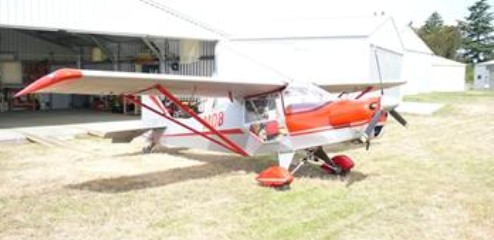
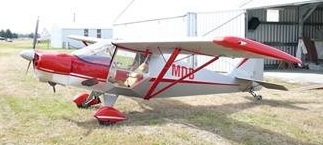
The 1941 Culver Cadet was a 2-place low wing light plane powered by a 75hp Continental engine and capable of cruising at 120mph. After much design and analysis, Neal La France offers plans for a homebuilt version of the Cadet. The Cadet STF features a steel tube, fabric covered fuselage instead of the production wood fuselage. A considerable weight savings and double the strength was obtained with the new design. Prototype is powered by a 100 hp Continental engine.
Cadet STF Engine: Continental C-90, 90 hp. HP range: 85-125 Wing span: 27 ft. Wing area: 120 sq.ft. Length: 18.5 ft. Height: 5.5 ft. Weight empty: 790 lbs. Gross: 1305 lbs. Fuel cap: 25 USG. Speed max: 175 mph. Cruise: 130 mph. Range: 500 sm. Stall: 50 mph. ROC: 800 fpm. Take-off dist: 800 ft. Landing dist: 825 ft. Service ceiling: 17,500 ft. Seats: 2. Landing gear: retractable tail wheel.
Engine: Continental O-200, 100 hp Wing span: 8.23 m Wing area: 11 sq.m MAUW: 592 kg Empty weight: 403 kg Fuel capacity: 95 lt Max speed: 282 kph Cruise speed: 217 kph Minimum speed: 88 kph Climb rate: 5 m/s Seats: 2 Fuel consumption: 22 lt/hr Plan price (1998): $375
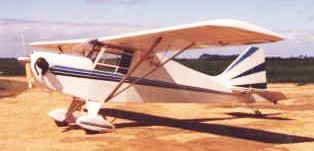
Powered by a modified BMW engine, which has as standard, fuel injection system, favorable mass production technology and no carburetor icing. With a view under the Cowling immediately the clear and low-maintenance installation of the engine as well as the associated aggregates is noticeable. In 2001 an Aerostyle Breezer was equipped with a Rotax 912 S and certified.
Single seat single engined mid wing mono¬plane with conventional three axis control. Wing has swept forward leading and trailing edges, and tapering chord; T tail. Pitch control by elevator on tail; yaw control by fin mounted rudder; roll control by one third span ailerons; control inputs through stick for pitch/roll and pedals for yaw. Cantilever wing; wing profile Worthmann FX 66SA96 V1; dou¬ble surface. Undercarriage has two wheels in tandem with wing tip skids and tailskid; no suspension on any wheels. Push right go right tailwheel steering connected to yaw control. Brake on main wheel. Glass fibre fuselage, totally enclosed. Engine mounted above wing driving pusher propeller. The designation PLM80 clearly shows that this aircraft is what the French call a planeur leger motorise, which translates as motor glider rather than micro¬light. As we write, this prototype has hardly completed its first flights and at present exceeds most countries’ definition of a micro¬light. In 1982, this latest product from Aerostruc¬ture is being test flown with a view to conventional certification. Its structure is made entirely of glass fibre laminates, as with all modern conventional gliders, and the PLM80 has a Worthmann FX66S-196V1 profile, set at 1½O incidence and with the maximum coefficient of lift of 1.5. The drag coefficient 0.45. The wing is also fitted with air brakes, totalling 1.79sq.ft (0.166sq.m) in surface area and which can travel from + 16 to 21%. The T tail uses Worthmann FK71L 150/42.5 profiles vertical fin and 150/30 for the horizontal, with the latter installed at 2.5% incidence. The engine is also a prototype, the three ¬cylinder French PAL640 from JPX, which was on static show at the end of July 1982 at Brienne le Chateau, the annual convention for European homebuilders. At that time it had just completed its bench testing. It drives a three bladed propeller directly, of fixed pitch and 37 inch (0.93 m) diameter.
Engine: JPX PAL640, 32 hp at 4600 rpm. Propeller diameter: 37 inch, 0.93 m. Power per unit area: 0.46 hp/sq.ft, 5.0 hp/sq.m. Empty weight: 353 lb, 160kg. Max take off weight: 618 lb, 280kg. Payload: 265 lb, 120kg. Max wing loading: 8.95 lb/ sq.ft, 43.8 kg/sq.m. Max power loading: 19.3 lb/hp, 8.8kg/hp. Load factors: +8.0, 4.0 ultimate. Length overall: 16.7 ft, 5.1 m. Height overall: 3.5ft, 1.04m. Wing span: 36.1ft, 11.0m. Chord at root: 2.7ft, 0.8m. Chord at tip: 1.2ft, 0.35m. Dihedral: 4 degs Sweep forward: 3.5degs Tailplane span: 5.9 ft, 1.8 m. Fin height: 3.4ft, 1.0 m. Total win area: 69 sq.ft, 6.4 sq.m. Total aileron area: 9.1 sq.ft, 0.85 sq.m. Fin area: 6.5 sq.ft, 0.6 sq.m. Rudder area: 2.7 sq.ft, 0.25 sq.m. Tailplane area: 7.8 sq.ft, 0.72 sq.m. Total elevator area: 2.3 sq.ft, 0.22 sq.m. Wing aspect ratio: 18.9/1. Tailwheel diar overall: 8 inch, 20 cm. Main wheel dia overall: 12 inch, 30 cm.
Single seat single engined high wing monoplane with conventional three axis control. Wing has swept back leading and trailing edges, and constant chord; V tall. Pitch/yaw control by elevon; roll control by half span ailerons; control inputs through stick for pitch/roll and yaw. Wing braced from below by struts; wing profile Worthmann FX 63-137; double surface. Undercarriage has three wheels in tail dragger formation; glass fibre suspension on main wheels. Push right go right tailwheel steering connected to yaw control. No brakes. glass fibre fuselage, partially enclosed. Engine mounted at wing height driving pusher propeller. The Pipistrelle was designed by Robert Jacquet. The first second generation microlight to appear in Europe, the prototype (designated P2A) accomplished its first flights at the end of 1981 and the first sales of the production model P2B commenced in March 1982. Built by the Aerostructure company, which specialises in aeronautical sub contract work in civil and military aviation, this machine uses its designer’s experience with composite materials and only the two struts carrying the wing are of Duralumin. The fuselage is made as two half shells of bonded layers, while the wings and tail surfaces are fixed to the fuselage in a similar fashion to that used for gliders. Control surfaces are operated by pushrods with sealed bearings so that the only two cables used on the Pipistrelle are those which steer the tailwheel from the rudder bar. The production aircraft have a JPX PUL425 26 hp engine. The machine is trans¬portable on a road trailer and can be rigged or derigged in 20 minutes by two people. Folded dimensions are 16.8 x 4.0 x 5.3 ft (5.00 x 1.20 x 1.60m). In France it is sold in two forms, either ready built or as a kit needing around 120 hours assembly.
Engine: JPX PUL425, 26 hp at 4600 rpm Propeller dia: 39 inch, 1.00 m Reduction: None Max static thrust: 155 lb, 70 kg. Power per unit area: 0.18hp/sq.ft, 1.9 hp/sq.m. Fuel capacity: 5.3 USG, 4.4 Imp gal, 20.0 litre. Length overall: 16.5 ft, 5.0 m. Height overall: 5.7ft, 1.70m. Wing span: 36.7ft, 11.2m. Constant chord: 3.9 ft, 1.20 m. Dihedral: 0.5deg. Sweepback: 1.5deg Tailplane span: 8.2 ft, 2.50 m. Total wing area: 146 sq.ft, 13.5 sq.m Total aileron area: 11.9sq.ft, 1.11sq.m. Total elevon area: 12.9 sq.ft, 1.20 sq.m Wing aspect ratio: 9.3/1. Wheel track: 3.6 ft, 1.07 m. Wheelbase: 10.6 ft, 3.20m. Tailwheel dia overall: 8 in, 20 cm. Main wheels dia overall: 16 in, 40 cm. Empty weight: 54 lb, 115kg. Max take off weight: 446 lb, 202kg. Payload: 192 lb, 87kg. Max wing loading: 3.06 lb/sq.ft, 15.0kg/sq.m. Max power loading: 17.2 lb/hp, 7.8kg/hp. Load factors: +6, 3 ultimate. Max level speed: 62 mph, 100 kph. Never exceed speed: 75 mph, 120 kph. Max cruising speed: 56 mph, 90 kph. Economic cruising speed: 50 mph, 80 kph. Stalling speed: 24 mph, 40 kph. Max climb rate SL: 600 ft/min, 3.0 m/s. Min sink rate: 200 ft/min at 34 mph, 1.0 m/s at 55 kph. Best glide ratio: 14/1 at 34 mph, 55 kph. Take off distance: 100 ft, 30 m. Land¬ing distance: 82 ft, 25 m. Service ceiling: 10,000 ft, 3050 m. Range average cruise: 155 mile, 250 km.
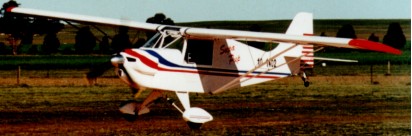
The Festival, manufactured by SC Aerostar S.A. of Romania, is a ready-to-fly, FAA certified, Special Light Sport Aircraft, and has been designed with one idea in mind: To create an affordable airplane which is safe, simple, and easy to inspect, maintain and operate.
Stall: 36 kt / 41 mph / 66 kmh Cruise: 101 kt / 116 mph / 187 kmh VNE: 130 kt / 150 mph / 241 kmh Empty Weight: 388 kg / 855 lbs MTOW: 599 kg / 1320 lbs Climb Ratio: 770 ft/min / 4 m/s Glide Ratio: 1:12 Take-off distance (50ft obstacle): 1246 ft / 380 m Landing distance (50ft obstacle): 951 ft / 290 m
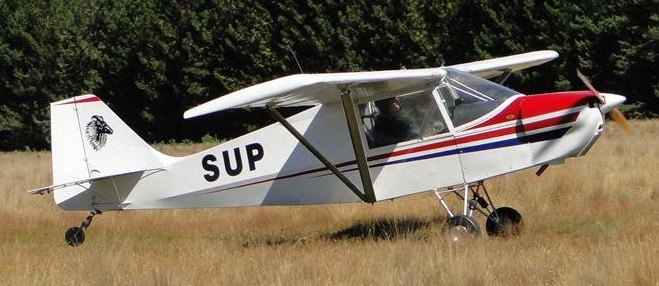
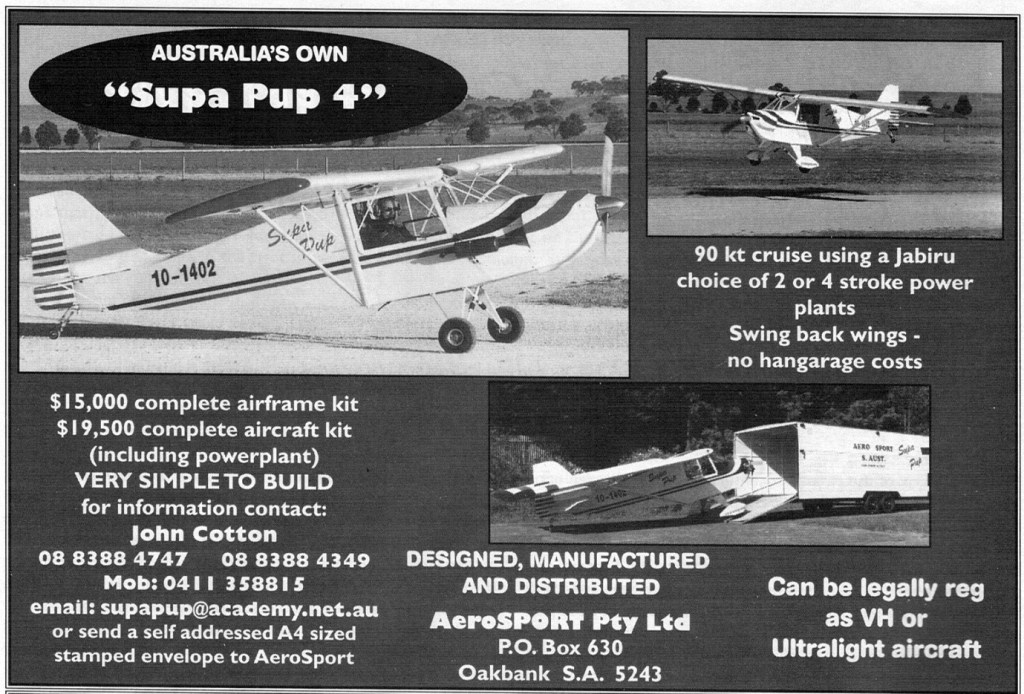
Australian made the Aeropup is an ultralight with dual controls. The wings fold back for transporting. Fast folding wings enable one person to swing the wings back to trailer width without help in minutes.
The pedigree of the SUPAPUP goes back to the early eighties when they were being individually hand built in Hahndorf, South Australia. The production gradually built up through Mk.1, Mk.2, and Mk.3 versions. Around 1987, production ceased and the former company disbanded due to having to invest prohibitive amounts of money to comply with stringent Australian aviation rules. Around forty deposit paid orders were refunded. The new company redesigned the concept to incorporate some very saleable features including the Fast Fold wing feature and invested the money necessary to bring the SUPAPUP to full maturity as a production plane made using jigs, and then designed the Aeropup in kit form. The Australian designed and built Supa Pup 2 is a conventional looking strut braced high wing tail dragger built of aircraft grade materials, chrom moly tube fuselage along with aircraft construction methods. The design criteria of the Supa 2 is to cater for the increased demand and reduce the man hour/cost production, the result is a more streamlined comfortable and efficient aircraft with better flight characteristics that still retains all the excellent qualities of the original Supa Pup. Rotax 447 engine is an option.
SupaPup Mk.4
Offered the Supa Pup 4 single-seat cabin lightplane in assembled or kit forms (first flown 1994). The Supa Pup 4 features folding wings.
Chris Wade commenced the initial theoretical design and research in 1997 as the sole designer of the aircraft and the highly modified Mazda Ml3B rotary engine. The actual construction for the first prototype started in Au¬gust 1999. A lot of time was spent in the initial design phase and this has allowed ASI to perform trials without any major deviations from the original design. Minor problems with quality and suitability of imported componentry have now been resolved and results of recommendations from the test pilot, CAA and other consultants have seen several modifications during the testing phase. The size of the wheels being a significant change. On 27 July 2001, at Tauranga airport, New Zealand, the prototype underwent its first official flight with Rob Sanders as test pilot. The original configuration allowed prototype testing in the Microlight category. Nearing the end of the flight testing programs a number of improvements to the original prototype were incorporated. A new mechanical pre rotator replaces the original hydraulic design which was not considered efficient enough. The new version is capable of spinning the rotors to 275rpm. The horizontal stabiliser effectiveness has been improved by raising it into the centre of the prop wash. Yaw stability has been improved by moving the vertical stabilisers into the last one third of the prop wash which also increases airflow over the rudders. This has particularly improved control at low airspeeds of 15 knots and less. The rotor head and mast assembly is now fully adjustable for different weight and balance characteristics. The original reduction drive was a Mazda gearbox which whilst successful, came with a significant weight penalty. A Hirth gearbox has been used to simplify testing of gear ratios, however it is planned to use a geared tooth belt drive in production. New controls have been designed which can easily be changed from dual to single place and back again. The fuel tank has been re located to improve balance and ease of manufacture. Engine cooling problems have been addressed and the modified Mazda 13b rotary powerplant is now producing 157hp at 5500rpm in a detuned state. The engine has been running on 91 unleaded fuel consurn¬ing 18 litres per hour. Weight including gearbox, starter, radiator, alter¬nator and pre rotator drive is 146kgs.
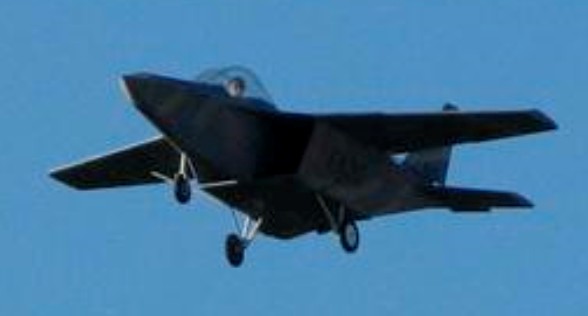
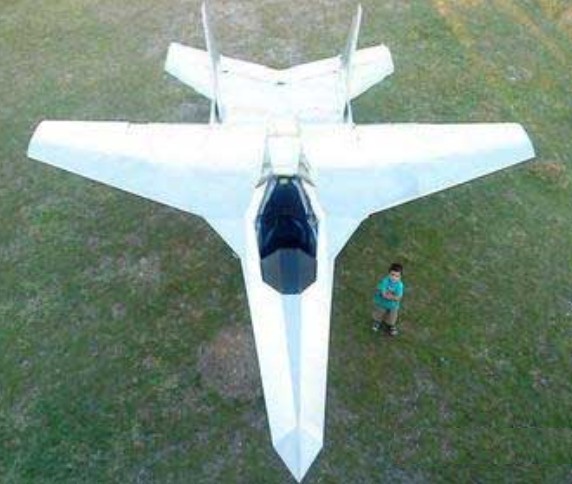
Planning on building a new generation sport, ultralight fighter was hindered by construction technology at that time. Almost a decade had gone by without any actual development regarding this type of aircraft before work began.
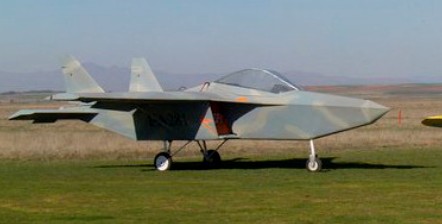
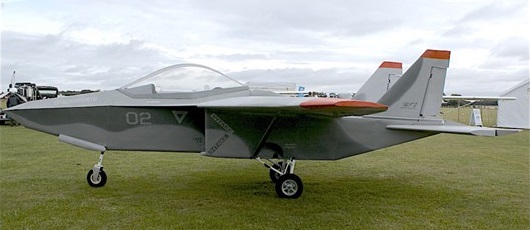
The SF/1 Archon is made from aircraft aluminum alloy, designed with lines like a real Jet fighter. Wing removal time is approximately 30 min.
All metal construction from aircraft aluminium alloy. Requires just basic skills and tools to assemble in a small workshop.
Engine: 50 hp hp range: 40-130 Prop diameter max: 1.6m Wingspan: 7.25m Length: 8m Height: 2.2m Empty weight: 205 kg / 452 lb Gross weight: 300 kg / 661 lb Fuel capacity: 42 lt Fuel consumption: 12 lit/h Vne: 113 kts / 130 mph / 210 kph Stall: 65 kph / 35 kts / 40 mph Cruise speed: 81 kts / 93 mph / 150 kph Vmo: 180 kph Va: 155 kph Vfe: 110 kph Climb rate: 800 ft/min / 4 m/s Glide ratio: 7-1 Load factor: +4/-2 G Take off distance over 50ft (15m) obstacle: 490 ft / 150 m Landing distance over 50ft (15m) obstacle: 490 ft / 150 m