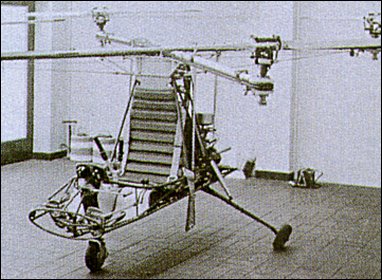
In early 1960s Aerotechnik began development of cheap, easy-to-fly helicopter, a prototype of which was completed in 1968.
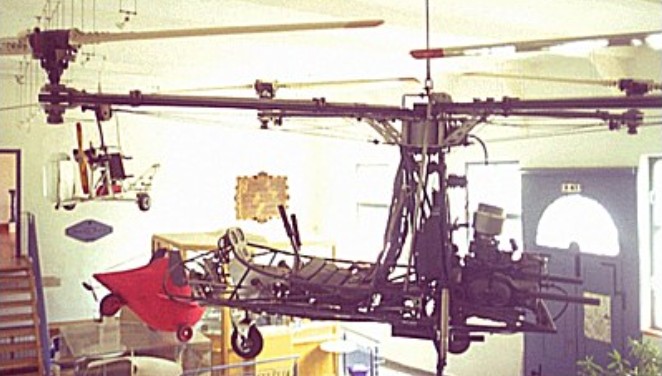
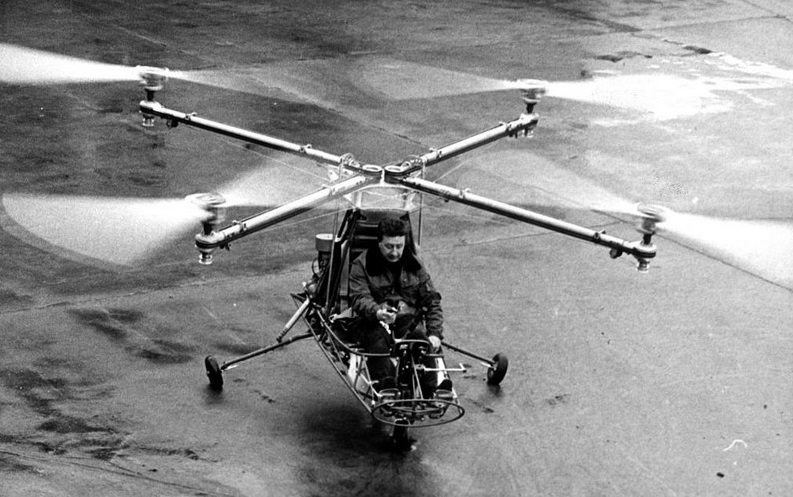
In early 1960s Aerotechnik began development of cheap, easy-to-fly helicopter, a prototype of which was completed in 1968.
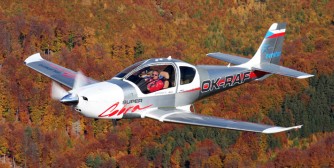
Initial work on the VUT100 Cobra project began in 2001 with the maiden flight made in November 2004.
October 2006 saw the maiden flight of the VUT100 SuperCobra.
The VUT 100 Cobra was designed to offer speed with cabin comfort and ergonomics, low cost of ownership and long range. Planned to be available in two versions differing by the power units: The VUT 100-120i is equipped with a Lycoming IO-360-A1B6 (200HP) and mt-propeller MTW-12. The VUT 100-131i is equipped with a Lycoming IO-580-B1A (315HP) and the mt-propeller MTV-9.
The VUT100 Cobra was designed to enable easy and fast access to the parts of the airframe which require inspections and maintenance and the number of nodes which require inspections and adjustment were minimized.
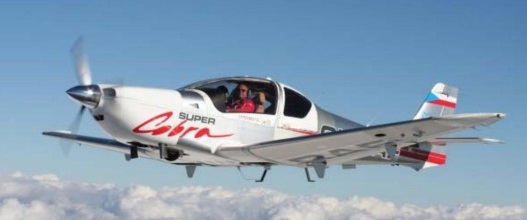
The development team designed the airframe from traditional duralumin using 3D design systems and optimized from the strength point of view by FEM methods.
VUT100-120i
Engine: Lycoming IO-360-A1B6, 200 hp
Propeller: Hartzell HC-F3YR-1RF
Diameter: 74 in / 188 cm
Type: 3 blade, constant speed
Length: 26.3 ft / 8 m
Wing span: 33.5 ft / 10.2 m
Internal cabin length: 122 in / 3.1 m
Seats: 4
Internal cabin width: 51.5 in / 1.31 m
Fuel usable: 90 USG / 340 lt
Internal cabin height: 48 in / 1.22 m
Max. take-off: 2,930 lb / 1,330 kg
Useful load: 1,105 lb / 500 kg
Max. level speed: 155 kts / 287 km/h
Max. rate of climb: 1,000 fpm / 5 m/s
Stall speed: 50 kts / 93 kph
Range: 1,080 nm / 2,000 km
Endurance: 8 hrs
Load factors: +3.8g -1.52g (Normal category) / +4.4g -1.76g (Utility category)
VUT100-131i
Engine: Lycoming IO-580-B1A, 315 hp
Propeller: Hartzell HC-F3YR-1RF
Diameter: 76 in / 193 cm
Type: 3 blade, constant speed
Length: 26.3 ft / 8 m
Wing span: 33.5 ft / 10.2 m
Internal cabin length: 122 in / 3.1 m
Seats: 4
Internal cabin width: 51.5 in / 1.31 m
Fuel usable: 90 USG / 340 lt
Internal cabin height: 48 in / 1.22 m
Max. take-off: 3,200 lb / 1,450 kg
Useful load: 1,260 lb / 570 kg
Max. level speed: 175 kts / 324 km/h
Max. rate of climb: 1,000 fpm / 5 m/s
Stall speed: 55 kts / 103 km
Range: 1,000 nm / 1,830 km
Endurance: 6 hrs
Load factors: +3.8g -1.52g (Normal category) / +4.4g -1.76g (Utility category)
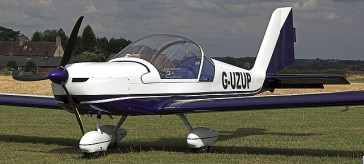
In 1996 Aerotechnik with Evektor began development of the EV-97 team Eurostar airplane.
A two-seat light or ultralight monoplane designed for sport/leisure flying, touring and training with limitation to non-aerobatic VFR operations. The Eurostar is aerodynamically controlled, single-engine, two-seat, low-wing, all metal plane with a fixed tricycle undercarriage and controllable nose wheel. The aircraft is equipped with four cylinder four stroke 80 HP Rotax 912 UL engine, optionally 100 HP Rotax 912 ULS or 80 HP Jabiru 2200.
Beginning in 2000 was the development of the EV-97 VLA airplane. This aircraft is called SportStar in US and EuroStar in Europe. Development of the SportStar version began in 2003.
By 2009, over 800 of the EuroStar had been delivered worldwide and the 2009 price was 50000 Euro.
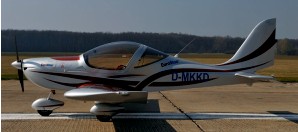
The EuroStar SL is an advanced ultralight airplane with 46.5 inches / 1.18 meters of shoulder room, new system of cockpit climate control, and state of the art glass cockpit avionics. During testing more than 450 spins in all configurations were carried out. The airplane was type approved by the Ministry of Defence of the Czech Republic and is operated by the Pilot Training Centre of the Czech Army for initial pilot training.
The EuroStar SL has an all metal anodised and corrosion-proofed aluminium airframe. It has all joints of construction riveted as well as bonded for durability and long fatigue life.
The EuroStar is certified for towing of the sailplanes up to 700 kilos (Duo Discus, Janus, Ventus, ASK 21, Ventus, Blanik etc.) and for towing of banners up to 140 sq.m.
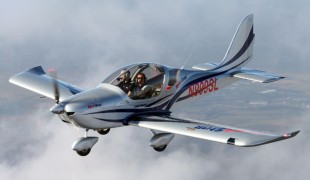
The SportStar MAX is an S-SLA aircraft business travel or training.
The airplane was the very first aircraft approved by the FAA (2005) in the U.S. S-LSA category and is holder of the prestigious “S-LSA Aircraft of the Year” honour from AeroNews Network (ANN).
The SportStar MAX with a re-designed, based on an EASA JAR-VLA certified pilot training airplane, airframe at 1320 lb / 600 kg MTOW provides up to 640 lb / 290 kg of useful load combined with range 700 nm / 1300 km, and was available as an IFR version. The SportStar MAX combines aerodynamic composite materials with an all-metal primary airframe structure.
The SportStar MAX build quality and reliability is based on Evektor´s certified aircraft production by the European Aviation Safety Agency (EASA), ISO 9001:2000 Quality Management System as well as LAMA certification.
The canopy gives 46.5 inches / 1.18 meters of shoulder room, and glass cockpit avionics.
The SportStar MAX has an all metal anodised and corrosion-proofed aluminium airframe with all joints of construction riveted as well as bonded. The SportStar is certified for towing of the sailplanes up to 700 kilos (Duo Discus, Janus, Ventus, ASK 21, Ventus, Blanik etc.) and for towing of banners up to 140 sq.m.
The SportStar is a Light Sport Aircraft (LSA) designed for pilot training, sport and leisure flying and touring with limitation to non-aerobatic VFR operations.
The Evektor fully certified (European EASA standard), general aviation-quality aircraft is conventionally powered (Rotax), and has evolved to the flagship Harmony and includes the SportStar MAX, both with all-metal construction, long range economy cruise at 110 knots by 2012. Base prices 2012: US$98,000 (MAX); US$102,000 (Harmony).
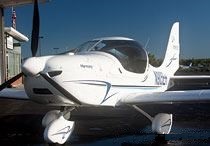
Evektor EV-97 Team Eurostar
Engine: Rotax 912 ULS, 100 hp
TBO: 1,500 hrs
Propeller: Fixed, on-ground or in-flight adjust
Cabin width: 46.5 in / 1.18 m
Length: 17 ft 7.5 in / 5.98 m
Height: 8 ft 1.6 in / 2.48 m
Wing span: 26 ft 7 in / 8.1 m
Empty weight: 609 lb / 276 kg
MTOW: 992 lb / 450 kg
Design load: +6 g / -3g
Max. baggage: 33 lb / 15 kg
Wing tanks cap: 17.17 USG / 65 lt
Vne: 270 km/h
Stall speed: 65 km/h
Maximum level speed: 240 km/h
Rate of climb: 7.5 m/s
Cruise 75% power: 200 km/h
Service ceiling: 6,000 m
Take-off distance: 200 m
Maximum range: 750 km
Landing distance: 300 m
Aerotow
Engine: Rotax 912 ULS, 100 hp
Prop: Woodcomp SR 3000XC electrically variable
Take-off run: 200-300m
TO dist 50ft: 450-600m
Climb speed: 100-120 kph
ROC: 2-3 m/sec
Cruise speed: 120-160 kph
Engine: Rotax 912 UL, 80 hp
TBO: 1,500 hrs
Propeller: Fixed, on-ground or in-flight adjustable
Cabin width: 46.5 in / 1.18 m
Length: 17 ft 7.5 in / 5.98 m
Height: 8 ft 1.6 in / 2.48 m
Wing span: 26 ft 7 in / 8.1 m
Empty weight: 609 lb / 276 kg
MTOW: 992 lb / 450 kg
Design load: +6 g / -3g
Max. baggage: 33 lb / 15 kg
Wing tanks cap: 17.17 USG / 65 lt
Vne: 270 km/h
Stall speed: 65 km/h
Maximum level speed: 220 km/h
Rate of climb: 5.0 m/s
Cruise 75% power: 180 km/h
Service ceiling: 6,000 m
Take-off distance: 280 m
Maximum range: 750 km
Landing distance: 300 m
Glide Ratio: 1:12
Evektor SportStar
Engine: Rotax 912ULS, 100 hp
TBO: 1500 hr
Prop: Fixed, ground adjustable
Wingspan: 28 ft 5 in / 8.65 m
Overall length: 19 ft 7.5 in / 5.98 m
Height: 8 ft 2 in / 2.48 m
Power loading: 12.1 lb/hp
Max ramp weight: 1212 lb
Gross weight: 1212 lb
MTOW US VG: 1,320 lb / 600 kg
Landing weight: 1212 lb
Empty weight, std: 680 lb / 309 kg
Useful load: 522-640 lb /237-291 kg
Useful fuel, std: 31.2 USG / 118 lt
Payload, full std. fuel: 355 lb
Seating: 2
Cabin width: 46.5 in / 1.18 m
Vne: 146 KIAS / 270 km/h
Maximum level speed: 115 KCAS / 213 km/h
Cruise 75% pwr: 100-110 kt
Fuel consumption 75%: 4.5-5.0 USG/hr
Stall speed: 40-46 kt / 74-83 kph
Best rate of climb SL: 840 fpm
Service ceiling: 13,100 ft
Takeoff ground roll: 620 ft / 190 m
Landing ground roll: 590 ft / 180 m
Baggage volume: 6.2 cu.ft / 175 lt
Max. baggage: 55 lb /25 kg
Design load: +6 g / -3g
Maximum range: 700 nm / 1,300 km
Total endurance: 8.5 hrs
Aerotow
Engine: Rotax 912 ULS, 100 hp
Prop: Woodcomp SR 3000XC electrically variable
Take-off run: 200-300m
TO dist 50ft: 450-600m
Climb speed: 100-120 kph
ROC: 2-3 m/sec
Cruise speed: 120-160 kph
Evektor Sportstar SL
Engine: Rotax 912 ULS / Rotax 912S (IFR)
Horsepower: 100
MTOW: 1320 lb
Empty weight, equipped: 745 lb
Useful load, std: 575 lb
Overall height: 8 ft 2 in
Overall length: 19 ft 7.5 in
Wingspan: 28 ft 5 in
Baggage volume: 6.2 cu. ft
Baggage capacity: 55lb
Wing tanks cap: 31.2 USG
Design load factors: +6/-3 G
Cabin width: 46.5 in
Vne: 146 KIAS
Vs: 45 KCAS
Vso: 40 KCAS
Max speed: 115 KCAS
Cruise 75% power: 110 KCAS
Range: 700 nm
Total endurance: 8.5 hr
Rate of climb, SL: 1020 fpm
Service ceiling: 15,500 ft
Takeoff ground roll: 620 ft
Landing ground roll: 590 ft
Aerotecknik Eurostar
Engine: Rotax 912, 80 hp
Wing span: 7.9 m
Wing area: 10.2 sq.m
MAUW: 480 kg
Empty weight: 275 kg
Fuel capacity: 50 lt
Max speed: 225 kph
Cruise speed: 185 kph
Minimum speed: 65 kph
Climb rate: 4.5 m/s
Fuel consumption: 9 lt/hr
Certification: Vz, CZ UL Z
Seats: 2
Price (1998): 98,850 DM
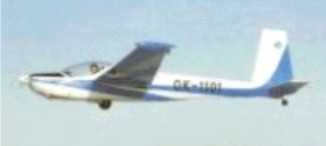
Designed by Karel Dlouhy in the middle of 70´s as a powered self-launching derivative of the LET L 13 Blanik, the Vivat uses a rear fuselage and wings very similar to the L 13. Of all metal with fabric covered control surfaces. The wings do not incorporate the flaps of the L 13, but retain the DFS type airbrakes. The center section and cockpit area are widened to make room for the two-place side- by-side seats. The main wheel is retractable, and the wingtip outrigger wheels fold back at the same time. The tail wheel is steerable, being linked to the rudder circuit. It can also be unlocked and be fully castoring outside the normal rudder-linked range. The Vivat was offered with a choice of engines, the SHE with the Czech Walter mikron, matched to a three position Hoffmann propeller, and the SL with a German Limbach fitted with a Muhlbauer electrically operated constant speed feathering propeller. The engine compartment is fitted with cooling shutters which can be closed to reduce drag when the engine is off. Both models were offered with a two wheel non-retractable landing gear as an alternative to the single retractable wheel with tip outriggers.
Around 200 units of the L-13 Vivat were successfully exported to USA, Canada, Australia, South Africa, Egypt, Israel, Germany, Sweden and many other countries.
Production of the L13 Vivat motorgliders ended circa 2005.
Vivat L 13
Engine: Walter Mikron III AE, 64bhp/ 48kW
Wing span: 16.8m / 55.1ft
Wing area: 20.2sq.m / 217.4sq.ft
Empty Weight: 500kg / 1102lb
Payload: 220kg / 485lb
Gross Weight: 720kg / 1587lb
Wing Load: 35.64 kg /sq.m / 7.3lb/sq.ft
Aspect ratio: 13.7
L/DMax: 24 @ 100 kph / 54 kt / 62 mph
Seats: 2
MinSink: 1.1 m/s / 3.60 fps / 2.13 kt
Airfoil: NACA 63(2)A-615, root; -612, tip
An improved version of the AC-13 was designed, known as the AC-14. A larger version of the AC-13, powered by a Turbomeca Artouste II shaft turbine and with accommodation for five.
The prototype AC.14 used part of the structure of one of the AC.13s but had a lengthened cabin section with a rear seating area and a larger 400shp Turbomeca Artouste IIB turboshaft engine. The engine is mounted above the cabin, which is extensively sound-proofed. Residual thrust is used to increase forward speed, and anti-torque control by gas deflection in helicopter flight and by vertical rudders in gyrodyne flight (high speed cruising).
The single, four-blade rotor has double-articulated blades with an area each 0.84sq.m, and total disc area of 72.35sq.m.
The landing gear of of skid type with a 2.0m track.
The enclosed cabin seats a pilot at the front and four passengers in two side-by-side pairs behind. Entrance doors are on each side of cabin.
An initial series of six was completed in Madrid by ENHASA and the first flew on July 16, 1957.
Having provided funds for the Aerotecnica helicopter project, the Spanish Government ordered ten examples. These were delivered to the Spanish Air Force, with the designation EC-XZ-4, where they served for a relatively short period before being retired.
Aerotecnica AC-14
Engine: 1 x Turbomeca Artouste IIB shaft-turbine, 400hp.
Oil capacity: 9.4 lt
Main rotor diameter: 9.60m
Overall length: 11.22m
Fuselage length: 8.25m
Height: 3.10m
Weight empty: 700kg
Weight loaded: 1300kg
Max speed: 180km/h
Cruising speed: 150km/h
Best rate of climb SL: 300m/min
HIGE: 2700m
Service ceiling: 6350m
Range: 260km
Fuel capacity: 74 lt ag version
Fuel capacity: 244 lt passenger version.
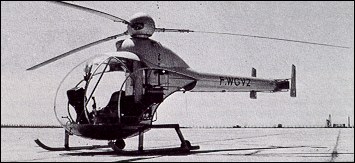
Jean Cantinieau had been working on a three-seat turbine-powered helicopter, the designs for which he had sold to Societe Nationale de Constructions Aeronautiques du Nord (S.N.C.A.N.). Very similiar to the AC.12, SNCAN built two prototypes as the Nord N.1750 Norelfe with a large bubble canopy and a Turbomeca Artouste I turbine mounted above and behind the cockpit.
The three-blade rotor was positioned directly above the engine and had a rotorhead enclosed in a large spherical fairing. The tail rotor was replaced by a ducted exhaust gas controlled by the pilot through pedals.
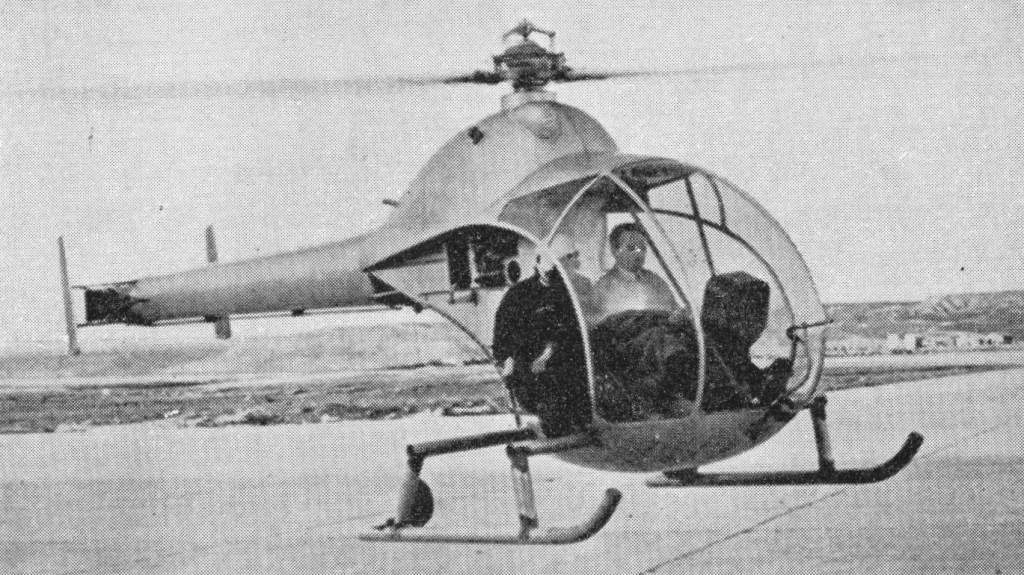
The first Noreife prototype, F-WGVZ, was flown on 28 December 1954 but SNCAN sold both the aircraft and the rights to Aerotecnica who designated them AC.13A. After further testing in Spain, Aerotecnica moved to a larger five-seat version known as the AC.14.
The two prototypes were acquired by the Spanish Government.
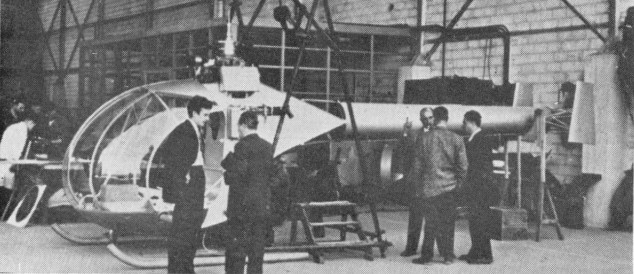
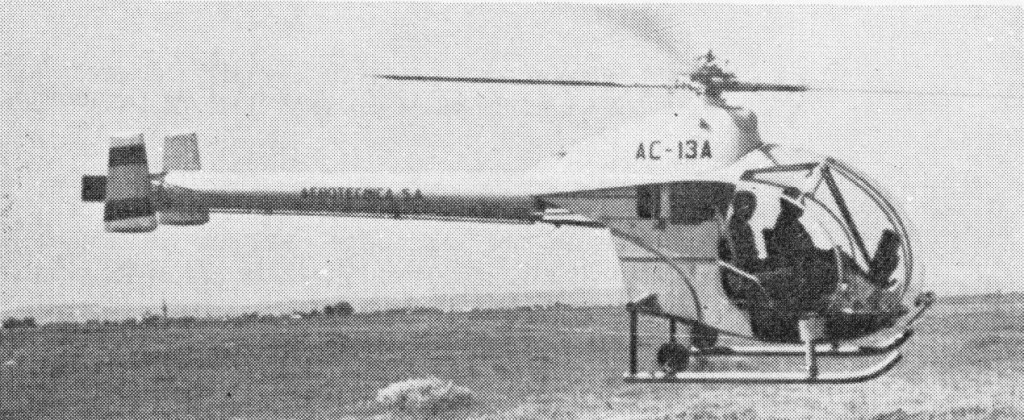
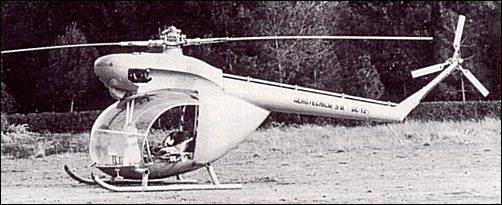
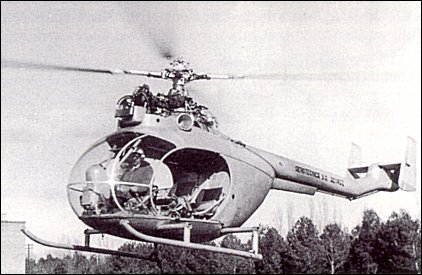
From the Matra-Cantinieau MC-101 / AC-11 Aerotecnica developed the AC-12 and AC-13, the former powered by a 150hp Lycoming O-320 engine and the latter by a Turbomeca Artouste I gas turbine.
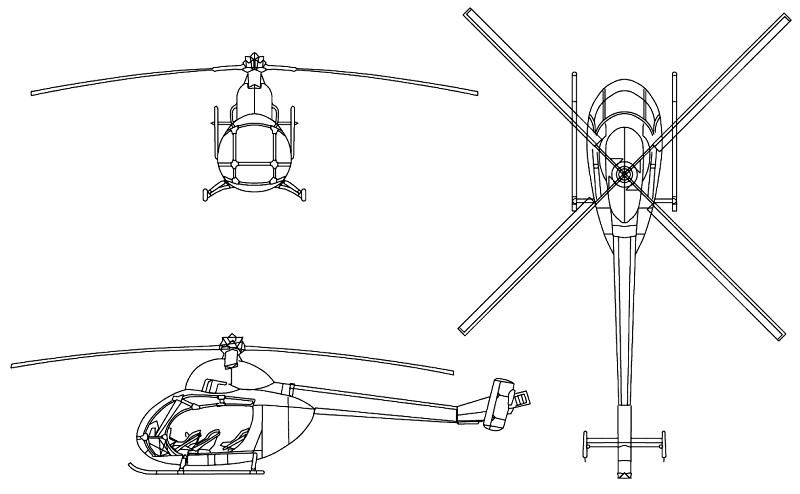
A twin seat single-rotor helicopter, the AC-12 has a full all-metal monocoque fuselage with a large overhead ‘spine’ encompassing the boom and engine mounted above the cabin. Three-blade rotor with double-articulated blades. Each blade has a solid machined duralumin spar which forms the leading-edge, duralumin ribs and trailing-edge. Space between ribs is filled with a plastic foamed resin compound named Klogecell, with a final overall covering of Fiberglas. Floating hub, with cyclic and collective-pitch changes made through a “spider.” Rotor blade area each 0.71sq.m. Rotor disc area 57sq.m. Three-blade anti-torque rotor of similar construction to main rotor. Anti-torque rotor blade area 0.0927sq.m. Anti-torque rotor disc area 2.26sq.m.
The main rotor is driven direct from the engine gear-box (7.28 : 1 ratio) and clutch through a universal joint. The anti-torque rotor is driven through a gear-box (1.4 : 1 ratio) and cardan shaft.
Enclosed cabin seating two side-by-side with dual controls. Entrance door on each side of cabin. Landing gear is skid type. Track of skids 2.0m
Two prototypes were built with Spanish Government funding in Madrid by AISA, with a transmission and reduction gear designed on motor-car principles and built by the ENHASA airscrew company. One 168hp Lycoming O-360-B2A fan-cooled engine mounted above the cabin with direct drive through the gear-box to the main rotor. Fuel tank under seats with capacity of 60 litres. Oil capacity 9 litres. The first of these flew on July 20, 1956.
A production order for 12 was received from the Spanish Government with a military designation of XZ-1 where they served for a relatively short period before being retired.
Aerotecnica AC-12
Engine: Lycoming O-360-B2A, 170hp
Main rotor diameter: 8.50m
Overall length: 8.30m
Fuselage length: 7.35m
Height: 2.75m
Fuselage width: 1.22m
Weight empty: 490kg
Weight loaded: 770kg
Max speed: 140km/h
Cruising speed: 110km/h
Rate of climb SL: 258m/min
Hovering ceiling IGE: 1650m
Hovering OGE: 800m
Service ceiling: 3100m
Cruising range: 170km
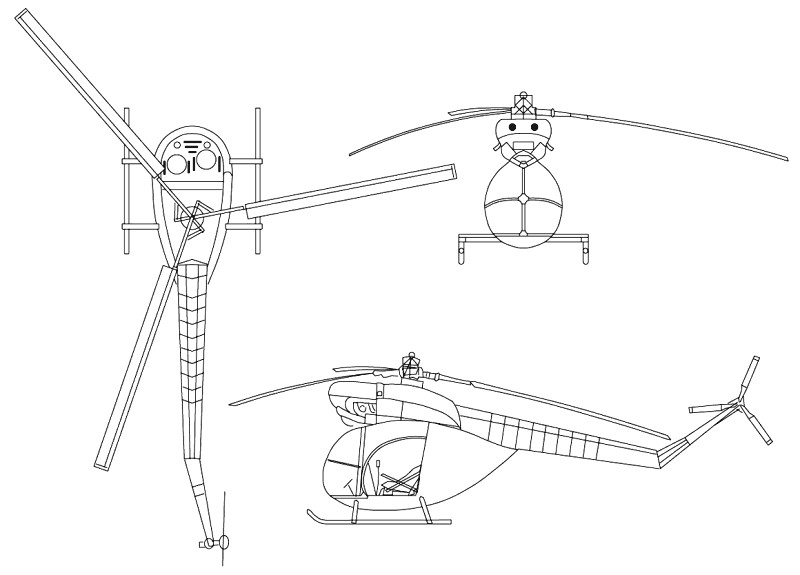
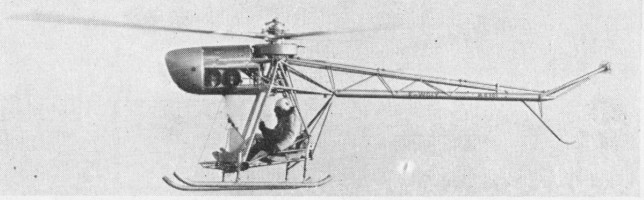
Cantinieau moved on to a two-seater, the MC.101, which retained the general layout of the C.100 but with a much cleaned-up structure and a 105hp Hirth engine. Two examples of the MC.101 were built by Matra (F-WGIX and F-WGIY), the first of which was flown by Gerard Henry at Buc on 11 November 1952. It was shortly after this that Cantinieau gained the interest of the Marquis del Merito, a Spanish industrialist, who had established Aerotecnica SA as an aerial photography and crop spraying business based at Cuatro Vientos near Madrid.
Aerotecnica S.A. began building helicopters by hiring French engineer Jean Cantinieau and acquiring the Matra-Cantinieau MC-101 light helicopter built by the French Societe Matra in 1952. This helicopter was given the designation AC-11 (Aerotecnica-Cantinieau-11). It became evident that the aircraft was underpowered in Madrid’s hot and high conditions and a 150hp Lycoming was installed – in which form it became the Model AC.12.
From the AC-11 have been developed the AC-12 and AC-13.
Engine: 105 h.p. Hirth
Rotor diameter: 26 ft. 4 in
Rotors: 3-blade main; 3-blade tail
Fuselage length: 22 ft
Loaded weight: 1760 lb.
Ceiling; 9,840 ft.
Typical range: 250 miles at 96 m.p.h. with ful1 load.
Seats: 2
Single seat single engined high wing mono¬plane with hybrid control. Wing has constant chord; cruciform tail. Pitch control by weight¬shift; yaw control by fully flying rudder; no separate roll control; control inputs through weight shift for pitch/yaw/roll. Wing braced from above by kingpost and cables, from below by cables; single ¬surface. Undercarriage has three wheels in tricycle formation; torsion bar suspension on all wheels. Nosewheel steering. No brakes. Aluminium tube framework, without pod. Engine mounted above wing driving pusher propeller. Framework from 6061T6 and 2024T3 aluminium, 4130 aircraft steel; coated stainless steel rigging, Dacron wing surface.
The Canadian Skyrider is a hybrid control ultra¬light, the pilot using his swing seat as the principal means of control, with his weight shift aided in yaw by a rudder.
Standard power unit is a twin cylinder Cuyuna 430R with dual ignition and in flight recoil restart facility. Alternatively, the sing¬le cylinder Cuyuna 215 cc engine may be fitted. Construction time is estimated at 30 h; a trailer is needed for transportation.
After producing between 150 and 200 aircraft, the future of the company seemed in some doubt in 1983.
Engine: Cuyuna 430R, 30 hp
Propeller: 48 x 23 inch, 1.22 x 0.58 m
Reduction ratio: 2.0/1
Power per unit area: 0.19 hp/sq.ft, 2.0 hp/sq.m
Wing span: 32.0ft, 9.75m
Fuel capac¬ity: 3.8 USG, 3.2 ImpG, 14.4 lt
Contant chord: 5.0 ft, 1.52 m
Total wing area: 160 sq.ft, 14.9 sq.m
Aspect ratio: 6.4/1
Nosewheel dia. Overall: 11 inch, 28cm
Empty weight: 155 lb, 70 kg
Main wheels dia overall: 11 inch, 28cm
MTOW: 420 lb, 191 kg
Payload: 265 lb, 120 kg
Vne: 55 mph, 88 kph
Wing loading: 2.62 lb/sq.ft, 12.8 kg/sq.m
Power loading: 14.0 lb/hp, 6.4 kg/hp
Engine: Cuyuna 215R, 20 hp
Power per unit area: 0.13 hp/ sq.ft, 1.3 hp/ sq.m
Wing span 32.0ft, 9.75m.
Fuel capac¬ity: 3.8 USG, 3.2 ImpG, 14.4 lt
Contant chord: 5.0 ft, 1.52 m
Total wing area: 160 sq.ft, 14.9 sq.m
Aspect ratio: 6.4/1
Nosewheel dia overall: 11 inch, 28cm
Vne: 55 mph, 88 kph
Main wheels dia overall: 11 inch, 28cm
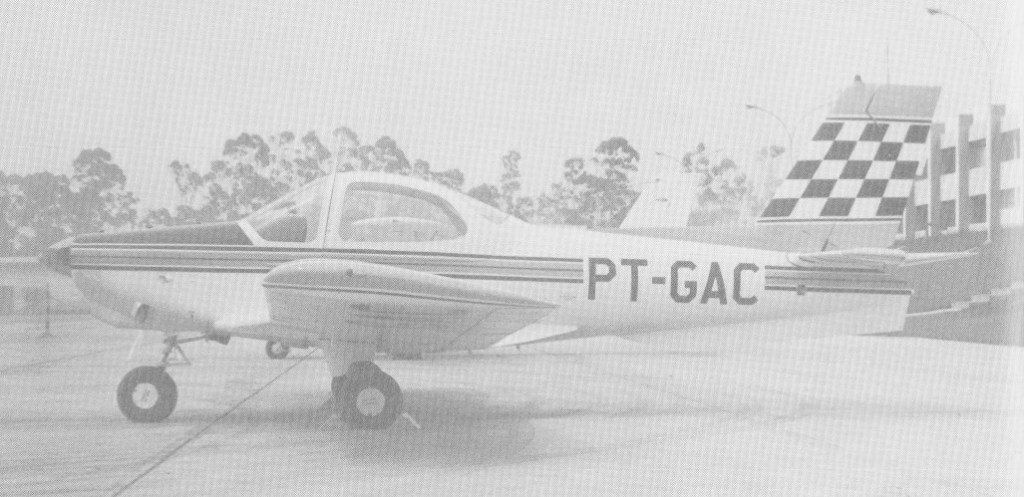
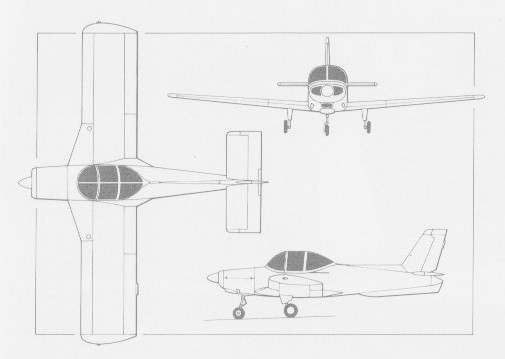
The Aerotec A-122 Uirapuru 2 seat Brazilian military trainer aircraft first flew on 2 June 1965, powered by a 108 hp Lycoming O-235-C1 engine. A second followed powered by a 150 hp Lycoming O-320-a and was offered to the Brazilian Air Force as a replacement for its locally built Fokker S.11 and S.12 basic trainers. Thirty Uirapurus were ordered for this purpose early in 1968 under the military designation T-23. 40 more were ordered in 1969. They have a 160 hp Lycoming O-320-B2B and differ from the civilian model in having fully-adjustable seats, stick controls, a nose wheel the same size as the mains, and a modified cockpit canopy in which only the centre portion slides rearward.
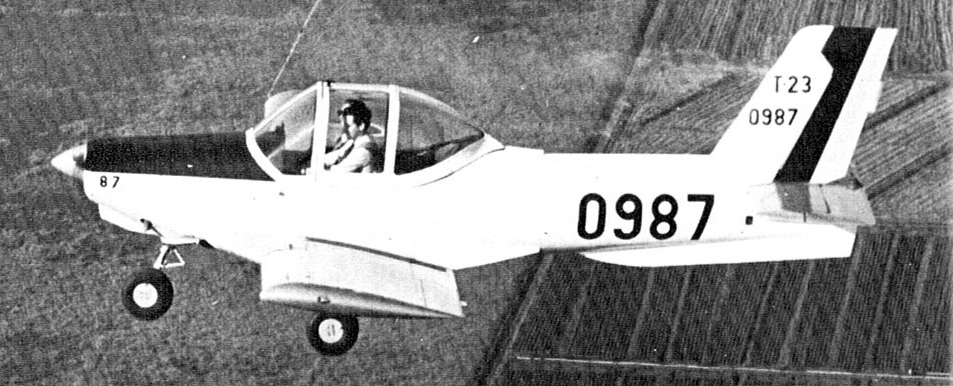
Following the loss of the first production T-23 in 1968, a small ventral fin was added to improve spin recovery.
They were used by Brazilian, Bolivian & Paraguayan Air Forces.
Engine: Lycoming: O-320-B2B, 160 hp
Wingspan: 27 ft 10.75 in / 8.50 m
Length: 21 ft 8 in / 6.60 m
Empty weight: 1191 lb / 540 kg
MTOW: 1825 lb / 840 kg
Max cruise 5000ft / 1525m: 100 kt / 115 mph 185 kph
Service ceiling: 14,760 ft / 4500m
Max range: 700 nm / 805 mi / 1300 km
Max endurance: 6 hr 30 min
Seats: 2
Baggage capacity: 66 lb / 30 kg