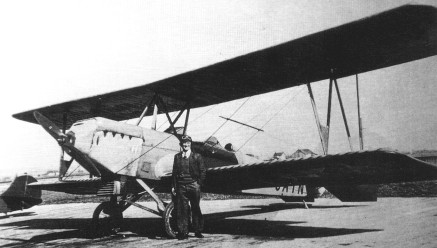
A machine supposedly built by Alexandre and called Garaix/ACR-2, with an 80 hp Anzani.
1 engine
Alexander Eaglerock
Designed by Daniel Noonan the Eaglerock was extensively redesigned as the A-1 by Al Mooney in 1926. The design had folding wings, and Warren-truss wing struts with no wire rigging, and based on surplus Longren components.
The name came about from an injured Golden Eagle cared for as a pet by factory employees, appended with “Rock,” honoring the nearby Rocky Mountains.
The 1925 Alexander Eaglerock had trouble get¬ting off the ground at Denver, where it was being built, because its wing area was too small. Mooney improved and lengthened the wing. He made the up¬per and lower wings exactly alike and left out the center section. So where the fuselage fitted into the bottom set, it gave them a longer span.
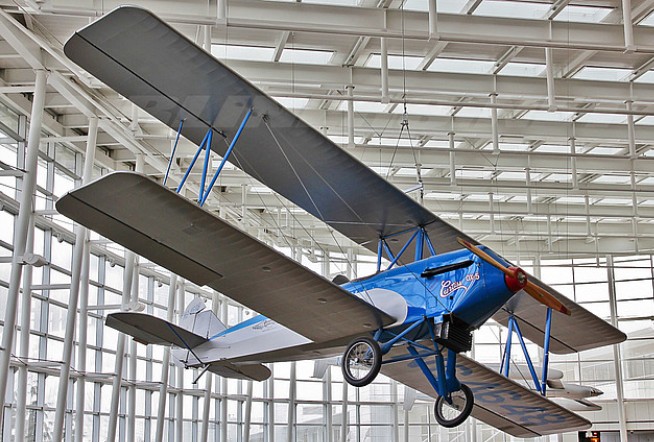
First flying on 19 September 1925, powered with a 100 hp Kinner engine the Eaglerock sold at $3907 flyaway factory. The craft was available with $1562.80 down and the balance in twenty semi-monthly installments of $128.94. Powered by a 150 hp Hisso A the flyaway price was $3230, or $1800.00 down and twenty semi-monthly installments of $107.25. Powered by a 165 hp Wright J-6 the flyaway price was $3397, or $2238.80 down and twenty semi-monthly installments of $182.71.
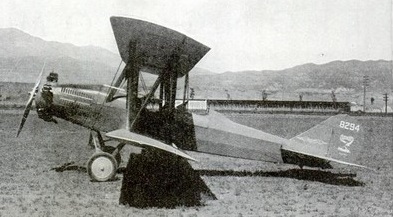
The second Eaglerock design, the 1926 Eaglerock A-1 or New Eaglerock, had 40’0″ lower wing.
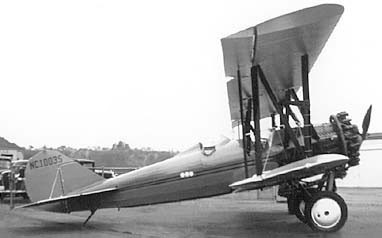
First flying on 7 January 1926, piloted by Capt Cordner, the A-1 sold for $6,500, or $2,250 less motor, receiving DoC approval (ATC 57) in 1928.
895 of all Eaglerocks were built 1927-32. Company records claim a total of about 450 Eaglerock models built by the end of 1928.
Engine: Curtiss OX-5
Eaglerock A-1
Engine: 220hp Wright J-5
Wingspan: 36’8″
Length: 23’11”
Useful load: 786 lb
Max speed: 126 mph
Cruise: 108 mph
Stall: 39 mph
Range: 580mi
Seats: 3
Albessard Aerobus
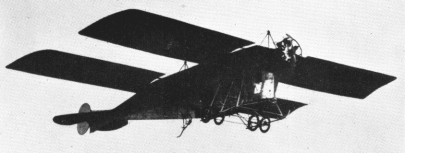
A further development of La Balencelle prototype, the tandem wing Albessard of 1914 flew successfully and sported an enclosed cabin.
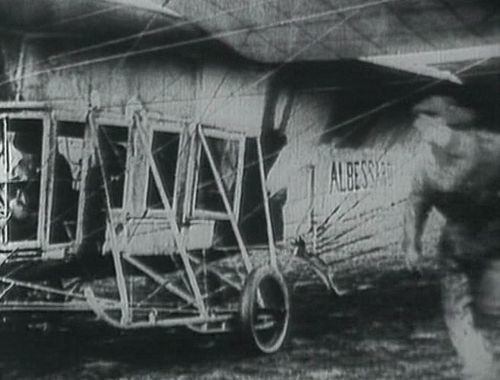
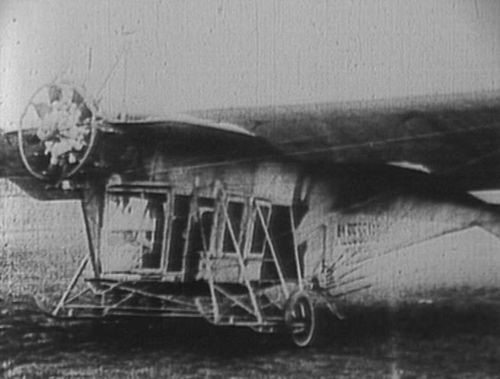
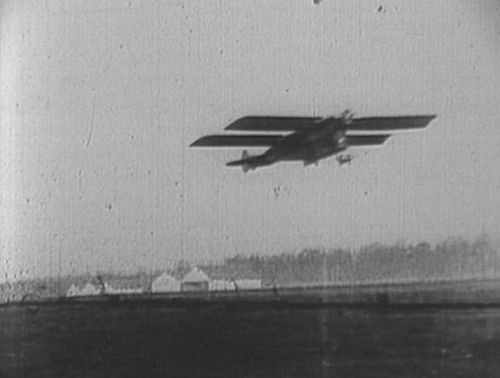
Albessard La Balancelle / Autostable
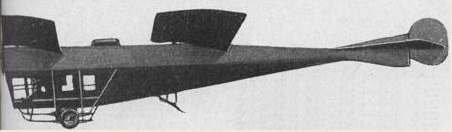
First actual built design of Lucien-Joseph-Antonin Albessard; although not necessarily named “La Balancelle” at the time. Built in 1912, the Albessard La Balancelle experimental aircraft had tandem wings.
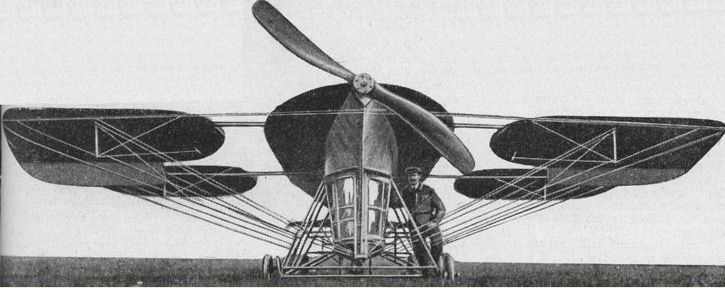
Albessard tried to design a comfortable passenger aeroplane that would prevent stalling in alternating wind conditions, therefore he arranged the wings around an enclosed cabin to help keep the aircraft in the stream. Jules Vedrines tested the machine and noted that it was underpowered.
The design “Autostable” was efficient and research continued until 1926.
Albert A.110
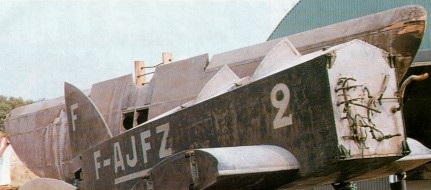
A high wing single-seater, powered by a 60 h.p. five cylinder Walter engine.
Albert A.61
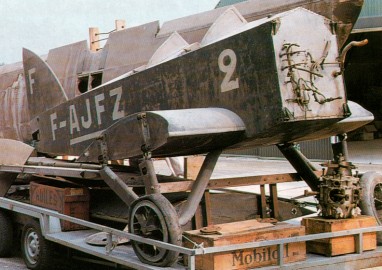
A low wing two seater.
Albert T.E.1
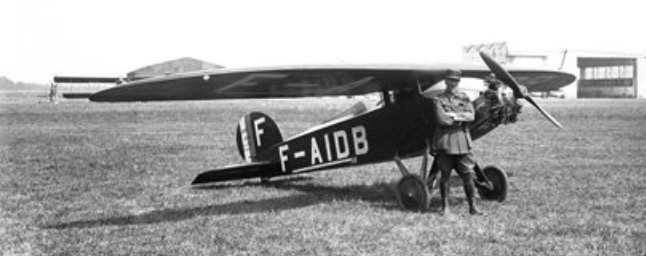
Albert built T.E.1 piloted by Thoret participated in the French Light Plane Competition, Orly, in September 1928. He is ranked fifth.
Five TE-1 were built, with a 40hp Salmson 9-Ad. Some Albert planes crashed due to wing flutter—still rather unknown at the time and particularly affecting cantilever wings insufficiently rigid in torsion.
Bellanca acquired the license and planned to build it in the USA as “Baby Columbia,” but apparently the project failed. At least one TE-1 demonstrator must have reached the USA.
The Albert TE-1 parasol monoplane is the subject of an 8-page 1926 report (perhaps a NACA paper, though the source is identified as “CASI”) available from NASA’s archives, entitled: “Albert TE-1 training airplane.” Their online report server summarizes the abstract as: “The TE-1 is designed for the economical training of pilots and is a single seat parasol cantilever monoplane. It is nearly entirely made of wood, using a 40 HP. air-cooled Salmson A.D. 9 engine, and weighs 255 kg empty.” The report Document ID is 19930089227 and Accession ID is 93R18517 and Report Number is NACA-AC-23. The NASA notes say related information is found in L’Aeronautique, April, 1926. . “December, 1926.”.; and in NACA Aircraft Circular 23.
Albaviation DA-24 MagicONE

The Da-24 has a varying laminar profile with plant tapered, and an integrated fixed slat in the profile for around 70% of the wing, fowler flap and ailerons.
Stall: 27 kt / 31 mph / 50 kmh
Cruise: 122 kt / 140 mph / 226 kmh
VNE: 154 kt / 177 mph / 285 kmh
Empty Weight: 280 kg / 617 lbs
MTOW Weight: 450 kg / 992 lbs
Climb Ratio: 1450 ft/min / 7 m/s
Take-off distance (50ft obstacle): 450 ft / 137 m
Landing distance (50ft obstacle): 500 ft / 152 m
Albatros Werke Taube / Dove
The 1913 Albatross Taube / Dove monoplane was designed and built by AlbatrosCompany in Germany.
Albatros Werke RE 1
The 1913 Albatros RE 1 monoplane was designed and built by Albatross Company in Germany.

