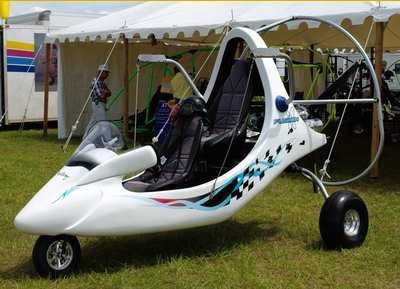
The Alliant Destiny Fusion is a two-seat powered parachute, designed and produced by Alliant Aviation based at Richland, Michigan. USA. The aircraft was designed to comply with the FAI Microlight rules. It features a parachute-style high-wing and two-seats in tandem in a semi-stressed fibreglass cockpit, tricycle landing gear and a single 52 hp (39 kW) Rotax 503 engine in pusher configuration. Versions were also available with a Rotax 582 or Hirth 3701 engine. The Rotax 503 version cost US$18,750 in 2004.
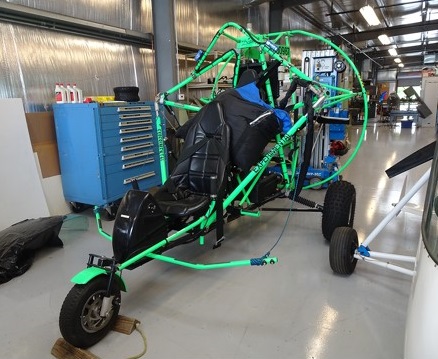
The Alliant Destiny XLT two-seat powered parachute was designed to comply with the FAI Microlight rules. It features a parachute-style high-wing and two-seats in tandem in an open frame, tricycle landing gear and a single 64 hp (48 kW) Rotax 582 engine in pusher configuration. Versions were also available with a Rotax 503 or Hirth 3701 engine. The Destiny XLT cost US$16,050 in 2004 with a Rotax 582 engine.
2005 Alliant Aviation Destiny XLT 2000
Destiny Fusion Powerplant: 1 × Rotax 503, 52 hp (39 kW) Propeller: 3-bladed Wing area: 540 sq ft (50 sq.m) Empty weight: 340 lb (154 kg) Gross weight: 849 lb (385 kg) Cruise speed: 29 mph; 25 kn (47 km/h) Rate of climb: 1,080 ft/min (5.5 m/s) Crew: two
ST Single-seat variant
LT Two-seat lightweight variant
XLT Heavier two-seat variant Powerplant: 1 × Rotax 582, 64 hp (48 kW) Propeller: 3-bladed Empty weight: 386 lb (175 kg) Gross weight: 992 lb (450 kg) Maximum speed: 34 mph; 30 kn (55 km/h) Cruise speed: 32 mph; 28 kn (52 km/h) Crew: two
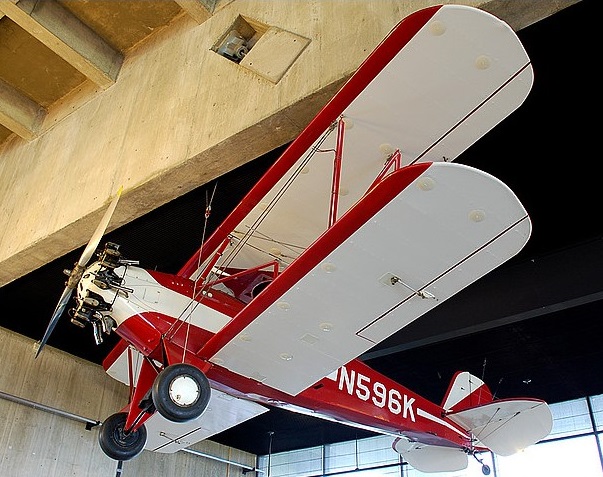
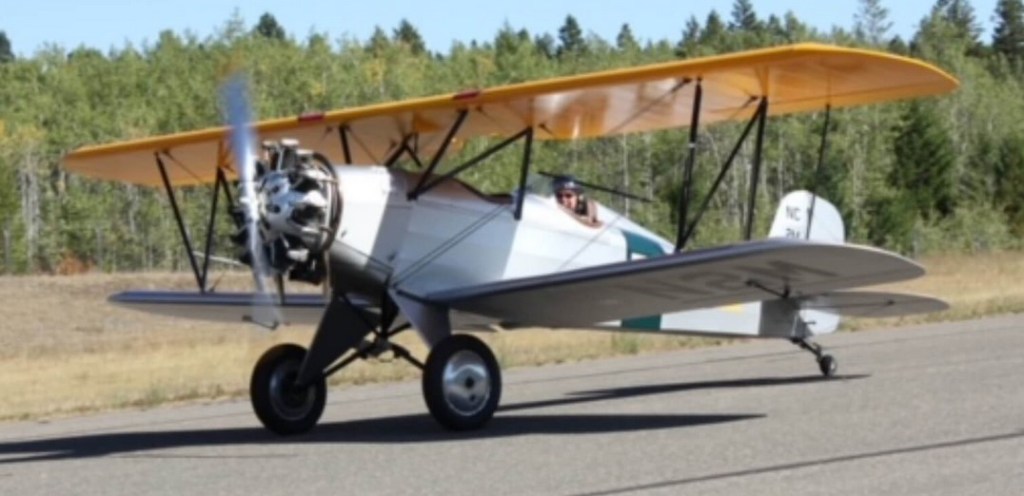
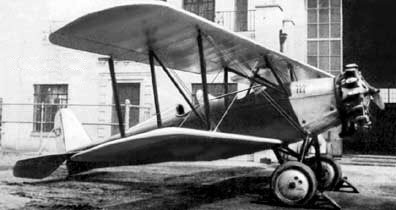
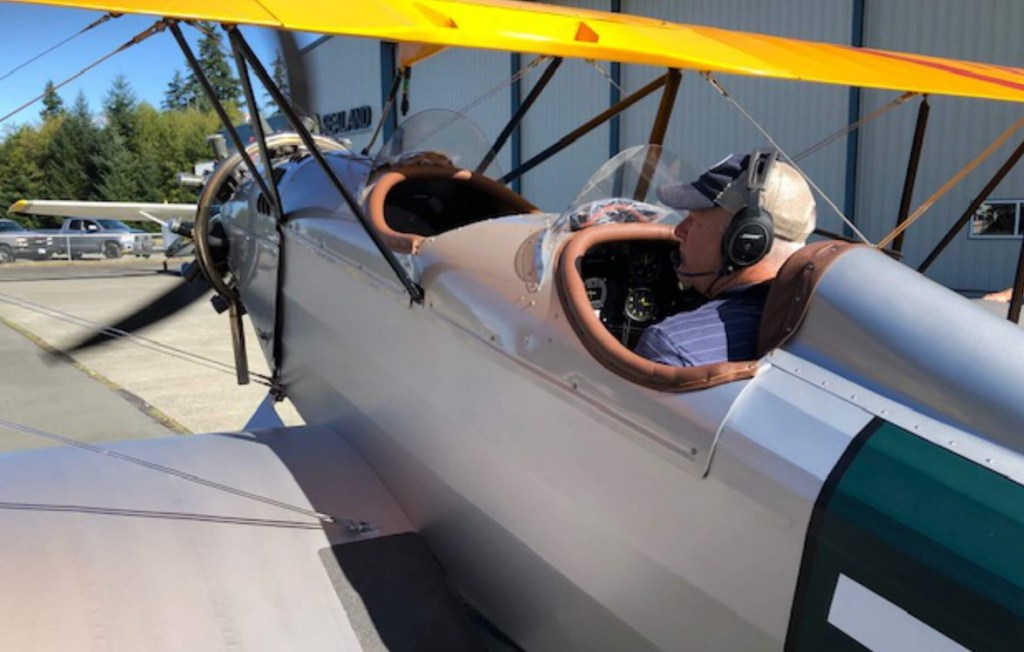
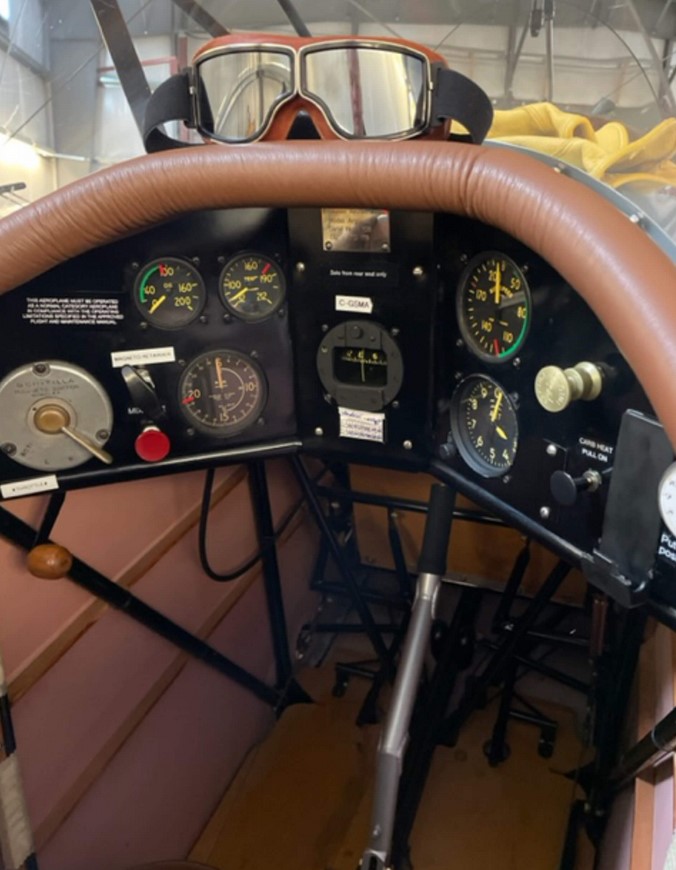
The Argo was a two-place open cockpit sport-trainer biplane seating two in tandem and was powered with the new 7-cylinder Hess “Warrior” engine. The type certificate number (ATC 178) for the Alliance Argo was issued in July of 1929 and it was manufactured by the Alliance Aircraft Corp. in Alliance, Ohio.
The prototype Argo was shown at the Detroit Air Show for 1929 and soon was in production. It was well received in flying circles all over the country, but the oncoming depression was hard felt at Alliance Aircraft. In all, some twenty of the Argo Sport-Trainer were built
After the prototype, N3601, 19 or 20 were manufactured (priced at $4,500) before the type became the Warrior line in 1930.
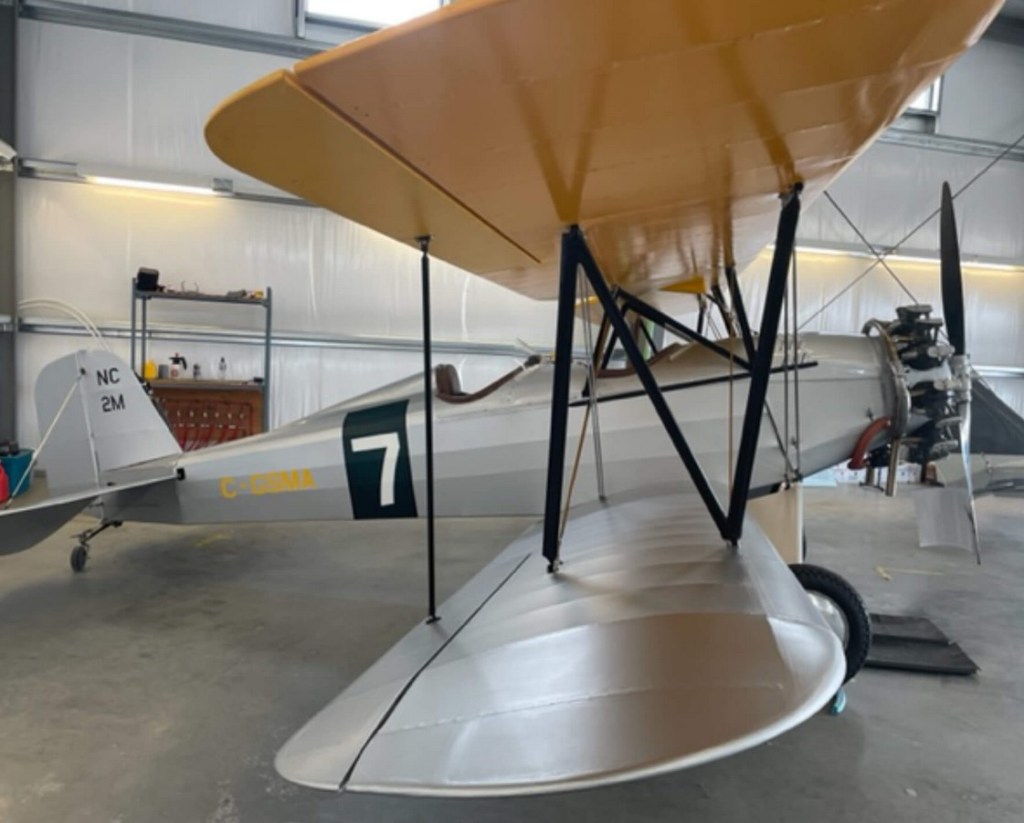
Alliance A-1 NC2M
By 2012, there were two survivors, with 1929 Argo N596K (cn 106) preserved at the Ohio History Center.
For transatlantic attempt built (1919) a special P.2 Seabird biplane with 21 -hour endurance, powered by Napier Lion engine; a second example crashed attempting Australia flight.
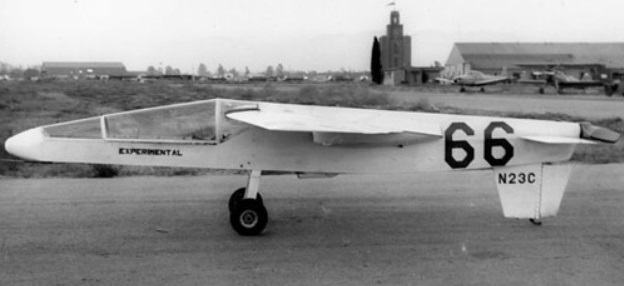
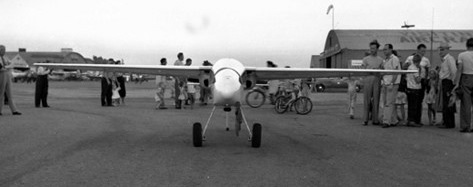
The Allenbaugh Grey Ghost Goodyear racer, No.66, registered N23C, was designed and built by Paul Schaupp for Ed Allenbaugh. A prone pilot required a fuselage of only 25 inch deep. The engine was behind the pilot.
The pilot, Dwight Dempster, was killed on the first flight when the engine failed on take-off due to oil sump pump failure. The Prone pilot arrangement was outlawed by the P.R.P.A.
Engine: Continental C-85 Span: 18 ft Length: 19 ft 6 in
Goodyear racer number #95 the ‘Californian’ was built by Ed F. Allenbaugh, and flown by Dwight Dempster, both from North Hollywood, in the 1947 Goodyear races. Registered NX67893, it featured a fiberglass fuselage shell.
The All American Aircraft 10-A Ensign (ATC 792) is an all-metal side-by-side two seat cabin monoplane with a large Plexiglas canopy enclosing the engine. Power is provided by an 85 hp Continental C85-12 engine, and the nosewheel of the fixed tri-gear is steerable.
Designed by Ernest Adler as an all-metal design with side-by-side cockpit under a bubble canopy, and knee-action tricycle gear, was a victim of the post-war slump.
All American 10-A NX14281
First flown towards the end of 1945, the Model 10-A Ensign was designed and built by All American Aircraft Inc, a company previously specialising in sub-contract work for other manufacturers.
Priced at $3,495, at least four were built; NX14281, NX8003H, NC8004H, and NX90648.
A proposed production version was to have offered dual controls as optional.
Planned retractable-gear 125hp Model 10-D was canceled in the design stage.
Engine: Continental C85-12, 85 hp Wingspan: 33 ft 0 in Wing area: 138 sq.ft Length: 21 ft 0 in Height: 8 ft 6 in Empty weight: 1000 lb Loaded weight: 1550 lb Max speed: 120 mph Cruise: 110 mph ROC: 700 fpm Service ceiling: 12,000 ft Range: 400 mi Seats: 2
Alisport initiated development of the STOL YUMA in 1994. A single engine, two-seater side-by-side, high-wing monoplane with a metal structure, all aircraft structural parts are heat-treated and corrosion inhibiting coatings are used throughout. All aluminum skins are bonded to the underlying structure prior to final riveting. The cockpit structure is a welded tubular steel frame, and aluminum is used for the wings, tail-cone, and empennage. The control surfaces are fabric-covered. The flight characteristics of the YUMA are enhanced by an optimized wing profile and carbon-fiber leading edge slats (Handley-Page type) that directly address the requirements of S.T.O.L. flight. The large flaps permit steep final approaches to facilitate descent over tall obstacles. The fuel system is two wing tanks and a header tank at the firewall providing a total endurance of up to five hours.
Engine: Rotax 912 UL (80 HP) Wing span: 9,75 m Cabin width: 1,18 m Length: 6,45 m Height: 2,45 m Wheelbase: 2,00 m Wing area: 13,4 sq.m Aspect ratio: 6,6 Empty weight: 282 kg Max takeoff weight: 450 kg Wing loading: 33,5 kg/sq.m Maximum speed: 175 kph Cruise speed 75%: 150 Km/h Stall (without flaps): 55 Km/h Stall speed (with flaps): 50 Km/h VNE: 105 kt / 121 mph / 195 kmh Rate of climb: 6 m/s TO dist (with 1 pob): 40 m TO dist (full load): 45 m Landing distance: 55 m Max ceiling: 5000 m Fuel capacity: 85 lt Endurance max payload at cruise speed 75%(5000 rpm): 5,2 hr
Engine: Rotax 912 ULS (100 HP) Wing span: 9,75 m Cabin width: 1,18 m Length: 6,45 m Height: 2,45 m Wheelbase: 2,00 m Wing area: 13,4 sq.m Aspect ratio: 6,6 Empty weight: 282 kg Max takeoff weight: 450 kg Wing loading: 33,5 kg/sq.m Maximum speed: 185 Km/h Cruise speed 75%: 160 Km/h Stall (without flaps): 55 Km/h Stall speed (with flaps): 50 Km/h VNE: 105 kt / 121 mph / 195 kmh Rate of climb: 8 m/s TO dist (with 1 pob): 30 m TO dist (full load): 40 m Landing distance: 55 m Max ceiling: 5000 m Fuel capacity: 85 lt Endurance with max payload at cruise speed 75%(5000 rpm): 4,5 hr
Engine: Rotax 914 UL (115 HP) Wing span: 9,75 m Cabin width: 1,18 m Length: 6,45 m Height: 2,45 m Wheelbase: 2,00 m Wing area: 13,4 sq.m Aspect ratio: 6,6 Empty weight: 282 kg Max takeoff weight: 450 kg Wing loading: 33,5 kg/sq.m Maximum speed: 195 Km/h Cruise speed 75%: 170 Km/h Stall (without flaps): 55 Km/h Stall speed (with flaps): 50 Km/h Rate of climb: 10 m/s TO dist (with 1 pob): 30 m TO dist (full load): 40 m Landing distance: 55 m Max ceiling: 7000 m Fuel capacity: 85 lt Endurance with max payload at cruise speed 75%(5000 rpm): 4,1 hr
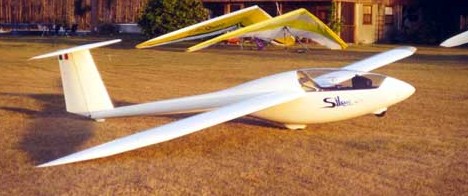
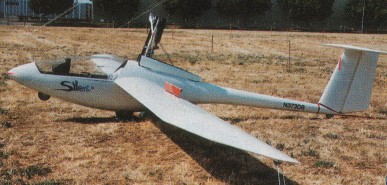
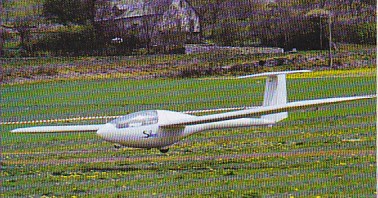
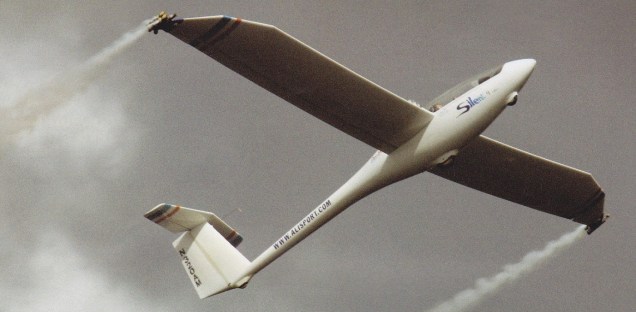
The Silent Club is a light sailplane with 12-meter fiberglass wings for recreational flying. It has a blend of agility/control responsiveness, climb performance, safety, and fun. The two-position flaps have a reflex position to maintain good glide performance at higher airspeeds. The pure sailplane and fuel-injected self-launcher versions were available as quick-build kits. Assembly is simple, both due to all controls having fully automatic connections and due to the light weight of the wings. The airframe is built entirely of composite materials, with use of carbon fiber in the aft portions of the fuselage pod, the tail boom, and various critical locations of the structure. The cockpit is completely built of glass fibre. The Silent Club’s low sink rate and its stability while thermalling allow it to fly with hang-gliders and to be practically unbeatable in climb when compared with Standard class or 15m class sailplanes. It is easy to both launch and to land, and is particularly suitable for new pilots performing their first single-seat flights. The Silent Club has very efficient conventional air brakes and can be landed in less than 70 m (230 ft). Due to its span of only 12 m (39 ft) it can be stored in a small space. A fully enclosed “clam-shell” trailer is available for road transportation. The Silent 2 is a high-performance light sailplane with 13-meter wings for recreational and sport flying. The carbon-fiber wings have an elliptical planform, removable winglets, and five flap settings to cover the entire speed range. The pure sailplane and fuel-injected self-launcher versions were available as quick-build kits. Several World records have been set with the Silent 2 in the FAI Class-DU. A basic airframe combined with reasonable pilot weight will generally result in a take-off weight under the 220kg (485 lbs) maximum allowable required for the FAI’s DU Class. The Silent 2’s airframe is built entirely of composite materials, with use of carbon fiber in the aft portions of the fuselage pod, the tail boom, and various critical locations of the structure. The oven-cured wing structure includes extensive use of carbon-fiber. The sandwich skins use vacuum-bagged carbon fabric for the interior layer and glass fabric for the exterior layer while the wing spar uses pultruded carbon rods for the spar caps. It tows well behind trikes, sport-aircraft, and regular towplanes, making it versatile for all types of glider operations. The Silent 2 TARGA is a high-performance light sailplane for recreational and sport flying. It has retractable landing gear, vertical-design winglets, and horizontal stabilizer with automatic trim. The pure sailplane and fuel-injected self-launcher versions were available as quick-build kits.
Powered by the proven Alisport A302efi engine producing 28hp at 6200rpm, this single-lever FADEC engine has electronic ignition, fuel-injection, electric start, and flywheel generator. The counterweighted monoblade carbon-fiber propeller has a swept diameter of 1.4m and electrically retracts into the fuselage along with the engine pylon. The wings have an elliptical planform, vertical design winglets, and a span of 13.3 meters. The wing structure includes extensive use of carbon fiber, both in the sandwich skins and in the tapered I-beam wing spar which uses pultruded carbon rods for the spar caps. The wing geometry is unique in that it varies non-linearly from the root to the tip, both in overall planform shape and in wing section profile. The flaperons stretch for 11.0 meters of the full wingspan and their range of motion varies from positive landing L, to +40 for thermalling, to 00, -40, and S reflex positions for cruising. The sailplane is trimmed in pitch via an innovative variable-position horizontal stabilizer. The stabilizer position is governed by the flaperon setting: the five settings of the flap control produce corresponding changes to the stabilizer incidence, thus defining the trim airspeed in relation to the flap requirements. The conventional elevator remains in trail, minimizing trim drag.
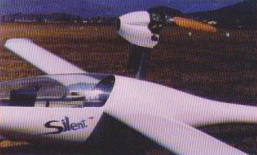
The Silent OP version has the engine mounted on a fixed pylon. Power is the Konig SD 570 or retractable Zanzoterra FZ 34 and single blade prop.
Silent OP
Silent-1N launching with two jet engines
Silent Light sailplane circa 1998. Weight: 130 kg Wing span: 12 m Wing area: 10.3 sq.m Vne: 200 km Stall: 54km Vz min: 0.6 m/sec Glide Ratio: 32 @ 90 kph
Silent Club Length: 20.8 ft. Wingspan: 12m / 39.3 ft. Wing area: 10.3sq.m / 110.9 sq.ft. Aspect ratio: 14-1 Seats: 1 Cockpit width: 22 in Empty wt: 135kg / 300 lbs. Mtow: 240kg / 530 lbs. Payload: 105kg Cruise: 60 mph. Stall: 36 mph L/D: 31-1@ 85 km/h Min sink: 126 fpm / 0.64 m/s @ 65 kph. Structure: all composite
Silent 2 Targa Self-Launch Engine: Alisport A302efi 28 Hp single-cylinder air-cooled Wing span: 13.3 m / 43.6 ft Length: 20.8 ft. Wing area: 8.9sq.m /95.7 sq.ft. Aspect ratio: 20 Empty Weight: 185kg / 385 lbs. Payload: 105kg MTOW: 300kg / 660 lbs Fuel cap: 4.2 USG L/DMax: 40 at 90 km/h MinSink: 0.60 m/s / 118 fpm @ 85km/h Cruise: 56 mph Stall: 40 mph No. of Seats: 1 Cockpit width: 22 in
Silent OP Engine: Konig SD 570, 28 hp Wing span: 12 m Wing area: 10.30 sq.m MAUW: 270 kg Empty weight: 165 kg Fuel capacity: 2 x 20 lt Seats: 1 Max speed: 200 kph
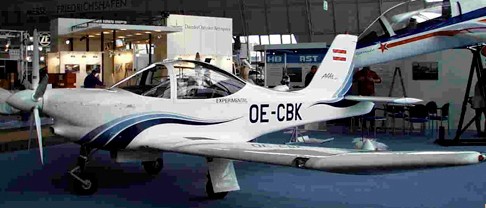
The Alfa is a European kit built aircraft designed by Heino Breditschka. An all-metal low-wing, tri-cycle gear airplane with side-by-side seating, the aircraft is 19.35 t in length and has a wing span of 29.5 ft. Suggested engine for the plane is a 110 HP Volkswagen Porsche G 2 2.400 air cooled boxer engine. The HB207 cruises at 140 kts with an fuel burn of 3.5 US Gal/hr and stalls (flaps down) at 40 kts. It features a 5 blade constant speed prop, retractable landing gear, and detachable wings.