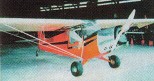
Designed by Dean Wilson, the Magnum will take off the ground in less than 150 feet and will climb 1800 fpm solo. It features a 44.5 in wide cabin (ches) and an open baggage area of 28.5 cubic feet. There is an optional jump seat for a small adult or a couple of kids. The Magnum was available in the Tri or tail-gear landing gear configuration. The Magnum fuselage, landing gear and tail are built of welded 4130 Steel tubing. The wing features aluminum spars with wood ribs. All welding and fabricating is done at Avid’s factory. The wing ribs are pre-built and fiberglass parts are formed. All that is left is assembly and covering. The design of the Magnum’s folding wings, similar to the system used on the Mark IV, allows the Magnum to be towed or trailered.
March 1993
Engine: Lycoming Wing span: 9.75 m Wing area: 12.9 sq.m MAUW: 794 kg Empty weight: 431 kg Fuel capacity: 106 lt Max speed: 249 kph Cruise speed: 209 kph Minimum speed: 64 kph Climb rate: 7 m/s Seats: 2
Engine: Lycoming O-320, 150 hp. HP range: 150-180. Speed max: 155 mph. Cruise: 130 mph. Range: 450 sm. Stall: 40 mph. ROC: 1800 fpm. Take-off dist: 150 ft. Landing dist: 200 ft. Service ceiling: 17,500 ft. Fuel cap: 28 USG. Weight empty: 950 lbs. Gross: 1750 lbs. Height: 6.2 ft. Length: 21 ft. Wing span: 32 ft. Wing area: 140.3 sq.ft. Seats: 2+1. Landing gear: nose or tail wheel.
The STOL was an easy to build 350 hour kits. Equipped with quick folding wings, the AVID STOL takes off in 50 feet, climbs at 2250 fpm and cruise at 85 110 mph, lands in 100 feet and stalls at 25 mph. Trike or taildragger. All steel fuselage pre welded at the factory, with no special tools required to build. Designed by Dean Wilson.
March 1999
Avid Aircraft Mk.IV Stall: 31 kt / 36 mph / 58 kmh Cruise: 113 kt / 130 mph / 209 kmh VNE: 156 kt / 180 mph / 290 kmh Empty Weight: 449 kg / 990 lbs MTOW Weight: 794 kg / 1750 lbs Climb Ratio: 1800 ft/min / 9 m/s Take-off distance (50ft obstacle): 225 ft / 69 m Landing distance (50ft obstacle): 200 ft / 61 m
Mk.IV Speedwing Engine: Rotax 582, 65 hp. HP range: 65-80 Speed max: 135 mph Cruise: 120 mph Range: 566 sm Stall: 46 mph ROC: 850 fpm Take-off dist: 300 ft Landing dist: 600 ft Service ceiling: 12,500 ft Fuel cap: 18 USG Weight empty: 510 lbs Gross: 1150 lbs Height: 6.9 ft Length: 17.91 ft Wing span: 23.96 ft Wing area: 97.31 sq.ft Seats: 2 Landing gear: nose or tail wheel Aerobatic.
STOL Engine: Rotax 582, 65 hp HP range: 65-80 Speed max: 135 mph Cruise: 95 mph Range: 340 sm Stall: 36 mph ROC: 1000 fpm Take-off dist: 140 ft Landing dist: 200 ft Service ceiling: 12,500 ft Fuel cap: 14 USG Weight empty: 510 lbs Gross: 1150 lbs Height: 5.91 ft Length: 17.91 ft Wing span: 29.89 ft Wing area: 122.5 sq.ft Seats: 2 Landing gear: nose or tail wheel.
High-Gross STOL Engine: Rotax 582, 65 hp HP range: 65-80 Speed max: 135 mph Cruise: 95 mph Range: 340 sm Stall: 36 mph ROC: 1000 fpm Take-off dist: 140 ft Landing dist: 200 ft Service ceiling: 12,500 ft Fuel cap: 14 USG Weight empty: 510 lbs Gross: 1150 lbs Height: 5.91 ft Length: 17.91 ft Wing span: 29.89 ft Wing area: 122.5 sq.ft Seats: 2 Landing gear: nose or tail wheel.
The Catalina was formerly named Avid Amphibian. Designed by Dean Wilson, the original prototype was powered by an air-cooled engine, but was changed for the Rotax 582. The sponsons contain the main wheels as well as providing a step, and the drooped wingtip have built-in floats.
March 1999
Engine: Rotax 582, 65 hp. Speed max: 80 mph. VNE: 80 kt / 92 mph / 148 kmh Cruise: 75 mph. Range: 364 sm. Stall: 36 mph. ROC: 900 fpm. Take-off dist: 300 ft (750 ft water). Landing dist: 500 ft (275 ft water). Service ceiling: 12,500 ft. Fuel cap: 17 USG. Weight empty: 600 lbs. Gross: 1200 lbs. Height: 5.75 ft. Length: 19.4 ft. Wing span: 36 ft. Wing area: 150 sq.ft. Seats: 3. Landing gear: retractable tail wheel.
A side by side two seater with standard undercarriage and high wing, the Aerocruiser has a fuselage and wing of fabric covered aluminium Conversion to floats takes one hour.
Engine: Rotax 912, 80 hp Wing span: 9.75 m Wing area: 16 sq.m MAUW: 479 kg Empty weight: 239 kg Fuel capacity: 41 lt Max speed: 169 kph Cruise speed: 135 kph Minimum speed: 48 kph Climb rate: 4.5 m/s Fuel consumption: 10 lt/hr Seats: 2 Certification: Canada Price (1998): Can$43,500 Kit price (1998): Can$37,000
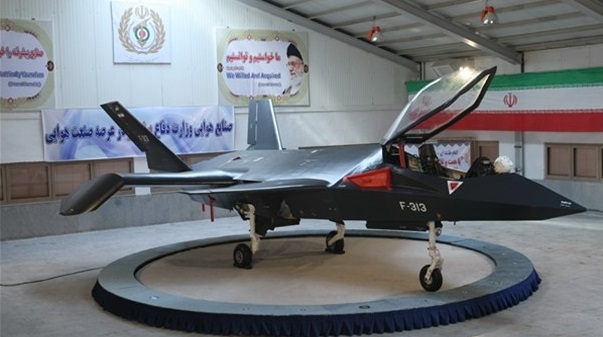
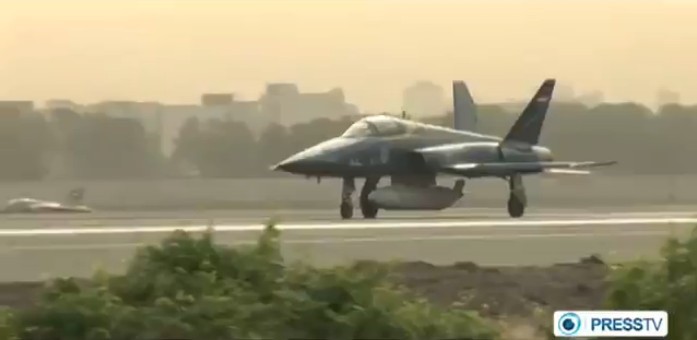
Unveiled on Feb. 2, 2013, the Qaher 313 was no more than a mock-up that will never fly unless it is almost completely redesigned. Iran insists its new home-made stealth fighter aircraft is “not a paper model” but an “aircraft designed by the Islamic Republic for anti-choppers missions.” Furthermore the F-313’s mission would be “protecting security in the Persian Gulf.” This is what a senior Iranian defense ministry official said on Apr. 16.
Addressing a group of Iranian soldiers, Deputy Defense Minister General Majid Bokayee explained that the Qaher 313, designed and developed at a cost of 2 to 3 million USD, has a “unique” structure, will be armed with home-made weapons and equipment and it will feature capabilities that will stun enemies on the battlefield. According to the Iranian Defense Minister Brigadier General Ahmad Vahidi, the Qaher 313 is an advanced aircraft with a very small Radar Cross Section, capable of taking off from short runways and flying at low altitude like no other most advanced western plane.
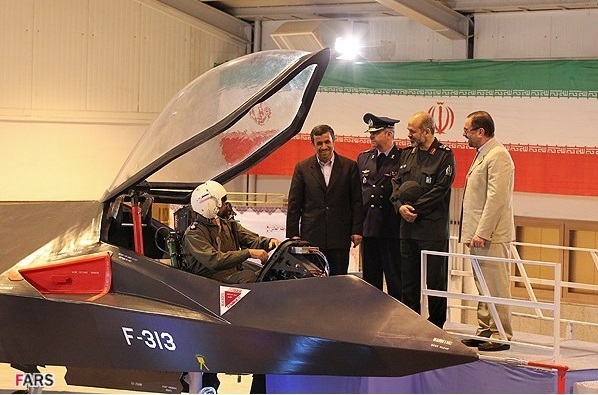
The prototype of the Q-313 (or F-313 according to the stencils applied to the aircraft), was presented to President Mahmoud Ahmadinejad and publicly displayed as part of the Ten-Day Dawn ceremonies held in Iran to celebrate the 1979’s victory of the Islamic Revolution.
In the previous days, the Iranian Defense Minister Brigadier General Ahmad Vahidi had said, “The aircraft will be different from the other fighter jets Iran has already made.”
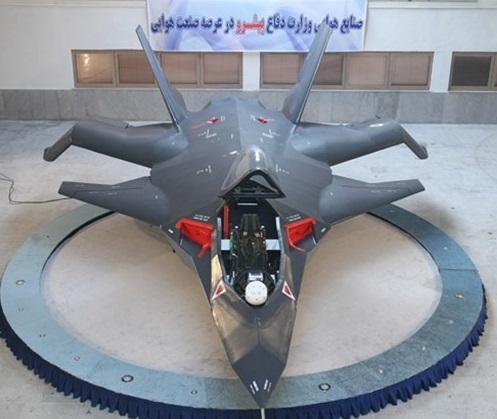
The Q-313 has large, seemingly fixed canards, and little wings whose external section is canted downward. The canopy material looks like plexiglass or something like that. The cockpit seems to be basic (note the lack of wirings behind the front panel and the presence of few instruments, some of those similar to those equipping small private planes…).
The nose section is so small almost no radar could fit in it. The air intakes are extremely small whereas the engine section lacks any kind of nozzle: engine afterburners could melt the entire jet. The aircraft is way too small, look at the image showing an Iranian officer sitting on the ejection seat in the cockpit.
There is a video allegedly showing the Q-313 in the air. Here it is.
The Magnum light aircraft has an all composite hydraulic fully retracting tricycle undercarriage, 30% Fowler flaps with low drag cruise setting, 160 kts continuous cruise on 100 hp, 1000 nautical miles range, 200 kg crew, 50 kg baggage, room for skiis, 21:1 L/D ratio, and a max 21 deg alpha
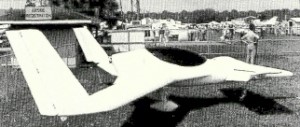
After mixed results with the MicroLight prototype, carmaker Lotus still wanted to build a business for the ultralight canard pusher, and when the arrangements with Rutan didn’t work out, they sought backing to continue alone. When that wasn’t approved, Lotus went looking for partners and teamed up with the Eipper company, a big ultralight builder in those days (now no longer in business) to distribute it in the USA, while Malcolm Lawrence’s Aviation Composites of Thatcham in Berkshire, was to distribute it in the UK and Europe.
Lotus originally planned to build the basic structure themselves, with Aircraft Composites finishing and distributing it. It was then decided that the materials (epoxy glass) and the quality control techniques were not part of the Lotus core business, and Aircraft Composites agreed to take over the development and build, with the help of Peter Jackson’s Specialised Mouldings (a well-known firm in motorsport).
Since Lotus was struggling to cope with the aftermath of Colin Chapman’s death, Aircraft Composites moved into taking over the whole project. Instead, Aviation Composites used the design’s features as a basis for a different aircraft. The company employed VariEze builder Ivan Shaw, and built a similar but much heavier version, the two-seat Mercury prototype (G-INAV c/n AC001).
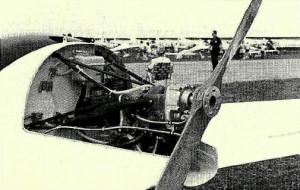
The Mercury featured an all-composite canard configuration with a four-cylinder Magnum pusher engine. The Mercury incorporated various modifications from the Rutan design and Shaw had several problems with it. First of all, it apparently exhibited some not-so-attractive flight characteristics, and its development program suffered a number of developmental problems, among them, the failure to obtain an acceptable engine. When the Magnum engine proved unsatisfactory, and a 40 hp Norton rotary engine was fitted instead. However, testing the brand new aircraft engine of a motorcycle company on an airframe that hasn’t yet been properly flight-tested was not a good idea.
Initially, the aircraft was to be available by February 1986 and Aviation Composites intended to obtain UK certification in the motor-glider category before introducing the type to the US market. However, these setback seriously compromised the fledgling company’s chances to offer a proven model on the market any time soon. Aviation Composites therefore approached Scaled Composites requesting developmental help. While assisting Ivan Shaw, now the company’s production manager on the program, with flight testing (the plane was test-flown by Douglas B. Shane, one of Rutan’s own test pilots), Scaled discovered a poor spin recovery characteristic, and found out the virtue of using of engine power to aid in recovery from a deep stall in a canard pusher-type, using this successfully on several occasions during high angle of attack testing of the Mercury.
Once Aviation Composites realized that changes would be necessary to obtain adequate spin recovery characteristics, the next step should have been to equip the aircraft with a spin recovery parachute and to develop an appropriate aerodynamic fix for the problem. Instead, they discontinued support of the flight testing and further development, and sued RAF for all of their expenses to date—allegedly amounting to several million dollars—claiming that they should have more thoroughly tested the Model 97 in 1983 to find a possible flaw in spin recovery.
The case was scheduled for trial in federal court during January ’91. Burt Rutan best summed up the situation when he declared: “there seems to be no basis, however, these exercises have an enormous effect on our time and distract from our ability to concentrate on things more productive and enjoyable.” The case dragged on (way beyond Lotus being taken over by GM in 1986) and was eventually dropped. The backers disappeared, and Aircraft Composites went into bankruptcy. As for the original MicroLight prototype, it was lost in an accident in which the owner and test pilot of the aircraft were killed, giving some credence to Aircraft Composites’ claim that the design was faulty.
Engine: Norton 40 hp Maximum speed est: 87 kt Range est: 290 nm Seats: 2
This 2/3-scale P-51D Mustang is fully aerobatic and seats two Since the original fighter had a liquid-cooled Rolls-Royce Merlin engine with an external radiator affixed to the underside of its fuselage, Aviation Ad Ventures chose to go the liquid-cooled route. The airplane utilizes a conventional metal structure — welded tubular 4130 steel fuselage frame and riveted aluminum flight surfaces and controls. It is covered with a fiberglass shell from rudder to spinner and features hydraulic gear retraction and flush-riveted surfaces. The new production prototypes have a Bendix Fuel Injection system and Electronic Ignition for better performance. For those homebuilders who prefer to build their own powerplants, a modified kit, the “Mustang Plus,” contains everything except the engine, propeller and instruments. According to Aviation AdVentures, extensive efforts have been made to maintain authenticity in both performance and appearance.
Engine 330-hp 351C1D Ford or 350 CID Chevrolet V8. Cruise 277 mph. Cruise 267mph. Stall 77mph. Rate of Climb 3131 fpm. T/O run 1063ft. Ldg roll: 1400 ft Range: 540 mls. Gross wt: 2660lbs. Empty wt: 1930lbs. Wing span: 23.9ft Length: 20.5ft.