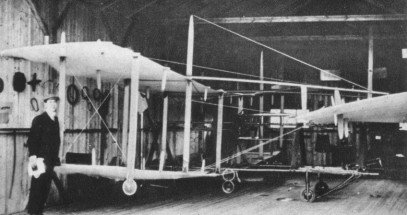
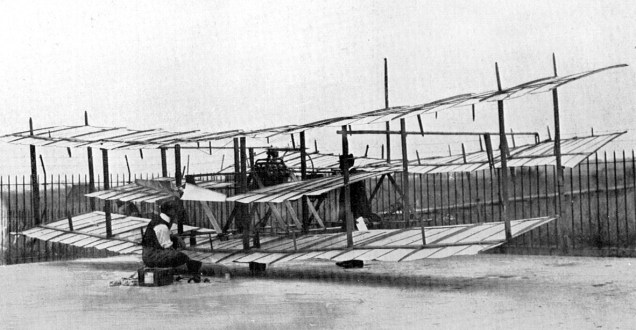
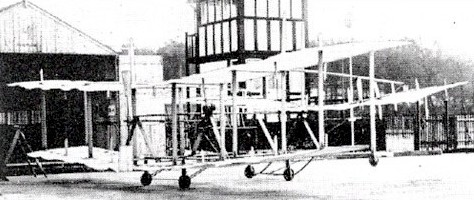
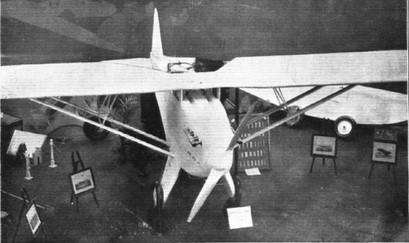
In 1903 Alliott Verdon Roe started to build a man carrying version of his successful model, in the hope of winning £2,500 offered by the management of Brooklands to the first aviator who flew round the track before the end of 1907.
It was soon clear that the little 9 h.p. J.A.P. engine of his biplane was powerful enough only for taxying, so he hired a 24 h.p. Antoinette.
On June 8th, 1908, the new engine enabled him to claim later that he had made the first aeroplane flight by an Englishman in England. Roe’s achievements were too late to win the £2,500.
When claims for the distinction of making the first British powered aeroplane flight were considered officially by the Royal Aero Club 21 years later, it was decided that his early efforts were only hops and not proper sustained flights; the committee accepted the claim of Moore Brabazon who, in May, 1909, flew a distance of 500 yards in his Voisin.
Engine: 1 x 24hp Antoinette Wingspan: 9.14 m / 30 ft 0 in Length: 7.01 m / 23 ft 0 in Height: 2.1 m / 7 ft 2 in Take-off weight: 295 kg / 650 lb Empty weight: 159 kg / 351 lb Seats: 1
Conceived as a multi-purpose aircraft equally suited for the roles of four-seat tourer, agricultural aircraft, ambulance, school trainer and glider tug, the AVI 205 flew for the first time in September 1960, development having been initiated in October 1958. The prototype was powered by a 205 hp Continental E-185-9 engine, but the production model was to have a 225 hp Continental E-225-8 engine driving a metal variable pitch propeller, and modified undercarriage.
For liquid spraying or dusting operations a jettisonable tank or hopper was to be attached beneath the fuselage. The AVI 205 is of all-metal construction with fabric covering.
Prototype Engine: 205 hp Continental E-185-9 Span: 37 ft 5.25 in Wing area: 215.278 sq.ft Length: 26 ft 3 in Height: 7 ft 2.75 in Max speed: 139 mph at SL Cruise 75%: 112 mph Max range: 652 miles Empty weight: 1433 lb MAUW: 2645 lb
Production model Engine: 225 hp Continental E-225-8 Propeller: metal variable pitch Span: 37 ft 5.25 in Wing area: 215.278 sq.ft Length: 26 ft 11 in Height: 7 ft 2.75 in Max speed: 151 mph at SL Cruise 75%: 132 mph Max range: 756 miles Empty weight: 1620 lb MAUW: 2790 lb
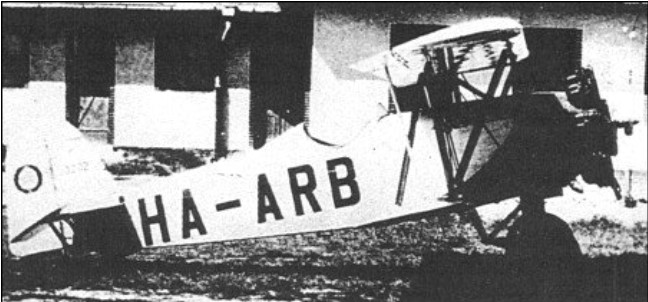
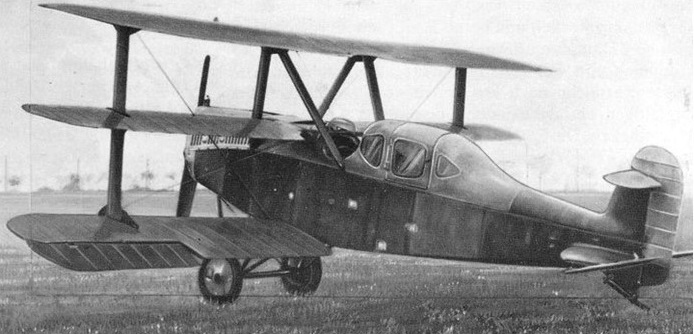
Developed in parallel with the AVIS II and entering flight test shortly afterwards in 1935, the AVIS III was powered by a 550hp Manfred Weiss-built Gnome- Rhone 9Krsd Mistral nine-cylinder radial engine driving a three-bladed adjustable-pitch Hamilton Standard propeller. Unlike the preceding AVIS fighters which were of all-metal construction, the AVIS III had wooden wings with a combination of plywood and fabric skinning, and four prototypes were laid down. The AVIS III demonstrated improved characteristics, but lacking the agility of the Fiat CR.32, which was meanwhile evaluated by the Legilyi Hivatal and adopted for service, it was not ordered into production. The armament of the AVIS III was two 7.62mm Gebauer machine guns, and one of the four prototypes was completed with minor modifications as the AVIS IV.
AVIS III Engine: 1 x 700hp Weiss/Gnome Rhone 9Krsd Wingspan: 9.50 m / 31 ft 2 in Length: 7.80 m / 26 ft 7 in Height: 3.20 m / 11 ft 6 in Wing area: 20.20 sq.m / 217.43 sq ft Max take-off weight: 1380 kg / 3042 lb Empty weight: 1210 kg / 2668 lb Max. speed: 310 km/h / 193 mph Cruise speed: 256 km/h / 159 mph Ceiling: 6500 m / 21350 ft Range: 400 km / 249 miles Crew: 1 Armament: 2 x 7.62mm mm
The poor results achieved with the AVIS I fighter prompted Prof Abody-Anderlik and his team to redesign the aircraft despite the decision of the Legilyi Hivatal to acquire 21 Fiat CR.20bis fighters from Italy. While retaining the Jupiter VI engine, the redesigned fighter, the AVIS II, featured a slimmer, slab-sided fuselage, redesigned vertical tail surfaces, narrower interplane bracing struts and increased gap. Empty weight was reduced by 100kg and, after initial trials, the engine was enclosed by a Townend ring. The AVIS II commenced flight test early in 1935, but still proved overweight and lacking in the agility demonstrated by contemporary foreign fighters. The planned armament of twin 7.62mm Gebauer guns was never fitted. Development was abandoned in favour of the higher-powered AVIS III.
Engine: 1 x 420hp Weiss Jupiter VI Wingspan: 9.00 m / 30 ft 6 in Length: 7.80 m / 26 ft 7 in Height: 2.90 m / 10 ft 6 in Wing area: 21.20 sq.m / 228.19 sq ft Take-off weight: 1320 kg / 2910 lb Empty weight: 1110 kg / 2447 lb Max. speed: 300 km/h / 186 mph Range: 500 km / 311 miles
During the course of 1931, the Central Repair Workshops at Szekesfehervar-Sosto began construction of the AVIS (Anderlik-Varga-Iskola-Sport) aircraft, ostensibly a single-seat trainer and sports aircraft, but, in fact, a fighter intended for use by the Legtiyi Hivatal (Aviation Department), the clandestine Hungarian air arm. An all-metal, single-bay, staggered biplane designed by Prof Elöd Abody-Anderlik, Laszlo Varga, Istvan Liszt and Deszo Fridrik, the first aircraft, the AVIS I, was completed and flown in 1933. Powered by a 420hp Manfred Weiss-built Jupiter VI nine-cylinder radial, intended armament being twin synchronised 7.62mm Gebauer machine guns, the AVIS I proved seriously underpowered, prompting major redesign as the AVIS II. The sole example of the AVIS I was eventually delivered to the flying school at Szombathely where it was to serve until 1936.
AVIS I Crew: 1 Engine: 1 x 420hp Weiss Jupiter VI Wingspan: 9.00 m / 30 ft 6 in Length: 7.50 m / 25 ft 7 in Height: 3.40 m / 11 ft 2 in Wing area: 21.20 sq.m / 228.19 sq ft Max take-off weight: 1480 kg / 3263 lb Empty weight: 1260 kg / 2778 lb Max. speed: 280 km/h / 174 mph Cruise speed: 233 km/h / 145 mph Ceiling: 5200 m / 17050 ft Range: 320 km / 199 miles Armament: 2 x 7.62mm mg
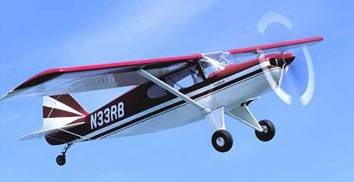
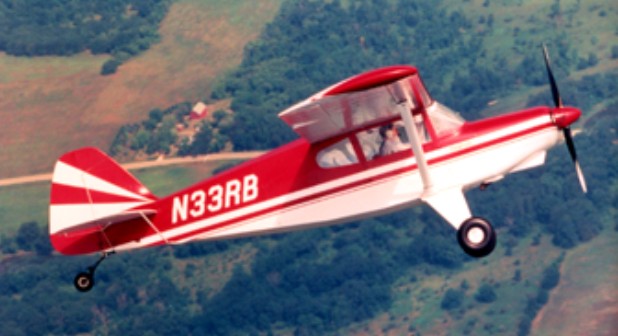
Designed by Robert Barrows of Fincastle, Virginia, the Bearhawk is a 2 or 4-place design. The design parameter were for a heavy hauling BIG airplane with a good cruise speed and economical operation. Short field performance is excellent with the large flaps. The Bearhawk prototype Bearhawk N6890R is powered by a Lycoming 0-360 (170 hp) set up to burn auto fuel.
The Bearhawk was designed as a personal project by Barrows to carry aircraft engines for delivery as freight for his engine rebuilding business in 1995. It features a strut-braced high-wing with an enclosed cabin accessed by doors, fixed conventional landing gear and a single engine in tractor configuration.
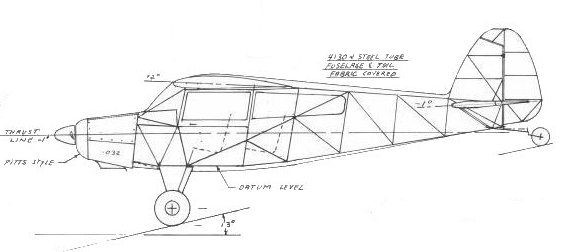
The aircraft fuselage is made from welded steel tubing covered in doped aircraft fabric, while the wings are made from aluminum sheet. Its 33 ft (10.1 m) span wing employs a NACA 4412 mod airfoil, has an area of 180 sq ft (17 m2) and mounts flaps. The aircraft’s recommended engine power range is 150 to 260 hp (112 to 194 kW) and standard engines used include the 180 hp (134 kW) Lycoming O-360 and 250 hp (186 kW) Lycoming O-540 four-stroke powerplants. Construction time from the supplied kit is 1200 hours.
With a 52 inch cargo door, the Bearhawk has a 12 inch C of G envelope. The painted 4130 tube fuselage is ready for covering, giving an actual builders’ time of 850-1200 hours. The all metal wings are 90% factory riveted, with solid rivets. Useful load ranges from 1,000-1,300 pounds and can carry four adults and full fuel. The back seat can be removed resulting in a huge cargo area with unobstructed access. Not only does the back seat have its own door, but also the door combines with the cargo door to allow a six-foot loading area.
The Bearhawk has an all metal wing with a fabric covered steel tube fuselage and tail feathers. The modified 4412 airfoil combined with big flaps and a long, all metal wing offer the best combination for short field take off and landings. A Cessna windshield, modified lift struts, and the fiberglass nose bowl are some airframe components that need not be built by the homebuilder. The builder time is estimated at 1500-2000 hrs. The Bearhawk kit plane is available in a “quick build” kit. Some Bearhawk owners have put the big tundra tires on their airplanes, and operate on the remote landing spots used by bush pilots in Alaska.
The Bearhawk useful load (depending on engine and builder finish out) ranges from 1100-1500 lbs. The 50 USgallon main fuel tanks can be filled and four full sized adults carried with room left over for 250 lbs of baggage or cargo.
The back seat can be removed resulting in a huge cargo area with unobstructed access. Not only does the back seat have its own door, but the back door combines with the cargo door to allow a six foot loading area. In addition, the back seat can be flipped around and mounted with the seat facing aft. This moves the CG of the rear seat passengers 8 or 9 inches forward.
The two prototype Bearhawks (180 hp & 260 hp) have accumulated well over 1000 hours of flight time. There are at least two Bearhawks built by builders with over 700 hours on them.
Introduced in 1995, plans were offered for sale and over 1400 sets of plans have been sold. By November 2012 66 examples had been registered in the United States with the Federal Aviation Administration and seven with Transport Canada. There are over 100 Bearhawks flying in the USA and around the world. The kit only price in 2011 was US$35,295.
The plans are now included at no additional cost with the purchase of a full Quick Build kit for the Bearhawk or Patrol. If less than a full QB kit is purchased, then the plans must be bought from R & B Aircraft (Bob Barrows).
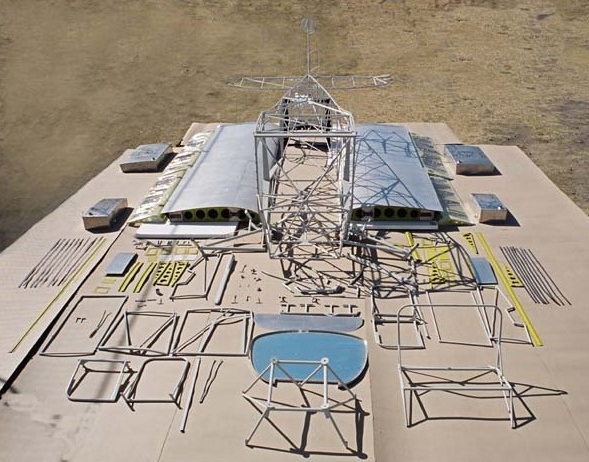
The Bearhawk can be built from plans alone, built from a Quick Build kit made by Bearhawk Aircraft, or some combination of the above. According to Bob Barrows, the QB kit can save up to 70% or more of the time required to build.
The price in 2014 was $295 US for the four place Bearhawk plans. Get a description of the plans or purchase plans online at http://mybearhawk.com/bearhawkplans.html
If less than a full Quick Build kit is purchased, then the plans must be bought from R & B Aircraft (Bob Barrows). The plans are now included at no additional cost with the purchase of a full Quick Build kit for the Bearhawk or Patrol.
The Patrol version can be built from plans alone, built from a Quick Build kit made by Bearhawk Aircraft, or some combination of the above. According to Bob Barrows, the QB kit can save up to 70% or more of the time required to build.
The price is $280 US for the Patrol plans, and can be paid with a money order, US personal check, Canadian Postal Money Order (US $), or international money order (US $).
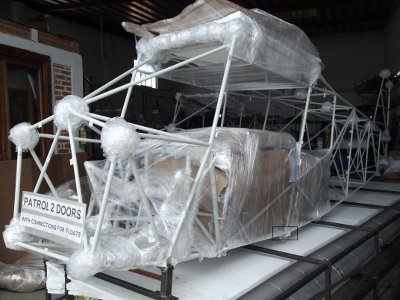
Float plane flying customers suggested putting doors on both sides of the Patrol instead of just the right hand side door to allow more flexibility while docking in windy conditions,. In addition, they requested the fuselages come from the factory with the rear float attach fittings already welded in place. With these suggestions became the Patrol SP (Sea Plane). This model incorporates those two approved design changes; along with some structural strengthening by using thicker wall tubing above the rear float attach fittings. The price of this full Patrol SP Quick Build kit was US$39,700 in 2014.
Prices and contents of the Full Bearhawk kits and components (2014): Full Bearhawk Quick Build fuselage – $23,025 Includes everything that comes with the Bearhawk Quick Build Kit
BASIC FUSELAGE $11,600 The basic fuselage structure complete, but with only the most important attach fittings finish welded on. These are: Wing attach fittings Wing Strut Fittings landing gear attach fittings wing strut attach fittings and the tail surfaces attach fittings. A straight, true fuselage finish welded. Unpainted because there are many parts that still need to be welded on.
Bearhawk Quick Build Wings – $18,475 Includes everything that comes with the Bearhawk Quick Build Kit
WING COMPONENT KIT $7,250 Ribs formed (includes all wing, flap, aileron ribs) All spars primed, assembled and finished
Patrol kit pricing (2014) Basic QB Kit – $30,825 (Some welding required) Includes: Quick-build Wing Kit – Basic Fuselage Kit Deluxe QB Kit – $39,105 (No welding required) Includes: Quick-build Wing Kit – Deluxe Fuselage Kit Quick-Build Wing Kit – $17,305 These wings are sold in an advanced level of completion. The top skin is completely finish riveted. The forward edge of the bottom skin is finish riveted to the bottom flange of the main spar, and aft of the main spar the bottom skin is drilled and dimpled as are the ribs the bottom skin is riveted to. The bottom skin is pop riveted (with a few pops) for shipment. Spars and all spar parts are alumi-prepped, alodined, and primered with MIL-P-23377E strontium chromate epoxy primer. Wing skin interiors and all ribs are primered with Zinc Chromate. Steel parts in the wings are primered with epoxy primer and top coated with MIL-C-22750D epoxy paint. Quick Build wings come with ailerons and flaps 90% finished, but still requiring fabric covering. Fuel tanks are included,but must be installed.
Basic Fuselage – $15,500 Welding required. Includes finish welded fuselage frame (unpainted) and motor mount, all major fittings are welded in place, tabs, sheet metal and minor fitting to be done by builder, landing gear, control stick assembly, rudder pedals and flap controls are finished. Horizontal stabilizer, elevator and rudder are finish welded. Deluxe Fuselage – $21,800 No welding required by builder. The fuselage and all fittings are completed, sand-blasted and epoxy primed. All steel parts are coated with the epoxy primer and top coated with MIL-C-22750D epoxy paint. Sheet metal is included; cut and ready to be assembled, but may require some trimming. Door and frames, seat frames and the fiberglass nose bowl are included.
Builders of the Bearhawk can purchase the plans and can purchase some sub-kits or components.
The two-place side-by-side Bearhawk Companion aircraft is derived from the tandem Bearhawk Patrol wings and four-place Bearhawk 5 fuselage. The aircraft features flush rivet aluminium wings, a steel tube fuselage, and an Airfoil shaped empennage. The fuselage is slightly shorter than the Model 5.
The first flight of the Bearhawk Companion was announced in early 2021.The first flight was performed by the aircraft builder, Dave Lenart of Vermont, USA. It was built from a manufactured kit.
The Companion handles and performs much like the narrower Patrol.
Bearhawk Four seat model with a cabin 42.5 in (108 cm) wide and a gross weight of 2,700 lb (1,225 kg), with 75 reportedly completed and flown by December 2011.
Patrol Two-seats in tandem model with a cabin 32 in (81 cm) wide and a gross weight of 2,000 lb (907 kg), with three reportedly completed and flown by December 2011.
Specifications:
Engine HP range 150-260 hp Wing span 33 ft. Wing Area 180 sq. ft. Length 23 ft 6 in Empty Weight 1150-1350 pounds Gross weight 2500 pounds (2700 pounds on floats) Useful Load 1350-1150 pounds Fuel Capacity 50 USG (standard) 68 USG (optional, w/aux tanks) Vne 175 mph IAS Cruise Speed (62% 260 hp) 150 mph TAS Cruise Speed (180 hp) 135-140 mph TAS Landing Speed 40 mph IAS Takeoff Roll 200-500 ft Rate of Climb @ gross 1,500-1,700 fpm Range @ 65% est. 650 mi. Range @ 50% est. 900 mi. Cabin Width 42 in. Cabin Length 9 ft 8 in. (firewall to back of back of baggage area)
Engine: Lycoming O-360, 170 hp HP range: 150-260 Wing Span: 33 ft. Wing Area: 180 ft. Length: 23 ft. 6 in. Height: 7 ft Empty Weight: 1190 lbs. Gross Weight: 2500 lbs. Fuel cap: 55 USG Top Speed (VNE): 175 mph Cruise Speed: 120-150 mph Landing Speed: 40 mph Take Off Roll: 250-600 ft. Range (55 gal @ 60%): 800 miles Stall: 40 mph ROC: 1500 fpm Range: 800 sm Service ceiling: 15,000 ft Cabin Width: 42 in. Cabin Length (Firewall to the end of baggage area): 9 ft. 8 in Cockpit width: 30 in Landing gear: tail wheel Seats: 4
Bearhawk 180hp Wing span: 33 ft Wing Area: 180 sq. ft Length: 23 ft. 6 in Empty Weight: 1150-1550 lb Gross weight: 2500 lb Gross weight w/floats: 2700 lb Useful load: 1100 lb Vne: 175 mph, IAS Cruise 60% pwr: 135 mph Cruise 75% pwr: 145 mph Touchdown speed: 40 mph Range std tanks: 650-800 mile Range aux tanks: 850-1000 mile Range @ 65% est: 650 mi. Range @ 50% est: 900 mi. Fuel std: 50 US gals Length: 9 ft 8 in Takeoff Roll: 200-500 ft Rate of Climb @ gross: 1,500-1,700 fpm Cabin Width: 42 in Cabin Length: 9 ft 8 in Cargo door: 52 in CG envelope: 12″ Seats: 4
Engine: Lycoming O-540, 250 hp. Hp range: 150-260 Length: 23.5 ft Wingspan: 33 ft. Wing area: 180 sq.ft. Empty wt: 1400 lbs Mtow: 2500 lbs. Useful load: 1100 lb Seats: 4 Fuel cap: 50 USG Cockpit width: 42.5 in Landing gear: tailwheel Cruise 62% pwr: 150 mph Cruise 75% pwr: 160 mph Stall: 40 mph Std Range: 650-800 sm Opt Range: 850-1000 sm ROC: 1700 fpm TO dist: 400 ft. Ldg dist: 350 ft
Bearhawk Engine: 1 × Lycoming O-540, 250 hp (190 kW) Propeller: 2-bladed constant speed Length: 23.5 ft (7.2 m) Wingspan: 33 ft (10 m) Wing area: 180 sq ft (17 m2) Airfoil: NACA 4412 mod Empty weight: 1,400 lb (635 kg) Gross weight: 2,700 lb (1,225 kg) Fuel capacity: 50 U.S. gallons (190 L; 42 imp gal) Cruise speed: 155 mph (135 kn; 249 km/h) Stall speed: 40 mph (35 kn; 64 km/h) Range: 625 mi (543 nmi; 1,006 km) Rate of climb: 1,700 ft/min (8.6 m/s) Wing loading: 15 lb/sq ft (73 kg/m2) Crew: one Capacity: three passengers
Bearhawk 250 hp Wing span: 33 ft Wing Area: 180 sq. ft Length: 23 ft. 6 in Empty Weight: 1150-1550 lb Gross weight: 2500 lb Gross weight w/floats: 2700 lb Useful load: 1300 lb Vne: 175 mph, IAS Cruise 62% pwr: 150 mph Cruise 75% pwr: 160 mph Touchdown speed: 40 mph Takeoff dist: 400 ft at 2,500 lb Range std tanks: 650-800 mile Range aux tanks: 850-1000 mile Fuel std: 50 US gals Fuel aux: 72 USgals cargo door: 52 in CG envelope: 12″ Takeoff Roll: 200-500 ft Rate of Climb @ gross: 1,500-1,700 fpm Range @ 65% est: 650 mi. Range @ 50% est: 900 mi. Cabin Width: 42 in Cabin Length: 9 ft 8 in Seats: 4
Bearhawk Patrol Engine: 115 hp to 210 hp Top speed: 165 MPH Cruise Speed: 140 MPH Landing Speed: 35 MPH Take-Off Roll (Gross Wt.): 250 ft Range (55 gal. @ 35%): 900 miles Empty Weight: 950+ lb Gross Weight (Utility Stds.): 2,000 lb Wing Span: 33 ft Wing Area: 180 sq. ft Length: 22 ft 8 in Height (3 pt.): 6 ft 4 in Cabin Width: 32 in Cabin Length: 9 ft 5 in
An Anglo Belgian fighter aircraft, the original Felix engined Firefly I was a private venture single seat biplane fighter first flown on November 12, 1925. Although it was much faster than contemporary RAF fighters top speed 302 km/h (188 mph) it did not go into production, but an improved all metal version, the Firefly IIM, was entered for an RAF fighter competition in 1929. Apart from its construction, this differed considerably from the Mk I, having a pronounced stagger to the wings, much improved interplane and landing gear struts, modified vertical tail surfaces, redesigned turret with the stowing cradle for a ventral radiator (instead of wing mounted), and a more powerful engine (480 hp Rolls-Royce Kestrel IIS) in an aerodynamically cleaner cowling. A 0.303 in (7.7 mm) Vickers machine gun was mounted in each side of the fuselage, forward of the cockpit, to fire forwards through the propeller disc. The Mk IIM lost the RAF competition to the Hawker Fury, but in a home based competition, against strong continental opposition, it proved superior to all its rivals and was the only one of them to demonstrate a terminal velocity dive. As a result, in 1930 Belgian’s Aeronautique Militaire ordered 45 (later increased to 88), of which all but the first 25 were manufactured by Fairey’s Belgian subsidiary at Gosselies. Deliveries began in late 1931 and were completed during 1933. Although they were no longer in first line service at the outbreak of the Second World War, about 50 were still on charge in May 1940 when Germany invaded Belgium, and took part in the brief fighting which followed. Most of the Fireflys that survived this period succeeded in escaping to France. Fairey in Britain also built one Firefly Mk III/IIIM, a carrier version with bigger area wings, strengthened fuselage, catapult and arrester gear, bomb racks, and provision for floatplane landing gear. This competed unsuccessfully for a Royal Navy order against the Hawker Nimrod, but was later used as a practice floatplane by the 1931 RAF Schneider Trophy team. Two other Firefly IIMs were converted to Firefly IVs with 758¬hp Hispano Suiza 12 Xbrs engines.
Firefly IIM – Span: 9.60 m (31 ft 6 in). Length: 7.52 m (24 ft 8 in). Gross weight: 1490 kg (3285 lb). Maximum speed: 282 km/h (175 mph).
Quebec’s Avionnrie Lac St-Jaen marketed an exact replica of the 1954 Cessna 180 as the Cyclone 180 kit plane. The Cyclone 180 can be completed to replicate a CE-170, CE-180 or CE-185.
Cyclone Engine: Continental, 230 hp. HP range: 145-350. Speed max: 170 mph. Cruise: 158 mph. Range: 870 sm. Stall: 37 mph. ROC: 1300 fpm. Take-off dist: 250 ft. Landing dist: 950 ft. Service ceiling: 17,700 ft. Fuel cap: 65 USG. Weight empty: 1700 lbs. Gross: 3000 lbs. Height: 7.5 ft. Length: 26 ft. Wing span: 38 ft. Wing area: 185.7 sq.ft. Seats: 4. Landing gear: nose or tail wheel.
Super Cyclone Engine: Continental, 300 hp. HP range: 300-350. Speed max: 175 mph. Cruise: 165 mph. Range: 1000 sm. Stall: 37 mph. ROC: 1500 fpm. Take-off dist: 250 ft. Landing dist: 650 ft. Service ceiling: 17,700 ft. Fuel cap: 90 USG. Weight empty: 1800 lbs. Gross: 3500 lbs. Height: 7.5 ft. Length: 26 ft. Wing span: 38 ft. Wing area: 185.7 sq.ft. Seats: 2. Landing gear: nose or tail wheel.
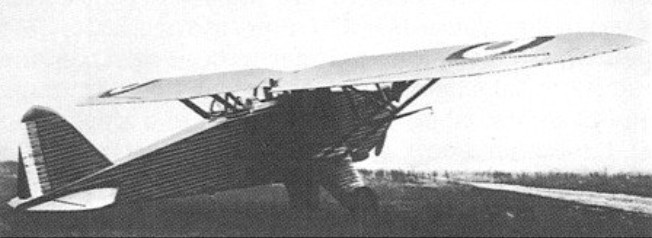
Aviméta (Société pour la Construction d’Avions Métallique) grew out of the Aeronautical Department of the Schneider-Creusot arms manufacturer. Both the frame and the corrugated covering of the Aviméta 88 were made from Alferium, an aluminium-iron alloy developed by Schneiders.
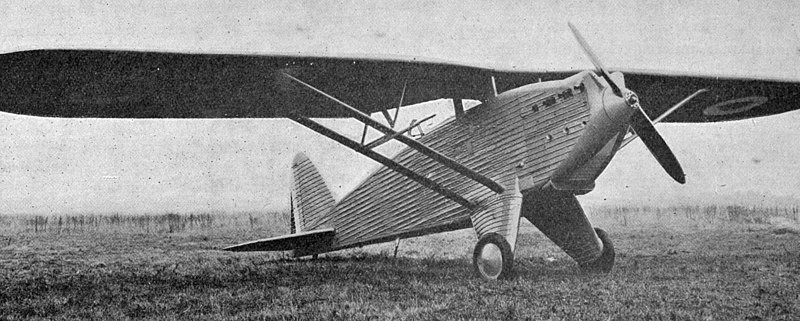
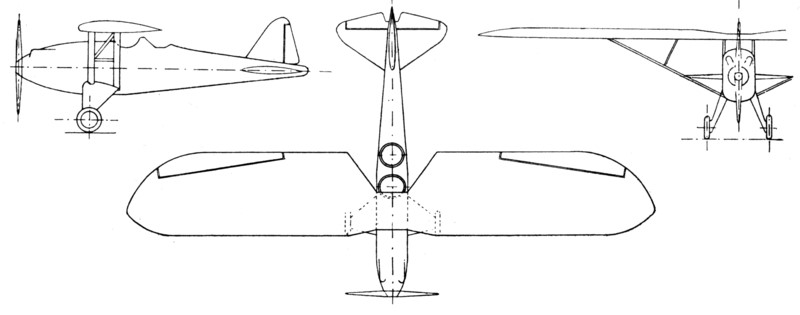
Designed by George Lapère, the Aviméta 88 was an all-metal two-seat reconnaissance-fighter or heavy fighter tested in 1927. It was a parasol aircraft, with wings of constant chord and with slightly pointed, semi-elliptical tips. The thin-airfoil-section wings were built around two lattice girder spars and had a skin thickness of 300 μm. There was a large, trapezoidal cut-out in the trailing edge to improve the view from the cockpits. Its aileron hinges were set at a shallow angle to the trailing edge.
The wings were braced to the fuselage with a parallel pair of struts from the lower longerons to the spars at about mid-span assisted by N-form, cross-braced jury struts at right angles. Four very short struts from the upper fuselage longerons to the wing centre section formed a low cabane.
The square-section, rounded-cornered fuselage was built around these four longerons and a set of diagonally braced formers. The Aviméta’s 444 kW (595 hp) Hispano-Suiza 12Hb water-cooled V-12 engine was in a pointed nose, driving a two-blade propeller. There were two open cockpits, with the pilot forward at mid-chord and the gunner/observer behind in line with the trailing edge. Behind the cockpits the fuselage tapered rapidly in profile to a conventional empennage, with the tailplane mounted at mid-fuselage. Both horizontal and vertical surfaces were strongly tapered, particularly on the leading edges, with a broad tailplane and fin but with small, inset elevators and rudder. The Aviméta 88 had independent bungee-sprung wheels on legs enclosed in tapered trouser fairings attached to the lower longerons at the bottom of the wing struts. The fuel was in crash proof and in-flight jettisonable tank.
The Aviméta 88 was on show at the December 1926 Paris Aero Salon. It may not have flown by that date, and rather little is known about its later history, though it gave a “pretty impressive” display at Villacoublay in September 1927. Development was terminated when the official call for a two-seat fighter-reconnaissance aircraft was rescinded.
Engine: 1 × Hispano-Suiza 12Hb, 444 kW (595 hp) Propeller: 2-bladed Wingspan: 17.00 m (55 ft 9 in) Length: 9.76 m (32 ft 0 in) Height: 3.55 m (11 ft 8 in) Wing area: 40 sq.m (430 sq.ft) Empty weight: 1,550 kg (3,417 lb) Gross weight: 2,400 kg (5,291 lb) Fuel capacity: 310 kg (680 lb) (420 l (92 imp gal; 110 US gal)) Maximum speed: 240 km/h (149 mph; 130 kn) at sea level, 220 km/h (140 mph) at 5,000 m (16,000 ft) Service ceiling: 7,500 m (24,600 ft) Time to altitude: 16 min to 5,000 m (16,000 ft) Crew: two Armament: two fixed, synchronised 7.7 mm (0.303 in) Vickers machine guns firing through propeller disc and two more mounted on the wing. A pair of Lewis guns on flexible mounting in rear cockpit.