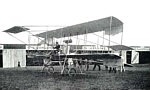
The 1910 Aviatik biplane was designed and built by Baron P. de Caters in Belgium.
The 1910 Aviatik biplane was designed and built by Baron P. de Caters in Belgium.
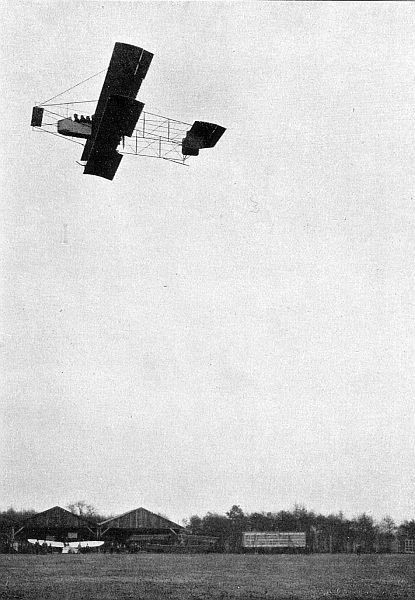
This particular machine was the first Aviatik biplane that received a 100 hp engine. In November 1912 aviator Arthur Faller planned to perform a promotion flight from Habsheim to the “Feldberg”, the highest mountain in the Black Forest, but while waiting for suitable weather conditions he undertook several record-breaking multiple-passenger flights. One such flight took place on January 30, 1913 at Flugplatz Habsheim carrying three passengers, lasting 2 hours and 3 minutes, breaking the standing world-record of 1 hour and 35 minutes set on January 25, 1912 by Dipl.-Ing. Grulich on a Harlan Eindecker, yet others with 3, 4, 5 and 6 passengers followed or predated that event.
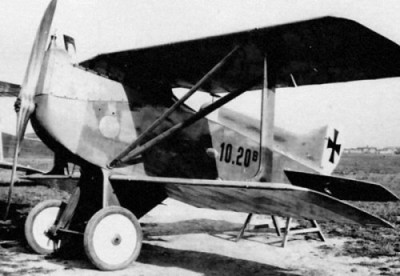
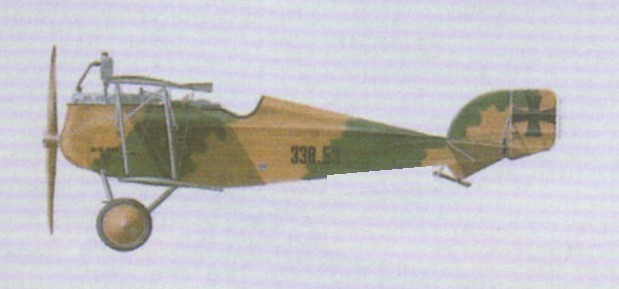
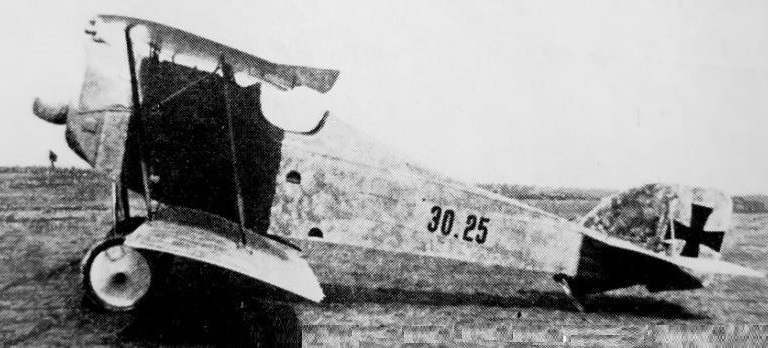
The D.I was designed to replace the Hansa-Brandenburg D.I series. The Aviatik D.I holds the distinction of becoming the first indigenously-designed fighter to be build in whole in Austria.
The D.I began life in prototype form in August of 1916 with a first flight recorded on January 24th, 1917. The test flight proved fatal, however, and took the life of its test pilot. As such, the initial design was revised to compensate for defects and three more prototypes soon emerged, each charged with a distinct development purpose as well as its 8mm Schwarzlose machine gun fitted to the top wing assembly. After additional testing, production aircraft were ordered and delivered – these with the synchronized (via a propeller interrupter gear) 2 x 7.92mm Schwarzlose forward-firing machine guns along the upper sides of the engine.
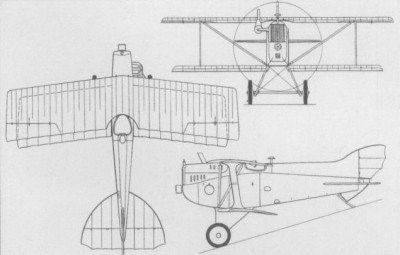
Design-wise, the Aviatik D.I was of a conventional single-seat biplane arrangement. Wings were fitted as an upper and lower staggered assembly of equal span with parallel struts and single bays. The engine – an Austro-Daimler water-cooled inline producing 200 horsepower – was fitted to the extreme forward portion of the fuselage and powered a two-blade propeller. The undercarriage was of a fixed arrangement and made up of two main landing wheels and a tail skid. The spacious cockpit was situated aft of the engine at about amidships and offered a relatively good field of vision (as good as vision gets in a biplane). The pilot sat behind the upper wing assembly (which was held relatively close to the top of the engine compartment) behind a simple windscreen in an open-air cockpit. The fuselage tapered into the empennage which featured a single large vertical tail fin and applicable horizontal planes. Performance specifications included a top speed of 115 miles per hour, a service ceiling of approximately 20,100 feet and operational endurance totaling 2 hours, 30 minutes.
Often called the Berg Scout, in honour of the chief designer of Austro Hungarian Aviatik, Julius von Berg, this basic single seat scout design was originally designated Serie 30.14. Though primary manufacture of the Aviatik D.I was handled by Austrian Aviatik, license-production was also undertaken at multiple facilities. These included Lohner, Lloyd, MAG, Thone und Fiala and WKF under various batch series designations and differed mainly in horsepower output of their selected Austro-Daimler engines. In all, roughly 700 of all types were produced from 1917 into 1918. Deliveries began in the Fall of 1917 and continued on into October of 1918.
Development was protracted and production did not begin until early 1917, the sub type hav¬ing by this time progressed to Type 30.21. As the D.I, this was ordered in large numbers (possibly as many as 1200) and about 700 were delivered by Aviatik (Serie 38), WKF (Serie 84), MAG (Serie 92), Thbne und Fiala (Serie 101) and Lohner (Serie 115). Repeat batches with higher numbers were ordered, the bulk of those delivered having the 200 hp engine and final batches the 235 hp version.
Built by the Austrian-Hungarian Aeroplane Works in Vienna-Stadlau, this type was used for recce duties by the Austrian Air Force during the Great War.
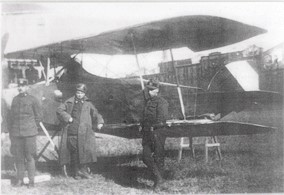
When in action, early-form D.Is exhibited engine overheating issues and structural weaknesses (namely the fabric tearing away from the understructure or loss of parts and wings while at high speeds). The guns on the original production models were also situated well out of reach of the pilot meaning that a jammed gun stayed jammed until the pilot landed his mount for repairs. As production continued, the structure received attention in areas and was reinforced based on pilot feedback. Likewise, the guns were now moved within reach of the pilot. Engine overheating was solved in-the-field by simply flying without the engine covers on.
The engine made the D.I unpopular because it tended to overheat badly; most photographs show the top cowling panels, and sometimes the side panels, removed to assist cooling. Initial armament was a single 8 mm Schwarzlose machine gun mounted above the upper wing to fire over the propel¬ler, but two of these guns, with synchronizing gear, in the top decking flanking the cylinders became standard armament. In almost every case the guns were so far forward that the pilot could not reach them to clear a stop¬page, though many pilots fitted string to the cocking handles.
The D.1 was replaced progressively from the Balkan and Italian fronts during 1918 by the preferred Albatros scouts.
The D.I appeared in a revised form as the D.II with a cantilever low wing assembly. The D.II was produced in limited quantities in two batches beginning in 1918 but arrived too late to see useful delivery to combat units. The D.I was also considered in a few other notable “one-off” prototype forms – mainly the D.III, a high-altitude variant fitting a Hiero engine of 230 horsepower and the Dr.I (Type 30.24), a triplane design based on the D.I biplane.
D.I Srs 38
D.I Srs 138
D.I Srs 238
D.I Srs 338
D.I Srs 84
D.I Srs 184
D.I Srs 284
D.I Srs 384
D.I Srs 92
D.I Srs 101
D.I Srs 115
D.II Srs 39
D.II Srs 339
Engine: 185 hp Daimler
Wingspan: 8.4 m
Length: 7.6 m
Loaded weight: 865 kg
Maximum speed: 186 kph
Service ceiling: 6400 m
Endurance: 3 hr 30 min
Armament: one synchronized machine gun incl. one flanking the cockpit
Aviatik D.I
Engine: 1 x Austro-Daimler liquid-cooled 6-cylinder, 200 horsepower.
Length: 6.95 m (22 ft 93in)
Wingspan: 26 ft 3 in (8.00m)
Height: 8.14 ft (2.48m)
Empty Weight: 1,475lbs (669kg)
Maximum Take-Off Weight: 1,878lbs (852kg)
Maximum Speed: 115mph (185kmh; 100kts)
Maximum Range: 225miles (362km)
Service Ceiling: 20,177ft (6,150m)
Armament: 2 x 8mm Schwarzlose synchronized forward-firing machine guns.
Accommodation: 1
The Aviatik C.I was designed from the outset with military use in mind, sporting a single 7.92mm Parabellum machine gun for self-defense.
Following the Aviatik B.I, Aviatik produced their first full military-ready design in the Aviatik C.I series, a biplane reconnaissance aircraft.
The C.I was a single-engine, twin-seat biplane with a Mercedes D.II 6-cylinder engine producing upwards of 120 horsepower and driving a two-blade propeller. The observer was seated in the front – just behind the engine – and the pilot was at rear. The forward observer had a single 7.92mm Parabellum machine gun on a flexible mounting. It was soon found that the field of fire for the observer was quite restricted and the rearward seating position of the pilot was ill-suited when compared to other aircraft types coming out at the time. Later examples of the C.I began seating the observer (with gun) to the rear and the pilot forward. This new arrangement produced the designation of “C.Ia”. This version was built by both Aviatik and the Hannoversche Waggonfabrik.
The C.I series as a whole would be replaced by a small series of the improved C.II, with 200hp Benz Bz.IV engine.
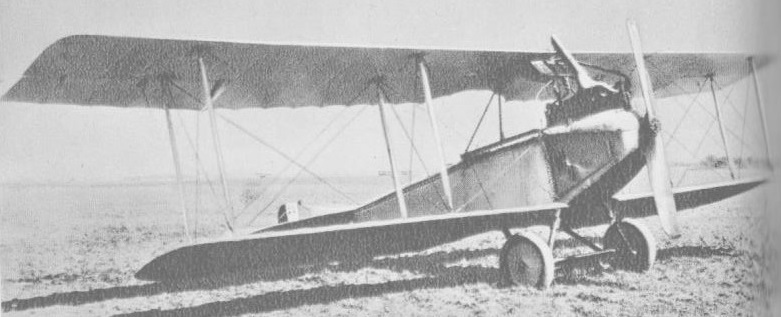
The final production model was the C.III of early 1916, which was originally designed with the old crew arrangement but quickly changed to a rear observer layout. Powered by the 160 hp D.III, it had a cleaner and more streamlined nose, with propeller spinner faired into an improved engine installation, and was much faster than the C.I despite usually having twin machine-guns. A light bombload could be carried, and for some months the C.III was used in the first German Kampfgeschwader (bombing wings), though its main duty continued to be reconnaissance.
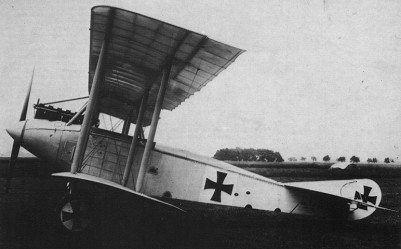
C.I
Engine: 1 x Mercedes D.II 6-cylinder, 120hp.
Length: 26 ft 0 in ft (7.92m)
Span: 12.50 m (41 ft 0.25 in)
Height: 9.68ft (2.95m)
Maximum Speed: 88mph (142kmh; 77kts)
Service Ceiling: 11,483ft (3,500m)
Armament: 1 x 7.92mm Parabellum
Accommodation: 2
Maximum Take-Off Weight: 2,954lbs (1,340kg)
C.II
Engine: Mercedes, 160 hp
Wingspan upper: 40 ft 8 in
Wingspan lower: 37 ft 5 in
Wing area: 430 sq.ft
Length: 26 ft
Height: 10 ft 5 in
Empty weight: 1863 lb
Loaded weight: 2831 lb
Wing loading: 6.6 lb/sq.ft
Max speed: 82 mph at SL
Service ceiling: 11,500 ft
Time to 6000ft: 22 min
Endurance: 4.5 hr
Armament: 2 x mg
Crew: 2
C.III
Span: 11.75 m (38 ft 51 in)
Length: 8.09 m (26 ft 6.25 in)
Gross weight: 1337 kg (2948 lb)
Maximum speed: 161 km/h (100 mph).
Srs 37
Srs 137
Srs 47
Srs 83
Srs 183
Srs 91
Srs 114
Srs 214
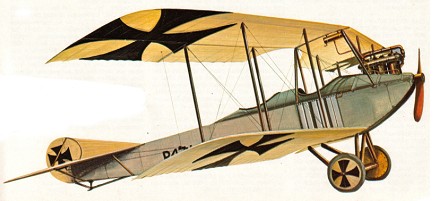
On the outbreak of the First World War, the company moved from Miffilhausen, which was near the Western Front, to Freiburg im Breisgau, on the other side of the Rhine. Here the B.I was designed, and flown in late 1914 (probably in November). A two seat biplane, it was powered by a 100 hp Mercedes D.1 six cylinder water cooled engine. A small series was built for the Imperial Air Service, supplementing the pre-war aircraft of similar design, one of which became the first aircraft to be shot down in air combat, on October 5, 1914.
During the winter of 1914 15 the company’s Austro Hungarian subsidiary, Osterreichisch Ungarisch Flugzeugfabrik Aviatik of Vienna, designed and went into production with a developed version, the B.II. Powered by a 120 hp Austro Daimler, this differed mainly from the B.I in having angular elevators and rudder with large horn balances; it could also carry two 10 kg (22 lb) bombs, but guns were not originally fitted. Limited production, designated Serie 32, was undertaken for the Austro Hungarian Flying Service, and from about April 1915 the B.II was an observation machine on the Russian Front.
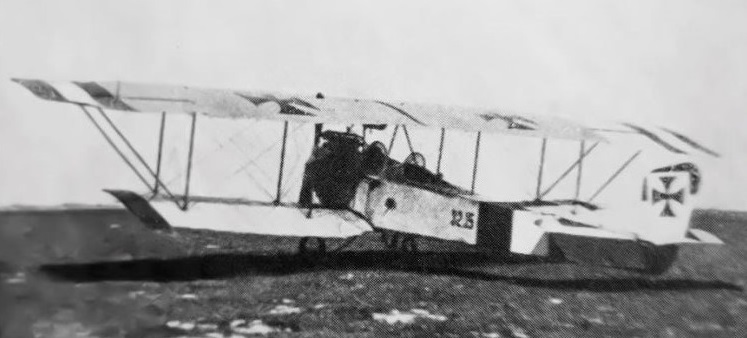
In the spring of 1915 production switched to the more powerful B.III, with a 160 hp Austro Daimler with the radiator repositioned above the cylinders. The wings were larger, with swept back tips, and pilot and observer sat in a single large cockpit, the observer having a rifle or often a 7.92 mm Schwarzlose machine gun either on an infantry tripod or a spigot mounting on the upper longerons. The B.III had a sluggish response to control, so production reverted to the Serie 34, which was virtually a B.II with the 160 hp engine (but B.II side radiator) and machine-gun; most Serie 33 (B.III) and Serie 34 had racks for three 10 kg bombs. Hundreds were delivered, but by 1916 they were all being relegated to training.
Span: 14.00 m (45 ft 11 in)
Length 8.00 m (26 ft 3 in) (small variations according to sub type)
Gross weight (B.I) 860 kg (1900 lb)
Gross weight (B.II) 870 kg (1918 lb)
Maximum speed (all): 110 km/h (68 mph) approx
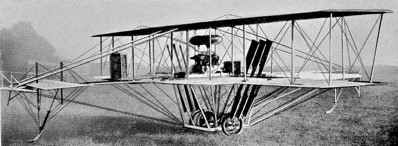
The Aviatik Versuchs-Doppeldecker of 1910 was an experimental first machine designed and built by Julius Spengler. Notable for its twin triple-superimposed propellers driven via chains by a 50 hp Argus engine in the wings, and its unique undercarriage.

The South African Raptor 582 Trike is built for cross country flying. It can pack down and trailor load.
Engine: Rotax 582
Prop: Bolly
Fuel capacity: 55 lt
Fuel burn: 10 lt/hr

The Aviat 110 Special of 1999 is a rebirth of the popular ’30s Monocoupe sportplane with larger empennage. At least seven were built.
Engine: AE IO-360-A1B6, 200 hp
Fuel type: 100/100LL
Propeller type: Hartzell two-blade
Landing Gear type: Fixed, conventional
Max ramp weight: 1725 lb
Gross weight: 1725lb
Landing weight: 1725lb
Empty weight, std.: 1150lb
Useful load, std.: 575lb
Payload, full std. fuel: 323 lb
Usable fuel, std.: 40 USgal
Wingspan: 23 ft 1 in
Overall length: 19 ft 10 in
Wing area: 99 sq. ft
Wing loading: 17.4 (normal), 16.4 (aerobatic) lb/sq. ft
Power loading: 8.6 lb/hp
Seating capacity: 2
Cabin doors: 2
Cabin width: 40 in
Cabin height: 52 in
Baggage capacity:20 lb
Max level speed: 191 kt
Cruise speed (75% power): 161 kt
Max range (w. reserve): 732 sm
Fuel consumption (55% power): 8.4 USgph
Stall speed (flaps up): 59kt
Best rate of climb: 1700 fpm
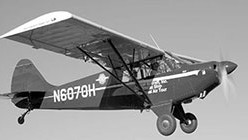
The Husky A1-A, conceptually based on the Piper Super Cub, is a completely new design, created in 1986 and fully certified in 1987. The prototype was N6070H. By 2008 over 650 had been made and were in use all over the world.
The taildragger Husky A-1B continues the tradition with tremendous short and soft field abilities even with a healthy load and functions on wheels, floats or skis.
Aviat refined the design in 2005, improving the ailerons and flaps, as well as offering the Husky with an optional 200 hp powerplant and composite, 82-inch propeller.
The FAR 23 certified A-1B Husky takes off in 200 feet and lands in 350 feet fully loaded. On water takeoff it takes six seconds. With a useful load of 800 pounds, 20,000 ft service ceiling, top speed of 145 miles per hour, 33 miles per hour power on stall and 800 nautical mile range.
Featuring a STOL Clark-Y wing, the first production was in 1987. Price $105,000 (1998). 395 had been produced by the end of 1997 (including Christen production).

The A-1C increases its useful load by 192 pounds, and can carry up to 842 lbs, and can fly 800 miles without refueling. 60% Span semi-fowler flaps allow shorter take-offs and landings and removal of spades and the installation of advanced performance ailerons stability during flight, as well as during take-offs and landings. The aileron is mass and aerodynamically balanced. The aileron has a deeper chord and shorter span.
The A-1C has a stick force pressure that is about four pounds. Designed to provide three flap settings, 10°, 20° and 30°, the handle activates the flaps with considerably shorter travel. The leverage point for deployment is always in front of the pilot. The handle offers better leverage, takes less effort and is less cumbersome to operate.
The A-1B-160, A-1C-180 and 200 were designed to meet rigid government specs. It is certified to fly with a gross weight in excess of a full ton.
Optional is the 200hp Lycoming IO-360 A1D6 engine in place of the standard 180 hp O-360 engine. The IO-360 is equipped with a positive-flow fuel injection system that offers much better fuel distribution. Fuel injection also eliminates the requirement for carburetor heat and its associated controls. This IO-360 is an angle valve engine, as opposed to the parallel valve O-360. The IO-360 used in the Husky is equipped with a mass-balanced crankshaft. The IO-360 weighs some 23 pounds more than an O-360, due largely to the mass balancers. The 80″ Hartzell Constant Speed propeller comes standard. Also available with this engine package, is the 205cm MT propeller, which is close to 20 pounds lighter than a metal prop. The lighter prop makes the basic weight of the 200-hp powerplant package nearly unchanged from a 180-hp model with a metal prop.
The 200-hp installation includes a second oil cooler and a cowl flap to better manage engine temperatures. The switch to an angle valve engine, the addition of the cowl flap, and other modifications wouldn’t fit in a standard Husky cowling, so Aviat designed a new cowling.
Aviat were one of the first manufacturers to introduce the airbag in an aircraft. The airbags are much like those found in automobiles. The difference being that the Husky’s airbags deploy away from the pilot or passenger. Airbags are mounted in seat belt webbing and follow the path of least resistance, beginning with zero pressure in the bag.
The 2002 Husky Pup is a 160hp Piper J-3 Cub lookalike for $110,000.
Aviat Husky A-1B-200
Engine: Lycoming IO-360-A1D6, 200 hp
TBO: 2000 hrs
Propeller: MTV-15-B/205-58
Wingspan: 35 ft. 6 in.
Overall length: 22 ft. 7 in.
Height: 7 ft. 5 in.
Wing area: 183 sq. ft
Wing loading: 10.9(lbs./sq. ft
Power loading: 10 lbs./hp
Airfoil: Modified Clark Y
Landing gear type: Fixed tailwheel
Gross weight: 2000 lb
Max landing weight: 2000 lb
Empty weight, std.: 1320 lb
Useful load, std.: 680 lb
Fuel capacity, std.: 52 USG
Baggage capacity: 50 lb
Payload, full std. fuel: 380 lb
Seating: 2
Cabin width: 48 in
Cabin height: 27 in
Max range: 828 nm
Dirty stall speed: 53kt
Best rate of climb, SL: 1700 fpm
Service ceiling: 20,000 ft
Takeoff ground roll: 265 ft
Takeoff over 50 ft: 780 ft
Landing ground roll: 398 ft
Landing over 50 ft: 1025 ft
Aviat A-1B-180
Engine: Lycoming O-360-A1P, 180 hp
TBO: 2000 hr
Fuel: 100LL
Propeller: Hartzell CS 76 in
Landing Gear type: Conv. (bungees)
Max ramp weight: 2000 lb
Gross weight: 2000lb
Empty weight, std.: 1190lb
Max landing weight: 2000 lb
Usable fuel, std.: 50 USgal
Wingspan: 35 ft. 6 in.
Overall length: 22 ft. 6 in.
Height: 6 ft. 8 in.
Wing area: 183 sq. ft
Wing loading: 10.9 lb/sq. ft
Airfoil: Modified Clark Y/USA 35B
Power loading: 10 lb/hp
Wheel track: 6 ft. 7 in.
Wheel size: 8.00 x 6 in (31-in. tundra, optional)
Seating capacity: 2
Cabin doors: 1
Cabin width: 24 in
Cabin height: 49 in
Baggage capacity: 50lb
Cruise speed 75% power @6,500 ft: 121 kt
Cruise speed 55% power @6,500 ft: 113 kt
Max range (with reserve) 75% power: 617 nm
Max range (with reserve) 55% power: 645 nm
Stall speed (gear, flaps down, power off): 37kt
Stall speed (gear, flaps down, power on): 29 kt
Best rate of climb: 1500 fpm
Service ceiling): 20,000 ft
Takeoff ground roll: 150 ft
Landing ground roll: 250 ft
Flaps Extend Speed: 80 mph
Aft Stowage: 9.3 cubic feet /30 pounds
AVIAT HUSKY A-1C-200
Engine: Lycoming O-360-A1P, 200 hr
TBO: 2000hr
Propeller: CS Hartzell
Overall length: 22 ft. 7 in.
Overall height: 7 ft. 5 in.
Wingspan: 35 ft. 6 in.
Wing area: 183 sq. ft
Wing loading: 12 lb/sq. ft
Power loading: 11 lb/hp
Cabin width: 27 in
Cabin height: 48 in
Empty weight, std.: 1320 lb
Gross weight, std.: 2200 lb
Useful load, std.: 880 lb
Payload, full fuel: 580 lb
Fuel capacity: 50 USgal
Baggage capacity: 50 lb
Seats: 2 (tandem)
Cruise speed, 75% power: 144 mph
Range, 55% power: 828 sm
Best rate of climb, SL: 1700 fpm
Takeoff ground roll: 265 ft
Takeoff over 50 ft obstacle: 780 ft
Landing ground roll: 398 ft
Landing over 50 ft obstacle: 1025 ft
Vx: 67 mph
Vy: 73 mph
Va: 113 mph
Vne: 153 mph
Vso: 53 mph
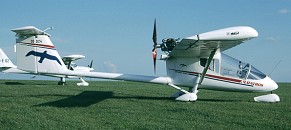
Aviasud Engineering from Fréjus, France developed a 2-seat highwing ULM-aeroplane with push-propeller. Production of the AE-209 Albatros started in 1992, and the Albatros was available with the 2-stroke Rotax 582 or the 4-stroke Rotax 912 engine. The Albatros classique is equipped with a tail wheel; the Albatros tricycle is equipped with a nose wheel or tail wheel. The wings can be folded, which reduces the needed parking space in the hangar.
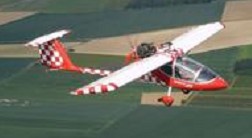
After Aviasud went defunct, Micronef ULM had the Albatros built under contract in Poland.
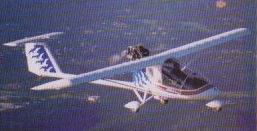
Seats: 2
Stall: 35 kt / 40 mph / 64 kmh
Cruise: 67 kt / 78 mph / 125 kmh
VNE: 100 kt / 115 mph / 185 kmh
Empty Weight: 230 kg / 507 lbs
MTOW Weight: 450 kg / 992 lbs
Climb Ratio: 825 ft/min / 4 m/s
Glide Ratio: 9/1
Take-off distance (50ft obstacle): 820 ft / 250 m
Landing distance (50ft obstacle): 920 ft / 280 m
Micronef ULM Albatros 503
Engine: Rotax 503, 52 hp
Wing span: 9.7 m
Wing area: 13.9 sq.m
MAUW: 450 kg
Empty weight: 213 kg
Fuel capacity: 60 lt
Max speed: 155 kph
Cruise speed: 130 kph
Minimum speed: 64 kph
Climb rate: 3.35 m/s
Certification: VZ
Seats: 2
Fuel consumption: 15 lt/hr
Price (1998): 220 221 Fttc

