Engine: Rotax 582, 65 hp Hp range: 65-100 Top Speed: 100mph. Cruise Speed: 90 mph. Stall Speed: 40 mph. Range: 620 sm. Rate of climb: 800 fpm Takeoff Distance: 150 ft. Landing Distance: 225 ft. Service Ceiling: 12,000 ft. Empty Weight: 613 lbs. Gross Weight: 1300 lbs. Fuel capacity: 24 USG Height: 7 ft. Length: 23 ft. Wingspan: 28 ft. Wing Area: 158 sq. ft. Number of Seats: 1 Cockpit width: 30 in
The 1910 Bloudek-Potucek-Cermak “Racek” 1-seater monoplane was designed and built by Stanko Bloudek, Slovenian and Javoslav Potucek and Jan Cermak, both Czech.
The 1911 Bloudek-Cermak Libella was a single-seat monoplane designed and built by S.Bloudek, Slovenian and J. Cermak, Czech, in the Austro-Hungarian Empire.
1911 Bloudek-Cermak Libella II was a single seat biplane designed and built by S.Bloudek and J. Cermak.
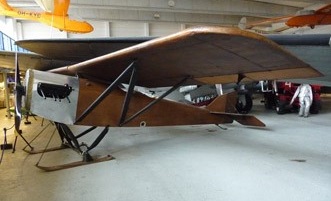
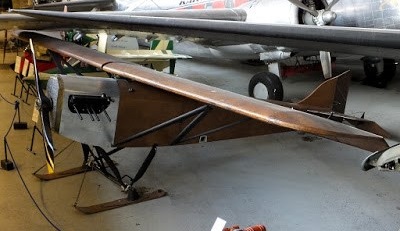
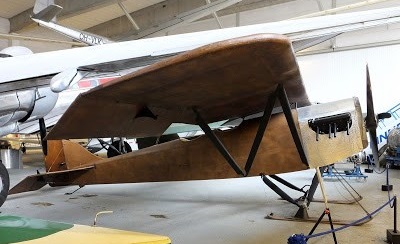
This two-seat monoplane designed and built by Attle R. Blomqvist and Emil Nyberg is the second oldest homebuilt aircraft in Finland. The first flight in 1926. It was damaged in a forced landing in 1927, after which was put in storage.
Donated to the Finnish Aviation Museum by engineer A. R. Blomqvist in 1983, restored by the members of the Aviation Museum Society in 1991 – 1994.
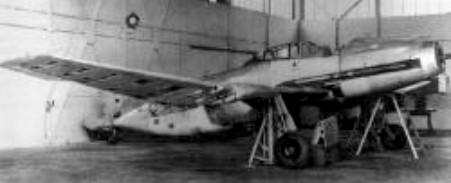
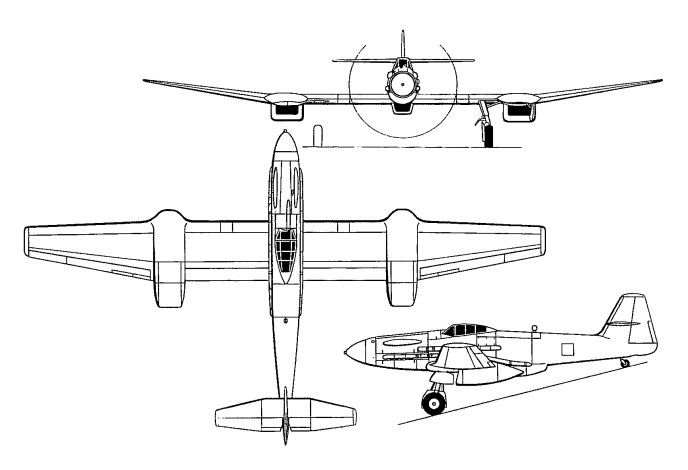
The origins of the Blohm & Voss Bv 155 lay in a meeting held at the Messerschmitt’s Augsburg plant in May 1942 to discuss the “Special High Altitude Fighter”. Both Messerschmitt and Fock-Wulf expressed interest in developing a special high altitude fighter, Messerschmitt had already done some design work on a related project. Messerschmitt’s preliminary study, known as the Bf 109 ST, had been allocated the official RLM 8-series aircraft designation Me 155. The number 155 had previously been assigned to the Klemm firm but since it had not taken up the number the RLM reassigned it to Messerschmitt. At the same time, numbers 152, 153 and 154, which had also been allocated to Klemm but not used, were re-assigned to Focke-WuIf. The original Me 109 ST was advanced in three variants; A, B & C (version A) called for a carrier/aircraft fitted with the DB 605, while (version B) called for a similar fighter powered by the high altitude DB 628. In order to relieve his already over committed design bureau and to speed development, Messerschmitt decided to transfer the Me 155B to Paris. Due to various problems work progressed only slowly throughout the remainder of 1942. By early 1943 things were starting to go wrong with the project. Fock-Wulf were progressing well with their Ta 152, little had been achieved with the Me 155B. During the first half of 1943, Messerschmitt’s design engineers had evolved basic parameters of an (extreme high altitude fighter) design study under the company designation Me P1091. By mid 1943 the Messerschmitt people were pursuing the Me 209H in competition with the Ta 152H and turning there Me P1091 in to the Me 155B. Development passed to Blohm & Voss as the Bv 155. The V1, V2 and V3 prototypes were outwardly very different, mainly by relocation of the radiators. The final Bv 155C had the cooling systems under the nose. A contract for 30 production aircraft was issued in the finals days of WWII. Never flown. The V1 prototype first flew on 01 September 1944, and V2 in February 1945. Three prototypes were built.
Engine: Daimler Benz DB 603A,1610 hp with turbocompressor TKL 15 (1,450 hp at 49,210 ft. (15,000m)) Propeller: metal three-bladed variable pitch Wingspan: 20,30 m / 67 ft. 3 in Length: 11,90 m / 39 ft 4 1/2 in Height: 2,98 m / 9 ft 9 1/2 in Wing area: 39,00 sq.m Empty weight: 4868 kg / 10,716 lb Maximum weight: 13,262 lb. (6016 kg) Wing loading: 141,025 Kg/sq.m Power loading: 3,105 Kg/hp Max speed: 690 Kmh Ceiling: 16950 m Range: 1440 km Armament: 1 x 30 mm MK 108, 2 x 20 mm MG 151/20
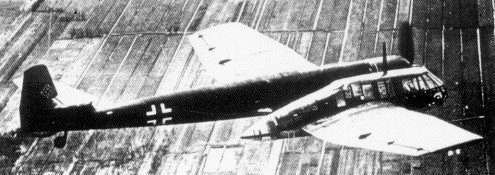
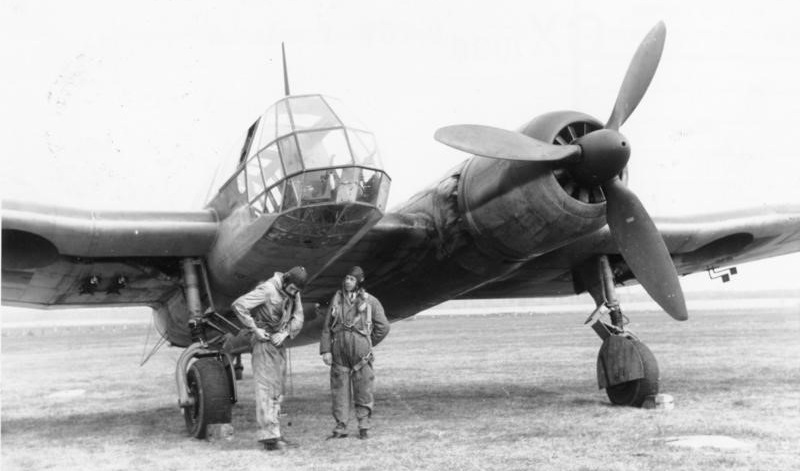
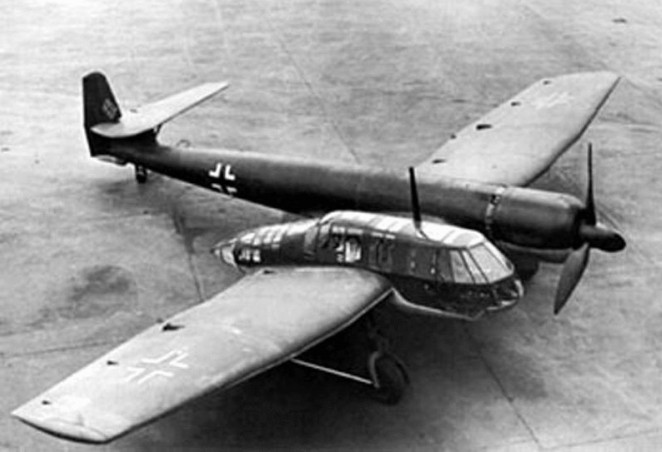
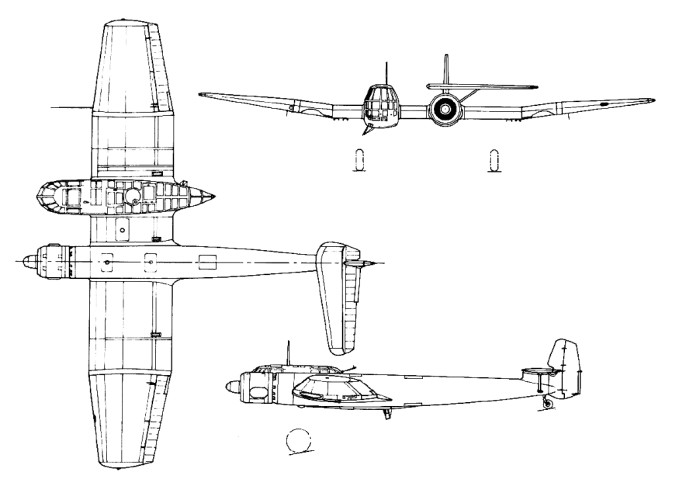
Resulting from a 1937 requirement for a short-range reconnaissance plane with a single engine and accommodation for a crew of three, Richard Vogt, the technical director of Blohm und Voss’s aircraft subsidiary, Ham¬burger Flugzeugbau, proposed that an official RLM requirement could best be met by an asymmetric design. The result was the company financed Ha 141 0, flown in Feb¬ruary 1938 with Major General Ernest Udet at the controls. An unorthodox machine with an extensively glazed crew nacelle offset to starboard of the centerline and the 865-hp (645-kW) BMW 132N radial engine to port at the front of the boom supporting the tail unit. A perspex-glazed crew gondola on the starboard side housed the pilot, observer and rear gunner, while the fuselage on the port side led smoothly from the engine to a tail unit.
The engine was a conventional radial piston powered machine spinning a three-bladed propeller system. The engine of choice became a single BMW 801A 14-cylinder radial of 1,560 horsepower providing for a 272mph maximum speed, a 1,181 mile range and a 31,810 foot service ceiling. The later pre-series Bv 141s would make use of only a single tail system, hence its asymmetrical arrangement. Despite this appearance, the weight of the aircraft was spread out quite well when in flight, relating to the Bv 141s good handling characteristics.
It proved to be quite successful, so much so that an order was placed for three planes including the original, since that one was built with private funds. The original BV-141-V and A models had a conventional stabilizer.
The aircraft’s design prompted a mixed response from the RLM and had no impact on their decision to build the Fw 189. Indeed, an urgent need for BMW 801 engines for use in the Fw 190 fighter aircraft further reduced any chance that the BV 141 would see production. Though the RLM officials remained uncertain of its potential they awarded a contract for further for five Bv 141A developed versions with 960L hp BMW 132N engine and armament of two fixed and two rear movable 7.92 mm (0.312¬in) MG 17 and four 50 kg (110 lb) bombs. Lengthy trials in 1939 40 were favourable, but the RLM claimed that the oddity was under-powered as an excuse to avoid large scale orders.
The German air ministry preferred the competing Focke-Wulf Fw 189, but the manufacturer’s enterprise in building three prototypes, the last two somewhat larger than the first, paid off in an order for five pre-production By l4lAs. These were evaluated up to April 1940, but no production was ordered even of the more powerful Bv 141B.
Vogt had anticipated this and in January 1941 flew the first completely redesigned Bv 141B with 1560 hp BMW 801 and larger airframe of different shape, including an asymmetric tailplane, first tested on the V2 prototype, designed to improve the rear gunner’s field of fire and which had resulted in no noticeable deterioration in handling qualities.
Only five B series aircraft were built, making 13 of all versions. No 10 was used operationally in the autumn of 1941, but this unique aircraft was eventually dropped as the twin boom Fw 189 was an adequate tactical reconnaissance aircraft and the Blohm und Voss shops were needed to help make the Fw 200C Condor after an air raid had damaged the Focke Wulf factory complex at Bremen.
All further development was cancelled in 1942.
Some 38 Bv 141 examples were known to have been produced though none survive today. Several were recovered by the Allies. In all, there were three V-series prototypes designated as V1, V2 and V3. The pre-series models numbered five examples under the Bv 141 A-0 branding and became V4 through V8. These were followed by the revised Bv 141 B-0 pre-series models from V9 through V18. There were eight Bv 141 B-1 series models thereafter.
The Ilmavoimat / Maavoimat / VL team evaluated this aircraft and conducted a series of test flights over April/May 1938. The performance was found to be good and the observation visibility excellent although STOL capability was lacking. Overall though, the design was rather too radical for the Finns and while it remained in consideration, it was as a “possibility” rather than up for firm consideration.
Bv 141A five pre-production aircraft Engine: 1,000-hp/746-kW BMW-Bramo 323 Wing span: 50 ft 8.25 in/15.45m
Bv 141B three-seat short-range reconnaissance plane. Engines: one 1,560-hp (1,163-kW) BMW 801A radial piston Maximum speed: 230 mph (370 km/h) at sea level Service ceiling: 32,810 ft (10,000 m) Range: 746 miles (1,200 km). Empty Weight: 10,362 lb (4,700 kg) Maximum take-offweight: 13,448 lb (6,100 kg). Span: 57 ft 3.5 in (17.46 m) Length: 45 ft 9.25 in (13.95 m) Height: 11 ft 9.25 in (3.60 m) Wing area: 570.51 sq ft (53.00 sq.m) Rate-of-Climb: 1,860ft/min (567m/min) Crew: 3 Armament: two fixed MG 17 and two trainable MG 15 0.312-in (7.92-mm) machine guns, and four 110-lb (50-kg) bombs.
The Ha.137 was a close-support aircraft and dive bomber, an inverted gull-wing monoplane with fixed landing gear derived from the Ki-5. First flown in April 1935, there were 6 aircraft built, the last of which, V6, was written off after crashing in July 1937. The first two models V1 and V2 (D-IXAX and D-IBGI) were powered by the Pratt and Whitney Hornet, licence produced as BMW 132 engines. The third prototype (D-IZIQ) produced used a Rolls Royce Kestrel. It became apparent that the radial engine of the first two prototypes was not suited to the dive-bomber role because of the severely restricted forward view and the Jumo 210A engine was selected to be the definitive power plant. In 1936 three further prototypes were built: V4 (D-IFOE), V5 (D-IUXU), and the ill fated V6 (D-IDTE). These were to be Ha137B, the previous 3 being the Ha137A. The Luftwaffe selected the Junkers Ju-87 and with the cancellation of the project no further work was taken. A single-engined, single-seat, open cockpit dive bomber of entirely metal construction.
Ha.137A V1 & V2 Engine: BMW 132, 720 hp Propeller: Metal three-bladed, variable pitch Wingspan: 11,15 m Length: 9,46 m Height: 2,80 m Wingarea: 23,50 sq.m Empty weight: 1814 kg MTOW: 2415 kg Wingloading: 102,765 Kg/sq.m Power loading: 3,354 Kg/hp Max speed: 330 km/h Cruise speed: 290 km/h Ceiling: 7000 m Range: 580 km Armament: 2 x 7,92mm MG 17 mg, 2 x MG 17 or 2 x 20 mm MG FF, 4 x 50 kg bombs
Ha.137A V3 Engine: Rolls-Royce Kextrel IV 650 hp Propeller: metal three-bladed variable pitch
Ha.137B V4, V5 & V6 Engine: Junkers Jumo 210A, 650 hp Propeller: metal three-bladed variable pitch
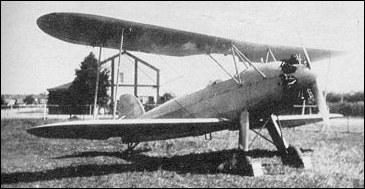
A small biplane trainer, a mixed-construction aircraft that was rejected by the Luftwaffe.
Powered by a Siemens Sh14, Hamburger Fluzeugbau produced 6 of these aircraft all used by the Fleigerubungsstelle, the last of which,D-EKME, was still flying at the end of 1940.
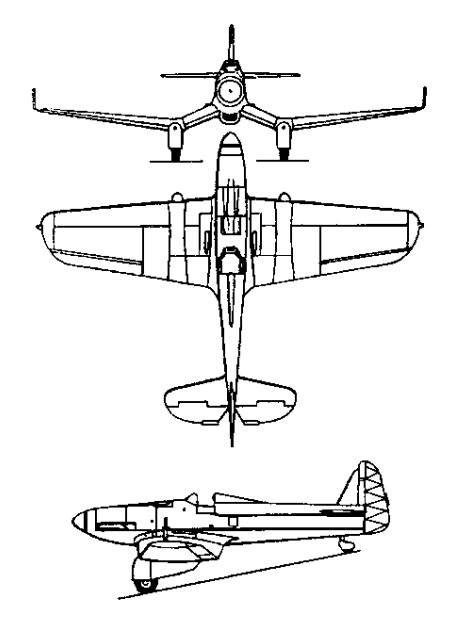
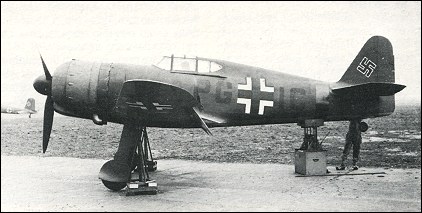
The last of the fighter aircraft to be evolved from the M.B.150, the Bloch M.B.157 was to be the airframe of the M.B.152 with a more powerful Gnome-Rhone 14R. An air-cooled radial engine with a power output of 1186kW for take-off, and having a supercharger that could provide 1268kW at 8000m. The increased size and weight of this engine brought realisation that it would not be practical to install it in the existing M.B.152 airframe. The conclusion that the full potential of the Gnome-Rhone 14R would be lost by attempting an adaptation of the airframe led to a decision to design a new fighter which would retain the same basic structural techniques.
It was possible to formulate the details of the M.B.157 very rapidly, for the basic design already existed and after just over six months of design initiation, the components of the prototype were ready for assembly. With German forces closing in on Paris, the M.B.157 components were loaded to be evacuated but, en route, this vehicle was intercepted by the Germans and ordered to proceed to an SNCASO establishment within the occupied zone. Finally, in March 1942, the M.B.157 was assembled and test flown under German supervision, demonstrating superb performance achieving 710km/h before being flown to Orly where the powerplant was removed for wind-tunnel testing. This was the most interesting feature so far as the Germans were concerned, and after tests had been completed the engine was transported to Germany. SNCASO’s airframe, which had demonstrated in conjunction with Gnome-Rhone 14R a degree of performance that was not to be attained elsewhere until later in the war, was destroyed during an Allied air raid.
M.B.157 Engine: 1 x Gnome-Rhone 14R-4 radial piston, 1186kW Take-Off Weight: 3250 kg / 7165 lb Empty Weight: 2390 kg / 5269 lb Wingspan: 10.70 m / 35 ft 1 in Length: 9.7 m / 31 ft 10 in Height: 3.2 m / 10 ft 6 in Wing Area: 19.4 sq.m / 208.82 sq ft Max. Speed: 710 km/h / 441 mph Cruise Speed: 400 km/h / 249 mph Range: 1095 km / 680 miles Armament: 2 x 20mm cannon + 4 x 7.5mm machine-guns