Bloch MB.150 / 151 / 152 / 153 / 154 / 155

In July 1936 the M.B.150.01 prototype failed even to take-off. Redesign, abandoned for a period, was subsequently re-started and a first flight was successfully completed on 29 September 1937. The prototype had been revised with a larger wing and a 701-kW (940-hp) Gnome-Phone l4No radial.

Trials confirmed that the revised prototype was a promising fighter, and span and power were again increased.
Bloch had become part of a nationalised group by this time, and from this SNCASO was ordered the M.B.151 in the form of 140 aircraft including 25 pre-production machines. The airframe was redesigned for mass-production, and the first aeroplane flew on 18 August 1938 with the 14N-11 engine.

While testing and further production were taking place, the improved MB-152.01 with a 14N-25 engine, in place of the MB-151’s less powerful 14N-35, was tested. The imminence of war led to additional orders, based on optimistic MB-152 performance figures (reached with inaccurate measuring instruments).

The first MB-151 delivered was not accepted by the Armee de l’Air until March 1939, and was regarded as unsuitable for combat. Even after modifications, Armee de l’Air MB-151 were utilised only for training.
MB.152

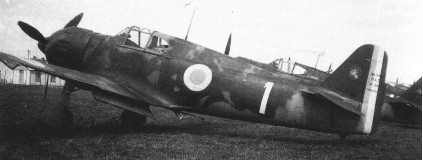
The designers had also been working on an improved version, the M.B.152 with more power and revised armament, first flying in December 1938. The Bloch 152 C1 cantilever low-wing monoplane was one of the standard Armee de l’Air fighters during the Battle of France in May-June 1940, but was comparatively unsuccessful.

The 745.2kWGnome-Rhone 14N-25 radial engine powering most Bloch 152 was insufficiently powerful to give good performance; a number had the improved 14N-49 engine and Chauviere 371 variable-pitch propeller, which rendered them more effective. It was clear, however, that the Bloch fighters (while robustly built and stable in flight) lacked manoeuvrability. Nevertheless Bloch-equipped units were credited with 146 confirmed and 34 probable victories by the time of the June 1940 Armistice.

MB.152

The first fighter Groupe to equip with the MB-152 was GC I/1 at Etampes-Mondesir in July 1939. The type was subsequently withdrawn for modification and when war broke out no Bloch fighters were in escadrille service. Re-equipment got under way at the end of 1939 and by the time of the German Blitzkrieg on 10 May 1940, 140 MB-151 and 363 MB-152 had been taken on charge by the French. Some of the former were to see service with navy fighter escadrilles. By the time of the Armistice the number of MB-152 accepted had risen to 482, plus one MB-153 (with Pratt & Whitney Twin Wasp radial) and nine MB-155. The MB.155 first flew on 3 December 1939 and the MB.157 in March 1942

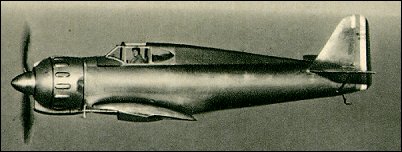
Nineteen more MB-155 were completed by the Vichy French. They differed from the MB-152 in detail and had increased fuel capacity. Externally the main change was in the adoption of a smooth engine cowling. The Vichy regime was allowed to retain six (out of nine) MB-152-equipped Groupes after June 1940, but only 215 MB-152 and MB-155 were on charge when the air arm was dissolved by the Germans in November 1942.
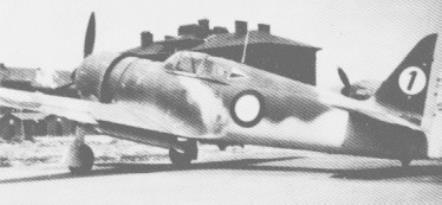
MB.155

Twenty MB-152 were sent to Romania and others (plus some MB-155) ended their careers as Luftwaffe trainers. Nine MB-151 of a Greek export order were delivered to that country in 1940, but there is no record of their operational use.

Production totalled 483, but most of these were inoperative in France during1940 for lack of propellers.

MB.152
Engine: 1 x Gnome-Rhone 14N21, 735kW
Take-off weight: 2693 kg / 5937 lb
Empty weight: 2103 kg / 4636 lb
Wingspan: 10.5 m / 34 ft 5 in
Length: 9.1 m / 29 ft 10 in
Height: 3.0 m / 9 ft 10 in
Wing area: 17.3 sq.m / 186.22 sq ft
Max. speed: 482 km/h / 300 mph
Cruise speed: 440 km/h / 273 mph
Ceiling: 10000 m / 32800 ft
Range: 580 km / 360 miles
Crew: 1
Armament: 2 x 20mm machine-guns, 2 x 7.5mm machine-guns

MB.152
Engine: l x Gnome-Rhone 14N-25 or N-49, 805 or 820kW (1,080 or 1,100 hp).
Span: 10.55m (34ft 7.25 in).
Length: 9.1 m (29ft 10.25 in).
Max T/O weight: 2680 kg (5,908 lb).
Max speed: 320 mph at 13,125ft.
Operational range: 373 miles.
Armament: 2×20-mm Hispano¬Suiza cannon and 2x or 4×7.5-mm (0.295-in) MAC machine-guns.

MB.152
Engine: l x Gnome-Rhone 14N-25, 805 kW / 1,080 hp
Span: 10.55m (34ft 7.25 in).
Length: 9.1 m (29ft 10.25 in).
Height: 3.98 m / 13 ft 0 in
Empty weight: 2020 kg / 4453 lb
Max T/O weight: 2680 kg (5,908 lb).
Max speed: 520 kph / 320 mph at 13,125ft.
Time to 6000 m / 16,400 ft: 6 min
Service ceiling: 10,000 m / 32,800 ft
Operational range: 600 km / 373 miles.
Armament: 2×20-mm HispanoSuiza 404 cannon (60 rds) and 2x or 4×7.5-mm (0.295-in) MAC 1934 machine-guns (500 ds each)

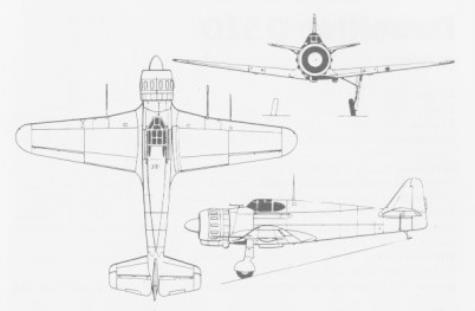
Bloch MB.81      

Developed in response to a government-sponsored competition in support of the new doctrine of “aerial first aid”, it was employed exclusively in the overseas colonies, specifically Morocco and Syria. The M.B.80 was followed by the M.B.81.01 coded F.301, which made its initial flight in October 1932, powered by a Salmson 9Nc engine of 101kW.

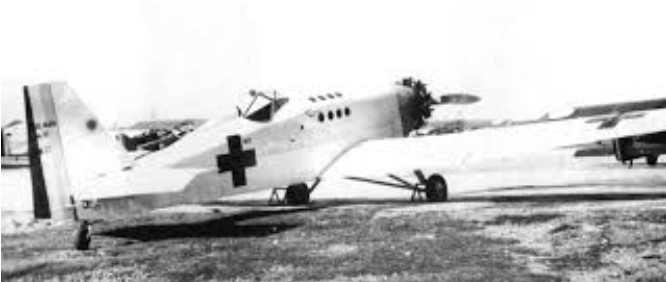
Unlike the MB.80 prototype, the MB.81 had a closed cockpit and a somewhat larger cargo space. This was the company’s first design which made it out of prototyping.

The aircraft was built without any assistance from the government, but an initial order of 20 was placed by the Ground French Forces (the French Armée de l’Air was founded in 1933), and it was one of the aircraft that relaunched Marcel Bloch in the aeronautical construction industry.

The production MB.81 was fitted with a French Salmson 9Nd of 128.68 kW (175 hp). It took part in military operations in Morocco and in Syria at the beginning of the 1930s.

A production order followed, the first of 20 M.B.81 production aircraft being delivered and entered service in 1935, and was used extensively throughout North Africa and the Middle East. A few were used in 1939-1940, before the French surrender, and in July, 1941 in the battle for Syria between the Vichy French and the British/Free French.

It rendered the greatest services, in particular for the military operations in Morocco and Syria at the beginning of the thirties. A few aircraft were used for the France campaign in 1939-1940 in Africa and the Middle East. One of them was used by the Free French Forces transport group commanded by Colonel Lionel de Marmier in Syria.

The fourth example flew with the RAF under serial AX677.

Bloch M.B.81
Engine: 1 x Salmson 9Nd radial piston engine, 130kW (172.56 hp)
Wingspan: 12.59 m (41 ft 4 in)
Wing Area: 17.8 sq.m / 191.60 sq ft
Length: 8.4 m (27 ft 7 in)
Height: 2.9 m (9 ft 6 in)
Empty weight: 580 kg (1,279 lb)
Max Take-Off Weight: 880 kg / 1940 lb
Maximum speed: 188 km/h (117 mph; 102 kn)
Cruise Speed: 161 km/h / 100 mph
Range: 654 km (406 mi; 353 nmi)
Ceiling: 6400 m / 21000 ft
Crew: 1
Service ceiling: 6,400 m (20,997 ft)
Capacity: 1 seated or stretchered

Bloch MB.80

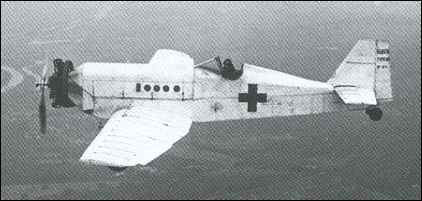
The aircraft was designed to be able to seek patients or casualties by scouting, even at high altitudes, during military operations in mountainous countries, like then-French Morocco over the Atlas Mountains.

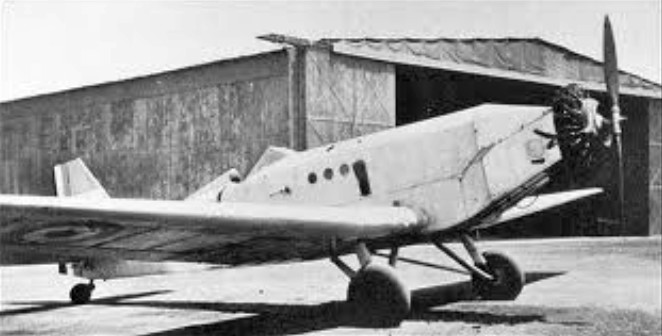
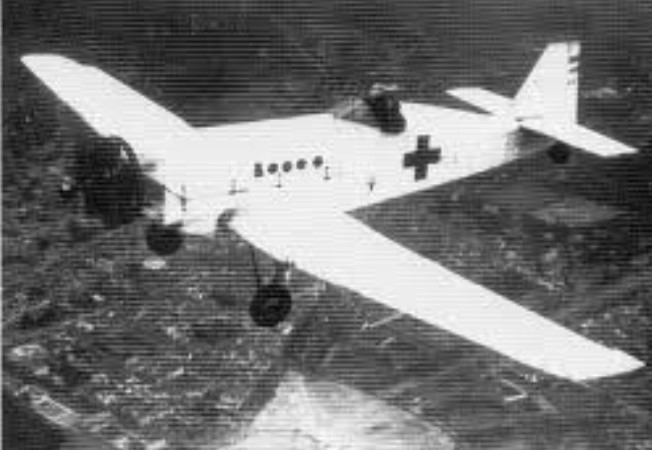
The M.B.80 prototype was an angular cantilever low-wing monoplane, powered by a single 89kW Lorraine 5Pc engine, and with fixed wide-track divided landing gear to facilitate operations from unprepared strips. Its pilot was seated forward in an open cockpit and behind him in the rear fuselage, under easily accessible panels, was accommodation for a single stretcher.

The main design feature made it possible to transport a casualty lying prone, in a compartment placed between the pilot and the engine. The wings could also be adapted to hold casualties, remaining constantly under the sight of the pilot and connected to him by an Aviaphone communication system.

The MB.80 made its first flight at the beginning of summer 1932 in Villacoublay, piloted by Zacharie Heu. An all-metal monoplane with low wings, it was equipped with a French Lorraine 5 Pc of 88.24 kW (120 hp) which allowed him to reach a speed of 190 km/h (119 hp) at an altitude of 6,400 meters (21,000 ft). It was able to take off in 70 meters (230 ft) and to land in 95 meters (312 ft). In a 1932 test, the MB.80 carried out 209 landings in one and a half days without any problems.

The aircraft was built without any assistance from the government, but an initial order of 20 was placed by the Ground French Forces (the French Armée de l’Air was founded in 1933), and it was one of the aircraft that relaunched Marcel Bloch in the aeronautical construction industry.

The production model was called the MB.81.

Engine: Lorraine 5 PC, 120 hp
Maximum speed: 190 km/h
Ceiling: 6400 m
Take-off distance: 70 m
Landing distance: 95 m

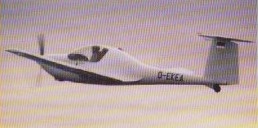
Hinz BL.1 Kea

A plans built two-seat composites monoplane. Built without moulds, the wings and tailplane can be detached like a glider.

Engine: Limbach L2400, 90 hp
Wing span: 10 m
Wing area: 12 sq.m
MAUW: 720 kg
Empty weight: 440 kg
Fuel capacity: 100 lt
Max speed: 270 kph
Cruise speed: 245 kph
Minimum speed: 85 kph
Climb rate: 5 m/s
Seats: 2
Fuel consumption: 13 lt/hr
Plan price (1998): 1500 DM

Bley M-Condor

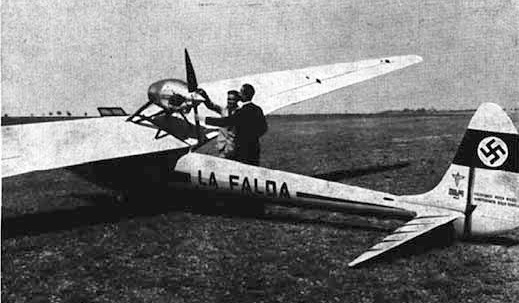
The 1935 Bley Flugzeugbau GmbH M-Condor was an experimental monoplane designed by Heini Dittmar at the request of the pilot Peter Riedel.

The 18 hp Kröber engine was mounted on six uprights and was possibly removable.

Based on a Dittmar Condor, (powered by Bley-Flugzeugbau, Namburg a. S.) the first flight was in mid-May 1935.

Engine: Kröber, 18 hp
Wingspan: 17.24 m
Wing area: 13.2 m2
Length: 7.6 m
Height: 2.6 m
Empty weight: 260 kg
MTOW: 350 kg
Seats: 1