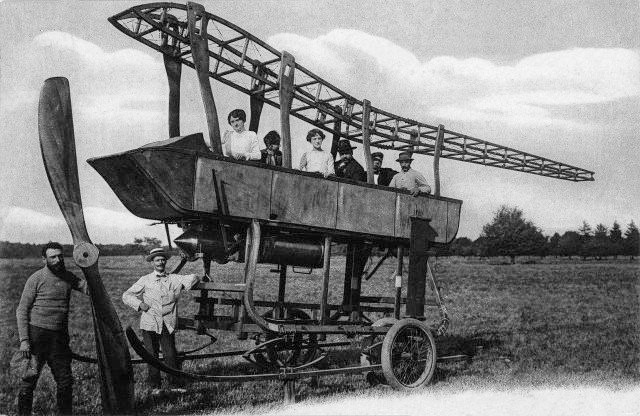
This big high-wing monoplane (span 14 m, length 12 m) was the design of René Bourgoin, who displayed it in 1912 at the cycle stadium Vélodrome d’Hiver in Paris. It was designed to carry no less than twelve passengers, driven by two giant tractor propellers of 3.5 m diameter, powered by an unidentified 200 hp engine, but it seems it was never finished.
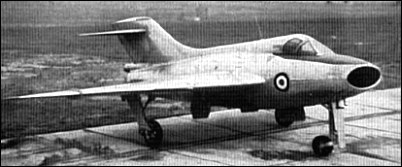
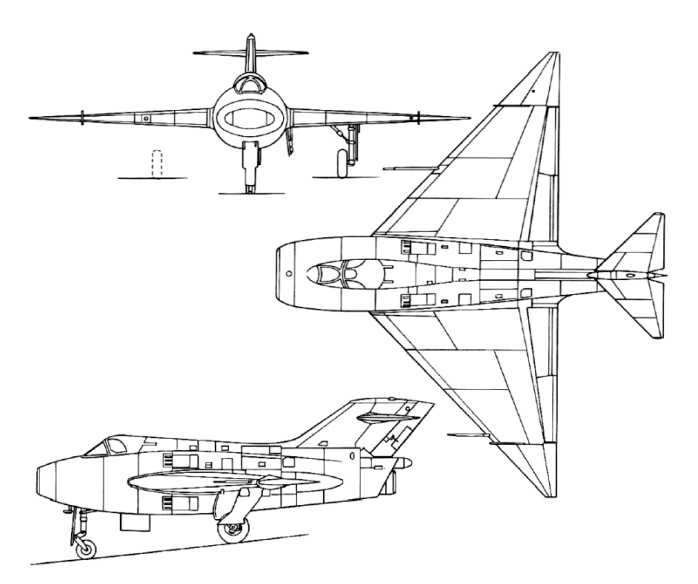
The Boulton Paul P.120 delta wing research aircraft, built to Air Ministry Specification E.27/49, was used to investigate high speed characteristics of the delta wing. The P.120, flown on 6 August 1952, was similar in general layout to the P.111 but had an all-moving tailplane mounted on a squat fin. The aircraft was lost on 29 August, in an accident thought to have been caused by tail flutter.
Engine: 1 x 2315kg Rolls-Royce RN.2 Nene Wingspan: 10.19 m / 33 ft 5 in Length: 9.02 m / 29 ft 7 in Height: 2.90 m / 9 ft 6 in Wing area: 26.95 sq.m / 290.09 sq ft Take-off weight: 5711 kg / 12591 lb Empty weight: 4838 kg / 10666 lb
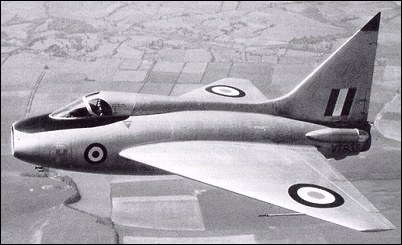
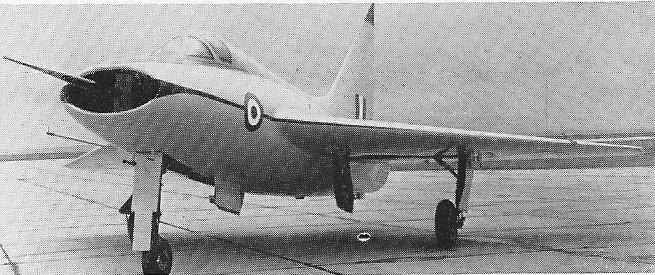
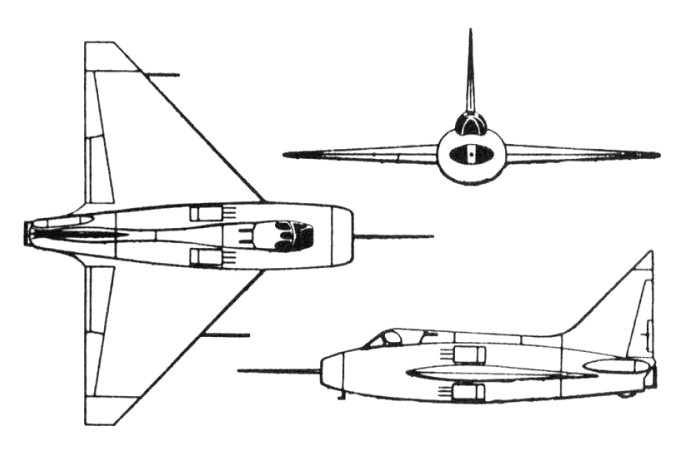
The Boulton and Paul P.111 research aircraft was built to specification E.27/46, to further investigation into delta wing characteristics at transonic speeds.
The only example, VT935, first flew on October 6, 1950, and was powered by a Rolls Royce Nene turbojet of 5,100 lb st. It featured a 45 degree delta wing with detachable tips to enable comparative tests of blunt and pointed wings to be made. The fin tip was also removeable. Data recording equipment, including a fin mounted camera, was fitted. It originally flew in natural metal finish and was supplemented from August 1952 by the P.120. A critical feature, that of total hydraulic, irreversible, powered flying controls allowed artificial feel for the pilot was by way of built in springs which could not be fully trimmed to take into account the very fine degree of control necessary, particularly with the minimal input demanded at high IAS. The design work was carried out at Farnborough, and all of the early flying was by Aero Flight pilots including Bob Smythe CO, Jim Harrison, and Jock Elliot. Jock carried out most of the flying with 52 flights totalling some 26 hours. He commented on the sensitivy of the controls at IAS, stating that, at 500 kts IAS, 1/4″ stick movement gave 1″g” of acceleration, and observed that the possibility of a strong reflex input was very real and would have catastrophic results. Following a belly landing by Jim Harrison the design was near to being shelved, when Jock came up with the idea for variable gearing between stick and surfaces; this facility would be available to the pilot in flight and would allow a choice ranging between 1:1 to 4:1. Jock pointed out that the idea was not new and that some of the Schneider Trophy aircraft had incorporated the idea. The idea was discussed at a meeting with Dennis Higton, aerodynamicist at RAE, JD North of BP, and Jock, and the outcome was that it was incorporated into the design, as the BP P111A. The point has been made that Jock’s concept of variable gearing was an crital break through for the aviation industry and virtually paved the way for Concorde and all high speed aircraft that followed. In 1953 the aircraft underwent internal modification, and also had four rectangular air brakes fitted around the fuselage behind the cockpit a nose probe. Redesignated P.111A, it made its first flight in this form on July 2, 1953. Ben Gunn flew the aircraft in it’s P111A form. Its research programme at RAE Bedford ended on June 20, 1958, by which time it had attained Mach. 0.93 in level flight.
P.111A
In April 1959 it was purchased from the Ministry of Aviation by the College of Aeronautics at Cranfield, Beds. It was then used in their Department of Aircraft Design to demonstrate variable gearing power flying control systems and general hydraulic services, and also for basic research on the ground resonance of a low aspect ratio wing. The P.111A survives in the Midland Air Museum at Coventry’s Baginton Airport.
P.111A Engine: 1 x Rolls Royce “Nene”, 2313kg Wingspan: 10.21 m / 33 ft 6 in Length: 7.95 m / 26 ft 1 in Height: 3.82 m / 12 ft 6 in Wing area: 18.58 sq.m / 199.99 sq ft Take-off weight: 4354 kg / 9599 lb Empty weight: 2948 kg / 6499 lb Climb rate: 9,400ft/min Max. speed: 0.98M, 650 m.p.h Crew: 1
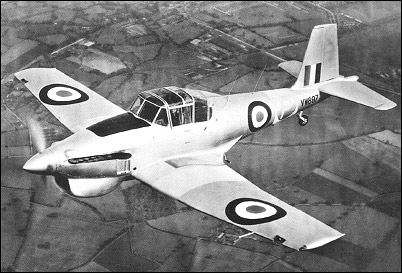
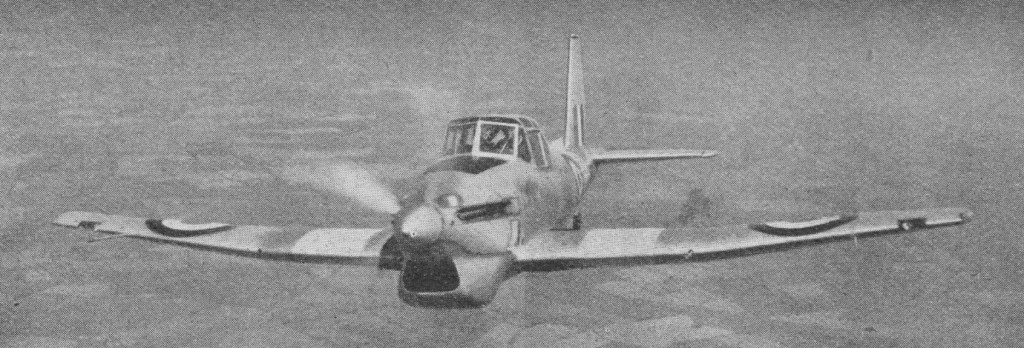
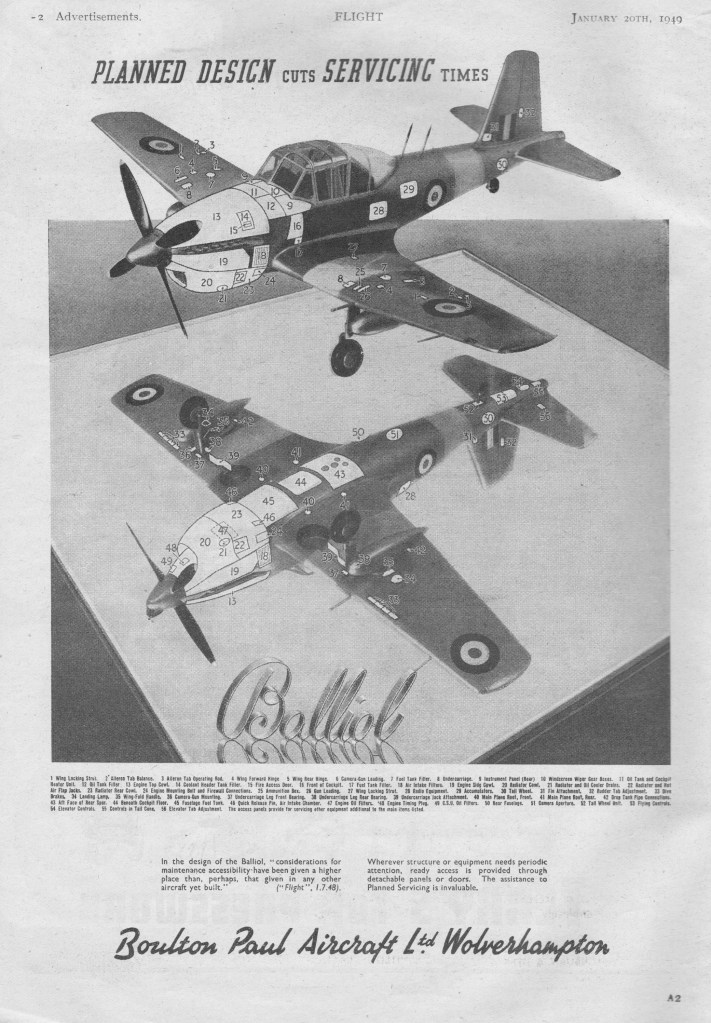
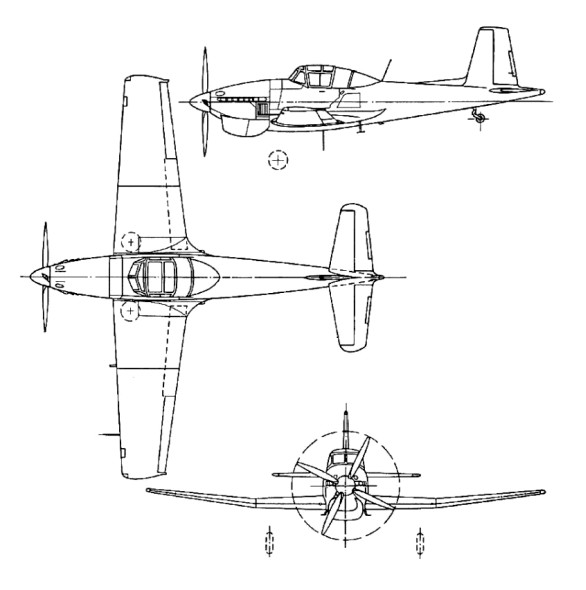
The P.108 Balliol was first flown on 30 May 1947, powered by a Bristol Mercury 25 radial. The Balliol was originally designed as an all-purpose advanced trainer to be fitted with turbo-prop engine to specification T.7/45.
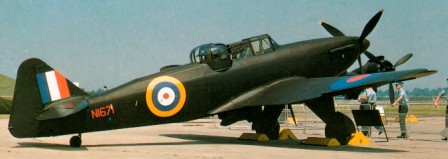
With modification of RAF requirements, the Balliol was modified to take the Merlin 35 piston engine as the Balliol T.2, 187 being built.
Balliol T.2 – Rolls Royce Merlin 35 – 1949
Three versions were produced: Balliol T.1 three-seater with a Mamba engine, first flown in prototype form on 24 March 1948 to become the first aeroplane in the world to fly solely on turboprop power
Balliol T.2 two-seater, produced for the RAF (162) with a 928kW Rolls-Royce Merlin 35 piston engine.
Sea Balliol T.21 WL732, RAF Cosford
Sea Balliol T.21 for the Royal Navy with deck-landing capability (30 built).
Balliol T.1 Engine: 1 x 1000shp Armstrong Siddeley Mamba Take-off weight: 3562 kg / 7853 lb Empty weight: 2724 kg / 6005 lb Wingspan: 11.99 m / 39 ft 4 in Length: 11.13 m / 36 ft 6 in Height: 3.23 m / 10 ft 7 in Wing area: 23.23 sq.m / 250.05 sq ft Max. speed: 494 km/h / 307 mph Ceiling: 11201 m / 36750 ft Seats: 3
Balliol T.2 Engine: 928kW, 1245 hp Rolls-Royce Merlin 35 Wingspan: 39 ft 4 in Wing area: 250 sq.ft Length: 35 ft 1.5 in Height: 12 ft 6 in Empty weight: 6730 lb Loaded weight: 8410 lb Max speed: 288 mph Cruise: 200 kt @ 10,000 ft. ROC: 1790 fpm Service ceiling: 32,500 ft TO dist 50ft: 1350 ft. Seats: 3 Armament: 1 x .303 Browning mg Bombload: 4 x 60 lb
Sea Balliol T.21 Engine: Rolls-Royce Merlin 35, 1245 hp Wingspan: 39.337 ft / 11.99 m Length: 35.138 ft / 10.710 m Max take off weight: 8412.1 lb / 3815.0 kg Max. speed: 250 kts / 463 km/h Range: 573 nm / 1062 km Seats: 3 Armament: 1x MG 7,7mm, 4x 27kg ext.
On the sale of its assets and business to a public company on 30 June 1934, Boulton & Paul became Boulton Paul Aircraft Ltd. Plans were also at hand to build a new factory at Wolverhampton. A contract was received for the construction of Hawker Demons fitted with a Frazer-Nash hydraulically-operated turret, which effectively protected the gunner from the slipstream enabling him to better train and fire his gun. The rear top fuselage consisted of a turtleback cowl attached to the gunner’s harness which folded up and down according to his movements.
Although development of powered turrets continued, it would appear that funding was somewhat limited, notwithstanding the enthusiastic response from the Air Ministry. The companys patents in this field ended in the Secret List, thus severely limiting further progress. John D. North, the company’s chief engineer, adopted a French design which met little official interest in France. Designed by J.B.A de Boysson, a hydraulically-operated turret was developed by the Societe d’Applications des Machines Motrices (SAMM) and Boulton Paul acquired full rights for its manufacture and development within the British Empire. Two turrets were ordered from SAMM for further trials, fitted with Browning machine guns in place of the four Darne 7 mm guns of the original design. Meanwhile, an original (Darne-armed) Boysson turret was tested in the nose of Overstrand K8175, and a single 20mm Hispano cannon installation was also tested in another turret on K8176.
During this time of radical change in fighter design and tactics, the Air Ministry was probably not completely confident that the emerging category of single-seat monoplane fighters, armed with a battery of eight guns buried in the wings, could make the grade. The issue of Specification E9/35 called for a two-seat day and night fighter, which should have its armament concentrated in a power-operated turret. In spite of the turret’s weight penalty, the aircraft was expected to perform within performance parameters close to those of contemporary single-seaters not only in speed but also in range of action.
Apart from Boulton Paul, F.9/35 brought proposals from Hawker, Bristol and Armstrong Whitworth; of these only the first two made it beyond the design stage, with one prototype each being ordered in the autumn of 1935. Boulton Paul commenced construction of their E9/35 prototype (K9310) in 1936 at their new Wolverhampton plant, although design had begun at Norwich. Close attention had been given to aerodynamic cleanliness in order to minimise drag. Of conventional construction, its fuselage was built in two main sections, the forward section built up of four longerons and a number of bulkheads, while the rear section was made up of three units, the two side panels and the top decking. The forward section housed the pilot’s cockpit over the wing centre section. The rear half of the fuselage incorporated the turret which was faired fore and aft with wooden-framed hydraulically-operated fairings which automatically hinged down to allow the guns to traverse.
The wings, built around two spars, were broken down into five parts: a centre section, two outer wing panels and detachable wing tips. The centre section housed the fully-retractable main undercarriage members and self-sealing fuel tanks, one 52 Imp. gallon (236 litre) tank on either side of the radiator bath. This tankage was later increased by another pair of 27 Imp. gallon (123 litre) tanks further outboard in the outer wing sections.
Its all-metal structure was conventional in most respects, its only unusual feature being the method of attaching the light alloy skinning to the stringers and ribs and then attaching these to the fuselage frames and wing spars. This obviated the need to pre-form the skins and, by riveting them while flat and countersinking the rivets, an exceptionally smooth finish was obtained.
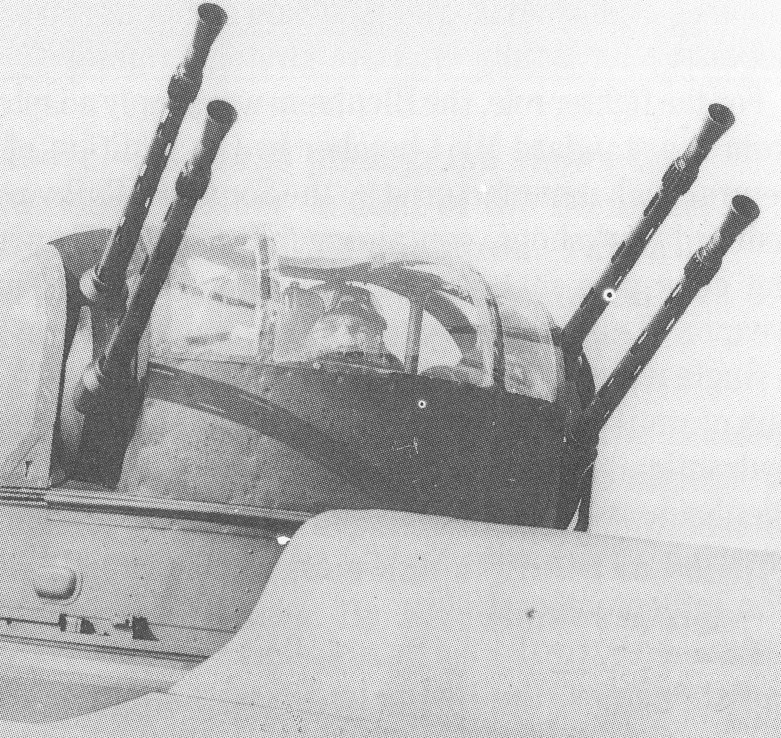
The Boulton-Paul A. Mk.IID turret was a self-contained, removable unit, fitted with four .303 Browning machine guns with 600 rounds per gun. This unit weighed 3601b (162kg) empty, to which 881b (39.6kg) of armament and 1061b (48kg) of ammunition had to be added. Its hydraulically-operated system was completely independent from any other system in the aircraft.
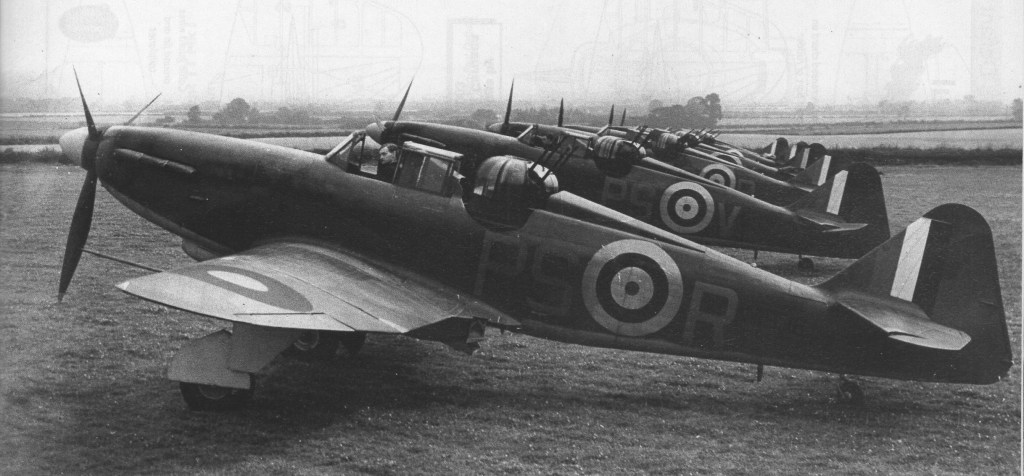
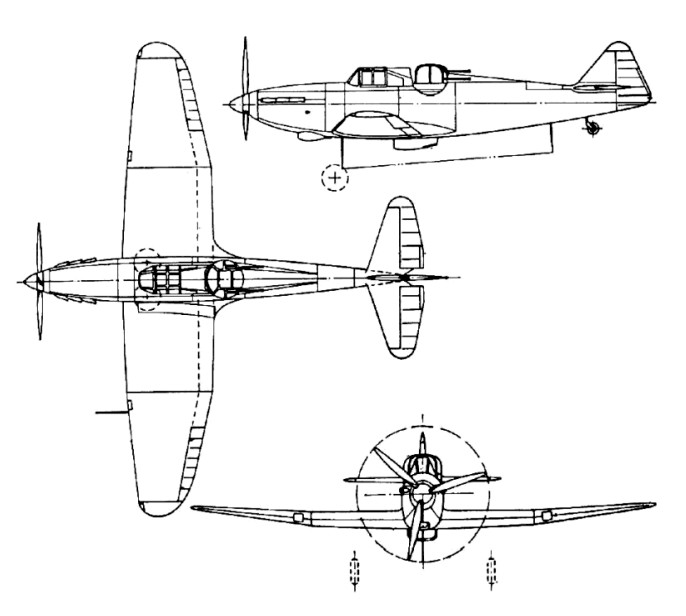
The Boulton Paul Defiant was only the RAF’s third monoplane aircraft and the Defiant became the RAF’s first four machine gun fighter. On 11 August 1937, chief test pilot Cecil Feather took the turret-less prototype up for its first flight. The aircraft weighed 7,5001b (3,375kg) without its turret at this stage and was powered by a 1,030-hp (768-kW) Rolls Royce Merlin 1 engine with which it attained a maximum speed of 302mph (485.6km/h) , at which point it was named the Defiant. With the turret installed, vertical tail area had to be increased slightly; meanwhile a second prototype had been ordered (K8620).
When it had been decided to abandon further development of the Hotspur, an initial order for 87 production aircraft of what by that time had become known as the Defiant, was placed on 28 April 1937. Although drawings began reaching the workshops by the end of that same year, completion of the second prototype was delayed due to a change in power plant, from Merlin 1 to Merlin II. Apart from the increased tail area, it also featured redesigned exhaust stacks and cockpit canopy, and modifications to the undercarriage doors, thus bringing it very close to production standard. This set the first flight of K8620 back to 18 May 1939.
The second prototype was fitted with a Type A four-gun turret based on a French design already licensed for use on Boulton Paul’s Overstrand bomber, and this version with but minor changes became the production Defiant Mk1. The turret was electro-hydraulically operated with a mechanical backup and carried 4 x .303 Browning machine guns, electrically fired with cut-off points in the turret ring preventing activation when pointing at the propeller disc or tailplane. Whilst the gunner could lock the turret forward and transfer firing control to the pilot, this was rarely practised given forward elevation restrictions and the lack of pilot gunsight. The machine guns were paired two to a side and the entire turret system could scan a 360-degree area above the aircraft. Six-hundred rounds of 7.7mm ammunition were afforded each gun.
This was followed by another engine update with the selection of the Merlin III, the version with a standardised shaft for DH or Rotol constant-speed propellers, for production Defiants. The first production aircraft (L6950) performed its maiden flight on 30 July 1939, and by September it was with the A & AEE at Boscombe Down for official trials. These included dive-bombing trials at Orfordness, as L6950 had been fitted with underwing racks to carry light bombs. L6951 was transferred to the Central Flying School for handling trials. The Defiant was described as having excellent handling qualities, with very few vices. It found to be quite stable, with very little trim change being necessary when the undercarriage or flaps were extended or retracted. As with most aircraft of the time, it had a tendency to swing to port during take off, something which could easily be corrected. Comparative trials with No.111 Squadron Hurricanes were performed at Northolt on L6952 in October 1939, where the real situation emerged: the Defiant proved to be at a distinct disadvantage when compared with a single-seat fighter. The report clearly stated that than any average pilot flying a Hurricane could carve up an aircraft with the power/weight ratio of the Defiant.
Defiant F Mk.1
The first unit to receive the Defiant was No.264 Squadron, which had been formed at Sutton Bridge in October 1939 from where it moved to Martlesham. There it received its first two aircraft on 8 December 1939. By that time, more than half of the first production order had been completed; two further orders had been placed, one in February 1938 for 202 aircraft and another in May of the same year for 161. More orders were placed in December 1939 (150), February 1940 (50) and July 1940 (280).
264 Squadron was grounded on 28 January after a series of engine difficulties and hydraulic problems, the ban being lifted during the first week of February 1940. Although not fully worked up, two of the squadron’s flights were posted to Wittering on 21 March to fly convoy patrols. On 10 May, the entire squadron moved to Duxford, while two days later a Flight proceeded to Horsharn St Faith. That day, six Defiants from this Flight patrolled the Dutch coast and after strafing ground targets, escorted by Spitfires from No.66 Squadron, drew first blood by shooting down a Ju 88A. On 13 May, B Flight went into action, engaging a formation of Ju 87Bs of which they claimed four destroyed, when the Defiants were bounced by Bf 109Es escorting the ‘Stukas’; only L6974 escaped to tell the tale. Between 27 and 31 May Deflants were ordered to participate in providing top cover at Dunkirk, across the Channel. During this period, 264 Squadron claimed 65 kills, 37 of which were supposed to have been achieved on 29 May. There is no doubt that these claims were grossly exaggerated.
No.141 Squadron was the second Defiant unit to be formed, becoming operational at Grangemouth on 3 June 1940. On 19 July, 12 aircraft from the unit moved to Hawkinge, nine of which were scrambled at 12.30hrs. They had the misfortune of being bounced south of Folkstone by Bf 109Es which practically decimated the formation; L7014, although badly shot up, was to be the sole survivor. Pilots of No.111 Squadron claimed that the Defiants had shot down four of the aggressors during the fight.
Defiants of No.264 Squadron RAF
During the height of the Battle of Britain, No.264 moved to Horchurch on 22 August; two days later the unit claimed three Ju 88s and a Bf 109E destroyed for the loss of two Defiants. On 26 August three Do 17s were shot down losing another Defiant in the process, while two days later four more of the turret fighters were lost.
Following the loss by 264 Squadron of 7 aircraft with 9 crewmen dead over the three days 26th to 28th August 1940, the Defiant was withdrawn from the day fighter role. On 28 August, 264 Squadron ceased operations and moved to Duxford the following day. Offensive patrols were cancelled and Defiant sorties were limited to anti-bomber patrols over the Channel from Matlesham Heath and Debden, until on 23 July the unit was retired to Kirton-on-Lindsey.
The Defiant Night Fighter No.141 Squadron pioneered night flying sorties with the Defiant on 1 July 1940, when L7997 flew a lone sortie. As the type had been withdrawn from daylight operations, both 141 and 264 Squadrons were operating practically as night fighter units by September. This coincided with the switch to night bombing by the Luftwaffe on London. B flight of No.141 Squadron moved to Biggin Hill, with A Flight taking up residence at Gatwick in October. Two He 111s were clairned by the unit as shot down on the night of 15/16 September. No 264 was similarly engaged, flying from Rochford, and later Debden. However, successes were few and far between and it was only with the arrival or airborne radar that the situation improved.
Defiants were now the Defiant NF.Mk I and were based on the standard Mk I marks. The NF.Mk IA followed soon afterwards with the AI.Mk IV / VI interception radar.
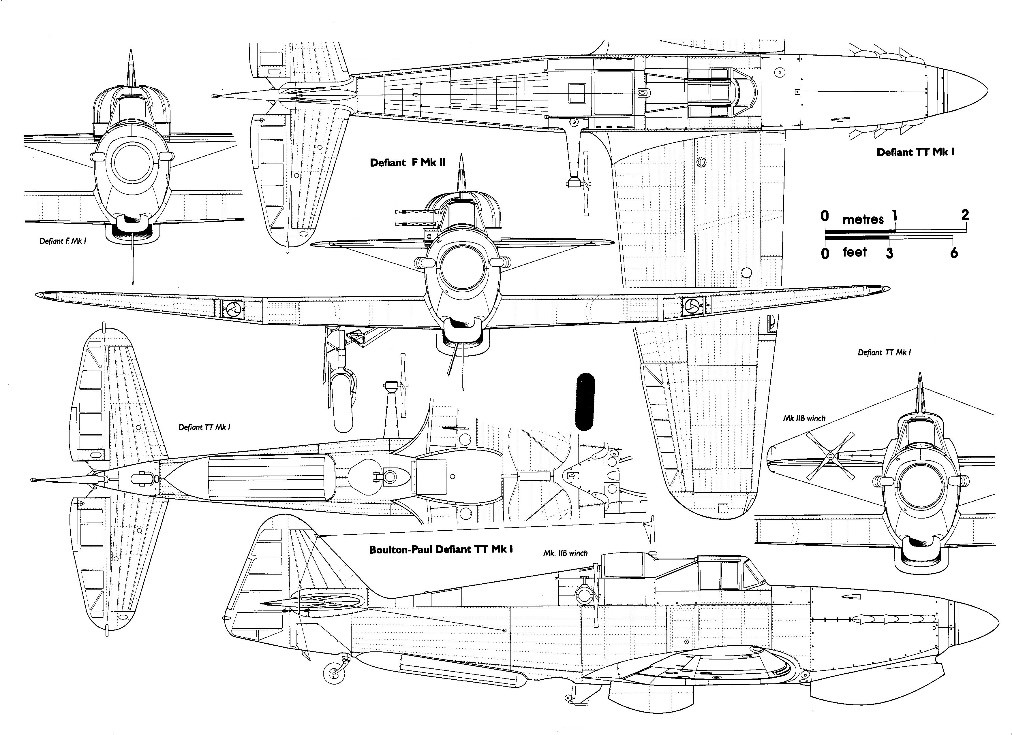
In the quest for better performance, Boulton Paul developed the Defiant F Mk II, more dedicated to the night-fighter role with the AI Mk IV airborne interception radar and powered by a 1,260hp Merlin XX. First flight of such an aircraft (N1550) was performed on 20 July 1940. Apart from the longer cowling to accommodate the new engine, both oil cooler and radiator were deepened and enlarged. The Mk II clocked a maximum speed of 315mph (506.5km/h) at 16,500ft (5,020m) during official trials. An order for 280 Mk Is placed in July was amended to cover the production of 63 Mk Is and 210 Mk IIs (a further seven Mk Is having been converted to Mk II standard on the production line).
Deliveries of the Mk II commenced in February 1941, by which time the Defiant had established itself in the night fighter role. By autumn of that year, AI Mk IV (and later Mk VI) radar was being fitted to Mk 1 Deflants (redesignated Mk IA) and Mk IIs (NF Mk II). Night fighter squadrons with the Defiant began to mushroom, these including No 96,125, 141, 151, 153, 264 and 410. By mid1942, the Defiant night fighter had been largely replaced by twin-engined types even in this role, No 153 and 256 Squadrons retaining their turret fighters up to the end of that year. A Flight of No 515 (Special Duties) Squadron kept its Defiants well into 1943.
As Defiants became surplus to needs of front line squadrons, they were transferred to Fighter Command air-sea-rescue units. Around 50 examples were fitted with an ‘M’ type dinghy stowage pack under each wing as ASR.Mk Is, serving with No 275, 276, 277, 278 and 281 Squadrons. After just six months of operations, these Defiants were withdrawn due to a number of problems.
The final production run covered 140 TT.Mk III target towing Defiants ordered in July 1941. A clear rearsliding canopy over the winch operator’s cockpit replaced the gun turret, a ‘B’ or ‘E’ type winch driven by a windmill was fitted to the starboard side of the fuselage while the target sleeves were housed in a faired pack fitted under the rear fuselage. First TT Mk 1 (DR863), based on the Merlin XX-powered Mk II, flew in January 1942. Apart from the order for new-build machines, the last 40 F Mk IIs on the production line were also completed as TT Mk Is, with the last (AA670) being delivered in May 1942. To these one has to add a further number of Mk IIs which, on being retired frorn squadron service, were converted for target-towing duties.
Quite a number of Deflants F Mk 1 were available for conversions to TT Mk III, a job assigned to Reid & Sigrist at Desford. N3488 became the development machine (rather than prototype) and apart from the Merlin III, distinguishable by its shorter nose, this version was similar to the TT Mk 1 in most other respects. About 150 Defiants were converted to Mk III standard between 1942 and 1943. Apart from most of the Gunnery Schools, where it replaced the Lysander, also the Royal Navy employed the Defiant target-tug overseas. For this purpose, in 1943 it became necessary to fit tropical filters to enable the Defiant to operate in hot and dusty climes.
At its peak of use, 13 RAF squadrons were Defiants equipped.
The Defiant also saw service with the Royal Navy and the air forces of Australia, Canada and Poland. A total of 1,064 machines were built.
Boulton Paul had embarked on a turret-less version way back in 1940, a single seat Defiant with a pair of .303in Brownings in each wing. The original prototype – K8310 – was modified to this standard; in fact one could say that it had reverted to the solid rear fuselage with which it had flown its initial flights. Notwithstanding that its performance would have been slightly better than that of the Hurricane, no official interest was shown in the single-seat Defiant.
At one time, a Merlin 24-powered version was under study, under the designation of TT Mk II; however the number of newbuild TT Mk Is and other conversions was considered as adequate for service needs, and the project did not proceed further.
Only one complete Boulton Paul Defiant example exists, this being held by the Royal Air Force Museum in Hendon, London.
Defiant Mk I Engine: one 1,030-hp (768-kW) Rolls-Royce Merlin III Wing span: 39 ft 4 in (11.99 m) Length: 35 ft 4 in (10.77 m) Height: 11 ft 4 in (3.45 m) Wing area: 250.0 sq ft (23.23 sq.m) Empty weight: 6,078 lb (2,757 kg) Maximum take-off: 8,600 lb (3,901 kg) Normal loaded weight: 8318 lb / 3773 kg Max speed: 259 mph / 302 kph at SL Maximum speed: 304 mph (489 km/h) at 17,000 ft (5,180 m) Cruising speed: 259 mph / 417 kph at 15,000 ft / 4572 m Initial climb rate: 1.900 ft (579 m) per minute Time to 15,750 ft / 4800 m: 8 min 30 sec Service ceiling: 30,350 ft (9,250 m) Range: 465 mi / 748 km at 259 mph / 417 kph Armament: four 0.303-in (7.7-mm) machine guns 600 rds each Crew: 2 Number built: 723
Defiant NF.Mk IA
Defiant TT.Mk I
Defiant Mk II Engine: Rolls Royce Merlin XX, 1262 hp/954-kW Length: 35.335 ft / 10.77 m Height: 11.319 ft / 3.45 m Wingspan: 39.337 ft / 11.99 m Wing area: 250.048 sqft / 23.23 sq.m Max take off weight: 8425.3 lb / 3821.0 kg Weight empty: 6282.0 lb / 2849.0 kg Wing load: 33.62 lb/sq.ft / 164.00 kg/sq.m Max. speed: 272 kts / 504 km/h / 313mph Cruising speed: 226 kts / 418 km/h Service ceiling: 30348 ft / 9250 m Rate-of-Climb: 1,900ft/min (579m/min) Range: 404 nm / 748 km Crew: 2 Armament: 4x cal.303 MG (7,7mm) Number built: 210
Defiant NF.Mk II Engine: Rolls-Royce Merlin XX, 1,280 hp Top speed: 313 mph Service ceiling: 30,350 feet Range: 465-mile
Boulton & Paul made two ventures into the light aircraft market, the first in 1919 with the P.9, then ten years later with the P.41 Phoenix. Realising that the de Havilland Moth and its competitors like the Blackburn B-2 controlled much of the two seat market, they set out to design a machine which was not in direct competition but lower in both capital and running costs. Their strategy was to build an all wood aerodynamic prototype first (their last ever wood framed aircraft and the first since the P.9), then to transfer the flying surfaces etc. to a metal fuselage.
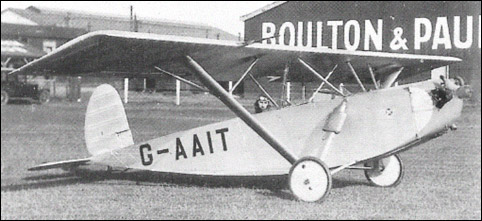
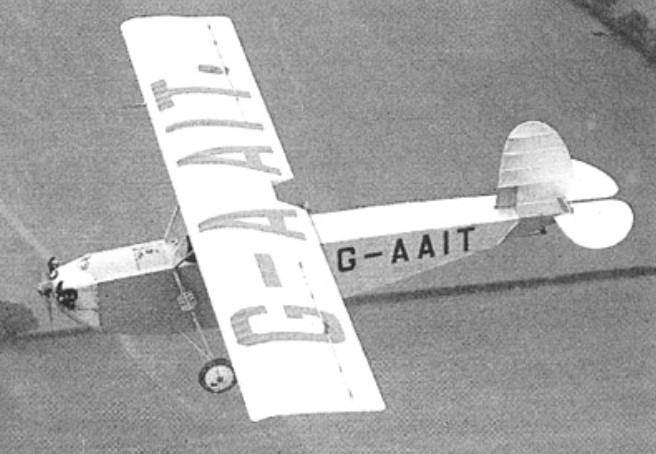
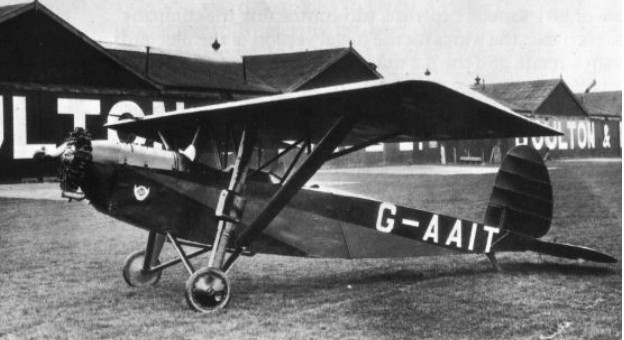
Designed by William Higley Sayers, the wood framed Phoenix I was a small parasol winged monoplane. The foldable wing had a constant chord and square ends in standard Boulton & Paul fashion. It was mounted on a pair of substantial streamlined struts from the lower fuselage longerons to the front wing spar. These main struts each carried a pair of short, slimmer members from near the wing to the front and rear spars. Further complicated strutting joined the upper fuselage to the wing centre section: a pair diverged gently from ahead of the forward cockpit to the front spar, another strut joined that spar on the starboard side to the port upper longeron between the cockpits and yet another joined the rear spar to the fuselage in the opposite direction behind the rear cockpit. The aircraft was normally flown from the rear cockpit at the trailing edge of the wing, with a cut-out to improve visibility. The forward cockpit was under the wing.
The nose mounted opposed twin-cylinder ABC Scorpion was air cooled with exposed cylinder heads. It produced 40 hp (30 kW). Behind it, the fuselage was of simple square cross section, flat on sides and top with a curved underside. The main wheels were mounted rubber sprung main legs attached to the upper fuselage and on axles linked to the lower fuselage. On the ground, with its legs compressed the Phoenix sat with its belly close to the ground. The empennage was unusual in two ways. Both rudder and tailplane were all moving, with no fixed surfaces, and all three surfaces were interchangeable to lower the costs of spare stocks. Nineteen years later, Boulton Paul used the same cost saving design approach with the Balliol. The elevators were mounted at the extreme end of the fuselage, the rudder with its trailing edge level with the elevators’ hinge.
The sole Phoenix 1, registered G-AAIT was exhibited at the International Aeronautical Exhibition at Olympia in July 1929, for sale at £375. It flew for the first time on 11 July 1929, with C.A. Rea, Boulton & Paul’s first full-time test pilot at the controls. It was then tested by many different pilots, many quite recently qualified and the sort of people Boulton & Paul saw as likely buyers. The Phoenix was well received, judged to be easy to handle in the air and on the ground and to land. There were a few criticisms: lateral control was rather sluggish; the upward and forward view was blocked by the parasol wing. Most of all, the testers were not convinced that the ABC engine would be reliable enough to fly cross country with confidence.
Boulton & Paul were encouraged by the responses to go ahead with a production version, the Phoenix II. This used the same flight surfaces but had a spot welded steel fuselage frame. When covered this had much the same shape as the earlier wooden one apart from the nose, where a 40 hp (30 kW) uncowled nine-cylinder Salmson radial replaced the ABC. There were changes to the minor struts including those at the centre section, with the struts ahead of the cockpits gone; but the most obvious alteration was to the undercarriage. The main wheels were now on wing mounted vertical legs, each on a stub axle that had a pair of vee struts to the lower fuselage; the revised aircraft sat higher above the ground. The Phoenix II, still registered as G-AAIT made its first flight on 12 June 1930 and this was followed by another period of amateur testing. Despite its low price the Phoenix failed to attract buyers aiming below the Moth and no further machines were built. G-AAIT remained in use as Rea’s personal hack until the end of 1935.
Phoenix II Engine: 1 × Salmson AD.9 9-cylinder radial, 40 hp (30 kW) Wingspan: 30 ft 0 in (9.14 m) Empty weight: 646 lb (293 kg) Gross weight: 1,089 lb (494 kg) Maximum speed: at sea level 86 mph (138 km/h) Rate of climb: initial 470 ft/min (2.39 m/s) Crew: 1 Capacity: 1 passenger
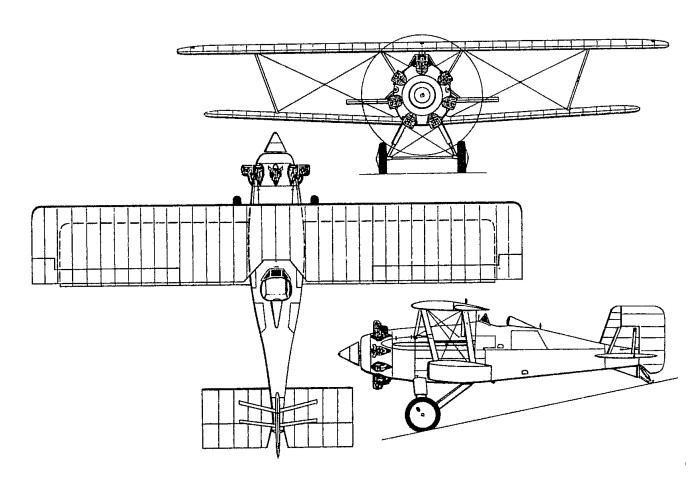
Evolved as a private venture to meet the requirements of Specification F.9/26, eventually satisfied by the Bristol Bulldog, the Partridge, designed by J D North, was of all-metal construction and its structure was made up in part of components already standardised for the P.29 Sidestrand bomber. Flown for the first time in 1928 with a 440hp Bristol Jupiter VII nine-cylinder radial (which it was intended to replace with the Mercury II in the unrealised Partridge III), it carried the standard armament of two 7.7mm Vickers machine guns in lateral fuselage bulges. The Partridge was initially flown with ailerons on the top wing only, but similar control surfaces were later introduced on the lower wing also. Only one prototype was built. It was entered in the F9/26 competition at Martlesham Heath against the officially sponsored Armstrong Whitworth Starling, Boulton-Paul Partridge, Gloster Goldfinch and Hawker Hawfinch, won by the Bulldog.
Engine: 440hp Bristol Jupiter VII Take-off weight: 1405 kg / 3098 lb Empty weight: 917 kg / 2022 lb Wingspan: 10.67 m / 35 ft 0 in Length: 7.03 m / 23 ft 1 in Wing area: 28.89 sq.m / 310.97 sq ft Max. speed: 269 km/h / 167 mph
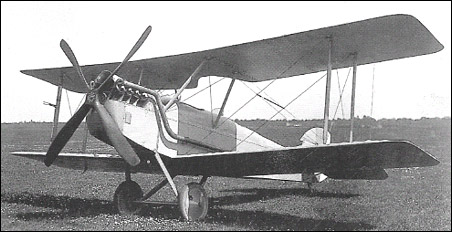
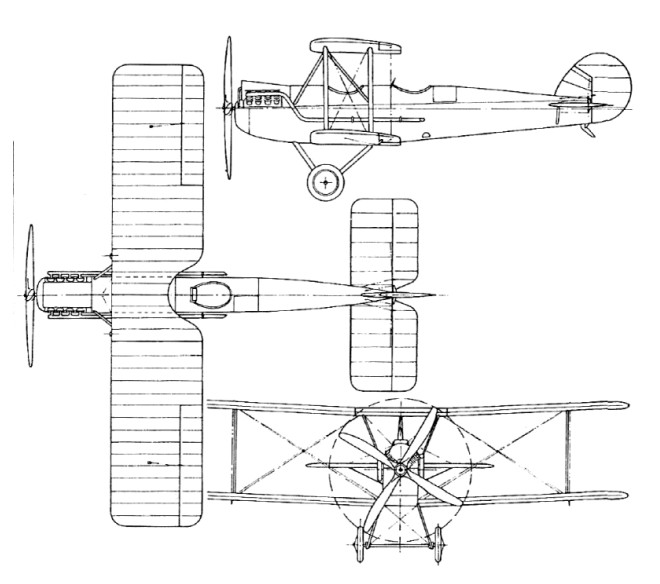
Engine: 1 x 90hp RAF 1a Take-off weight: 804 kg / 1773 lb Empty weight: 565 kg / 1246 lb Wingspan: 8.38 m / 27 ft 6 in Length: 7.62 m / 25 ft 0 in Height: 3.05 m / 10 ft 0 in Wing area: 30.01 sqm / 323.02 sq ft Max. speed: 167 km/h / 104 mph Ceiling: 4267 m / 14000 ft Range: 483 km / 300 miles
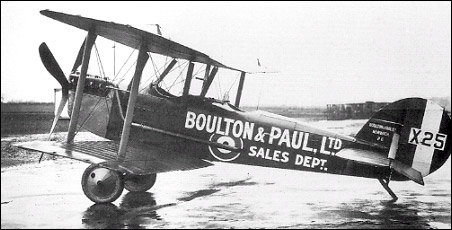
Engine: 1 x 90hp RAF 1a Take-off weight: 783 kg / 1726 lb Empty weight: 499 kg / 1100 lb Wingspan: 7.62 m / 25 ft 0 in Length: 5.79 m / 18 ft 12 in Height: 2.44 m / 8 ft 0 in Wing area: 21.83 sqm / 234.98 sq ft Max. speed: 166 km/h / 103 mph