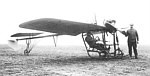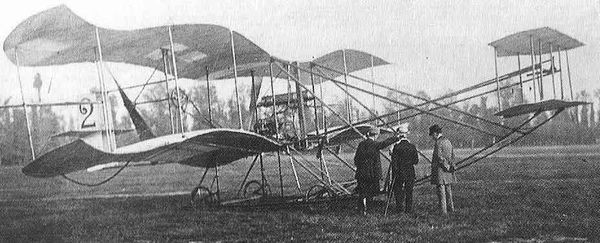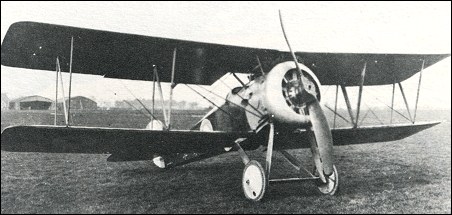
Boulton Paul P3 Bobolink

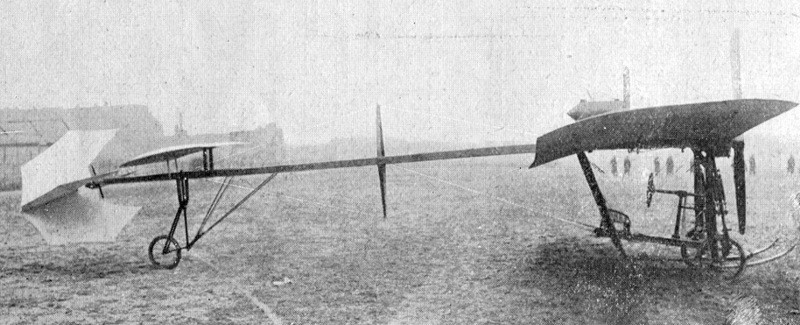
Boulton & Paul had manufactured wooden buildings at its Norwich factory, and during World War I built aircraft under sub-contract. Among the types produced were the FE.2b and Camel, and the Bobolink was the result of a design competition to find a Camel replacement. Boulton & Paul’s first aeroplane, the P.3 Bobolink designed by John D. North, was built only in prototype form.
The winner of the competition was the Sopwith Snipe, and the Boulton & Paul aircraft did not enter production. Three serial numbers were allocated for the prototypes, but records suggest that only one was built.
A Bobolink feature made it possible for the pilot to jettison its main fuel tanks in the event of an in-flight fire.

Engine: 1 x Bentley B.R.2 rotary piston engine, 172kW
Take-off weight: 904 kg / 1993 lb
Empty weight: 556 kg / 1226 lb
Wingspan: 8.84 m / 29 ft 0 in
Length: 6.10 m / 20 ft 0 in
Height: 2.54 m / 8 ft 4 in
Wing area: 24.71 sqm / 265.98 sq ft
Max. speed: 201 km/h / 125 mph
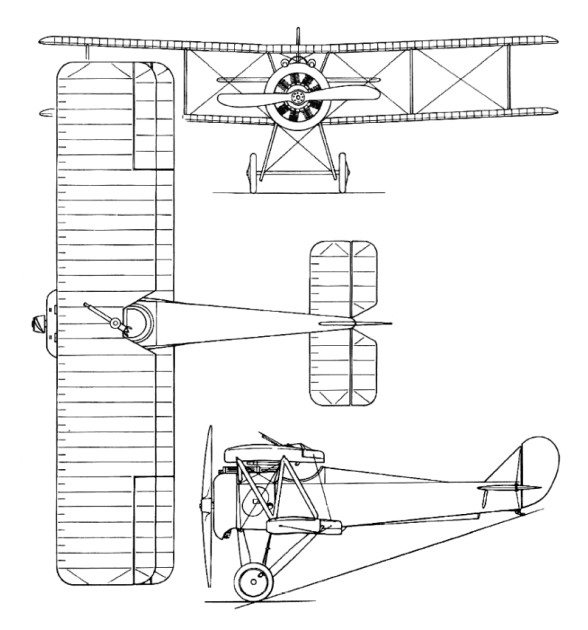
Bounsall Super Prospector

In 2012 the Bounsall Super Prospector had revised, professionally drawn plans. Material is tubing, wood, and fabric. Prefab kits were available. The Super Prospector could be built for less than US$5,995. The complete plans including postage were US$75.00.

Engine: Hapi 1835cc, 60 hp.
Speed max: 100 mph.
Cruise: 90 mph.
Range: 300 sm.
Stall: 36 mph.
ROC: 600 fpm.
Take-off dist: 300 ft.
Landing dist: 250 ft.
Service ceiling: 12,000 ft.
HP range: 50-85.
Fuel cap: 12 USG.
Weight empty: 440 lbs.
Gross: 800 lbs.
Height: 6.75 ft.
Length: 19.33 ft.
Wing span: 29.67 ft.
Wing area: 120.8 sq.ft.
Seats: 1.
Landing gear: tail wheel.

Bouchard Bush

A two seat tandem, open frame autogyro. Frame is bolted together, dual controls and composite partial enclosure. Engine: Rotax 582. Prop: 64” 3 blade composite. Rotor blades: 28’ x 75” Challenge aluminium rotors, bonded, riveted.

Min speed: 30 mph.
Cruise: 85 mph.
Top speed: 100 mph.
Empty wt: 390 lbs.
Useful load: 460 lbs.
Gross wt: 850 lbs.
Width: 7’8”.
Height: 8’4”.
Length: 14’8”

de Bothezat Helicopter 1939

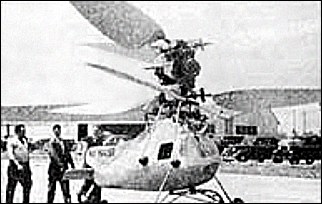
De Bothezat who, after abandoning his first helicopter in 1923, had created a firm for the design and manufacturing of industrial fans, returned in 1937 to the helicopter: he created then the Helicopter Corporation of America and built a coaxial helicopter.
A single-seat close-cockpit helicopter with 85hp radial engine and two coaxial rotors, the machine was completed by De Bothezat’s colleagues after he passed away in 1939.
Testing was entrusted to a Russian ace of World War I Captain Sergievsky.

de Bothezat Helicopter

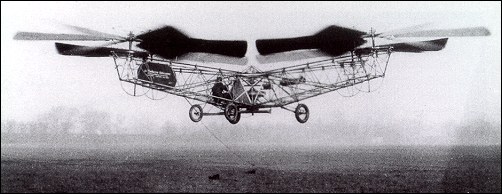
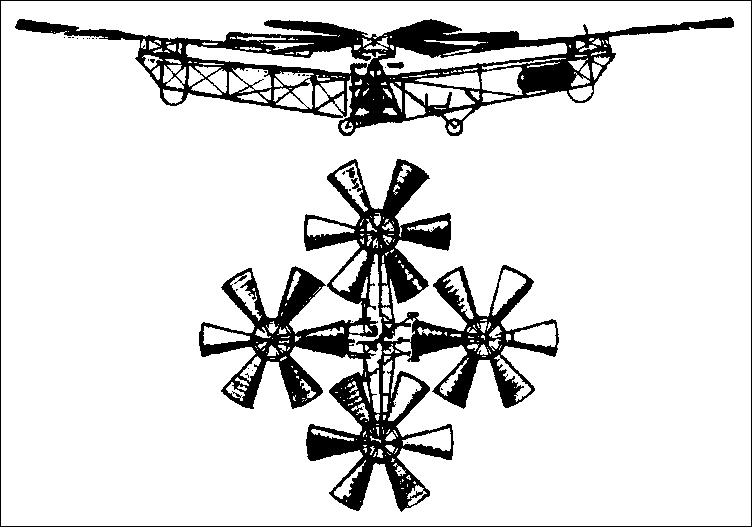
In January 1921, the US Army Air Corps awarded a $20,000 contract to Dr. George de Bothezat and Ivan Jerome to develop a vertical flight machine at Dayton. The 1678kg “X”-shaped structure supported an 8.1m diameter six-blade rotor at each end of the 9m arms. At the ends of the lateral arms, two small propellers with variable pitch were used for thrusting and yaw control. A small lifting rotor was also mounted above the 180hp Le Rhone radial engine (which it also cooled) at the junction of the frames, but was later removed as unnecessary. Each rotor had individual collective pitch control to produce differential thrust through vehicle inclination for translation. The aircraft weighed 1610 kg at take-off and made its first flight in October 1922. The engine was soon upgraded to a 220hp Bentley BR-2 rotary. About 100 flights were made by the end of 1923 at what would eventually be known as Wright Field near Dayton, Ohio.
On 18th December 1922 during a test by the Technical Section at McCook Field (now known as Wright Field), the aircraft rose 1.8 metres from the ground and remained airborne for 1 minute 42 seconds. On 19th January 1923 it lifted two persons to a height of 1.2 metres, and on 17th April 1923 it lifted not only the pilot but also four people hanging on to the framework.
Although the contract called for a 100m hover, the highest it ever reached was about 5m. After expending $200,000, de Bothezat demonstrated that his vehicle could be quite stable and that the practical helicopter was theoretically possible. It was, however, underpowered, unresponsive, mechanically complex and susceptible to reliability problems. Pilot workload was too high during hover to attempt lateral motion. Development ended in 1923.

Bothezat helicopter
Engine: 1 x Le Rhone radial 135kW, 180hp / Bentley BR-2 rotary, 220hp
Rotor diameter: 8.08m
Length and width: 19.8m
Height: 3.05m
Take-off weight: 1700kg

BOT-Aircraft SC07 Speed Cruiser

The Polish-designed, German-built, mostly carbon-fiber composite high-wing Speed Cruiser received ASTM certification (#131). It has a custom-built power plant and paraplegic controls for pilots in the Wounded Warrior flight program. The D-Motor is a flathead four-cylinder liquid-cooled direct drive plant rated at 95 hp and weighs 125 pounds. Cabin width is 48 inches, and seats are adjustable.

Stall: 35 kt / 40 mph / 65 kmh
Cruise: 127 kt / 146 mph / 235 kmh
VNE: 141 kt / 162 mph / 261 kmh
Empty Weight: 127 kg / 280 lbs
MTOW Weight: 214 kg / 472 lbs
Range: 650 nm
Climb Ratio: 6 ft/min
Glide Ratio: 15
Take-off distance (50ft obstacle): 490 ft / 150 m
Landing distance (50ft obstacle): 660 ft / 200 m
2009 Price: 59800 EURO
2012 Price: US$129,000.

Boshoff SB2

Building the SB2 was started in 1994 by S Boshoff, before the KR2S concept gained momentum. Looking for an aircraft that had better aerodynamic characteristics than the KR2, and the simplicity of the KR2, the SA-CAA granted permission to build an aircraft that was based on the KR2, but they would not allow it to be register as a KR2. Hence the SB2 which has the same wing as the KR2 with a lengthened fuselage and bigger tail areas.

The aircraft had its maiden flight on 23 November 2001.

SN: 1
Engine: Turbo charged VW 2.0 l t
Wing Span: 6150 mm
Length: 5050 mm
Empty weight: 310 kg
MAUw: 545 kg
Vstall: <50 mph
Vcruise: 155 mph
Vne: 190 mph
U/C: Fixed Composite MLG, Steerable NLG