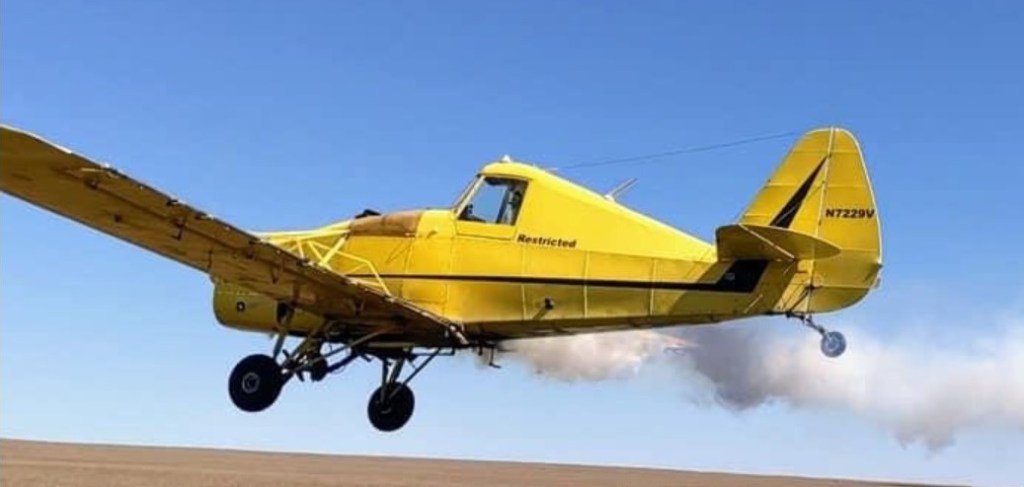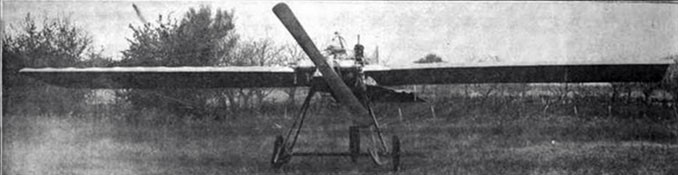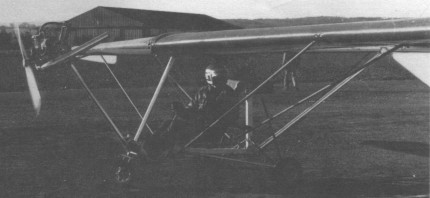
Campbell-Jones Ladybird

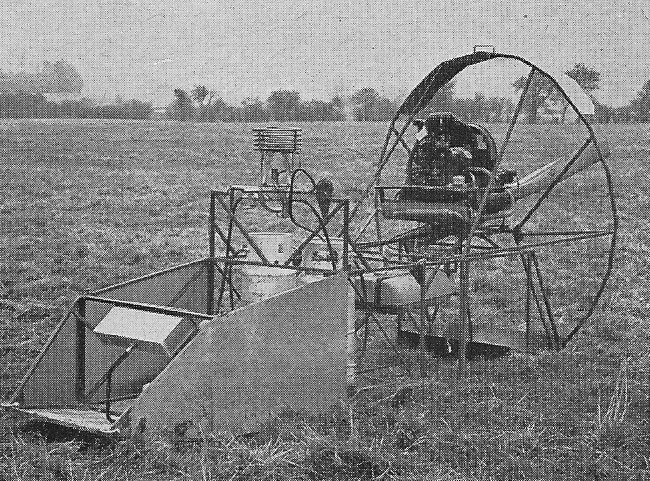
Single seat single engined high wing mono¬plane with conventional three axis control. Wing has swept back leading edge, unswept trailing edge and tapering chord; cruciforin tail. Pitch control by elevator on tail; yaw control by fully flying rudder with additional fin; roll control by wing warping; control inputs through stick for pitch/roll and pedals for yaw. Wing braced from below by struts; 100% double surface. Undercarriage has three wheels in tricycle formation; coil spring suspension on nose¬wheel and disc spring suspension on main wheels. Push right go right nosewheel steer¬ing connected to yaw control. Brake on nosewheel. Aluminium tube framework, without pod. Engine mounted at wing height driving tractor propeller.
Although the Ladybird is the first microlight to carry his name Mike Campbell Jones is no stranger to the micro¬light industry, having worked at one time or another for Hiway and Huntair in Britain, and Fulmar and the EMC 2 company in Belgium.
The Ladybird does not set out to be a high performance aircraft, at least not in terms of climb rate and speed. Instead, Mike has tried to create a light, simple machine with a good glide ratio and pleasant handling. The pro¬totype Ladybird was shown at the Long Marston fly in during August ’82 and was generally well received; however it was obviously in need of refinement and since then push rods and bell cranks have re¬placed control cables, the rudder has been down sized to eliminate over sensitivity and a differential movement has been built into the wing warping mechanism, to give the ‘up’ wing more movement than the ‘down’. The Ladybird’s most unusual feature is its wing warping mechanism, however, this mechanism is not just for roll control; a separate lever allows the pilot to twist both wings equally to adjust the speed range, thus permitting the pilot to select a slower stall speed in preparation for a tricky landing.
In 1983, the aircraft was powered by a Hiro engine, but Mike was not satisfied with its reliability and was consider¬ing substituting the 330 Robin for production aircraft.

Engine: Hiro Delta Mk I, 22 hp at 7500 rpm.
Propeller diameter: 54 inch, 1.37m.
Gearbox reduction, ratio 3.0/1.
Max static thrust 130 lb, 59 kg.
Power per unit area 0.16hp/sq.ft, 1.7hp/sq.m
Fuel capacity 4.8 US gal, 4.0 Imp gal, 18.2 litre.
Empty weight 250 lb, 113kg.
Max take off weight 475 lb, 215kg.
Payload 225 lb, 102 kg.
Max wing loading 3.49 lb/sq.ft, 17.1 kg/sq.m.
Max power loading 21.6 1b/hp, 9.8kg/hp.
Load factors +6.0, 3.0 design
Length overall 18.0 ft, 5.50 m.
Height overall 7.4ft, 2.26m.
Wing span 36.1ft, 11.00m.
Chord at root 4.6ft, 1.40m.
Chord at tip 3.0ft, 0.90m.
Dihedral: 2deg.
Sweepback: 7.5deg
Tailplane span 6.3 ft, 1.91 m.
Fin height 2.0 ft, 0.61 m.
Total wing area 136 sq.ft, 12.6 sq.m.
Fin area 1.5sq.ft, 0.14 sq.m.
Rudder area 9.5sq.ft, 0.88 sq.m.
Tailplane area 10.0 sq.ft, 0.93 sq.m.
Total elevator area 22.0 sq.ft, 2.04 sq.m.
Wing aspect ratio 9.64.
Wheel track 5.0 ft, 1.52 m.
Wheelbase 5.5 ft, 1.68 m.
Nosewheel diameter overall 13 inch, 33 cm.
Main wheels diameter overall 13 inch, 33 cm.
Floats, dimensions length 12 ft, 3.7 m.
Max level speed 55 mph, 88 kph.
Never exceed speed 65 mph, 105 kph.
Max cruising speed 50 mph, 80 kph.
Economic cruising speed 45mph, 72kph.
Stalling speed 25 28mph, 40 45kph.
Best glide ratio with power off 13/1 at 45 mph, 72 kph.
Take off distance 150 ft, 45 m.
Land¬ing distance 100ft, 30m.
Service ceiling 3000ft, 910m.
Range at average cruising speed 100 mile, 161 km.
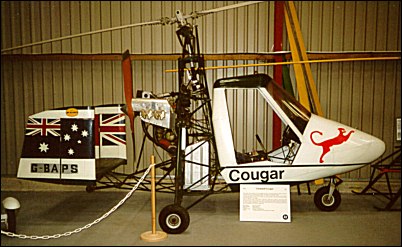
Campbell Cougar

The Campbell Aircraft Company was founded in the late 1950’s to develop and build autogyros and in 1969 began production of the single seat Cricket autogyro. This was later followed by a two-seat project and the construction of a single seat prototype was carried out by Western Airways at Weston-super-Mare Airport in early 1973. Powered by a single Rolls Royce Continental O-240-A 4-cylinder ‘flat-four’ piston engine it first flew in April 1973.

Cricket autogyros were still being manufactured in 2007, and Peter Lovegrove who was the original designer of the Cougar and Cricket was still involved.

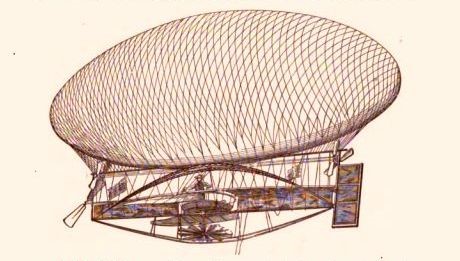
Campbell Air Ship / Novelty Air Ship Co Airship

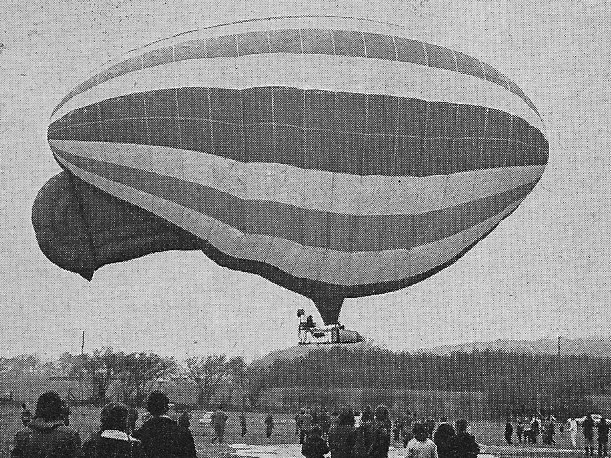
Powered by an Edison electric motor, its 18,000 cu. ft. envelope supplied by Carl E. Meyers, and built a cost of $2500 by the Novelty Air Ship Company of Brooklyn, N.Y., for Professor Peter C. Campbell; the first flight of which was made December 8, 1888 from Coney Island to Sheepshead Bay, piloted by Carlotta the aeronaut – the wife of Carl Meyers. At this time the motive of power is reported to have been bicycle pedals and multiplying gears. The Campbell Air Ship was lost at sea July 16, 1889 while being flown by Professor E. D. Hogan, a Canadian professional aerobat/parachutist, during an exhibition flight originating from the Nassau Gas Works. Intending to make a trip around New York, then to pass over to New Jersey and into the country, five minutes into the flight the 8 foot diameter lower propeller, with which Hogan was to raise and lower the Air Ship gave way and fell to the ground. To make matters worse, it was observed that the steering propellers did not seem to work as no revolutions were discernible, leaving Hogan at the complete mercy of the wind.

Campbell Model F

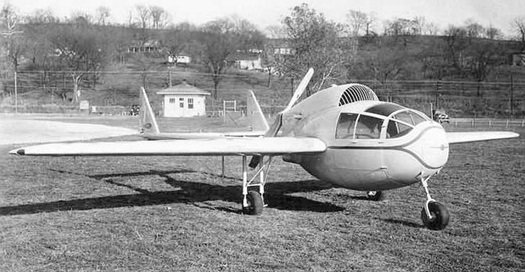
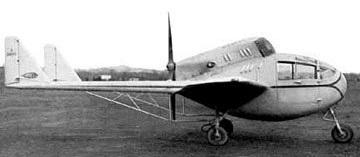
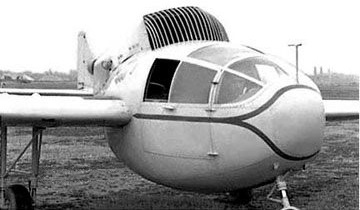
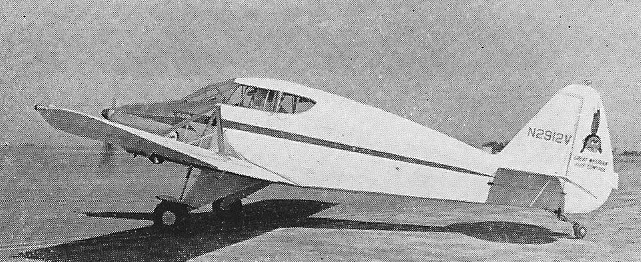
Designed and built in 1935 by Hayden Campbell in St. Joseph, Missouri, the Campbell F was made of all-magnesium construction and was powered by an 85 hp Ford V-8 automotive engine.The F model was equipped with a tricycle landing gear with steerable nosewheel.

Nicknamed ‘The Flying Easter Egg’, the aircraft was damaged in a demonstration flight and never repaired.

The goal of this side by side two-seater design was a cheap plane for tourism.

This aircraft was seen in a dismantled state in a barn south of Buffalo New York. Prior to that, it had been stored at the Hamburg, NY airfield on North Creek Road.

Engine: 85 hp Ford V-8
Wingspan: 36 ft
Length: 19 ft 4in
Max speed: 190 km/h
Seats: 2 side to side

Campana AN 4 Campana

A composite side by side two seater.

Engine: Limbach L 2000, 80 hp
Wing span: 11.08 m
Wing area: 14.31 sq.m
Empty weight: 255 kg
MAUW: 450 kg
Fuel capacity: 140 lt
Fuel consumption: 12 lt/hr
Max speed: 230 kph
Cruise speed: 210 kph
Minimum speed: 63 kph
Climb rate: 4.3 m/s
Seats: 2
Certification: CASA
Price (1998): 336,000 Fttc
Kit price (1998): 195,000 Fttc

Cameron P-51

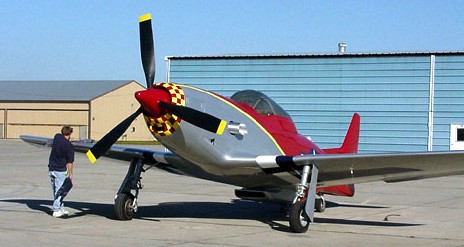
The P-51 is a full size Carbon Fiber Mustang manufactured by Cameron and Son’s Aircraft. This aircraft is available with a 1450 hp turbine, or can be fitted with a Rolls Merlin. It is capable of speeds in the mid 400mph range. There are three options on the canopy, the standard P-51D, a 9ft bubble, or a low profile racing canopy. Also available are standard P-51D wing tips. The cockpit features dual controls. The kit is built from 12 major components, making it the fewest part count aircraft of its kind.

Cruise: 420 mph
Stall: 87 mph
Range: 580 sm
Rate of climb: 4200 fpm
Takeoff dist: 1250 ft
Landing dist: 1750 ft
Engine: Allison, 1750 hp
HP range: 1150-3500 hp
Fuel capacity: 250 USG
Empty weight: 4500 lb
Gross weight: 6000 lb
Length: 36 ft
Wing span: 37 ft
Wing area: 233 sq.ft
Seats: 2
Landing gear: tailwheel

Call-Air Model A

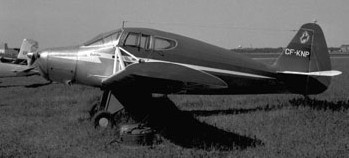
The first CallAir flew in 1941 and was designated the Model A. The last version was introduced in 1957 and was named the A-6. Throughout the years of its existence, the basic difference between any of the models was the powerplant; otherwise, the Model A-4 differed little externally from the original Model A. The CallAir was built with mixed construction: fabric-covered wooden wings and a fabric-covered steeltube fuselage.

The Model A-2, with a 125-hp Lycoming, and the Model A-3, with a 125-hp Continental, were produced during the years between 1946 and 1948.

Call-Air 100 Model A-2

The first production models of the A-4 appeared in 1955, and the major refinement was the addition of 25 more horsepower with the installation of a 150-hp Lycoming. All models shared the same two-to three-seat cabin and low wing with exposed struts.

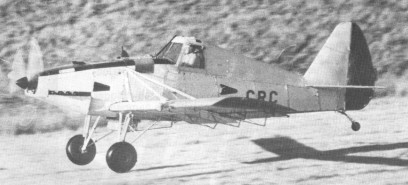
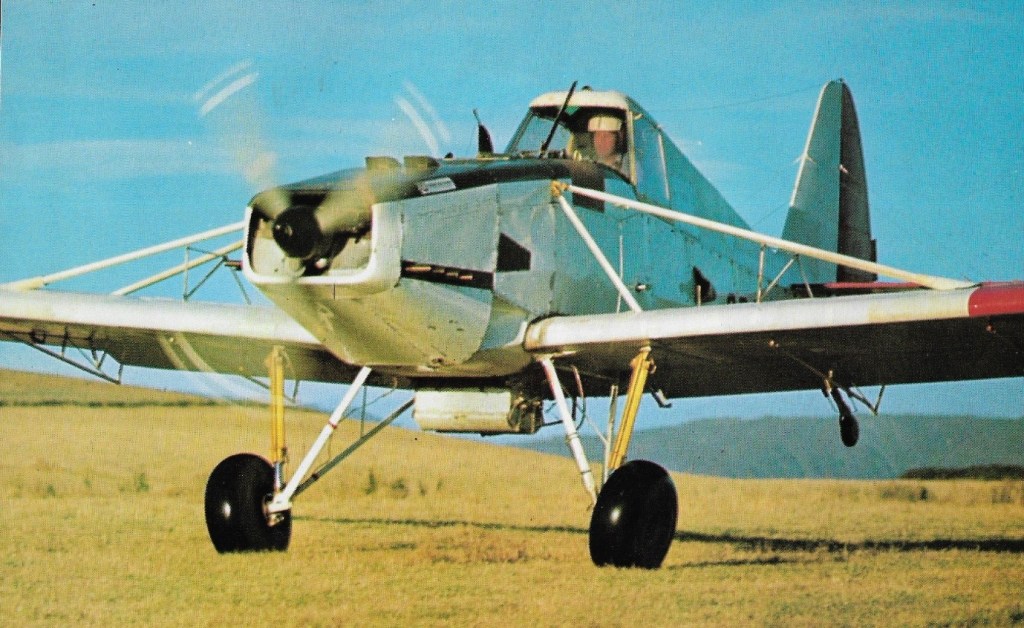
Another version of the CallAir was introduced in 1956 and was basically an agricultural development of the Model A-4. Designated the A-5, it was normally flown as a single-seater with the cockpit offset to the starboard side due to the inclusion of the dust hopper.

The Model A-6 flown in 1957 was identical, apart from another jump in horsepower to a 180-hp Lycoming.

CallAir A-9                                        courtesy Larry in NC

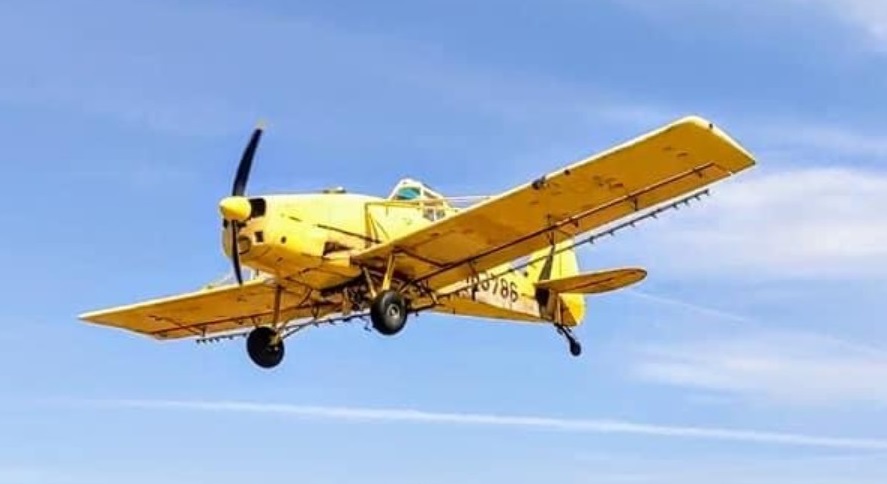
The Intermountain Manufacturing Co. developed a series of low-priced agricultural aircraft from the CallAir, and the first airplane rolled off the production line in 1963. The A-9 featured a 235-hp Lycoming; its top speed was now 130 mph, and its climb rate was now 650 fpm. The dust hopper was moved to a position in front of the cockpit.

CallAir A-9                                        courtesy Larry in NC

A-1
Seats 2-3
Gross wt. 1,550 lb
Empty wt. 1,000 lb
Fuel capacity 25 USG
Engine 100-hp Lycoming
Top 115 mph
Cruise 105 mph
Stall 40 mph
Initial climb rate 500fpm
Ceiling 13,000ft
Range 260sm

A-2
Seats 2
Gross wt. 1,550lb
Empty wt. 975lb
Fuel capacity 30USG
Engine 125- hp Lycoming
Top 120 mph
Cruise 109 mph
Stall 45 mph
Initial climb rate 1,000fpm
Ceiling 17,500ft
Range 456sm
Takeoff run 426ft
Landing roll 300ft

A-3
Seats 2
Gross wt. 1,550lb
Empty wt. 975lb
Fuel capacity 30USG
Engine 125- hp Continental
Top 120 mph
Cruise 109 mph
Stall 45 mph
Initial climb rate 1,000fpm
Ceiling 17,500ft
Range 456sm
Takeoff run 426ft
Landing roll 300ft

A-4
Engine 150-hp Lycoming
Seats 2-3

A-5
Seats 1

A-6
Engine 180-hp Lycoming

A-9
Engine 235-hp Lycoming
Top speed 130 mph
Climb rate 650 fpm.