Caproni Ca.22 Parasol / BH

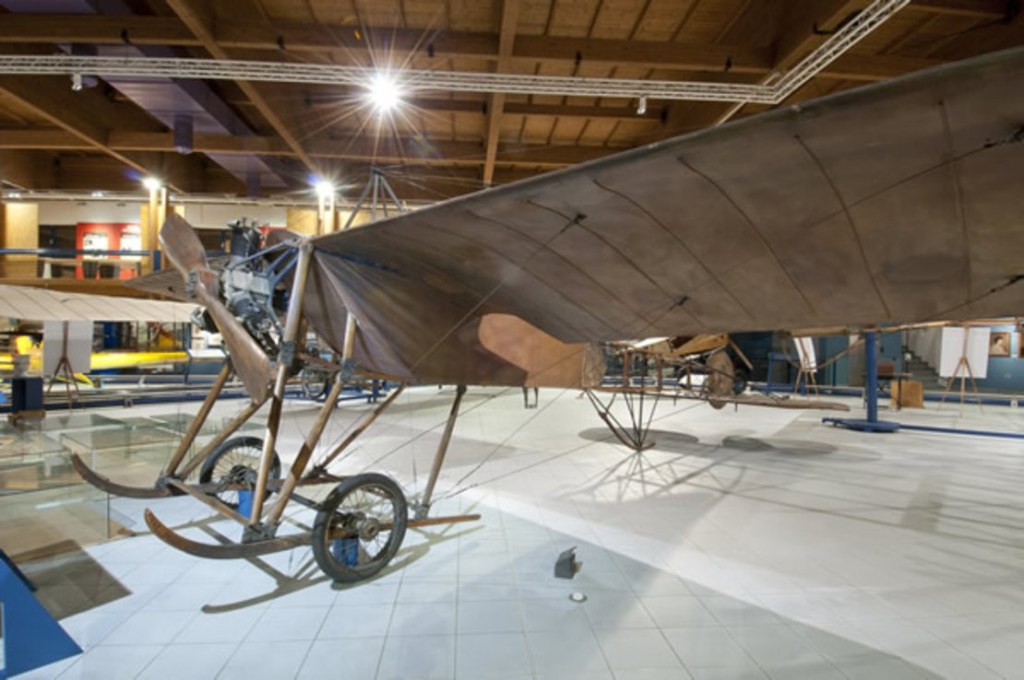
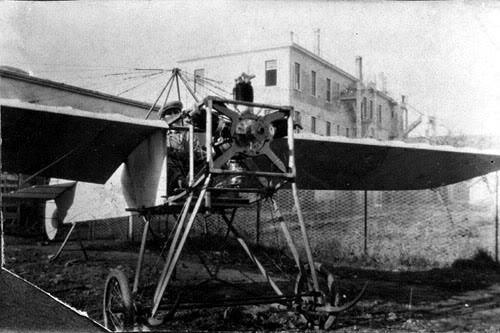
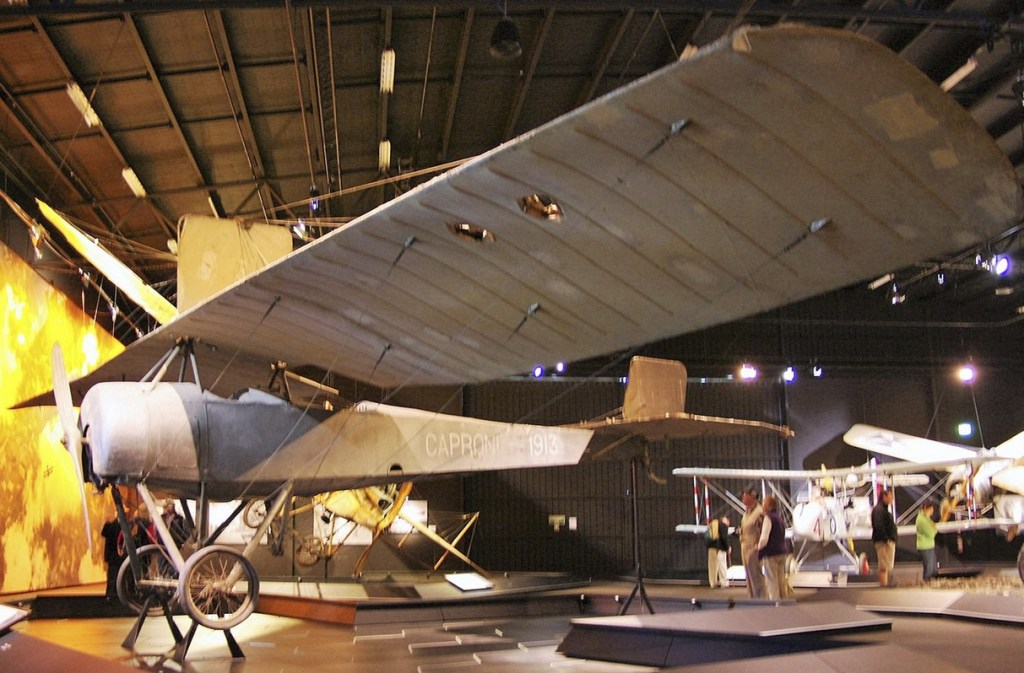
Caproni Ca.22 1913 at the Omaka Heritage Centre, New Zealand in April 2009

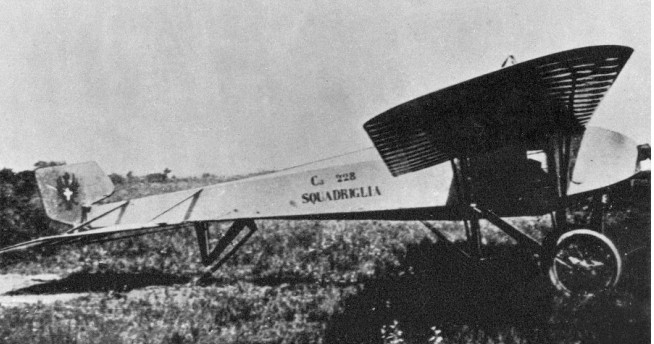
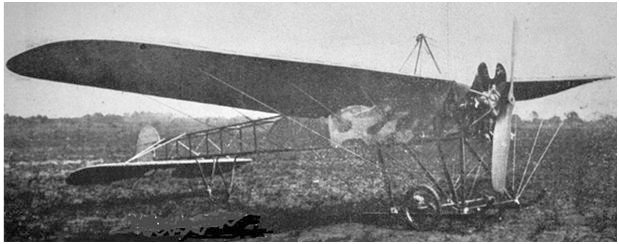
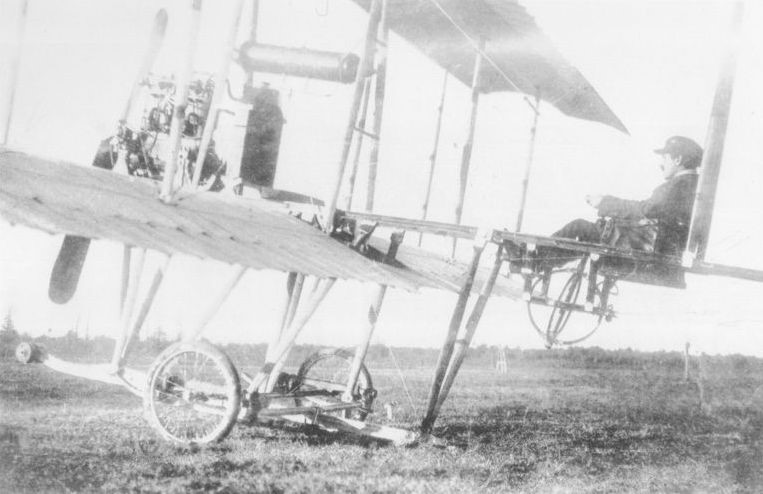
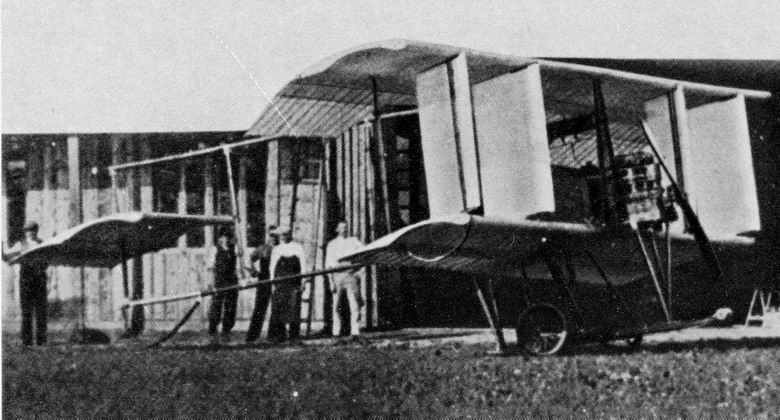
Development of the Caproni Ca.20 led to the Ca.22, a two-seat reconnaissance fighter of parasol wing configuration similar in appearance to the earlier type with a larger propeller spinner and a Le Rhone rotary engine, being either the 60 kw (80 hp) or 75 kw (100 hp) variants, but this was later replaced by a 104 kw (140 hp) Hispano Suiza.

The fin and rudder were of triangular type and were first introduced on the type L. One innovative feature of the design was the ability to tilt the wing to increase or decrease the angle of attack, varying the angle at which the wing surface met the oncoming air and thus varying the amount of lift produced. The machine was otherwise conventional for the time.

The CA.22 served as a two-seat observation aircraft with the Italian Army’s No 15 Squadron, which had used Bleriot monoplanes before the introduction of the Ca.22 in April 1915. It is known seven examples were issued to that unit, and it would appear that this was the complete production of the type. This unit operated near Piacenza with No III Group, being commanded by Captain Umberto Rossi and was involved in the reconnaissance role. On 30 June that year the Squadron’s aircraft were dis-assembled and conveyed to Pordenone near the Austrian border from where further reconnaissance flights were made, as well as commencing bombing operations over enemy territory.

The CA.22 became known as the BH when fitted with the Hispano engine. This engine had a water jacket surrounding the crank case. The Caproni BH was replaced in service by the Model P which was supplied to both the Royal Air Force and French Air Force.

Although not built in large numbers, one example has survived and has been imported to New Zealand, joining the collection of World War I aircraft on display at the Aviation Heritage Centre at Omaka. This example was held in storage by the Caproni Museum in Italy, which was set up by Gianni and Timina Caproni, from about 1929 until imported to New Zealand and is believed to be the only survivor. This machine has been described as a virtual ‘time capsule’ as it has changed very little in the 85 years it was held in storage.

Engine: 60 kw (80 hp) Gnome Rhone
Wingspan: 14.14 m (46 ft 4 in)
Length: 8 m (26 ft 3 in)
Height: 3.5 m (11 ft 6 in)
Wing area: 13.57 m² (144 sq ft)
Max speed: 125 km/h (76 mph)
Empty weight: 480 kg (|1,056 lb)
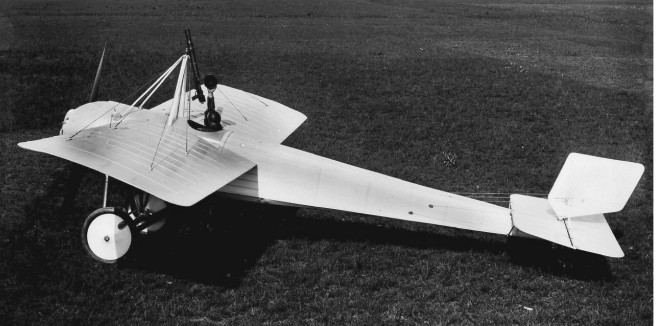
Caproni Ca.20

One of his early fighter aircraft was the Ca.18 reconnaissance aircraft which was developed to the Ca.20, the latter incorporating a larger engine mounted under a stream-lined cowling, with shorter wings and fitted with a machine-gun for offensive operations. The Ca.20 developed in 1914 was described as an exceptional fighter and ahead of its time. It was a single-seat fighting scout of mid-wing monoplane configuration and had a fixed forward firing machine-gun above the propeller arc. Only one example was produced and for many years it was stored in Italy before being acquired by the Museum of Flight in Seattle in 1999, preserved and placed on display but keeping its original fabric covering.

Caproni Ca. 13 Milano I

The thirteenth airplane model designed and built by aviation pioneer Gianni Caproni in Vizzola Ticino. It was a two-seat, rather conventional tractor wing-warper monoplane, generally of Blériot lines, which flew for the first time in June 1912. Two examples were built, powered by 70 hp Anzani radials, which proved problematic. The “Milano I” was the second, donated by Caproni to the Società Italiana Aviazione in July 1912.

Caproni Ca.9

The Caproni Ca. 9, from 1911, has a structure entirely in wood, with a latticework fuselage braced with steel cables, wooden wings and tailpieces with canvas covering. The engine is a 35 hp three-cylinder Anzani Y. The landing gear features the typical anti-tip skids, characteristic of many aircraft of the pioneering period.

To commemorate the hundredth anniversary of the birth of the Trentino pioneer in 1986, the prestigious National Air and Space Museum in Washington exhibited Ca. 9 of the Caproni Museum in the “Early Flight” pavilion, models, drawings, relics, medals won by Caproni devices and a series of illustrative panels.

Having returned to Italy in 1988 and temporarily hosted by the AerSud, in 1989 the Ca.9 was exhibited in the Palazzo della Regione on the occasion of the official announcement of the project to build the new Caproni Museum in Trento. It then became a symbol of the initiative, and was again exhibited on the occasion of the laying of the first stone. Subjected to conservative interventions in America and Italy, with the inauguration of the Museum, it found its permanent home in the pioneering aircraft sector of the Gianni Caproni Museum of Aeronautics.

Engine: 35hp Anzani
Wingspan 8.88 m
Length 7.80 m
Height 3.00 m
Empty weight 220 kg
Maximum speed 90 km / h

Caproni Ca.8      

The success reported by Louis Blériot with his monoplane at the end of July 1909 in crossing the English Channel impressed a vigorous change in the tendencies of the builders of the time towards the monoplane, justified by the greater structural simplicity and better aerodynamics compared to contemporary biplanes.

Gianni Caproni joined this new trend starting from 1911 and up to the end of 1913, dealing exclusively with the construction of monoplane for school and training, in both single and two-seater versions, making more than seventy.

The first of these, the Ca. 8 single-seater, also known as the “Caproni monoplano 25hp”, flew to Vizzola on June 13, 1911 powered by a 25 hp three-cylinder fan-shaped Anzani engine.

Caproni Ca.6      

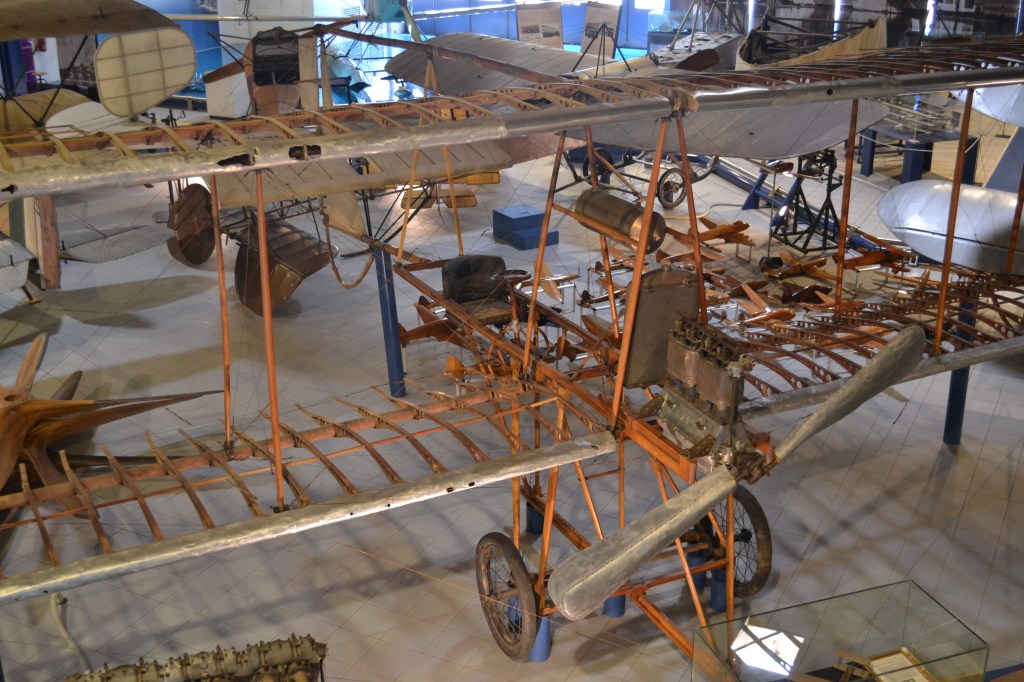
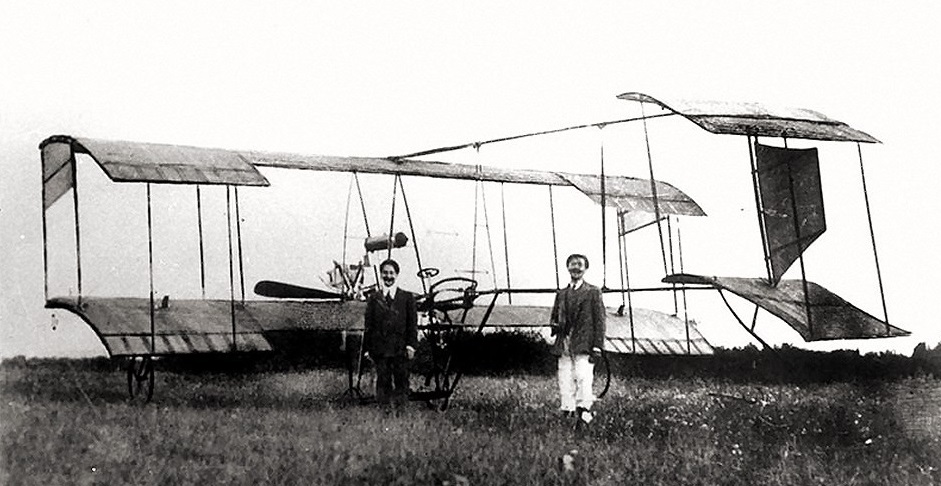
The Ca.6 was a single-engine propeller-driven biplane with a traditional configuration with wings in the bow and tail fletching, but it had no fuselage: it was replaced by a light structure formed by two beams of unshelled wood and some vertical reinforcing uprights that supported the planes of tail. They were composed only of a stabilizer – horizontal balancer; the lack of a vertical drift was compensated by four large interwoven surfaces that, placed between the wings, contributed to the stability of the aircraft around the vertical axis. The wings resumed the double curvature profile that had also characterized Caproni aircraft immediately preceding, but with not very lucky results: the aerodynamic characteristics of this type of profile, which had been suggested to Caproni by his friend and colleague Henri Coandă, proved to be once again unsatisfactory.

The one built first flew in 1911, The Ca.6, the sixth Caproni biplane, sported the characteristic double curvature airfoil and lightened tailboom, constructed from hollowed-out wooden tubes. Still powered by the 50 hp Rebus, it was modified following some flights in spring 1911.

The Caproni Ca.6 was preserved inside the Caproni workshops until 1934, when it was brought to Milan to be shown to the public on the occasion of the Italian Air Force Exhibition; in the meantime, in 1927, the spouses Gianni and Timina Caproni founded the Caproni Museum, in whose headquarters in Taliedo the Ca.6 found a place starting from the forties. After the vicissitudes linked to the Second World War and the reopening of the museum in Vizzola Ticino, the Ca.6 was again displayed to the public. The definitive position in the Museo dell’Aeronautica Gianni Caproni, reopened in Trento, in the nineties.

The aircraft underwent a first renovation-conservation operation before being displayed in Milan, in the early thirties: it was probably on this occasion that the leading edge of the wings was reinforced with a metal strip and the fuselage and the wings themselves they were shortened. At the time of its transfer to Trento, the Ca.6 has undergone a new intervention; however, due to the lack of availability of reliable technical drawings and other necessary historical documentation, a real restoration did not take place, but only a conservation procedure.

Powerplant: 1 × Rebus 50hp 4-cyl, 37 kW (50 hp)
Propeller: 2-bladed fixed pitch propeller
Wingspan: 12 m (39 ft 4 in)
Wing area: 45 m2 (480 sq ft)
Length: 9.8 m (32 ft 2 in)
Height: 3.27 m (10 ft 9 in)
Gross weight: 318 kg (700 lb)

Capone Aérogyroplane

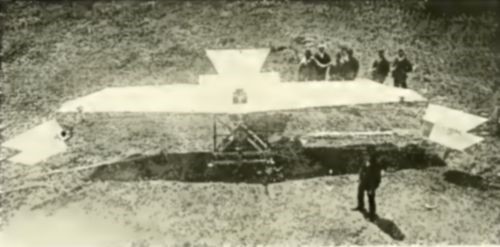
Federico Capone’s machine was called l’Aérogyroplane because of the way it was powered. A small motorcycle engine of 4.5 hp drove double pairs of swinging blades symmetrically disposed at the end of wings. The blades worked like rotors in the initial stage of flight and then their position could be changed from horizontal to vertical. The latter was to give horizontal action to the machine. Built by Ceccarelli in Naples, testing was not very successful, as the machine was partially wrecked by a gale on April 30, 1905. The repaired machine was later sent off from a high launching position and managed to fly a certain distance.