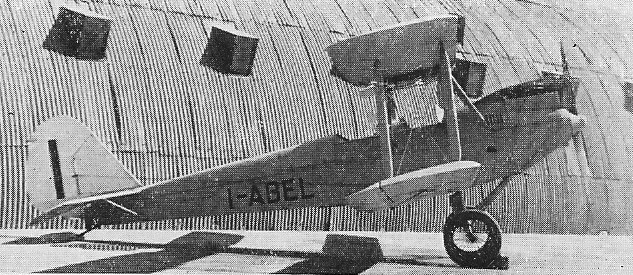
Caproni F.6         

Caproni-Vizzola F.6M

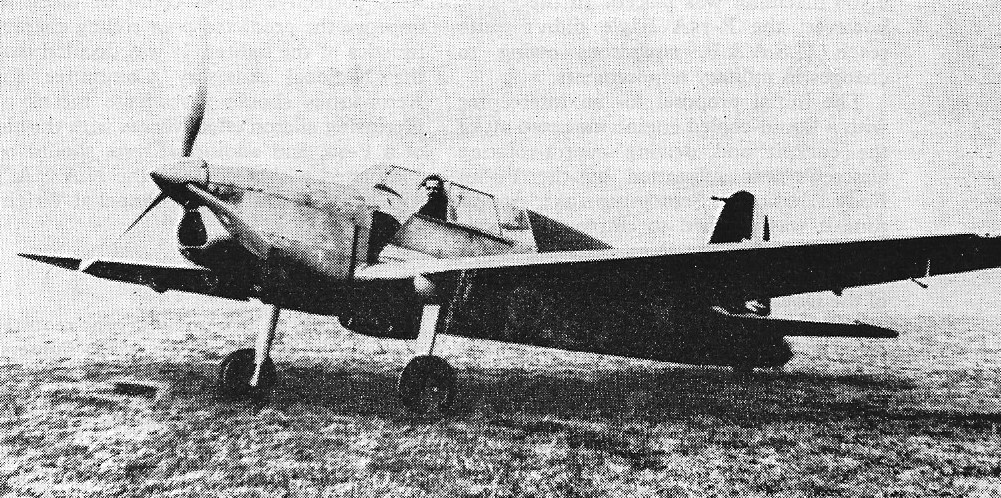
The F.4 had been redesigned to take the German DB 601Aa engine, finally flying with this in late 1940. Results were excellent, but Fabrizi decided not to pursue this, developing it instead with the more powerful DB 605A of 1475 hp, which was to be built in Italy as the Fiat RA1050 RC58 Tifone. With this engine the F.6 flew in 1942, and subsequently an all metal F.6M was built, passing through various development stages. Basic armament was four 12.7 mm (0.54n) Breda SAFAT machine guns. Several developments were projected, most having the X-form Isotta Fraschini Zeta engine, but the Armistice halted further work in September 1943.Engine: Daimler-Benz DB 605A.
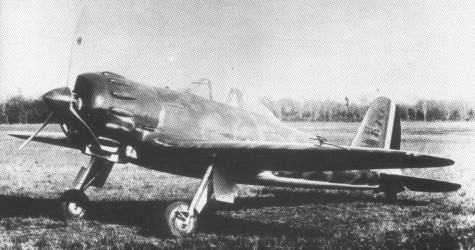
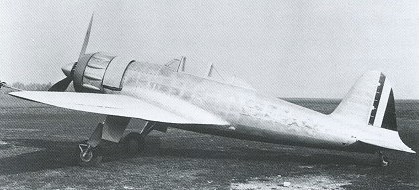
Caproni F.5 Vizzola         

The F.4 and F.5 were designed in parallel with the 890-hp (664-kW) Isotta-Fraschini Asso 121 inline and 870-hp (649-kW) Fiat A.74 radial engines respectively. They had traditional mixed construction, with welded steel tube fuselage with light ¬alloy skin and wooden wings. Landing gear and flaps were hydraulic, and ailerons were arranged to droop with extension of the flaps. Tailplanes had variable incidence for trim¬ming.
The F.5 was the first to fly, in early in 1939, and was evaluated against the Fiat G.50 and Macchi MC.200 for a production order, but the only contract placed was for 14 pre-production fighters. These had a modified cockpit canopy, greater fuel capacity, larger vertical tail surfaces, and a non-retracting tailwheel. The F.5s were used from mid-1940 for the night defense of Rome in the first months of the war, and then employed as interceptors until lack of serviceability forced their retirement. Armament was two 12.7 mm (0.5 in) Breda SAFAT guns. Fabrizi had numerous schemes for developments of the F.5, but none was built.

Caproni Vizzola F.5
Type: single-seat fighter.
Engine: one 870-hp (649-kW) Fiat A.74 RC 38 radial piston
Maximum speed: 317 mph (510 km/h) at 9,845 ft (3,000 m)
Climb to 21,325 ft (6,500 m): 6 minutes 30 seconds
Service ceiling: 31,170 ft (9,500 m)
Range: 478 miles (770 km).
Empty weight: 4,078 lb (1,850 kg)
Maximum take-off weight: 5,181 lb (2,350 kg).
Wing span 37 ft 1 in (11.30 m)
Length 25 ft 11 in (7.90 m)
Height 9 ft 10 in (3.00 m)
Wing area 189.45 sq ft (17.60 sq.m)
Armament: two fixed 0.5-in (12.7-mm) machine guns.

Caproni F.4

The F.4 and F.5 were designed in parallel with the 890-hp (664-kW) Isotta-Fraschini Asso 121 inline and 870-hp (649-kW) Fiat A.74 radial engines respectively. It was then decided to fit the more powerful Daimler-Benz DB 601A in the F.4, and the delay thus caused meant that the F.5 was the first to fly, an event that took place early in 1939.
The F.4 had traditional mixed construction, with welded steel tube fuselage with light alloy skin and wooden wings. Landing gear and flaps were hydraulic, and ailerons were arranged to droop with extension of the flaps. Tailplanes had variable incidence for trimming.
The F.4 finally flew in late 1940 with the DB 601A, and it was then decided to concentrate on an improved F.6 with the DB 605A.

Caproni AP.1

Poor performance eventually led to the Caproni AP.1 Attack Aircraft being replaced within the Regia Aeronautica.

Caproni AP.1

Engine: 1 x Alfa Romeo 126 RC.34 radial piston, 780 horsepower.
Length: 30.64ft (9.34m)
Width: 42.68ft (13.01m)
Height: 9.84ft (3.00m)
Maximum Speed: 216mph (347kmh; 187kts)
Maximum Range: 932miles (1,500km)
Service Ceiling: 21,325ft (6,500m; 4.0miles)
Armament: 1 x 12.7mm Breda-SAFAT heavy machine gun, 2 x 7.7mm Breda-SAFAT machine guns.
Up to 1,102lbs of munitions.
Accommodation: 2
Hardpoints: 2
Empty Weight: 4,277lbs (1,940kg)

Caproni Ca.164

The Caproni Ca.164 was produced by Aeronautic Pedappio S.A., a division of the Caproni Group in 1937.

Powered by a 185 hp Alfa 115-1 engine, the Ca,164 was employed by the Regia Aeronautica during the war years.

Engine: 185 hp Alfa 115-1
Wingspan: 30 ft 10 in
Length: 22 ft 10 in
Height: 8 ft 6 in
Empty weight: 1873 lb
Loaded weight: 2600 lb
Max speed: 13 mph
Cruising speed: 115 mph
Range: 330 mi
Seats: 2

Caproni Ca.113

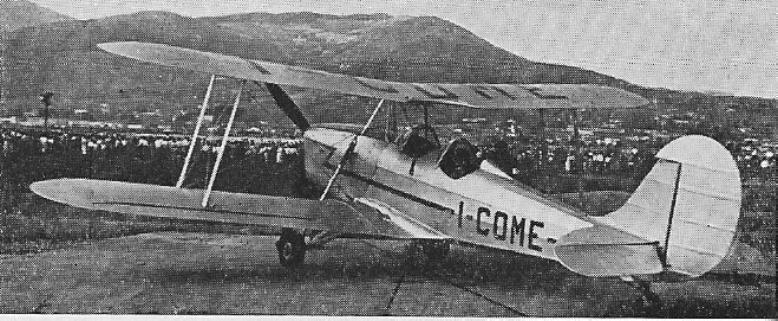
The Caproni Ca.113 two-seat advanced training and aerobatic biplane was produced in the early 1930s. Th wings were wood with fabric covering, and the fuselage and tail assembly had welded steel-tube frame0work covered with fabric. Differentially-controlled ailerons were fitted on the upper plane and small auxiliary balance surfaces were attached to the bottom planes. A special carburetter was fitted for inverted flying, and the type participated in a number of pre-war competitions.

Engine: Piaggio Stella VII, 370 hp
Wing area: 290.5 sq.ft
Wing span: 34 ft 5 in
Length: 23 ft 11 in
Height: ft 11 in
Empty weight: 1870 lb
Loaded weight: 2420 lb
Max speed: 155 mph
Time to 6560ft: 3.5 min
Ceiling: 24,600 ft
Range 186 mi
Seats: 2

Caproni Ca.100 / KN-1

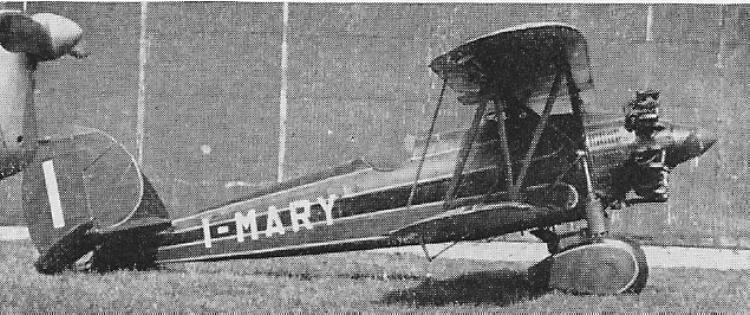
The Ca 100 has a lower wing of noticeably greater span than the upper wing, and about 700 aircraft were built from 1929. The type was bought by civil as well as military operators, and was flown with an assortment of engines including the original Gipsy, 63-kW (85-hp) Fiat A.50, 67-kW (90-hp) Blackburn Cirrus Minor, 86-kW (115-hp) Isotta Fraschini Asso 808, and 108-kW (145-hp) Colombo S.63.

90 hp Cirrus

The Ca 100bis is a touring model powered by a 130 hp de Havilland Gipsy. Built by Macchi, the Ca 100 Idro was a twin-float seaplane trainer, and there was also a bomber trainer with a 97-kW (130-hp) radial engine and provision for a quartet of light bombs. The type was built under licence in Bulgaria as the KN-1, and also in Peru.

Gallery

Ca 100
two-seat primary trainer.
Engine: l x de Havilland Gipsy, 63kW (85hp).
Span: 10m (32ft l0in).
Length: 7.30m (23ft 1.25in).
Max T/O weight: 680 kg (1,499 lb).
Max speed: 102mph at sea level.
Operational range: 435 miles.

Ca 100
Engine: Cirrus, 90 hp
Wingspan: 32 ft 10 in
Length: 23 ft 10 in
Height: 8 ft 11 in
Empty weight: 882 lb
Loaded weight: 1587 lb
Max speed: 102 mph
Cruise: 87 mph
Ceiling: 14,763 ft
Range: 435 mi

Caproni Ca.97

Powered by a licence built Alfa Romeo (Bristol) Jupiter of 515 hp, the Ca 97 was one of a family of civil and military high wing seaplane transports of 1928 33. The 97 was normally equipped with three 7.7 mm (0.303 in) Breda-SAFAT machine guns and external racks for a small bombload, but it could carry a crew of up to six or cargo internally.

Span: 16.0 m (52 ft 5.75 in)
Length: 10.8 m (35 ft 6 in)
Gross weight: 2595 kg (5720 lb)
Maximum speed: 220 km/h (138 mph)