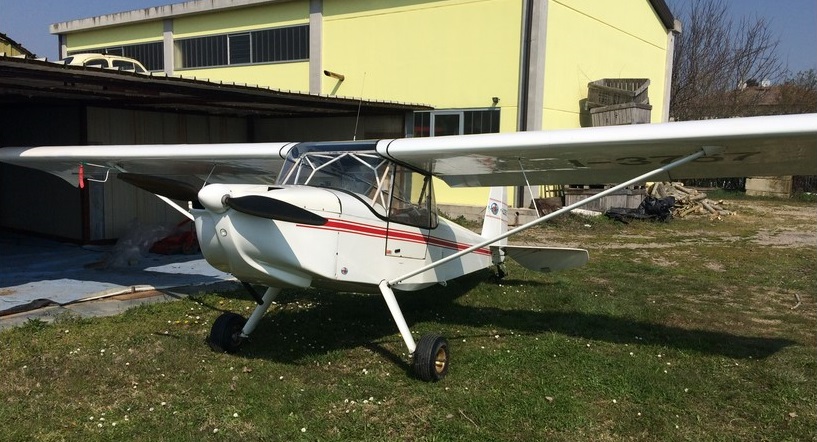
Capital Aircraft Air Trainer / Royal Air Trainer / Derickson Air Trainer

The aircraft was designed by Prof. Peter Altman of the University of Detroit. At that time it was named the Derickson Air Trainer.

John and Donalt Thomas acquired the design rights in 1928 and formed a company under the name Capital Aircraft Corporation located in Lansing, Michigan.

They built only one aircraft, registration number X795K. The airframe was initially built as a seaplane powered with a 60 hp LeBlond 5-D engine, which was exchanged with a 90 hp 7-D when later converted as a landplane. Span was 34 ft, length 25 ft, useful load 535 lbs, Vmax 105 mph, Vc 85 mph, Vso 30 mph, and range 400 miles.

In 1929 Capital Aircraft Corporation was relocated in Royal Oak, Michigan, and was renamed the Royal Aircraft Corporation.

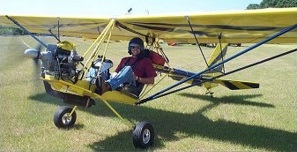
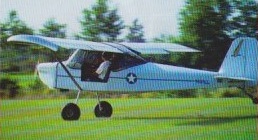
Capella Javelin / T-Raptor

The Capella Javelin is a family of American open cockpit, high wing, tractor configuration, conventional landing gear-equipped ultralight aircraft that were designed by J. Reid Howell and produced in kit form by Capella Aircraft of Austin, Texas and intended for amateur construction.

First flying in 1998, the single seat Javelin I was designed to comply with the American FAR 103 ultralight regulations, including that category’s maximum 254 lb (115 kg) empty weight. The 2001 cost was US$6000 without engine, propeller, instruments or covering supplies.

The design features an open frame fuselage of welded 4130 steel tubing, with the pilot’s and passenger’s seats bolted to the frame. The horizontal stabilizer and tail fin are also constructed of welded steel tubes. The wing is framed from riveted aluminium tubing with all flying surfaces covered in doped aircraft fabric. The wing is equipped with full span ailerons.

The conventional landing gear includes sprung-steel main gear and a similarly sprung steerable tail wheel. The open cockpit design provides good visibility while taxiing.

The standard engine supplied by the manufacturer for the single seat version was the 28 hp (21 kW) Rotax 277, but it was reported that the aircraft was underpowered with that engine installed. The throttle control is of a unique motorcycle grip type.

Original factory kit options included a cockpit pod and windshield, brakes and steel tube powder coating.
The single-seat Javelin was developed into a tandem two-seater, designated the Javelin II and then further developed into the T-Raptor ultralight trainer. The T-Raptor uses a wider and more enclosed fuselage, with optional bubble-windowed doors, to allow cool weather flying and was intended to be marketed to ultralight schools.

Capella Aircraft went out of business in late 2007, and the type is no longer in production.

Variants:

Javelin I
Single seat open cockpit ultralight
Engine: 1 × Rotax 277, 28 hp (21 kW)
Wingspan: 28 ft 0 in (8.53 m)
Wing area: 112 sq ft (10.4 sq.m)
Length: 18 ft 0 in (5.49 m)
Height: 6 ft 0 in (1.83 m)
Empty weight: 240 lb (109 kg)
Gross weight: 575 lb (261 kg)
Fuel capacity: 5 US gallons (19 litres)
Maximum speed: 63 mph (101 km/h, 55 kn)
Cruise speed: 60 mph (97 km/h, 52 kn)
Stall speed: 26 mph (42 km/h, 23 kn)
Range: 140 mi (220 km, 120 nmi)
Service ceiling: 12,500 ft (3,800 m)
Rate of climb: 400 ft/min (2.0 m/s)
Seats: one

Javelin II
Two seats-in-tandem open cockpit ultralight trainer powered by a 50 hp (37 kW) Rotax 503 engine. It was reported as being in development in 1998 and forecast to be available at the end of 1998.

T-Raptor
Two seats-in-tandem ultralight trainer powered by a 50 hp (37 kW) Rotax 503, 64 hp (48 kW) Rotax 582 or 60 hp (45 kW) HKS 700E four stroke engine. The T-Raptor has an expanded-width steel cage to provide a more enclosed cockpit and is a development of the Javelin II.

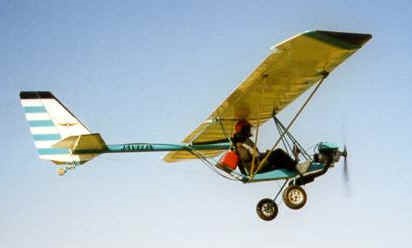
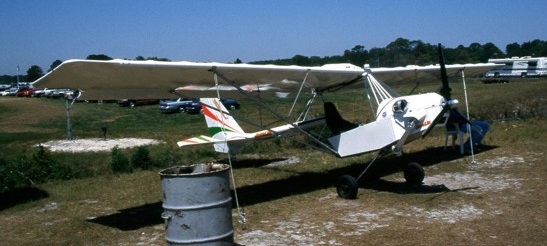
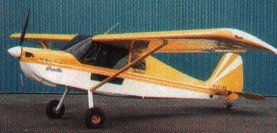
Capella Aircraft Corp Capella

Capella Single Seat

Desined by J. Reid Howell
The Capella SS first flew in 1988.
Folding wing optional.

The FW2T has a dacron covered spaceframe fuselage, while the strut braced wings are fabricated from sheet dural, pop riveted.

FW2T

The Capella XLS first flew in 1990.
Capella Aircraft Corp received certification in Germany for the Capella XLS model FW2C80 and Capella SS model FW1C50.
The Capella XS first flew in 1990.
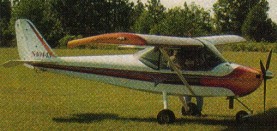
The Capella Fastback first flew in 1995.

Capella Fastback

Capella SS
Engine: Rotax 503, 50 hp.
HP range: 40-50.
Speed max: 112 mph.
Cruise: 102 mph.
Stall: 34 mph.
ROC: 980 fpm.
Take-off dist: 130 ft.
Landing dist: 130 ft.
Service ceiling: 10,000 ft.
Fuel cap: 7 USG.
Weight empty: 360 lbs.
Gross: 650 lbs.
Height: 5.67 ft.
Length: 17.33 ft.
Wing span: 27.5 ft.
Wing area: 110 sq.ft.
Seats: 1.
Landing gear: nose or tail wheel.

Capella XLS
Engine: Rotax 912, 80 hp.
HP range: 65-80.
Speed max: 121 mph.
Cruise: 119 mph.
Stall: 41 mph.
ROC: 1450 fpm.
Take-off dist: 200 ft.
Landing dist: 150 ft.
Service ceiling: 10,000 ft.
Fuel cap: 22 USG.
Weight empty: 560 lbs.
Gross: 1100 lbs.
Height: 5.67 ft.
Length: 18.4 ft.
Wing span: 28.5 ft.
Wing area: 114 sq.ft.
Seats: 2.
Landing gear: nose or tail wheel.

Capella XS
Engine: Rotax 582, 65 hp.
HP range: 65-80.
Speed max: 116 mph.
Cruise: 111 mph.
Stall: 41 mph.
ROC: 1200 fpm.
Take-off dist: 175 ft.
Landing dist: 115 ft.
Service ceiling: 10,000 ft.
Fuel cap: 10 USG.
Weight empty: 480 lbs.
Gross: 1100 lbs.
Height: 5.67 ft.
Length: 18.4 ft.
Wing span: 28.5 ft.
Wing area: 114 sq.ft.
Seats: 2.
Landing gear: nose or tail wheel.

Capella Fastback
Engine: Rotax 912, 80 hp.
HP range: 65-80.
Speed max: 121 mph.
Cruise: 120 mph.
Stall: 36 mph.
ROC: 1450 fpm.
Take-off dist: 200 ft.
Landing dist: 150 ft.
Service ceiling: 10,000 ft.
Fuel cap: 10/22 USG.
Weight empty: 560 lbs.
Gross: 1100 lbs.
Height: 5.7 ft.
Length: 18.5 ft.
Wing span: 28.5 ft.
Wing area: 114 sq.ft.
Seats: 2.
Landing gear: tail wheel.

Capella FW2T
Engine: Rotax 912, 80 hp
Wing span: 8.63 m
Wing area: 10.62 sq.m
MAUW: 450 kg
Empty weight: 265 kg
Fuel capacity: 52 lt
Fuel consumption: 14 lt/hr
Max speed: 180 kph
Cruise speed: 155 kph
Minimum speed: 58 kph
Climb rate: 3.8 m/s
Certification: VZ
Seats: 2
Kit price (1998): $13,795

Cantinieau C.100

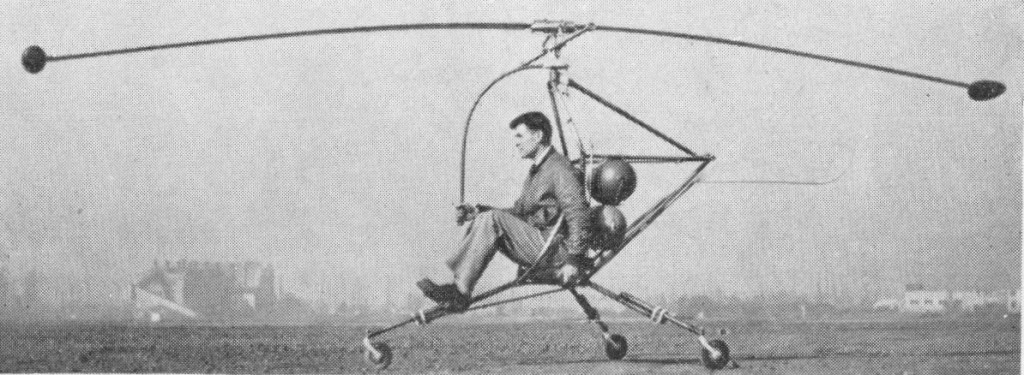
Aerotecnica helicopters goes back to the original research carried out in the early 1950s by Jean Cantinieau in France. Cantinieau, an engineer with Sud Ouest (SNCASO), designed his C.100 in cooperation with M. Decroze. It was an open frame single-seat machine with a triangulated tube structure surrounding the pilot and carrying the engine and rotor installation at its apex above the pilot’s head. The engine was mounted just forward of the rotorhead so as to reduce the extent of mechanical linkages and the C.100 had a three-wheel undercarriage and high-set tubular tailboom structure carrying a small tail rotor. The C.100 made its first of a total of three flights on 10 Novembers-1951 at St. Cyr and performed reasonably well.

Canterbury (NZ) Aviation Co Biplane

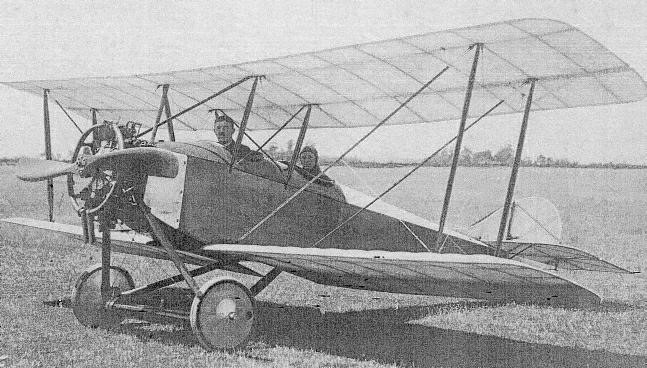
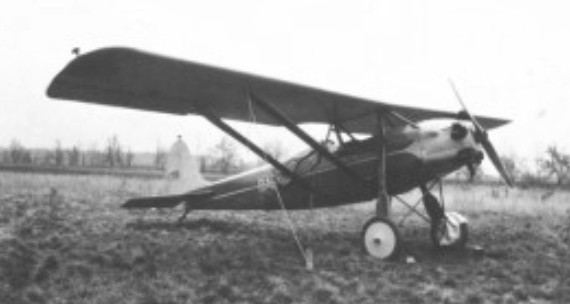
The first NZ designed and built land-biplane, strongly reminiscent of a Sopwith Tabloid, was designed and built at the Canterbury (NZ) Aviation Co Ltd workshops at Sockburn, near Christchurch, the two persons most concerned with the construction being Mr C M Hill, the company’s chief flying instructor, and Mr J G Mackie, the engineer.

The working drawings for this unnamed biplane were chalked out on the black-painted wall of one of the early Sockburn hangars, which full size drawings was apparently quite satisfactory as the biplane performed well in the air. The drawings were so “permanent” that they could still be seen, according to Mr W S Dini, as late as 1938 when he left the RNZAF after 14 years’ service. Cupboards had been built along the rear wall of the hangar in later years, and these helped in no small measure to preserve the drawings.

The aeroplane was rolled out of its hangar on 17th January 1919, and was a two-seater fitted with a 30 h.p. Anzani radial motor which was originally used to power one of the School’s Caudron biplane trainers. Main spars were of ash and the wing struts were of cedar, with bracing wires encased in cedar streamlines. Ailerons were fitted (instead of the Caudrons’ wing-warping and the wings had a slight dihedral. The aircraft, according to the Lyttelton Times of 18th January’ was “produced with little or no effort”. Wings and fuselage were fabric-covered.

Mr Hill made the first solo flight in the biplane on 17th January and found that it had a good rate of climb and was light on the controls. It also had a shallow gliding angle for its type, and Mr Hill predicted that it would be suitable for aerobatics. He said on landing that he had never before tested an aeroplane in which everything was so satisfactory, and he praised Mr Mackie’s work in high terms. The only alteration he recommended after the first flight was a small one to the control circuits to enable the aeroplane to be flown hands-off in level flight. He found that, trimmed hands-off, it tended to climb slightly. A very short landing was made after that first flight, another good feature.

Plans were then made for a flying tour to Invercargill, the aeroplane to be flown by Mr Hill and demonstrations and passenger flights to be given at selected centres. Passengers would also be booked between several of the towns to be visited, and it was thought that with a full tankage of 27 gallons of petrol, two people could be carried about 200 miles in still air.

The longest passenger flight in NZ on record, according to the Lyttelton Times, was made on 18th January 1919 when Mr Hill took off from Sockburn for a 28 minute flight over Christchurch and New Brighton, with Mr E S Fleming as passenger. This presumably would be the longest passenger flight made by an aircraft of the Canterbury (NZ) Aviation Co.Ltd. Mr Fleming, of the Riccarton Flour Mills, was a brother of Mr W H P (Herby) Fleming of Gore, who had also booked a flight between Gore and Invercargill during the forthcoming tour. Mr E S Fleming’s flight was made at between 2 and 3,000 feet, and there were “no engine troubles”. Later flights the same day were made with passengers Mr A V Smith and Mr Notman.

The southern flight was never made as the biplane was completely wrecked and Mr Hill killed on 1st February. It had been the custom for an aeroplane of the Canterbury (NZ) Aviation Co. Ltd to make a flight over the Racecourses at Addington and Riccarton on Race days, and Mr Hill had been requested to fly over the Riccarton meeting on the 1st. The Hon. H F Wigram, chairman of the Company, asked the Chairman of the Jockey Club if he would like to have an exhibition flight over the Racecourse that Saturday afternoon as an added attraction, and so it was arranged with Mr Hill. Mr Hill took off from Sockburn at 3.11 pm and set course for the Racecourse’ where he appeared just as the Lyttelton Plate was being run. He circled twice, and finally flew low over the course, where he was cheered by the crowd as he went past.

Mr Hill waved to the crowd, and then circled again to get more height. Another wide sweep over the course was made at a height of 2000 feet, and then the aeroplane disappeared into cloud. On his reappearance, he dived the aeroplane and came over in a loop. It would appear that the aircraft had some difficulty in going over the top, and soon went into another dive. This final dive was made towards the crowd, and as the aircraft climbed into its second loop, a distinct crack was heard and the port wings collapsed. Mr Hill tried to hold the aircraft straight but this was impossible and the aeroplane then disappeared from sight behind a belt of trees.

When members of the public arrived at the scene of the crash Mr Hill was dead and the aeroplane completely wrecked. At the subsequent inquest and investigation it was found that a flying wire had broken and this in turn had caused the other flying wire to break. The main spars had then cracked and the whole port wing assembly folded up. It was said that ordinary piano wire had been used for the flying wires, instead of cable.

Mr Hill had not previously attempted any aerobatics with the aeroplane and indeed had not permitted anyone else to fly it until he had completely tested it to his satisfaction. It had only made a very few flights at the time of the accident and it was fortunate that no passenger was being carried at the time.

The Coroner, Mr T A B Bailey SM, found “That on 1st February, while the deceased was making an exhibition flight over the Riccarton Racecourse, and attempting to loop the loop, one wing of the machine collapsed and the machine fell to the ground, the deceased being killed as a result of the fall, The collapse of the wing appears to have been due to the breaking of one of the flying wires. The machine was built under the personal supervision of the deceased, who was a competent mechanic and he expressed himself satisfied with the machine”.

Engine: 30 h.p. Anzani
Wingspan: 23 ft 6 in
Length: 20 ft
Wing area: 220 sq.ft
All-up-weight: 500 lbs
Fuel capacity: 200 lbs
Seats: 2
Cant Z.501 Gabbiano

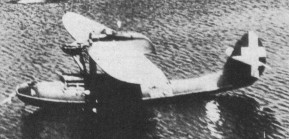
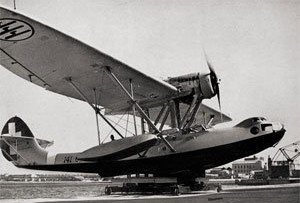
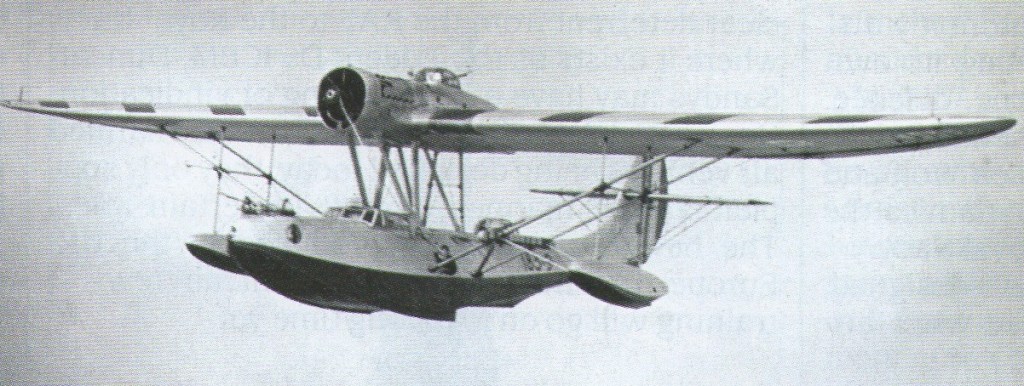
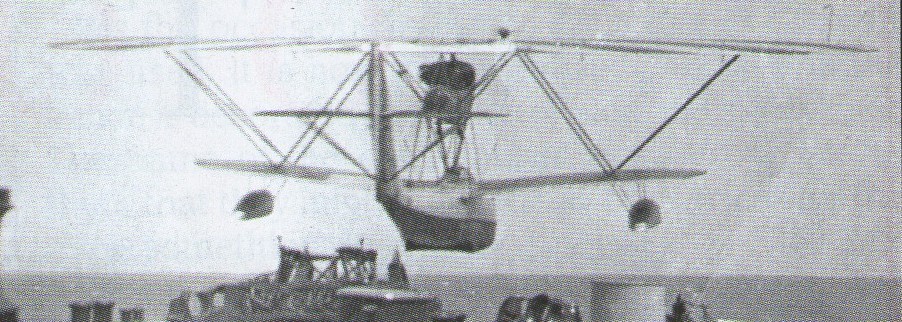
In 1931 the Cantiere Navale Triestino company acquired the services of Filippo Zappata, and also changed its name to Cantieri Riuniti dell’Adriatico, under which a number of civil and military seaplanes and land based aircraft were subsequently produced. The first Zappata designed prototype aircraft from the CRDA was a single engined flying boat, designed as a maritime reconnaissance bomber. Designated Z.501 and named Gabbiano (seagull), it flew for the first time at Monfalcone, Trieste, in 1934. With the civil registration I-AGIL, it set up an international distance record for seaplanes in October 1934, flying non stop for 4120 km (2560 miles) from Monfalcone to Massawa in Eritrea. A short time later a French aircraft took the record, but the Gabbiano reclaimed it in July 1935 with a 4957 km (3080 mile) flight from Monfalcone to Berbera in Somaliland.
It was in its designed role that the Z.501 entered service with the Squadriglie da Ricognizione Marittima (marine reconnaissance squadron) of the Regia Aeronautica (Italian air force) in 1936, after an order for production aircraft had been placed; an eventual total of 445 were built. In full military condition, the Gabbiano’s maximum range was 2400 km (1490 miles). The flying boat was of wooden construction, with fabric covered wings and tail, and was powered by a 900 hp Isotta Fraschini Asso XI R2 C15 12 cylinder V type engine mounted above the centre section of the parasol wing mounted on struts up high and away from the fuselage. It carried a normal crew complement of four or five men. Initial armament was three 7.7 mm (0.303 in) Breda SAFAT machine guns, one in an open position above the nose and the other two in semi enclosed positions in the middle of the fuselage and in the rear of the over wing engine nacelle. Racks attached to the inner¬ wing bracing struts could carry a variety of small bombs up to a maximum load of 640 kg (1410 lb), typical combinations including two 250 kg (551 1b), four 160 kg (353 1b) or four 100 kg (220 1b) bombs. Romania purchased a few Z.501s in 1937 38, and some saw service on the rebel Nationalist side in the Spanish civil war of 1936 39.

When Italy entered the Second World War in June 1940, the Regia Aeronautica had 202 Z.501s in front line service with maritime reconnaissance squadrons, air/sea rescue and other units. During the following year the nose gun was removed, to allow for an enclosed observer’s cockpit in that position. At the Italian armistice in September 1943 the Gabbiano was still in use; about 20 continued serving with the co belligerent Italian forces and others with the pro German Aviazione della RSI (the airforce of Mussolini’s short¬lived Italian Social Republic set up after the armistice), until the end of the war, and a few survived with the Italians until 1950. The Z.501 finished the war without a single air-to-air kill.

CANT Z.501 Gabbiano (Gull)
Engine: 1 x Isotta Fraschini Asso XI R2C.15 12-cylinder, 900hp.
Length: 46.92ft (14.3m)
Wing span: 73.82ft (22.50m)
Wing area: 667.368 sq.ft / 62.0 sq.m
Cruising speed: 130 kts / 240 km/h
Cruising altitude: 6562 ft / 2000 m
Wing load: 23.17 lb/sq.ft / 113.0 kg/sq.m
Height: 14.44 ft (4.40m)
Maximum Speed: 171mph (275kmh; 148kts)
Maximum Range: 1,491miles (2,400km)
Range (max. weight): 540 nm / 1000 km
Rate-of-Climb: 820ft/min (250m/min)
Service Ceiling: 22,966ft (7,000m; 4.3miles)
Armament: 3 x 7.7mm machine gun
Up to 1,411lbs (640 kg) of bombs.
Structure:
Accommodation: 4 to 5
Hardpoints: 2
Empty Weight: 8,488lbs (3,850kg)
Maximum Take-Off Weight: 15,543lbs (7,050kg)